
[Unveiling the Bermuda Triangle: Myth vs. Scientific Reality]-[Has the mystery of the Bermuda Triangle finally been solved?]
📋 Summary
Decoding the Bermuda Triangle: Beyond the Legend
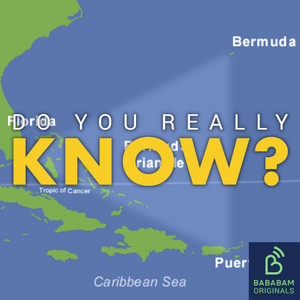
For decades, the Bermuda Triangle has occupied a unique space in popular culture, "straddling the line between legend and reality." This vast region, covering approximately 500,000 square kilometres between Florida, Puerto Rico, and the Bermuda Archipelago, is infamous for the disappearance of an average of four planes and 20 boats annually. While these events have fueled countless "adventure novels and films," modern investigation suggests that the mystery is less about the supernatural and more about geography and human error.
The Genesis of the Myth
The mystique surrounding the area has deep historical roots, with even Christopher Columbus reportedly noting that his "compass behaving strangely" while navigating these waters. However, the modern obsession with the Triangle was cemented by the tragic disappearance of Flight 19 in 1945. During this routine training mission, Commander Taylor radioed the control tower with a harrowing admission: "I don't know where I am" and "my compasses are malfunctioning." Despite a massive search effort, both the squadron and a subsequently dispatched rescue flight vanished without a trace.
This tragedy became the bedrock for "wild hypothesis and conspiracy theories." In the absence of immediate answers, the public imagination filled the void with notions of "portals to another dimension," alien intervention, or the presence of a "giant sea monster."
Rational Explanations for Historical Disappearances
Today, researchers offer more grounded, less sensational explanations. Regarding the loss of Flight 19, experts point to a "simple piloting error by Commander Taylor." By "repeatedly changing courses," Taylor inadvertently led his squadron deep into the open ocean, far from their intended flight path. The squadron eventually "ran out of fuel and crashed." The disappearance of the rescue flight is similarly attributed to a likely crash, dispelling the need for paranormal explanations.
The Scientific Reality: A Dangerous Environment
If the mystery is not supernatural, why is this region consistently high-risk? Recent discoveries, particularly those cited by National Geographic in 2017, highlight that the area is geographically treacherous. The Bermuda Triangle sits atop an "underwater mountain nearly 4,000 metres high," which was formed by "volcanic activity."
This environment is further complicated by:
- Sharp Reefs: Submerged hazards reaching up to 12 metres in height that pose a constant threat to maritime navigation.
- Extreme Depth: The presence of one of the world's deepest underwater trenches, which serves as a "final resting place for many lost ships."
- Meteorological Volatility: The region is a "hotspot for meteorological activity," frequently experiencing hurricanes, equatorial storms, and intense thunderstorms.
This "deadly combination" of extreme weather, strong winds, turbulent seas, and unpredictable whirlpools creates a natural environment capable of overwhelming both aircraft and vessels.
Conclusion
The legend of the Bermuda Triangle remains a captivating subject, but the evidence suggests that the "mystery" is a convergence of human error and a harsh, unforgiving physical landscape. By stripping away the sensationalism, we find that the true danger lies in the region's complex geology and volatile weather, rather than the extraterrestrial or the supernatural.

Deep Learning with ListenLeap


