So good, so good, so good.
Just in and so good.
Thousands of winter deals are in Nordstrom Rack stores now.
And that means thousands of fresh reasons to rack.
Because we get the latest trends for way less.
Because I've been looking for these.
Because the best deals go fast.
Save big with up to 60 % off.
Sam Edelman, Sorrell, Free People, Cole Hahn, and more cold weather finds.
Great brands, great prices.
That's why you rack.
Enjoying your podcast will be brief.
If you're looking for the perfect holiday gift, gift scratchers from the California Lottery.
With so many to choose from, you're sure to find the right gift for anyone on your list.
Now that your holiday shopping list is figured out, enjoy this bird singing jingle bells.
Give the gift of scratchers from the California Lottery.
A little play can make your day.
Please play responsibly.
Must be 18 years or older to purchase, play, or claim.
Hey guys, have you heard of Goldbelly?
It's this amazing site where they ship the most iconic famous foods from restaurants across the country, anywhere, nationwide.
I've never found a more perfect gift than food.
They ship Chicago deep dish pizza, New York bagels, main lobster rolls, and even Ina Garten's famous cakes.
So if you're looking for a gift for the food lover in your life, head to goldbelly .com and get 20 % off your first order with promo code GIFT.
Hello, our beloved listeners.
Welcome back to this series.
This is the 8 Minute English Podcast series on the Learn English Podcast channel.
I'm your host, Nathan, and it's a pleasure to have you with us again.
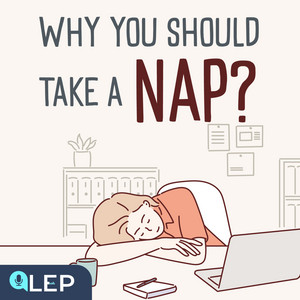
Our topic for today is why you should take a nap.
I think you've all heard the saying that you should sleep eight, nine hours a day.
The purpose is to make your mind and body healthier.
So do you think taking a nap plays an important role in sleep?
Let's talk about that.
We have two friends here to discuss this fascinating subject.
Felix, an experienced traveler, and Ron, an office worker, will share their viewpoints on the topic of napping.
Let's jump into their conversation.
It's been such a long time since we last met.
How have you been Ron?
It's great to see you.
Things have been really busy.
Work has been hard with long hours and tight deadlines.
I haven't had time to take a nap in a long time.
I hear you. I've been traveling a lot recently, but I still make sure to take naps.
They're a big part of my routine because they help me stay healthy.
Have you ever thought about adding naps to your day?
Honestly, I haven't really considered it.
I always feel like I'm too busy, and I've heard different things about napping.
Some say it's great, while others think it can mess up your sleep at night.
I get why you're worried.
Let me tell you some things I've learned.
There's a lot of science that shows napping is good for you.
For example, short naps can make you feel better and reduce stress.
Studies show that even a quick nap can lower blood pressure and help your heart.
That sounds impressive.
Can you show me more?
Sure. Naps are really good for your mind.
A short nap can make you more alert and help you focus.
It gives your brain a break to process things.
For example, when I was in Japan, I took short naps during my travels to stay awake and get ready for the day's activities.
I see, but I'm used to not napping.
Am I starting too late now?
Will napping affect my work performance and make me lazier?
Don't worry, my buddy.
Napping can help you work better.
When you're tired, it's hard to focus and make decisions.
A short nap can make you feel refreshed and ready to do tasks well.
While traveling, I'd take naps to feel better.
After a nap, I felt more awake and ready to explore or get things done.
That makes sense. How long should a nap be to get these benefits without feeling tired?
Good question. The length of your nap is important.
A 10, 20 minute nap gives you a quick boost and won't affect your night's sleep.
If you need more rest, a 60, 90 minute nap helps you finish a full sleep cycle, which is great for memory and creativity.
And I shouldn't sleep more than that, right?
Yes. But I don't think I could do it even if I wanted to.
You know, I work in an office.
My lunch break is quite short.
Just eating lunch takes a lot of time.
Anyway, keep trying.
Just do it every day and it will gradually become your habit.
Sure. Thank you so much.
Let's discuss some new words related to this topic.
Please take a look at the first word, tight.
The meaning of this word is difficult or hard to deal with.
For Ron, his work has been hard with long hours and tight deadlines.
Next, we have a noun study.
If it is a verb, this word is already very familiar to you.
In this case, study is a noun.
This is the activity of examining a topic in detail to discover new information.
Studies have shown that even a short nap can help lower blood pressure and improve heart health.
Here's another noun performance.
This is the action or process of completing an action, task, or function.
Naps can be helpful for work performance.
Now we have a verb called boost.
It is to increase or improve something.
Felix shares that a 10, 20 minute nap gives Ron a quick boost and won't affect his night sleep.
Here's the last word, creativity.
This is the use of imagination or original ideas to create something.
Taking a nap is great for memory and creativity.
Did you get all the new words?
Please comment below to let me know which new word you like better.
Let's discuss some questions about our topic.
The first question, what are the health benefits of napping mentioned by Felix?
They include improved mood, reduced stress, lower blood pressure and better heart health.
The second question, how can you take naps during the day without ruining your sleep at night?
Let me share first.
I don't nap right before bedtime.
Go to bed and wake up at the same time every day and avoid drinking caffeine in the afternoon or evening.
How about you? I would like to hear your opinions on these questions.
Please leave your comments below and let's discuss.
Did you know that different cultures have their own unique approaches to napping?
Let me share with you.
Many cultures have unique views on napping.
In Spain, people take an afternoon nap called a siesta to rest and recharge.
This is a common part of their daily routine with shops and businesses often closing in the afternoon so people can go home and nap.
In Spain, there is even a siesta contest.
In Japan, inimery refers to napping in public.
It is seen as a sign of hard work rather than laziness.
It's interesting how different cultures include naps in their daily lives.
In some countries, people nap every day while in other places, napping happens less often but is still appreciated.
In Italy, people take a riposo similar to the Spanish siesta.
People rest during the hottest part of the day.
Studies also show that regular napping can help you live longer.
In Greece, research found that people who napped regularly had a lower risk of heart disease.
So napping isn't just about feeling more awake, it has long -term health benefits.
This information is interesting, isn't it?
That wraps up today's episode on why you should take a nap.
I hope you enjoyed the discussion between Felix and Ron and found it informative.
Remember, adding short naps into your day can be a great way to boost your health and productivity.
Please stay healthy until we meet again.
Thanks for joining us and see you next time.
Even the busiest of holiday schedules is no match for AloMoves, the streaming wellness platform where you can sculpt your muscles, unwind with the yoga class, or even learn the art of awareness with their latest meditation offerings.
On demand, whenever works for you.
And right now for Cyber Week, you can get almost 40 % off your one -year membership with great deals on 6 -month and monthly memberships too.
Start saving today at alomoves .com.
Alomoves .com. Oh my God, it's the coolest thing ever.
Hey guys, have you heard of Gold Belly?
Well, check this out.
It's this amazing site where they ship the most iconic famous foods from restaurants across the country anywhere nationwide.
I've never found a more perfect gift than food.
They ship Chicago deep dish pizza, New York bagels, main lobster rolls, and even Ina Garten's famous cakes, seriously.
So if you're looking for a gift for the food lover in your life, head to goldbelly .com and get 20 % off your first order with Promo Code Gift.
Enjoying your podcast?
We'll be brief. If you're looking for the perfect holiday gift, give Scratchers from the California Lottery.
With so many to choose from, you're sure to find the right gift for anyone on your list.
Now that your holiday shopping list is figured out, enjoy this bird singing jingle bells.
Give the gift of Scratchers from the California Lottery.
A little play can make your day.
Please play responsibly.
Must be 18 years or older to purchase, play, or claim.