
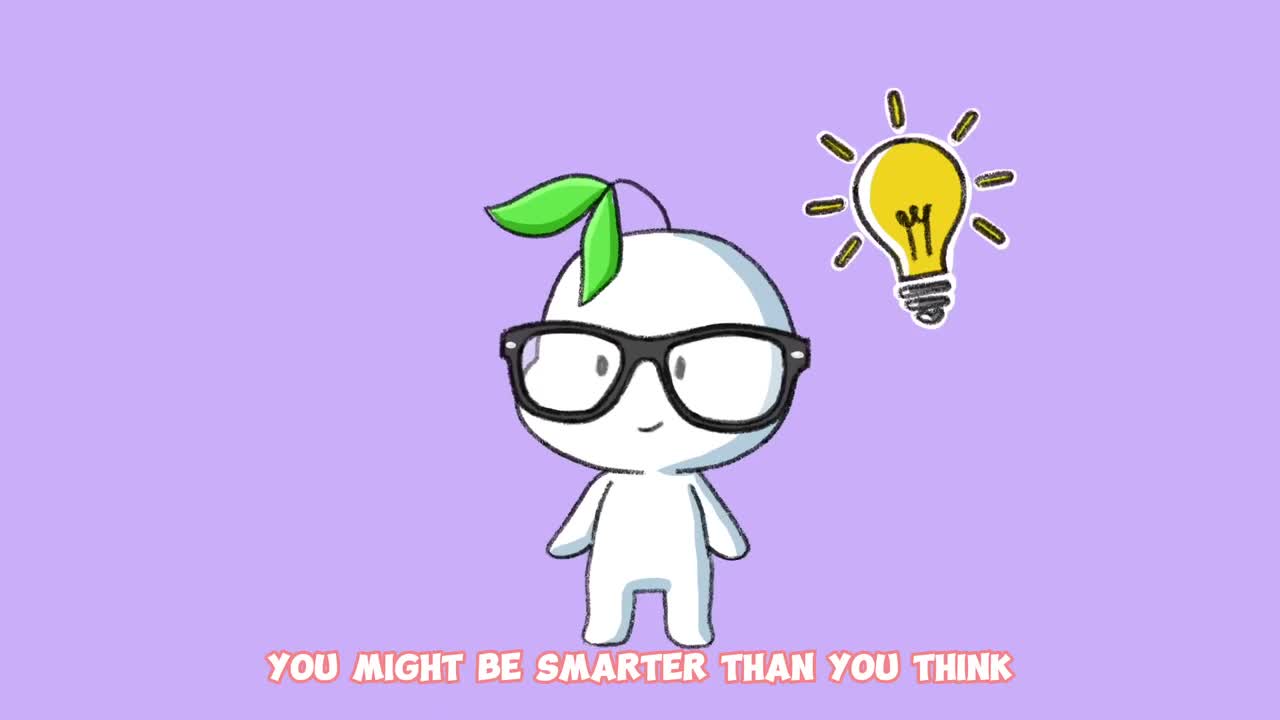
[Unveiling the Hidden Signs of High Intelligence: Why Your Quiet Nature Might Be Your Greatest Asset]-[Behaviors That Actually Reveal High IQ]
📋 Summary
Beyond the Loud: Redefining High Intelligence
In a society that often equates volume with value and quick answers with intelligence, many individuals who are introspective, quiet, or deliberate in their thinking often feel inadequate. They may be labeled as "too quiet" or "too slow." However, psychological research suggests that these perceived weaknesses are frequently markers of higher cognitive ability. True intelligence is not always about being the loudest person in the room; it is often found in the subtle, quiet behaviors that reflect deep mental processing.
1. The Power of Intellectual Curiosity
Intelligence is deeply rooted in the urge to ask questions. Those who frequently wonder "why" demonstrate strong "intellectual curiosity," which serves as a primary predictor for lifelong learning. Educational psychology highlights that curious individuals do not merely memorize facts; they "process information more deeply" and "retain knowledge longer." By resisting the urge to pretend they know everything, they engage in "active learning," constantly poking at ideas to uncover deeper truths.
2. Intellectual Humility and the Dunning-Kruger Effect
Perhaps the most counterintuitive sign of intelligence is the comfort in saying, "I don't know." This behavior is the polar opposite of the "Dunning-Kruger effect," where those with limited knowledge tend to overestimate their competence. Highly intelligent people possess "intellectual humility," recognizing the limits of their own understanding. By admitting uncertainty or stating, "I need to look into that," they demonstrate better reasoning and decision-making capabilities, proving that "quiet confidence often beats loud certainty."
3. The Cognitive Benefits of a Wandering Mind
While mind-wandering is often dismissed as a lack of focus, it is frequently linked to "stronger working memory and creative problem-solving." When your mind zones out, your brain is often "exploring connections in the background." This mental simulation of the future or replaying of conversations is the brain working behind the scenes, processing complex information that isn't immediately visible to observers.
4. Pattern Recognition and Deep Observation
Being "weirdly detail-oriented" is often a sign of superior cognitive wiring. Those who notice small inconsistencies or subtle shifts in tone engage in "strong pattern recognition." Unlike those who merely react to their environment, quiet observers "process information more deeply" because they are constantly analyzing the data they receive, allowing them to extract more information per moment than the average person.
5. Metacognition and Social Reflection
Overthinking social situations is often mislabeled as simple anxiety. However, when viewed through the lens of psychology, moderate social reflection is a form of "metacognition," or "thinking about your own thinking." By mentally replaying conversations and considering multiple perspectives, individuals are actually "actively modeling social dynamics in real time." This ability to analyze emotional cues and adjust behavior flexibly is a hallmark of strong social cognition.
6. The Necessity of Solitude for Complex Reasoning
Deep thinkers often require solitude to function at their best. Research on "reflective thinking" indicates that low-stimulation environments foster "longer attention spans and more complex internal reasoning." When an individual feels mentally refreshed after spending time alone, it is because their brain is prioritizing depth over constant external stimulation. In this context, "quiet doesn't mean empty"; it is the space where the most significant cognitive processing occurs.
7. The Expanding Horizon Effect
Finally, the most intelligent individuals are often those most aware of their own ignorance. As one learns more, they become increasingly cognizant of the vastness of information they have yet to master—a phenomenon known as the "expanding horizon effect." This feeling of not knowing enough is actually a sign of "cognitive maturity."
Conclusion
If you find yourself identifying with these traits, it is time to shift your perspective. Intelligence frequently manifests as curiosity, careful observation, and thoughtful pauses. By recognizing these signs, you may realize that your quiet nature is not a limitation, but rather a reflection of a mind that is constantly engaged, analyzing, and growing. It is time to stop giving your brain less credit than it deserves.
Deep Learning with ListenLeap


