Hello and welcome to Women in Retail Talks, the podcast where C-suite executive women in the retail space share their stories of professional growth leadership development, personal journeys and more.
I'm Marie Albajes, Senior Editor of Women in Retail, a membership-based community of executive women at leading retailers and brands.
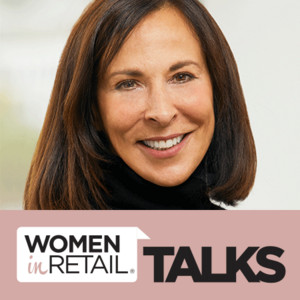
Today, I am thrilled to be joined by Jill Scalamandre, the CEO of Beekman 1802, a cosmetics brand that uses goat milk as the key ingredient and is certified cruelty-free.
She's going to share some key lessons learned from her various partnerships at Beekman 1802, delve into her impressive resume in the beauty industry and share the difference between a mentor and a champion and why having both is so important.
So Jill, thank you so much for joining me.
Thank you, Marie.
I'm so thrilled to be here.
I am so thrilled that you're here.
So I want to jump right in and learn a little bit more about Beekman 1802 before we kind of get deep into the business and in your vast experience.
Tell me where the name came from and why the emphasis on goat's milk as the base ingredient.
Well, the name came from the two founders.
They bought a farm up in Sharon Springs, New York, and the actual name of the farm was called Beekman and it was built in 1802.
So that's where the goats live and where they established their business and their name.
Okay, gotcha.
And so why the emphasis on goat's milk, other than the fact that they already have the farm there?
Yes.
So let me just take a step back and say how the brand was founded.
So Josh and Brent were at the farm Beekman 1802 in Sharon Springs, New York, and they got a knock on the door from their next door neighbor, Farmer John.
He lost his lease to the land, and he had 80 goats.
So he asked if it was okay for them to use their land to graze his goats?
And they, of course, said yes.
They established that as the first act of kindness, because our brand really has two ingredients beyond the goat milk is kindness.
So we say that we have a skin health brand that's based on two ingredients, kindness and goat milk.
So then they decided, well, what do you do with 80 goats?
You know, what can be done?
And so I think it was Brent who Googled, what do you do with goats?
And someone said, goat milk soap.
And so that's how they started.
They started making on their dining room table, with all of their neighbors in their community helping out making goat milk soap.
What then happened after?
That is neighbors, and that's what they call their customers.
We're saying my eczema is gone.
My skin is transformed.
My skin was so red.
Now it's not red.
What's going on?
And Branch, who happens to be a physician, researched goat milk and the skin and understood that goat milk has a real significant anti-inflammatory and health benefit for the skin.
So, understanding this, more and more, they get started buying other products in the line, knowing that goat milk is a super nourishing, nurturing ingredient for sensitized skin.
So I'm writing all of this down because my partner happens to have eczema and he's had it for five years with no solution.
So now I'm going to check out goat's milk.
Absolutely.
It really is amazing.
I mentioned it to everyone who has any kind of skin issues or just sensitivity is a big issue today in skincare because people have overdosed on ingredients and now their skin is more sensitive.
Gotcha.
So that was all happening around what, 2008, 2009, right?
Yeah.
The goat milk soap was around 2008, 2009.
And then about eight years later, they decided to go on television and tell their story.
So they went on to HSN and told their story and started building out their body care line.
And they became the number one brand on HSN because they were telling their story of kindness.
They were showing kindness, the great results that you get with goat milk on the skin, and it became a phenomenon.
That's awesome.
Yeah, I was going to thank you for leading me into all of the accolades that Beekman has had.
Even in the past year, I mean, you guys earned the top spot on Ulta's top three best-selling SKUs.
You were named Ulta's Brand of the Year.
You've got a series of awards.
I'm going to just rattle them off.
Good Housekeeping.
Best Beauty Awards Allure.
Best of Beauty Award Oprah.
You're on her favorite things list.
So, you know, that's what over 12, 13 years, what is some of the secrets to the success?
What do you attribute to all of these kind of accolades?
Well, thank you for mentioning our awards, because we are so proud of them and they are so important to us, because that helps establish us as a very, very credible brand.
So after the HSN phenomenon, we added skincare, facial care to the brand.
And we started doing all the clinical tests and all the white papers against goat's milk and really pushed the science behind the brand.
And that was a key turning point for the brand, because we had facts and figures that really said This is great for sensitive skin.
This has 18 active ingredients in every drop of goat milk and it can transform the skin this way by X, Y and Z.
So we had all the facts and the figures and we introduced this line.
We went exclusively to Ulta with our facial skincare line.
We call it the clinically kind facial skincare line.
And when we started pushing the science behind goat milk, All of a sudden last year the press really responded and so did the consumer.
And so we had a banner year last year for sales.
And we're just recognized and acknowledged for both our brand, our kindness initiatives and our products.
And we received 27 awards.
Now, I have been doing beauty. for my entire career, over 30 years.
And I have never seen a brand receive 27 awards in one year.
And it was recognized for everything, for its brand, its products, its initiatives.
So it really was a very comprehensive list of acknowledgements.
And we're very, very proud of it.
Why do you think it is that consumers were drawn to the science of the product versus, you know, any other kind of marketing that you've done?
Yeah, that's a great question.
And it's actually I have to give a few different ways into it because, first of all, you know, during the pandemic, people really overdosed their skin with ingredients.
And so skin sensitive skin has become a growing phenomenon in the last few years.
And I think that, because we are such a good brand for sensitive skin, all of our over 350 clinical essays on sensitive skin with zero irritation
So we really are truly a trustworthy brand for sensitive skin.
So that's the first thing of why consumers have come.
You know, sensitive skin is being researched and Googled and, you know, and we are there.
Um.
The other thing too, is consumers in general are looking for science and facts behind their products.
They want to know.
You know they, they are researching um.
They want to know what ingredients do what, how it works.
Um.
So having pushed the science out there, I think gave us more credibility and more um meat for the consumer to really look into and understand.
Do you find that there's various demographics that are more inclined to look at the science behind the product?
I'm thinking like, you know, is this a Gen Z thing?
Is this a millennial thing?
It's definitely a millennial and Gen Z thing.
So absolutely.
They, you know, they're in store, you know, with their iPhones and they are looking up ingredients and looking up reviews and testimonials before they make their purchase.
So it's absolutely critical that you have those three elements for consumers to look at.
Okay, that's really interesting.
So let me talk about collaborations for a moment.
I know that you, Beacon, partnered with Mrs. Potato Head and Nestle Toolhouse.
I think that was pretty viral.
I mean, I saw it.
So You know, you guys sold out of those collaborations, you know, moments before debuting on again QVC, HSM and Ulta.
So tell me some of the biggest lessons learned from these partnerships.
Yeah, that's a great question because you have to be careful when you do collaborations and partnerships.
My advice is to make sure that there is a definitive link to the brand when you choose a partner, so that you are building one plus one equals three.
I've seen many people partner with people where they didn't get anything out of it because it was a strange partnership.
They didn't understand why those two brands came together.
With us, when choosing partnerships, you have to look at the brand and what we're about.
We have a very, I'm going to say, warm, friendly, and somewhat nostalgic atmosphere.
Milk, it's a somewhat nostalgic ingredient that we all grew up with.
And so we take those to say all right, what are other very loved brands that milk is a compelling ingredient?
So we were doing a new peel for the skin.
Again, a great peel with potato pulp and milk for sensitive skin.
And we, you know, we knew we had heard that it was Mrs. Potato Head's 70th birthday.
And we're like, oh my God, how iconic.
Let's have a 70 year old beauty ambassador work with us.
And so that was a lot of fun and we got a lot of great coverage because it brought back all these nostalgic memories for consumers who are maybe slightly, you know, in the boomer age.
But it also brought back the for the young moms.
You know, the Pixar movies with Woody, Toy Story.
So, you know, there was a really multi-generational awareness and appeal.
That's great advice of finding that definitive link between your brand and your brand values and matching it with other brands and other partners that share those.
Right.
It's critical.
And so with Nestle Tollhouse um, you know we were doing, our holiday theme was about our sweet shop um, you know, milk and cookies.
So we went to Toll House Nestle and you know they, uh they were very welcoming and we actually work with uh, the chef at Toll House to really duplicate what uh, the base of the cookie dough smells like.
And, and chef Meredith approved our, our scent.
And, um, My gosh, that collaboration blew out.
It sold out in an hour and a half on QVC.
And it was a huge success.
Again, it fit within our personality of nostalgic.
Milk was definitely a linked ingredient when you think of cookies.
And it also linked to our holiday collection, which is Sweet to be Kind.
Again, really working it so that there is an obvious direct link of why the two brands would be together is really critical.
And that makes it one plus one equals three versus one plus one equals two.
Any future collaborations that you can reveal or that we can look forward to in 2024?
We do have a collaboration plan for the second half.
I can't say because we have signed an agreement.
But it is definitely a link to the magical world of kindness and how kindness is critical in relationships.
And that's all I'm going to say.
Okay, okay, a couple of hits there.
We are, we're really thrilled.
That's awesome.
I have some some theories in the back of my head.
So I want to talk about another partnership that you have at Beekman, which is the one with TerraCycle, who I know I'm a huge fan of.
I use it personally at home.
I try to incorporate into our events.
So tell us a little bit about that recycling program, as well as any other kind of sustainability initiatives that Beekman is pursuing.
So yes, what I should say say is that we have multiple pillars in our line.
Uh, about kindness.
So we are kind to skin, first and foremost uh so uh, there is no worry about being um, you know, becoming red or overusing our products, but we're also kind to animals, so we have a cruelty free, the leaping bunny.
We are kind to the community with our kindness initiatives and we are kind to the environment, or the planet.
And that is with both our TerraCycle, which is very important to us, so that you can you know through our website, you know we do have a TerraCycle program where you can return and recycle the products.
And we're also considering now as we move forward.
We have a new line that we are not putting cartons on.
We've got recyclable plastic.
So it's becoming, you know, we're good at it now, but we're not great at the sustainability.
But it is our goal to become great.
And so, little by little, we're going to be making improvements so that we are a fully sustainable line.
But it is a very important pillar to us in our kind of the planet pillar.
That's awesome.
I feel like that's becoming the standard now is brands that haven't done this from the beginning.
They're working on it.
And I love that you said, you know, we're good, but we're not great at it.
Showing, you know, there's failing upward, right?
Like there's momentum there and there's acknowledgement that we could be doing better.
All brands could be doing better when it comes to sustainability.
So I appreciate you saying that.
I want to stay on the theme of kindness for a little bit, because it seems like that value is really wrapped into all of that Beekman does.
Can you share how that applies to your team, your talent?
How is that manifesting in the culture at Beekman?
Okay, that's a great question, and I'm so happy to answer it.
And I don't know where to start because kindness is innate in every single thing we do.
So when it comes to the culture of our team, we give kindness coaching to our team.
We do actually kindness workshops for people who come up to the farm and visit.
We do it in our flagship store up in Sharon Springs.
We give kindness grants for those who are kind. we actually conducted last year a kindness.
We work with kindnessorg and we did research into the culture of kindness and how important it is in the workplace.
So we did a qualitative study with 11 brands where we actually surveyed the culture to give a measured culture quotient.
We can actually measure the level of kindness within organizations to say how is kindness working for you?
The reason is that we have proof that kindness actually impacts consumer employees' happiness and productivity.
So we did this survey across 12 groups and it was.
We did a beauty retailer, we did a CPG manufacturer, we did a tech company.
We really wanted to understand how kindness was cultivating inside of organizations.
And then we shared the results with each of the organizations and gave them some tools through kindnessorg to help improve.
And the results weren't horrific, but there were definite tools and there was definite insight.
One of the key insights that we learned is that having a good relationship with your boss, so that there is a good give and take and a kindness, is more important than the actual salary that they get, meaning it's more important than getting a raise.
Because that makes them happy to show up at work every day, when they know they have to come in and they're not going to be fearful or they're not going to be ignored.
They're going to be validated and appreciated by their boss and their supervisor.
Anyway, so that was one of the things that we did.
And we also last year gave a.
We worked with an AI company called KindWorks, which is a personalized AI coach to every single employee in our team.
So we call him Benny and Benny actually gives us exercises to do every week.
And my exercise is different from, let's say, the marketing manager's exercise.
It's my personalized exercise.
And it's important because it will build more kindness around the culture in our team.
So we have all of our AI-driven kindness coach.
And then last but not least, And I'll give you the little preview on that.
We are going to provide all of our consumers who come to our website individual, personalized kindness coaching.
If they choose so.
So that's going to start in February on the random acts of kindness day, where we're going to offer a kindness 15 minute personal sessions with a kindness coach.
Again, it's totally elective.
But, you know, we feel is that we want to be spreading.
Our mission, for our brand is to spread kindness around the world.
And, you know, so, you know, we want to share what we've learned and bring it out to consumers.
I can't believe I'm asking this question, but will this be a human kindness coach or an AI kindness coach?
This will be a human kindness coach who's going to work directly.
So like, very much like you can set up your own, your own business with someone to help you diagnose your skin and what you need.
You can now also set up on our website a kindness coach.
Very cool, very cool.
So along those same lines, as a leader, your day-to-day I mean, you mentioned some of the things that the culture at Beekman does, like the coaching, the workshops, but how is kindness showing up for you and your team when you're leading them day to day?
What does that look like when you're in meetings, that sort of thing?
Again, great question.
And I think what's important is to notice, just to state the obvious.
But is that kindness does not mean nice?
You want to differentiate.
Kindness means constructive.
And so, you know, giving direct feedback on a performance is kindness.
Because it's you know and, of course, doing it in a, you know, a gentle manner and not being, you know, a total jerk.
I find that I'm, you know, I'm direct with my team and I do it in a very kind way, but I give them very constructive feedback of how they can be better.
Again, because it was just always about being nice.
That's not helping the employee, you know?
So, day in and day out, it is about being kind direct firm, but it's also being appreciative and validating what they've done.
So a thank you, or great job, or, you know, or I think we have to work a little bit more on that.
It's, you know, it's important that you validate what they have done, and then you direct to help them in what they haven't.
I'm sure that you're saying this with years and years of experience.
And I want to talk a little bit more about that.
I mean, you've been the CEO here at Beekman for almost two years now, but I know that you have a pretty lengthy resume of working with beauty brands, you know, as an executive for years and years.
So I'd love to hear about your past experience.
And then if you could share a little bit about what makes working at Beekman and leading that team different from all of your other roles.
So, yes, you're right.
I have been I've done beauty my entire career.
And I started out in product development at Revlon.
And I've had the honor of working for large, established companies like Revlon, like Cody, like Shiseido.
And then they also the honor of working in smaller startups, like when product became a startup, or Frederick McKay or Strivectin and now Beekman, where they're small indie brands and they are.
They can be very similar and they can also be very different.
And I've worked in organizations, huge established organizations that are very kind.
And I do appreciate that because that's the kind of culture I like to live in and work in.
And I've also listened everyone's had their fair share of not so kind, and that hasn't you know.
That wasn't great.
And therefore I'm no longer there. what attracted me to Beekman was the two key ingredients.
So I have always believed in milk for the skin.
My dermatologist always, always said was when your skin gets reactive, you're doing milk compress.
You know, go just soak a rag in milk and put it on your face.
It's a great ingredient to heal and reduce redness.
So I've always been a real milk believer.
So when I was approached by Beekman, that was check, Amen.
And then the other was the kindness value and how they believe in kindness.
And you know, I've always considered myself a kind person, but living and breathing it and spreading it around the world was something that made me super excited.
So there were two things about Beekman that I just knew I was right for the role.
The brand was right for me.
And And these few years have been absolutely amazing.
And seeing the growth and watching this team flourish has been an honor.
What made you stay in beauty all these years?
What's the differentiator for you in terms of not straying to other retail verticals?
Right.
And I have been approached in other industries and categories.
And there is something about beauty that just gets in your blood.
And it's not about the vanity of looking beautiful.
It really is about the inner feeling of feeling confident.
You know there are so many studies done in beauty where you know when people feel good about their skin or their hair, they really they feel more confident and they feel better about themselves.
And that's what I tap into in beauty.
And that's where I've seen it.
I've seen it where.
I've seen it with women who are undergoing chemotherapy, where you just give them some cream for their skin and their dry skin now becomes moist, and what it does for them.
I've seen it with women you know who have you know you know, issues with their skin, be it acne or be it severe redness, and I've seen what beauty can do to transform.
Now those are very extreme cases.
And then there's the day-to-day cases where women and men you know just when they feel well-groomed, they feel better about themselves.
Look good, feel good, right?
Exactly, exactly.
So I've got two questions left and I want to make sure that we hit on this one.
I heard you on another podcast talking about the importance of mentorship and then the importance of having a champion in your life.
So tell us what's the difference and why is it important to have both?
There's a subtle difference.
And let me explain because I've had both and it's been really helpful.
So In mentorship it's really having someone that you can turn to and bounce things off of and get their guidance.
And that can be someone within your company, or it can be someone outside your company that you know and that you go to
So that's a person, again, I want to grow.
I'm struggling with this or what about this?
What do you think?
And that's what I find a good mentor role is just to be there to bounce things off of.
A champion is someone internally within the company that is helping you navigate the company itself.
So again, it could be one person.
It could be two people.
You may have a mentor and a champion in one person, or you may have a mentor who's outside of your company.
Let's say it's an old boss from a different company.
But inside the company is someone that you go to to grow and to learn and to be your advocate within the company.
Does that make sense?
It does.
And I've heard other guests that we've had on the podcast use the word sponsor.
Do you think about sponsor and champion similarly?
Are they interchangeable?
I think they're interchangeable.
Again, I use the word champion because it's a positive word.
Who's someone who's really advocating on your part?
I do like that you're using that word because sponsor sounds so, I don't know, business-y.
Yeah, and it's almost neutral.
Yeah, the sponsor is a neutral word where champion is a much more positive word.
But yes, you know, when push comes to shove, you can, you know, they are interchangeable.
Yeah.
How do you recommend finding both a mentor and a champion?
So a mentor is someone who either you can find them through someone you have worked with in the past or someone who you, who you know or have admired, and you reach out to them and ask them and tell them you know, I have admired you.
I would love to have you as a mentor.
Then there's also mentorship programs.
You know, I am the chairwoman of an organization called Cosmetic Executive Women which has 8000 members individual members in the US and they offer mentorship programs as well.
So it really is doing your homework on who you would like to learn from and reaching out to either an organization to help you or, if you can find, reach out to that person directly on LinkedIn and find that person.
And then the champion is someone internally who you admire, who you think fits your values, who you would like to meet up with, and then you would email them and ask for a meeting.
Great, great advice.
The last thing I want to ask you about, because we're almost out of time, is just what you're looking forward to for the rest of the year?
Retail trends, personal, professional, what is on your radar?
Oh, I'm really excited.
I'm excited because I know skincare is going to continue to flourish this year.
You know, beauty is also another category that is so replenishable.
And let's say fashion or accessories where you buy it, you don't need to keep repurchasing it.
And beauty is a replenishable category.
So that's another reason why I love it.
But this year we have some amazing new launches.
I'm looking forward to that.
Really are very differentiating.
And I know will really reach new consumers for us.
I'm looking forward to our collaboration in the second half.
And just in general, I know it's going to be a great year.
I think that our team has prepared a wonderful plan that will bring energy and excitement and attention to the brand.
Awesome.
And what about personally?
Anything exciting in the works?
Personally, I am excited about continuing the Kindness Initiative.
We have some great plans on capitalizing on every World Kindness Day, on Random Act of Kindness Day, on World Kindness or Kindness Month.
And I am personally going to put myself out there and really help, drive and participate in our kindness initiatives.
And that makes me happy personally and professionally.
Yeah, it's a great challenge.
Well, Jill, thank you so much for joining me.
I really enjoyed this conversation and I can't wait to see what's next for Beekman.
Thank you.
I really enjoyed it.
And thank you for having me.
Thanks for listening.
For more information on this podcast, please go to womeninretail.com slash podcasts for show notes.
Women in Retail Talks is available on Apple Podcasts, Google Podcasts, Stitcher, and Spotify.
Make sure to subscribe on our podcast channel page as well.
If you've enjoyed this episode, please take a few moments to rate and review our show.
Lastly, if you're a female retail leader interested in joining our community at Women in Retail Leadership Circle, visit womeninretailcom.
Thanks, and until next time, this has been Women in Retail Talks.