Grownups, Wondery Plus subscribers can listen to Wow in the World early and ad-free right now.
Join Wondery Plus in the Wondery app or Wondery Kids Plus on Apple Podcasts.
Hey, Wowzer fans, Mindy here.
And before we start the show, I gotta let you know that this November, with a special new episode featuring our friends at Circle Round and Terrestrials on Radiolab for Kids,
And don't miss when Elmo from Sesame Street stops by Wow in the World to make us all belly laugh on November 24th.
Oh, but that's not all, Reg.
On December 1st, we are sharing our 250th episode of Wow in the World with all of you.
We think this one is going to be music to your ears.
Literally.
Did I mention it's a musical?
And if you're a member of the World Organization of Wowzers...
Oh boy, do I have a surprise for you.
You can listen to our 250th episode early with me and other members from around the world on Saturday, November 22nd, at 7 pm.
Eastern.
That's right, we are throwing another listening party.
Join us as we dance along to our new songs.
React to the episode with other members in the chat and more.
Grownups.
If you want your wowzer to join this members-only listening party, you can sign up to become a member today at Tinkercastcom.
Slash wow.
Already a member?
Well, you can find the link and password to join the event when you sign in at Tinkercastcom.
Slash wow.
That's it.
It's going to be a November to remember.
But for now, let's get on with the show.
Woo!
Now, if we're going to make this presentation effective, I need everyone to cooperate, okay?
Okay.
Okay, I'm ready to operate.
No, what?
No, I said cooperate.
Oh, no thanks.
I do not want to be here.
Okay, first things first, I need to assign everyone their roles.
Hooray, role play.
What's my character, Mindy?
Now, these are all roles you've all played before.
What?
I've never acted in my entire life.
Yes, you have, Mr. Fingerling.
You acted in our production of Robo Fish.
Robo what?
And you played Papa Bee when we told the story about the bee barf study, remember?
No.
Oh, I remember, Mindy.
I was cast in the starring role as Baby Bee.
And I would say, wah, wah, someone change my diaper, wah.
Oh, yeah.
And everyone loved me.
Well, I'll give you two stars.
That's right, Dennis.
And you will be playing the role of Baby B again.
Oh, boy!
Here's your Baby B costume.
Thank you.
Here we go.
Back in my old diaper.
And it's almost dry.
Gross.
And Grandma G-Force, you played the role of Grandma B-Force.
And I've got your costume here, but I couldn't find the stinger.
Well, that's because I never took it off.
What?
You heard me.
Yeah, she stung me in the eye with it just yesterday.
That wasn't your eye, Fingerling.
That was your arm.
Well, I saw you do it with my eye.
And Thomas Fingerling.
Present.
You are going to be reprising your role as Papa Beef.
OK, Papa Beef.
Got it.
No, she said Papa Bee, Tommy.
Yeah, that's what I said.
Papa Beef.
Are you saying beef?
Where's the beef?
No, there's no beef.
Okay, now, Mr. Fingerling, please put on your costume.
Put it on where?
On your body.
Quit yelling at me.
Okay, so what's the story, Mindy?
Are we playing Grandma Bee Force and the Three Little Bees again?
Well, not exactly.
Rats.
But we are playing.
And we are bees.
Huh?
Did you say Arby's?
They got the beef.
Stop saying bee.
No!
Okay, so if we're not doing the three little B's again, what are we doing this time?
Oh, I'll tell you in a minute, but right now we have to wait for... Guy Raz!
Walk, walk, walk, walk, walk!
Mindy?
Oh, hey, Guy Raz!
Oh, hi, Guy Raz!
Hello there, Mr. Razzy!
I'm not saying nothing.
Hey, everyone, what's going on here?
Mindy, I thought you had a presentation for me.
Oh, I do, Guy Raz.
A scientific presentation.
Yeah, on beef.
On what?
Never mind.
And why are you all dressed up like bees?
Good question.
We're playing bees.
What?
We are?
I thought we were making one of them blind melon music videos.
I don't know what that is.
Mindy, I thought I was coming over here for a serious science presentation.
It is a serious science presentation, Guy Raz.
On play.
On play?
In a way.
Well, Mindy, I really don't have any time for play.
I've got a very busy schedule today.
I've got to alphabetize my beans, iron my bath towels, clean my doors.
Clean your doors?
Oh, yeah.
Door cleaning is super serious.
Oh, it's not?
Yeah, huh?
Well, you know, dirty doors are a safety hazard, and it is on my schedule.
So, uh, if you'll excuse me, uh... just be seeing myself out.
Have fun playing.
Mindy, do something.
Wait, Guy Raz.
What is it?
We have a presentation on a new scientific research study led by Queen Mary University of London and published in the journal Animal Behavior.
I'm listening.
I'm not.
Me neither.
Okay, Mindy.
You've got my attention.
What is the study, and what's with the bee costumes?
Okay.
So you know how, every time we try to get you to play, you just make up excuses for why you can't play.
I don't make up excuses.
Yes, you do.
What?
Hey, Reg!
Hit the flashback button!
Hey, Kairat, want to take these sticks and build a big nest and pretend we're baby birds?
Oh, I'm sorry, Mindy, but I've got a very important, uh, bathroom sink to install.
Ugh, you never want to play!
Hey, Guy Ross, want to get inside this huge cardboard box and pretend like you're a puppy that I just got for Christmas?
Oh, I'm sorry, Mindy, but I've got to organize my, uh, bookmarks.
Ugh!
I want to go fill my gingerbread mansion with bubbles and then get all lost in the bubbles and then pretend we're crabby house inspectors and say hey, who put all these bubbles in here?
Oh, man, I'm sorry, Mindy, but I've got to go clean my excuse generator.
You never want to play.
See?
Well, it's not that I don't want to play, it's just that i consider it a waste of time to do things that are not productive.
What i mean?
If it doesn't serve a purpose, then what's the point?
Having fun just for the sake of having fun?
I mean, who does that?
Yeah mindy, who does that?
Hush boy?
Well for one, bees do that.
Oh snap.
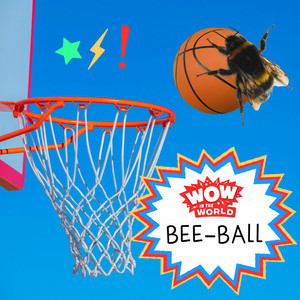
At least that's what researchers from the Queen Mary University of London discovered when they studied a bunch of buff-tailed bumblebees playing a little game of b-ball.
That was a lot of words.
Yeah, and I liked most of them.
And I could go for a beef ball.
They're called meat balls.
So, Mindy, are you saying that scientists discovered that bees play for fun?
Well, I could tell you...
Yes?
But I'd rather show you.
Is it presentation time, Mindy?
It sure is, Dennis.
Okay.
Places, everyone!
Places!
Um, where are our places, Mindy?
Okay, just follow my lead, everyone.
Reggie?
Turn down the lights in the, uh, arena, please?
What is it?
The story begins in the year 2017, when a group of scientists at the Queen Mary University of London conducted research that showed that bees could be taught how to play soccer.
Bees?
Soccer?
That's right.
Wow, that's weird.
Um, psst.
Mandy, are we supposed to be playing soccer?
Oh, yeah.
Here, Dennis, catch this bowling ball.
Ah, midday!
I'm not kicking that.
Now, as I was saying, these researchers had discovered that bees, or at least buff-tailed bumblebees found all over Europe, could in fact play soccer.
Or as I like to call it, b-ball.
What?
Why?
Because we're bees.
Oh, I get it.
Do you get it, guy?
B-ball? for bees?
Yes, Dennis, I get it.
Just keep playing, Dennis.
It's part of the presentation.
Right.
Buzz, buzz, buzz.
I'm the baby.
Someone pass me the ball.
Wait, hold on a minute.
Is this what these soccer games... I mean...
Bee ball games looked like some bees pushing around a bowling ball?
Well, yeah, kind of.
They looked like bumblebees pushing a tiny wooden ball the size of a marble, until they scored a goal and won an award.
An award?
Well, more like a reward.
Aha!
Now I would say this sounds like a productive use of their time.
I mean, they were wise. working towards something.
They literally had a goal to meet.
That's a little different from just playing for playing's sake.
Yes.
Speaking of which, I've set a goal to get my doors cleaned by the end of the day, and Not so fast, Guy Raz.
There's more.
There's more?
Hey, Mindy.
How much longer do we have to do this?
Where?
Let's go!
Where's my beef?
Where's the beef?
Uh-oh.
For the 50th time, there is no beef.
What?
Not cool.
Everyone, take five and get on the sidelines, okay?
Okay, okay.
So, Mindy, you were saying that there's more to this story?
Oh, yes.
That's right, Guy Raz.
There's more.
More than bees playing soccer and scoring goals in return for rewards?
Oh, yeah.
So while studying these bees playing soccer, the researchers discovered something interesting.
Something unexpected.
Go on.
They discovered that the bees on the sidelines, the bees not in the game, were also rolling balls around.
Huh.
Not to score goals and get rewards?
Exactly.
And it was in this moment of discovery that the researchers hatched a hypothesis.
Oh, did you say hypothesis?
Like an educated guess?
That ain't right, Fingerling.
You're oversimplifying it.
Nuh-uh.
Uh-huh.
A hypothesis is a supposition or proposed explanation made on the basis of limited evidence as a starting point for further investigation.
Oh.
Wow, Grandma G-Force.
Yeah, I am in a state of disbelief.
Did someone say beef?
No!
Where's the beef?
So, Mindy, about this hypothesis or educated guess?
Oh, yeah.
So, after seeing the bees playing on the sidelines and not for any rewards, the researchers came up with the hypothesis that maybe, just maybe, The bees were playing just for fun.
Exactoritos, Guy Raz!
Wow!
I know that other animals like bees and dogs play just for the sake of having fun, but insects?
Bees?
Okay, so that was 2017.
Now we need to fast forward to 2022.
And it was time to put that hypothesis to the test.
An experiment?
You know it.
An experiment in the form of another game of b-ball.
You mean soccer?
Yeah, whatever.
Should we get back in the arena now, Mindy?
Yep.
Should I go get Baby Dennis so he can be Baby Baby Bee Dennis?
No!
So Mindy, before these researchers could experiment with another game of bumblebee soccer, It's bee ball boy.
Oh, right, sorry.
Before they could experiment with another game of bee ball, did the bees have to establish any rules of the game?
Well, yeah, but I guess you could say it was more along the lines of...
The rules of play.
The rules of play.
So, in order to determine that the bees were playing and not just working toward a reward, the play had to match a few pieces of criteria.
Criteria?
Yeah.
So, for example, in order for the behavior to be considered play, it had to be voluntary.
Buzz, buzz, buzz.
This is so much fun.
I would do this even if Mindy didn't tell me to.
It had to be spontaneous.
Hey, watch me pop this ball with my bare hands.
But, Chief Horse, there ain't no air in a bowl.
Boo-yah!
Um...
And the third rule of play is that it had to be rewarding in and of itself.
Okay, so just to recap, in order for it to be considered play, it had to be voluntary, spontaneous and rewarding in and of itself.
Yeah.
In other words, it couldn't be for any immediate purpose like finding food or shelter or a mate.
You know, stuff that's not as much fun, feels kind of like work.
Okay, got it.
So how did the experiment work?
Okay.
So there were actually a couple of experiments, but for one of them the researchers put 45 bees into a tiny bee-sized arena with a clear path leading to a feeding area full of food.
Whoa, look it over there.
Beef.
Oh.
Well, well.
OK.
And on the other side of this path, there were a bunch of colorful wooden balls.
Forget the beef.
Look what I found over here.
Colorful balls.
Oh, that is also interesting.
On one side, the balls were glued to the ground, making it impossible for them to move.
I can't move them.
Wait.
What in the world wide web is wrong with these balls?
But on the other side, the balls were loose and ready to roll.
Ooh, there's more over there.
Let's try those.
And let me guess, the researchers gave the bees two choices.
They could either stay the course on the path leading to the food or they could get off course and play with the balls.
You know it, Guy Raz.
And can you guess what those bees did?
Buzz, buzz, buzz.
Guy, look at us.
We're having a ball.
I'm going to guess that the bees ventured off course to play with the balls.
Tree force, I'm open.
Pass me the ball.
It's bee force to you, fingerling.
You know it, Guy Raz.
And the bees did this anywhere between one and 44 times over the course of a day.
Buzz, buzz, buzz.
I love this so much.
Oh, yeah.
I could do this between 1 and 44 times a day.
One bee played with the balls 117 times over the course of the 18-day study.
And because they weren't trained to play with the balls in exchange for food.
This behavior suggests that the bees choosing to play with the balls was voluntary.
Yes.
Spontaneous.
Yes.
And rewarding in and of itself.
You got it.
Playing for the sake of play.
The play was the reward.
It's almost like the whole purpose of play is just to have fun.
Turns out there's a lot we can learn from bees, huh, Guy Raz?
You know, maybe you're right, Mindy.
Okay, Tommy.
You and me are going to stand at one end of the room and Grandma Bee Force is going to try to knock us over with the bowling ball.
Oh, okay.
All right, B-Force.
We're ready.
Okay.
One, two... Wait.
What?
Wait for me.
Huh?
Mindy, do you have another B-Suit I could wear?
Oh, uh, let me check my costume in here, Guy Raz.
Uh... Oh, I know.
Let's see who can balance on a ball the longest.
Well, okay.
Ooh, me first.
Hurry, hurry.
I gotta get in before the fun is over.
But I thought you said you had to wash your door or something productive like that.
Oh, you know, bean alphabetizing, door cleaning, all that can wait.
It's time to play.
Well, well, well.
Look who wants to play now.
Buzz, buzz, buzz, buzz.
Where, where?
I fell on my diaper.
Where?
Quick, Mindy.
I need a bee suit. cows behind.
Would that work for you, Guy Raz?
Uh, sure.
Could you help me put it on?
Okay.
Put your arms up in the air.
And I'm just going to squeeze it over your head.
Come on.
Stay still.
Come on.
There you go.
Zip it up.
Look at you.
Boy, you look like a big butt.
How did we do on the presentation, Mindy?
Yeah.
What do we get for doing this?
What do you get?
I think you're getting it right now, Thomas Fingerling.
Ooh, what is it?
Don't you see it?
You're getting to play.
You're having fun.
That's the reward.
Go ahead, Guy Raz.
Get in there.
Go play.
Come on, Mindy.
It's more fun if we all play along.
I guess you're right, Guy Raz.
Watch out, everyone.
I'm buzzing in.
Here you go, Mindy.
Hi, Rozby.
Wow in the World will be right back.
Grown-ups, this message is for you.
Hey, grown-ups.
It's Mindy and Guy Raz here from Wow in the World.
Mindy and I have some brand new Wow in the World toys out in the world just in time for the holidays.
Made for the kids who love science and for the ones who don't yet.
From our 100 experiments that Wow Kids...
To the telescope and astronomy kit.
Our Wow in the World toys help your Wowzer learn about their world through play your exclusive audio content from me and Guy Raz to help your wowzer discover even more wows.
Grownups.
Give the gift of wow and wonder this holiday season with our latest Wow in the World toys designed with your curious wowzer in mind.
You can shop our Wow in the World toys at Tinkercast.com slash toys.
That's Tinkercast.com slash toys.
That's it.
Back to the show.
Minnesota.
In my wildest world is that frogs can breathe through their skin.
Say hi to Dennis.
Howdy.
Grandma G-Force.
And Reggie.
Oh, and Dennis.
Yes?
What do you call the pig that wants to learn karate?
A pork chop.
Hi, Mindy and Guy Raz.
My name's Adeline.
I live in Soldotna, Alaska.
My wildest world are sunflower stars.
They are very very big and they can move up to 5 to 10 feet per minute.
They are also very big.
My teacher got to hold one once.
Bye Mindy and Guy Raz.
Hello, I'm Grace and I'm from Maryland and my law in the world is a cloud can weigh around a million pounds.
The average cumulus cloud can weigh one million pounds, and that is as heavy as the world's heaviest.
My wow in the world is that bamboo is one of the fastest growing plants on Earth and that it's also one of the least nutritious.
Say hi to Dennis and Reggie for me.
I love your show.
Bye.
Hi there.
Hi, my name is Ollie.
I am from Denver, Colorado.
And my wow in the world is that Ingenuity is the first helicopter on Mars.
Hi, Mindy and Guy Ross.
My name is Theo and I'm eight years old and I live in Waxhaw, North Carolina.
Did you know that the sunlight you see out the window was out the sun eight minutes ago?
I love your show.
Say hi to Bucky, Reggie, and everyone else.
Hi, Minnie and Guy Raz.
My name is Alex, and I'm from Rochester, New York.
My wow in the world is that there are bees that live in the Arctic.
Say hi to Reggie, Thomas Fingerling, Grandma G-Force, Dennis, the sleigh cat.
Hi, Mindy and Sarai.
My name is Maddie.
I live in North Carolina.
And my wow in the world is that four is the only number to have the same amount of letters in its name.
Say hi to Dennis, Reggie, Thomas Fingerling, Grandma G-Force, and Bucky Fermi.
Ah, hush puppies. being Guy Raz.
My name is Emerson from Appleton, Wisconsin.
My Wow in the World is that Taylor Swift has a millipede named after her.
Narnia Swift Day.
Bye.
I love your show.
End of messages.
Wow in the World is written by Mindy Thomas and Tom Van Kalken with help from me, Guy Raz.
Original sound design and music editing is done by our supervising producer, Jed Anderson and Tyler Thull.
You can also hear Jed Anderson in the voices of Dennis Thomas Fingerling, Reggie and many of the other silly characters you hear on our show.
Jessica Bode keeps our facts straight as our fact checker, and Meredith Halpern-Ranzer powers the wow at Our theme song was composed and performed by three-time Grammy nominees, The Pop-Ups.
Find them at thepopups.com.
Special thanks to Steph Sosa, Henry Moskal, Ruth Morrison, Rebecca Caban, Kit Ballinger, Sana Ali Muhammad, Anna Zagorski and all of the other tinkerers at Tinkercast HQ.
To keep the wows rolling, visit us at tinkercast.com.
There you can learn more about becoming an official member of the World Organization of Wowzers.
Learn about upcoming events, shop our Wow shop, find our best-selling books and learn about all of our other amazing podcasts from Tinkercast.
Grown-ups, you can follow Wow in the World on Facebook, Instagram, and Twitter at Wow in the World.
And our email address is hello at Tinkercast.com.
And if you're a kid with a big wow to share with us, call us at 1-888-7-WOW-WOW for a chance to be featured at the end of our show or an upcoming episode of Two What's and a Wow.
Thanks again for listening, and until next time, be fun wowing!
Wow in the World was made by Tinkercast and sent to you by Wondery.