This message comes from Carvana. Why spend time wondering what your car is worth?
Instantly track its value on Carvana Value Tracker.
Answer a few quick questions and stay up to speed on your car's value.
Hey, it's Marielle. I have friends and family in a lot of different places, and I like to visit them, which means I've had a lot of experience staying at other people's houses.
I've slept on couches, in guest bedrooms, on a partly deflated air mattress in a cold, unfinished basement with a spider hovering above me, in a host's bed with them — we were best friends — and without them, they insisted.
The sleeping situation has really varied, and the expectations of me as a guest have varied, too.
When I'm visiting family outside of New York City, they expect me to stay over, even if we didn't plan for it.
And if I ask for permission to, say, use the laundry machine or eat something in the fridge, it's almost an insult.
Don't you know this is your home, too? Mi casa es su casa is baked into our family culture.
Other folks are not into that kind of spontaneity and they would rather have you ask permission.
They just have more boundaries around their space.
So when it comes to being a good house guest, there are no hard and fast rules.
But Elaine Swan says she can offer some etiquette guidelines.
Etiquette really has to do with how we make other people feel.
The core value of it is how are we impacting other people?
Elaine is a lifestyle and etiquette expert who's been working on her craft for more than two decades.
She trains people and companies on social courtesy through her consulting firm.
And she even has an upcoming book aptly named Elaine Swan's Book of Modern Etiquette.
Here's a starter tip from Elaine as an example.
One of the ways that you can get invited back as a house guest is number one, etiquette.
Make sure that you are very, very mindful of the footprint that you bring.
So do not overpack. Think about making sure that you are not hauling in too many items.
So keep everything contained. So on this episode of Life Kit, reporter Andy Tegel talks to Elaine about how to be a great house guest.
Whether your college roommate is letting you couch surf for a long weekend or you're taking the kids to your aunt's house for that big family reunion, they've got advice on how to make sure your presence is a gift and not a chore.
This message comes from BetterHelp. With all the talk about mental health and wellness these days, it can feel like there's advice for everything.
But how do you know what actually works for you?
BetterHelp therapists have a 4.9 rating from 1.7 million client reviews.
So you're in good hands with their licensed therapists who can help figure out what's best for you.
Visit betterhelp.com slash NPR for 10% off your first month.
This message comes from NPR sponsor, U.S.
Bank. With U.S. Bank Business Essentials, you get more than just a bank.
You get a dedicated partner that provides you a powerful combo of checking and card payment processing with quick access to the money you've earned, proving that there is nothing as powerful as the power of us.
Visit usbank.com today to learn more. Member FDIC.
Copyright 2025 U.S. Bank. This message comes from NPR sponsor Holiday Inn by IHG.
It's a new day for a new stay at Holiday Inn for business travelers.
With modern spaces for meeting and working, plus delicious dining from breakfast to happy hour and dinner, you have everything you need to get work done.
Give your everyday business travel an upgrade.
Book your next business trip at Holiday Inn by IHG.
Visit HolidayInn.com to book your stay. This message comes from ServiceNow.
People should do the creative work they actually want to do, not boring busy work.
Now with AI agents built into the ServiceNow platform, you can automate millions of repetitive tasks in every corner of your business, IT, HR, and more.
So your people can focus on the work that they want to do.
That's putting AI agents to work for people.
It's your turn. Get started at servicenow.com slash AI dash agents.
Do you have any hard and fast rules on who you should or should not stay with?
If you do not know the person well enough to invite them to your own home, then that's likely a home that you should not go and stay at.
I think that's a great barometer to look at to say, you know what, is this somebody that I would invite to my house to stay over and stay with me in my home?
And if they are not, it's likely not going to be the best person for you to stay with as well.
So your barometer would be your own comfort level.
Good start. Okay. And what's the best way to prepare a host for your arrival?
Like how far in advance should you ask to stay with them?
Give them at least three to four weeks in advance so that they can prepare their home.
And whatever dates you're going to stay that you need to stay, do not shift it and change it.
If you say you're going to stay for three days, then you stay for three days, no longer than that.
And so give the person as much advance notice as possible.
Try not to do last minute stays unless there's some sort of emergency.
So three to four weeks if it's planned, that two week marker is kind of your big cutoff there unless it's an emergency.
Is there such a thing as too much time? I don't think there's too much time because this is almost like a save the date card.
You know, sometimes you can look at it from that perspective and say, hey, you know what?
I'm going to be in your area sometime in the summer.
I'm not quite sure when, but I just want to know when I get there.
Is it all right if I stay with you? I can give you details as we get a little closer to it.
Okay. What other information should you ask for or provide them with before?
The other information a guest should always provide for the host is whatever their dietary restrictions are.
And what I mean by this is not things that err more so on the side of preference in terms of lifestyle.
I more so mean things that have to do with something that could create some sort of health crisis.
So if you have allergies... to something that can impact you negatively.
If they have pets, are you allergic to them?
That sort of thing. So let the host know things that can impact the entire visit from an emergency perspective.
Okay. Before arrival, you should check in with someone.
Okay. Before, you should always let the person know before your arrival.
For example, I'm deathly, I'm EpiPen allergic to shellfish.
So that's something that I would let the host know well enough in advance.
So this way they don't say, you know what, as a welcome reception, we decided to do a seafood boil.
Really important. Okay. Elaine, is it ever okay to ask someone to stay without an explicit invitation first?
Yeah, I think it is absolutely acceptable to ask to stay at someone's house.
It is especially, and here's where, again, we look at that barometer and we see, okay, is this a person that I would have stay at my house?
And so if your answer is yes, and that means you're likely close enough to that person to say, hey, listen, I'm going to be in town.
The only thing is anytime you ask a person a question, you want to make sure that you're prepared for the answer to be yes or no.
And you accept and you respect whatever the answer is they've given.
And don't be presumptuous. Your ask should really be an actual ask, but I believe it is acceptable to ask.
This is the thing that's so important. And I think we want to really kind of get back to this is for people to really have that connection with one another and just staying with family and friends and and breaking bread together and sharing that time is such a wonderful thing to be able to do and I believe that it will fortify us as individuals as human beings and that goodness will trickle out into our society we need more of that Takeaway one, a stay in someone else's home should be a comfortable affair for all involved.
That means don't just ask to stay with anyone.
And also, you don't have to be shy with the people you do feel close enough to bunk with.
Give any potential host as much notice as possible when you're coming into town.
And then, take away two, get rid of any guesswork for both sides as best you can beforehand.
Run the potential details of your trip by your host.
And allow them the chance to opt out, pull back, or tell you what they might need to make that visit work.
And be proactive in your planning. Don't assume any host roles or responsibilities.
One prime example? Transportation. Make sure that you do not rely on your host for transportation to and from or what have you.
So if you don't rent a car, don't then, you know, utilize a ride share service or what have you.
But don't expect them to take you to and fro and don't build them into your schedule.
Oh, I'm here for this such and such event.
Will you take me here? Will you take me there? do not impede on their personal schedule.
Instead, make sure that you are self-sufficient.
That's the best way to be a house guest is to be very, very self-sufficient.
If your plans aren't based around a specific event or occasion, Elaine says there's an ideal amount of time to stay with someone else.
A good number typically is three days or four days, if you will, and three nights, right?
A long weekend type stay is a good sweet spot, she says.
It's long enough to get quality time, but short enough that it's over before frustrations can set in or your host feels crowded.
It can shift based upon the occasion. And this is when we're looking at, for example, holidays.
Sometimes holiday stays tend to be longer.
If you are staying with someone and you're there and it has kind of nothing to do with them meaning it's not a holiday it's not something where you're all getting together and your purpose is to visit then but sometimes people are coming into town because there's a convention going on but you've got a really great friend that you thought well you know what instead of me staying at the hotel i may as well stay with my friends so we can get together and enjoy ourselves then this is where you really want to be careful.
That three-day maximum is about that cutoff.
Unless it's an open-ended thing. Sometimes people will say, hey, you're coming for the summer, stay as long as you want.
And I imagine we should also adjust for like the size of your party, the size of their home, the size of their family, etc.
I think there's a lot of factors that come into play based upon the length of time that we stay.
If you have a large footprint, meaning you've got family, you've got little ones, you know, the age of your little ones has a lot to do with it as well.
Infants and toddlers, they have a mind and voices of their own and you can't always control that.
And so this is where you really have to be mindful of the length of stay so that it does not impede the lifestyle of the folks that you're visiting with.
So Those are all factors. And, you know, get clarity.
Ask questions. Listen, I'm interested in staying between these days and these days.
Is that OK if I stay with you all of these days because I'm going to be in the area this time frame?
Or is it less? Allowing the person to make that decision, giving them the open opportunity to say, oh, you're going to be in town for five days. you know what, three of those days would be okay or two nights would be all right, but the rest of the time that we've got some other things going on.
So really allow your conversation to flow.
But as the potential house guest, it is important for you to make sure that the person feels comfortable sharing their perspective and their heart in terms of how long they want you to stay.
Let's talk about gifts when you arrive. I was always taught to never show up to someone else's house empty-handed, but I know that what people see as an appropriate gift can vary wildly, and getting it wrong can make both sides feel uncomfortable.
Any guidelines there? Gift-giving as a house guest is really unique, and I think it's something that should be well thought out.
But people should not go overboard when they're thinking about what to bring for a person.
If you arrive with nothing in your hand to start with, that's okay.
But your purpose should be to go on a reconnaissance mission while you're in that house and to look around and see what's important to that host.
You know, you might see that they love little kitchen gadgets and you think, okay, well, while I'm here, I'm going to make sure that I order and have it delivered or go out and purchase it and pick it up.
Some cool, you know, little, you know, bottle opener, can opener, you know, garlic press or something like that.
Contribute to the household while you're there because in some form or fashion.
It could be dish towels or something. Just make sure that you do, if you don't physically bring the gift with you, make sure while you were there, a gift is delivered to them either by hand or by delivery itself.
Which brings me to my next point. Ask the host, is there anything I can bring to the house?
Is there anything you need when I come in?
I'll be driving in from the airport. Is there anything I can bring to the house? so that this way they can either accept or decline.
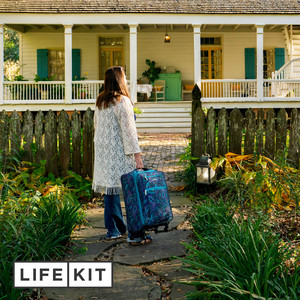
And as one of the ways that you can get invited back as a house guest is number one, make sure that you are very, very mindful of the footprint that you bring.
So do not overpack. Think about making sure that you are not hauling in too many items.
So keep everything contained, but don't feel as though you have to keep such a small footprint that you literally disappear and not allow yourself to be present and connected in the home.
Instead, get in sync with the household itself so that you can spend time with the folks who are there.
And I think they would appreciate it. I love that.
We can be considerate of the people that we visit with.
But if you're there to spend some time, make sure to spend some time.
Takeaway three, pretty simple. Consideration is key.
That means cleaning up after yourself, helping out where you can, maybe offering to do the dishes or take out the trash.
Treat your host to a meal. Most important, Elaine says, is to sync up to the flow of the household.
Are your hosts early risers, for example?
Does everyone change out of PJs before breakfast?
When you're a house guest, she says, you want to be your best, most respectful self.
Even if you're offered that old line, make yourself at home.
Elaine says, generally speaking, this line means don't expect to be waited on hand and foot.
So they want you to fend for yourself. If you're hungry, that host wants you to go in there and make yourself something to eat.
So when they tell you to do so, then follow through.
But also, don't be too literal here. Sure, maybe you don't pester them every time you want a drink of water or need an extra napkin, but you wouldn't want any guest in your home, say, rifling through your medicine cabinet or leaving their breadcrumbs on your couch.
You still want to have that reverence for the fact where this is not really your home.
I'm going to make myself at home by making a sandwich, but I'm going to clean up after myself as well so that this way I'm not leaving a big footprint in a person's house.
Elaine, what rights should a guest have or speak up about in another person's home?
Maybe, I don't know, maybe someone has a pet and you're not like super allergic, but you don't really want to sleep with their dog all weekend in your bed.
Are you allowed to push back against your host for those types of things?
An individual is certainly allowed to make a request of their host.
Okay. But be prepared for the answer. So let's say, for example, a person has a pet and they go, well, this is Fido's room and he loves the room, but we're going to make it your room while you're here and you're sleeping with the dog.
And you don't have to necessarily be allergic.
It just may not be something that you're most comfortable with.
And so say to the host, you know, I'm really not comfortable sleeping with the dog.
Can we put the dog somewhere else? If they say yes, great.
If they say no... Then you now have to make a choice.
You either stay with the dog in the room or you cut your visit short and make your accommodation somewhere else.
Another question I have, I often have, is what I should bring versus what I should assume my host will have ready for me.
But like when I stay with my sister, I always use her towels.
I use all of her bath products. I never think twice about it.
But Elaine, should I? Am I actually being the worst in that scenario?
You're not being the worst in that scenario.
In that particular scenario, especially because it's your sister, then she's probably so excited to have, you know, all of the wonderful things.
I'm telling you, I love, love, love, love, love to host.
And so when I know someone's going to stay at my house, I get super excited because...
You know, I fill the bathroom with all kinds of things and so forth.
I have a little welcome basket for them and everything.
Items, I would say specialty toiletries that you have for yourself.
Definitely bring those items unless you have a close enough relationship to where you can use what they have.
The amount of stuff that you bring has to do with how well you know your host.
Helpful. What about appliances? Like asking to do a load of laundry or two before traveling home or using their hairdryer, that kind of thing.
Same general barometer? It's acceptable to use appliances while you're there.
And I'll tell you why it's a good idea to do laundry, because if you know you're going to go and you're going to do laundry, that means you're packing less stuff and you're not bringing as much stuff to their house, which is a great thing.
So that laundry aspect is good because that means you're not taking up as much space in their closets and their drawers.
Elaine, what subtle cues otherwise might people be missing that they've offended their host or otherwise committed an etiquette crime?
Anything that people should look out for?
Yeah, one of the things that you want to start to look out for is if the host starts to somewhat withdraw, meaning when you first arrived, they were, you know, you were having those really great lengthy, you know, talks up late or what have you.
And now that person is beginning to withdraw a little bit.
They're spending a little more time on the other side of the house or in their room or away.
That's a very good indication that they are ready for separation and that separation would be your time to depart.
Yeah. So what do you do in that situation?
What's the best way to address it when you've slighted your host in some way?
Well, the best way to address it is to give them a hard time frame to say, you know, just to let you know everything is on track for me to leave on Tuesday.
So I just wanted to let you know, is there anything I should do?
You start giving them the cue of the fact that you know that it's time for you to go.
It gives them a sense of, OK, so you might see them get a little more giddy because they're thinking, OK, time is coming to an end.
Okay, so you don't need to write the wrong.
You don't need to like figure out what the specific problem is.
No, not at all. You just need to make sure that you stay on track.
When you see that withdrawal happening, that means, okay, they're about ready.
And so that means that you should not ask to stay longer.
And last but not least, takeaway four, leave on a good note.
Stick to your agreed upon dates and times and respect the rules of the house until then.
Leave the place cleaner than you found it.
Elaine says stripping the bed is a thing of the past, but it probably doesn't hurt to ask what your host prefers if you feel unsure.
The best way to end your visit on a positive note is to make sure there is an actual end.
So informing the host of your time of departure and following through on that Making sure that you have that hard goodbye is so important.
Don't just kind of disappear into the night and say, well, I told him I was going because now we're treating the person like a hotel, but it's not.
And then follow up with a thank you to let the person know that you appreciate the fact that they allowed you to stay there.
Elaine Swan, it's been a pleasure. Thanks so much for your time.
Oh, it's my pleasure. Thank you so much for having me.
Okay, let's recap. Takeaway one, being a guest in someone's home should be a treat for both sides.
So don't be afraid to ask for or offer a stay with a loved one.
Just provide enough planning time in advance to make it a good one.
Takeaway two, get rid of the guesswork beforehand by running trip details by your host.
Do those dates work for you? Do you wanna join us at the theme park?
Are you sure you're all right with the whole family staying with you? the baby isn't quite sleeping through the night.
Take away three. When you're a house guest, aspire to be the best, most respectful version of yourself.
Mind your manners, clean up after yourself, and sync up to the flow of the household.
That means no sleeping till noon if everyone else is up by eight.
And finally, takeaway four, the best way to leave on a high note is not to overstay your welcome.
Head out when you say you will. Leave the home cleaner than how you found it.
Thank your host for their hospitality. And if you followed all the other takeaways, wait to be invited back soon.
That was LifeKit reporter Andy Tegel talking to etiquette expert Elaine Swan.
For more LifeKit, check out our other episodes.
We have one on texting etiquette and another on tick bites.
You can find those at npr.org slash life kit.
And if you love life kit and you want even more, subscribe to our newsletter at npr.org slash life kit newsletter.
Also, if you want to send us episode ideas or feedback or say something nice to us, email us at life kit at npr.org.
This episode of LifeKit was produced by Claire Marie Schneider.
Our visuals editor is Beck Harlan, and our digital editor is Malika Gharib.
Megan Cain is our senior supervising editor, and Beth Donovan is our executive producer.
Our production team also includes Margaret Serino and Sylvie Douglas.
Engineering support comes from Jimmy Keeley and Damian Herring.
I'm Mariel Segarra. Thanks for listening.
This message comes from Ritual. What makes Ritual Vitamins different?
Ritual Vitamins are made with bioavailable, clinically studied key ingredients and a patented nutrient delivery system that aims to help your body use the nutrients you're getting.
Ritual's essential multivitamins are made with you and your body in mind and backed by scientific research, filled with key ingredients as well as the essence of mint so you can enjoy taking your vitamins.
Get 25% off your first purchase when you visit ritual.com slash NPR.
Congress has approved a White House request to eliminate federal funding for public media.
NPR remains committed to our mission of informing the public, increasing your understanding of the world, and enriching everyday life.
But without federal funding, we are relying on your support now more than ever.
Please give today at donate.npr.org.