This BBC podcast is supported by ads outside the UK.
If journalism is the first draft of history, what happens if that draft is flawed?
In 1999, four Russian apartment buildings were bombed.
Hundreds killed, but even now we still don't know for sure who did it.
It's a mystery that sparked chilling theories.
I'm Helena Merriman and in a new BBC series I'm talking to the reporters who first covered this story.
What did they miss the first time?
The History Bureau, Putin and the apartment bombs.
Listen on BBC.com or wherever you get your podcasts.
Available now on the documentary from the BBC World Service.
China is developing its ambitious polar silk road through the cold and volatile waters of the Bering Sea that borders both Russia and the United States.
Join me, Anna Hulligan, as I travel to Alaska to explore why China is increasing its presence around America's last frontier.
Listen now by searching for the documentary wherever you get your BBC podcasts.
This is the Global News Podcast from the BBC World Service.
I'm Celia Hatton, and at 16 hours GMT on Thursday, the 15th of January, these are our main stories.
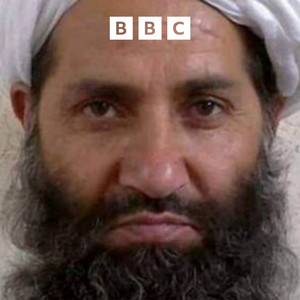
An exclusive BBC investigation in Afghanistan reveals a split at the top of the ruling Taliban.
Videos and voice messages from Iran show the extent of the government's crackdown on protesters.
And the social media platform X announces new rules for its AI chatbot Grok over the creation of sexualized images of real people.
Also in this podcast.
Uganda's general election faces widespread delays as President Museveni seeks a seventh term.
And... Dragon, SpaceX, we see splashdown.
On behalf of SpaceX and NASA, welcome home, crew 11.
Four astronauts are back on Earth after the first ever medical evacuation of the International Space Station.
In the last edition of this podcast, we brought you an exclusive BBC report on a split at the top of the Taliban in Afghanistan.
In a leaked recording, the group's supreme leader, Haibatullah Akanzada, warns that the divisions could bring down his government.
The story is the result of a year-long investigation by the BBC's Afghan service.
And now we want to bring you more details from one of the journalists who worked on it, Zia Sharir.
He told us that, while the Taliban has denied the split, it could have huge ramifications for the 44 million people within Afghanistan and how they experience the Taliban's harsh rule.
The Taliban are a very secretive government, one of the most secretive, with a leader who is not showing his face and do not speak.
Come out, pictures are not taken from him.
So what we tried to do was to look into their daily operations and how they are governing Afghanistan.
But also last year, there was a leaked audio that we obtained in the BBC.
And in that audio the leader of the Taliban expresses concern about internal division inside the Taliban.
His concern talks about the differences inside the Taliban that could eventually topple down their government.
Within the body of the government, they will set people against one another.
They will criticize each other so that the system becomes weak and divisions increase.
As a result of these divisions, the Emirate will be destroyed and will simply come to an end.
So our one-year investigation was focused on finding out what are these differences and who are opposing each other inside the Taliban government.
And we found out that In fact, there are two groups.
One is based in Kandahar, led by Hebatullah Khunzada himself.
The Kandahar group is loyalist to the leader who are pushing and supporting the radical and extremist policies that Hebatullah Khunzada is pushing across the country, particularly on women education and women's work, but also in relation to their relationship with the world.
They are more into isolationist policies and also the strict implementation of the Sharia law or the morality law, which is a major source of difference between the two groups, and also the concentration of power.
So they're concentrating a lot of power in Kandahar.
The leader is in charge of pretty much everything in the government.
But then we have the Kabul group, consisting of the defense minister, interior minister and the deputy prime minister.
The most famous of them are Saroj Deen Haqqani, who was once the leader of the Haqqani Network, a very feared militant group.
But now he's sort of showing, and also a group around him showing more interest into moderate policies, particularly again into female education.
And also they are not happy about the concentration of power in Kandahar.
They think that the ministers are being overlooked by the leader in Kandahar.
And they are also supporting active interaction with the international community.
OK.
So now that we're aware of this apparent division within the Taliban, this lack of unity, what difference could this make for people living in Afghanistan?
It's a very important question, I think.
And what we've tried through this investigation, to first of all, take the people and the people of Afghanistan into, who are ruling them, because there is a lot of should I say secretive, or there are secrets ambiguity.
They're not very sure who are ruling them because they cannot see the leader.
Because we have audiences.
We have people who say that Hebatullah Khonsada doesn't exist at all because he doesn't show himself.
So through this piece, we first confirm that he does exist.
But we also go into, through eyewitnesses, through our sources, into his meetings, into his daily operation in Kandahar.
How does he talk to people?
Where does he go?
What's been the Taliban's response to your reporting?
So the Taliban main spokesman, Zabirullah Mujahid, responded to our questions and he denied flatly that there is any internal division among the Taliban.
He said we are aware of what a division would do to the Taliban or to any group or to any government.
But he did say that there are differences of ideas inside the government and, just like as he put it, members of family who have differences on different things.
But he said no division.
Well, to Iran now.
The state now claims there is calm on the streets after weeks of angry protests, though human rights groups say thousands of people were killed to bring the demonstrations to a halt.
Donald Trump's threat to take action and even use lethal force in support of protesters still looms over Tehran.
Iran closed its airspace for five hours overnight.
And its foreign minister has urged the U.S. president to choose diplomacy, not war.
Where does that leave the protesters?
Iran has not allowed foreign journalists into the country, and a communications blackout has made it difficult to speak to people there.
But Jiar Gol of BBC's Persian service has been piecing together videos and messages from protesters – to gain a fuller picture of the violence they've faced.
In a video recently emerged from Tehran shows paramilitary loyal to the supreme leader, the Basij, alongside anti-riot police chasing young protesters through the streets.
As they run, the security forces are firing their weapons.
This explains why so many young men and women have been shot from behind, often at close range.
With a total internet shutdown across Iran, communicating with the outside world has become extremely difficult.
Only a small number of people using Starlink satellite connections have been able to reach us.
Images emerging from Iran are harrowing.
One shows a woman in her late 40s, dressed in black, standing in shock and grief among rows of body bags, searching for her loved one.
We have received many messages describing what is happening in different cities.
To protect their identities, we have broadcast these voices anonymously on BBC Persian.
One young man contacted us from a small town in Gilan in northern Iran, a place where people usually turn off their lights early in the evening.
He said, there were protests with fear and hope.
We were all together.
Then suddenly it escalated.
Another woman from the same town told us that around 2 a.m. that day, they heard gunshots.
At first, there were two casualties, but by 4 a.m., the number of victims had risen.
Images we have seen from open-air morgues show families lining up desperately searching for loved ones.
Meanwhile, security forces and Revolutionary Guards Intelligence Unit have been arresting people across the country.
The Islamic Republic has released images of dead protesters, but claims they were killed by terrorists.
If we want to do this, we have to do it quickly.
On state television, security and judicial officials appear one after another, warning that they will show no mercy to anyone accused of rioting or damaging government or private property.
Every day, every hour, the number of dead continues to rise.
We can say with confidence that thousands of young men and women have been killed in these recent protests.
A level of violence against protesters that is unprecedented in modern Iran.
Elon Musk's AI bot Grok has angered a lot of people over the last few weeks.
The strong reaction came after Grok began allowing users to digitally alter people's photos to reduce or remove their clothing.
The feature was even being used on images of children, and that sparked outrage and legal scrutiny in many countries.
At first X, the platform that features Grok, responded by saying that paid subscribers would still be allowed to access the feature.
But now X says that kind of digital editing will no longer be available in parts of the world where it's illegal.
Our Asia business correspondent Nick Marsh spoke to Sally Bundock.
This is probably the strongest and most detailed response that we've had from X on this issue so far.
I think it's fair to say that until now, its actions, its responses have been fairly piecemeal.
But now it says yes, it will block users from Digitally undressing women you know, real life women in photos, creating sexualized material of minors and that sort of thing.
In its statement it says that X has a zero tolerance for any forms of child sexual exploitation, nonconsensual nudity and unwanted sexual content.
Interestingly though, this all applies with the caveat of X, whether these are deemed illegal in your jurisdiction.
Presumably if these things creating unwanted sexual content that is are not illegal in your jurisdiction.
The users are still free to do that using grok.
And the same goes for creating sexual content with grok of imaginary humans.
That is still very much allowed.
But this is definitely the strongest and the most detailed response we've had so far.
And here in the UK we've seen a lot of reaction to this from the government, from the watchdog as well.
What about where you are in Malaysia, Indonesia?
They've actually just banned it, have they?
Yeah, they banned Grok over the weekend.
They were the first countries in the world to do so.
And obviously, as you say in the UK, there's an investigation there with the regulatory authorities.
We've seen the same in France, in India as well.
And then most recently, California's attorney general said that he'd be investigating Grok.
And actually it was very shortly after this announcement in California that that Grok came out with this statement saying that they would be taking much stronger action against this kind of content.
This has been a controversy that's been bubbling up.
It's sort of bled into the political sphere a little bit as well.
We know that Elon Musk has had his differences with Keir Starmer, the British prime minister.
And interestingly, until now and we haven't had any direct comments on these new actions taken by X from Elon Musk, But it was only a few days ago that Elon Musk was calling any criticisms of Grok or any concerns an excuse for censorship and limiting free speech.
So we'll see how these new restrictions are implemented and how thoroughly they're rolled out across the world.
Nick Marsh in Singapore speaking to Sally Bundock.
Still to come in this podcast, the hottest topics on Wikipedia.
Britney Spears, Donald Trump and Jesus are among the most edited individuals, racking up tens of thousands of amendments over the years.
The world's favourite online encyclopedia celebrates its 25th anniversary.
If journalism is the first draft of history, what happens if that draft is flawed?
In 1999, four Russian apartment buildings were bombed, hundreds killed.
But even now, we still don't know for sure who did it.
It's a mystery that sparked chilling theories.
I'm Helena Merriman and in a new BBC series I'm talking to the reporters who first covered this story.
What did they miss the first time?
Listen on bbc.com or wherever you get your podcasts.
Available now on the documentary from the BBC World Service.
China is developing its ambitious polar silk road through the cold and volatile waters of the Bering Sea that borders both Russia and the United States.
Join me, Anna Hulligan, as I travel to Alaska to explore why China is increasing its presence around America's last frontier.
Listen now by searching for the documentary wherever you get your BBC podcasts.
Are you ready to embark on a journey of self-discovery?
Ride along with a father and son across America's 1960s Northwest in this BBC full cast dramatization of Zen and the Art of Motorcycle Maintenance by Robert M Persig.
This is a powerful examination of how we live and a breathtaking meditation on how to live better.
Evil spirit insane from a world without life or death.
He has come to take Chris.
Start listening to Zen and the art of motorcycle maintenance, available to purchase wherever you get your audio books.
This is the Global News Podcast.
To Uganda now, where logistical problems have delayed voting in presidential and parliamentary polls.
Officials say the issue lies with the failure of biometric identification kits and a lack of equipment.
Even the president himself, Yoweri Museveni, who's seeking re-election for his seventh term, said he'd experienced problems voting.
He's facing a challenge led by the former musician Bobby Wine, who maintains a stronghold in the poorer parts of the capital, Kampala.
Our correspondent in Kampala, Sami Awami, told me more about the problems affecting the start of voting.
The technical issues have delayed voting from starting.
The polls were supposed to open, or at least the voting should have started at 7 a.m.
But until 10, when we left several polling stations that we visited, voting had not started yet.
So I asked election officials at the centres what was the problem, and they told me they were failing or they couldn't configure the gadgets to connect the stations with the central system or the central polling station.
Were we expecting a big turnout to the election before we knew of these technical problems?
We've seen a lot of political party supporters in big rallies, like massive rallies.
Hundreds of people have been attending.
But there has always been a question about whether these attenders in campaign rallies would translate into actually people going to vote.
There are several people that I've spoken to here and then asked them whether they were planning to vote.
Quite a few of them expressed disinterest, really, not going to vote.
And they said, the winner of the election, especially the presidential candidate, is almost known already.
So they felt like there was no point for them to go out to vote.
But this morning, when I visited these polling stations, some of them had long queues, maybe over 100 people.
But the first one, especially the polling station where the opposition politician, the opposition presidential candidate, the main opposition presidential candidate, was going to vote.
There were less than 100 people and it's quite a big district.
You'd expect there would be many people there, but it was different.
Sammy, how free and fair is this election likely to be, given that there are major restrictions on President Museveni's opponents?
Well, that question really depends on who you ask, right?
If you ask the Electoral Commission, they've been assuring voters that they would manage these elections with utmost professionalism.
They would abide by with the law and making sure that whoever wins will be announced.
But again, when you ask the opposition and activists, they'll tell you otherwise.
And they said, you know, they point out to some of the experiences especially the opposition have had in the last few weeks, few months.
The opposition.
The main opposition party, the National Union Party, have said of the 700 of their supporters and senior leaders have been either arrested or disappeared.
There's one of the leading activists is in jail right now.
The former, you know, strongest opponent for President Obama, is also in prison, facing prison charges.
Even the main opponent for President Obama in this election, you know wears a bulletproof helmet, you know for protection because they said security has not been good in the country.
So If you ask the opposition activists, they'll cast doubt on whether this election will be free and fair.
But if the Electoral Commission has assured voters that they will conduct this with highest professionalism and abiding by the law.
Sami Hawami in Uganda.
In Thailand, questions are being asked about the dangers posed by all large-scale construction projects in public areas.
That's after a crane fell onto a passenger train on Wednesday that killing at least 32 people.
The crane was part of a major rail project to link the Thai capital, Bangkok, with southern China.
It was supposed to showcase the best of the two countries' engineering works.
However, Thailand's Structural Engineers Association is now calling for the suspension of major building projects in public areas.
This comes as two people were killed on Thursday after a second crane collapsed onto a highway in central Thailand.
Our correspondent Jonathan Head spoke to us from the scene of Wednesday's incident.
The day after the accident there's been a lot of activity down here as they've tried to clear away the rubble, the destroyed carriages.
One of the carriages is completely cut in half.
And the massive steel girders that came down off this high-speed railway line that they're constructing here down onto the passing train.
There have been a lot of heavy cranes coming in here, lorries taking out the debris from the accident.
At the same time, we've had visits from people inspecting, checking what might have gone wrong.
And some of the relatives have also come down here relatives of those who died on the train just to see the site of where it all happened.
There is an active investigation apparently ongoing.
The government ordered one immediately.
The railway authority says they expect to complete their first inquiry within two weeks.
But already people are raising serious questions about what was going on here.
One engineer saying that the train should never have been passing on the old line underneath this high-speed rail when they were carrying out the difficult manoeuvre of extending these gantries that help construct these elevated railway.
People are asking for answers and there's a big question about how much it's going to delay this already much postponed project, which is going to eventually link the Thai capital Bangkok, with China.
This is a prestige project.
It's meant to be a showcase of Chinese and Thai engineering working together.
Obviously, with what's happened here, that's a huge setback to the reputation of the people building this and indeed to Thailand's plans to modernize its infrastructure.
You can see these kinds of building sites and these kind of ambitious infrastructure improvements going on all over the country.
And we've heard that only today.
This morning, the day after the accident, there's been another very similar accident on a major road improvement project south of Bangkok, which suggests that there are lingering problems with safety culture in this country that still need to be addressed.
Jonathan Head.
Four astronauts have arrived back on Earth after their mission at the International Space Station was cut short because of an unspecified medical issue.
Their space capsules splashed down into the waters off the coast of California.
Dragon, SpaceX, we see splashdown.
SpaceX, Dragon, copy two curves, splashdown and mains are cut.
We are in 4.800.
SpaceX copies and we see the same.
Mains cut.
On behalf of SpaceX and NASA, welcome home, Crew 11.
This was the first medical evacuation that's ever been carried out since crews first started going to the station a quarter of a century ago.
The newsroom's Peter Goffin was watching the return.
It started with the SpaceX Dragon capsule, which looks, by the way, like a big metal cone, hurtling back into the Earth's atmosphere at around 190 kilometers per hour, deploying four parachutes and floating far more slowly down into the Pacific Ocean in total darkness.
This was the middle of the night local time.
Now, the capsule was met within minutes by a recovery boat.
It was hoisted on board.
And there was this great moment of suspense when the capsule door opened, medical staff and a NASA photographer crawled in and finally the first astronaut, Commander Mike Fink, emerged.
And then Zina Cardman, then the Japanese astronaut Kimia Yui and Russian cosmonaut Oleg Platonov emerged.
Now NASA has not said what the illness on board the space station was or which of the astronauts is affected.
We do know that if one person has to come back from the space station, everyone who arrived with them on the capsule has to go too.
That's their ride home essentially.
But today, none of the astronauts were vaccinated. visibly unwell.
Now, they don't come bounding triumphantly out of the capsule.
Astronauts never do.
They have to be helped onto a gurney and then wheeled away.
But that's because spending months in low gravity takes a serious toll on the body.
Astronauts need to regain their balance.
They need to build back muscle mass.
But otherwise, there were no visible signs of anything wrong with these four.
Peter, I do agree with you.
Watching the images of that capsule splashing down and then waiting for it to be reopened was pretty cool.
But it must have been a difficult moment for the astronauts who've had their mission cut short.
Yeah, bittersweet is the way that Commander Fink described it.
And just imagine, you've trained for this mission for years, and then you don't get to complete it.
These four astronauts had been on the International Space Station since August.
They had about a month left on their scheduled stay.
But I must say, as they were coming out of the capsule, they looked buoyant.
They were pumping their fists, giving the thumbs up, waving to people on the boat.
There was this fantastic close-up of Kimia Yui beaming from ear to ear.
We should note though, there are three people who stayed behind on the space station as a sort of skeleton crew to keep things running until the next crew arrives in mid-February.
Their mission continues, and it's just become a lot more challenging, as these three people will have to do the work of seven astronauts.
Peter Goffin.
It's 25 years today since the launch of Wikipedia.
The online encyclopedia is funded by donations and run by volunteers, meaning it's made a huge amount of knowledge available for free.
But it's also open to abuse and misinformation.
Our technology editor, Zoe Kleinman, has been looking back at how one of the Internet's most popular sites came to be.
Since its launch in 2001, Wikipedia has grown from a few hundred articles to more than 65 million, across 300 languages.
It's become the go-to resource for curious minds worldwide, and hundreds of thousands of volunteers work tirelessly to keep it up to date.
People rush to Wikipedia when someone famous dies.
Its service almost collapsed following Michael Jackson's death in 2009, and its page about the US conservative activist Charlie Kirk was visited 170 times per second in the hours after he was assassinated.
It's also gone from digital to analogue.
The Magna Carta page was turned into a giant embroidery.
Back to basics.
Founder Jimmy Wales told me why it's called Wikipedia.
Well, The software is called Wiki.
And a Wiki is just a website anybody can edit.
It comes from a Hawaiian word, wikiwiki, which means quick.
So the idea is quick collaboration.
It hasn't been without controversy.
Hoaxes, edit wars and debates over accuracy have all been part of its journey.
A page dedicated to a completely made-up god called Jarido Wenz stayed online for nearly 10 years before being caught.
Britney Spears, Donald Trump and Jesus are among the most edited individuals, racking up tens of thousands of amendments over the years.
Stricter sourcing rules and a global community of volunteer editors.
Try and keep misinformation in check.
Those volunteers are key.
Oh yeah, I mean the volunteer community is absolutely everything.
They write all the content, they make all the editorial decisions, they do the community management and things like that.
Let's crunch some numbers.
Wikipedia is edited by nearly 250000 volunteers every month, with edits made 350 times every minute.
The most edited page is a list of WWE personnel yes, the wrestling brand, with more than 59000 changes so far.
At 25, it faces new challenges, disinformation, deepfakes and artificial intelligence.
You know, we think there's some interesting opportunities for our community to use AI to help us with the work.
It's not good enough to write Wikipedia entries, but it is good enough to say spot a problem or to make a suggestion.
What does the next 25 years hold?
I mean, I do worry a lot about the rise of censorship around the world and the various ways that governments, both totalitarian governments, but also even democratic governments are starting to I think, soften on their understanding of freedom of expression and so forth.
So I worry, you know, a fair amount about that sort of thing.
I always am thinking about the community and thinking, how do we stay healthy?
How do we stay strong?
Wikipedia is the only website in the top 10 most visited global sites run by a non-profit.
And yes, people do use that familiar pop-up banner to make donations.
Wikipedia's mission remains the same.
Free knowledge for all.
Zoe Clyman, who's been speaking to the founder of Wikipedia, Jimmy Wales.
And that's all from us for now.
But there will be a new edition of the Global News Podcast later.
If you want to comment on this podcast or the topics covered in it, you can send us an email.
The address is globalpodcast at bbc.co.uk.
You can also find us on X at BBC World Service.
Use the hashtag Global News Pod.
This edition was produced by Peter Goffin.
It was mixed by Nick Randall.
The editor is Karen Martin.
I'm Celia Hatton.
Until next time, goodbye.
In 1999, four Russian apartment buildings were bombed, hundreds killed.
But even now, we still don't know for sure who did it.
It's a mystery that sparked chilling theories.
I'm Helena Merriman and in a new BBC series I'm talking to the reporters who first covered this story.
What did they miss the first time?
The History Bureau, Putin and the apartment bombs.
Listen on BBC.com or wherever you get your podcasts.