You're listening to Roundtable.
I'm Steve, today with Ding Hung and Fei Fei.
Coming up, sometimes our stories link together naturally, and sometimes they do not.
And when they do not, it's our job to find that hidden thread.
That's exactly what the full circle is about, and it's on the way.
After that, the classic bathhouse is gone.
In its place, a 24-hour mega-complex that isn't just for bathing.
These places are where you go to work in a quiet pod or eat a high-end meal or watch a movie and essentially live for a day without ever checking into a hotel.
They've shattered the idea of what a relaxation space can be, capturing something modern life desperately craves efficient, all-in-one escape.
Our podcast listeners can find us at Roundtable China on Apple Podcasts.
And don't forget that we love hearing your voice, too.
So send your voice notes our way.
Here's how you do it.
Roundtable podcast at QQ.com.
Once again, Roundtable podcast at QQ.com.
And now.
Three stars, one connection.
This is the full circle.
It is time for the full circle.
And in this segment we look back at three stories from our previous episodes of Roundtable this week.
And we try to draw, we do draw a single, perhaps surprising connection between them.
And to make it fun and to make it a genuine puzzle we, on purpose, we deliberately pick three stories that seemingly have nothing to do with one another.
That's kind of the point.
And Feifei's on it this week.
What stories did you choose?
Yes, Steve.
So first of all, for Monday, we talked about elderly gamers.
Now in China, people in their 60s and 70s are forming real esports teams.
They're training seriously.
They're entering competitions.
And they're turning gaming into a new way of aging with purpose.
Yeah, this was a nice kind of revelation that We think of gamers as people in their 20s teenagers, maybe 30s maybe, but definitely not in their 60s or 70s.
That is for sure.
But we learned that that stereotype was being broken.
And also gaming is becoming their not only source of income but a source of social connections achievements.
And they are bounding with each other, not only bounding within their own groups, but bounding with across generations, with the young people as well.
Yeah, yeah.
And they're beating the young people too.
Dinghong, are you a gamer?
No, not really.
But to me, it's really eye-opening, to say the least.
And it's really fascinating to think about this very fact that some elderly people becoming so enthusiastic and really becoming a kind of an expert at playing esports.
My takeaway is that it's fantastic if your life philosophy is about seeking new experiences and seeking new possibilities.
Well, if you're not a gamer yet, you've got plenty of years left apparently, from what we learned from that story.
What's your next one, Fei Fei?
Next is from Wednesday.
We talked about a highly innovative way to deliver medical care.
Yeah.
So first of all, the approval comes from Shanghai that recently the Municipal Health Commission officially issued a pilot license to I and ENT, which is Ear, Nose and Throat Hospital of Fudan University, to operate an airplane hospital.
It was the C-909, right?
Yeah, exactly.
That was the airplane.
They built... an entire operating room within the plane itself.
And it's not about flying 25000 feet in the air and performing surgeries, which is what I thought was happening originally.
It's about flying to the location, the remote areas where the hospitals there may not have those services available, bringing those services, those opportunities, to the citizens of that region.
Yeah, they.
They're equipped with a lot of advanced equipment, including a 5g telemedicine, so it also allows like, online consultations for patients in that location with, for example, a doctor in shanghai, which is really really cool and sort of Leveling the field for people when it comes to the access to medical care.
Which is maybe the most important point that this is all about.
Yeah.
So I guess, if you think about say, China's next five-year plan for 2026 to 2030, I think really a focal point is to working hard to increase the accessibility and availability of quality public services, including medical services, in rural areas, in remote areas.
Now that we have This innovative licensed airborne hospital, I think it is really providing a new channel for the work in that regard.
We are getting much closer, that's for sure.
And your final story was also from Wednesday?
Yes, it is.
We talked about blend tomatoes.
As we sit here, in 2026, China is leading a biotech charge to hack into tomatoes' DNA and restore its soul.
And it's not only with tomatoes.
Dingheng, are you happy with the flavor of tomatoes these days?
Yes or no?
No, no.
Frankly speaking, I am not really a fan of tomatoes precisely because of this lack of flavor in modern tomatoes.
I feel like there is a lack of experience, good experience and meaning when eating tomatoes without flavors.
Yeah.
Well, we learned about it.
Scientists have hacked it.
The tomato code.
So those tasty yet durable tomatoes are coming to our supermarkets, hopefully pretty soon.
Yeah, so the grandma taste that we yearn that juicy sweet exploded in your mouth of eating a very fresh tomato is coming on the shelf very soon, hopefully.
Oh.
So, thanks to the Chinese scientists' endeavors and efforts, probably in the near future I will consider including more tomatoes in my daily recipe.
Yes, exactly.
Give them another shot.
All right.
So what do we have here?
We have seniors who are playing games, not just playing games.
They're being very competitive at these esports.
We have airplanes now equipped with emergency rooms of sorts, bringing top medical care and surgeries to places that they couldn't bring them before.
And we have disappointing tasting tomatoes for now.
Yeah.
All right, those are the three stories.
Now, they don't seem to have any connection with each other, but Feifei's on the job.
Let's get to the full circle.
Yes, like steve said, at the first glance these three stories seem to have nothing in common, but actually look deeper.
They are all asking the same question what if our perceived limits aren't real, for example, when it comes to gaming?
The mental limitation placed on us by society tell us competitive gaming is for the young, that focus and skill have experience in date, and the seniors dominating in esports, so not just winning.
They're proving that when you remove these self-limiting beliefs, You discover an entirely new arena for competition and community.
And this is the triumph of potential over prejudice.
And then second, health care.
Here, the struggle is against a physical limitation.
We've accepted that top tier medicine is anchored to major cities.
But when doctors and engineers remove the physical limits of the hospital building and bring the surgical suite directly to distant towns, they're not just delivering care.
They're rewriting the entire geography of hope and healing.
This is the power of making the impossible portable.
And third, our food.
For decades, scientists and farmers thought they faced a fixed trade-off, a biological limitation.
You could have flavor or you could have a tomato that shapes well and feeds millions.
But by refusing to accept that binary choice, by going back to the genetic blueprint, they're now reclaiming both, proving that richness and resilience can in fact grow on the same vein.
This, it will grow on the same vine.
This is the taste of challenging a false dilemma.
So this week's full circle isn't just about surprising news, it's a blueprint for progress.
Where is age, distance, or a genetic trade-off?
The most exciting breakthroughs begin the same way, by looking at a so-called fixed limit and deciding it's not a wall but a door waiting to be opened.
The real story is what happens on the other side to reimagine our limit.
Well put together.
So reimagining our limits.
So for the elderly, their limit.
No, you can't play esports.
Your limit has already passed.
Your age limit has already passed.
For the doctors.
Yeah, sorry, we can't get the surgeries to you because of the geographical limitations.
Our hospital is here and you are way over there.
And for the tomatoes, sorry if you want them in the supermarket in good condition.
This is how they're going to taste.
We have limitations.
But in all three scenarios, yeah, they push the limitations there. a little bit further.
And so this is really the reason why I try to phrase the limit not as a wall but as a door is not about telling you to stop.
Okay, this is the place you need to stop.
But maybe this is the time that you can pause a little bit and ask the question can I open that door?
What's behind that?
Is this door locked or is it not?
Yeah, I was thinking about this too.
And I love that concept of you know, when we reach our own limits, maybe that's just a door that needs to be opened.
And then what did you say?
The answer is on the other side.
Yeah.
And when I was thinking about that, I was thinking about society as a whole, like human beings as a whole.
And it struck me that when we, when we want to progress as a society or as a species, for like tech or science or industry, then we're very, very good at opening those doors and walking through and seeing what's on the other side.
That's why we can go to outer space and have a space exploration these days, for example.
But what about when it comes?
This is what I was thinking.
What about when it comes to our own lives, our own like personal paths?
Do we still try to push the limits or push the boundaries, especially when we compare ourselves to society as a whole?
I think we don't necessarily do that very often.
I don't know.
What do you think about that?
Yeah, I partially agree, because this phenomenon that you raised Steve, I think it is sometimes because people are quite preoccupied with external missions or their social responsibilities, their societal role, their family role.
So, which means the time and space is quite limited, often limited, for them to explore themselves, the inner self.
The inner parts of themselves.
The limits of time.
So, yeah.
And another aspect is probably whether you like it or not.
People, individuals are often, you know, self-interested.
So we are willing to challenge external limits.
Because doing so might, as a society, doing so policy-wise, etc., might bring us long-term benefits.
But when it comes to individual matters, challenging our own limits sometimes means a new way of life, a new way of doing things.
And we are not so sure that a new way is necessarily the better way.
This is especially true for people with established a career, established wealth, established family.
Trying something new might mean giving up your existing belongings.
Because change is scary.
Yeah.
So I agree.
We need to look at the end game of this, making the trial to challenge these limits.
When we're challenging the limits of the outside world, reaching a new world record, going to outer space, The end game is what's come after of that achievement is power, is fame, is money.
So that's why there are people always want to do this challenge.
But when it comes to challenging your personal life, for example, in marriage, in job, especially in personal life, in marriage or relationships, or your lifestyle, the end, the results may not be that positive that, even though you try to make a small change in your lifestyle and your relationships.
That can mean a lot of pressure and burdens and also maybe you know people just discussing you behind your back and that kind of social pressure.
Social limitations.
Yes.
So that seems like a much more difficult decision to make compared to, you know, making a breakthrough technologically or in sports.
Nobody's going to challenge what you're trying to do differently, you mean?
Everybody's on the same page?
If you go to outer space, people will praise you as one of the bravest astronauts in the world.
If you are saying to the world, you know what, I'm going to have my own marriage patent.
People will question you.
What's your problem?
They will be judgmental.
Yeah.
So if you step outside the lines of what's expected, people think you're weird.
I mean, I kind of did that myself.
I moved to Asia when I was 23 years old.
And this is where cultures are the same between Canada and China.
You're kind of or society expects you to finish high school, go to university or some form of higher higher education, finish that, get a job, get a relationship and continue on with your career until you retire, get a hobby and die.
And that's the concept of life from the beginning to the end, And you kind of live in the same spot.
And I chose to move away, not because I was very disheartened with how Canadians live or anything like that.
I'll tell you why I moved one day.
This is when I was working for a beer company.
There was a globe in the office and I spun the globe and I just kind of stopped it on Nova Scotia, where I'm from.
And I looked at how tiny Nova Scotia is in the world.
And I thought oh, i can't be just born here, grow up here, live here and end my existence all in the same location.
I need to go and do something else and see other parts of the world.
So it had nothing, nothing to do with canada, it just had something to do with what i wanted for myself.
And definitely people looked at me and said to me, like you're going, you're going where why?
What are you doing?
Yeah yeah, and they thought i would be home a year later and that's what i thought too.
But here we are, you know yeah, you never know, you never know, you never know.
But i think there's something to be said for pushing the limits right, and those are three great examples of great things that can come from uh, pushing limitations.
Feifei, you did a nice job connecting the dots today.
Any final thoughts from you?
Um, here is my final thoughts.
Limits exist until someone reimagined what's possible, and often those limits quietly settle into our routines.
They shape what we expect of ourselves, of others, and of the world around us.
We learn to accept them without much resistance.
And the age means slowing down, that sophisticated care has to be far away and that some losses of the taste, of the quality of the connection are simply the cost of it.
So we compromise because it feels like a small price to pay.
But if we pause and really think about it, maybe there shouldn't be a price to pay at all.
Sometimes change doesn't need to be loud or radical, Just a small shift, a tiny twist in a gene, a modest redesign of an existing airplane, a willingness to try a game you've never played before.
And in that moment, the limit doesn't disappear.
It softens.
It turns from a rule into a question.
And quietly, that is how change begins.
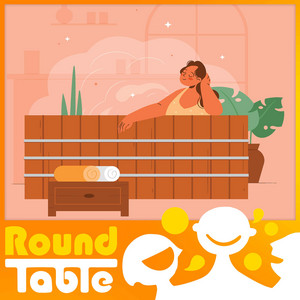
You're listening to Roundtable and coming up next, this ain't your grandma's bathhouse.
Looking for passion?
How about fiery debate?
Want to hear about current events in China from different perspectives?
Then tune in to Roundtable, where East meets West and understanding is the goal.
You're listening to Roundtable.
I'm Steve today with Ding Hung and Fei Fei.
In the past, bath centers were merely functional spaces for a quick soak and a quick scrub.
But today's modern versions, OMG, they are not the same as they used to be.
They've evolved into sophisticated, 24-hour mega complexes that function as all-in-one lifestyle hubs.
Unlike the traditional bathhouses, these new places integrate high-end dining, movie theaters, gaming capsules.
I saw one that had a scream room.
I'll tell you what that is in just a sec.
But they've also got some quiet office areas.
It's creating a daycare-style vacation for the modern consumer.
It does indeed break the traditional boundaries of space and time.
And they've captured very well, I think, the emotional value and the relaxation side of things in today's economy that standardized hotels can often lack depending, of course, on where you're staying.
Before we get to the new ones, tell us about, in China, the traditional bathhouses, what those look like.
Well, they are or they were primarily dedicated to mainly bath services and they are cheap too.
Their processes basically followed a kind of unwritten script.
Soak steam scrub, rinse and then they have certain social functions.
They can be doubled as a kind of community living room, like guys chatted about everything from family to their work, to their businesses, while soaking women soaked, they did face masks and swapped certain neighborhood or work unit gossip etc, etc.
So It's a very local, community-centered Spanish culture.
A place to hang out, a place to chat while you're in the tub with your friends, while you're gossiping with each other on the previous week's happenings or things like that.
Yeah, in the northern part in particular these bathhouses or the community center, I would say on some level.
I remember some of the best gossip that I've heard as a child happening in these bathhouses between my mother with her friends.
And as they bathe, scrub, and we were playing as well in the tub with other children.
And they're talking about the gossip next door, what's happening in their workplace.
You know, just a very relaxing experience.
That's the old bathhouse.
Now we bring in the new.
And it's almost unrecognizable when you compare the two.
Exactly.
First of all, when it comes to the decoration, the interior is like drastically different.
In the past is just simply, you know, tiled walls and floors and there is a shower heads, there is a tub and there is a bed for you to get scrubbing, but now it looks like a big commercial complex with a lot of services.
They are on a scale, they are polished, they have high ceilings drastic, dramatic lighting, different styles of interior designs and even they have this a very luxurious hotel lobby design.
These places, I mean, when we use the word luxury to describe these places, please believe us.
I was shocked because I didn't have the right picture in my mind.
These places look like high end day spas that you'd find at a five or six star hotel.
They are gorgeous.
The pools are gorgeous.
They have little mini gazebos attached to the pool.
You just step out of the pool right into your little luxury pillowy spot to relax.
I mean, this is like, This is stuff you'd find at the nicest of hotels.
Then you leave the spa area and you go out and there's like a fruit buffet or a high-end buffet that you'd expect to find at a hotel.
They've got the game rooms.
They've got PlayStations.
The one I watched had TVs lined up with all PlayStations there and nice comfy chairs.
The screaming room I mentioned, I think it was called the venting room.
They have what do you call them?
Kick bags that you'd find in a boxing gym.
You go in there.
It's a soundproof room.
They give you boxing gloves and then you just beat that bag and scream and shout and nobody else can hear you.
And after you sweat, you just go back to the spa, relax a little bit more, take a shower.
And then, when you're ready, they've got the sleeping pods that are private and you can get some snacks.
And it's just you can spend a whole 24 hours there.
So instead of paying just to take a shower or bathing, I think you are actually buying time, right?
One ticket, a few hundred yuan, et cetera, covers 12 hours or even longer.
And then, if you want to stay there overnight, just a small amount of extra money, extra fee, will suffice.
So I guess for many young people, young consumers, that really makes it cheaper and more fun than booking a hotel, right?
Yeah, on some level.
Well, when it comes to these luxurious bathhouses, their prices are like from either 200 or 300 yuan to 500 yuan plus.
Some of the extra charges when it comes to different services, like overnight stay or different game rooms and so on and so forth.
But yet when you compare it to the I mean, if you compared it to the hundreds of dollars that you might spend if you go to a hotel, doesn't have all of those extra services then it's much, much cheaper.
Yeah, and also, you don't have a game room, you don't have a screaming room, you don't have a movie room and the price is, on some level, pretty much the same, and even on some in some cities, the hotel accommodation fees can be much, much more expensive.
So, from my point of view, that these bathhouses they're not just selling, you know, get yourself clean.
It's more about comfort, emotional, and it sells time, not like a bet.
Because if we went to a hotel we're thinking about, we're really buying a bed, a place for you to stay at night.
But when it comes to these bathhouses, you get more than one bed.
You get different services, you get different buffets even.
And that just seems a more economical decision.
Yeah, and the industry is huge.
And there's been steady growth over the past four years or so.
And the younger age group is accounting for the majority of the total amount of customers.
This is from Meituan data.
Users aged 18 to 35 now account for 58 the total, and those between 24 and 30 years old make up the core spending group.
And I agree, you know you go to a hotel and you're basically paying for yeah, I know, you know hotels have other services as well, but you're essentially paying a lot of money for a place to sleep.
These bath houses, these luxury bath houses, are far more affordable and they do offer many more services.
And But yet this is where I'm wondering if there's any comparison or whether these two industries are existing, separate from each other.
The places to sleep in the bathhouses, you don't go into a private luxury room, from what I've seen.
I've not visited them, but I've watched a bunch of videos and they're like private pods, but they're not private rooms.
So I don't know if it's fair to compare these two industries or not.
Well, I think there is definitely overlaps because, no matter the reason you travel to another place, either for leisure or for business, you need to book some place to stay.
And bathhouse can be one if you travel for leisure.
But if you travel for business, of course, you won't be staying in a bathhouse.
My mom visited Korea.
They have these in Korea, too.
And I wanted my mom to have an experience.
So I asked my female co-worker, I said, hey, would you take my mom to a bathhouse, please?
I didn't tell mom what was happening.
I said, mom, my co-worker is going to take you out for some fun.
And I was laughing.
Mom came home and she said, Stephen, I have to talk to you about something.
And I knew she got the scrub.
Oh, man.
Mom had never been naked in a bathhouse before, so it was a great cultural experience.
Oh, we still laugh about that today.
Anyway, that's it for today's roundtable.
Thanks for being with us this time around.
For Ding Hung and Fei Fei, I'm Steve.
We hope you enjoyed the show.
Have a good one, and do come back again.
Ready, get ready, get ready for super night.
Here in Beijing, lights come on.
New Year's beat is moving strong.
Step by step, feel the sound.
Happy smiles all around.
Feel the rhythm, feel the force.
Here it comes.
Here in Nairobi, hearts are bright.
Hope is strong, the future's light.
From this desk to every door, the night, strong and bold, full of drive.
This is the year, the year of the heart.
Keep moving on, don't slow down.
From every street to every town, old year gone, new dreams start.
One world one beat.
A super night, fast and free.
Strong of course, a lucky happy.