
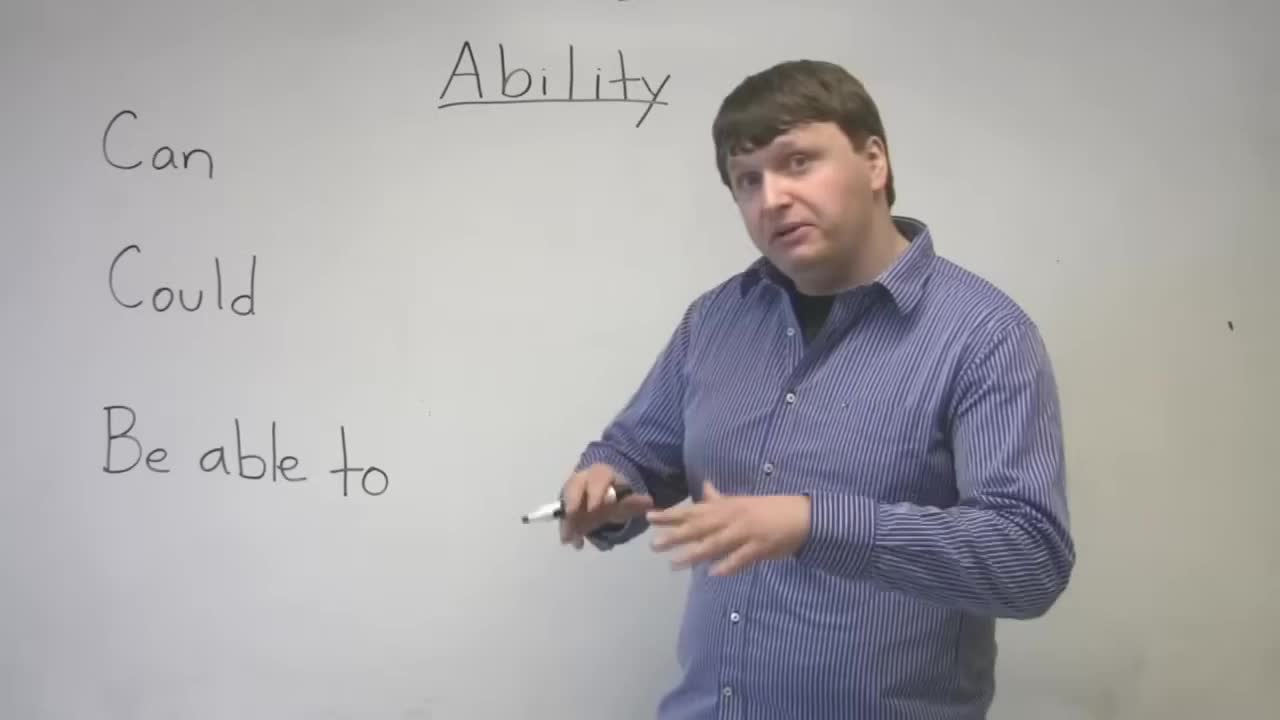
[Mastering English Modals: A Guide to Can, Could, and Be Able To]-[Basic English Grammar: CAN, COULD, BE ABLE TO]
📋 Summary
Understanding Ability: A Comprehensive Guide to Can, Could, and Be Able To
In the English language, expressing the "skill, the power, or the means to do something" requires a nuanced understanding of three key phrases: can, could, and be able to. While these terms are often used interchangeably, they possess distinct grammatical rules and temporal boundaries.
The Versatility and Constraints of 'Can'
Can is primarily used to express ability in the present tense. For instance, stating "I can swim" clearly establishes a current skill. A critical grammatical rule for can is that it must always be followed by the base form of the verb. You cannot use the infinitive (e.g., "I can to swim") or the gerund (e.g., "I can swimming").
Beyond the present, can is also applicable to future possibilities. As the host notes, if you are unavailable to help someone now, you can say, "I can help you tomorrow." However, can is strictly forbidden when referring to the past. It serves as a present-to-future bridge but lacks the scope to reach backward in time.
Using 'Could' for Past Abilities
When shifting the focus to the past, could becomes the go-to modal. Similar to can, it requires the base form of the verb. Examples such as "My grandma could swim" or "My grandma could speak five languages" illustrate its role in describing past states of being or general past capabilities. It signifies that a person once possessed the "power" to perform an action, though it does not necessarily imply a single completed event.
The Flexibility of 'Be Able To'
If can and could have limitations regarding tense, be able to is the universal solution. It "covers the entire gamut" of tenses, allowing for seamless integration into past, present, and future expressions.
- Present: "I am able to drive."
- Past: "I was able to drive when I was 16 years old."
- Future: "I will be able to drive in the future."
Because it functions as a phrase rather than a pure modal verb, it avoids the rigid constraints of can and could, making it highly versatile for speakers who want to ensure grammatical correctness across all time frames.
The 'Achievement' Exception: A Crucial Distinction
Perhaps the most important takeaway from the discussion is the special case regarding specific achievements in the past. While could works for general past ability, it is inappropriate for describing singular, successful outcomes.
For example, when discussing winning a competition, the host explains that one should not say, "I could win the spelling bee." Instead, because the spelling bee represents a "specific achievement," the correct phrasing is, "I was able to win the spelling bee." This distinction is vital: could denotes a general capacity, whereas was able to emphasizes the successful completion of a specific task at a specific moment in time.
By mastering these distinctions—the base form requirement for can and could, the temporal range of be able to, and the achievement exception—learners can communicate their capabilities with much greater precision and grammatical accuracy.
Deep Learning with ListenLeap


