Hi, I'm Kitty Felde.
We continue our series highlighting episodes that feature books that have been banned or challenged.
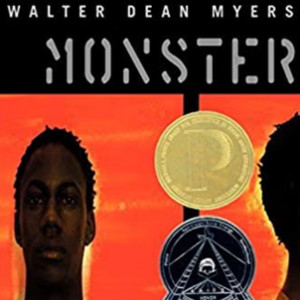
This week, it's Walter Dean Meyer's tale of a kid on trial for murder, called Monster.
In 2021, parents in Signal Mountain Middle School in Tennessee complained about mature language and sexual content in some seventh -grade reading club selections.
In response, a teacher told parents she was removing monster from the reading list. Meyers reacted to book bans by saying, I think that most often people wanting to censor books are well -meaning and concerned about the welfare of their children.
But I suggest that children will be exposed to the world in spite of their efforts, and that exposure is best handled in a school setting.
I write to establish the humanity of the children I identify as my major audience.
I'm not trying to push any boundaries.
So give a listen as a group of readers from Washington, D .C.
discuss the book and make up your own mind.
It's the Book Club for Kids.
It's the Book Club for Kids.
It's the Book Club for Kids.
It's the Book Club for Kids podcast. Hi I'm Kitty Felde.
This week we tackle a tough book, Monster is Walter Dean Meyer's story about a young man on trial for murder.
No matter what anybody says, I know you're innocent and I love you very much. That's our celebrity reader, actor Larry Powell.
Our readers from Cramer Middle School in Washington D .C.
say the hero of the book was on a quest to find his the place in the world.
In jail he still didn't know who it was or what to do.
So that's even worse.
You're somewhere you don't want to be looking for who you truly are.
The late writer Walter Dean Myers said the book is about choices.
He knows that certain things are wrong, you shouldn't do them.
But these conflicts come up when he's challenged which one does he go with?
This is The Book Club for Kids, the podcast where kids talk about books.
We'll tell you how you can be on the show a little later on, but first let's meet our readers.
Hello, my name is Ziquan.
My name is Marja. My name is Maven and we're all eighth -graders at Crammer Middle School in Washington, DC.
Marster is about a Black man who is 16 years old, who might be going away for jail for his entire life.
It's about a boy that is in a robbery and is waiting to be charged.
Who's our main character?
Steve, like you said, is a 16 -year -old boy.
He wants to be a director.
Movie director? Is he a nice kid and not a nice kid?
He's on trial for murder, but what else do we know about him?
He fell in with the wrong crowd because before he went to school every day, got his education and one day, he got to high school and he fell in with the wrong people and it grew up from there and one day, Bobo convinced him to rob a convenience store with him and he did and he got caught and Bobo got caught and now they're on trial and then they kiss somebody.
But, just because you hang with the bad people, it didn't mean he was a bad person, himself.
He just chose to do something wrong on that day He didn't know they was scared of somebody.
He had no intentions of murder.
He was the lookout.
I don't think he was a bad kid.
I just think he wanted to fit in with other people, you know, try to be something he not like, a cool kid.
The book is written in a odd style.
How would you describe it?
It's read like a script.
Have you read screenplays before?
Yeah, eighth grade teacher, Miss Rambu, our first book was in the script format.
And how does that compare to prose, what you usually get when you open up a book.
Is it easier to read, more difficult to read?
How's it different?
It's easier to read because it got the curt's name and what they're saying that it says O 'Bryan and his line, that then it say Steve and his line.
I think it's easy for me to read too because it's like when you're in a classroom everyone can participate.
Everyone gets a character and you make the book come to life.
So did you guys read it that way where everybody played one of the characters?
I was O 'Brien. I think you'd be a really good attorney.
What about you? Do you think it's an easier way to read?
Yes, way easier, because you know what to say and how to say it.
How do you know what the scene is like?
Because that's what you get in prose.
It's a, quote unquote, saying in a book, the guard started with the smirk.
It got directions and minds of what we're supposed to be doing, like a play.
So they were stage directions.
They're very specific things that let you know where you are.
And it gives you background information so you know how to play the character.
So some of the book is written just like you guys said, like a screenplay.
There's another, he does two or three other things in there.
What other kinds of storytelling does he use to tell the story?
Did you notice anything?
Say what, what, what?
Like a diary. Why would he include a diary in addition to the, to the screenplay version of the story?
A diary is sentimental and secretive, and it's like, he's telling you this with an inside.
He's like, man, I'm breaking down, this, and this, and this.
I can't do this, da, da, da, da.
He's thinking about this and it's like, dang.
Simply giving us the deeper thought.
Oh, he writes a diary to let people know how it all went down.
Well let's hear a scene from the book where Steve's mother visits him in jail.
Mama came to see me.
It's her first time, and she tried to explain to me why she hadn't been here before but she didn't have to.
All you had to see were the tears running down her face and the whole story was there.
I wanted to show strong for her, to let her know that she didn't have to cry for me.
The visitor's room was crowded.
Noisy. We tried to speak softly to create a kind of privacy with our voices, but we couldn't hear each other even though we were only 18 inches away from each other, which is the width of the table in the visitor's room.
Do you think I should have got a black lawyer?
She asked. Some of the people in the neighborhood say I should have contacted a black lawyer.
I shook my head. It wasn't a matter of race.
She brought me a Bible.
The guards had searched it.
I wanted to ask if they had found anything in it?
Salvation, grace, maybe compassion?
She had marched off a passage from me and asked me to read it out loud.
''The Lord is my strength and my shield.
My heart trusted in him and I am helped.
Therefore my heart greatly rejoices.
And with my song, will I praise him.
It seems like you've been in here so long, she said.
Some guys have done a whole calendar in here, I said.
She looked at me puzzled and then asked what that meant.
When I told her that doing a calendar meant spending a year in jail, she turned her head slightly and then turned back to me.
The smile that came to her lips was one she wrenched from some place deep inside of her.
No matter what anybody says.
She reached across the table to put her hand on mine and then pulled it back thinking a guard might see her.
No matter what anybody says, I know you're innocent and I love you very much. And the conversation was over.
She cried, silently.
Her body shook with the sobs.
When she left, I could hardly make it back to the cell area, no matter what anybody says.
I laid down across my cot.
I could still feel mama's pain and I knew she felt that I didn't do anything wrong.
It was me who wasn't sure.
It was me who lay on the cot wondering if I was fooling myself.
You guys talked about how our main character, Steve, is a good person who made a bad decision.
How do we judge people?
I mean, how do we judge whether or not a person is a good person or not?
With this specific scenario, you can't really judge whether he's a good person or not because you're looking at the incident.
You're not really looking at him as a person, looking at what he did.
Can you separate what we do from who we are?
Yes. People make mistakes, lots of them.
Yeah people make mistakes because because he I feel like he like went to school got education but he just wanted to be like everybody else and tried to get like a name for it so you know try to be cool fit in but but he wound up getting caught now he on trial.
How hard is it to fit in in in middle school.
Oh And you just don't hang with nobody.
You mean you're a loner?
Yeah, you don't hang with nobody.
You can't trust everyone.
Yeah, I don't do that.
Wow, that's a hard way to be.
Me personally, I've learned what he said, you gotta sometimes be by yourself, because my whole life I've worried about being liked, cause, you know, teasing and stuff.
So it took a while for me to learn to get there, like, you know, just stay to yourself.
Love, kid. It's not easy, but it's not hard because once you get to know the right people and you get to expressing yourself and you get to speak out, people want to be your friend because you like to speak out on behalf of not just your own, but other people.
What do you mean by right people?
People who have high expectations for themselves.
They don't want to be something in life.
and how do you find those people?
You'll catch those kind of people in class doing their work every day and on time.
Do you ever get teased for being that kind of kid?
Sometimes you might get a little bit of backlash like, oh, you think you know everything, you're the teacher's pet.
And then other times, it's like, oh you're smart, you can do my homework.
It's hard because when you're in school, even if you don't choose to be there yourself, people put you in the category.
What category do the kids put you in?
Oh I'm laid back, I'm cool, I be coolin, I don't mess with nobody.
I stay with myself.
And nobody messes with you?
I might talk to people but nah, I just stay to myself, do my own thing.
And what do people categorize you as?
They might categorize me as the teacher's pet or something like that, because if you was to come to the school and you would see me, I do this for this teacher, that for this teacher.
Help the main office.
And, under all of that, I still do my work.
Well, do you think it's harder to be somebody like you or somebody like Steve in the book?
Because he seemed like he was searching for where he fit in in his school.
It's harder to be Steve because it's like he was looking for sanctuary, like, oh, these are my friends, and I'm going to be in trouble.
Then, boom, something bad happens.
It's like he was searching for himself, both the incident.
He never found it and In jail, he still didn't know who he was or what to do.
So that's even worse You're someone you don't want to be looking for who you truly are.
I was just about to say it's harder to be Steve because because he tried to he was his own person at one time and he just fell in and Got in a lot of trouble and you know, he locked up in jail Was the book realistic to you?
Yes because it was specific details that had me like the judge said this and a jury said that and he got convicted for this and at the end of the book it actually said it was a true story.
Yeah I feel like things like this happen on a daily basis.
It can happen to anybody honestly.
You've just been in the wrong place at the wrong time or just because you hang with this person they think you're with this.
It can happen to you or it can happen to me.
I feel like it's like a true thing because good.
It's happened to somebody.
I know He yeah. Yeah straight A's, but he uh, he got caught up robbery.
And now he got locked up He just got released right now like a couple weeks ago Let me ask you this then that I mean How does that affect you in your choices?
Oh man Human I'm starting to act like him making bad choices getting in trouble and it's not good.
What can you do to change that?
Stop being in trouble.
Go to class on time.
Finish all my work.
Turn on my working, homework, stuff like that.
Stay off the streets.
I'm exposing myself.
Well why do you do it?
I mean not why do you expose yourself but I mean why do you make the choice why, why do we all make the choices we make?
Because everybody's not perfect.
Say it again. Because everybody's not perfect.
Well I don't think any of us are perfect.
Yup, some people think they have to do some things to get certain places.
But I'm comfortable being myself.
Honestly, I don't follow anybody.
Um, I don't really think I'm the best person to follow because I'm still working on myself.
But… Well, how did you get so confident?
I had to build it. It was hard, but I did it.
Writer Walter Dean Myers said the story for Monster began in a courtroom.
It was a very sad scenario.
There was a defendant at one table, this lawyer and the two people from the prosecutor's office at the other table.
I was the only spectator.
And the trial was moving along.
This kid was up for attempted murder.
And then all of a sudden there was a big noise from outside the courtroom, and what's that?
And the judge stopped the trial, and the guard looked outside and said, oh, it's just the kids getting out of school from across the street.
Such a sad thing because this kid was young enough to be going to that school, And I'm saying, here's a kid who was innocent maybe three months ago, and now he's facing perhaps a lifetime in jail.
And I said, I have to do something about these kids.
And this was the book.
Here's a young man who has multiple cognitions.
He knows a number of things.
he knows that to live in the inner city and do nothing you can be accused of being a punk.
He knows that he wants to assume identity as a man.
He knows that certain things are wrong.
He shouldn't do them.
But when these conflicts come up, when he's challenged and there are two or three things he knows, which one does he go with.
Very often he will go with the easiest one and that's a problem.
Did this book remind you of anything else you've read before?
The newspaper. I don't find it, similar to other books that I read.
I say yeah I only hear stuff like this in news because this isn't the type of book I would usually go for, because I don't really like sad things like this, but this is a good book.
It's actually one of my favorite books.
I like it. Well, you played the defense attorney in class.
Do you have any interest in becoming an attorney yourself?
If I don't become an actress I do want to go to law school and become a lawyer, because I feel like I fit the part perfectly.
I think I would agree.
You know, you said it was a difficult book to read, but did you like it mm -hmm oh because I could relate to it because it happened it happened I could relate to this book because my uncle was in the wrong place at the wrong time and the police thought that he did bad things but it wasn't him he was actually coming home from work and they turned in the jail and he was Wrongfully convicted.
Um, it kind of touched me in the spot, because my father had went to jail for robbery.
But it's different because I know the person so deeply and I know that the person actually did it, so it's like, in this book, it's like, I feel bad for him, just like, I'm hoping that he gets out.
because, you know, my father didn't.
electronic music plays I've had people scream at me, you know, that he was guilty, he should have gone to jail.
I've had people say he should never have been tried.
If he wasn't black, he wouldn't have been tried, but it comes, I mean, it's really good feedback.
I really love it, you know.
There's a scene at the end of the book where Steve is elated that he's won this case and he turns to Mrs. O 'Brien and she turns away.
That is the scene, I guess the most male, of any book I've ever done.
When people get to the end of a book they want to feel, yes, okay, I can see why this ending has happened.
And now he's found not guilty, but then this one person turns away from him.
They're shaking, or maybe I'm not right.
Would you recommend this to somebody else?
It's an interesting book.
You'll get caught up in it if you keep reading it.
It's like a mystery, keeps on the edge of your seat.
it's like all right, sign up for the book and say no, what happens next?
I think kids in general will be interested to read this book and probably be at the edge of their seats.
What age group do you think is appropriate to read to this book?
In other words, how old do you think you have to be to read this book?
12. Yeah, 12. 12 and up.
So, the hardest question, although you guys said this wasn't such a hard question.
What's your favorite book and why?
I loved that book. It's like interesting.
One day the boys - Z -RO and he was, he was kind of like off.
But he was a good person.
He got tied and ran away.
Tell me why this story spoke to you.
Z -RO got sent to the - he got sent to the - it's like a military boot camp thing.
He got sent there because he had took some shoes.
He thought it was free so he just took it.
My favorite book is Chained by Lauren House Anderson because it teaches about slavery, how black and whites treated each other back in the day, and how blacks was chained up to boats and shipped away to work this place and that place, and it just intrigued me.
And we should say that it's one of our favorite books too, and we did an episode on Chains and did an interview with the writer Lori Hall -Sanderson, And we'll put a link on it at our website book club for kids org.
All right favorite book Honestly, um, I Don't know not many books Not many books really grabbed my attention and for this one to do that and make me want to read it again That's why I like this book.
I don't really have a favorite book besides this.
Honestly. What about you Larry?
What's your favorite book one of my favorite books is a play called the piano lesson written by the great august wilson Who is one of the most important american playwrights of our time?
This play actually won a pulitzer award pulitzer prize for drama and is one of the most powerful plays You'll ever read it's about a family.
It's about a brother and a sister fighting over a family heirloom and the language The characters, the world of the play is so vibrant, it's so beautiful, and so poetic, and honest at the same time, that it just shakes you to the core page after page after page.
I encourage you to read it.
It changed my life.
I'm sure it will impact yours as well.
Do you have a favorite book or a favorite play?
Want to be on the Book Club for Kids podcast?
It's easy. all you have to do is record yourself on the voice memo app of a smartphone and tell us your first name, the grade and school where you go to school and the name of your favorite book and why you love it.
And then email the audio to us here at kiddie at bookclub4kids .org.
That's kiddie at bookclub4kids .org and we will put you on a future episode.
This episode is funded in part by the Jack Kent Cooke Foundation dedicated to advancing the education of exceptional promising students who have financial need.
And by the Nora Roberts Foundation and the DC Commission on the Arts and Humanities.
thanks this week to our producer Ilse Setzial, Jonathan Jensen composed our theme music, and Emma Steinkelner designed our logo.
Thanks to the estate of Walter Dean Myers and the D.
Fiore and Company literary agency for sharing the audio interview with Mr. Myers.
Thanks as well to our celebrity reader Larry Powell and to our readers this week.
Zekwan, Marjai and Maven and their librarian Patrick Ebel at Kramer Middle School in Washington, DC.
We have a free newsletter for teachers, parents and librarians full of free tips about how to turn kids into lifelong readers.
You can sign up at the website footclubforkids .org.
And if you want to find a way to talk to your kids about civics, well check out our other podcast The Feena Mendoza Mysteries.
It's an episodic show that follows the adventures of the 10 -year old daughter of a congressman, who also solves mysteries inside the US Capitol.
There are teacher's guides, companion books, and a facts behind the fiction blog.
The books are in English and Spanish.
And you can find out more at the website, chesapeakepress .org.
That's the Fina Mendoza Mysteries, the winner of the 2024 Latino Book Awards.
I'm Kitty Felde. Thanks so much for listening.