These are my personal opinions.
Always seek a professional when you're making choices about your mental health and well-being.
All right, i'm gonna try to get to two messages today.
I'm not very good at that, i usually just spend my time on one, but i will try.
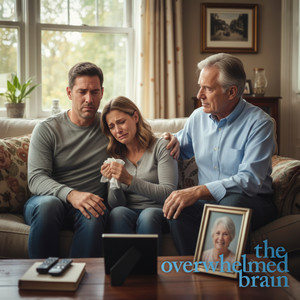
And so this first message is somebody who wrote about their mother-in-law being at risk of Alzheimer's.
And he said, I recently found out my mother-in-law is at a high risk of Alzheimer's.
And this just gives me flashbacks of when my mom had Alzheimer's and, as a result, passed away from it a few years ago.
But I'm scared and worried for my wife and brother-in-law because they've never had to face this situation.
I've already been through it and I know what it's like, and I fear they don't really know what to expect.
I've tried to explain and prepare them for it, but it's difficult to explain or express to someone who's never gone through this.
My wife is kind of accepting the fact that her mom's losing her memory, but my brother-in-law is undoubtedly in denial about the situation and I honestly don't know how they'll react if and when she gets diagnosed with it.
The good news is that the doctor said at this time everything's normal.
But I know for a fact that that can change within weeks or even overnight.
How do I cope?
How do I prepare myself for their reaction?
So thank you for sharing that.
And I'm sorry that this is happening.
It's very difficult when somebody gets a disease like this because they change.
They completely change.
And, um, You just don't recognize them.
A lot of them change into somebody you don't recognize.
And sometimes they don't recognize you.
And often they'll forget.
And often they will be a completely different person, like I'm saying.
So I'll just answer your question right off.
There's really nothing you can do to prepare, except to know that what they experience will be unique and probably something you can't prepare for.
And if your wife is able to be more stable in this transition that might be happening, then maybe her brother, your brother-in-law, will be okay in the end.
I mean, nobody can prepare for this.
Nobody can prepare for somebody getting sick and dying and all that stuff, or somebody getting sick and changing to a completely different person while everything degenerates and goes downhill.
It's just nothing you can do except be strong.
And how do you do that?
You pull out those resources.
What are those resources?
Everything that you've experienced in your life, the pain that you've gone through.
You pull it out and you realize I did it.
And I'm going to be strong for these people as well.
Now your question wasn't necessarily how do I be strong for them, though you did kind of intimate that.
You're asking, how do I cope?
How do I prepare myself for their reaction?
And if you're thinking about that, then that tells me that you're probably very worried about an onslaught of emotions.
And what do you do with their emotions?
And here's the thing.
When someone experiences grief, shock and just these negative surprises in life, all you can do is do your best to sympathize.
Sometimes we empathize because we've been through that.
But at minimum, we sympathize and say, I completely understand.
And then be there for them.
That's really all you can do.
So again, it's the question, how do I cope?
Not necessarily how do I be there for them.
But I want to get this sort of covered first.
And when you're there for somebody, that means you don't dive into their reality of pain with them.
This is the empathy part.
So if we were to dive into their pain with them, then we empathize.
But when they are experiencing the deepest, hardest grief or pain, it's important that we don't necessarily jump into their reality with them.
Like when we are empathetic.
I like to stay out of someone's deep pain because I'm an empathizer.
If somebody starts crying around me, I will start crying.
But I'm very careful because About allowing myself to get sunk into a deeper state of sadness or pain that they may be in.
Because who do I become around them?
I'm with them, which is probably somewhat helpful for them because they don't feel alone.
And I try to be there with them so that they're not alone.
But there's a point where you have to pull back.
And pulling back allows you to keep your strength, allows you to keep your emotional resilience, not so you can cope, not so you can survive, but so that you will be their rock when they need someone.
They need that strength.
So there's two different things going on here.
How do you cope?
How do you deal with that?
That's part of it is not diving into that empathetic state, or at least fully, so that you are now back when your own mom died and dealing with all those emotions because that's what happens.
When someone's pet dies and we remember how our pet died and how we felt, suddenly we're in that state with them because now we're in our own stuff.
And if we want to be there for them instead of getting into our own stuff, we have to pull back a little bit.
That's hard.
It's not easy to do.
I call it uptime.
I learned it in my training a long time ago.
And I think it's a good word.
Downtime is when I'm down with you.
Uptime is when I'm back up into myself with myself here for you.
Basically, that's what I'm doing.
I'm staying up here for you.
So if you need me, I'm here.
Because as soon as I start thinking about my own pets that have died over the years and I'm in my stuff with you and we're basically in that stuff together it can be difficult for me to be there for you.
So if I've experienced something in my past that has hurt that, I've dealt with that, I've gotten through that.
Maybe I might still need healing on if I have gone through that and I've made it through that, even if I still feel pain about it.
I have developed some resilience.
I have developed some strength.
Even when it doesn't feel like that, I've developed some strength because I made it.
I made it through.
Still hard to think about, but I made it through.
So to be there for someone else that might experience what you've already been through is part of how you are strong for them, without getting so down into the weeds of where they are that you bring up your own stuff.
I've started to have this happen before.
Somebody was telling me about a child sexual abuse case when I was working at a hospital and she described the details and I just suddenly I was in my stuff.
I mean I felt so awful about it but I empathized with the child, imagining I was her being.
You know all that stuff happening to her and to be in that state I could barely function.
I was in that state because I felt so awful, because I was empathizing so much.
I mean that's a good thing to experience because it keeps you compassionate.
It keeps you as a supportive, helpful person to others because you understand someone else's pain.
You know what they're going through.
And so I felt that coming on and I couldn't stop it.
It was so difficult and I had to pull back.
And I actually felt a little guilty for pulling back because that can happen.
You feel guilty for diving in there and being with that person, even though the person they're talking about wasn't in the room.
I didn't even know her, but it was still just such an awful, awful thing to happen to any child, to happen to any person and to dive into those weeds, into that, to their reality and to where they are, or they were at the time.
It really brought me down.
I was getting pulled down into the deep darkness.
You know, with this anchor that's pulling me down and I had to pull myself back out of it because I don't want to stay there.
Someone has suffered and I absolutely sympathize.
But to experience it as if I were them, that was very difficult.
So I pulled back by just telling myself, you know, I have to be here.
I have to be present.
I have to be aware.
And my energy has to be saved for the people in my life today.
That could be children.
That could be other people that I need to help or I need to be there for.
And I have to be there for myself.
This person asked about coping.
I have to reserve or save this strength for myself.
Because if I go down into that space, it's going to be a lot more difficult to be there for myself and be there for others.
Because imagine a mom telling somebody that their child was abused and that person getting so lost in the abuse that they can't be there for the mom.
You know in their mind they sink into that space.
And maybe they were abused too, so that would certainly activate the empathy.
But to pull back, that's the hard part, right?
To pull it back so we don't get lost in our own stuff.
And that's really what it comes down to.
And I was saying that I felt guilty about pulling back, because pulling back felt like Oh, I don't want to necessarily feel so sorry for this little girl that I get lost in her suffering and I'm in there with her.
If I were her, this is how I would feel.
And it feels so awful.
And so pulling back made me feel like I was leaving her behind.
And that was hard.
I mean, I won't lie.
It was very difficult to pull back from that and stay strong for me and others and not get lost or not get buried with all that uh suffering that she had, and it's difficult.
It's difficult to pull back because you might think that you're leaving someone behind if you don't empathize, and the truth is you are more there for somebody if you can be sympathetic and not empathetic when they are so down and by getting into your own stuff it brings you down with them.
I'm not saying you shouldn't be empathetic.
I think that's the strongest quality of any healthy human being.
But what I'm saying is, if they are in such a deep dark state for example, your brother-in-law goes into this deep, dark state of grief and you go there with him because you're thinking about your own mother and how she passed and all that time leading up to that it's going to be difficult to be strong for him and strong for yourself, because you asked how do i cope, how do i deal with this?
And i believe that at least a good part of coping has to do with not allowing yourself to get into your own stuff, at least at the time.
I'm not saying you shouldn't ever do that, because if you have stuff, you have to deal with it.
You'll reflect on it, you'll feel it, you'll have emotions about it and you can experience that, but maybe not.
Then you know, when i used to work one-on-one with people, i would um, i would have to be very careful about not feeling what they felt to the point where i couldn't be effective for them, And if I felt myself going there because they said something that I've experienced in my past.
It's something that you have to practice.
You have to say, no, no, no, no.
I'm not going there.
That's my past.
That's my stuff.
And I'll deal with that later.
I'll work on that later because I want to be here for this person.
I want to be here for you.
This is what I'm here to do.
This is where my strength is.
If I get too lost in your stuff, then I won't be effective or strong for you or strong enough for you.
At least that's how I talk.
I'm not saying you have to say this, but that's where I go.
I want to be strong for you.
I want to be here for you.
So that is one way to cope is to try to prevent yourself from being so empathetic that you get lost in the weeds of their pain, their suffering.
I'll tell you what.
After some of my coaching sessions with people, I have had to process my own stuff.
So I had to be careful not to let myself get sunk into their suffering and pain, so I could be there for them as an effective coach guide mentor, whatever they needed for me.
And by keeping myself there, I was able to function more appropriately and more, again, effectively.
And my stuff would come up.
My stuff would come up and I would have to think, can't do that.
Can't do that right now.
I need some time to process that.
It'll be later.
I'm here for them.
That, again, takes practice.
But I have had sessions where later on I'm thinking, oh, I got to work through this.
Oh, now I'm thinking about my dad or my mom or so-and-so, my ex-girlfriends, my stepfather.
All this stuff comes up.
That I'm helping people through, that I have obviously had an experience with and obviously have some thoughts and feelings about still and are dealing with them.
Not that I haven't healed, but our stuff comes up.
It just happens.
And so to be able to be consciously aware that that's what's happening and to pull ourselves out of that, it does take a lot of willpower.
But remember who's in front of you.
Remember that they are the priority right now.
And if you have your own stuff, we deal with it later.
That's my suggestion.
Now this person.
They started writing.
They said I have flashbacks of when my mom had Alzheimer's and passed away.
And My sister and my brother-in-law have never had to face this, but I've already been through it and know what it's like.
And I fear that they don't really know what to expect.
So again, I think this is all about empathy.
Empathy is a wonderful thing to have.
And it sounds like you have it and you don't want them to suffer.
But remember, suffering is part of the grieving process.
We have to do it.
We have to feel it.
We have to let go of this pent up and built up energy that has been accumulating for a long time, or at least a number of maybe months or years, especially in your case, where she passed away three years ago your mom, and the thoughts and feelings that you had every day regarding how much worse it's going to get and when is she going to pass.
All of that energy has to come out.
It has to be expressed.
It is part of grieving and processing.
And so when you see this happen with your wife and her brother, just know that it is healthy.
This is something that they have to let out.
They have to experience.
And that is part of their healing.
And it's just giving them the space to let it out.
Like sometimes my wife will complain about something really angrily.
She would be very angry.
And it might even be about me.
She will be very angry.
And I will just let her go off on me or about someone else.
Doesn't matter.
I will let her do it because there's a lot of pent up energy in there.
And when it's pent up, we need to open the pressure release valve and let them release the pressure, no matter how it comes out.
Even, here's the thing, even if your brother-in-law blames you, why didn't you tell me?
Why didn't you tell me that it would be this hard?
You know, whatever he says. let them say it.
One of the most important pieces of advice I've heard was when somebody dies, their loved one should get a free pass for about a year.
What that means is their loved one, whether it's a spouse, a family member, a friend, whoever it is, because they're grieving, they're going to be maybe thinking and doing things that seem out of the ordinary, seem uncharacteristic.
And I have seen this probably a few times in my life, where somebody will just change and they will do and say things that are just not necessarily them.
They are just going through their grieving process.
Now, if it gets too crazy or dangerous, you do want to say something, but allowing them, you know, being there for them, accepting what they're going through and allowing them to be whoever they want to be during that year.
It's not an exact time frame, but about that's all part of the healing process and the grieving process, and it can take people some time, and that time is what they need to process all of it, because if somebody's been in your life and you're connected to them emotionally and you have a strong bond with them, and then they're suddenly gone, a piece of you is gone with them.
A part of you is taken from you because they were a part of your identity.
They were a part of you.
And when they're gone, it's a rebuilding process.
Who am I now?
How do I define myself now without that person in my life?
And that also takes time to discover about oneself and rebuild that part of oneself.
And so that is something that you'll probably have to face as well.
But you probably faced it, this person who wrote, you probably already faced that with your mom.
She was a part of your identity.
And as she changed and as she passed, you had to adjust and continue adjusting to this new reality that you did not want to accept, but you had no choice to accept until she passed.
And then you had to process all of that stuff.
And now your wife and your brother are going to have to go through this.
It sounds like they're going to have to go through this as well.
And you've been there, you've made it through, and now you can be there for them.
And that's my thoughts for you.
Just try to stay out of your own stuff and be strong and open and present for them to be and say and do anything they need to to get through this experience, which will, I'm sure, be very painful.
Stay strong with that.
I talked about the one-on-one coaching sessions that I used to do and I remember how much time went into the before and after the session.
A single hour session could take me up to three hours, sometimes because of preparing beforehand and then writing notes after, let alone the scheduling, the rescheduling, the billing and more.
I needed an assistant, and that's what I love about simple practice.
It takes care of almost everything.
If you're a therapist listening, you already know your work doesn't end when the session does.
Simple Practice is an all-in-one EHR that is HIPAA compliant, high trust certified and built specifically for therapists.
It brings scheduling, billing, insurance, and client communication into one place.
So you're not juggling multiple systems.
Automated appointment reminders help reduce no-shows, and note templates make your documentation faster, so the business side of your practice feels lighter.
And if you're just starting out or growing your practice, there's a credentialing service that takes the headache out of insurance enrollment, which is honestly a huge relief.
So if you're ready to simplify the business side of your practice, now is a great time to try Simple Practice.
Start with a seven-day free trial, then get 50% off your first three months.
Just go to simplepractice.com to claim the offer.
Again, that's simplepractice.com.
I'm going to read you this other message.
I'm actually going to get to it.
This is the other message.
This person is actually responding to one of my newsletters.
If you are not on my The Overwhelmed Brain newsletter called TOB Insights, you can go to my website, theoverwhelmedbraincom.
And if you haven't visited in a while, you'll see a little pop up at the top that says subscribe to TOB Insights.
And you can also click on about and then you'll see TOB newsletter.
This person was responding to one of my newsletters and she said reading this was difficult because my husband's face is probably next to the definition of a liar.
Now she's responding to the newsletter where I talked about one of my other episodes about the aggressive accuser.
Someone who's always pointing the finger at you saying, you're the problem.
You did this.
You did that.
I don't believe you.
And you're a liar.
And they're always accusing and accusing.
And that person is, in the episode I was talking about, sometimes they're projecting.
What they're doing.
They're telling you that you're doing to keep the spotlight off of them and put it back on you.
That way, if you're busy explaining and you're defending yourself, then they don't have to explain themselves.
So this is what happens with kind, caring, compassionate, empathetic people.
If they get blamed, they want to explain that it's not their fault.
You know, if it's something that's not their fault.
They want to explain, no, no, that's not what I did.
I promise.
And then they sit there trying to explain it.
And if the aggressive accuser is pointing the finger at a person like that, then they know that that person will spend all their time defending and explaining themselves, so that the aggressive accuser, who might actually be the one at fault, doesn't have to explain anything.
They just keep you busy.
They keep you busy explaining and defending yourself.
I actually talk about that in another episode in my other podcast called Love and Abuse, over at loveandabusecom, where you'll find you're constantly explaining and defending yourself.
I think it's something like that, the title of it.
So this person wrote reading this newsletter was difficult because my husband's face is probably next to the definition of a liar.
I can be presented with circumstances that easily point to this truth, but he will defiantly deny and tell me some twisted, not making any sense.
Quote real event.
In the beginning, especially with events that were hurtful, I needed to hear his version so that I would feel better.
I didn't want what I believed to be true, be true.
Now I think we've gotten to the point where he honestly believes the tales he tells.
Is it possible to not believe someone's story and also not be an aggressive accuser?
I am so sorry that you live with a liar.
Thank you for sharing that.
And the answer to your question is hell yes.
Hell yes, it is possible to not believe someone's story and also not be an aggressive accuser.
In fact, I do this myself when I don't believe someone or they have proven themselves to be a liar.
There's a little checkbox in my brain that I check and it's regarding this person.
So I have these people.
I mean, we all do this.
We have people compartmentalized in our brain.
And we say, ah, this person is nice.
This person is disrespectful.
This person is a liar.
Maybe your brain doesn't work that way, but mine does.
Where I meet someone, I'm not always thinking like, oh, maybe this time they won't show up that way.
I walk into a room and if they're there my little sheet of paper in my brain with all the check boxes some of them unchecked, some of them checked they pop up and they say, oh yeah, this person is XYZ.
And I have known people in my life who I've caught in a lie and I've checked that box.
Ah, they're a liar.
They have no problem lying to me.
That is their M.O.
Now, maybe they don't lie 98% of the time.
I don't know.
But now I know that I can't take everything they say as truth and I have to be skeptical.
So when I see this person again, I have to be skeptical.
I just don't 100% believe it.
If they tell me there's gold buried under my house, I'll be skeptical, but they lie.
So I probably won't believe it and I probably won't follow up on it unless they have some compelling evidence.
But my checkbox is checked.
They're a liar.
They've proven themselves to be a liar before.
And I've met people who have lied multiple times.
And that tells me that they can never be trusted.
So we might have a nice conversation, but I can't trust anything they say.
If they start saying things that sound unbelievable, I won't believe it.
That's where I go with it.
I don't decide which one is truthful and which one isn't.
I just don't believe anything they say.
I know you know people like this.
This person who wrote, unfortunately, is married to one.
I'm so sorry you were married to a liar.
I don't know if you've heard me tell this before, but I had someone reach out to me and she said I'll try to be, I'll try to keep her privacy here, but she said that her partner had not been working for many years.
And her partner said that they had been working.
In fact, went to work every day.
But she found out that they were never working for years.
So this person's partner left every morning, came back every day.
How was work, honey?
Oh, went fine.
Lied.
Lied. every single day about going to work.
Where this person got their money?
She doesn't know.
I don't know.
So what the hell?
Where were you going the whole time?
Where were you getting your money?
Why were you lying about work?
And so some people are so pathologically inclined to that lying to them becomes a normal everyday reality.
And there's no moral compass guiding them to be truthful.
And they may have morality in other areas of their life Like, maybe this person's partner was faithful in the marriage, but not faithful in the sense of being honest.
So talk about a negative shock to the system.
Suddenly she finds out that her partner wasn't going to work every day.
Now what else is that person hiding?
So she had to deal with that.
And The reason I share that is because some people are so comfortable with lying that it becomes a normal thing, like breathing air.
And there is no moral pull to do the right thing, because they believe lying is just a part of communicating.
So that is, again, pathologically inclined or a pathological thing. could be diagnosable.
But if somebody is so used to lying that they don't even think twice about doing it, don't ever expect the truth.
And this person said, I believe that he believes the tales he tells.
My armchair analysis about that is unless he is experiencing schizophrenia or that he knows he lies, but it's just like breathing air and eating food and drinking water.
It's a way to live life and some people will live life drinking and eating and finding shelter and lying as if they're all in the same category.
Maslow's hierarchy of needs, if you are aware of that, where you start off with the basics Need to eat, need to drink, need shelter.
And they include lying.
Because lying is no different than telling the truth.
And it is part of survival.
Because lying is often, if not always, about survival.
And if that has been implanted in them from a very early age, where lying was the norm, then they're not going to think twice about doing it.
Or if they've lost, you know, we're talking about empathy.
If they've lost their empathy, if they've lost their ability to care about what other people think, then lying is no big deal.
Just part of living.
It's part of life.
It's like me telling you, hey, I started this show in November of 2013.
That's true.
And the next year I was a millionaire.
That's not true.
But I could say it so nonchalantly that you might believe it.
You might hear that story and go, wow, that's amazing.
I should start a podcast.
But that's not what happened.
But I could say it.
It could roll off my tongue easily, if I just didn't care if I was brought up that way, if I didn't believe lying was a problem.
And, um, this is kind of how I see a part of this is kind of how I see karma, how karma works.
I'm not saying that karma is real or not, but if it is, I believe karma is our subconscious mind catching up to us.
So if you did something in your past and it's still in your mind and you're thinking, Oh God, I can't believe I did that,
I feel guilty about it.
Karma.
Is our subconscious mind catching up to us saying okay, now it's time to uh, pay your karma, pay your debt, because now you have to deal with it.
So when something bad happens in your life and you think, oh gee, you know, i did something similar when i was 12 years old, or 16 or 28 or whatever, And it was a very similar thing.
And here it is catching up to me.
I felt guilty about it the whole time.
And now I'm paying for it.
So that's kind of how I see karma.
There might be a spiritual aspect in there.
I don't know.
I don't know if there's a quantum level aspect in there that we're all on the same super conscious level or whatever.
I think about that stuff, but I don't put too much effort into it because then I get lost in the weeds of that.
I try not to get lost in the weeds of too much unless it's helpful to me and I can actually have an outcome that I can use.
But, you know, I philosophize every now and then about that stuff.
But that's what I think.
It's like if somebody is not affected by their own immorality or atrocities or lies or betrayals, if they're not affected themselves, then their karma may never catch up to them.
In the explanation I just gave,
Their subconscious mind doesn't bother them about it.
And if someone's subconscious mind doesn't bother them about what they've done in their past, then they are 100, not likely to change because it doesn't bother them.
And I'm not even talking about a sociopath, antisocial personality disorder.
I'm not talking about that at all.
I'm talking about someone who just learned, in this case, that lying was no big deal, just part of living, just part of communicating.
Do you want to be with somebody like that is the question?
Because in my mind, when I checked that box, they're a liar.
I don't want to be around them.
I don't want to hang around somebody who lies because I can't believe what they're saying.
There's no integrity in the relationship.
I'm not telling this person that she needs to leave her husband.
I'm just saying that if that's how he is and there is no moral push to be better, to act better, to tell the truth, and his lies are intertwined with his truths to the point where they are completely natural either way, then you can expect nothing more and nothing less.
It is possible he could work on that, but he has to be self reflective.
He has to think, okay, is what I'm saying truthful?
And if it's not, why am I lying about it?
What am I protecting when I lie?
Because that's why most people lie.
They're protecting themselves.
They don't want someone else's anger or to be accountable for what they've done.
So they lie.
And when lying becomes natural, and normal, then they do it all the time.
And pretty soon they don't think about it at all.
They just keep moving forward.
It doesn't bother them.
And without that bother, there is no quote karma, at least the way I explained it today.
There might be real karma.
It might be real karma coming after them.
And I've seen that too.
Someone who lies a lot or does a lot of bad things keeps having bad things happening to them.
I see that as karma.
I see that as getting their comeuppance.
That's how I see people who drive crazy on the road and cut people off.
They're going to get their comeuppance, but they may not feel that subconscious pull to address what they've done because it doesn't bother them.
And so when you're with somebody who is not bothered by things that absolutely bother you and are outside your own values, you have to consider what the future will look like to them.
Because if they don't care now and even when you addressed what you don't like, you know what they're doing in this case a liar.
You don't like when they lie.
Please don't do it ever again.
If they choose to lie again, never ever expect it to stop.
Because what is essentially happening after you tell someone that they're doing something that is hurtful, disrespectful and even a betrayal to you, after you tell them that and they don't change, then they are knowingly disrespecting, betraying and hurting you.
That's how I see it.
When you tell somebody, hey, when you do that, it's hurtful to me.
It's disrespectful.
And it feels like a betrayal.
When you do that, that's what happens to me.
That's what I feel.
And then they do it again.
Then they knowingly do it, knowing it hurts you.
Because once you make someone aware of something that really bothers you and they continue doing it, then they know it bothers you.
And if this person's husband says, well, I don't know what I'm doing.
It just rolls off my tongue.
Then he needs to get help.
Prove that you love the person that you're with and get help.
If you can't figure it out yourself, they need help.
That's what I believe.
If you know that you can't stop yourself, then you need to get help.
Whatever that looks like.
Because the ones we love should take our priority.
They should be more important than whatever coping mechanism or strategy that we've developed in our life that has turned out to be hurtful to someone else.
They should be more important.
We should treat them with more importance than trying to protect ourselves with some coping mechanism or strategy that hurts someone else.
That's just my opinion.
And I know that's not easy for everyone.
That's like saying well, how can an alcoholic stop drinking and love the?
I mean that's part of it too.
If they are hurting someone else when they drink, then they should get help if they can't stop.
And I know easier said than done.
But um, Back to this person.
They asked is it possible to not believe someone's story and also not be an aggressive accuser?
Just to differentiate, an aggressive accuser wants you to keep the focus on you.
So if I'm pointing the finger at you, You are wondering, what did I do wrong?
I didn't do that.
And you're just in your own thoughts trying to figure out how to deal with this.
That's an aggressive accuser, because they want you to constantly think about what you did, even though you did none of the things that they're saying.
The flip side is checking that box in your mind saying, ah, they're a liar.
So I don't really have to accuse them of anything because I've already accepted that they're a liar.
So I don't have to turn around and say, well, you're a liar.
You're a liar.
You're a liar.
I already know it.
And I can even say, I know you lie.
So I just won't believe anything you say.
And then just leave it at that.
I know you lie.
Well, I'm telling the truth this time.
No, I know you lie.
You have not proven to me that you tell the truth.
You only prove to me that you lie constantly.
And so it's going to take a lot more work than you just lying in this whole time and then telling me one truth and saying no, this part's the truth.
That's not accusing.
That's just stating a fact.
So there's the difference.
I'm stating a fact that I know you're a liar and I won't believe you from this point on.
But I'm not going to waste any of my energy on Accusing you of doing something or saying something, because I have already accepted that's who you are.
It's one thing for a reasonable person to mess up and then you accuse them.
Hey, you messed up.
Why did you do that?
That wasn't very nice.
That's one thing.
You accuse because you justify what you're accusing them of.
You know that they did something and it's unusual for them to do it.
But if they do the same thing over and over again, there's no reason to accuse.
You've already accepted that that's who they are.
That's what they do.
The hard part is accepting that's who they are.
That's what they do.
And so, in my opinion, this person who wrote if you're married to someone that you know is a liar, and you've accused, and you've tried to address it and you've tried to get them to stop just stop yourself and realize that this person will never, ever change.
Once you get that down, once you commit that to being your belief, then there's no reason to accuse anymore.
There's no reason to bring it up anymore.
You just know that your belief that they tell lies is true.
And once you're in that mindset, you're not looking for anything else from them.
And once you stop looking for anything else from them, You lower the suffering.
I don't say the suffering goes away, but you lower the suffering because the suffering comes from the resistance to what is.
And if you have no resistance to what is, then you're in a clearer space to make the best, right decisions for yourself.
Does that mean you leave him because he's a liar?
Or does it mean you say, hey, we need to go to therapy.
Let's do this because I can't stand that you lie all the time.
Could mean any number of things.
So I hope this helps.
Thanks so much for sharing that for both people that wrote to me and shared their stories.
I wish you the best.
Thanks for listening to another episode of the overwhelmed brain.
I'm going to thank the patrons of the week.
There's Sandra.
Thank you, Anna, Christy, Heather.
Thank you, Maria.
Thank you so much.
And soup wrote again.
She tells me to call her soup.
She said, Paul, I'm so, so grateful for the recent episode about myths.
Listening to your show, I always learn something new, like a different way to think about forgiveness.
Thank you for your support, Soup, and for your donation.
And she's talking about the episode 649, very recent.
It's eight myths about life and relationships.
And she's talking about myth number two about forgiveness and disconnecting from people in a healthy way.
And I'm just going to read this.
Myth number two addresses the idea that you need to forgive someone in order to move on or heal from what they did to you.
And I had AI kind of summarize this for me.
And it said, your perspective challenges this common belief.
You explain that forgiveness isn't always necessary for healing.
What's more important is forgiving yourself, specifically forgiving yourself for how you showed up in the relationship or situation.
And let me just explain that really quick.
Sometimes we blame ourselves for how things went, even though it's somebody else's fault.
So I like to look at forgiveness as forgiving yourself for not giving yourself a break, for how you could have shown up differently, because you couldn't have.
There's no way you could have shown up differently.
Otherwise you would have because you were who you were back then and you are who you are now.
So I talk about it more in that episode.
But that's what I mean by forgiving yourself for how you showed up in the relationship or situation.
AI goes on to say the key points are you don't need their forgiveness or to forgive them to move forward.
You can disconnect from someone in a healthy way without requiring forgiveness in either direction.
Self-forgiveness is what matters.
Instead of focusing on forgiving the other person, focus on forgiving yourself for your part in how things went, for staying too long or for however you showed up.
You can still love them differently.
You can move on and let someone go while still loving them in a different way as a human being.
You just don't have to stay connected to them.
This reframes forgiveness from being about the other person to being about releasing yourself from the burden of what happened.
It's about making peace with your own choices and actions, rather than waiting for or needing to grant forgiveness to someone else before you can heal and move forward.
Thank you AI for summarizing that part of my episode for me.
It is an important, such an important topic.
So thank you soup for commenting on that.
And this is something I still do to this day.
I see forgiveness as not looking at someone else, having to forgive them.
I look at someone else and ask myself am I still holding on to anything about them that prevents me from moving forward in my life?
That's a good question.
Am I still holding onto something about them or about the incident that prevents me from moving forward in my life?
And moving forward just might be getting over anger, getting over fear, getting over sadness, all this stuff that we sometimes carry around with us.
And if that's the case, what do I need to forgive in myself so that I can move forward?
And the big question might come up, why should I have to forgive myself?
They did it.
And I have learned that if I spend my life trying to forgive someone else and I just can't do it, then I'm trying to apply forgiveness to the wrong person.
And what that means to me is that I don't have to forgive you.
F you.
I don't have to forgive you at all.
I don't have to forgive what you did, because what you did is unforgivable and it's not up to me to forgive you for it.
So take that as you will.
But I'm not here to give you a break.
I'm here to give myself a break.
I'm not here to let you go.
I'm here to let me go.
I want to let myself go from what is holding me back, which is all about you, and that incident, or many incidents.
I want to let myself go from that.
So I'm going to forgive myself a break for how I showed up back then, because I didn't have the resources I had back then.
I didn't have the tools that I have today.
And I was who I was and I couldn't have shown up any differently.
So Paul, I forgive you.
I forgive you for not having the strength to get yourself out of that situation.
I forgive you for not having the intellect to think your way out of that situation.
I forgive you for not reaching out to someone else for help.
I forgive you for all of that because it's not your fault.
It's not.
And I release you.
I release you from this burden that's holding you back, because you don't need to carry it with you anymore.
And especially, I love you.
And you deserve happiness.
Again, thanks for listening.
I want to tell you about my other podcast.
I mentioned it before.
It's called Love and Abuse over at loveandabuse.com.
It's all about how to navigate the difficult relationship.
And we all have at least one.
You can listen to that over at loveandabuse.com, like I said.
And if you know you're the difficult one in the relationship and you want to change that about yourself.
Join the program that is helping a lot of people heal.
I've helped many thousands already.
Go over to healedbeingcom and that's where I help people stop being emotionally abusive and make better decisions to make them the healthiest partners.
And with that, always be firm in your decisions and actions so that you can create the life you want, and always take steps to grow and evolve.
You are powerful beyond measure and, above all And this is something I absolutely know to be true about you
You are amazing.