Discussion keeps the world turning.
This is Roundtable.
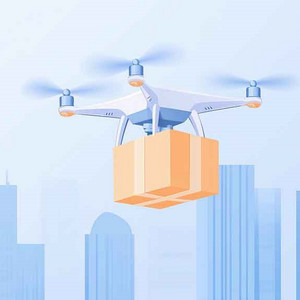
Imagine a drone delivering fresh produce to a remote village.
China's logistics revolution is turning this into a reality, using autonomous tech to reshape rural life and economies.
But can it overcome the final obstacles?
We'll explore the promise and the challenges.
We're live from our studios in Beijing.
This is Roundtable.
I'm Steve.
Thank you very much for sharing your time with us today.
And for the show, I'm with Yuxin and Feifei.
First up.
This year alone, China has delivered over 18 billion parcels, a staggering volume that is accelerating the adoption of driverless transportation technologies across its logistics networks.
These innovations, including autonomous vehicles and drones, are revolutionizing access in remote mountain villages, ensuring faster delivery of critical goods like food and medicine, while creating new economic opportunities through enhanced connectivity.
However, there are big hurdles, such as complex terrain, regulatory frameworks and the high initial costs of infrastructure, that must be addressed to fully unlock this potential and bridge the last mile delivery gap in rural communities.
So how are they doing it and what still needs to be done?
We'll try to answer those questions.
To the best of our ability.
The courier industry in China, Yuxin and Feifei, good afternoon.
It's not surprisingly huge, obviously, and it entails a lot of different branches.
But today we're going to be focusing on the autonomous delivery aspect.
Seemed like a distant future at one point, but for many it's a reality now.
So what role do autonomous deliveries play in our lives at this time?
Well, you know, we have a new set of data kicked clock in this week.
It's about the 18 billion deliveries this year in China's courier industry, which is well, as Steve said, not very surprising.
But what's surprising is the last one bit of those 18 billion parcels is a fully automated delivery process.
This parcel went through from a driverless warehouse, through driverless vehicles and then finally reaching off to the hand of a courier.
And that's very interesting because currently in the country, the postal and courier industry has continued to to expand its service network across the country, including rural areas, taking advantage of the large scale application of smart cloud warehouses, driverless deliveries and also low altitude logistics, which are all some new concepts and very hit concepts this year in the country.
Yeah, it's very futuristic um, but it is our reality these days.
And the last of you know?
18 billion parts.
It's just mind-blowing, isn't it?
18 billion parcels delivered, but the very last of those parcels is a pretty good example.
Yeah, as uh feifei just said, the very last one is delivered through all of these automated processes.
And i would say, is it an?
Uh, is it a coincidence?
Probably it is, but When we're thinking about it, it is because of the change of the quantity, change to the actual fact of maybe the last one, or maybe the last millions one are delivered by all of these automated processes.
Data from the Bureau revealed that by the end of 2024, the number of autonomous delivery vehicles in use exceeded 6000 and that far outnumbered the driverless taxis, where the leading companies in the sector operate a total fleet of just about 3 000.
The courier and logistics industry has been the biggest adopter.
There are numerous players involved.
Yes, for example, zto express is one of the leading express delivery companies in china.
The company has already deployed nearly 3000 driverless vehicles, and Jitu has over 1000 and SF Express has about 1800.
And also China Post announced in October that it plans to purchase 7000 such vehicles over the next three to four years.
So it's going to continue to grow.
And those are the vehicles, but drones are also playing a significant role.
The bureau also said that there are now over 300 drones delivering more than 3 million packages nationwide and from urban delivery in Shenzhen to rural logistics areas.
They have helped create a development model that balances the efficient city routes with inclusive rural networks means that you can actually see these kind of drones maybe delivering parcels in these mountainous areas for the villagers.
It would take a tremendous amount of planning in the urban areas and the rural areas.
I mean simply mapping out the routes itself would be a complicated process.
But speaking of the rural areas, how does the focus of the unmanned delivery or driverless delivery differ from urban to rural areas?
Is it a different process?
Is it a similar process?
Well, there are some similarities, but also I think differences can also be noticed.
For example, in very developed regions, for example in Shanghai or in Shenzhen.
I think these automated deliveries, including drones, are basically deployed to meet the high-speed delivery demands because you know the life pace in those places are very fast and people sometimes need something delivered within one or two hours.
And that can pose great challenges to human deliveries.
But drones, for example, can come in to help.
But for like rural areas in, for example, central or western part of China, that is used to help overcome some terrain challenges, to improve the efficiency of transporting products and also reduce the cost.
So there are different demands there.
But I think, when it comes to application of these technologies, There are similar issues and challenges, similar processes.
For example, you need to design the route.
You need to train your vehicles and drones first.
You need a system ready to help navigate through these different landscapes.
So there are some similarities here as well.
Similarities but yeah, a difference there, because in the rural areas it wouldn't necessarily be so much about the high-speed aspect of the delivery or the delivery time, but more about the challenges of getting the parcels there in the first place.
And the instant delivery is still being done, by the way.
That's not new uh, here in china.
I ordered i was just telling you before the show i ordered uh, two humidifiers this week for the house, and what i didn't, and i i used this for the first time the instant delivery.
I won't tell you which company uh, but you should help me out with this saying oh yeah, you can get it within an hour if you want to.
My mind was blown.
I got those humidifiers faster than i could get a pizza.
It was unbelievable, but it was delivered by a human being.
Um, the high speed aspect is there, But this is just making things a whole lot more efficient and a whole lot more possible when we're talking about the use of autonomous vehicles.
Back to the big cities just for a moment.
Shenzhen is a really good example, right?
Because these drones are in use now.
Yes, I think a lot of influencers who come to China.
You know international influencers.
They come to Shenzhen specifically to experience, for example, drones delivering their food and doing live streams and all that.
And I think also, for example, some customers in Shenzhen also they deliver documents contracts, for example, using these driverless vehicles.
And they also.
I think one of the customers called Huang.
She also said her family and friends also use drones to send fresh produce, which is also very interesting.
They're thinking that how you can purchase something online and then have a drone dropping it off for you.
So now in Shenzhen, it's not just about drones, parcel deliveries or packages or humidifiers, for example, but you're talking about food deliveries as well, and that would include also medical supply just basically, almost anything you can think of within reason.
Yeah, some of these platforms they are rigorously developing.
They're like drone delivering services, and some of them are.
They're guaranteeing you that you can actually get your parcel or deliver your food within 15 minutes thanks to the drones.
And some of them can be, you know, the maximum payload can be as big as 2.5 kilograms.
That's a big hot pot.
Kind of big, yeah.
So also within three kilometers of delivery range.
So when you're thinking about this, these kind of areas, they are having these kind of services and even faster services than usual.
And one thing is that couriers and these kind of stations they are set up to for kind of that specific service and when of course you need to have that station and or they have the kind of designated area for the drones to land and take off.
That's how the deliveries work.
You don't open your window and take your sandwich from the drone hovering outside.
It wouldn't surprise me if that's the way it's going to be in the future, though.
Shenzhen is such a great example when we're talking about drone delivery.
In the first three quarters of this year, the city's production of civilian drones grew by nearly 50 percent about 47 percent compared to 2024.
And also the commercialization of low altitude logistics in general and delivery services increased is really advancing quite steadily there.
That's the big city example.
Let's get some rural examples too, though.
Yes, for example, in eastern China's Zhejiang province, for instance, they have villages.
One of the villages called Fenglian Village is located in a quite mountainous area.
And so in the past.
For example, the village has about one third of the population aged over 60, meaning they are elderly people.
And in the past, when that village is trying to deliver meals to these elderly population, they had to rely on human transport.
And that creates problems.
For example, It's quite time consuming to travel among mountains, and when some of the meals were delivered to the homes, they were already cold.
And now taking advantage of these drone delivery services.
The local government actually partnered with some companies to do that.
And they planned five routes connecting five very scattered villages in the mountains, so that these elderly residents can enjoy hot meals at their homes.
That is one example of how they've been using this new technology.
That's always kind of inspiring to me that a lot of these policies and plans will always focus on these areas, when people like build bridges and like different routes or using drones to these maybe mountainous areas that you have to travel, or like drive for hours to get there and now you can have so much faster services right now for these villagers.
And another example is also in Zhejiang.
It's called Pan Tian Village.
It is located over 1,000 meters above sea level.
And then I searched it.
It's the village.
It's around more than 600 people living in there.
And local farmers produce a variety of specialty agricultural products like tomatoes and they're, But because of the rough mountain roads, it usually takes more than one hour to transport them by road.
And then, in 2025, the village partnered with China Post to establish a standardized drone takeoff and landing point.
Like an airport.
Yeah.
Kind of.
For the drones.
And then equipped with professional operations and maintenance team, as well as an intelligent scheduling system, and then drones with packaged vegetables automatically will fly along a designated route to the market 10 kilometers away, and the improved transport speed has led to a significant increase in online orders from the village, or maybe get into the village.
Yeah, so not only great for customers who are ordering those vegetables, but great for the farmers to get their vegetables to the market as well.
Just making things possible where it would have been nearly impossible a long time ago.
A long long time ago, but maybe more close to now, at least a little bit of a pain.
The province also plans to optimize the layout of their low-altitude logistics routes and they want to expand the use of drones in rural areas.
They want to do that for things like medical deliveries, emergency rescue, agricultural product transportation, and the list goes on.
There are some examples too, of autonomous vehicles in rural areas in the Xinjiang Uyghur autonomous region.
Yeah, exactly.
So it's not only about the government partnering with companies to do that.
Some operators of these delivery stations are also embracing these new technologies.
For example, in Xinjiang, in a county called Jinghe.
It's the size 24 times larger, bigger than Beijing's Chaoyang District.
And Chaoyang District is actually pretty big.
Yeah, it's pretty big.
You can spend like four hours commuting just within the district.
And yet the population of that Jinghe County is only about 24, is about only a fraction of that to Chaoyang District.
So you can see that when it comes to deliveries, It can be very challenging.
You know, some villages are as far as 60 kilometers away from their delivery point.
And so it would be very costly, for example for that delivery station operator you know, to have a human courier guy to deliver parcels in this long distance.
Yeah, I mean, it would be... not worth it for the delivery station.
And probably for the companies, maybe just they wouldn't deliver at all.
Yeah, for a lot of villages, not only in Xinjiang, in a lot of very remote mountainous areas in China.
You have to pick it up at certain spot yourself.
Well, but now I think one of the delivery point, the owner of the delivery point, is using driverless vehicles to deliver parcels.
And the vehicle can run eight delivery stops along the way every day and can deliver over 500 packages every day.
So it helps the villagers to not...
You know, they don't have to travel 60 kilometers to pick up something.
So I guess it would work with the vehicles as opposed to the drones.
Well, the drones would have a landing spot where people would come and pick up their packages.
I guess for the vehicles, it would work the same way.
They would stop at designated areas and then open up.
Yeah.
And then people would come and take their packages there.
Yeah.
It also happens in a lot of campuses these days in China that you know, in China a lot of universities has a very big campus and students live on those campuses and so they have this driverless vehicles where they can stop at each dormitory building and you know the students come downstairs and pick up their parcels.
So from the express delivery distribution center in that kind of a maybe bigger area, and then the driverless delivery vehicles send packages to some pickup points in each village or each area or designated area, which could be a kind of a delivery station or even a just small local shop.
Yeah right, and then they're partnering with these courier companies and then courier can notify residents to come and collect their packages, which is making things easier, and of course they maybe it's pretty hard for them to provide that kind of door-to-door service.
But i think going to that nearest local shop is convenient enough, super convenient compared to The example you gave was the closest pickup point before was 60 kilometers away.
And I'm guessing that that 60-kilometer road is not a straight A to B road.
Probably lots of twists and turns and smaller roads that would take a lot longer to drive.
The advantages of this type of system are many, I suppose, but one of the most clear advantages would be speed.
That would be a huge benefit.
Yes, particularly, I think, in urban areas.
We've covered that in examples in Shenzhen and also in Shanghai that for a lot of these express services it can be much efficient.
When it comes to with the help of drones and also driverless vehicles, it can be a very pretty good supplement to human deliveries.
But when it comes to rural areas and I think it also makes sense that, instead of you know having someone working, you know driving a truck, for instance, traveling hundreds of kilometers a day to deliver these packages you now can have driverless vehicles travel multiple times a day to make the deliveries.
And another quite noticeable benefit to these driverless deliveries is actually they're pretty cost-saving.
For instance, at one of the delivery points in Jiayuguan in Gansu Province.
The owner said she bought three driverless vehicles for these deliveries and she made the math that by using these three driverless vehicles, she actually saved in total 65000 yuan in, you know, in fields in insurance and maintenance in labor.
So it's much cheaper for her to use this vehicle.
Well, these vehicles, too, I don't think we mentioned this.
The delivery vehicles are electric vehicles, correct?
Yes.
Yeah, so therefore you're spending just a little bit, a few yuan on electricity to deliver a package, as opposed to money on gas.
And then, of course, the labor costs as well.
Also, flexibility is one another point.
Practitioners are also saying that, unlike large trucks that maybe require you to have a minimum of thousands of packages to set off because you need to make that one trip worthwhile yeah right, and then an um like uh, that kind of a driverless vehicle can start with just 600 or um hundreds of packages and make three to four runs per day, as opposed to just one run per day Yeah.
And then without the need for a driver no, limited by time and maybe never tired, but they need electricity anyway.
Human energy, not a factor.
Yeah.
So these vehicles can precisely navigate even the most remote villages and ensuring timely delivery.
So maybe at night, when nobody's on the road, they're still running to deliver your parcels and packages.
And that is quite flexible when Maybe the amount is not that big, but several runs for one day.
I would imagine as well that it would help save on other human resources, particularly in rural villages where a common problem may have been about pickup times.
Kind of unpredictable, perhaps.
Delivery workers maybe would have to wait around for a long period of time to make sure that the package made it to the person who ordered it.
And then that would be difficult to make a schedule for that.
But it would also be difficult, I would think, to attract employees to do that particular delivery route.
Or even if they had the employee, to retain that employee to keep that job over time.
Yeah, exactly.
Because for a lot of these delivery guys they rely on the orders right, the amount of orders that they deliver.
More in a day means more money for them.
Yeah.
So if they have to wait around just to deliver, for example, dozens of parcels, it just won't make economic sense, financial sense to them.
So it will be very difficult to retain and also hire such people to help around in rural areas.
And also it reminds me of another example in Qingdao.
Actually, when a food supply warehouse, they also use driverless vehicles to deliver their fresh produce to schools, because they have to be delivered between 11 pm to 3 am.
And that would be very difficult to find, these night shift drivers that can work on a very fixed schedule.
And this is the time when driverless vehicles can be very helpful.
24-7 in places that nobody wants to deliver.
They also don't need brakes.
So that can be another perk for the high employers.
What about the impact on the local economy and just the livelihood in general of these rural communities?
Because we're seeing here a great improvement in access to goods and services as a whole.
Because most of these solutions still address that kind of last three to four kilometers of transportation to that specific area right.
So in remote and rural areas, where infrastructure is often limited, these driverless, automated logistics provide a crucial link to the markets and services.
And drones and autonomous vehicles enable faster and more cost-effective transportation of goods such as fresh produce, medical supplies and essential goods from remote areas to urban markets or distribution centers.
And this reduces the isolation of some of these rural communities and making it easier for them to participate in the broader economy.
Well, that's a great point, because this is the danger of of what can happen when you have a country the size of China, has these mega cities that are very, very modern, but yet you still have plenty of rural areas, with so much happening in terms of advancements within the cities,
It's easy to see how rural communities could be left behind.
And therefore, when you have this type of autonomous delivery, it's sure it's great to get a head of lettuce on a Tuesday afternoon at 3 pm, in 20 minutes.
But it's also great to get medicine delivered.
And it's also great to keep up with what the rest of society is doing.
Yes, especially if you're considering in a lot of rural areas in China.
Their population is also aging, meaning the residents in these villages are, most of the times, elderly people.
And so it will be essential that we incorporate them into our society.
But how to do that?
You can't just force young people to stay in the village to do these services.
You have to be real opportunities here.
And I think these driverless logistics are also creating new jobs to lure young people back into these areas as well.
You have these services, for example, in this area.
That means you need people to maintain the system work.
You need people, for example, to operate the vehicles, oversee these systems.
So, you know, I think it's a win-win situation.
100%.
I'm from a hometown of a thousand people, Tadamagush, Nova Scotia.
And if Tadamagush had the same access to goods and services that Toronto did or Vancouver did, for example, it would make Tadamagush a lot more of an attractive place to be for young people.
The idea when you're young, if you're from a really small town, oh, I want to get out of here.
I want to go to the big city.
I want to achieve my life goals there.
But if you can achieve your life goals in the area where you're from, or maybe move to an area like that, that might help with achieving people's personal goals.
Another interesting point that I see right now is that you know a lot of these places, and what we're talking about is rural area.
And some of these rural areas.
Maybe economically they are not that highly developed but they can have these kind of you know, look so fancy and tacky technologies in their livelihood.
And that It's just fascinating, you know, that kind of contrast.
And as I, because I had a business trip to Xinjiang and visiting their farms and agriculture areas.
They use drones to spray everything pesticides and everything.
You can just totally see that basically no human there.
And that is a remote area.
And the drone just, you know, fly itself in that area quietly doing their things.
Yeah, I'm just saying that it's just really tech forward and in some areas.
And we can actually in big cities or in some populated area, you cannot see that.
Maybe because of the nature of it is for that specific reason. maybe not that populated area.
I do have a question, though.
In these remote areas.
I don't know if this would apply to drones as much as it would apply to autonomous vehicles, four-wheel vehicles, but what about things like accidents or the vehicle breaking down?
Because in those remote areas, a nearby human would need to come and solve that problem.
Is that an issue or is it not really an issue?
Because, as you mentioned before Yushin, this is kind of last mile delivery within a three to four kilometer range.
It's unlikely that a vehicle is going to get stranded in the middle of nowhere.
We had the conversation on how advanced these driverless cars can be.
Of course, they are equipped with these LiDAR scanners and sensors, everything.
They will have the ability or capability to avoid accidents.
That obstacles but still, but do people have the ability to avoid those?
Yeah, i also saw some videos online that sparked a bit of controversy.
Uh, in many of these, especially villages, area people usually, you know, spread their crops like corns uh, out on the ground to dry, to dry them.
But These driverless vehicles cannot recognize that kind of layer of crops on the ground.
And they drove over them?
They drove over it.
And that leads to villagers just kick the vehicle and make them stop.
And others argue that the villagers are actually occupying public roads.
So that is some...
There are some issues that maybe wait for the companies to solve or the management of the village to solve.
But it is a process that human and robots are getting along with.
There are a lot of problems. potential problems in terms of small issues like that.
Well, that issue wouldn't be so small to the person who laid the corn out to dry, I'm sure.
But easily solvable, we hope.
And there is a lot of government support coming in terms of opportunities.
There was one particular region where the municipal government they put out some measures to promote these express delivery services.
This is interesting.
For postal companies that invest over a million yuan that's about 140000 in autonomous vehicles or automated equipment, the government will offer a one-time subsidy of 5 of the investment amount, with a cap of about 200000 yuan, or that's about 28000 yuan per company of 28000.
So there's incentives for these regions to get involved in autonomous delivery as well.
It's a really interesting development.
Of course China, one of the more advanced countries in the world when it comes to things like autonomous delivery, but it's wonderful to see that the rural areas are not being left behind as well.