You're listening to Roundtable, I'm Nyeong -hong Lin, joined by Steve and Lee E.
Coming up, you might think that exploring a wealthy neighborhood is something reserved for real estate agents.
But think again, young people are turning these high -end communities into weekend hangouts.
Who needs tourist traps when you have luxurious pools, gyms, and really nice gardens right in your own city?
It's a fun, accessible way to unwind.
But it also hits a deeper cultural shift in how we approach leisure.
So let's dive into this emerging trend and see what it's all about.
Why bother traveling to crowded tourist spots when the finest enjoyment are just around the corner?
Forget international travel or popular scenic spots, young people today are choosing reserved tourism, spending their weekends exploring all kinds of residential communities, especially the high -end ones.
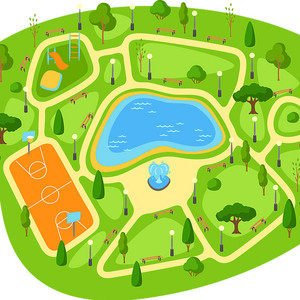
With scenic gardens, fancy gyms, and outdoor pools that rival five -star hotels, these gated communities offer a taste of the good life without breaking the bank.
So when it comes to this particular topic, one thing very interesting is the idea of community area or residential community area in China.
Yeah. And that was going to be question number one for me.
This is something that I haven't learned about just yet.
So please do tell me, when you say community, what exactly are you talking about?
I think it's more like an apartment complex area here in China.
So you do have a lot of, well, residential buildings in this one single neighborhood or residential community.
And it is rather enclosed, meaning that one residential area, there are like walls to separate the residential areas from the main roads.
So that it's very clear that all this square is this apartment complex, but meantime, not every single apartment or residential area is that strictly enclosed.
So you can still visit this area, even if you don't really live there.
So it is this community idea we're talking about here in China.
I think that can be different from the other neighborhood idea.
My parents live in Florida in the United States for six months a year and they live in a community where there are rules.
I think you have to be over 65 to own a house within that area.
And it's a gated walled off area as well.
So you cannot go in, you cannot just drive in if you don't have the card for the gate to open for you.
Inside there, they have a swimming pool.
They have a community center where they can take classes.
My aunt took an iPad class, which I thought was awesome.
She was learning how to use apps since she was like 82 years old.
And they have, I think there was a bar in there as well.
It's like everything they need within their own gated walls.
Is that kind of what we're talking about here?
Maybe not to that extent.
Pretty similar I think.
Well, of course, you have to think about different positions of different residential areas, of course.
But I think in general here in China, when you are talking about this residential area complex, you do have this shared facilities as well.
Maybe not something as swimming pool for each area, but you do have this gym or public gardens where seniors and also children babies can just run around and interact with people, talk and everything.
So depending on the community, obviously some will be much nicer than others.
But the nicer ones, the high end ones, they'll have nicer facilities in the public areas, I guess.
Or the newer ones. Because I remember when I was a kid, I do also live in this enclosed area.
There are walls and stuff.
And also the security is quite nice.
But within that area, you only have the residential buildings.
That is why we often say that residential building communities, something like that.
But later on, you realize that when people or when the developer of these residential community areas are starting to wanted to attract more residents to get inside, so they started to add much, much, much more facilities into that enclosed area.
I see. Not only are we talking about swimming pool or gardens, actually, sometimes they would invite some exquisite cafe in.
Bars can be get can be inside.
And like Steve has just said, the kind of community that offers different types of classes and services like tennis classes.
And all these are included in the residential, bigger and bigger residential communities.
So the latest, I think, trend is that since we have all these different types of communities around us, maybe we can go explore what is this many environment include?
Yes. And I think you just talked about, I mean, different definition of how we categorize this residential area, of course, I think high end and low end can be one way to put it.
And yes, I pretty agree with the new and old ones.
Because while taking Beijing, for example, here you can see a lot of actually pretty old residential areas and which were established, say decades ago.
And, you know, well, for people living in, say, 40 or 50 years ago, that can be a pretty good and sufficient residential area in terms of daily living and buying groceries and everything.
But then maybe say in recent years, people start to own private cars, and especially each family can can have their own private cars.
So you start to worry about these parking spaces.
So that's why you do see some public spaces are being turned into public parking spaces and which can somehow be not very pleasant for people living there.
But for new residential areas for new apartments, I think they will design the underground parking spaces, which can provide more public spaces for something like this swimming pool, cafes and everything to, you know, enhance the living quality of people living in this residential area.
I think in different parts of the United States and maybe Canada as well, we have these kind of gated communities.
But as far as I know, and they probably they have great facilities inside as well, the newer ones or the more expensive ones, tennis courts and things like that.
But as far as I know, and I could be wrong, but I think I'm right.
Those areas are closed off to the general public.
You can't just wander into their community and go for a swim in their swimming pool or play tennis in their tennis courts.
But in certain parts of Beijing, not all, correct me if I'm wrong, not everywhere.
You can't go into all of these public or these community areas.
But in some of them where they do have swimming pools and they do have tennis courts in different facilities, there are spaces where the public general public can go in there and enjoy these spots.
And that's the trend.
That's what young people are doing here.
Yes. And I don't think it's a new trend, because at least for me and some of my friends, when we were in university time, actually, I'd like to wander in community areas, not for the luxurious enjoyment or anything.
It's just like once you're, for example, visiting a new city or you're just in your old city, once you get into the real community area, residential area, you can take a look at how people live.
For example, when I was in Shanghai, I really do like to go into those little alleys and I think some of them are linked, intertwined with each other from this community area.
You can actually go to the other one and you also even see some of the clothes they hand up there when they actually wash them and hand up there for it to get clean, get dry.
And walking into those areas, you can also hear them talking to their neighbors a little bit.
It's a really fun way of knowing how exactly how local people live, like a hutong area.
So I totally get the idea of traveling or visiting these residential areas.
But apparently these days, these young people are taking advantage of it much more.
Nobody's walking around trying to see underwear hanging from a window.
They're looking for better things.
Yes, so they are having something like a picnic in public gardens and parks in those residential areas.
And of course, they will just visit cafes and restaurants located in those areas.
And for those areas which offer spaces for outdoor activities, of course, they will just also take advantage of that.
And meantime, I'm also thinking that might also have something to do with the overall design of this area.
I mean, not only this residential area, but also this large area in general, because you mentioned Steve, a lot of high end and new residential areas, they are not really open to the public.
But I think you have to consider the area, I mean, the size of this place, of course, if it is just a very isolated residential areas.
And meantime, you also have to consider the benefits of people living inside it, right?
They might not really want to welcome a lot of strangers on a daily basis.
Yeah, I was going to ask, I can see why people would want to go hang out there that don't live there.
But from the people who are paying for those apartments or have paid for those apartments, you would think they wouldn't want the general public coming there every weekend to hang out.
Of course. So that's why I think it's really important to design a better environment and layout as well.
Because one example I can think about is the Arsha Island in Guangzhou, and I have visited that area as well, because it is a very small tiny island in the Guangzhou City, which is in the southern part of China.
And on that island, there are some like a lot of high end residential areas and including villas as well.
But meantime, they are like a separate areas, you know, and meantime, alongside those residential areas, there are like green parks, I think there are five or four green parks on that small islands.
And meantime, there are also cultural venues such as concert hall, museum, and also cultural exhibition hall and everything.
So, so the whole island really offers this, you know, quite soothing and artistic atmosphere as well, which also part of the reason it become also popular tourist destinations.
So on the official website of the local government, it even recommends I mean, give you some camping advices or you know, the general public to teach you to tell you where are the best spots to visit this island.
So, but meantime, they're also doing a very good job in terms of separating different function zones, which can also guarantee the living or where the benefits of people living inside those residential areas.
In the meantime, the random visitors as well.
Yeah. And let me provide you with my mommy perspective.
Sometimes in China, some of these residential community areas are designed or are close to each other.
So you would see several ones being really near each other.
And a mommy would like to walk their kid in the neighboring areas because the facilities in your own community area is a bit too, you know, old and the same for your kid and he or she would want to, you know, even if it's the similar kind of facilities, it's just a new place and makes them feel the novelty
and makes them excited and happy.
So sometimes we would visit each other's residential community areas.
And in that sense, people are not, people started to make friends with your neighbors, a bit far away neighbors.
And it's not that huge a problem seeing quote unquote strangers or people who do not live in the residential area.
You're not, you're not annoyed by that?
Not that much, because let's face it, even we're talking about it as if it's a new trend trend.
It's not that common or popular.
It's not like one million, well, 10 ,000 people rushing into your community area and jumping into your pool.
It's still just something that's people randomly too.
Yeah, I'm kind of reminded of Venice Beach in California, which is a community.
It's not a gated community.
Venice Beach is one of the most famous beaches in the United States.
The beach itself is in the front next to the ocean, obviously, but the houses and the communities, it's really beautiful.
There's little canals and you walk down the canal area and the homes are there and tourists do it.
And I think it's kind of a similar thing.
People go there, they take pictures for their Instagram and then they go to the beach.
Yeah, so it's the same kind of concept.
And I asked when I was at Venice Beach because my friend that I was with told me his friend lived there.
I said, does your friend not get annoyed by all of this?
And he said, no, my friend said that people who live in this community, they just know.
They just know that this is a tourist spot.
This is what they're buying, when they're buying the apartment.
They know before they get their place there that this is what it is.
And they like that.
And that's why they want to be there.
And also, Venice Beach is stunning.
So they want to be there for that reason, too.
And the last thing I want to ask is a little bit associated to the Road Cities Day, which falls onto the 31st of October.
When it comes to cities, we want something that can cater to our everyday needs.
We want the community to be nice.
We want the environment to be friendly.
And we want the facilities to be rich so that all of our desires can be met.
And in the meantime, what kind of communities do you think are good communities that are modern, that can be for the future, for example?
What do you think? What would you like to see, Lee?
Well, I would say the most important thing that matters to me is the availability of various facilities and services, because, well, of course, it really depends on a different person.
But for me, if my residential area could just offer services like hospital and also maybe childcare and also grocery and everything, very, very basic, but very important services that matters to your daily life, I think that I will be happy to stay within this residential area.
No, I know. And yeah, there are initiatives in cities around the world that are aware that people want that type of thing, where you have your schools, your hospitals, your supermarkets, your parks, your everything within walking distance so that people who live there, they never really leave their
neighborhood. Yeah, I think I think here in Beijing and also in a lot of cities, they are they are already building this so -called 15 or 10 minute life circle as well.
Somehow, like, you know, my mom and dad used to have when they were young, you know, something called that you are and within this one residential area, you've got everything, you don't really have to leave this area.
But I think they are very important services to people as well.
So I think now we do have this, I mean, different facilities.
And I think if we can offer more and more comprehensive facilities and affordable to people living there as well, I think that would be a very sufficient community for me.
Well, I have more unrealistic and bigger dreams.
I hope all the residential communities can pick a theme and decorate everything with the theme, and they can have a lot of different facilities.
And I can be a tourist, travel between all of these different, you know, I can pick a traditional Chinese costume kind of community to visit this weekend and go to the, you know, space science themed community area the other day that will make me happy.
Lovely. And unrealistic.
Also unrealistic, but lovely at the same time.
Yes. So what would be your dream for future community areas or maybe just yours?
Let us know in the comment area of wherever you listen to your podcast, and yes, you're listening to a round table.
Coming up next, let's find out how come some people are sending their pets to work.
Stay tuned. Looking for passion?
How about fiery debate?
Want to hear about current events in China from different perspectives?
Then tune in to round table where East meets West and understanding is the goal.
It's round table with myself, Neil Hongli and Steve Hatherly and Li Yi.
We've all heard of working hard to earn a living, but what if it's your pets doing the hard work?
Welcome to the adorable world of pet jobs in China where cats and dogs now clock in in cafes, charming customers in exchange for snacks.
So would you opt for dropping off your dog at work for the day and pick them up later with their paycheck in treats?
It's an awesome story.
This might be my favorite story that we've done on round table for as long as I've been on the show.
Have you been to a pet cafe or an animal cafe before?
Before having my cat, I used to, yes.
I enjoy it quite so much.
Well, I'm actually sensitive to, I mean allergic to fur, but I do have visited one dog -themed cafe where you can have this chance to pet those very cute dogs, but yeah, I think they're cute.
Yeah, the story is not for lady.
You can go back to the office now.
We'll wrap things up here.
The first cat cafe in the world was called a cat flower garden in the Taiwan region back in 1998, became popular among local patrons and tourists there, primarily from Japan.
And then after that, the world's second cat cafe opened in Osaka, Japan.
And after that in North America in 2014, the one in Japan was 2004 and cat cafes became super popular around the world.
And then it moved on to dog cafes and other kinds of, I mean, now you can find various animals and various types of cafes around the world.
The first one opened in 2011, according to CNN Guangzhou.
And the number of similar establishments since that time grown by 200 % per year.
That's unbelievable.
That's according to data from CBN data.
So as of 2023, there were more than 4 ,000 cat cafe related companies in the country.
And now the trend, and I love this, is for cats and dogs to go to work part -time.
Now, how does this work?
Have you ever wondered at a cat cafe or a dog cafe, whose dogs are those?
Where do those dogs come from?
Most of the dogs and cats belong to the owner of the cafe.
They can. And there's other instances where a local shelter will run a cafe as well.
So sometimes the dogs and cats will be available for adoption.
There's those types of cafes too.
But this is a different trend here in China right now.
So here's how it works.
A cafe owner will post a job posting, looking for cats or dogs to work at their cafe.
Then they can look on the internet to find the resume of some local cats or dogs.
This is getting too real.
I love it. They find a resume of a cat or a dog, which is posted online by their owner.
They contact the owner.
They bring the animal to the cafe.
They spend about an hour or two or so.
Interview. Letting the animal play with the other dogs or cats that are already there and also allowing them to interact with the customers a little bit.
And then if they get the job, well, then they're hired.
And here's how it works after that.
The owner will bring the dog or the cat to the cafe, drop them off on their way to work as you would with your child.
I suppose dropping them off at school.
The dog or cat works at the cafe during the daytime.
After work, the owner comes back, picks them up and off to home.
They go just like a regular work day.
Sounds like a kindergarten to me.
It sounds like a day, like a doggy daycare.
But I think the difference is here is that the owners don't, the pet owners don't pay anything to the cafe.
From what I understand, the cafe doesn't pay anything to the pet owner.
It's just a mutually beneficial relationship because the cafe is populated by friendly cats and dogs.
The owners, they can go to work stress -free, not worrying about taking care of their animal during the day.
Or should I say, no one taking care of their animal during the day.
Also, one person from the story was talking about how in the summertime it was really stressful because air conditioning is really expensive and to leave the dog at home in the daytime was really pricey because of the air conditioning.
You have to leave the air conditioning on by sending the dog to a cafe to work, then no air conditioning during the day.
The cats and dogs get paid in treats.
Well, very interesting story.
But I have to admit, it's much more legit and reasonable because once I was listening to this story and doing the research, I was imagining if I were the cat, I'd be super stressful because I have to go work in social with other cats and also strangers, hence the customers.
And I have to earn my treats.
I usually just get my treats from my mommy, my owner.
So yeah, that's very stressful.
But I heard about the interviewing process.
That's a huge relief because we all know pets, dogs and cats, they have different cat ability, or no, excuse me.
Cassin cat, her nality and dog and personality, I was thinking about that.
And they have to some of them are introverts.
Some of them are extrovert.
And having this interviewing and resume process is actually a way to protect these pets, making sure they can get along with those living already in the cafe.
It's win win, honestly.
It's great for the cafe owners.
It's great for the pet owners as well.
Be warned though, that just because you post your pets resume on the internet, it does not guarantee job success.
One woman named Jinjin has a two year old tuxedo cat named in English, not stupid.
That's the cat's name in English.
Zhongbuhr, is that something?
If you recognize that.
Anyway, the kitty's resume has been up since early September, but no job luck just yet.
Still looking for employment.
That's the downside with competition and everything in the future.
If my pet gets the better job, I would, you know, frown upon you're not smart enough lazy cat who's not still still not working, still staying at home.
Well, I'm quite worried, you know, when your cat is too happy in those cat cafes, and especially when they're, yeah, and when they're, you know, go back home and they're just along with you, they might be feel like oh, a little bit disappointed because I can be the king or the queen in a cat cafe.
But now I'm the only cat in a family without friends or that common shows that pet owners today put too much of their own interpretation in the world of pets.
They don't care at all.
They don't care that much.
But definitely. I think that is a playful way to entertain pets and a creative solution to household costs when it comes to raising a pet.
And that brings us to the end of today's roundtable.
We'd love to hear your thoughts on today's topics.
Leave us a comment or send us an email to roundtablepodcastatqq .com.
Until next time, keep the conversations going and the ideas flowing.