Hello and welcome to the NVIDIA AI Podcast.
I'm your host, Noah Kravitz. Buckle up, folks, because today we're going deep into the mind of artificial intelligence, academia, and theoretical astrophysics.
We're going to explore two questions at the heart of modern day PhD research.
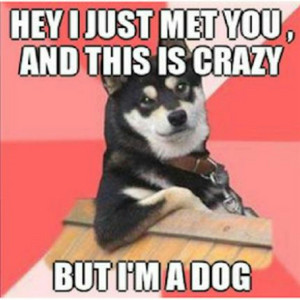
What's a meme and what makes a meme dank?
All right, so these questions might be a little more at the fringes of academia than in Stanford's core curriculum, but they do have applications to AI and deep learning research.
Our guest today is Lawrence Pearson. He's a PhD student in theoretical astrophysics at Stanford.
He's also the co-author of Dank Learning, a white paper detailing a neural network he built with a classmate that generates captions for memes.
And I swear some of them are even funny.
Lawrence, thanks so much for taking the time to join the AI podcast.
Thank you for having me. Okay, first things first.
For the uninitiated out there, what's a meme and what makes a dank meme dank?
Wow. Well, that's actually a very involved question.
So it's a tough one to start with. I think Richard Dawkins actually first coined the term meme a while ago in one of his books.
I can't remember which one. But the idea of a meme, I think, is a sort of reproducible cultural kind of media item that you can mass produce, distribute, and carries with it some kind of cultural reference or implication that's usually humorous, I would say.
If it wasn't for your background in theoretical whatever, I wouldn't have thrown this question at you.
It's a little bit of a weird nebulous thing, right?
Everybody talks about a meme, we trade memes, all that stuff, but putting your finger on what it is, A little nebulous, but kind of perhaps more importantly, tell me about Dank.
Dank. Well, so since memes were kind of created some years years ago, they've kind of taken step forward steps forward every every year or so and become more and more esoteric in their nature.
And the most recent well, semi recent transition has been to this kind of dank meme, which is a meme that sort of references maybe kind of drug culture in some sort of way.
I was going to say, I'd always heard the word dank associated with...
Well, nobody says marijuana, but you know, marijuana is legal in California now, so we can talk about it on the podcast.
It's okay. But is that kind of where it came from?
That's where it originated. So it was like dank memes or something that were like, you know, either to do with marijuana or like, you were kind of very high when you came up with them or like you have to be sort of high to enjoy them, that kind of humor.
Got it. And now it's kind of transitioned into just extremely strange types of meme, which you can, if you go on Reddit for about five minutes, you'll see what I'm talking about.
But yeah, things have kind of gotten out of hand.
And there are all sorts of different media formats that you can have these days with gifts and like, videos and mashups and all this sort of thing.
So it's really kicked off. Walk us through the timeline.
You're pursuing a PhD in theoretical astrophysics. and you're interested in AI, decide to take a couple AI courses.
I don't know if I have that much right, but pick it up from there and lead us to Dank Learning.
Yeah, I came to Stanford. I was doing some astrophysics research, decided to take a few AI classes.
I even rotated with an AI group that did kind of neuroscience AI stuff and I learned a lot about image processing AI and convolutional neural networks working with them and taking these courses One of the courses I took was also natural language processing, which is the ability of AI to understand and create language.
And so while I was taking these courses, we have to come up with a project to work on for the end of the course.
And part of your grade is all to do with this big project.
And I've always loved memes since the beginning.
I have my own meme page and everything. It's a very esoteric meme page.
It's called the specific heat capacity of europium as standard temperature and pressure, if anyone was interested in that.
Sidebar here, what is europium? europium's an element i just i got into this is it a dank element is it the dankest element Some might say.
Don't say no. Don't say no. The page followers would probably say that.
Good. Okay. Yeah. I got into a phase where I was quite into extremely sort of specific things i found them quite funny and memes related to that and how memes often um target kind of subcultures, you know, like there's a chess memes page, like sports meme pages, all these kind of things.
And the more specific the subculture gets, the funnier I kind of find it because I think it's quite ridiculous.
And so I made my own version of that. Yeah, so the important thing is that I love memes and so I was thinking, what am I going to do for my NLP class project?
And I considered the first thing I actually thought of was a slang translator.
So something that takes, um, written urban slang and translates it into normal English using something like urban dictionary is it's, um, data source.
But I quickly found out that was going to be too difficult because of the nature of the data sets you need.
But then I came up with the idea of having a meme generator, because there exist already many image captioning networks that take an image of a surfer and say, this is a man riding a surfboard or something like that.
And it's a nice combination of like, image processing and language processing.
So I thought it was the idea. Not that I wasn't paying attention, but I of course had to look up your meme page.
I'm looking at it. And I'm just going to be honest.
I mean, the listeners can go. You can Google it.
If you go, there's a blog post on the MVIA blog now. about your work and the page is listed there.
And so it takes you to a Facebook page. I don't know what is happening on your page, man.
You know, I'm a pretty smart guy. I'm a little older now, so I'm not up on all the crazy interweb stuff.
It just looks like you've got this cell from the periodic table just haphazardly on Harry Potter's face and The Simpsons TV and stuff.
But I'll take your word for it. Take your word for it.
So you've got natural language processing.
You've got urban dictionary. So already we're on a road to ruin here.
But the slang translator wasn't quite it.
So where do we go next? So yeah, I figured that people, it's always been quite difficult to produce humour with AI, there's been some research into it hasn't been very successful.
Um, so I wasn't very optimistic about this project when I started it, but I thought it was going to be, you know, a bit of fun and like, we'd see what would happen.
Sure. So then I just took a normal image captioning network of which many exist, which are very good. and made a bunch of alterations and additions to it. scraped a data set of 400,000 memes from meme generator.net.
I should say actually, I've kind of with this meme generator, I've started right from the beginning.
So I've taken it generates original style memes, which are just an image with a caption on top of the image, right?
There's no super crazy, you know, stuff going on there.
There's no video gifts or like, chopped up images or put on top of each other.
It's very standard. And I thought for the first meme generator using AI ever that that would be a good place to start rather than being too ambitious.
It's a historical perspective and I appreciate that.
So yeah, absolutely. It's good. Yeah. Yeah, and then the rest is history, I suppose. tried it out, trained it, and to my great surprise, it was genuinely very funny, actually. so you said you scraped a data set from uh meme generator But how did you hone in on training them to be funny as opposed to just sort of training them on a definition of what a meme is?
Hmm, well, the approach I sort of took is one which I think many people well, maybe not many, but some that I've met take in the community, which is you have your problem, you just get your data set.
You let the network train and it figures out everything for itself.
You don't have to fine tune it in any way.
You've just got data sets straight to output. and you let it run.
And then you see what the results are. Right.
So by doing that, it by itself, it learned, you know, given a certain kind of image, of say, I don't know, like a face very close up, there's a certain kind of caption that goes with that sort of image for a particular expression of the face that's appropriate and then it learned like many different types of that caption and it can apply sort of image appropriate caption, which happens to be funny because the whole training set it trained on is all kind of funny captions.
So it's kind of the classic AI thing or computer science thing that you have to start with a good data set.
And in this case, it's... funny memes. Absolutely.
I mean, to be fair, actually, many of the memes aren't particularly funny on the on the data set.
I've kind of gone through them. But uh, There are enough funny ones in the amalgamation of the style, I think, is what the AI really learns.
Right, right. That's a good way to put it.
In a minute, we'll get into some of the things you found out about how human beings, or at least the ones who create memes, are apparently just horrible, horrible people who are racist and sexist and all that stuff.
But to your point, if you spent five minutes on Reddit, you'd know that already.
Is there anything that surprised you in the process of doing this or as you were writing up the research?
Anything that surprised you about the technical aspects and designing the network and what you found out?
Or if not, sort of another question I wanted to ask you was coming into, I don't know how much of a computer science background you had already.
I don't know what a theoretical astrophysicist does.
You can start with that if you like. But kind of coming into these AI classes, not as your... you know, not as your life's work and your bread and butter, but kind of getting into it.
Was there anything about working with AI kind of, you know, for the first time that surprised you?
Yeah, when I came to Stanford, and everyone was talking about AI, it seemed, you know, so exciting and like amazing.
But once you once you really get into it coming from a physics background, It's actually not too too complicated.
You know, it's just a bunch of linear algebra.
What took me the most time to get my head around was the kind of programming languages. because I'm not a super experienced CS kind of person.
So I had to learn TensorFlow and all these kind of things.
And it took me a while to learn the ins and outs.
But once I had that down, the process was pretty simple.
And I feel like I feel like many people could have done what I've done.
What we did was was pretty basic, to be honest.
So that's why I was I was surprised it works so well.
Now, so to level set and kind of humble myself, if not some of the listeners, when you say it took you a while to get your head around TensorFlow and this kind of stuff, How long did it really take?
So I spent all of my Christmas holiday doing a kind of online... reading through the notes of this online course.
And I was working pretty hard over Christmas.
So that was like, three to four weeks, and then I was working simultaneously in an AI group and taking two of these deep learning courses at Stanford.
And by the end of that quarter and that Christmas, I felt like I was pretty good at what I was doing.
Okay. I've got some friends who've been struggling with JavaScript for 20 years, but that's fine.
So from there, you wrote a white paper. and published the white paper and the white paper got some attention.
Tell us about all that. You've been getting calls for interviews.
Obviously, you're on a podcast. People are interested in Dank Learning.
I think, yeah, the first thing I saw about the paper, which kind of surprised me was, well, first of all, at the poster session for the project at the end of the course, Everyone loved it.
Everyone loved the paper, the idea. Someone actually came up to me and said, I'm just absolutely sick of all these like AI and medicine, like bollocks, like, So nice to see some actually useful science.
Oh, the future's in good hands. That's right.
Some research the world needs. Yes. And then the professor thought it was really funny.
He tweeted it. And after that, you know, it was pretty quiet.
People were asking me to meme them and stuff like that using the model.
And then when I published the paper on archive, someone posted it to the UC Berkeley meme page.
I don't know how they found it. And that was like a massive post.
And then after that, some news articles started popping up.
And it was all very, yeah, I don't know. kind of strange being on the inside of something going viral.
Right, right. it's sort of you see the time it takes for different news networks to get a hold of something that news a different news network got hold of first.
And it kind of trickles along the chain.
Where are you at in the lifespan of your virality?
Are we tapering off? Yeah, I think we're in the tail at this point.
Although maybe with the app coming along, it might bump up again.
Right. And how long was the how long is the whole viral experience?
About a month. About a month, yeah. That's pretty good.
I had... I had two or three weeks myself a while back for something much less fun.
And it is an interesting thing. So there's an app coming.
Let's segue into that. The app also called Dank Learning because, you know, why fix something that ain't broke?
And what's the app going to do? It lets you take any picture you want.
You can take a photo on your phone through the app or go into your photo library and it'll caption. that image for you and it'll caption it infinite number of times you can just scroll through your picture with the meme text on top of it and scroll through and kind of choose whichever one you like the most, click on it, and then you can slide the text along to be in the orientation that you want.
And then you can save that, share it, whatever.
Yeah, it's great. Pretty simple. Cool. When's that going to hit the App Store? the apps pretty much finished.
But now we've run into all this kind of stuff that I didn't foresee, which is a bit of a pain, like starting a company and and all this like stuff which i didn't expect because i'm new to all this right right So that's going to delay it.
You're just a humble theoretical astrophysicist.
Yeah. What do I know about commerce and memes?
Now that's your, I'm looking at the NVIDIA blog page with the, do you know that I have a girlfriend meme?
That's you on that one? Yeah, that is me.
Yeah, very cool. We're talking today to Lawrence Pearson, who is the author or co-author of of a neural network that produces captions for memes and a white paper that went viral called Dank Learning and a forthcoming iOS app called Dank Learning that will use the power of AI
To caption your memes infinitely, you can spend all day just recaptioning the photos in your photo library.
It's good fun. Let's back up a little bit.
I'm only teasing you about the astrophysics thing because... you know, it's you're like half my age and I'm sure no things about the universe.
I'll never know, but, um, let's, let's walk back.
Um, I think in my notes, I had a great question like, were you dank as a kid?
I'm not going to ask you that, but how'd you get into, you know, how'd you wind up at Stanford doing what you're doing?
Where'd you grow up? So I was born in Spain.
My mom's Spanish and my dad's American. And but I grew up in London from the age of five.
Okay. So that's really where I'm from. I went to school there.
I wasn't particularly dank. I can tell you that for free.
And, you know, I like doing crew and sports and all this sort of thing.
And then I ended up going to Oxford to do physics.
I always loved physics. I thought there was something quite special about it and I was always good at it.
So then I spent four years there. That's when I made my meme page and got very into memes.
Actually, I caught the train a little bit late, I would say compared to everyone else.
It was the Harambee meme. that really got me into memes.
When Harambe was shot, that was the birth of dank learning.
You can trace it back to that moment. I have a feeling 20, 30 years from now, internet historians will be able to trace a lot of things back to that moment.
I could be wrong, but I don't know. I agree.
But yeah, and then I wanted to continue with physics. wanted to do a PhD, I thought I'd like to do something new.
I felt like I'd kind of done enough of Europe for the time being.
My dad's American, so I thought, why not? go back to my roots a little bit.
So I decided to apply to US grad schools and ended up coming to Stanford.
And how long have you been at Stanford? This is my first year.
Oh, this is your first year. So how's the weather treating you?
Oh, my God. Amazing. It's really, it's such a mood improver.
I underestimated how great that could be.
I didn't come from rainy London, but I came from the cold northeastern United States.
I always thought I'd miss winter when I moved west, and I do not miss winter.
And so your foray into AI and doing some learn a little CS over winter holiday.
Are you going to stick with it? Is it something that's applicable to your work in astrophysics, or is it kind of... you know, yeah, I went viral.
I'll go back to my meme page and doing what I'm doing.
No, I'd really like to continue with it.
I'm actually pushing my supervisor right now to let me do a deep learning related project to do with looking at gravitational lensing in sources using deep learning.
So what is gravitational lensing? It's when If you're looking at a very distant galaxy or a star or quasar or whatever, very far away, If some some other massive body comes in your line of sight between you and that object that you're looking at, like a black hole or like a smaller star or something. the light bends around that object and it becomes a kind of lens.
And so it focuses the light towards you or defocuses it.
And so you can see these in the light curves of the sources that you're looking at as little bumps or like troughs.
And so what would deep learning potentially do for your work on gravitational lenses?
So it's often quite hard to the data for a particular type of source called a blazer, which is something I'm very interested in in my research. the light curve for that source, the intensity of light over time as you look at it, is very noisy.
So it's hard to make out patterns in the data.
If you want to find these lensing events, you need to look very closely and fit it and all this kind of thing.
But famously, deep learning is extremely good at pulling out patterns from data.
So I thought, why not apply this to this problem right here?
Absolutely. Cool. Well, if your supervisor is listening, you know what to do.
Let Lawrence run. So one of the things, this is mentioned at the end of the blog article that I mentioned about the tank learning.
You mentioned the potential for using this kind of the captioning tech. for marketing, advertising, other things kind of influencing the public sphere, that sort of thing.
I don't know how far you got into thinking about that kind of stuff, but this whole idea of...
AI generated content. We've had folks on the podcast, we had an episode about building zombie armies.
And so it was using AI and it was talking about graphic design and the gaming industry and artists being able to use AI to sort of do the grunt work, right?
And sort of setting this This creative direction and then the AI can kind of fill in things that are, you know, usually very time intensive and resource intensive for humans to do but don't necessarily require. a lot of creativity it's more kind of taking direction yeah you know have you thought about or have you even had inquiries from you know sort of content farms so to speak about about applying this tech?
I have had a few people approach me about similar kind of things.
And that's one of the reasons that it sort of dawned upon me that this could have quite a wide influence in the future.
I don't know, there were a few things that that led me to believe this could be quite big in that sense.
For instance, there was a A meme a while ago, a few years ago, when a Star Wars game came out, Battlefront 2 or something like that, Battlefront 3.
And there was a kind of meme that used a scene in that game that became very popular at the time.
And it kind of made me think, wow, you know, like, if you can get all these, there are hundreds of thousands of people that consume memes on a daily hundred millions of people. that consume memes on a daily basis on social media.
If you can get your product or whatever it is you want people to see, to go viral in the form of a meme, then you're in business basically.
Right. So yeah, for sure. Like this has an application to those kind of, spheres all right before i let you go i'm gonna go back to your main page right i'm looking at the page right now and if you're You're listening along.
You know, we know we have listeners who listen during their commutes, so you might not be able to do this, but I'm going to pick one that maybe people are familiar with.
October 29th, 2017 is the date on your Facebook page.
And it's the meme. of the guy the kid with his girlfriend and another girl walks by and the pictures of you know the guy is looking over his shoulder at her with one of those woo-wee looks on his face, and his girlfriend has a look of disgust.
Right. And then, you know, blurry in the foreground is like the girl who caught his attention.
Right. And so that one, a lot of people are familiar with that one now on.
On your page, okay, the meme here, and there are nine people who like this, so...
You know, take that for what it's worth.
It's a big deal. It's a big deal. Thank you.
I don't know what the qualifier for dank is to make it extra dank, but it's extra dank.
So you've got, it looks like it's the periodic table cell for Europium, and there's one on each of the three people.
But it's like the guy, it's just the periodic element.
His girlfriend, it's got two pluses next to the EU symbol.
And then the newfound object of his inappropriately lusty desire has three pluses on hers.
Now, is it one of these cases where if you got to ask, you'll never know?
Or can you explain the joke to me? I can actually explain this one.
Okay. I can explain all of them actually some some require more kind of tenuous links than others.
I'm sure they do. But this one's pretty simple.
Basically, European can take two possible ionization states.
One is two plus and one is three plus. And the two plus state is much more common than the three plus state.
So what you're seeing there is like the Europium, the guy is looking for the less common three plus state.
Yeah. It's a problem that guys in memes tend to have.
It's a relatable meme. And that's what makes it go viral.
It's so relatable. Exactly. I cannot think of a better place to end this conversation than on that.
Lawrence, thank you so much for coming on.
It was truly a pleasure. Obviously, you are on a path to all kinds of wonderful things life experiences, meme and not meme related.
And I'm just glad you're sharing them with the internet.
That's really all I can say. If people want to find out more, obviously they can Google Dank Learning and they will come across your white paper.
The app, you said, is on its way, but now you're dealing with the commercial side of being dank, so not exactly sure when it's going to come out, but that will be on the Apple iOS app store.
If folks want to find out about, you know, the other work you're doing in theoretical astrophysics and whatnot, is there a place online they can go? there's my GitHub, I suppose.
Okay, the best place to have a look. Yeah.
Terrific. And then of course, there's the specific heat capacity of europium at standard temperature and pressure. which is available on facebook.com for all of your meme needs.
Yep, absolutely. Please, please have a look.
Great. Lawrence, again, thank you. It was a lot of fun for me, hopefully.
Well, thank you for tolerating me anyway.
And I wish you sincerely all the best to work or all the best of luck rather on all the work you've done.
Thank you very much for having me. This is lovely.
Thank you.