get the unmissable news stories of the day.
This is the Beijing hour.
Examining the events that impact and shape China and the rest of the world.
This is the Beijing hour.
One hour of news and information brought to you every weekday.
Now here's your host. Shane Bigham with you on this Monday, April 7th, 2025.
You're listening to the Beijing hour coming to you live from the Chinese Capitol.
On today's program, US tariffs continue to have a devastating impact on global markets, with those in Asia plunging on Monday.
China recorded more than 120 million domestic trips during the three -day Ching Ming Festival holiday over the weekend.
Storms have brought severe flooding across the US midwest and south.
In business, a closer look at the tariff devastation on the markets.
In sports, Man City's bid for Champions League qualification suffers a blow.
In culture and entertainment China's box office set a record for screenings for the Qingming holiday.
Now the day's top stories.
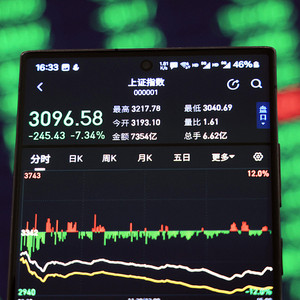
US president Donald Trump's new tariffs have sent stock markets plunging across Asia.
In China the Shanghai Composite Index lost over 7 % on Monday while the Shenzhen component index fell almost 10%.
Japan's Nikkei suffered its third largest point drop on record, falling nearly 8 % from Friday.
Nikkei's stock futures temporarily halted trading after the Sharpe Fault triggered the circuit breaker.
The operator of the Korea Composite Stock Price Index had to pause program buying for five minutes after the KOSPI 200 lost more than 5%.
The KOSPI closed just over 1 % lower and that was the first time this year that the index had slipped by more than a percent.
I will bring more specifics of the stock market performance in business news.
And China's accused the United States of undermining global trade rules in the name of fairness.
Beijing is calling the sweeping tariffs on global trading partners an act of unilateralism, protectionism, and economic coercion.
Multiple Chinese chambers of commerce have denounced the new round of U .S. tariffs.
These business associations are from a range of sectors including textiles, foodstuffs, machinery and electronics.
they blasted Washington for violating global trade rules and harming corporate and consumer interests.
Meanwhile, China's announced a 34 % tariff on all US imports and has banned several US companies from trading and investment while placing some others under export controls.
Zhao Yunfei explains the Chinese response.
The pursuit of so -called fairness is more than just America first, but American exceptionalism.
That's the stance that China has taken on U .S. sweeping tariffs against trading partners around the globe.
In a statement on Saturday, Beijing said Washington's move infringes on other countries' legitimate rights, violates World Trade Organization rules, harms the rules -based multilateral trading system, and disrupts global economic stability.
It also labeled U .S. tariffs as an act of unilateralism, protectionism, and economic bullying.
Data from China's General Administration of Customs shows that the United States is China's third largest trading partner in the first two months of this year.
But economic experts are worried that the tariffs could further damage bilateral trade.
China announced on Friday another 34 % tariff placed on all imported U .S. products.
That's the same amount of additional tariffs that Trump earlier imposed on China.
China's countermeasures clearly demonstrate a zero -tolerance stance against actions that seek to undermine the global multilateral trading ecosystem.
These harmful moves have far -reaching consequences for the global economy and China's countermeasures are both well prepared and timely.
China says it would take resolute measures to safeguard its sovereignty and interests.
In Saturday's statement, Beijing reiterated China's commitment to high -level opening up and sheering development with the world.
It called for global cooperation to reject protectionism and uphold the rules -based international trading system.
The statement also called on the international community to value fairness and justice and stand on the right side of the history.
That was Zhao Yunfei on China hitting back against U .S. tariffs.
China says its countermeasures aim to safeguard the interests of all companies, including those from the US, and urges Washington to get back on the right track of multilateral trading.
The Commerce Ministry held a roundtable with US enterprises, including Tesla, GE Healthcare and Medtronic.
Vice Minister Lin Ji reaffirmed China's role as a safe and ideal investment destination.
He stressed that China's doors will open wider, and the policies on using foreign investments will remain unchanged.
Ling said the U .S. tariffs have severely damaged the rules -based multilateral trading system and infringed upon the legitimate interests of nations.
He called on U .S. enterprises to safeguard the stability of global production and supply chains and promote win -win cooperation.
Japanese Prime Minister Shigeru Ishiba says the government will continue to ask the U .S. to lower tariffs but warns that results won't come overnight.
In South Korea, the finance minister says they'll prepare support for sectors that need urgent care.
The announcement came after Acting President Handaok Suh said the governmental aid the auto sector and seek negotiations with the Trump administration.
The British government's unveiled a support package to protect the country's automotive sector.
It includes reforms to the plan to phase out petrol and diesel cars by 2030 and an extension of the deadline to shift the full electrification.
The government's confirmed nearly 3 billion US dollar investment to support the transition.
Some residents in a car manufacturing town have expressed concern about a decision by a carmaker Jaguar Land Rover to pause shipments of vehicles to the United States following the announcement of new tariffs.
Analysts say other British car makers may follow suit as the increased tariffs heap more pressure on the auto sector.
Some residents in Solly Hall say they're worried about potential job losses and that the government should keep all options open.
If something went that, went that such large in the community, would be devastating to people, it really would.
If you wipe that off the landscape, what a chunk of people that will not only work there, but the families that now have not got income.
I would monitor it to start with to see how things start to go and what effect it's going to have on the economy.
Then obviously, if it's going to be devastating effects, then obviously they need to put something in place.
The number of cars made in the UK dropped nearly 14 % last year.
Over 77 % of those were destined for the export market.
Leaders elsewhere in Europe have also voiced opposition to the U .S. measures.
European Commission President Ursula von der Leyen said the bloc stands ready to defend its interests with proportionate countermeasures.
Top EU officials also said they remain committed to negotiating over US tariffs.
In Austria, wine makers risk a sharp revenue drop despite lower -than -expected duties.
Johannes Pleshberger finds out how they plan to tackle the situation.
Wine grower Gerhard Lobner feared entirely losing his biggest export market.
Now that US tariffs are much lower than expected, the Viennese businessmen can continue shipping wine to America.
It's however uncertain how many customers will cancel due to increased prices.
If the Americans want to build a wall around their country, and only want to drink woody chardonnay from the Central Valley, then so be it." Instead of the previously announced 200 percent, Washington ultimately decided on 20 percent.
Nevertheless, some Austrian wine growers fear this measure will cut U .S. orders in half, adding another existential threat after the COVID pandemic and high inflation hit local vineyards.
Vienna calls itself the world's only capital with significant wine production within city limits, but continuing production with less American customers will be challenging.
If there is too much wine here in Europe, the wine growers will have really problem because the prices go really, really down and they have no income with this wine.
Europe exports roughly 5 billion dollars worth of wine to the US each year.
If American customers stop buying that wine because of higher prices, export revenue might drop by up to 20%.
And the EU Commission wants to help wine growers adapt by unlocking new market opportunities, such as low -alcohol wine, which more and more younger Europeans are choosing for health reasons.
Another solution is going east. Last year, Austrian wine exports increased by 11 % to countries like Japan, South Korea and China.
It's a trend many Viennese winegrowers hope will continue, with some already travelling to Beijing to meet potential bias.
I do think that China is an exciting wine market.
An Austrian white wine goes perfectly with Chinese cuisine." And even if he loses some American customers, Lohne is certain his historic winery will continue to thrive as it has done for the past 342 years despite wars and trade wars.
That was Johannes Pleisbarger reporting from Vienna.
Canadian Prime Minister Mark Carnies assured supporters that the country will win the trade war against the United States just as it does in hockey and soccer.
The Prime Minister said he's told US President Donald Trump that he will be retaliating.
Canada has announced a plan to match the US's 25 % auto tariffs.
Car industry workers in Mexico voiced uncertainty after Stellantis announced a month -long pause in production.
Mexican President Claudia Scheinbaum said her government will continue talking to the Trump administration to improve the terms of their economic integration for the auto industry as well as for steel and aluminum.
Thousands of protesters have taken to the streets in all 50 US states decrying the economic turmoil and widespread job cuts.
Those gathering for the hands -off campaign said the tariffs and efforts to downsize federal agencies are an assault on families jobs, health care and social security.
Pappi Mputang reports from Washington.
Scenes from the nation's capital as thousands of protesters descended on Washington DC to participate in the hands -off campaign.
In a loud and unified chorus, demonstrators called on the Trump administration to keep its hands off civil rights, women's rights, LGBTQ rights and more.
We object to everything that Donald Trump is doing.
Basically in terms of his power grab, and all the damage he's doing to the economy, and to democracy.
That's why I'm saying, Trump's slump is basically the stock market's crashing, the economy's going to crash, it's already crashing.
And it's all about Trump.
It's all his actions, his stupidity.
one of my major concerns is how much disinformation that they are perpetuating out in the public that basic science and basic facts that our democracy depends on is being torn down and when that happens people get hurt we've already seen that whether it's measles outbreaks that should not be happening in this country or climate change I'm really concerned about it We're going the wrong direction.
Organizations and ordinary Americans demonstrated against US President Donald Trump's policies, many encompassed in over 100 executive orders, including the efforts of the Department of Government Efficiency resulting in the firing of tens of thousands of federal workers, pulling funding from scientific and educational institutions, and levying tariffs on global trade partners, which sent financial markets into freefall.
Thousands also turned out in cities across the United States, including Boston, New York, Los Angeles, and Atlanta.
On Sunday, more protests were held at Tesla dealerships across the country aimed more specifically at Trump advisor Elon Musk and his Doge cuts to the federal government.
That was Papi Mputing on opposition at home to US tariffs and job cuts.
Professor Radhika Desai from the department of political studies at the University of Manitoba says the Trump administration has created a big mess with its tariff policy.
She said tariffs will not help with the US purpose of correcting its trade deficit, because the problem lies within manufacturing.
I think that the world has just suffered a major, major shock.
It is not clear when it will end on the one and President Trump has ratcheted up the level of uncertainty.
I mean the level of uncertainty was already shooting up the moment he was elected and now it is through the roof.
I read in the paper that about 50 countries have lined up to negotiate with the Trump administration seeking a reduction in tariff.
It is not a talk clear that the Trump administration has the administrative capacity to engage in negotiations with all these countries.
So it is a big mess.
On top of that, I am reading that congresspeople, corporate leaders, and other such influential people are afraid to oppose the Trump administration.
Practically everybody can see that these tariffs are nonsense, that they are not based on any serious rationale and we can discuss the various rationales.
And on top of that, the formula that they publish according to which they are calculated the tariff is complete rubbish.
So, you know there's simply essentially saying just because we have a trade deficit with you, you are being unfair to us on trade.
No, you may have a trade deficit with a country because you're simply not producing enough.
You are not producing anything that that country finds sufficiently attractive to buy." Over the weekend experts at the Harvard College China forum pointed out that Washington's focused on goods but ignored its huge surplus in services.
Attendees including Bank of China USA chief executive Hui Wei called for communication and mutual understanding.
Coming up China recorded over 120 million domestic trips during the Qingming festival holiday long weekend.
Welcome to Climate Watch, the podcast that brings you the latest on climate change, energy and sustainability all in under 30 minutes.
Each week, we speak with global experts, from energy policy pioneers to wildfire historians, uncovering the stories that matter most. Climate Watch is your go -to source for insightful, inspiring conversations.
Tune in to Climb Your Watch on your podcast platform, and let's navigate the path to a sustainable future together.
At 16 minutes past the hour, travellers made more than 120 million trips in China during the three -day Qingming Festival holiday.
The number is up 6 .3 per cent from a year earlier.
National immigration officials reported 6 .2 million cross -border trips, a nearly 20 per cent rise.
Some shopping malls leveraged technology, and immersive devices to attract visitors.
Wu Jiyuan at Shanghai Bin Gong Commercial Center says they hope to offer an immersive experience.
Technology empowers culture.
We have introduced over 20 different types of entertainments.
We hope to create a destination that promotes consumption through the combination of different entertainment types with cultural elements in them.
China's Qingming Festival, also known as Tomb Sweeping Day, is a time for people to honor their ancestors and enjoy springtime travel.
Myanmar leader Min Aung Leung visited the camp headquarters of the Chinese rescue teams that offered timely help following the 7 .9 magnitude earthquake.
More than 3500 people have died since the quake at the end of last month.
China sent rescuers and medical professionals along with emergency relief supplies.
Zhen Zhiyuan spoke to some of the people.
It's been a collective effort on the ground.
China has dispatched multiple teams to Myanmar, including national -level rescue specialists and those from non -governmental organizations.
The Ministry of Emergency Management coordinated 10 non -governmental emergency forces with a total of 145 people to participate in this rescue operation.
They are standardized in terms of professional skills and equipment support and are the backbone of the non -governmental emergency force.
These teams have assisted in the efforts of rescuing eight survivors and fining the remains of 37 deceased individuals.
The REM Rescue Union, the Shenzhen Rescue Volunteer's Foundation, and the Xiamen Dawn Emergency Rescue are all present here on the Ground in Myanmar. China and Myanmar have a history of cultural relations that dates back more than a thousand years.
Rescue workers feel the friendship between the two nations is mutual.
The Mandalay is a special city.
It is a historical city in Myanmar. In fact, it is also the central city along the Southern Silk Road, which is an extension of the ancient Tea Horse Road.
The two peoples have been in a state of mutual benefit and mutual assistance for more than 1 ,000 years.
So, I think that our ability to come here for rescue operations and support is also a continuation of friendship between the two peoples.
Myanmar's Fire Service Department announced that its efforts would transition from rescue to recovery.
Locals say they will never forget what many of these rescuers have done for them during some of Myanmar darkest days.
I was Sen Ziyuan on the showing of solidarity between China and Myanmar. China's first large cruise ship is set sail from Qingdao on its first voyage from that eastern city.
Shanghai base Adora Magic City is carrying more than 4 ,000 tourists on a trip to South Korea in Japan.
A second cruise ship has completed main haul assembly.
Adora Flora City, is scheduled for delivery by the end of next year.
And China is the world's largest producer and exporter of garlic.
Chinese farmers harvest millions of tons of the kitchen staple rather to feed global demand.
Henan province is known as the home of the aromatic.
Daniel Aratmoy visited the Central Province to check out the garlic business.
If you have ever cooked with garlic, chances are it came from China.
The country has long been the undisputed king of garlic production, supplying over 70 percent of the world's garlic.
Here in our country, China is often referred to as the bread basket of China, but it's also the garlic capital of the world.
And there is a very good chance that the garlic in your kitchen, whether you are Nairobi, Kampala, Paris, or New York, its journey started right here.
China has a long history of garlic.
It's over 2 ,000 years old.
What's more, the central plains area is located in the middle and lower reaches of the Yellow river.
The soil is more fertile, the garlic grown tastes better, and the quality is also good.
But China's dominance isn't just about quantity, it's about efficiency.
Advanced farming techniques and large scale processing allow China to export garlic at competitive prices, making it a key player in international markets.
We are trying to help the farmers to adapt to new technologies, such as machines, to save their labour input.
Mechanised agriculture has boosted garlic yields by 30 % as opposed to traditional farming, which gave us approximately 10 % of the garlic yields.
Many farmers are now leveraging live streaming platforms like Taobao Live to sell directly to consumers worldwide, cutting out middlemen and boosting profits.
We want to help farmers to connect directly with the customers so that they are able to make more money.
While other countries grow garlic, none come close to China's output, and with demand only growing, it seems that this is one tie to China won't be given up any time soon.
For now, the world's garlic supply remains firmly in China's hands.
That was Daniel Aratmoy reporting.
Coming up, deadly storms and flooding in the U .S. Midwest and South.
Dive into news like never before with Deep Dive, the podcast from CGTN radio.
Join our global reporters for captivating stories and thought -provoking conversations.
Search Deep Dive on your favorite podcast platforms and get ready to dive in.
It's 22 minutes past the hour.
Storms in the U .S. Midwest and south have killed at least 18 people.
A small town in northwest Tennessee went almost entirely underwater after a nearby river overflowed under recent rainfall.
Many rivers are rising and under flood alerts.
Jen Sullivan reports.
Days of powerful storms, pummeling much of the central U .S., have left a path of destruction.
Torrential rain has fallen across the Mid -South since Wednesday, measuring more than a foot in some areas.
In Kentucky, many roads are underwater, with some communities swamped.
I've been an emergency manager in Woodford County for greater than 20 years and I don't ever remember this much water.
In the small town of Hardy in Northern Arkansas, the relentless rain has caused the spring river to spill over the banks surrounding homes.
Some structures all you can see are the roofs.
We're just getting a lot of water right now and with the continuation of the rainfall plus what is continuing to fall north of us, all that water has got to go somewhere.
here in Memphis, Tennessee, cars left stranded in Nashville, a river of water leaving feet of water in many basements.
We have a little one in a dog and my husband and I kind of just kept all we could do is watch all this like rushing water.
The string of storms also triggering tornadoes.
This family in senatoro Bia, Mississippi, has lost everything.
We were all in shock, Um, very hard. It's hard to talk about it in the threat isn't over yet.
Roughly 22 million people are under flood watches in the Tennessee and Ohio Valleys, the Central Appalachians, and the Southeast Sunday.
That was Jen Sullivan reporting.
A new report from the World Health Organization says women are now more likely to survive pregnancy and childbirth but warns of the threat of major backsliding amid aid cuts around the world.
The WHO released the report on World Health Day on Monday.
The report shows a 40 % global decline in maternal deaths between 2000 and 2023 largely due to improved access to essential health services.
But it also warns that the pace of improvement slowed since 2016 and that an estimated 260 ,000 women died of complications from pregnancy or childbirth in 2023.
WHO sexual and reproductive health scientist Jenny Creswell says there are substantial inequalities between different countries and regions with nearly 9 out of 10 maternal deaths taking place in lower or middle income countries.
There is a widening gap between countries which are experiencing um long -term threats to their the effect of their health systems particularly those countries which are affected by conflict or institutional fragility and the report shows that three out of five maternal deaths are taking place in countries affected either by conflict or by long -term fragility.
The report comes as cuts to humanitarian funding are having severe impacts on essential health care in many countries, forcing them to roll back vital services for maternal, newborn and child health.
The report warns that pregnant women in multiple countries will face severe repercussions without urgent action.
It also calls for efforts to ensure that women and girls have the knowledge and resources to protect their health.
Former French Prime Minister Gabrielle Hetal has denounced Marine Le Pen's defiance over her guilty verdict for embezzling public funds.
The Renaissance party leader says the facts are clear.
It is not up to us to say if the judgment rendered against Marine Le Pen is good or bad.
It is up to us to always hear the facts.
Well, the facts are clear.
Noring Le Pen and the National Rally were found guilty after 10 years of investigation and the process of having embezzled millions of euros from our taxes.
Le Pen described the decision to block her from standing in the 2 ,027 presidential election as political.
That's why we ought not to be blamed for criticizing a court decision.
This is not a court decision.
It's a political decision.
So now I should be eliminated from political life without any possible recourse in the name of a so -called disturbance of Democratic public order, a concept purely and simply invented for the occasion." Le Pen added that she will continue to fight.
Atal has urged party members to continue to fight against the far right and the far left. Turkey's main opposition parties re -elected its leader, delegates of the Republican People's Party, voted for incumbent leader firing Ozel.
Ozel has called for an extraordinary Congress of his party after the recent arrest of Istanbul Mayor Ekrem Ememoglu.
The owners of a ship docked in London are trying to make the case that ammonia can offer shipping a more eco -friendly fuel.
Andrew is not a new fuel that there were already trucks running on ammonia during World War two.
The reason why ammonia is now taking the limelight is because it does not have the carbon molecule therefore it is emerging as a fuel of choice for a number of uses beyond the traditional fertilizer for power supply and so forth and also it's clearly carving out a very good pathway within the marine sector as well.
Some experts have expressed concern about ammonia's toxicity.
They say ammonia is much riskier than other fuels requiring a very cautious approach. Independent hydrogen and ammonia consultant Charlie Rattan is positive about ammonia's use in the future but is aware of its potential risks.
Should one of these things encounter a problem it's probably much worse in scale, in magnitude and lasting damage than it would be for methanol or for liquid organic hydrogen carrier or for some kind of liquid hydrogen which all of those are in the same orbit if you like with varying degrees, yes they're all got some danger but some are more dangerous than others shall we say.
The regulator of international shipping has set a target for the sector to reach net zero greenhouse gas emissions close to 2050.
The International Maritime Organization is also committed to ensuring the wider use of fuels with zero or near zero emissions.
experience the musical classics of the East mingle with the masters of Chinese music music talks witness the sound of antiquity and modernity online on air and on your phone.
Take today wherever you go and stay ahead of what's changing our world from politics and the economy to business and technology today covers regional and international issues that affect China and the world keep up to date with today.
29 minutes passed the hour checking the forecast ahead of the break and Beijing's down to 11 degrees on Monday evening it'll be overcast in 19 on Tuesday.
Nansheng's 18 this evening and then cloudy in 30.
Elsewhere in Asia, Islamabad's at 21 overnight, and then a slight rainfall and 34 degrees on Tuesday.
BnTien's down to 24 and then overcast in 33.
Phnom Penh's 25 this evening, then overcast in 36 degrees.
In Africa, Nairobi will get a slight rainfall and 25 on Tuesday.
Kampala's at 19 overnight, then a slight rainfall and 24 degrees Celsius.
It's time for a short break.
So far this hour, U .S. tariffs continue to have a devastating impact on global markets, with those in Asia plunging on Monday.
China recorded more than 120 million domestic trips during the three -day Ching Ming Festival holiday over the weekend.
And storms have brought severe flooding across the U .S., Midwest and south.
Shane Bigum with you.
Stay with us here on the Beijing Hour.
Shhh, listen up! Can you hear the heartbeat of our world?
It's vibrant and pulsating with the essence of life itself.
From the stem of trees, to the gurgle of rivers.
From the silent strength of mountains, to the icy whispers of glaciers.
Even the solid ground beneath our feet.
Right there in the midst of all beats the heart of humanity.
What if those other heartbeats were to stop?
Would ours keep on ticking?
Ever wondered what's actually going on in Africa through the perspective of an African?
How are things really going between China and Africa?
What's the narrative of this relationship?
Well, get a perspective with China -Africa Talk.
Hear from African diplomats, entrepreneurs, academics, Chinese natives and more.
Get on our wavelength every week to find out what's real with China -Africa Talk.
Find us on your favorite podcast. We'll see you there.
Examining the events that impact and shape China and the rest of the world.
This is the Beijing Hour, one hour of news and information brought to you every weekday.
Now here's your host...
Shane Megan with you on this Monday.
Still to come, in business, a closer look at the tariff devastation on the markets.
In sports, Man City's bid for Champions League qualification suffers a blow.
In culture and entertainment, China's box office set a record for screenings for the Qingming festival holiday.
To contact us, you can email Radio at CGTN .com, or follow our ex -account, at CGTN Radio.
But now a check at the day's headline news.
China says its countermeasures to U .S. tariffs aim to safeguard the interests of all companies, including those from the U .S., and urges Washington to get back on the right track of multilateral trading.
The Commerce Ministry held a roundtable with U .S. enterprises and reaffirmed China's opening up and its use of foreign investment.
government. Other world leaders have also opposed the U .S. tariffs on global trading partners.
The governments of South Korea and Japan have vowed to protect their industries while seeking negotiations with the U .S. Top EU officials said they remain committed to negotiating over U .S. tariffs.
European Commission President Ursula von der Leyen also said the bloc stands ready to defend its interests with proportionate countermeasures if necessary.
The U .K. has unveiled a package to support carmakers to transition to electric mobility.
Canada said it's determined to win the trade war with the U .S. and Mexico said it'll continue talks on the integration of key industries.
U .S. stock futures opened sharply lower on Sunday night, signaling another volatile week ahead as global trade tensions escalate.
The S &P 500 E -mini futures tumbled 4%.
The Dow dropped by 3 .8 percent and Nasdaq futures dropped 4 .6 percent.
Crude oil benchmarks also fell sharply in early trading on Monday.
A Brent Futures and West Texas Intermediate futures dropped more than 3 percent, sinking to their lowest levels since April of 2021.
Local residents have returned to the streets of Madrid and other Spanish cities to protest high housing costs that are strangling family budgets.
Thousands of protesters marched in the Spanish capital behind a banner reading, lower the prices.
I came here because we are fed up with spending our wages on rent.
And we want that to change.
We are basically tired of transferring our income to people who simply own property, which we don't.
We believe that's unfair and wrong.
Housing is a fundamental right and must be protected.
It depends on all of us.
We are here to demand that right.
Ruins are very high, mortgages are inaccessible and salaries are very low.
People cannot save. And of course, housing is a basic necessity.
Housing is a business and the rent is rising more and more.
And I think it's important to know our rights regarding housing and to set limits for the owners, for the landlords.
Well, the average rent in Spain has doubled in the past decade.
The price per square meter rose to 13 euros or 14 US dollars last year.
Rents have been rising due to small supply of rental properties and increased demand as buying a home has become unaffordable, with market pressure and speculation driving up prices.
Many young people say they have to either remain with their parents or spend a lot of money sharing an apartment with little chance to save enough to purchase a home of their own.
Less than 2 % of all housing available in Spain is public housing for rent.
Ukrainian President Volodymyr Zelensky is accusing Russia of launching strikes from the Black Sea.
U .S. negotiators announced last month that Ukraine and Russia had agreed to halt hostilities on the water.
The Kremlin demanded the lifting of some Western sanctions.
Meantime, Russia's defense ministry said Ukraine is violating the 30 -day partial cease fire by attacking energy facilities.
Rivers rose and floodings worsened across the U .S. south and midwest, threatening communities already damaged by days of heavy rain and wind.
Utilities scrambled to shut off power and gas from Texas to Ohio, while cities deployed sandbags to protect homes and businesses.
A small town in northwest Tennessee was almost entirely underwater after a nearby river overflowed. Many residents evacuated homes at the request of the fire department.
Dominic Scott came to visit after not hearing from his father, who lives in the area.
Came here to check on my dad.
He lives right over there by the baseball field, and, really really heard nothing from him, and, you know, just wanted to make sure he was safe and out of here.
Forecasters warned that flooding could persist for days as torrential rains lingered over many states, including Tennessee, Kentucky and Alabama.
They also warned of tornadoes in Alabama, Georgia and Florida.
Flooding has killed at least 30 people in the Democratic Republic of the Congo.
Heavy downpour struck Kinshasa, home to 17 million.
Many victims drowned or were killed by collapsing walls in their homes.
The rising waters have brought much of the capital to a standstill, cutting off roads and power.
Authorities say the number of casualties may rise.
Just ahead in business, a closer look at the tear of devastation on the markets.
the beijing hour your window on china and the rest of the world at 37 past the hour stock markets on the chinese mainland closed lower on monday shares in the agricultural sector were among the top gainers while industries such as batteries consumer electronics and computer devices saw significant losses wang yin has more the shanghai composite index tumbled 7 .34 while While the Shenzhen component index plunged 9 .66 percent, and the small cap Chinese board took a 12 .5 percent nose dive.
The blue chip CSI 300 index lost 7 percent as markets waited to see if any more stimulus was incoming.
China's yuan slipped to its lowest -distance January, and bounce rallied sharply.
Trading volumes were heavy, especially as Chinese markets had been shut on Friday when selling was heaviest in the U .S. and other financial centers.
Mainland indices of solar companies and household appliance manufacturers notched the losses of around 10 per cent, selling was strong in oil and gas shares as the prospect of a global recession hammered oil prices and sectors from electric vehicles to cloud computing.
Shares of major Chinese technology companies witnessed a sell -off on the expected brunt of tariffs.
Apple supplier Foxconn Industrial Internet and luxury precision industry each fell by daily permitted maximum limit of 10%, software maker Beijing King Software Office software fell 7 .7 % and the AI company iFlytek shed 10%.
That was Ouyen in Shanghai.
Elsewhere in China, the Hong Kong stock market closed lower with the Hang Seng Index plummeting more than 13 .2%.
Meantime, stocks in Japan also suffered significant losses due to U .S. tariff shock with the Nikkei dropping 7 .8 per cent.
Central Huizhin Investments stated that it fully acknowledges the current A -share market value and has expanded its investment in exchange -traded funds.
The state -owned investment company says it'll increase its holdings in exchange -traded funds and ensure the stable operation of the capital market.
China's foreign exchange reserves have stayed above US $3 .2 trillion for 16 consecutive months.
In March, the reserves rose by $13 .4 billion compared to the previous month.
Authorities attribute this stable performance to the overall stability and continued recovery of the Chinese economy.
Goldman Sachs analysts now predict a higher chance of a U .S. recession in 2025, raising their forecast of 45%.
That's up from 35 last week.
The change followed President Donald Trump's announcement of global tariffs.
Recession fears grew after the United States unveiled its tariff plans, fueling concerns over trade disruptions and increasing distrust of U .S. policy, which could lead to a sharp economic downturn.
Goldman Sachs forecasts that the Fed Reserve may cut interest rates sooner and more aggressively with three 25 basis point cuts starting in June.
In the event of a recession, the bank expects the Fed to reduce rates by around 200 basis points over the next year.
With more on the impact of the US tariffs, Zhang Junfeng spoke with Zhong Gong, a professor at the University of International Business and Economics.
What can US consumers expect to feel the impact of tariffs if really enacted given that many importers in the US have stockpiled goods in anticipation of these measures?
I think there's not much of an uncertainty here.
Prices are gonna go up across the board for many things, housing price is going to go up.
Automobiles in particular, you're going to see automobile prices going up by $3 ,000, $4 ,000, even over $10 ,000 for high end cars.
American households are already struggling with the high prices of automobiles.
Top of this, they're going to hit more with this kind of tariff.
I think it's pretty certain that automakers will have to increase their prices.
Many of these cars are manufactured in Mexico.
So, you know, with this kind of a tariff definitely the car price has gone up.
You already see reports that consumers are rushing out to snatch cars as much as they can.
I mean, even at very high prices they're still going to go out and buy these cars.
And then, you know, I think prices at Wal -Mart are particularly going to go up.
You know, these places where middle class, lower middle class households, average folks are going to buy things and warm up the prices are going to go up.
You know, this is going to be an inflation.
Now, as professor John Gong from the university of International Business and Economics, people from all over the world have raised concerns about Donald Trump's tariffs.
Spanish scholar Felix Valdiviezo warned that the tariffs could lead to a global economic recession.
These measures will have global economic impacts and may even lead to a recession.
Analysis at Moody's ratings have pointed out that these tariffs will drive our prices.
Price increases will directly affect consumers' personal income and spending power, as well as their purchasing power.
Meantime, protests erupted in central London with people voicing anger at the tariff policy.
When Trump does something brain dead, we are all impacted.
and it's incredibly important to understand his impact goes beyond poor America who I'm afraid we have to turn our back on.
Well I think the impact will be to effect the cost of living for most of us, those of us who are on limited incomes are gonna really feel it and I think people with pensions and other kinds of investments are going to feel it.
I was reading earlier today that already nine trillion pounds or perhaps more would not have been knocked off the stock market that's going to have a ripple effect around the world.
On Friday countries like France, the U .K., Italy, Australia, Singapore, South Africa and Bolivia expressed opposition to the U .S. moves with several preparing retaliatory measures.
European central bank policymaker Yannis Stornaris warned that Donald Trump's tariffs could slow economic growth in the euro area by between 0 .5 and 1 percentage point.
The 27 -nation bloc faces a 25 % import tariff on steel aluminum and cars, along with tariffs of 20 % on nearly all other goods starting Wednesday.
The European Central Bank has estimated that a blanket 25 % U .S. tariff on European imports would reduce euro zone growth by 0 .3 percentage points in the first year.
EU counter tariffs on U .S. goods would increase the impact to half a percentage point.
In 2024, U .S. imports from the EU totaled US $365 billion, while EU exports to the U .S. amounted to US $585 billion.
The integration of technologies like GPS and AI is quietly reshaping the landscape of Chinese agriculture.
Smart tractors, crop -monitoring drones and automated irrigation systems not only enhance resource efficiency but also significantly boost productivity.
Daniel Aratmoy is back with the story.
In the fertile fields of Enan province, farmer Lee Jay is using a drone to spray pesticide and monitor his wheat crop.
Equipped with multi spectral cameras, the drone captures detailed images of the field, allowing him to identify areas affected by disease or nutrient deficiencies.
Now I can save a lot of manpower and material resources.
I can remotely control the drone and monitor the wheat fields using my mobile phone.
You can fertilize and water anytime.
Across China, farmers are adapting precision agriculture technologies, including soil sensors, GPS -guided tractors and AI -powered analytics platforms. When we are planting wheat we use this large agricultural machine.
We do deep -tillage for two to three years.
We also use drones to monitor the fields so that we attain the best results.
The government attaches great importance to the development of science and technology in breeding strategies.
These tools are helping farmers to optimize irrigation, reduce fertilizer use and increase yields, all while minimizing environmental impacts.
Chinese wheat experts have expressed their eagerness to share their extensive knowledge and innovative techniques with African farmers.
Of course, I hope to use the skills I have mastered and introduce them to our friends in Africa, alongside new innovations to help them gradually increase their production through mechanization.
The shared experience in increasing wheat yields and adapting crops to climate change is expected to position China as a valuable partner for African nations striving to overcome agricultural challenges.
That was Daniel Aratmoy reporting.
Coming up in sports Man City's bid for Champions League qualification suffers a blow.
Sideline Story brings you all things sports related.
The hottest topics, latest events, juiciest stories all with a very personal take.
Subscribe to Sideline Story podcast for heated sports discussions covering events that are Thank you, Shane.
In football from the English Premier League, Manchester United and Manchester City played out a scoreless draw in the derby that dealt a blow to City's bid for Champions League qualification.
United manager Ruben Amorim says they could've played better.
Pep Guardiola's team is fifth on 52 points, 1 behind Chelsea.
United is in 13th place on 38 points.
Meanwhile Liverpool stumbled in the Premier League with a 3 -2 defeat at Fulham.
The last put the brakes on Arsenal's side's efforts to take another step towards securing the season's title.
Fulham manager Marco Silva is satisfied with the result.
Great, great three points for us.
I will believe that they will.
We deserve it. In our first half, it's a very, very good level, in my opinion, in all the aspects of the game.
A great goal from McAllister.
From the moment that, in that two duels, you have to be stronger or at least to start to be clever to make some tactical falls that you need sometimes in these types of games, in general in football.
But the reaction was great.
Despite the defeat, Liverpool remains on top of the league standings having an 11 -point lead over Arsenal.
In the NBA, Kobe White scored 37 points and the Chicago Bulls roped past Charlotte Hornets won 31 -1 17 for a third straight win.
Josh G Lynnney added 23 points, 10 rebounds and 8 assists for the Bulls.
Mark Williams led the Hornets with 23 points and 9 rebounds.
K .J. Simpson and Jusuf Nagic each had 18 points.
Miles Turner scored 24 points and the Indian Pacers overcame the Denver Nuggets won 25 -1 -20.
The Nuggets lost their fourth straight game despite 41 points from Nicola Jokic and a career -high 30 points from Christian Brown.
In other action, the Toronto Raptors got past the Brooklyn Nets 120 -109.
LeBron James had 19 points and the Los Angeles Lakers beat Oklahoma City Thunder 126 -99, the Utah Jazz lost to the Atlanta Hawks 147 -134, the Boston Celtics stunned Washington Wizards 124 -90, The Houston Rockets beat the Golden State Warriors 106 -96 and it's the Sacramento Kings over the Cleveland Cavaliers 120 -113.
In Formula One, Red Bull's Max Verstappen has won his fourth consecutive Japanese Grand Prix holding off the McLaren duo of London Norris and Oscar Piastri.
It was a lot of fun out there.
Not easy of course to manage the tires but yeah, I am incredibly happy.
Norris finished second, PS3 was third, Ferrari's Charles Leclerc was fourth, Luis Hamilton was seventh in his Ferrari.
Norris leads the drivers standing after three races with 62 points, one more than Verstappen.
Novech Djokovic will be competing in his 18th Monte Carlo Masters.
He says it feels good to be back.
It feels good in some way to have played it so many times, so many years.
I always enjoyed really Monte Carlo, a place where I reside for so many years.
Both my actual children are born in Monte Carlo.
I know the courts well and all the people were working and club really transforms during the tournament so it's not recognizable really but it's beautiful.
So many people France, Italy particularly, they come, they love tennis, sport.
It's exciting to be here again." Djokovic will be seeking his 100th career title.
Jenson Bricksby has won his first ATP title.
He beat second seed Francis Tiafoe at the U .S. men's clay court championship in Houston.
Brooksby had saved five match points in the roundup to the final and didn't stop his dominance as he secured a 6 -4 6 -2 victory in the All -American Affair.
TR4 won back -to -back matches for the first time this year but suffered a consecutive Houston final loss after dropping the 2024 edition to Ben Shelton.
Still in tennis, top seed Jessica Pegula has staged a comeback to win the Charleston Open, defeating fellow American Sofia Cannon in straight sets.
Cannon appeared poised to force a third set with a 5 -1 lead and three set points, but Pegula saved them all and reeled off six straight games to seal the title.
It was the first All -American final in Charleston in 20 years.
It's amazing being able to win here, have a lot of roots connected here.
It feels like home whenever I come back so just super excited to be able to take home the title, first clay title as well.
Just kind of overwhelmed right now.
I think it's really cool.
The winner also says the victory brings her a lot of confidence about the clay season.
I have been working on a lot of stuff coming into the clay.
Obviously pretty quick turnaround, but there was some stuff that we kind of thought I could add into this clay court season and I'm glad I was able to kind of feel like I showcased that and things that I've been working on have worked in.
Obviously the green clay is a little bit different than the red clay but I feel like going into Stuttgart in Madrid where it plays a little bit faster, I can feel really good about some the stuff that I've worked on and the transition to clay that I think will help me hopefully going into the season." The Wayne marks Pegula's second title of the season.
The 2025 Dive -in World Cup in Guadalajara has concluded.
Team China scored two gold, three silver and one bronze medal on the final day.
This brought their total tally for the event in Mexico to seven gold, four silver and one bronze.
And finally, the 31st Pyongyang International Marathon has taken place.
The race in the North Korean capital was the first in six years.
Park Jindong won the man's full marathon with a time of 2 hours, 12 minutes, and 11 seconds.
Another local runner won the women's race.
And thank you very much. That was Yang Guang with sports.
And just ahead in culture and entertainment, China's box office set a record for screenings for the Qingming Holiday.
From North to South, East to West, people in China are chasing their dreams and leaving their mark.
Want to know how they beat the odds and made a difference?
Footprints brings you the true life stories of their journeys.
53 past the hour. In Culture and Entertainment, data shows that China's box office grossed 370 million yuan during the Ching Meng Festival holiday on the weekend.
Admissions reached 9 .2 million and screenings reached 1 .4 million sessions.
That set a new record high for the highest number of screenings during the Ching Meng Festival holiday.
The Luoyang Museum of ancient tombs in Hunan province has introduced live performances and interactive games inside tomb replicas.
These activities bring historical stories and figures to life, helping visitors learn about the tombs and history in a more immersive way.
The new program moves beyond traditional walks and tours through exhibits and galleries and drew large crowds during the three -day Qingming Festival holiday.
The Yung Museum's underground exhibition Space houses remarkable reconstructions of 25 ancient tombs spanning from the Han dynasty to the Song and Jin dynasties.
Visitors can touch the tomb chamber walls, stone carvings, and murals allowing them to experience the ancient burial structures up close.
The museum welcomed over 11 ,000 visitors on the first day of the Ching Man Festival holiday.
Two Buddhist cave complexes along the ancient Silk Road in Xinjiang have opened to the public for the first time, drawing visitors during the Ching Man Festival holiday.
The Yaa Art Lake Rados and Tirpan feature numerous stunning murals and other collections.
The UNESCO listed site welcomed visitors following a year of restoration work and digital upgrades.
Formerly serving as a monastery, the grottos comprise 22 caves dating back to the fifth century, containing Buddhist murals and inscriptions in multiple languages.
Tourist Guan Ching -gun says it's a good way to learn history.
With the explanations from the guide, I learn about the history of that time.
I also saw the original murals through glasses.
It was truly stunning.
Around 40 kilometers away, four caves of the Shengjin Co.
grottoes in Turpan have also opened to the public.
Tourist He Mengjie from Xi 'an showed great excitement.
I'm so excited. I came here as soon as I heard about the opening.
Witnessing this historical moment, and connecting with the thousands of years of history makes this trip truly worthwhile.
The Shengjing Co. site has 13 caves dating back to the 7th century with murals, woodwork, pottery, fabrics, and paintings on silk.
Since 2012, China's invested around 30 million yuan or about 4 million US dollars in five conservation projects, including reinforcement and mural restoration laying the groundwork for the public opening of the Shengjing Co.
grottos. The Turpan Basin is home to more than 14 known grotto sites collectively encompassing over 400 caves.
Around 60 students from eight U .S. colleges have gathered at North Central College for the Midwest College Chinese Speech Contest. Each student gave a three -minute speech in Chinese.
They also showed their proficiency in Chinese singing and dancing skills and recited a tongue twisters and poems. Organizers say the contest aims to promote Chinese teaching progress at the university level in the U .S. Midwest. It also aims to encourage students to learn Chinese and interested in Chinese language and culture.
The Chinese opera seasons underway in Vienna.
It opened with a performance of the traditional Wu Opera, the legend of the White Snake.
Eight productions are on the schedule in the Austrian capital, featuring a variety of opera styles, including Wu, Kun -shu, and Yue.
The opening performance brought to life the classic, romantic tale of Bai Sujian, a woman transformed from a white snake, and her love for the scholar Shuxian.
Originating in the Ming dynasty, Wu opera is renowned for its blend of dynamic action scenes and traditional performance techniques.
We're at 57 past the hour now.
Checking the forecast before we go for the day and Beijing's down to 11 degrees on Monday evening.
It'll be overcast in 19 on Tuesday.
Nansheng's 18 tonight and then cloudy in 30.
elsewhere in Asia Islamabads down to 21 and slight rainfall in 34 on Tuesday.
Vinten's 24 this evening, and then overcast in 33.
Phnom Penh's at 25 tonight, then overcast in 36.
In Africa, Nairobi's getting a slight rainfall and 25 degrees Celsius on Tuesday.
That's it for this edition of the Beijing Hour.
Making news today, U .S. tariffs continue to have a devastating impact on global markets, with those in Asia plunging on Monday.
And China recorded more than 120 million domestic trips during the three -day Qingming Festival holiday over the weekend.
On behalf of the staff, this is Shane Bigamin in the Chinese capital.
Hoping you'll join us for the next edition of the Beijing Hour.
And open a window to the world together.
Find the Beijing Hour at precisely 6 p .m. Beijing time.
We meet you on podcast and on air every weekday.
The Beijing Hour, your window on China and the rest of the world.
He can't live without the Yellow River in his eyes.
The Yellow River is so noble and elegant.
Both my grandpa and dad made the living from the river.
Would you like to move away from the Yellow River?
I don't think I would do it.
I love it so much. The Yellow River, the second longest river in China, is regarded as a shaping force in the history, economy, and culture of Northern China.
Today, about 100 million people live within its water basin, making up nearly 9 % of the country's population.
How is climate change felt at its headwaters?
And what are the locals doing to cope with it?
What are the descendants of the boatman doing?
What has kept some people from leaving their home village by the river?
And what has drawn others back?
Could the fading fishing community revive in the time of digital transformation?
From 2021 to 2024, our reporters visited the upper, middle, and lower reaches of the Yellow River, talked to the herders, farmers, boatmen, fishermen, and eco -activists who share a close bond with the river and present their stories in pictures, podcasts and videos, or in our You