
[The Evolution and Aesthetic Essence of Art Nouveau: A Comprehensive Overview]-[How did art nouveau flourish around the turn of the 20th century?]
📋 Summary
The Evolution and Aesthetic Essence of Art Nouveau
Art Nouveau stands as a pivotal aesthetic movement that redefined the boundaries of design at the turn of the 20th century. Departing from the rigid constraints of traditional art forms, it sought to infuse beauty into the functional aspects of daily life, leaving an indelible mark on architecture, graphic design, and decorative arts.
The Genesis and Philosophical Roots
Unlike movements defined by a single manifesto or artist, Art Nouveau emerged as a fundamental "change in mentality." Its origins are deeply intertwined with the British Arts and Crafts movement, which arose as a reaction against "Victorian industrialisation" and the degradation of "quality craftsmanship" caused by the rise of mass production.
Historically, the term first surfaced in an 1884 Belgian art journal, identifying a collective of 20 progressive artists. While it blossomed in France and Belgium, the "1900 Paris Exposition Universelle" acted as a global catalyst, propelling the movement across Europe and into the United States, where it remained a dominant force until the onset of World War I.
Breaking the Barrier Between Fine and Decorative Arts
One of the most significant achievements of Art Nouveau was its push for the "unity of all the arts." By integrating artistic vision into everyday objects, the movement aimed to dismantle the hierarchical divide between "fine art" (such as painting and sculpture) and "decorative arts," which had long been disparaged. According to the New York-based non-profit The Art Story, Art Nouveau was perhaps the most influential movement in history for "closing that gap," successfully proving that items could be both aesthetically exquisite and functional.
Defining Characteristics and Organic Motifs
While manifestations varied across cultures, the movement was unified by a distinct visual language. Central to this were "sinuous lines" and a focus on the "fluidity of the lines" that connected elements seamlessly. Artists frequently employed "asymmetry" and prioritized "organic shapes" derived from direct observation of nature. Typical motifs included "elegant abstracted versions of leaves, flowers and animals," which transformed mundane objects into "total works of art" that engaged multiple senses.
Key Figures and Their Contributions
Several visionary figures defined the trajectory of Art Nouveau:
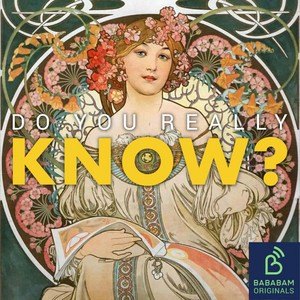
- Alphonse Mucha: A Czech artist in Paris whose depictions of the "bold new woman" revolutionized the nascent field of graphic advertising.
- William Morris: Often cited as the "philosophical forefather" of the movement, his commitment to "stylized, artisanal craftsmanship" laid the groundwork for Art Nouveau's design philosophy.
- Gustave Klimt & Henri de Toulouse-Lautrec: Both artists expanded the boundaries of the movement; Klimt through his architectural work on the Stockley Palace, and Toulouse-Lautrec through his celebrated graphic art, which achieved parity with his traditional paintings.
In conclusion, Art Nouveau was not merely a decorative style but a transformative movement that championed the marriage of form and function. By rejecting industrial monotony in favor of organic beauty, it fundamentally altered the landscape of modern design.

Deep Learning with ListenLeap


