For the positive hour that you see, there are 23 horrible hours.
Eddie Murphy and John Landis get into basically a physical altercation as they're filming.
And at that moment, coming to America was not going to be finished.
You get him drunk and you get him high.
I'm the devil.
Hi, I'm Michael Sebastian, editor-in-chief of Esquire, and this is what I've learned.
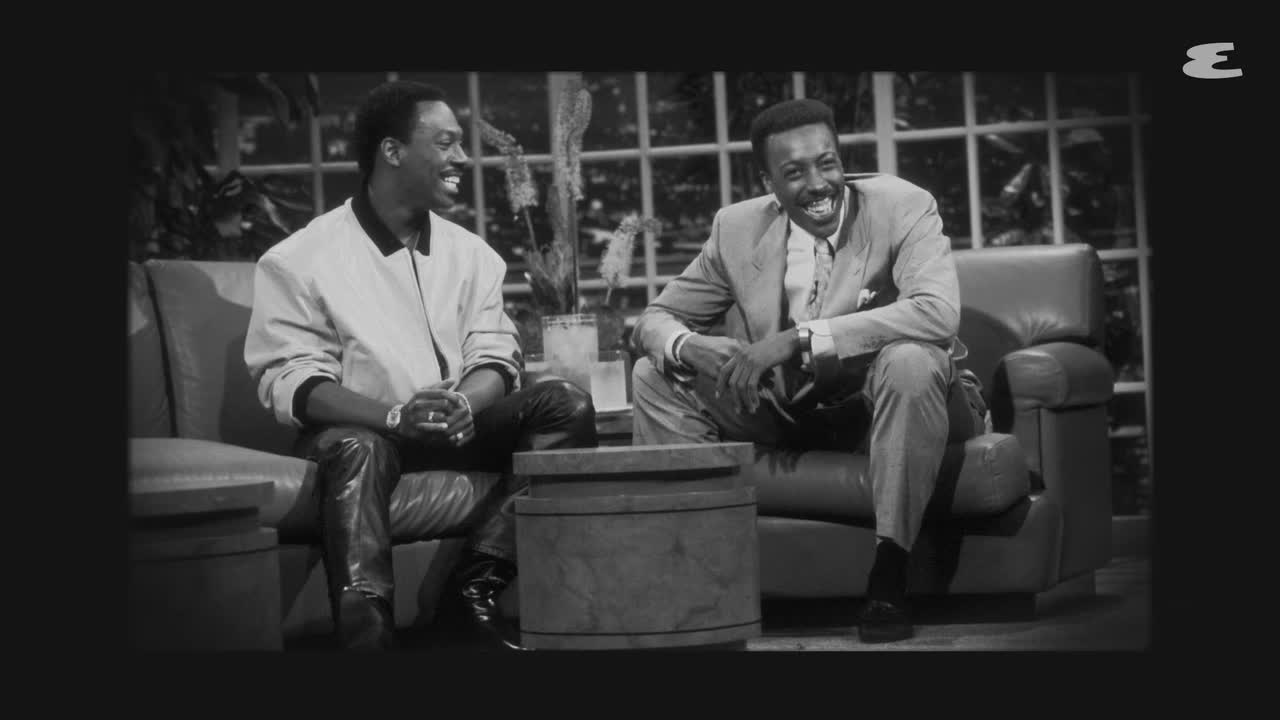
Today I'm joined by a comedian actor and the original late-night disruptor who changed the game of The Arsenio Hall Show.
From stand-up stages to Hollywood and back again, he's built a career on reinvention, resilience and knowing exactly when to call it quits.
Please welcome Arsenio Hall.
Mr. Hall, thank you for being here.
This is a true, true honor.
Well, thank you.
And thank you for the intro.
I mean, that was like better than a Shay Shay interview intro, you know?
So I want to dive right in.
You've got this incredible memoir, Arsenio, which I truly, I read in one sitting.
You know you bring the receipts to show that it was your decision to leave the Arsenio Hall show and not that of Paramount's.
You've got this great quote.
My timing and innate ability to end things before they're finished may be my superpower.
So I'm curious why, after all these years, do you feel it's important to set the record straight on this?
My son.
When your kid comes to you and says, Oh Dad.
So I was always told that you were canceled because you snuck in the studio one night and interviewed Minister Farrakhan.
And I'm like, really?
You can't do an interview without Paramount knowing about it.
Right.
But my son said that to me, and I started thinking.
And it was during the pandemic, and I got a call from Charlemagne the guy.
He said, I heard you on Stern.
You've got to do a book, dog.
You've got to do a book.
And I said, I'd love to.
Let's call my agent.
So I call my agent, and I said, Charlemagne wants me to do a book.
And she says, let me get back to you.
And she got back to me and said, that's a good idea.
And it started.
Yeah.
You know, there's one thing in the book I have to admit that I didn't quite believe.
So you say, so you do the show for six years.
You devote your life to it, you know, 24 hours a day, and then it ends.
And you go home and you sleep for an entire weekend, you say.
And then you wake up on Monday morning, and your life after the show begins.
That was the thing I had a hard time believing because I thought I can't believe that just the muscle memory of showing up to that office every day would have felt discombobulating at least, than just be at home and not have that.
I think a lot of people see me on the air and they see this happy guy who loves show business and loves entertainers, but they don't understand for the positive hour that you see, there are 23 horrible hours.
When I wrote that letter, which I put in the book and, by the way, that letter is really important because I think young black men have to know that I went out on my own terms.
You wrote this letter to Paramount, essentially your resignation letter.
And then that never surfaced.
Not only never surfaced, but they promised that we would do a press release announcing the end of the show together.
I think it was Dennis Miller or somebody who let me know that they had gone forth without me and released a press release that wasn't really the truth.
I got played, but it's cool because now I got a book.
Good book.
It's a good book.
And I know we bailed and went back to that.
And you were asking me another question.
And I feel like the worst interview in the world right now.
No, stop it.
OK, so you brought up the fact that you had Louis Farrakhan towards the end of your run.
In the book, you write, it's when we stop talking to each other that we have a problem.
You say that a couple of times in the book.
I'm curious, if you had a show today, who from the world of politics would you most want to talk to?
I don't really want to interview anybody, because the climate is so toxic and ugly right now.
We have a unique president who talks all day.
Comedy writers are so tired.
I mean, my arm.
It's like, oh, is he on again?
Oh, man, he's gonna kill comedy writers.
I don't wanna interview anybody I don't wanna be a part of.
You know, I do a joke in my act where I say I hate all politicians.
Everybody talks about J.D.
Vance running against Gavin Newsom.
I hate both of those pimps.
My dad was a Republican.
My mother was a Democrat.
So I'm like a Republican-crat caught in the middle, hating everybody.
Asking me about JD Vance and Newsom is like asking me who my favorite Menendez brother is, or some shit you know.
It's a bizarre world out there now and I just sit back As an old head I just turned 70 and I just watch it and I say there's no place for me and nothing I can do.
But watch.
So let's go back.
So your dad was in his 60s when you were born.
My question is, what is the best lesson your dad taught you?
There are a lot of lessons I didn't listen to.
My dad didn't want me to come to Hollywood.
You know, my dad was like, Don't do shell business.
My dad wanted me in the family business.
He wanted me to be a preacher.
But he didn't want me here.
I tried very hard. to be kind every day, to treat people as I want to be treated.
And when I think about the juxtaposition of those words I realize that's a commandment do unto others.
So those little things that you learn do unto others as you'd have them do unto you.
Those basics that I knew by age six are the most important things that I have in my heart.
And those came from my home and my dad.
I've made a lot of mistakes and there have been many days when I've slipped and probably been an asshole or done the wrong thing.
But I tried to make my dad proud because he didn't want me here.
Yeah.
You know one thing you write about that your dad said was my dad always taught me that men don't cry.
But, you know, you describe in the book, you describe many tearful moments that you had.
I'm curious, what do you make of that advice?
And, you know, have you, I mean, what have you told your son about that?
Have you said that to your son?
Have you said it's okay to cry?
I've said it's okay to cry, and I realize that we strap our young men with that responsibility.
Be a man.
Don't cry.
There are a lot of things we're told when we're young that we have to get out of our system.
It's important to cry.
Being told, suck it up.
You know, be a man.
Yeah.
You got to cry.
Some of the most important moments in my life, I went through them crying.
There is this character in your life that you talk about in the book, Delight.
Delight was your mom's boyfriend.
Yeah.
Also a drug dealer.
Yeah.
Yes.
Tell me about him.
What lessons did you learn from Delight?
My dad. was a recluse, never left the house much.
My dad went to church and back.
But delight was in the street.
I found a couple pounds of weed once in my mother's bedroom in a bottom drawer.
That devil's cabbage kind of smell for the first time.
He's like, what is that smell?
What's that funky smell?
And I start moving around my mother's room and I open a drawer and more weed than I've ever seen in my life.
And that's when I realized one of the divisions of Delight's company.
As a matter of fact, my landlord was a former pimp.
I would spend days just talking to him, asking him questions.
That's the talk show host, probably.
But it's also the preacher's kid who didn't know that side of the world.
Yeah, yeah, yeah.
And he would tell me things about women and sex and money.
He'd also tell me about this store.
I used to do this.
I took that money and bought this, and now I'm out of that.
There was a day of the week when he would order things.
When he would order the candy, I would give him a piece of paper.
Give me a 12-pack of Kit Kats, 12-pack of M&Ms, 12-pack of Snickers.
And I would have a briefcase that I carried to school.
And at lunch, open my briefcase, and I would do magic tricks and sell candy.
So he taught me a lot about the hustle.
Yeah.
You just mentioned magic.
So you started off as a magician, like a kid magician.
Yeah.
Do you still do magic, though?
No, but I still love it.
One of the cool things about doing Celebrity Apprentice was I spent three months with Penn Jillette.
Yeah.
You've mentioned Celebrity Apprentice a few times.
How often does Donald Trump text you and say, I need some advice?
I stay out of politics.
And I haven't talked to Mr. Trump since I worked for him as a judge on a pageant.
He doesn't fuck with me.
I don't have Trevor Noah's money.
So I don't even do many Trump jokes.
I remember a time when my friends, like, Magic Johnson would stay at the Trump Hotel.
That was his favorite hotel.
If he went to New York, he had to stay there.
Mike Tyson would speak glowingly of Donald Trump.
I don't know what their relationship is now, but I had friends who wrote rap records and you'd get Trump's name in it or Scarface in it.
There were people who were heroes to the Roughnecks.
Donald was one of them.
And it's interesting how it's flipped.
Because I remember a day standing with him Talking and he first said something about the whole birthday thing.
Asked me what I thought of Obama and we had a real cool personal conversation And I told him that's not gonna fly.
Well with the black community Mm-hmm.
And you already got this Central Park five thing.
Yeah.
Yeah, I didn't know then about his youth and some of the indiscretions as a landlord with minorities.
So you grew up in Cleveland.
In the book, you don't describe any incidents of racism growing up in Cleveland in the 60s and 70s.
Was that the case or did you intentionally leave that out?
I didn't intentionally leave it out, but my first pass at the book It was like 900 pages.
I had read Streisand's book and it felt long.
So I wanted to have a book that was an easy read, not too long, and accept the fact that I can't tell every story, because I tried to tell every story.
You know the doctor.
He slapped me and I slapped that motherfucker back.
You know from the beginning.
So I got somebody to help me craft this book and cut it down.
I remember one of the stories I took out, I went back to Cleveland.
It was an interesting bittersweet visit.
It was a wonderful R&B event that I hosted.
On my way back to the hotel, doing the convertible, couple guys screamed, nigger!
I hadn't been called nigger in so long.
You know, I've been in Hollywood.
I'm like, hmm.
Me?
Oh!
You know, and it was a while before I visited Cleveland again.
And I realized, it's not Cleveland, dude.
It's the world.
And in Hollywood, you're insulated, because you're that guy.
So, I was mad at Cleveland for a minute.
But racism is everywhere.
Well, it's interesting you say that because you said you're insulated from it in Hollywood and yet I got this feeling from reading the book that you were experiencing it at Paramount.
You described these incidents in which basically the people from Paramount who distributed your show are coming to you and saying Arsenio, the show's too black.
But for what they wanted, They were right.
But I was like I'd rather do it the way I did it for six years than to do it the way they wanted to do it for 26 years.
I don't regret one thing.
I tried to kick the door open and let everybody in pop culture and it wasn't just Black rappers and comedians
Lea Deliria. was an unknown gay comedian who was out.
That was my mission.
Black men, black women, hip hop, the comedy that don't fit into The Tonight Show.
I don't know if it's racism, the things that Paramount used to do to me.
It might be racism to search my car to see if I stole something which I've had the guards at Paramount do.
But as far as what they wanted for the show, it's not about black or white in that situation, it's about green.
So, I was hard-headed. because I had waited all my life.
I used to do this show in my basement in Cleveland.
I waited all my life.
Y'all can't change me now.
Because when I was a kid it was like in school you could say hey, Al Green is going to be on The Tonight Show or Ray Charles is going to be on.
I'm like, oh, cool.
And it was appointment TV because a Black person was going to be on.
Diana Ross is gonna host the Tonight Show.
Bill Cosby's gonna sit at the desk.
And those kind of things were events.
I wanted to take them away from being events and make them commonplace, because we are part of America too.
And some of the music being performed on the Carson Show has been stolen by people who can't even get on the Carson Show.
You know, I think the thing that shocks me most is that there is nobody black in late night now and nobody significant female in Late Night Now.
I'm amazed.
I thought back then there would be a lot of guys like me.
Is there anybody that's really kind of picked up the mantle from you?
And is the new Arsenio home?
I think there are people who are doing what I did.
They're just doing it in different venues in different ways, maybe not with as large an audience.
Yeah, shows like drink champs, those are black men.
I mentioned shea shea earlier.
Yeah, he's a black man for this generation.
What i do, you know, like tupac used to call me and say, hey man, i'm in some trouble and i need to come on and plead my side.
Yeah yeah, and i'd have him on and he would talk about what he's going through.
I think now that space could be Charlemagne Tha God.
I just think you have to sometimes look close and say oh, it's disguised, but there is a Black talk vehicle that's doing what I was trying to do.
Yeah.
Just maybe not a variety vehicle also, because it's expensive.
One of the things I used to go through is Luther Vangelis would come to my show and he wanted violins.
And to make it pure and make it the Luther we love, it would cost me a lot of money.
Now, if Luther were alive, maybe Charlemagne could talk to him, but we couldn't bring the violators.
No, no, no.
And so you can feel the frustration in your book because, on the one hand, you've got Paramount giving you notes about how the show is too black or you're too black.
On the other hand, you've got people in the black community who are saying, well, it's too white.
Yeah.
You've got Spike.
Spike Lee called you Uncle Tom.
Spike Lee called me an Uncle Tom.
And you know what?
I went and had dinner finally with Ice Cube.
But Ice Cube was mad at me eventually.
And one day he invited me to dinner.
We sat and he says, I know what you were going through now.
Once he became famous, he said, I totally get everything I criticized you for.
I know what you were going through.
When you first go to Paramount and say OK, the acronym is niggas with attitude, and they have a song called Fuck the Police.
That meeting is over.
Back then, and I didn't have the power to make that meeting go any further.
Later on, I was able to say, Ice-T called me, and he was going through the cop-killer saga.
And he wanted to come on and explain it.
Boy.
He kicked some knowledge that day and helped people understand something about young Black men and hip-hop.
At that point, the show was so hot when Paramount said, we're not talking about Cop Killer.
And I'm like, yes, we are.
And then it start changing.
So then it start being Arsenio doing that show he dreamed of and we can't stop him.
Yeah.
Okay, so you tell all of these great stories in your book.
I want to, you know, illuminate a few of them.
So you went on a date with Pamela Anderson in the 80s.
You don't really say how that date ended.
How did it go at the end?
We became very good friends.
Yeah.
And I think until she got married, we stayed homies, you know.
Pam is a very smart, talented person.
And we're still friends, even though our lives and our paths don't cross like they used to.
There's also this great story about you.
You're doing Coming to America.
Eddie Murphy and John Landis, they get into basically a physical altercation as they're filming.
And you are called to basically get Eddie Murphy back on board.
And you go to his house in New Jersey, and you get him drunk, and you get him high.
And he did not drink at the time.
He did not do drugs at the time.
I want you to tell me about that story.
Like, tell me.
See, that sounds like I became the guy my dad was afraid I'd become.
I, like a lot of famous heterosexual men, wanted to be with two women.
The star on the Hollywood Walk of Fame, that was one of two dreams.
The other thing I dreamed of was being with two women.
So I had a day off from shooting, and I'm at the Waldorf Astoria.
One young lady who I was dating in LA.
She flew in and I met another young lady on the set and I weaved my magic.
We had some weed and some coke, and they came over, and we had the stereo and the TV blasting.
And it was on, dawg.
It was on.
I had on my Hefner robe, and, uh...
The phone rang.
It was a man named Ned Tannen.
Ned ran Paramount back then.
The last thing you want when you're about to have a menage a trois is a phone call from a man named Ned.
He says, go find your friend.
Do you know what happened?
And I said no, this is my off day, i'm not there today.
And he says i think eddie uh hurt john landis and they're like what do you mean?
Hurt his feelings?
What'd he say to him?
No no no, i think he there was some physical and, and so i called uh, eddie's cousin ray, and i said yo, what happened today?
And he said Director was talking shit.
I had to pay.
I'm like, I'm coming.
I'm coming.
You know, like I'm Superman or something.
I get dressed.
I get a car that Ned Tannen had waiting for me downstairs.
And I went to Inglewood, New Jersey, with a baggie of joints.
And I walked in, and Eddie told me what happened.
And that it had happened outside, I think, maybe in front of the McDowell's set.
I guess they were fans.
And Eddie's signing autographs.
And John Landis said something to him in front of these people.
One of those things where if they were private, it might have gone down different.
But you front me off in front of all these people.
And I think that was the issue.
My solution to the problem was, it's crazy, man.
And he says, I don't smoke.
Fuck away from me and that shit.
And I said, let me make you a drink.
He said, I don't drink?
You know I don't drink.
Who are you?
You know?
I poured some orange juice and some vodka in a glass.
And we're talking.
We're just talking.
And then we start getting away from that and just laughing.
The problem is, Landis quit.
And at that moment, Coming to America was not going to be finished.
If Landis hadn't have come back, the legendary film Coming to America would not have been what it is.
He was the heartbeat of that movie.
We start talking and laughing, and we got away from the movie.
Eventually, Eddie said, so is that nasty?
And I'm like, no, it's not nasty.
It tastes like orange juice a day after it expires.
He has his first drink.
I'm the devil.
And eventually, I get him to hit a joint.
And before you know it, this is when I knew that we were going to have peace.
He said, I love that dog.
Come here, Val.
And he lays on the ground with Val, and they start talking.
And I'm like, cannabis, the hero to conflict.
By the end of that evening, he was like, yo, man, we got to get this movie back on track.
And I don't know what happened after that party that we threw, because we invited some people.
We had a good time that night.
I was off the next day too.
Ned called and said, you're a hero.
I don't know what you did, but you're a hero.
So I didn't do nothing.
I didn't do nothing.
Somehow he realized that there was a bigger mission And he had to put the anger aside and make it happen.
And somehow him and Landis talked.
And on that third day, when I was supposed to be back there, I was back at McDowell's trying to pronounce rhinoceros pism.
And a young Sam Jackson was on the ground under my rifle.
And I remember Landis during lunch saying, he's going to be the best.
He's going to be great.
He's a wonderful young actor.
Samuel Jackson is great.
You were offered the part opposite Martin Lawrence in Bad Boys.
Do you regret turning that down?
This is not gonna make a lot of sense to most.
I don't need a lot of money.
I just need enough to not worry about money.
If money is here on a list, is something right here.
When I stepped away from late night, from just working for a minute, I was able to see life clearer and realize that I didn't need more of that.
And I found out what I needed.
I needed more personal life.
I needed a kid.
I needed to be a dad.
I wanted to be a dad.
And I wanted to pick him up from school.
I didn't want to be busy.
I didn't want to be the dad.
Dad, where are you?
You're at Yuck Yucks in Atlanta.
You know, I didn't want to be that dad.
Richard Pryor once came to my first condo.
And I said, I don't have no furniture, Rich.
And he says, just have some Cavasier.
We'll sit on the floor.
I want to see what you bought.
So Richard comes to my house, and we're drinking Cavasier.
And Richard said, I used to have a place like this.
It was actually the last time in my life I was happy.
Now, I'm sure that was exaggeration, that was hyperbole, but he said it.
And as I got older, I realized what he meant.
Life ain't about show business.
It's just a job and sometimes we make.
I want to knock the bar up here and I want to have this and that, and I want to do this and that, and you get to the end of your life and you say They forgot me anyway.
I don't care how good you are or how well you do something.
People are going to forget you.
So decide what's important.
Be present as a father.
Be present as a son.
Be present as a husband.
Those things are so much more important than I wonder if they'd get rid of Kimmel.
If I can get in there.
I got mine.
Prince was somebody that you, he was on your show three times, something like that, and it would take up the entire hour.
That was the deal I made with it.
The first time he did the show, he says, I want to do your show. but I want the whole show.
As soon as you give Prince the whole show, that new singer Sammy Lunchmeat wants the whole show.
We start getting calls from bizarre dudes saying, why can't I have the whole show?
It's like, I'm never doing this for anybody else but Prince.
Back in the old days, he wouldn't talk.
And he would say, have somebody on while I change.
You know, because he would do wardrobe change.
Have somebody on while I change to do the things I don't like to do.
And that was talk.
So the first time I think I brought Patti LaBelle on, he loved Patti LaBelle.
You know, she was like a big sister to him.
He loved her and I was like okay, while you're changing clothes, me and Patty are gonna talk about you.
And that's how I would do the show.
I would have a co-host or someone to talk to while Prince put on different heels.
You know, I don't know if you've ever seen this theory, but there's a theory that basically the world kind of went awry after Prince died.
You know we say that with tongue in cheek, but Prince did warn me and probably other friends of his, about a lot of things that became problems.
I remember him talking about the concept of Napster and how that was going to change music.
I asked Prince one time, I was like, don't you want a cell phone?
And he says, no, I don't need one.
And I said, I can't believe it.
I told him all the wonderful things.
And he says, everyone around me has a cell phone.
Why do I need one?
And I'm like, that's no fun, dog.
But the bottom line is he even thought that was bad, even possessing one.
Till the day he died, as I know, there was no phone in his tight pants.
I remember before cell phones me and Queen Latifah Dana were downtown at this club at one in the morning and Prince did a two-hour set.
And I look back and I'm like, how did we all get there?
I mean, there were a lot of celebrities in the room watching Prince break new material and work out.
Somehow, he would get everybody in that room, and we would watch Prince till four in the morning.
You are also friends with Michael Jackson.
And in fact, there's this great story about him basically wanting to meet your mom, give her a hug.
I mean, tell me about that.
I asked him for some advice, because I'm like, I'm so busy, man.
I'm working and I feel bad because my mother's out here now.
So I told Mike.
I said I feel bad sometimes because she hangs out with my friends and I don't have no time and blah blah, blah.
My mother went to dinner with a comedian once.
I'm like, Mom, you know.
You can't go, you can't come to the Comedy Store and give your number to a comedian.
You know, it's just, I don't know how to explain it to you.
It's just not a good idea.
You know, if you end up at Spago with Pauly Shore or whatever.
It was the big Soul Train Awards.
I was hosting, and Mike was being honored with the highest honor.
And he says, bring your Thursday.
Now, this is Hollywood.
People are polite at most.
This is Michael Jackson.
You know, this is the most popular man on the planet.
He says, I'd love to meet him.
So I tell Mom, you got to come to the awards.
I'm going to send a car for you.
Michael Jackson wants to meet you.
And she comes to the awards, and she has a great time.
And at the end of the night I walk her out because I have to go speak with Don Cornelius, pack up my trailer, I walk her out to the car, I put her in the car and, as she's about to drive away, a security guy says Mr Hall, you know uh, I was waiting for you.
Are you kidding me?
He's reminding me.
I hope people forget when I promised them things, you know?
So I tell my mother, Mom, whoa, whoa, whoa, get out of the car.
Come here.
Come here.
We're going to say hello to Mike.
She says, you told me we were going to do that.
I thought you...
I'm so mad at you.
She was riding away sad.
You know, she was looking like Denzel in Soldier Story leaving the shrine.
You know, one tear coming down her eye.
We go to Michael's trailer.
The gentleman does the secret, Billie Jean knock, and then opens the door for us and we go up the steps, my mother first.
And you hear, Annie Hall.
He always found her name intriguing.
Him and my mother talked.
I was just amazed that this guy said that and was still sitting in his trailer because Michael could have been gone.
A lot of guys like him come out of the building into the car wet with a towel and they're in Sherman Oaks.
Before I say good night, Mr Cornelius.
But Mike kept his word, and he met my mom.
And to this day, my mother's in her 90s.
To this day, You can't get her to stop talking about Michael.
And that night.
So i had this experience with with spike lee several years ago.
Uh, we were, did he call you an uncle tom?
He, he did.
How did you know that was?
Yeah, we were shooting him for the magazine and uh, there was music playing in the background and a michael jackson song came out and this was sort of uh, this was probably around 2019 2020, something like that.
A lot of people sort of groaned and said turn it off because of the kind of allegations that had swirled about Michael Jackson.
And Spike Lee said, no, no, no, no, Michael was framed.
What do you think about the legacy of Michael Jackson?
As much as I love Michael, I have to respect kids I don't know and things they say about their life.
I think we get into trouble saying, I'm not familiar with that, Michael, so you're a liar.
I think there's something that I used to do in Cleveland, that my relatives used to do, that we did back in the day, that people don't do enough anymore.
Mind your own motherfucking business.
I see the kids and parents and Neverland and Michael and Jesus Juice.
It's too much.
It's too much for a guy at home to try to make a decision.
So what I do is I try to raise my son, take care of my woman and not make any judgments about anything so terribly serious as abuse of children.
And I know that doesn't make for a good interview.
It would be much better if I said, What was the Jesus juice all about then?
You know, but it's none of my business, and it's too serious for me to guess.
Yeah.
So there are so many memorable moments from your show.
I mean, it would be hard for anybody to just kind of zero in on one, but it was your show.
What is the most memorable moment for you from your show?
Between standing on stage and having Bill Clinton with a saxophone.
That feels surreal to me.
Yeah.
I remember looking at the cards and saying finally, a Democrat blowing something other than an election.
And I looked to see if he's laughing.
And he...
And I look down and I see all the Secret Service guys, because usually there's rappers in the front row here.
On this day, it was men in really nice suits dressed like you.
When I did that joke I saw one of the Secret Service guys say So.
It was cool and surreal to make him laugh.
And then he wins.
And he calls me and says it's because of me.
You know, to have that, you know, I wouldn't be president if it weren't for you.
Oh, fuck.
I can't believe he said that.
I wish somebody else was here.
Listening.
That moment, and probably the moment I arrived at Paramount and on the top of stage 29 where I did my show, where like 20 members of the Nation of Islam in suits and bow ties And I knew then I had gotten myself into some shit.
And what's bizarre is now, we mentioned Charlemagne Tha God.
I turn on The Breakfast Club and I see him talking to Minister Farrakhan.
And the things that made people hate me for life are commonplace conversations in media today.
But I get it.
Donahue back in the day talked to Farrakhan.
And Mike Wallace talked to Farrakhan.
And Barbara Walters talked to Farrakhan.
But I get that the rule was Niggas can't talk to Farrakhan.
You and Oprah can't talk to Farrakhan.
And I broke the rule.
Nobody's bigger than Oprah.
You never saw Oprah Lewis Farrakhan interview.
I broke the club rule, and I talked to someone that I wasn't supposed to talk to.
Because a lot of people say, well, you're not a journalist.
That's why we didn't want that to happen.
And I'm like, the fuck out.
It's a lot of motherfuckers that call themselves journalists that aren't journalists.
And the deal is I'm closer to my fans than any journalist.
And I'm going to ask the questions they would want me to ask.
And I'm the perfect person to do this. and let the journalists also do it.
And by the way, let a black journalist do it.
This thing of it should just be a white dude because y'all can't do it.
You black people, we don't want you to do it.
We'll do it.
You go and do it.
Do something else.
Have another interview with Hammer.
Yeah.
So during your final show, you filled the stage with hip hop artists.
By the way, I know where that comes from.
Online, it says that that was my final show.
That was not the final show.
I'm not sure why that show had such impact that people.
It actually bugs me sometimes because I'm thinking no no, I continue to do the show for another month.
But what you're talking about is all these rappers flew to LA to pay tribute to what I had done for hip-hop.
And it was everybody from Old Dirty Bastard to Yo-Yo.
Everybody was there.
And they freestyled, which was kind of new back then.
I think the first freestyle by a rapper was on my show and executed by Snoop.
But that said, everybody was there.
And for some reason, people thought that was the farewell to me.
But there were many shows, and the last music performance on my show was James Brown.
James Brown, that's right.
And he came and he said I'm going to come and do it, but you got to make sure I get to sell my cookie.
And I said, Mr. Brown, I'm sorry?
He says, I got to lose the James Brown cookie.
And I wanna, just if we just have a moment.
I said, but this is my last show, this is so important, you gotta let me have this one.
Yes, you gotta let me show the cookie.
There's a funny moment that's only funny to me where I'm saying goodnight to the world and I hear a crumpling of cellophane paper behind James' back.
And James Brown cookies.
But I will see you again.
Oh, James.
If you want to have some of these James Brown cookies, I will.
That's all I remember about my last show, trying to hold James' sleeve so he wouldn't raise the arm with the cookie.
You know?
I got the new James.
You know?
My life.
My life.
When the hip hop artists filled the stage and they're freestyling one of them freestyles.
If not for Arsenio, there wouldn't be no late night TV.
Do you believe that?
At the end of that quote should have been, for us.
Because I think people like those rappers knew that I was coming to include the huddle masses in the game, the people that didn't have a late night show.
I'm here for you.
And I think they appreciated that.
And that was what that was about.
So for him, He had watched Steve and Edie a lot of times on The Tonight Show.
That wasn't late night for him.
For him, late night began and ended with me.
The thing I love about late night is the things I was doing.
Even though there are no Black hosts and no female hosts, the things I was doing are commonplace now.
What I showed is there is an ability to get numbers with minorities.
You know, I remember arguing with Paramount about Juan Gabriel.
He was a Hispanic artist.
They said, who is Juan Gabriel?
And I said, he's at the Rose Bowl tonight.
So I was trying to break minorities into the late night game that were huge in America but just not on our mainstream late night shows.
Now, guys like Kimmel and Fallon are including everyone.
And that's what I love.
Yeah.
Last question.
Your obituary, what's the first line of it going to be?
He made me laugh sometimes when I didn't think life was funny.
That's great.
Because that's what I'm about.
At the end of the day, I've been put on the earth to do a lot of things, but the most important making people smile, making people laugh.
So if the first line is about me making people laugh and making people happy, I'll be happy with that obituary.
Mr. Hall, thank you for being here and joining us.
This was fabulous, a true legend.
His memoir is out March 31st.
It's extraordinary.
You should all go out and buy it and read it.
Thank you.
Thank you, sir.