
[A Journey Through Time: A Summary of Jules Verne’s 'Around the World in 80 Days']-[Around the World in 80 Days - Part 01]
📋 Summary
Introduction to a Literary Classic
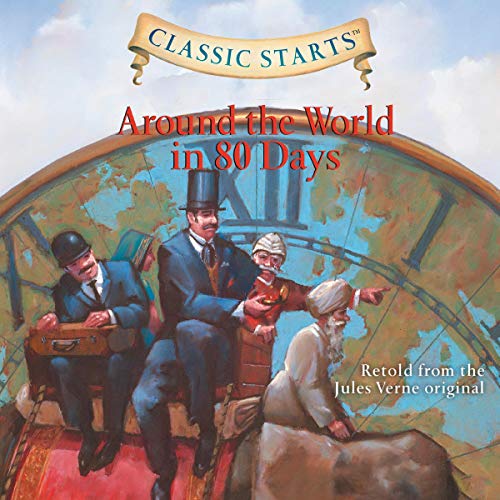
'Around the World in 80 Days,' originally penned by the visionary Jules Verne and masterfully retold by Deanna McFadden for the 'Classic Starts' series, remains one of the most enduring adventure narratives in literature. Narrated by Rebecca Reynolds, this adaptation brings the fast-paced, high-stakes journey of Phileas Fogg to a modern audience while preserving the Victorian charm and suspense of the original work.
The Catalyst: An Impossible Wager
The narrative is set in motion within the confines of the Reform Club in London. Phileas Fogg, described as a man of extreme 'precision' and 'methodical habits,' finds himself embroiled in a heated debate regarding the feasibility of global travel. Driven by his unshakeable belief in logic and calculations, Fogg accepts a daring wager: to circumnavigate the globe in a mere 80 days. This decision marks the departure from his 'solitary' and 'routine-filled' existence, setting the stage for an extraordinary expedition.
The Traveling Companions: Fogg and Passepartout
Central to the story is the dynamic between Fogg and his newly hired valet, Jean Passepartout. Passepartout, a Frenchman seeking a 'quiet life,' finds himself thrust into a whirlwind of chaos. The contrast between Fogg’s 'impassive demeanor' and Passepartout’s 'exuberant and impulsive nature' provides both comedic relief and essential support throughout their travels. Despite their differences, they form a bond forged in the fires of necessity, navigating through various transit modes, including steamers, trains, and even an elephant, to maintain their strict schedule.
Obstacles and the Pursuit of Justice
As the duo traverses continents—from the bustling streets of Suez and the complexities of India to the rugged landscapes of the United States—they are dogged by Detective Fix. Fix, convinced that Fogg is a 'bank robber' who has fled London with stolen loot, represents the primary antagonist. His 'misguided pursuit' adds a layer of tension, as he attempts to sabotage Fogg’s progress at every turn. Fogg’s indifference to these external pressures, focusing solely on his 'itinerary,' highlights his singular determination.
The Climax: A Race Against the Calendar
The journey is fraught with challenges, including delays, cultural encounters, and the constant threat of missing a connection. The story reaches its zenith as Fogg returns to London, believing he has failed by a narrow margin. The 'bittersweet realization' of his apparent defeat serves as a testament to his character; even in failure, he remains composed. However, the discovery of a 'crucial miscalculation' regarding the International Date Line serves as the narrative’s ingenious resolution, proving that Fogg’s meticulous nature was his greatest asset all along.
Conclusion: The Triumph of Will and Perspective
Ultimately, 'Around the World in 80 Days' is more than a tale of travel; it is a meditation on time, perception, and the human spirit. McFadden’s retelling captures the essence of Verne’s work, emphasizing that adventure is often found in the most unexpected places. As Rebecca Reynolds narrates the final pages, the reader is left with the understanding that Fogg’s greatest reward was not the money won in the wager, but the 'widening of his world' and the newfound companionship he found in the process. This classic remains a cornerstone of adventure fiction, reminding us that with enough resolve, any challenge—no matter how insurmountable—can be conquered.

Deep Learning with ListenLeap


