How many times can I use gonna in a short conversation?
Ha!
I challenged myself to write this conversation to show you how we use gonna in conversational English.
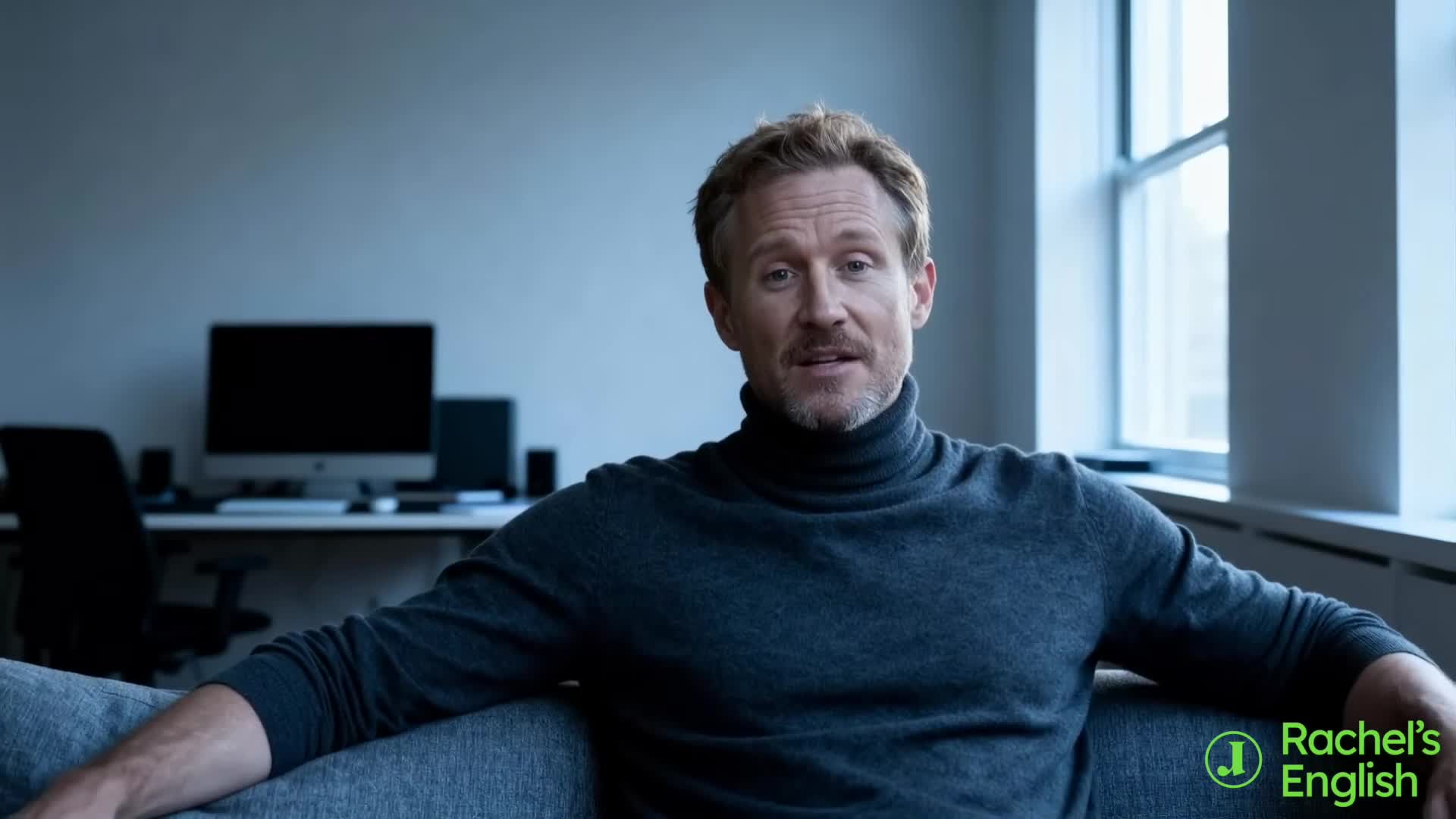
My colleague Tom and I recorded this conversation.
I'm going to tell John we were here.
You're not going to tell John we were here.
And then I thought this would be more interesting if I created AI characters to use our voices.
I made this AI copy for myself and I used this fake guy for Tom.
What do you think?
Did we nail it?
First, here's the conversation.
Then we'll do a full pronunciation analysis.
At the end of this conversation you'll have a better understanding of the rhythm of spoken American English.
Here's the conversation.
I'm gonna tell John we were here.
You're not gonna tell John we were here.
I'm gonna tell John we were here because he's gonna know anyway.
John's not going to know we were here.
He's going to know we were here because he's going to see that his money's gone.
He's not going to see that.
And if he does, he's just going to think he lost it.
He's not going to think we were here.
I still think I'm going to tell him.
Now let's look at the analysis.
I'm going to tell John we were here.
So it starts pretty high.
I'm gonna, I'm gonna, I'm gonna tell.
I'm gonna tell.
I'm gonna tell.
I'm gonna tell.
I'm gonna tell, John.
So tell is our main verb here.
Gonna, our helping verb.
I'm gonna, I'm gonna, gonna, gonna, gonna, gonna, gonna.
Not stressed.
I'm gonna tell.
I'm going to tell— I'm going to tell— tell— We have a little bit of a scoop up.
I'm going to tell John we were here.
And then everything comes down after that.
Tell John we were here.
Little bit of stress on the word here.
I'm gonna tell John we were here.
I'm gonna tell John we were here.
I'm gonna tell John we were here.
But gonna said very quickly.
Gonna, gonna.
Linked with I'm.
I'm gonna, I'm gonna, I'm gonna, I'm gonna.
I'm gonna, I'm gonna, I'm gonna.
I'm gonna, I'm gonna, I'm gonna, see if you can do it that quickly.
I'm gonna, I'm gonna tell, I'm gonna tell, I'm gonna tell, I'm gonna tell John we were here.
And all of the energy, volume comes down from that peak of stress. when we scoop up for tell.
I'm gonna tell John we were here.
I'm gonna tell John we were here.
I'm gonna tell John we were here.
You're not gonna tell John we were here.
You're not gonna.
You're not gonna.
Not gets quite a bit of stress.
Not.
And it is a stop T We don't release With that sound, we just have not abrupt stop.
And then the G sound.
Just like I'm was said very quickly here I'm I'm I'm I'm, you are your, is also said very quickly.
It actually reduces Yor, becomes yur yur, yur with the schwa R sound.
So just think of it as a Y sound and an R sound.
You're, you're, you're, you're.
You're not gonna tell.
You're not gonna tell.
You're not gonna.
Then our unstressed word gonna.
Just falling down in pitch.
You're not gonna, gonna, gonna, gonna, gonna.
Gonna tell John we were here.
Tell John we were here.
So we have up-down shape of stress on John.
John, we were here.
I'm Rachel.
I have a background in opera singing and I've been teaching the American accent to non-native speakers for over 20 years.
Scan this QR code or go to rachelsenglishcom, slash free to get my free course the top three ways to master the American accent.
It will blow your mind.
It will give you totally new ideas on how to get the sound you've always wanted.
John, we were here.
John, we were here.
John, we were here.
The word tell.
It's a verb, but it doesn't really get the stress the way John does in this sentence here.
You're not going to tell John, so not and John get the most stress here.
You're not going to tell John we were here.
Whereas in my sentence, I stress the action, what I was gonna do.
I stress tell the most.
Tom wants to make sure I don't tell John, so he's stressing the negative and the object, John.
He doesn't want John to know.
You're not gonna tell John we were here.
You're not gonna tell John we were here.
You're not going to tell John we were here.
I'm going to tell John we were here because he's going to know anyway.
I'm going to tell John.
So again, gonna, helping verb, not stressed, but tell, and John, both stressed.
So I am going to, pronounced.
I'm going to, I'm going to, I'm going to, I'm going to, I'm going to, I'm going to.
It's almost like there's not even really a vowel here.
Usually in IPA I would write this with the UH as in butter vowel, but I do think sometimes it's said so quickly that it's more like a schwa, with kind of a feel that there isn't even a vowel there.
I'm going to.
I'm going to.
I'm going to.
I'm going to tell John.
I'm going to tell John.
I'm going to tell John.
I'm going to tell John we were here.
We were here.
And here, stress goes up, here, because I'm about to explain why.
We were here.
We were here.
We were here.
We were both unstressed said very quickly.
We were, we were, we were, we were here.
We were here.
We were here.
We were here.
Because he's going to know anyway.
Because he's going to know anyway.
All of that stresses are one word, know.
Because he's going to know anyway.
Everything else just sort of leading up to that peak of stress or falling away from that peak of stress.
Because he is going to becomes, because he's going to, because he's going to, because he's going to, because he's going to, because he's going to.
So because gets reduced, it's just K, schwa Z, The H gets dropped in, he's.
So now that's just the EE vowel.
Kuh-zeez.
And the apostrophe S makes a Z sound.
Kuh-zeez guna.
Kuh-zeez guna.
Kuh-zeez guna.
Because he's going to— Because he's going to— Because he's going to— Because he's going to know anyway.
Linked together very smoothly and not very clear.
Know is our most clear stress word, our main verb there.
Because he's going to know anyway.
Because he's going to know anyway.
Because he's going to know anyway.
John's not gonna know we were here.
John's not gonna know we were here.
Three stressed words there, none of them are gonna.
John's not gonna know we were here.
Everything else, flatter in pitch, linking things together, less clear.
Again, we have a stop T, not gonna, not gonna.
You're never going to hear not gonna, not gonna.
You'll never hear that true T release.
It's always gonna be a stop T in this case when it's followed by gonna.
John's not gonna.
Gonna, gonna, gonna.
John's not gonna.
John's not gonna.
John's not gonna know we were here.
And again, we were said very quickly, a little bit unclearly.
We were, we were, we were, we were.
We were here.
We were here.
We were here.
And then more stress and up-down shape of stress on here.
We were here.
We were here.
We were here.
We were here.
He's gonna know we were here.
He's gonna know we were here.
So in this first part of the sentence, two stressed words.
He's gonna know.
Our main verb, gonna know we were here.
He's gonna know we were here.
He's gonna know we were here.
He's gonna know we were here.
He's going to becomes.
He's gonna, he's gonna, he's gonna, he's gonna, he's gonna, he's gonna, he's gonna, he's gonna.
Again, don't think of putting a clear UH vowel in here.
It's really more of a schwa because it's so fast, because it's said so quickly.
Gonna, gonna, gonna, gonna, gonna, he's gonna, he's gonna.
He's gonna, he's gonna, he's gonna know we were here.
With that nice longer up-down shape of stress on our two stressed syllables, know we were here.
And again, we were much faster, lower in pitch.
He's gonna know we were here.
He's gonna know we were here.
He's gonna know we were here because he's gonna see that his money's gone.
Because he's gonna see that his money's gone.
So we have our primary verb, our main verb stressed. and a noun.
His money or object.
Gonna, our helping verb again, unstressed.
So because he is going to is pronounced.
Because he's going to.
Because he's going to.
Because he's going to.
Because he's going to.
Because he's going to.
Again, because is reduced, it becomes kzz.
K consonant, schwa, Z sound, kzz.
And that Z links into the EE vowel because we've dropped the H. Kzz, kzz, kzz, kzz.
That's also a Z.
Then, gonna.
Gonna.
I'm gonna write that with two schwas.
Gonna.
Cause he's gonna.
Cause he's gonna.
Cause he's gonna.
Because he's going to see that his money's gone.
Because he's going to see.
Then see a little bit longer, a little bit of an up-down shape of stress.
This is usually the way our main verbs are.
They are usually stressed.
Let's look at the words that and his.
That is, that is, that is, that is, that is also unstressed and reduced.
This is the symbol in the international phonetic alphabet for the TH.
The AA vowel changes to the schwa, the, the, the, the.
This T actually becomes a flap T, linking together two vowels, the schwa and the IH vowel, because the H is dropped here.
That is, that is, that is, that, his.
Here in conversation, that is, That is, that is, that is.
The tongue is just a flap here, just a quick bounce up and down against the roof of the mouth.
That is, that is, that is, that is, that is, that is money's gone.
Money's gone.
So stress on the first syllable that has the UH as in butter vowel, and the second two syllables just come in as the voice falls off in pitch.
Money's gone.
Money's gone.
Money's gone.
Money's gone.
He's not gonna see that.
He's not gonna see that.
Okay, again, the negative word not, he's not, stop T, gonna see that.
And our main verb stressed up-down shape of stress a little bit longer always a stop t followed by gonna, not gonna, not gonna.
He's not gonna see that.
He's not gonna see that.
He's not gonna see that.
Gonna said so quickly gonna gonna, gonna See that.
Now the vowel here doesn't get reduced.
We don't reduce it when it's at the end of a thought group.
See that.
That would be a little bit weird, so we keep the AA vowel.
See that, that, that, that.
Stop T. It's still unstressed.
It's quieter, lower in pitch.
It's not that with an up-down shape of stress.
It is flat but the vowel doesn't change to the schwa that that that, see that, see that, see that, see that, and if he does and if he does, and niffy little bit on if and niffy, and if he and if he and if he does and if he does Does.
So we have the word and reduced.
And, and, and, and.
I would just write that schwa N, not and, but and, and.
If.
Links into the word he with the H dropped and it's just the EE vowel.
It's really common to drop the H, you've noticed that here in he and in his.
Not so much at the beginning of a thought group, but definitely in the middle of one.
In a fee, in a fee, in a fee, and if he and if he and if he does does this word has the uh as in butter vowel, just like money does and if he does, and if he does, and if he does, and if he does, he's just gonna think he lost it.
He's just gonna think he lost it, Just lost.
Our two stressed words, everything else, flatter, quicker, lower in pitch.
Gonna becomes gonna.
Just gonna.
Just gonna.
Just gonna.
Just gonna.
Just gonna.
Just gonna.
Said so quickly.
It's very common in an ending T cluster to drop the T if the next word begins with a consonant.
I'm just gonna leave now.
I'm just gonna put this here.
I'm just gonna go see.
Just gonna, just gonna.
No T. Just gonna, just gonna, just gonna think he lost it.
Let's look at this word, he.
It's in the middle of the thought group.
Is the H dropped?
Just gonna think he lost it.
Just gonna think he lost it.
Just gonna think he lost it.
Yep.
Think he.
K linking right into the E vowel.
Think he.
Think he.
Think he lost it.
Ending in a stop T. Lost it.
Think he lost it.
Think he lost it.
Think he lost it.
He's not gonna think we were here.
Again, stress on not.
He's not gonna think we were here.
Not.
Up-down shape of stress, more length, more volume.
Stop T. Not gonna.
Gonna.
Flatten pitch.
A little unclear.
Definitely unstressed.
He's not gonna.
He's not going to think we were here.
He's not going to.
And then a little bit of stress on our main verb, think.
Think.
He's not going to think we were here.
Here.
A little bit of up-down shape of stress.
And again, we.
Were.
Were. said flatly, said very quickly, we were, we were, we were, we were here.
We were here.
We were here.
We were here.
I still think I'm going to tell him.
I still think.
Stress on my adverb.
I still think I'm going to tell him.
I still think I'm going to tell him.
And then the verb tell.
I still think I'm gonna, think I'm gonna, all flatter, unclear, gonna, gonna, gonna, gonna.
Said very quickly.
I'm gonna, I'm gonna, I'm gonna tell him.
And then dropping the H in him, linking the L into the IH vowel.
Tell him.
Tell him.
Tell him.
Tell him.
Tell him.
Now let's take every sentence where we have a gonna and let's play just the gonna three times in a row.
I'm gonna.
I'm gonna.
I'm gonna good good good good good good good good gonna gonna gonna gonna gonna gonna, gonna gonna.
Let's listen to the whole conversation one more time.
I'm going to tell John we were here.
You're not going to tell John we were here.
I'm going to tell John we were here because he's going to know anyway.
John's not going to know we were here.
He's gonna know we were here because he's gonna see that his money's gone.
He's not gonna see that.
And if he does, he's just gonna think he lost it.
He's not gonna think we were here.
I still think I'm gonna tell him.
Don't forget to check out rachelsenglishcom.
Slash free to get my free course.
The Top Three Ways to Master the American Accent.
Keep your learning going now with this video and don't forget to subscribe with notifications on.
I love being your English teacher.
That's it and thanks so much for using Rachel's English.