Thank you.
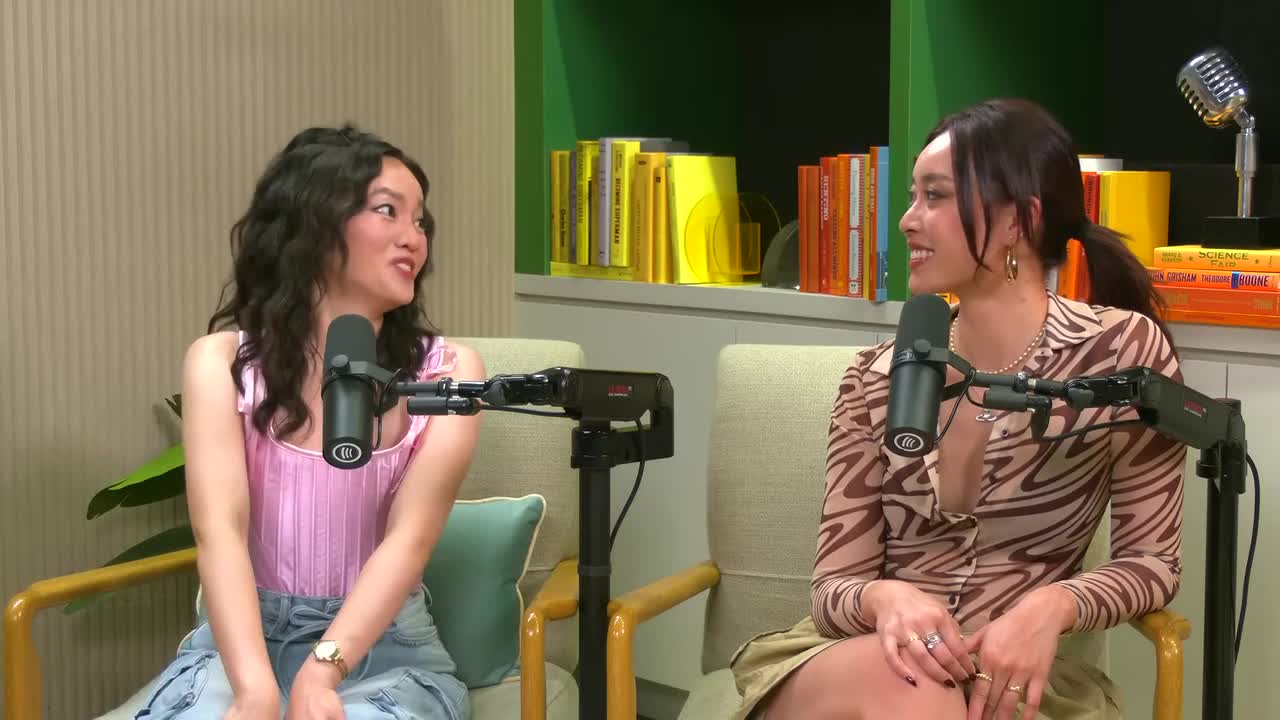
Hello and welcome back to this brand new podcast under the AVG umbrella.
My name is Jen.
I'm the cheese ball in your snack drawer.
My name is Emily.
I'm the older sister you've always wanted.
And I'm Madeline, your girl who thinks everything is that deep.
Today, we've got a juicy, juicy episode.
Are we red flags?
Are we toxic?
Are we really toxic?
The answer is yes.
Yes.
The answer is yes.
Everybody got a little bit of toxicity sprinkled in.
But what's fun is we're toxic in different ways.
Yes.
So we cover all colors of the toxicity rainbow.
We are self-aware girlies.
We know where we are wrong.
We know where we fall short.
And we are excited to talk about it today.
We've done a lot of work trying to uproot these difficult habits of ours.
However, some of them are stickier than others.
And it's something that maybe we might have to live with for the rest of our lives.
They still peek out every now and then.
Yeah.
It's not pretty.
They do.
I know, just looking at us, we do look like we have nothing wrong, but...
Deep down and maybe not even that deep down, there are things that... Actually on the surface.
Actually on the surface, on the crust.
Actually last week.
We're laughing because it's true.
Toxicity is so fun.
Dude, I love...
I love being toxic.
I feel like it's kind of like when you know that something is bad and you know that there's something in you that you should change and like oh, maybe this is not a personality trait that I should be proud of, but it feels so good when you're doing it.
You're like, I know I shouldn't send that text. and be inflammatory to this person.
I know I shouldn't write this one-star Google review, but boy, does it make me happy.
I know I shouldn't twist the knife.
I know I shouldn't use their words against them, but they deserve it.
It's like you look for the jugular.
They deserve it.
It's wild.
It's like you look for the jugular and your developed brain is like, don't touch that.
Please don't touch that.
And your animal brain is like, rip it out.
And it feels so good.
We're really exposing ourselves so fully, pouring our heart out, bearing our souls to you so early on in our relationship welcome.
We want to bond with you by sharing.
This is who we are the deepest, darkest corners of who we are.
Usually i try to sham, wow you and make you think that i don't have these traits, but we are growing, so that's why we're trying to be truthful about it now.
You know what i'm saying together.
How are you toxic, jen?
Give it to us.
Don't be general.
Be specific.
Okay well, the first one that came to mind when I was thinking about this question was one of my toxic traits is that when I feel attacked or I'm in a fight with someone, I become a lawyer.
I have a JD.
Her father is a lawyer.
My dad's father is a lawyer.
Yeah, it's a hard one, so it is.
Yeah, it is just a jump hop and a skip away, but i become a lawyer, okay.
So what i'll do is I'll like ping pong with you back and forth in our argument.
Okay.
But the whole time I got my yellow line paper out and I'm remembering things you said and I'm searching, scanning the horizon, for any loopholes.
Anything you didn't cover.
She loves a loophole.
I do love a loophole.
She'd be looking for loopholes all the time.
Yes.
So when I find one, I weasel my way in there and I make the loophole bigger and bigger and bigger until you get exhausted.
You're spun in circles.
You're dizzy.
So you exhaust your opponent.
Oh, yes.
I'm calling them an opponent. because they are my opponent in this situation.
For Jen, arguments are not like, let's work through this together.
She's like, this is me versus you and I'm going to win.
Yeah, that's what I do.
I take the long game too.
We play for, yes.
I'm like, I will- You go for endurance.
Go for endurance.
I'll like- Would you like to- Talk you into a circle.
Share with us who you lost.
Maybe not the most recent.
Oh, last time I did that.
Well, this one time I had a fight with my mom.
And basically, it's about like attitude.
Like I had an attitude with her and she felt disrespected, which was very valid.
But I spun it as, well, you gave me an attitude first.
Therefore, that's why I gave you an attitude as well.
I'm just reacting.
Dang.
I don't know you calling me out for this.
Let's think about where the source of this came from.
It was you, so therefore.
Check out the log in your own eye.
I think back to that and I was like, wow.
Did you realize that was happening, or did you look back on it?
Well, my mom is very smart.
She knows my patterns now.
She knows my toxic areas.
You two do know as well.
So actually in the middle of the argument, we're going back and forth for a while.
And she just, she's like, I'm not going to talk about this anymore with you.
You go and think about what you might have done in that situation.
So she was like, I will not be spun in circles by you because I know you've done this in the past.
And she knows me so well.
She's so smart.
And so she identified that that's what I was doing.
And she was like, Don't pretend you're perfect in this.
Just go think about what you might have done.
I'll go think about it as well.
And let's come back.
Because she was like, we will not go on the merry-go-round.
We will not go on the teacups ride.
You're over there trying to beckon her onto the carousel.
And you're like, come on.
She's just like, that ride's not for me.
She's like, I've ridden that.
I've thrown up after it.
I'm going to get off the ride now.
He's like, I'm too tall for this ride.
I'm too big for this ride.
Let's get off.
I'm going to go eat some popcorn and a pretzel over here.
Let's go get a funnel cake.
Yeah, think about what we've done.
So I can see that happening when I feel specifically, when I feel attacked, when I feel like someone is like blaming me for something.
And my obviously immediate reaction is gonna be defensiveness.
So I feel all of the atoms in my brain shut down any possibilities of empathy.
They all retreat from that.
She becomes a psychopath.
Yeah.
They all coalesce together and they're like, we will find the loophole.
Nice.
Yeah.
So that's one of mine.
Man, I don't know where to begin.
There's like so many.
Your favorite one, your favorite one?
Yes, I feel like I'll give you the cold shoulder and I just kind of like will turn away, just withdraw.
Yeah, I just.
And then, and then, like you leave the other person, just like begging for them to interact, begging you to interact with them, and and you just withdraw every, every sense of your presence.
I don't think I usually come from the perspective of trying to actively withhold of that, maybe a byproduct of it.
More of like, you're just not worth my time right now.
It's not even, I'm trying to hurt you.
It's like indifference.
You don't even get to.
It's indifference.
Yeah.
Which is the worst.
Like this is not worth, you are not worth my energy anymore, but like that's not good because like you should be leaning in yeah, and it's just like ah, i don't really care.
You know, do you think it's a defense mechanism?
Do you feel like, or have you experienced the other end of it?
So you know how powerful that is.
Well, when you do, I think the less developed version of me also really struggles with intense emotions.
And so feeling everything is a lot.
So just step away from the situation, go ice cold, and you're not gonna worry about it.
And then, as we said in the last episode, it just seeps out in other ways.
So that becomes a problem.
So you don't deal with it.
You don't think about it.
Yeah, you are shut down too yourself.
Yeah yeah, and you just kind of like step away and make them flail a little bit and say, and it's not sorry, it's so fun.
Yeah, i'd be like you messed up, didn't you?
You don't give them a stage.
Yeah, i can, but then sometimes they get really like wordy loquacious.
It gets boring, like who nobody wants words, you know Yeah, we're like we're honored to receive your flaming insults.
At least we are receiving something.
Yeah, I think I've seen other people do that before.
And so I thought that that was the solution.
Because it worked on you, it yeah, and it was awful, and you have no idea what you're doing and then, and then you never address it afterwards, but then that's just what i thought was the way to work through something exactly when conflict management is not confronting, it's not really managing, it's just like yeah, um.
So i would say that probably is top of mind.
What about you?
Em, i'm a karen.
I think I've always had like a very strong sense of I am important and I need people to know that.
Like, of course I would grant that to other people.
Other people are important as well.
And I make sure that they have what they want and what they deserve.
But if I feel like that's either being taken away from me or ignored, I'm like hey, remember me, that was unfair.
Yeah yeah, so i will leave negative google reviews.
I will leave, like the one star yelp review, if i feel like the waiter was being really rude or if i feel like they were being racist, because even now, even as an asian american who has lived here my entire life, sometimes i feel like, was that racist?
Is that because I'm Asian?
So if I feel that and they'll say something, then I will make it known to the public.
I will make it known to the public that this was not okay.
And of course it's done through a lens of like justice and like, hey, don't treat me like that.
But I think when I get into that mindset, like no one else matters.
Like their feelings do not matter because they owe me something now.
Yeah, like I use the empathy shuts down.
I got in a fight.
I got in a fight with my grandma's neighborhood director because she I remember.
Yeah, she my grandma lived in this cute neighborhood for retired ministers.
So she she yeah, she lived in a retirement community.
And so there's this director who I've heard she got her job because of nepotism, because she was the niece of the guy who started it all.
Sensing a little judgment here.
Yes.
And so she just mismanaged everything.
We asked them for a plumber like three months prior because the toilet kept flooding.
And I'm like this is not the right way to live for a senior citizen and like she should not have to be like plunging the toilet at 90 years old.
So i like i called her and i was like we have asked over and over again for you to send a plumber.
If that is too difficult for you, I can call my own plumber and I will build a neighborhood, if that is something that I can do for you.
And so I got in a fight with the director lady and my mom got mad at me.
Cause she's like, you need to be nice.
I'm like, I have been nice and they've done nothing.
So sometimes you have to be a little more pointed, but I know I could have could have said it better, i could have said it with more grace.
Uh, why does this feel like a confession and more?
My mom is like when you're asking people for something, you have to come from a, from a place of kind of begging like oh, if you would be so kind to do this, and i'm like no, not in america, i don't think it doesn't really work that way.
So i i, as you can tell, like i have a very passionate place of justice.
And like, this has to be set right.
Everything has to be equal.
It has to be balanced.
And if I feel like my tuna tartar just wasn't cold enough, I will let you know.
So that's my toxic trait.
Within relationships too.
If I feel like ooh, I didn't like how they spoke to me, I must sit them down and be like I don't like this.
What is your toxic trait in a relationship?
I'm kind of like you, or I'm like a combination in relationships.
I also learn from family how to back someone into a corner so their argument is just moot.
And so all they have to do is just be like I accept that you are right and that you are always right.
Yes.
Yeah.
So in a relationship I like to just like poke holes in every single argument until they agree with me.
Otherwise, I'm just either mean to them or I also... or I withdraw myself.
Yeah, and I know that's hurt a lot of, like my ex, bless his soul, he didn't deserve any of that.
I don't really know how to do relationships well. but like I would send screenshots to Maddie.
She's like, you didn't have to be like that.
Like you could have said that so much nicer.
Yeah, but it's just like that Karen comes out and it's just like, why didn't you see this?
Why didn't you treat me this way?
Like I am your queen.
And Madeline's like, you are not a queen.
You're an equal in this relationship.
Do you want a partner or do you want a servant?
And I'm like, oh.
You're like, oops.
Yeah so listeners, I am not perfect, so much of it boils down to not being seen, though it is.
Yeah, that's a common denominator.
It's like i am not seen, so i have, to like, fight extra hard to make sure that you see me, you hear me, and that I'm acknowledged or validated in some way.
The root is always like you didn't understand me so I have to voice it extra hard or I have to withhold so that you have to come and find me, to go figure out and go see me.
You have to present an entire case when all you really need is someone to be like.
I hear that and that's it.
Yeah.
That's it.
Which is ironically the thing that I also need to be doing for them too.
You know what I mean?
Yeah.
Like when I'm fighting, I'm like, I am not seeing any of your emotion at all.
No, no, no.
Empathy out the window.
Yes.
Yeah.
And all we need to do is like take a beat, be like, ah.
Yes.
That did feel hard for you.
It is not nice when you receive an attitude from me yeah yeah, like i'm sorry i, i'm sorry, i used that tone on you.
Yeah, that wasn't nice.
Easy immediate, like we're, we're like diffuse yeah yeah, we're like you need to do this and you need to do that and they think they have to come at you with, like this fire hose, when all they really need to do is mist, that's it and then immediately closed.
Otherwise though, throw in flames.
Flames.
Yeah.
Survival.
Yeah.
And I think for us just more clinically, it comes from a place of being first a girl, then Asian, then Asian in America.
Yeah yeah, there's so many layers and there's so many layers and even birth order matters too.
Oh my god, so much yeah, like i'm.
I'm the first child.
I have a younger sister and i always felt like i needed to fight to be heard and like, if they won't listen to me, they won't listen to her.
So i need to, i need to like spearhead this movement.
And you're jen, you're an only child.
So how did that feel for you?
Yeah, i think a lot of.
It is probably like dealing with the expectations of parents or family that like want you to be a certain way or want to see a certain way, and having to like be honest and voicing things that might be different from those expectations and allowing the like space and the gap of those deltas and talking through them together.
I feel like is a lot of like not feeling seen sometimes and like white fighting to be seen for really who you are instead of what maybe people expect of you.
This goes for like being at work too, or like with new people.
Like just you can see what they see that you are and then you know what you actually are and you kind of are fighting to.
There's that cognitive dissonance yeah, and you can feel it too.
Yeah yeah, yeah.
And then Madeline she's the youngest child of an older brother.
Yes, yes.
Not of an older brother.
You have an older brother.
I have an older brother, yeah.
So the only one here with a boy in my family.
I'm so sorry.
No, it's all good yeah, but it does come with a unique perspective, because I find like, girls that have older brothers have to have a little bit of a tougher skin than girls that only have girl siblings.
Um, not always, but a lot of the times it's pretty clear when someone, like a girl, has an older brother, you can just tell that they have this grit to them yeah that, like either girls with sisters or only girls, like never had to really fight against yeah yeah, you can tell that they operate from a different place, like the environment they grew up in was just totally different.
You don't have to like like, the coding and the words and the way that you approach things is different with a guy than with a girl.
But i think my brother probably felt a lot of what you felt em, in terms of having to fight his case for everything and then um, i was just a little angel baby princess, i gotta get away with murder.
Yeah, you know she bats those eyelashes yeah, so i think that also shows up though, in like in toxicity and like in traits, and like thinking that i should get things, or like thinking that it should be easy.
She's entitled, i'm entitled, she's a princess yeah, entitled and um, totally like um, what is the word victim mentality?
I have a really strong victim mentality because if i don't get it, then i'm like but i should, why not?
Yeah why, you know life is so hard.
But then, like for my brother, he's like you literally get it so easy.
Like what are you talking about?
I tell my sister all the time I'm like I paved the way for you.
I made your life so easy.
Like I got the mean version of our parents so you can get the nice one.
That is kind of true though.
I feel like they're always a little mean it's true because they're trying to they don't know what to do they don't know what to do and they're trying to be the best parents so they're just like yeah they don't know how to discipline like they don't it's just it's really hard we're paving the road and trailblazer yeah we're trailblazing and then the younger sibling is just like we're We're trailblazing younger siblings just like, what a nice road.
I wonder who built this.
It is funny how we cover all the different spectrums of sibling orders yeah yes got a younger sibling older something an only child and uh-huh and how they show up the the toxic traits show up yeah or in response to those yeah yeah Other toxic traits, guys.
I could elaborate on the victim mentality.
Okay, let's hear it.
I really, I love indulging in, like, woe is me, you know?
She does.
It's, like, so satisfying.
Some of it is justified, though.
It is.
But some of it are just like, you're too used to this.
This one time we both were checking in for a flight.
Basically, I think, like I checked in and I had a seat assigned, and then you checked in and you didn't have a seat assigned.
Do you remember that?
And I was like, is she on?
Oh, oh, oh, oh.
It's okay, no, no, no.
This is because I am so woe is me that like Jen and Em are just like so used to it.
They're like, we cannot feel this anymore.
But also they see that it comes from a place of experience sometimes.
So she saw that and she was like wait, is this actually true?
Is a life a little hard for her?
And so i was just sitting there smug, so happy, and she best sorry, i mean, you get to choose your seat, but i just have to live with the consequences of being a pleb and not like.
I didn't work hard to like not be a pleb, you know.
But um, And she knows the right words to say that you're like oh you, poor thing.
People just favor others.
The thing is she voices it first and I'm like, But then she doubles down and then I'm like, You're like, wait a second.
Wait, wait, wait.
It's either her going down the road.
Yeah, yeah, yeah.
I make you believe it, you know?
Very convincing.
Yeah, and then maybe like two days later, you're like, wait a second.
Yes.
You're washing the dishes.
That was not a big deal.
That we had to... You didn't have to empathize with that.
That was not something worthy of my energy.
Just like in the moment you're like, your life is hard.
Yeah.
I'm so sorry you had to deal with this.
I will be more cognizant.
Because we see her suffering in front of us.
I'll be more cognizant of like how to like cater to you next time.
Yeah.
Like two days later while you're doing dishes, be like, did she just...
Did she just sham-wow me?
Did she just sham-wow me?
Did she just do that to me?
Have I been manipulated?
She takes like three vials and we're like, maybe we can give you like five.
You poor thing.
I am poor.
Oh my gosh.
Anyways.
So victim mentality is one of my favorite toxic traits.
I think I'm really, one of my strongest ones.
Yeah, if we could compete, I bet I would win.
And if we were to compete, if all of our toxic traits were to compete against each other, I bet my woe is me would win.
My biggest contender is... knowing how to use what people like to hear to get what I want.
So, for example... Oh my God, you do that all the time.
I know.
I see it happen and I'm just like... But you guys get things, right?
You get... I've given you the benefit of what I've received.
She's very generous with this.
Yes, I'm generous, but I do get what I want.
This feels so bad.
I know guys love to be complimented.
They love to be told that they're strong.
And so.
So when I have someone over at my place, like some some guy friends over at my place, and I'm like trying to open a chip bag and I really just don't want to put in that effort to open the chip bag, but I know I could do it myself.
I'm just like I open it a little bit, can you do it for me?
And then they open it.
I'm like, oh my gosh, you're so strong.
And they just love being just handed the jar.
They love being handed the chip bag.
They love being like oh my gosh, can i, Can you reach that for me?
I can't reach it.
And I'm like, I know I could climb onto the counter and get the jar myself.
But it's just like, if you give someone a job, it makes them feel good too.
So everybody wins.
Everybody wins.
I'm not just using you just for my gain.
I'm giving you something to feel good about afterwards.
And then you feed your village yes, and then you feed and like oh, it's actually altruistic, she's a provider yeah yeah, they did such a good.
And then i'll call it out be like thank you so much for opening that chip bag for me.
With the eye like have you been working out like i know how to be the girl of everyone's dreams.
So that's it.
And I'm a Karen, so I can also be your worst nightmare.
But by the point the Karen comes out, you've been reeled in already.
Yeah, it's too late.
You can't escape.
Your charm, her magnetism.
I'm not sure if this is a toxic traits episode or like a propaganda campaign.
I'm like buying into something like this.
How do I be like that?
I need to do some of this too.
But yeah, I don't do it maliciously at all.
It's just how I've learned how to operate.
At least we can name our toxic traits, guys.
This is very good.
Yes.
This is very good.
Yes.
Lawyer.
Karen.
Victim, victim.
You were calling me the victim, therefore I am the victim.
Oh my gosh.
Now it's your fault.
You see, ladies and gents, she's very cute.
I didn't say it.
I didn't say it.
Let's take a moment of celebration for the fact that We are aware.
We are self-aware.
We can articulate them.
Johnny, our producer, is also clapping for us.
Thank you, Johnny.
Thank you, Johnny.
He acknowledges it.
There are the toxic traits that you're not aware of, but a lot of times, the consequences that you cause.
You see them and it's really difficult to stomach you causing other people emotional harm especially, especially when you can see it happening in front of you and knowing you're the cause of it.
And so a lot of times, like maybe you don't know, like you just reacted yeah, and then you see them and you're like oh, but like they deserved it right, so then.
So then, But then maybe the next step is kind of like well maybe, like you know, things aren't great, but they don't deserve to feel that way.
And like, what did I do to cause that?
But then like, that's already a lot.
So just questioning, you know, where it came from and why it is that way is... would be probably the first step but yeah yeah just facing the consequences of what you yeah yeah i think you have to kind of ride that wave of knowing that it will feel good at the time to do the toxic thing yeah but and i think that's where we stop before we make the decision to say the thing or like deal out the pain or throw the punch but then you don't realize like afterwards someone else will react to that yeah and then you kind of see their face drop and then you see the faint the pain that you've caused in them and you're like oh no and it makes you pause and be like oh Yeah.
Oh, I didn't mean to do that.
I'm sorry.
Like, it really hurts to see someone else hurting because of what you did to them.
Yeah.
Yeah.
And like it's so satisfying at first, but give it like a few more beats and then you're like did I do that?
Yeah, and then you're like am I, am I a terrible person?
Yeah yeah, yeah.
And like if, if they're brave enough to call it out, they're like I, like I, I also gave attitude to my mom, like a few weeks ago, and like after I reacted to her, she was like you didn't have to say that that way and i did not deserve that.
Yeah, and like after she called that out, i was like oh, i was just being to my mom and she really didn't deserve that.
Yeah, and so it makes you pause and be like okay.
So i think yeah, being called out and kind of riding that wave and knowing the pain that you can cause someone later on, it's kind of hard, like when you're in the moment, to kind of examine oh, what did i just do?
And dissect that moment.
But i think you can only ignore it for so long.
It helps for you to note, after you think through it like oh, this is what triggered me, this is what i do, this is what it caused, and kind of like go down those steps yeah, and a lot of times, like it might not be so clear like you might, it's you you start noticing trends in the way that people either fall off in your life or the way people react to you, or you notice that different people are responding in the same way.
And so you think about the equation, like what is the one consistent thing?
What is the common denominator?
Could not ever be me.
But is it me?
Am I the problem?
Maybe it's like the air around me, but like not me.
You know what I mean?
It's them.
It's the molecules.
I think for me, at least, also the common denominator is often just the pride and the ego.
Oh, for sure.
That is so strong.
We forgot that one.
That one's great.
Added to the top of my list, actually.
Better than victim mentality.
Yeah, pride.
Pride.
And like when you are fighting and you are exhibiting those toxic traits, it's all out of pride that's been hurt.
And you're, like, putting all these walls up.
You're putting all these, like, ugly things out because your pride has been hurt.
But, like, indulging in your pride never ultimately feels good.
It doesn't feel good.
We know what it feels like to give and be generous and to see other people well, and that's that's what ultimately gives us life.
But at the moment, acknowledging that like oh, i'm doing this because my ego is hurt, is actually like, really helpful too.
Like i am hurt too and that's why i'm operating this way, but i don't need to operate this way.
It's also giving yourself the grace too, i think, to be like it's because my egos hurt too.
Yeah, i think it gives us permission to feel what we feel without acting it out, you know.
Yeah, so we allow ourselves to even acknowledge ourselves, even if the other person can, and then from that place, we can have more space to maybe make space for them.
That's the empathy.
Atoms in our brain.
I don't think people talk enough about how existing in the pride and the ego is also very lonely too.
Because you could be right, but nothing is resolved.
And now there's this relationship and there's a riff in it yeah, and so like, in the end you end up losing the person, even if you win the argument.
Yeah, you end up losing the relationship.
And so it's just like you have to be more cognizant of like oh, where can i like, give a concession, where can i be like okay, it's not really okay, but like for you i can, i can offer myself out in this way, And a lot of times, both sides just want to have someone first.
Just be understood.
Take the little baby step to be like, how did that make you feel?
Immediately disarmed to the other side.
Immediate disfusion.
What we were talking earlier about.
Instead of blowing at them with a fire hose, you're just like a little mist.
A mist.
A little bit of H2O.
Yeah.
A little bit of water.
Maybe some essential oils.
They're just parched.
I think it's good to even call it out as it's happening.
Be like, oh, I just gave you attitude.
That was not okay.
And so for that person to know that you're thinking about them is automatically so disarming.
I like how this became more like, this is how to do a relationship.
This is how to converse well.
Because toxicity comes out in relationships the most.
You can't be toxic on your own.
Like, what are you gonna do?
What are you gonna do if you're just like alone?
Who are you gonna be toxic to?
Yeah yeah, it takes closeness for the toxicity to arise.
Yeah well like, poison in a bottle isn't gonna do anything.
It has to be poured out and administered.
Wow, great picture, thank you.
Thank you, but i think step one, before you even work on it honestly, because it's a long journey okay, it's okay, it's a long journey, it's very and that's a whole other episode, i'm sure it's like a whole season but uh, step one is just being aware of it, acknowledging it honestly, like making fun of it with yourself too.
You know, it's like really healthy.
And not having it feel crushing either.
Like sometimes when you acknowledge your toxic traits, it can feel really like self accusatory too.
But you're like, We're all toxic in different ways.
Everyone is toxic.
Different colors, different flavors of it.
Yeah.
And it's fun to learn your closest friends or your family members.
Just understanding their toxic traits allows you to love them well as well.
And my house is so good.
So healthy.
And I don't think it's even something to eradicate, because it's like roses have thorns and it's going to be there.
But it's just like are you aware of it enough to be like oh, maybe don't touch this area because I will poke you.
Or like, oh, I need to be more careful with this.
Like knowing your boundaries and knowing, like where to tell people like oh maybe like yeah this this, will this, if you, if you get come around, like this side of me, it might hurt you.
Yeah, so just like letting you know like i am working on it.
But it does exist one thing i've told all of my roommates and close friends, like even when, whenever we go out somewhere, if we go travel somewhere, i tell all of them, if it's the morning and i am being mean don't, it's not you, i promise you like it is me and i am the problem.
Yeah, i am very true in the mornings and like, just just don't talk, it's really true and like, and they always try, they always try to be like And I'm just like don't, I told you not to talk to me.
You know what I mean?
But it's like, I would tell them and they don't believe, so they don't believe you.
That's like another thing you have to deal with.
But like being able to like call that out and like show that you're aware of it, to like give them the space, to like a little bit of knowledge on knowing how to navigate you as you're working on it, you know.
Yeah, just so it's not something that they're confronted by like right in the morning.
Out of surprise.
I thought we had a great time last night.
Like, why are you being like this to me?
Yeah.
Exactly.
That's just like how you are.
I know right, and i think, as as people with friends, you know, i think it's also important for us to give concessions to other people's toxic traits as well.
I think, like for me, a general rule is like i'm gonna give my friend like one or two things that I'm just going to be okay with because that's just how they are.
People aren't perfect.
And so like if you have a friend that's like a pathological liar and you're okay with that, just be like oh, she's just, that's just how she is.
There she goes again.
She's covering up something out of yeah, you can't fix people like it's up to them to fix themselves.
But if you're able to concede and be like okay, this is how she is, she's not very happy in the morning, but i i'll just stay away and i know and i trust that she'll come back around, i think that'll that's like very healthy for relationships.
Yeah, when the clock strikes noon, it's so funny.
Yeah, It's so funny because, like You just see her smile like When food hits her stomach, it's very good.
It's very good.
And then when she asks you the first question of like, how did you sleep?
She's ready to engage now.
Let me speak to you.
Just like give her some space first.
Yeah, yeah.
And they all try to like, they all try, they all don't believe me.
They all think I'm being, I'm underselling myself.
They all think I'm being over-exaggerative.
They learn the hard way.
As you both have.
But knowing your best friend's toxic traits is like, there's such intimacy in that, you know?
There's such closeness.
And being like, I know she'd like that.
And also, there's such closeness.
And you know they're not scared of it either.
And you can call it out and trust that they'll take it well.
And they're not going to hurt that side of you when they're calling it out either.
Because they know where it's coming from.
Yeah, it's really special.
Self-awareness is so attractive.
Think about some of the people in your life that you really respect, like there's a deep self-awareness that they have and they know themselves so intimately and they're unafraid in sharing their best sides and their worst sides, uh.
But also like It's exciting to discover your toxic traits, because they often will point to your deepest wounds, which then you can heal and grow from, but then too, can also point to your biggest superpower sometimes.
So learning to wield them well and wielding them for good is powerful.
So it's actually so exciting.
Go discover your toxic traits together with your friends.
Make fun of each other for it.
Roast them for it.
You know, it's really...
Have a toxic night.
There's a test online where you can see your toxic traits.
Emily sent this to me out of nowhere.
I was like, I came back from vacation.
I'm like, she's gonna love this.
Went back to work and then no text from you.
And then all of a sudden out of nowhere, just...
The link.
What's your toxic trait?
And then we had a group chat of like the five of us from your birthday trip.
And we were like, let's all take it.
Yeah.
Everybody share yours.
Yeah.
Yeah.
That's fun.
So I'll drop a link to that.
Yeah, we could drop a link.
I'm the Karen.
I forget what I am.
Yeah, but just thinking about.
Your master manipulator, Drama Llama.
Ah oh, how cute.
I love the name.
It's so true though so fun.
I love being dramatic yeah, but yeah, knowing how much pain you can cause someone with your toxic trait, but knowing that also, that comes from your greatest strength, think how much you could influence someone else on the flip side, how much happier you could make, how much exuberance you could bring to someone's life with what comes from the toxic the same place as the toxic trait.
So it's a great power.
It is a great power. just wielded wisely.
Yes.
Yes.
I think that wraps up this episode about red flags, toxic traits.
We have exposed ourselves.
In conclusion, we are red flags, but we know it and you are too.
And we out.
And scene.
Bye.
Bye.