You're listening to Brains On, where we're serious about being curious.
Brains On is supported in part by a grant from the National Science Foundation.
Hey Molly, hey Julian. Hi Bob.
Beautiful day today isn't it?
Wow Bob, you're in a great mood.
Were you watching paint dry again?
I'm waiting for a pot of water to boil.
Two of my favorite things.
I actually spent all day at a Taylor Swift concert.
Well seriously that's awesome.
Yeah that's amazing. Yes and here's the best part.
I was at a Taylor Swift concert standing in line.
The line moves a little at a time and then when you get to the front you can just go back to the end and start all over again.
No one stops you and you don't even need tickets for the line.
You want to go check it out with me?
Actually we're just about to tape an episode and we're so no excited about it.
Yes, going to be pretty cool if you know what I mean.
Oh let me guess. Is it about frozen corn?
I love frozen corn playing no salt.
Excellent guess but no we're trying to chill out and we just can't because the topic we're discussing today is brilliant.
We're not self-pulling.
You're like it's going to give you goosebumps.
I know it's an episode all about that feeling you get when you get out of the bathtub and your tozes touch the cold bathroom floor and you go.
Eee eee eee eee eee eee eee eee.
That's nippy. Not quite but don't worry Bob.
We're not penguins to feel frost-treated.
Penguins, frost, cold.
Oh I give up. What is it? Today's episode is all about Antarctica.
Ah Antarctica. Very fun.
Very fun. But maybe next time an episode about plain frozen corn or how about room temperature water or standing in a really long line.
Oh no no. Standing in a really long line drinking a glass of room temperature water.
That's it. You're listening to Brains on from APM Studios.
I'm Molly Bloom and my co-host today is Julian from Nashville, Tennessee.
Hi Julian. Hi Molly. We are so glad you're here today because we're talking all about Antarctica.
That amazing and mysterious continent on the earth, South Pole.
You sent in a question to us about it, right Julian?
Yeah, I wanted to know whether there are any insects on Antarctica.
A great question. What made you think of it?
Well, maybe think of it as that we have a lot of insects in summer.
And I wanted to know if cold places had them too.
Excellent question. Do you have a favorite insect?
A butterfly. Do you have a favorite butterfly?
Probably a monarch. Ah yeah.
They are so beautiful. So would you like to visit Antarctica if you could?
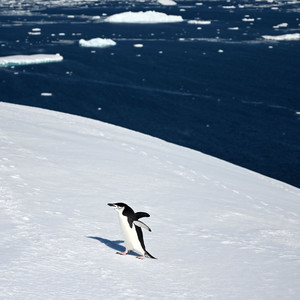
Yes, because I would get to see penguins.
That would be really fun.
What is your favorite thing about penguins?
My favorite thing about penguins is that they can survive in Antarctica.
So would you rather be really cold or really hot?
I'm really cold. Okay, why?
Because I would get to play in the snow.
Ah yes. I love to play in the snow.
What's your favorite snow activity?
Snowball fight. Oh, very good.
So when you think of Antarctica, you might imagine a place with tons and tons of snow and not much else.
But that's not the case.
There's actually very little snow there.
It's mostly ice. And there are lots of other really cool things.
Looking for an unforgettable vacation destination with awe-inspiring views, butchy-cunching temperatures, and sub-zero mountain breezes that will literally take your breath away, then you need to visit Antarctica.
Antarctica. Do you turn your nose up at sunny beaches, poo-poo swimming pools, then come to Antarctica, where the temperature plummets to minus 76 degrees Fahrenheit in the winter.
And when you're chilly, warm up to one of our boiling hot volcanoes.
Or maybe you like super dry places.
Well, you're in luck because Antarctica is one of the driest places on Earth.
That's right. It's actually a giant desert.
It only gets a couple inches of snow every year.
Antarctica. One thing that Antarctica does have?
Ice ice baby. The Antarctic ice sheet is bigger than the United States and Mexico combined.
Wow. So big. In some spots, the ice is almost three miles thick.
Just think of all the winter sport possibilities.
Ice skating, ice dancing, ice skateboarding, and of course, ice ping pong.
And with six months of non-stop daylight every year, you'll never have to stop playing.
Antarctica. Paid for by the Antarctic Attours in Bureau.
Not responsible for frostbite, but cheek-dention due to prolonged clenching or ice ping-pong injuries.
Ice ping-pong sounds awesome.
Totally. Antarctica is an extreme place full of huge mountains, super thick ice, and active volcanoes.
It has some of the harshest conditions on Earth.
In fact, the coldest temperature ever recorded on our planet was in Antarctica.
Yeah. Back in 2018, the temperature reached minus 144 degrees Fahrenheit there.
For comparison, the freezer in your house is usually set to about zero degrees.
So this was much, much colder.
You might be wondering, look impossible to survive in such a dry cold place.
The answer is lots of stuff.
Along the coast of Antarctica, the temperatures are a little more mild.
In the summer, it can get a little above freezing, which means different things can grow there, like moss, algae, and even lichen.
Lichen is that funky, green, and white stuff that sometimes grows on tree bark.
And there's also a bunch of different kinds of marine life on the coast.
Like penguins. Eight different kinds of whales.
Giant schools of krill, which look like tiny shrimp, and feed all sorts of different sea creatures.
And even fierce leopard seals.
One thing Antarctica doesn't have?
Polar bears. Polar bears are only found in the Arctic near the North Pole.
Remember, Antarctica is on the South Pole, the other side of the planet.
Right. If you were looking at a world globe, Antarctica would be on the bottom.
A lot of the creatures that live in Antarctica have special characteristics that help them survive the cold temperatures, like thick layers of blubber and fur to keep them warm.
But what about insects?
I'm picturing an insect with blubber.
And it's kind of cute, but doesn't seem likely.
Yes, you're correct. No insects with blubber, but there are insects on Antarctica.
Well, I should say there is one insect that we know of that can survive outside on mainland Antarctica.
It's called Drumroll Please.
The Antarctic Midge. A Midge?
Isn't that like a tiny fly?
It sure is, but this isn't just any tiny fly.
It's an extraordinary tiny fly.
First of all, even though it's technically a fly, it's flightless, meaning it can't actually fly.
Okay, not when I was expecting, but go on.
And even though it's so small, it's actually Antarctica's biggest land animal.
That's because hardly any animals spend their entire lives on land there.
Right. The other animals we talked about earlier, like seals and penguins, spend part of their lives in the water.
Back to the Antarctic Midge.
The adults have shiny black bodies with big eyes and fluffy antenna on their heads that look like feather dusters.
And like we mentioned, they're teeny tiny, only about one eighth of an inch long.
That's like half the width of a pencil racer.
But here's the really impressive thing about this insect.
It spends about nine months of the year frozen solid.
Like a super small fly popsicle.
Exactly. The babies that eventually grow into the adult flies are little purple, wriggly grubs called larvae.
And they're super survivors.
They can live up to a month without oxygen and survive temperatures as cold as five degrees Fahrenheit.
Well, that's one tough insect, but it can get way colder than five degrees in Antarctica.
How does they survive? Scientists think part of it is where they live.
The baby grubs live underground for almost two years.
That makes sense. It's usually warmer underground away from the cold air.
Another thing the Midge has going for it is its ability to dry out.
The baby grubs can lose almost three quarters of the water in their bodies.
And without as much water in their bodies, they're less likely to freeze.
It's like they turn into little raisins and that helps protect them from the cold.
Yes. They also make special chemicals in their bodies that keep them from freezing.
Almost like the antifreeze chemicals we use in our cars.
Okay, you've convinced me.
The baby midgees are totally awesome.
But what about the adults?
What's their deal? Well, the adult midge is emerged from the ground in the summertime when it's warmer, but they only live about two weeks.
And sometimes they form big groups of thousands of midgees.
I love summer! Party time!
Yeah! Party party! A summertime midge party so festive.
Total midge party. Scientists definitely don't have it all figured out though.
There's still so much to learn about these super tough antartic insects.
That's so cool! So there are all different kinds of animals living in and around Antarctica.
Like penguin seals and even midgees.
Plus, there's one more creature we haven't talked about yet.
Humans. Oh yeah! Lots of scientists live and work on research stations in Antarctica.
We'll talk more about that in a bit and meet an actual scientist who's worked on Antarctica.
But first, it's time for the...
You ready, Julian? Yes!
Here it is. What do you think?
Sounds like a saw. Ooh! Excellent guess.
I have no idea what this is either should we hear it again?
Yes! Alright, let's hear it again.
What do you think now? Still a saw.
Cutting wood. Still a saw.
Okay. I love that guess.
Well, we will hear it again.
Get another chance to guess and hear the answer after the credits.
So stick around. We are working on an episode about stringed instruments and how they all make unique sounds.
From ukuleles and sotars to violins and guitars.
For this episode, we want you to send us your own version of the brain song theme song.
You know. Duh, duh, duh, duh, duh, duh, duh, duh, you can play it on the piano.
Bang it on a drum. Stromm it.
Beat box it or show us how it's sung.
Maybe you want to write some lyrics?
Two, don't have to do the whole thing, add your own flair.
Julian, if you could come up with your own version of the brain song theme song, what would it be?
How would you do it? It would be like a dog's farting and cats mowing.
Oh, wow. I love that. Can you give me an example of what that might sound like?
I love it. That is beautiful.
That's a great idea. Well, listeners, please send us your theme song recordings at brainson.org, slash contact.
And while you're there, you can send us mystery sounds, drawings, and questions.
Like this one, do fishes have tongues?
You can find an answer to this question on the moment of unpodcast.
It's a short dose of facts and fun every weekday.
Find it wherever you listen to brainson.
So keep listening. Brain, brain, brain.
Welcome back to brainson.
I'm Julian. And I'm Molly, and today we're going sub-zero at the South Pole.
Antarctica, land of ice and snow, and also volcanoes.
Where few things can survive, but somehow a hearty little flightless fly called the Antarctic Midge does all right there.
And humans live there too, mostly scientists who live on research stations.
Like Dr. Jennifer Mercer.
She's a scientist with a National Science Foundation who has lived and worked in Antarctica.
And she's here with us today.
Hi, Dr. Mercer. Hi, Julian.
Hi, Molly. What's it like living in Antarctica?
It is breathtaking. I think you talked about that a little bit earlier.
And it is breathtaking both in the literal sense when during the winter time when it's really cold.
It's hard to breathe. It's very, very cold air.
It's spectacular visually because as far as you can see, and you can see very, very far.
There are no trees in Antarctica.
You can just see snow and ice.
And so this is an amazing thing that you don't see anywhere else.
Wow, that's so cool. Yeah, it really is.
And I've been to Antarctica both in the summer and the winter.
Their seasons are different down there since Antarctica is in the southern hemisphere.
Summer in Antarctica is when we have our winter here in the United States.
Or in North America. So we have our winter there in summer.
And when we are in summer, they're in winter.
And their winter is totally dark.
Wow. Isn't that cool? Yeah, it is.
What kinds of food did you eat?
Well, Julian, you're not going to believe this, but we get to eat a lot of candy and cookies, cookie bars, and sweets to stay warm.
Because since it's so cold, your body needs more calories to stay warm when you're working outside.
So I have never eaten so much candy in my life.
Wow. That's cool. Isn't that, but that's pretty amazing, huh?
Yeah. And the other thing, besides cookies and candy, or a New Zealand colleagues, used to have this, this thing that we would always get a try to get our hands on to eat called a.
Butter bar. And so it was like a cookie bar, but it had a lot of butter in it.
And it was very delicious and kept you very warm.
What did you have to wear outside to stay warm?
Yeah, good question. It really depended on the weather and the time of year.
In the Antarctic summer, it's, it's really just like our winter here in North America.
So close that you would wear maybe to go sledding or skiing, lots of layers.
And in the summer, since it's sunny all day long, all 24 hours of the day, it's sunny even at midnight.
You have to make sure you wear sunglasses and sunscreen in the winter, though, you have to wear even more clothes because it's so cold.
And so I would wear really, really heavy boots and really, really big jacket.
And then I would wear hats and gloves and layers that I think the most interesting thing in the winter is that.
Because you're breathing into your layers of clothes, your eyelashes will get frost on them and build up.
So it's like little icicles on your eyelashes and they'll get, they'll stick together.
And so you're constantly kind of brushing your eyelashes off to get the, to get them to unstick.
And I have been there when it's been so cold that even your snott freezes.
Wow. A kind of research that you do there.
So I was lucky enough, I worked in Antarctica for many years and the very first time I went to Antarctica, I got to work in a place called the dry valleys, which is a place in Antarctica that doesn't have any snow on the ground.
It's very like its name dry, a lot of dust and rocks and it's the closest thing we have on earth to Mars.
So if you imagine pictures you've seen of Mars, the Mars landscape, it looks like that.
And I was studying the soil in the dry valleys.
But after that, then I worked for many years studying the ozone hole.
The ozone layer is, is a shield over the earth that absorbs a lot of the sun's ultraviolet radiation.
And we would go in the winter and we would launch balloons all the way up into the stratosphere, which is the layer of the atmosphere that's above the troposphere where we live.
So way up into the atmosphere, we launched these huge helium balloons to measure ozone.
And look at the changes each year in the ozone hole, which forms over Antarctica and the Arctic each year.
Wow. What's one of the coolest things you saw?
Did they're well. I got to visit the South Pole station.
I think that was pretty special.
But maybe the most spectacular thing that I did was at the time of year we were there to study the ozone hole.
There were also scientists there studying penguins.
And so we got to go out to their research site one day and they when they study penguins, they drill a hole in the ice and they put what's called an observation tube down into the ice.
And so this metal tube that's open to the air above and you can climb down a ladder down in there and there's a window.
So you get to sit down there in this tube and watch the penguins swimming underwater.
And I think that's the coolest thing I did probably.
I'm curious to know what you and the other scientists did for fun when you weren't working.
Yeah, that's also a good question.
We work a lot because you're there to accomplish your science work.
And so oftentimes you find yourself working every day.
But there used to be a bowling alley in McMurdo and that was really fun.
We watched movies. You can go for hikes and hiking and Antarctica is pretty neat because you can hike up to up on these rocky hills and see even further.
So things like that. Very cool.
And when you were Julian's age Julian, how old are you now?
Nine. Okay, so when you were nine, were you interested in Antarctica or is that something that came later?
I think that I was interested in the whole globe and all of the different places on the globe and and just the different people across the globe when I was nine.
But I will say that I always loved the snow.
I grew up in South Dakota.
I love to ski and play in the snow.
And my favorite one we had huge blizzards and then and then school would be canceled.
So we could go outside and build snow forts.
And that actually was very applicable when I, because the first time I went to Antarctica, everybody goes down and you have to do survival training.
And one of those things is to build something very similar to a snow fort so that if you ever get stuck out, you can build yourself a shelter and and stay out of the wind.
That's super cool. Well, thank you for taking the time to talk to us today.
This is amazing and I've learned so much.
Thanks so much for talking with us, Dr.
Mercer. It's been my pleasure Julian.
Thank you and have a great day.
Goodbye everybody. Bye, Dr.
Mercer. Bye. So that was so cool to be able to talk with someone who lived in Antarctica.
Julian, do you think you could spend six months at a research station there?
Probably not because it would be very cold.
Yeah. And you're like, I don't want to bundle up.
You know, we say here in Minnesota, there's no such thing as bad weather, just bad clothes.
You just need the right clothes to get out there.
So if you had to, what three things would you bring with you to keep yourself happy and healthy?
A bag of snacks, a jacket and a leather display that would like tell me if what the weather was and how cold it was.
Smart. Dr. Mercer studied all sorts of things in Antarctica, soil, the ozone.
She met people who studied animals.
There's so many different things to study there.
So what would you want to study if you lived on Antarctica?
I would want to study penguins.
Nice. You look at that observation tube.
See what's down there. Would you like to swim with the penguins?
Yeah. Very pretty cool.
One wild fact about Antarctica is that if you dig about a hundred feet underground, you can find traces of a tropical rainforest.
Wait, what? Yeah, scientists have drilled deep into the icy continent and found fossils of all kinds of plants and animals, and it gets weirder.
And Antarctica may be the reason there are kangaroos in Australia.
Okay, I'm intrigued. Well, Julian, like Taylor Swift, and Antarctica has had many different eras.
Looking for an unforgettable vacation destination with awe-inspiring views, sock-sogging swamps and towering trees that will make you shout, Timmer!
Then you need to visit Antarctica 90 million years ago.
That's Antarctica. 90 million years ago.
Back before I went to Alsa in Frozen, Antarctica was a warm and wild paradise.
For millions of years, palm trees, ferns, and other plants you'd see at a fancy beach resort were just hanging out, living their best life on Antarctica.
That's because 90 million years ago, the earth was much warmer.
So warm. In fact, scientists think Antarctica was about as warm as Italy.
Bungiorno! Plants and animals survived there, even though, like today, it was pretty dark for most of the winter.
So go visit Antarctica 90 million years ago.
What are you waiting for?
Oh, you're waiting for time travel to exist.
Yeah, us too. Yeah, where's time travel?
Paid for by the invent, time travel now advocacy group.
Not responsible for butterfly effects, time dilation, or accidentally stepping on an animal and wiping out all of existence in the future.
It wasn't just Antarctica that was warmer back then.
The whole planet was toasty or two.
So it was a very different time all around.
Well, but back to the King of Rose.
Were there King of Rose and Antarctica?
I'm very invested in this.
Well, 90 million years ago, it wasn't just warmer, the whole planet looked pretty different too.
That's because the colossal land masses we live on are always moving very slowly.
We call these huge areas of land continents.
I've heard of those. We live in a continent called North America.
Yep, all of South America is a continent too.
Think of these as giant plates of rock that are always slowly grinding their way across the planet.
Oh yeah, that's called plate tectonics.
It's the idea that all of the land we see is actually sitting on giant slabs of rock and these giant rock plates very slowly slide around the globe.
And many scientists think that around 90 million years ago the giant rock slabs holding up South America and Antarctica and Australia were all connected.
Whoa, today South America and Australia are very far apart and separated by lots of water.
I know, but back then they were pretty much holding hands.
Scientists think at that time animals would travel between South America and Australia.
They'd use Antarctica kind of like a land bridge.
The journey might have taken several generations, but that's one way creatures spread from east to west.
Scientists think one type of animal that did this are marsupials.
Like kangaroos and koalas and possums.
There are animals that often have pouches for their babies to live in.
Exactly. Scientists have found fossils that tell us marsupials first showed up in South America.
But over time they shuffled across Antarctica and ended up settling down in Australia too.
Some of those evolved into kangaroos.
So without Antarctica, no kangaroos.
Crikey! So what happened?
Why was it so warm back then?
And so cold there now? Excellent question.
It's something scientists are still trying to figure out.
They think back then there was a lot more carbon dioxide in the air.
That's one of the greenhouse gases that's causing climate change today.
It's released by burning fossil fuels like gasoline in our cars.
Exactly. It can be released naturally too, like from volcanoes.
Back then there was a lot of that gas in the sky, way more than right now.
And the planet got so warm that even at the poles things were pretty toasty.
Sea levels were probably 200 feet higher than they are now.
Scientists aren't exactly sure what caused all that carbon dioxide gas to show up at that time.
It wasn't from dinosaurs driving cars or running cold burning factories.
Nope. But we do know over time the amount of carbon dioxide in the sky started dropping.
The planet cooled down and somewhere around 30 to 60 million years ago, ice caps formed in Antarctica.
Then comes the ice cold and ice, but Molly, Antarctica is changing again, right?
Yes. That chilly wonderland is heating up again.
But this time we know the cause.
Humans are releasing a lot of greenhouse gases into the air, and just like before, they're warming the planet.
But it's happening a lot quicker than last time, which makes it really hard for the plants and animals live right now to adjust.
Yeah. And as things warm up, the ice melts.
Over the last 20 years on average, Antarctica lost about 145 gigatons of ice a year.
How much is that? Molly, I happen to be a gigaton expert.
One gigaton of ice is enough to cover New York City's Central Park in a block of ice that's 10 stories tall.
Now, imagine 145 of these huge blocks of ice.
That's 145 gigatons. That is a lot of ice, and that's how much of Antarctica's ice is melting every year.
So things are changing fast.
Looking for an unforgettable vacation destination that's a crucial part of our planet's climate?
A place with so much ice that if it all melted, sea levels would rise dramatically?
A place that's home to unique species like penguins and leopard seals and midges?
Visit Antarctica. Antarctica.
The ice caps there are both magnificent and super important.
So let's keep them nice and icy by cutting down on fossil fuels.
By turning to renewable sources of energy like solar or wind.
And by asking our leaders to do everything they can to fight climate change.
Fight it now! After all, what's good for Antarctica is good for the planet.
Antarctica, a place too cold for most people.
But just right, for the Earth.
Paid for by the midges of Antarctica.
We're tiny bugs with big dreams of curbing climate change.
If you visit, please don't step on us.
Antarctica is a vast and wild place.
Home to super thick ice sheets, volcanoes and some of the coldest temperatures on Earth.
All kinds of creatures live there, including a super tough little insect called the Antarctic Mitch.
It's really cold there now, but 90 million years ago Antarctica was a warm and tropical place covered in palm trees and ferns.
And it's getting warm again because of climate change.
And that's causing ice and Antarctica to melt.
That's it for this episode of Brains on.
This episode was written by Shaila Farzon and Sandin Totten.
It edited by Molly Blow and produced by Rosie DuPont.
Backtracking by Nico Gonzalez Whistler.
We had engineering help from Derek Ramirez, Dave Walton and Pam Holland with sound design by Rachel Breeze, original theme music by Mark Sanchez.
Perlman is our executive producer and the executive and charge of APM studios are Chandra Kavati and Joanne Griffith, special thanks to Jennifer Mercer, Cassandra Eichner, Rebecca Eri and Jonathan Irish.
We had production help from the rest of the Brains on universe team, Anna Goldfield, Ruby Guthrie, Lauren Humpert, Joshua Ray, Mark Sanchez, Charlotte Traver, Anna Weggel and Audorone Waldus-Lassie.
Brains on is a non-profit public radio program.
There are lots of ways to support the show, subscribe to Brains on universe on YouTube, or you can watch animated versions of some of your favorite episodes, or head to Brains on dot org.
While you're there, you can send us mystery sounds, drawings and questions.
Okay Julian, are you ready to hear the mystery sound again?
Yes. Wonderful. Here it is.
Okay, what do you think last time you thought it was a saw?
Do you have new thoughts?
I still think it's a saw.
Okay, I'm going to say I think it's a saw too, but it sounds like a tiny saw.
So maybe the cats and dogs that listen to Brains on are using their tiny saws to build a parade float dedicated to Brains on.
What do you think? I think so.
Okay, great. You ready to hear the answer?
Yes. Okay, let's hear it.
Hi, my name is Luca and I live in Switzerland.
What was the sound of my mother twisting her feet while wearing sneakers on the wet floor of a parking garage?
Oh my goodness. Oh my gosh.
We were not close. No. Twisting wet sneakers on the floor of a parking garage.
That is a really tricky mystery sound.
Good job Luca. You stumped us completely.
Now it's time for the Brains honor roll.
These are the kids who keep the show going with their questions ideas, mystery sounds, drawings, antifives.
Ezra from Charlotte, North Carolina, Aetan from Jerusalem, Daniel from Clifton Park, New York, Domingo and Javier from Rustin, Virginia, Zander from Kingsburg, California, Maya from Israel, Jane from Pennsylvania, Samira from the Netherlands, Cali from Briar, Washington, Aria from Windsor, Ontario, Geo from Water, Lulantario, Kevin from Canaan, Connecticut, Owen from Chicago, Jace from Lutz, Florida, Ben from Sydney, Australia, Roger from Annapolis, Maryland, Graham from Dallas, Texas, Mark from Columbus, Ohio, Alex from Los Alitos, California, Eliza from Budapest, August from Cari, North Carolina, Logan from Valleyo, California, Samona from Vancouver, Arella from Bothal, Washington, Nemo from Woodbury, Minnesota, London from Mary's, Villahayo, Simon from Virginia, Jack from Missoula, Montana, Mathias from Carmel, California, Josie from Port Angeles, Washington, Collette from Portland, Oregon, Ivy from Denver, Melody from Mississauga, Ontario, Sibela from Austin, Texas, Arthur, and Alice from Irvine, California, Ellie from Calgary, Alberta, Marie from Aberdeen, UK, Miles from Tucson, Arizona, Abram, Liam and Johannes from Los Alamedos, California, Delilah from Phoenix, Charlie from Red Rock, Ontario, Jay from Orange, California, Jasper from Burbank, California, Leo from Seattle, Navi from Hillsboro, Oregon, James from Harp and in England, Galilee and Eden from Pleasant Hill, California, Aude and Amal from Somerville, Massachusetts, Leo and Miles from Goshen, Ohio, Lyra from Portland, Oregon, Everett and Amelia from Baker's Hill, California, Cooper from Boise, Idaho, Rain from Bluffdale, Utah, Greta and Arthur from Dallas, Dakota from Amblor, Pennsylvania, Caleb from Drake and Valley, Canada, Nora from Victoria, British Columbia, Clara Olivia Sophie from Grand Prairie, Alberta, Presley from Joplin, Missouri, Addison from Bloomington, Illinois, Jaren from Oakland, California, and Penelope from Aliso, VA, Ohio, California.
We'll be back next week with an episode all about building a house on the moon.
Thanks for listening.