Discussion keeps the world's turning.
This is Round Table.
You're listening to Round Table.
Look my self-hate young.
I'm Joon-Vie Lee and Brandon Yates in the studio coming up with each passing gear a
new IT.
Superfood emerges, promising to be the ultimate panacea for our health woes.
Our superfoods really nutritional superheroes are just an overhyped marketing ploy.
And our special segment motivational Monday coming your way will give you that adrenaline
shot for the start of the week or just make you feel even better for this National Holiday
Day.
Our podcast listeners can find us at Round Table China on Apple Podcast.
If you have questions that you want us to answer on social issues, business, technology,
or whatever moves your spirit, you can send those our way.
There's a place to do it.
EZFM around table at FoxMail.com.
Emails are fine, but voicememiles are just a tad better because we're a radio show
after all.
Now let's turn our attention to superfoods.
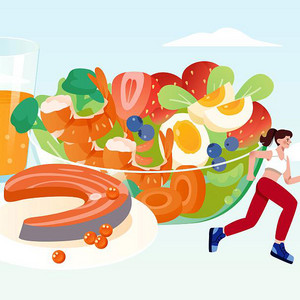
Year after year we're bombarded with the latest superfoods promising health benefits from
avocado to quinoa to matcha, clean tea and gochibarys.
They capture the public's imagination with their purported ability to boost immunity,
aid weight loss, and sometimes even their promoted as to combat chronic diseases.
Major question mark there.
Huge question mark.
Oh yes.
And admits the frenzy surrounding these trendiest of health foods, a critical question arises.
Our superfoods truly living up to the hype.
And what are we exactly talking about when it's superfood?
It's quite interesting because when I try to do more research about superfoods, I find
that there isn't really a clear and scientific definition about superfood.
And here's what I find, which is an article published by Lenny Kliknik.
And they said that superfoods aren't a nutritionally recognized category of foods.
So there are no specific criteria of say a food must meet to be considered as superfood.
But then the title or the term is typically referring to foods that offer maximum nutrition
benefits for minimum calories.
Yes.
And they are usually associated with improving individual health, from increasing your
muscle, to reducing fatigue, or even prolonging your life according to those advertisement.
Well, it's quite interesting because when you look at some commonly acknowledged superfoods
such as berries, you mentioned blueberries, strawberries, and goji berries, and also leafy
greens such as kale and spinach, and nuts and seeds like almonds and cher seeds and
oily fish such as salmon and starting greens such as quinoa and oats.
So these foods are rich in essential nutrients like that vitamins, minerals, fibers, and healthy
fats and making them excellent choices for enhancing overall health, well included in
one's diet.
So for me, like I've always like eating healthy and vitamins and all of that sort of thing
has been quite important to me for I would say the last decade.
And I think you can kind of go down a rabbit hole when you only focus on superfoods and
what kind of nutritional value each food can provide.
For me, I think it's always better to consider these foods as just healthy options to include
into your diet, but I don't necessarily think it's a great idea to rely on a certain food
group for certain vitamins or for certain health benefits.
So my approach is kind of like I try and eat a certain amount of fruits and vegetables
a day, I try and eat a certain amount of lean meats and protein and try and incorporate
all of those things into my diet.
And then I also don't necessarily trust the nutritional value of certain foods because
but if you're not eating super organic food and you're not, you know what I mean?
So you don't know how much nutritional value the orange that you're eating is providing
or if the apple you eating is genetically modified or so there's those elements to bear
in mind as well, but I don't think you shouldn't eat them just because they aren't organic
or whatever.
So what I do is that yeah, I eat all of those foods as best as I can, but then I try and
supplement that with vitamins.
So I take a crazy amount of vitamins because I mean the pills.
Yeah, yeah, so like, and I don't also think this is the best approach, but I think it's
a good like insurance, I would say to add into your daily requirements because you're
not necessarily certain that you're getting all of the vitamins and minerals you need
from your foods.
So that's kind of what I do.
Identify like what vitamins and minerals I really need to take on a daily basis and
then buy those vitamins and then try and seek out foods that would also provide me with
additional support to my vitamins.
That's my approach.
Okay, and that's only Brandon.
Yeah, yeah, and also I suppose in China a lot of people are very, because of the rich
tradition of traditional TC Chinese medicine.
So a lot of Chinese people, I guess as a whole, we don't really prefer drugs or medicine,
we would prefer more like natural elements.
But would Chinese people consider vitamins and like for example a multivitamin would that
be considered like a drug or medication?
Well, I know a lot of people take it, especially maybe after your annual health checkup and
they, and the report says that you're deficient of let's say vitamin B or whatever it is, then
I suppose some people are motivated to take the so-called pills or the health supplements.
The supplement, yeah.
Also, there's a whole bunch of people who are more prone to, well, I don't, because I'm
not.
Like getting through foods.
Yeah, I've got an expert in this, but I've heard of the term Shirley Al before.
It's like food treatment so they believe just eating foods and can just provide, I suppose,
mostly the nutrients, one needs.
But I also would like to offer sort of just a caveat there that if one is diagnosed with
an illness or an ailment, then food is not medicine and medicines.
Yeah.
And also you never really certain what you're getting from your foods.
That's one of the hardest things.
I mean, I would love to get all of my daily nutritional and vitamin and mineral needs from
foods.
And I would save a lot of money, you know, not having to buy multivitamins and vitamin B
and vitamin D and all of that stuff that I take.
But I just, I don't know if we as customers can trust what, for example, supermarkets
and that kind of thing provide for us with food.
I don't know if fruits and vegetables and meats are offering the same nutritional value
as they did in the past.
Right.
But my friend don't get me down that road of trust because when it's big farmer, that
is offering the supply of, you know, all kinds of nutrients or whatnot through pills.
I would also have, well, bear a huge question mark in my mind looking at that too.
Well, I think it's quite tricky.
The point you mentioned, it is also part of the discussion that many people would just
have about the superfood.
They challenge this definition.
They think it's only like a marketing strategy by those agricultural companies or
with the food companies because, you know, when I tried to, you know, locate the origin
of these superfood, I found that, you know, the earliest or the first superfood being recorded
is set to be bananas.
And it is because, yeah, it's, it's because this example may have taken place in the early
20th century during World War II, one, and it is because the United Fruit Company, they
were trying to promote its major import of bananas.
Something happened with milk too.
Yes.
So it's tried to, you know, publish some informational brochures, you know, telling people the food
value of banana.
They're trying to advertise this banana in a, in part of their daily diet item being
cheap, nutritious, of course, easily digested.
But ultimately, they just wanted to sell bananas, right?
Yes, exactly.
And that's why, of course, and then you see some, you know, medical journals published
by physicians, they're claiming that banana diet can, you know, trade certain conditions,
like, including diabetes, so which make banana even more popular.
And I'm sure those doctors weren't paid to release those reports either.
You see, so you say diabetes?
Yes.
Bananas, which is rich, impact in sugar.
Well, when cigarettes were marketed like in the early 20s and 30s, people were told
that they were just healthy snacks that you could enjoy, you know?
Also, and that's also, that was also a marketing ploy.
But something also, I mean, there was also a major, a couple of decades ago, when people
were really pushing milk in marketing campaigns and promoting the health benefits of milk,
that was also in order to not, not that milk was discovered as some sort of superfood.
It was just, you know, being marketed because, you know, a certain country needed to sell
a certain amount of milk or whatever it is.
Also, just a bit of a conspiracy theory that I've heard just related to bananas apparently
if you eat two bananas in a row and then run around, you die.
What?
So I've never tried it just in case.
I don't think it's true, but I've heard that if you eat two bananas and you run around,
you die.
So I can't verify those facts, but I'm also pretty sure it doesn't cure diabetes.
So there's, that's another problem with superfoods is that I think there's a lot of overhyped
myths around these superfoods.
And look, I think the majority of the superfoods that are listed in our research notes are
very good for you, but I don't think they are as beneficial as they are made out to be
by certain marketing companies.
Right.
And also don't just live on that one thing.
Exactly.
Yeah.
Younger Chinese listeners might not be able to identify with this, but I still remember a
few years back.
What are those homegrown?
Well, now I suppose you can slap the superfood label on it.
Green, green mung bean, green mung beans.
Okay.
I think that's the proper English term for it.
It's like, Ludo.
Because Chinese people, well, a lot of us, this is a little bit of a tradition for not
everyone, but a lot of us and more like a custom that you would have this try to cover
all grounds, you know?
And this is the thing to have during summertime.
Is it like a weight loss thing or a health thing?
It's a health thing.
So it's really, you know, sometimes it's like weight loss stuff.
Really people go on crazy diets and like Chinese people traditionally do all this weight
stuff, uh, lost stuff.
But anyway, it's supposed to sort of kill the heat.
Yes.
So you just boil the mung beans and then drink the, uh, I say drink, well, literally it's
kind of like that.
Have the soup and like bean tea.
Bean soup soup.
Soup.
Okay.
So there's a lot of this water content and it cools you down.
It's supposedly and the best thing is when it's being, it's put in the freezer for
some time.
Okay, not freezer, just the refrigerator and then it's cold.
It's cool and it's supposed to cool down the heat inside your body and that's supposedly
good.
And remember years ago, there was, um, there was this urban myth in a way like my banana
myth.
Two would kill you.
It's intense.
Yeah.
A lot less intense.
You know, have a lot of this and you'll live forever or something like that.
No, I just love the idea of someone holding a second banana while listening to our show
and then just dropping it and freaking out.
Maybe not him.
You see, they're, they're like different, you know, fun rumors about different food.
But I think, uh, say when we talk about superfood, this is somehow quite closely related to
the fitness trend.
Yes.
When you see, yes, because when you see the major consumer of this superfood, basically,
they're also active participator in fitness industry as well.
So that's also why some people are arguing that when you look at this list of superfood,
uh, those food, I mean, most food are typically food items consumed in Western cuisine.
Yep.
And I'm one of Chinese.
Yeah.
And I'm one of those fools that felt when I was younger, that fell for all of those fitness
marketing campaigns.
It's literally it's a billion dollar industry.
It is.
And also, I find that when I was in high school, for example, you know, everyone was just
getting into jimming and fitness and trying to get in shape for, you know, to either attract
women or to get into sports teams, whatever it may be.
So every time some new like protein shake was being marketed or like a creatine supplement
or whatever it was, we as little 16 year olds all thought, I have to take this.
Otherwise, I wouldn't be able to get into shape, you know, and it just shows you how impactful
and powerful some of these marketing campaigns can be.
And I think a lot of that is linked to things like superfoods.
Um, so I think that's also something people need to be aware of is that yes, a lot of
these things are good for you.
But also bear in mind that the people that market these products are professionals and they
are incredibly good at selling a product not necessarily to benefit you, but to, you
know, benefit their company financially.
So there's a lot of things you need to bear in mind when looking and examining, taking
on certain foods or supplements and incorporating them into a daily life and realize they are
supplementary, not a necessity.
Right.
So just by listening to that, I also realize parents are up to such, you know, great challenges.
Um, you know, if your kid is hogging you to more like begging you to get the latest supplement,
yes.
How was that, yeah.
And then, you know, you, you want to say no because you, you see that, you know, this
is dubious, but also just how can you counter this really powerful marketing force out there?
You need to put it up.
Let me tell you child in the nicest way possible you are dumb.
You are falling for a marketing campaign.
My mom tried to explain that to me as politely as possible without saying you are dumb,
but she was kind of insinuating you are falling for marketing tricks.
Don't be fooled.
Just stick to your foods and eat healthy and work out.
You'll be fine.
But I think it's, it could be even more challenge for parents nowadays because on social media,
like, you see a lot of KOLs, I mean fitness KOLs, they are, they are not only selling
fitness products, they are not only telling you how to do your work out plan, they are also,
you know, trying to display a healthy lifestyle with a lot of food advertisements inside their
business.
But you'll also get these beautiful women or hyper masculine buff men that are saying,
I became this way because I took this one pill, you know, so there's a lot of responsibility
on the influences that market these products as well.
There's so many things that, and like you mentioned, I think social media has made it even
more intense for parents and kids to deal with because they are just bombarded with marketing
campaigns every single day.
Yeah, that's really tough.
And also one testament to how popular super foods could be is that we've seen in China
in recent years, this has now actually become a staple of one type of restaurants in all
shopping malls.
That is the light meal promoting healthy messages, kind of restaurants.
And I can't remember how many times I've been dragged to Sunday brunches to pay for massively
overpriced salads and yogurt bowls or salad bowls, which consists of all these, well, a lot
of them are considered as super foods.
I first learned the word keenwa at one of these places, maybe a decade ago.
But that's just where I understand, you know, when you meet up with girlfriends, a lot
of the times, before you can eat your food, somebody's going to be like, wait, wait, let
me get the picture.
Yeah, I'm that girl.
You're that girl.
Alright, okay, noted.
But also there's a really affordable, or you can eat breakfast nearby, I'll tell you
about that.
You'll tell me later.
I'll tell you after the show.
Yeah, yeah, because, you know, we didn't get paid to that.
And there's no keenwa, nothing, don't worry.
No, no, okay.
It's all the good stuff.
Yeah, so yeah.
But, yeah, but meantime, I think, you know, especially younger consumers, they're being
somehow more rational in terms of what healthy diet is nowadays, because usually, you know,
before when it comes to fitness, diet, people don't really consider typical traditional
Chinese cuisine.
They were just, you know, preferred to eat salad, like yogurt bowl.
And now there is this conception or perception that maybe to have a balanced and like your
daily meal is enough sufficient enough to help you stay fit or stay healthy.
So that's why people are also saying, ah, mental Chinese fun is the most clean grin,
so for fitness people to eat.
So you know, you see, there's a different perception about what constitutes healthy diet
nowadays, especially on social media platforms, which is quite fun.
Yeah, and I think with healthy diets and the fitness industry and all of that as a whole,
there seems to be a trend of, you know, like, fad diets where people get involved in these,
you know, superfood trends or dieting trends that aren't necessarily sustainable.
And I think a lot of people are learning that it's better to find a way of eating or living
that is sustainable, not just getting in shape in three months or something like that,
but finding something that is sustainable and healthy for the long term, that is the
best way forward.
But funny enough, a lot of that is just literally the traditional stuff that has nothing to
do with all of these products and superfoods that we've been talking about, yeah.
So are superfoods indeed super?
I mean, I think there are a lot of foods out there that offer more nutritional value
than other foods and are definitely less calorie dense than others.
So I think superfoods is quite an extreme term, I suppose, but they are definitely certain
quote unquote superfoods that are definitely a great idea to incorporate into a balanced diet.
Mm-hmm.
So just like superheroes, superfoods don't necessarily, well, it's more like a made up thing.
I'm sorry, kid.
Yeah.
But you know what, I think from a marketing perspective, I think the term superfood is probably
one of the best marketing terms ever invented.
Yeah.
But it's not entirely factual.
And in some countries, actually, for example, in the UK, you're not allowed to put the
combination of words, superfoods, onto the label.
But it just shows you how impactful that term is.
I know.
So we ever came up with that term in the marketing sector, congrats.
Oh, yes.
And what should we do about the superfoods then?
Well, I think there are some different types offered by medical experts out there.
So they, they said that, you know, compared with consuming superfoods, perhaps you should
just look at the colors on your plate.
So basically try to consume this, you know, diversified as much different food varieties
as possible.
And also to have more greens to the soups and stir fries and try replacing your beef
or poetry with a salmon and tofu.
And also add maybe a few berries to your breakfast and make sure you have fruits or vegetables
every time you eat.
So these are some sustainable and healthy eating habits offered by medical experts out
there.
So if those are not a substitute for an overall healthy diet and that, I think Brandon was
pretty much spreading the gospel in a very effective way throughout the show.
And coming up, motivational Monday.
There's no way around a Monday, only through it with gusto, I feel.
So Lee, what do you have for us?
Well, I bring a quote from Robert Schuller who is an American motivational speaker.
He's about how to make good decisions.
So never cut a tree down in the wintertime.
Never make a negative decision in the low time.
Never make your most important decisions while you are in your worst moods.
Wait, be patient.
The storm will pass.
The spring will come.
Well, I think the takeaway is quite helpful for me because I was trying to do a lot of
decisions, which I consider as major in recent times.
And I find that I can make totally different decisions while I'm in different moods.
And particularly I tend to make bad decisions while I'm in bad moods.
Well, from hungry.
Yes.
Well, I think it's really important to tell people who are considering making important
decisions out there, never make big decisions, but you are emotional or feeling down.
So true.
So we are faced with numerous decisions on the daily basis, big or small.
So making decisions is never an easy thing.
And so when it comes to important decisions in your life, try to use your logic and rational
thinking to weigh each variable differently and carefully in each one we have it to promise
and cause.
Remember, all dark days will pass and they will not be there forever.
You will see the sunshine eventually and then be patient and make good decisions.
It's so hard though because so many tough decisions in life are so intrinsically linked
to emotions.
Yes.
So I definitely agree with you, but man, it is really hard to be rational when you're making
potentially life alterating decisions.
But if you can try as best as you can, I agree to make those decisions when you're in
as level as state as you possibly can be.
Yes.
Do your research calm yourself down?
It's hard though.
It's hard.
And take your time in making those important decisions.
Yes, and giving you a motivational boost, what do you want from me by Adam Landberg provides
an inspirational message of resilience and this song encourages listeners to stay true
to yourselves despite pressure and doubt and pressure and perfection and recognize that
your journey is uniquely yours.
Landberg's genuine delivery of the song invites you to find strength in your authenticity
and keep moving forward despite setbacks and Adam Landberg's journey as the iconic band
Queens vocalist was a testament to his resilience and talent and Landberg started touring with
Roger Taylor and Brian May of Queen since June in 2014.
Initially met with great skepticism from some diehard fans, confession, this one included,
this indeniable talent and respect for the late legendary frontman Freddie Mercury's
legacy eventually won over even the most ardent critics through his electrifying performances
and genuine reverence for the band's iconic catalog.
Landberg has proven himself a worthy torchbearer, breathing new life to Queens timeless anthems
while honoring their enduring spirit and most recently, or more recently, Adam Landberg's
appearance on the Chinese Singing Competition show I Am a Singer has brought the message
of this song, what do you want from me to an even wider audience highlighting its universal
appeal.
His performance was met with overwhelming acclaim showcasing incredible vocal talent and the
raw emotion that he brings to every note.
The Chinese audiences' enthusiastic response underscores how music can transcend cultural
barriers and connect with people on a profound level.
So let's hear this.
What do you want from me by Adam Landberg and well, Brendan, I'm sure you will share
with us your motivation Monday next week and I do look forward to that and thank you,
Brandon and Lee for joining the discussion.
I'm Hayoung.
We'll see you next time.