Discussion keeps the world turning.
This is Roundtable.
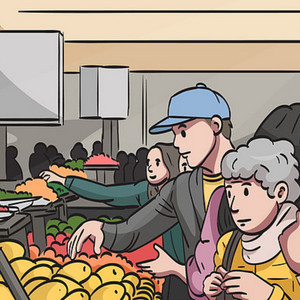
Once messy, now glossy, China's traditional farmer's markets just got a digital facelift. Is this makeover really making life easier for everyone?
Can grandma and grandpa figure out the self -checkout?
Coming to you live from Beijing, this is Roundtable.
I'm He Yang. For today's program I'm joined by Steve Hatherly and Yu Xun in the studio.
First on today's show.
Tale as old as time, China's farmers markets have long been known for offering the freshest produce along with noise and chaos.
But fast forward to today and these once humble veggie hubs have gone well they've really gotten a serious digital glow -up.
Apparently think clean floors, a sleek stalls, digital price tags, and smart screens that size up a tomato faster than any vendor.
Some markets now look so polished and chic you'd think they were vying for a feature in a lifestyle magazine.
Young people are flocking, not just for the fresh pok choi but for Instagrammable snapshots and selfies with veggies, so let us chop it up!
Tell us about the upgrade of some of these traditional fresh markets in China?
Yeah, so for a while now you know a lot of young people visiting farmers markets has been a trending topic on social media promoting you know even local governments and tourism agencies to ramp up efforts in both renovating and also promoting these markets.
Some of the more distinctive markets have been even included in city tourism routes you know becoming windows into local culture and and history for curious travelers.
One example is that on Xiaohongshuo Red, popular Chinese lifestyle platform, the hashtag Farmer's Market travel guide has amassed more than 1 billion views.
Meanwhile, the SINAWAY board topic, visiting a city without exploring its farmer's market is a waste of a trip, has garnered almost 9 million views.
That's interesting, isn't it?
When we think about farmer's markets, we have them in Canada too, lots of them, but we don't necessarily make the connection about being a part of a tour or a tourism package or something like that.
That's Testament perhaps, along with all the attention on social media, how much of an upgrade these markets have gotten.
Yes, indeed, and one that's caught Yuxun's attention is in Shanghai.
Yes, actually Shanghai is a very, quite an obvious or example of upgrading all of these farmers market.
For two consecutive years, upgrading 80 standardized farmers markets has been listed as one of the city's key public service projects.
Also in 2024 alone, 98 standardized farmers market across all 16 districts were upgraded.
According to domestic media, the paper, However, the actual number of renovations can exceed the target depending on each district's local implementation capacity and the new generation of farmers market upgrades focuses on standardized management digitalized transactions and also convenient services they offer the services that you cannot even imagine.
Maybe barber shops is the one that we know already they can eat potatoes and a haircut.
Yeah, they are even setting up some galleries for some of the maybe kids or residents nearby the neighborhood to maybe showcase their art pieces in this farmer's market.
I remember when we—and that just talking about art reminds me of the conversation that we had on the show.
I think it was maybe last summer when we were talking about museums in the Beijing area and how they had kind of upgraded, and we were discussing maybe even the necessity to keep up with modern times to attract new and younger customers to their exhibits, I wonder if that's what's happening here a little bit.
You know farmers markets have been around for a long long long long time so maybe adding these kind of extra services is a way to attract more customers or get their name in the media a little bit more or just kind of get a little bit of extra attention.
To me this sounds like a very interesting upgrade because if you were thinking about the more traditional veggie markets, caixuxang in Chinese, you wouldn't necessarily associate it with art at all, because sometimes they could be a little bit chaotic, it might have wet floors, and people don't go there to appreciate art, or even if it's just a place to showcase like community spirit or anything like that.
so I think that might be more of a modern upgrade in a way, and there are some very cool, chic almost, these are farmers markets, and on the other hand there are still a lot more of those more traditional types that everyday people just go in to get their fresh veggies I suppose.
And you guys mentioned that with some of these smart farmers markets, they become almost like a tourist attraction to some extent.
This reminds me of in London.
They have this big fish market, and this other food market, I think it's called the Burroughs Market, which has histories that span over 100 years, and they are renowned tourism spots, because this is an interesting way to have a peek into the local people's dinner table, as well as their food culture.
And also in these farmer's markets, it's less formal, right?
It's not like in a supermarket when everything is supposed to be nicely lit, really clean, there shouldn't be too many workers wandering down the aisle now you don't really have so many employees anyway.
And then people kind of just go in for this almost industrialized and kind of sterilized, in a way, display of produce.
So this is a very different feeling.
And also, that's maybe partially why it holds a special place in the hearts of some Chinese people.
And Yuxun, could you help us to paint the picture of what traditional farmers markets in China used to look like, or how they've evolved throughout these years?
and why does some of them still need a little bit of a renovation?
Of course, also I think this may maybe also answer the question of Steve.
You know, most farmers' markets in China focus primarily on selling agricultural products and food, though many also include, you know, small goods and everyday household items, while the vendors might not necessarily be farmers themselves.
Many are small -scale distributors or resellers.
And the environment and sanitation situation in these farmer's markets, the first impression of these traditional farmer's markets is often just noisy, and maybe a little bit chaotic, not that clean.
Lots of sellers yelling out their prices, right, cause they're competing with each other, right?
Yes. And also the sound of bargaining because in these places you can actually bargain for a better price.
And also in this way, this kind of a image, I think they create a kind of a contrast image when we have all of this renovation and making these farmer's market even like sound chic.
Because some of these farmer's markets even invited some famous designers to do the whole designing part of their farmer's market.
The interior, wow. Yeah, so you talk about the noise, and the hustle and the bustle and some stalls may be cluttered and cleanliness maybe sometimes an issue.
I think we all kind of have that kind of familiar image in our minds when we think about a traditional market, in any country I think that that we're thinking of, but that being said, you know these stalls are are filled with very colorful fruits and vegetables and meats and fish and shrimp and all kinds of fun foods at various colors so that you talk about art, that in itself is somehow artistic, right?
The variety is rich, the prices, we expect them anyway to be relatively affordable, especially when we compare them to big chain supermarkets, and you can get a good deal there.
And I would argue that, you know, the things that they wanted to upgrade, or that they saw as necessary upgrades would be not all of them perhaps, but at least some of them would be that charm.
That's where the charm comes from the yelling out especially if you're a tourist right that in a foreign language You don't know what anybody is saying But everybody's yelling something right and it's it's lively and it's active and there's tons of people there deals are being made pictures are being taken and Right in front of us.
There's all kinds of beautiful foods.
I think it's a cool I think it's a cool thing and I think it's cool opportunity Yeah, and also precisely because of this, you know, these traditional markets are more than just places to shop they can carry a lot of deep cultural memories, not only for the local people, but also for the tourists.
Even for the tourists?
Yeah. Because they can see the original or authentic image or impression that this place can bring you.
Yeah, while traveling, I haven't put on my list of things to do, like go to a local market.
But if I'm walking around and there's one there, absolutely, I would stop by.
One of the reasons is because, especially if you're traveling in a country that's very foreign to you, you're curious about what fruits and vegetables are there.
And sometimes you'll see fruits and vegetables that you don't even recognize, right?
But that's part of the fun I think is, you know, seeing what local people eat, what vegetables and fruits are available to them.
It makes for a fun way to kill a couple of hours for sure.
Oh, yeah. And when you guys mentioned cultural memories, certainly it rings true for locals, because That's for everyday people in China.
That's where we shop for food." Well, actually, there is a disclaimer.
That was the case maybe a decade ago, because given the rapid rise of e -commerce in recent years, I suppose, especially for the younger generation, actually visiting a traditional farmers market your local farmers market isn't all that common anymore cuz with the tap a few taps on your smartphone you can get anything any fresh vegetable delivered to your doorstep but for some of us more old -fashioned people we still like to size up the vegetables or you know really feel how firm the tomato is before actually buying it and bringing it home.
Although, okay, again, confession here, I say that with a slightly romanticized feeling because as much as I love that sentiment, and also when I used to go to the vendors in my local fresh market, the vendors would know me and they would go like, hey, your dad's not with you today.
Oh, hey, you've grown taller.
Oh, we have a really fresh winter melon, dung -gua, today.
You got to have that.
And since I'm picking up a couple more vegetables there and they're going to be like, okay I'll throw you a batch of cilantro for free because you're a loyal customer.
And then, you know, the really warm like chattering and that's all really special.
That's all stuff that goes into, you know the cultural memory as such. But I have to admit, that happened more than 10 years ago to me.
So I suppose for a lot of people today, they go to supermarkets, they go to e -commerce and visiting the traditional farmer's market might actually feel a little bit new or even nostalgic to a certain extent.
But here we're also talking about new upgrades, smart upgrades.
Yuxun, could you tell us, what can they do here?
Oh yeah, so about these kind of a smart upgrades, Besides from these basic renovation on no matter if it's exterior or interior of these farmer's markets they are getting more spacious wide aisles and well organized stall zones.
These kind of things, brighter, cleaner.
And with the smart upgrade they are equipped with many standardized smart electronic skills They integrate maybe multiple functions such as payment, product tracability, operations and management, making these kinds of things easier for both customers and vendors.
A big data display screen has been installed in this Shanghai's Hour Market.
This is the name of the market, it's called Hour Market, to provide real -time information on stall locations, daily produce prices, food safety testing results, product promotions, customer flow and also top selling stalls.
You can know which stall is maybe - The most popular one.
The most popular one, and budget friendly produce offering added convenience for a lot of shoppers.
So these markets operators have also tightened daily management practices by incorporating hygiene conditions into routine stall evaluations, which means they're trying to keep these markets clean but not only you know for a certain period of time to make its market looks clean yes so those would be the changes that are more in line with what we would expect from a typical supermarket right in my opinion wider aisles more spacious space for your cart right if you're if you're walking with a cart brighter this farmers market I don't I don't think they will offer you a cart most of the time, they will just
give you bags or you bring your own bags and...
Yeah, right. Yeah, but it does seem like it, doesn't it?
It sounds like it. That direction is going a little bit towards your traditional supermarket, but not so much that it feels like you're walking in to a supermarket.
It looks very different.
It looks very different.
I was watching... It wasn't the hour market in Shanghai.
I was watching a video earlier today of a Shanghai market and they were talking to some of the vendors in there and They were saying that you know This is because this has become and they don't even really know why this has become a popular thing for tourists to do I just explained why I think it's a popular thing for tourists to do But yeah coming in and having that market experience with these changes that can make people feel more comfortable and more confident about shopping at that market or visiting that market's a really really good thing.
You get people coming in there sharing their experiences on social media and it gets more attention.
I think what you mentioned before Huiong, there's that sense of nostalgia, that sense of community but also a sense of something new.
It's tough I would imagine for these markets, traditional markets to compete with shopping in grocery stores, but more so probably online, and by reinventing themselves a little bit and taking advantage of an opportunity that presents itself to it.
These markets can remain competitive.
One thing that's been touted as the smart upgrade is that the minute when you enter these traditional farmers' markets there will be this huge screen that has a lot of the relevant information and data that you should mention all on display and I mean sure that sounds new but I just wonder you know how many people are gonna step into a traditional farmers market and want to look at the screen and even if it's got a lot of data there then sure but isn't it just easier to walk to the vendor that that knows me and my dad for example and I've been shopping with them long time and they're honest. They
sell really fresh produce to me and just quick and dirty get it done, and off I go.
Do you like the big screen arrangement and other stuff that apparently are touted super smart and cool?
I agree with you on that.
It's not like these customers will ask for big screen and, you know, waiting for them to look at it, but it's there and why not?
Right, and it can offer you more information.
Maybe it's about the time is about the weather literally, even it's better than nothing.
Yeah, and I'm not going to a market to check out the latest paintings from this artist or that artist But it's kind of the same argument.
Why not? Am I going to a market to get a haircut?
probably not, but maybe if I need some potatoes that day I might.
I think the point here is that if you look at each individual change you can analyze it and say is that really necessary, will that be effective but collectively perhaps they will make a difference.
And also one point is as I mentioned before it's at least in Shanghai, they are considered as public service projects.
So we're talking a lot about okay tourists are flocking into these farmers market but actually in the first place they are renovating these for the people living there so this should be a project for at least first of all that is being more convenient for people who live in the neighborhood and they are having better experience of buying things there.
Yeah and there's Lots of different examples.
There's a market, a new style farmers market in Hangzhou, in Zhejiang.
It's called Winter Farmers Market, and they have incorporated these trendy little business ideas like cafes, like flower shops, even performances.
They have agricultural product fairs from time to time, and they also offer a chef -prepared cook -for -you service.
Now, if I can go to a market and get a coffee, maybe have a look at some flowers, pick up some flowers, watch a musical performance, I mean, this is starting to sound like a pretty fun afternoon.
Yeah. Right? Well that sounds like the type of thing that would definitely attract extra foot traffic, Like, tourists, possibly.
Or even some young influencers, maybe.
But that's a far cry from my local farmers market.
And mine, I suppose, is just like many of the regular farmers markets.
I think they serve pretty good purpose and might not have the performance.
But I think what's really maybe down -to -earth and what people want is affordable and fresh produce alongside the extra amenities that might be on offer.
But also, what do you think is driving young people?
I suspect these are Gen Z -ers who maybe grew up buying stuff online, and now they're going, they're setting foot into traditional markets.
Yeah. I think we've mentioned a couple of times.
Actually, farmer's markets have become windows into local culture and everyday life of people there.
A lot of these farmer's markets are rich in culinary traditions and offer young people a taste of authentic, time -honored dishes and they can capture the charm of daily life and also the rhythm of local culture and the vibrant atmosphere that filled with dialect, shouted bargains, as Steve said.
And lively chatter blends nostalgia with authenticity in offering young people and very immersive cultural experience that's refreshingly different from typical tourist spots.
Maybe this survey from the United States, we're talking about two different countries markets here, farmers markets here but maybe these responses will guide us to your answer a little bit.
They conducted this in October of 2024.
And among the respondents, the question was why farmer's markets flourish in the United States?
And among the respondents, only 2 % of farmer's market shoppers considered them to be expensive, 95 % considered it affordable.
91 % of farmer's market sellers are considered friendly by shoppers.
And impressive, almost 94 % of respondents said that the vegetables or the produce is fresh.
They believe it to be fresh at farmers markets.
80 % of respondents said they want to support local farms and that's a key benefit for them to visit farmers markets.
I think put all of those things together you get friendly service, you're met with a smile by the sellers, you trust that you're saving money, You trust that you're giving back to the community to support these local farmers as opposed to supporting a bigger conglomerate.
There's a trend there with younger shoppers now.
Maybe we're seeing that here too.
Yeah, maybe we are.
And just offer a little bit of a differentiating point because with this translation of farmer's market, you kind of assume that it's farmers selling what they've planted in their backyard, but in China, a lot of the time, at least when we're talking about big cities like Beijing and Shanghai, that is not the case.
It's usually just folks who want to do this business, they often go to the fresh produce wholesale market early in the morning, to get these fresh vegetables at a cheaper price and then they bring these fresh vegetables to these so -called farmers, you know, slash fresh veggie market and sell.
So it's not like they, a lot of the times they're not farmers, they are they're workers.
They're sellers. Yes, and then they you know these stanfest people they they get up early and do the hard work.
So Do you, first of all, do you resonate with this young people's trend of going to these farmers markets, and also, do you think it's gonna make life easier and better for everyone involved?
Everyone, well, that's a big word. First of all, I think I understand the action or the behavior of visiting these farmers markets as we have explained a lot of reasons why, right?
And also, just being good -looking is a selling point of all of these farmers markets.
as we list the example of Shanghai's Our Market and also another one, I think, I've never been there.
It's in Eastern China's Jiangsu Province in Suzhou City.
It's called Shuangta.
It's designed by a really famous designer.
They designed the whole market into a totally different chic and fashionable style.
A lot of people taking pictures, sending them on social media and yeah, That is how I think young people are accepting these kind of ideas into not only modern, but also traditional farmer's markets.
But for the second question they were asking, can everyone adapt to this kind of style?
Of course we are seeing a lot of these intelligent devices that's been used in these, you know, farmers and smart markets.
Of course, elderly people, they may struggle dealing with all of these payments and some of them are still using cash to be honest. That could be a trouble for them.
Sure, cost is an issue, right?
Because you have to purchase and you also have to maintain these smart electronic scales or digital management systems or whatever system or tool they're using.
That's one concern.
There's also the concern, I, this didn't come to mind immediately for me, but there are privacy and data concerns here too.
And I thought, how can that be?
Well if vendors are integrated into smart systems that allow the operators of the market to access the stall -level sales data, right, that could be helpful for management, but it could also spark fears about data privacy among vendors, because if you start selling quite well, well the management there is going to be aware of your sales volume and that could lead to rent hikes.
That's one of the concerns of vendors apparently.
And also one point is that, okay, a lot of these farmers markets are getting upgraded and they're, I think, they're getting more that kind of supermarket like images and appearance I think.
The thing is that when I, you know, when I visit places that are far farther from the city center They still have that kind of old fashioned large markets.
You know where people call it dazhi they're not like 24x7 markets, but they rather just open on fixed dates and times vendors gather on particular street with stalls lining both sides, you know offering everything But the entire street is packed with people, fulfilling the daily shopping needs of local residents.
And this actually attracts a lot of young people as well, but they're not upgraded at all.
They're so authentic, they're so original.
And people find it to be fresh and down to earth.
So I'm thinking that different forms of markets might also reflect people's different lifestyles and habits, You know, not everything that is uniform and orderly is necessarily what everyone wants.
That's a really great point.
And it's like when you feel like having a coffee or being a little bourgeois, I suppose, and there are those fancy farmers markets that you could go to.
But if you feel like, you know, maybe you just want more like freestyle and no smart but you know, authentic, chatting with real people and getting some fresh produce or fresh food made on the spot, you could go to those da -ji, those markets as well.
So and if you're feeling particularly lazy, yeah, just shop online e -commerce without getting out of bed.
Whatever mood you happen to be in that day.