Discussion keeps the world turning.
This is Round Table. You're listening to Round Table.
I'm your Hulling joined by Lee in the studio and Steve Hathorly on the line.
Coming up on the second half of the show, I've got some news for the foodies out there.
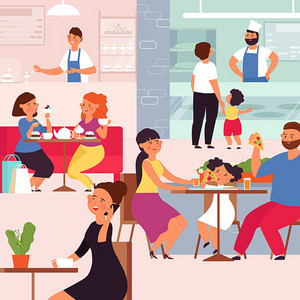
Have you noticed that some of your favorite restaurants are starting to look like bustling market stalls?
Today, we're talking about why more and more eateries are going for that vibrant chaotic market vibe.
Spoiler alert is all about bringing authenticity and a bit of nostalgia to your dining experience.
And we have a startling revelation for you.
Just eight minutes of anger can harm your body.
Find out the details on today's Round Table.
Recently, a fascinating trend in the culinary world has caught our attention.
Restaurants are starting to look more like traditional food markets.
Many believe this shift isn't just about decor.
It's a reflection of deeper cultural movements towards authenticity and nostalgia.
Before we explore the factors driving this trend and its impact on the dining experience, let me first quickly ask the both of you a few questions to find out what kind of consumers you best represent.
So you're going to answer the question separately but fast to start with, how often do you die in the evening?
What type of cuisine do you prefer?
Nothing around the community that is a little spicy as well.
So for you, if I give you the choice of local and traditional, international or fast food, which one were which type do you go for the most frequent?
Always go for local food.
Interesting. Then what is the most important to you when choosing a restaurant?
We have some choices here.
Ambience and decor, quality of food, price or location.
I would say the quality of food is my first factor to be considered.
And also environment is also very important.
I'd rather go to some clean environment where you don't see a lot of people smoking inside.
Of course, indoor smoking has already been banned, which really helped me a lot.
It's a frequent diner out there.
Okay. How about you, Steve?
Quality of food and geographic convenience.
Lazy eater. I'm not going to travel 45 minutes to the other side of the city on a Wednesday afternoon for lunch.
Why not? I would do that.
Yes, I would do that. It's a really good restaurant.
Yeah. If it's the weekend, maybe, but not during the week.
So yeah, no, I think if it's somewhere around that's reasonable within maybe 20 minutes and the food is good, then I'll go.
Interesting. So have you ever dined at a market style restaurant?
Ever. No. I think yes for me.
Me too. I think this is several actually.
I'll share my experience a bit later.
And that leads to my next question.
Do you feel a stronger connection to a restaurant if it reflects cultural or traditional elements?
That's a really good question.
I think it really depends on how the restaurant is doing is traveling in terms of creating this local atmosphere.
Okay. How about you, Steve?
No. I'm there to eat and fill my belly and then go.
And if the ambiance is culturally pleasing, then that's a bonus.
It's not saying I don't like it.
It's just saying it's not a key factor when choosing a spot.
But that being said, it does totally add to the experience of dining when you're surrounded with that kind of environment.
But you ask me if it's a key priority.
It's not a priority, but I do enjoy it.
That's for sure. In that case, what kind of dining experience do you usually seek?
Everyone relaxed, formal and elegant, fun and lively, or quick and convenient?
I went to a three-star Michelin restaurant one time and there were nine courses and I couldn't even really identify too much of the food.
My number one question during that meal was, what's this?
What's this? What is this?
Why is it so small? That was my number two question.
So I will say- So someone elegant out of the list, huh?
Off the list. It's a year maybe.
It's fun. It's a fun dining experience.
But I would say casual and friendly.
I love, love, love a good mom and pop shop that's been around for like 50, 60, 70 years.
That's my favorite. I also dislike restaurant that would just make me myself feeling ignorant about food and also about everything.
So I think it's really important to have this connection with the restaurant owner sometimes.
I think some of them are really good at building this connection with diners.
The reason I'm asking all these questions is to give our listeners a idea of who you are, what kind of eaters you represent.
Because when it comes to the culinary culture in different places, definitely there are multiple choices.
And I have to say as a foodie, I am pleased to say these restaurants are competing fiercely in terms of the quality of food, the level of hygiene, pricing and also coming up with these all kinds of fun ways and sometimes gimmicks that I appreciate a little bit to attract more and more people to eat.
Definitely if you're going to a restaurant to the very first thing you look for is of course good food.
But I talked about going into a place because it represents this cultural connection and this traditional element.
I want to do this restaurant I think when I was in high school and also college dozens of times not because they have good food but because they give you this vibe or create this wooxia world for you.
This ancient Chinese kung fu society and culture feeling for you.
Once you get inside they would say things like welcome to our store, Shiro or hero in the Kauyouta Xia Li Bianchi coming in.
I'm going to know which restaurant you're talking about.
It used to be so popular.
It's a fun restaurant and once you get in you sit on these strange stalls and also using this really shabby and cracked bowls and plates as well as glasses.
It's not really a glass because it's actually made of wood and you use these chopsticks that are not even even because one would be a little bit longer or shorter than the other.
It's all this plain and authentic feeling and all the dish would have strange names generated from traditional Chinese martial art novels which gives you a feeling that you're basically having this immersive experience.
The food is good but not to the extent that I would visit the place several times a year yet to the whole experience is fun.
You see here's my question.
Will you be frustrated if you say have a rather disappointing experience of the food provided there because usually for this kind of restaurant the major selling point would be the atmosphere and also decoration and all those glamorous activities they're offering.
However the food might not be as good as some quality restaurant out there.
Will you be then disappointed?
Well the thing for me is that the reason I wonder so many times is because each time I would bring different groups of new friends I would basically introduce them to the experience.
Same goes with the type of restaurants we're talking about today.
That is for the restaurants that basically look like a fresh fruit market that you can choose the vegetable you can choose the meat you want to eat you can choose the raw ingredient and then somehow you can even choose the way of cooking make it very spicy or very plain and healthy can talk to the actress and give them your priority and then you can sit there and waiting for the raw material to become actual dish coming to your table.
It's a fun experience and I do that with a lot of new friends as well.
But I know for sure that these restaurants are up leveling the game a little bit right?
Yes. Yes. Because for me I think sometimes the most appealing restaurant would be the stronger where the best selling point is only their food or I would mostly frequently visit a restaurant for its food instead of other things because say the decoration and atmosphere and also sometimes some local performances would be a bonus point but I don't really think it could be a strong point that could help the restaurant to keep attracting customers and sustain customers and I think that's the most important thing usually food quality food is the most important factor to sustain your customers.
Maybe that's only my opinion.
I think so too. Last year in Korea the news just came out a couple of months ago that one in five restaurants around the country closed last year.
It's hard for restaurants to consistently not only just stay open and stay afloat but be successful.
I was reading as well that the food industry, the restaurant industry in 2023 in China made a 20% increase, a little over 20% increase basically returning to the pre-pandemic levels.
People in China seem to be going out and it's a worldwide thing.
Everybody's going back to restaurants again which makes it extremely competitive for those restaurants and going into a place that calls me hero every day.
Well the first time it's going to be fun and cool.
The second time I might be like oh okay yeah right then maybe the fourth time I just Steve call me just Steve.
It's a gimmick isn't it?
It's fun to take your friends.
It's almost like a touristy thing to do.
Is that something that is sustainable?
Is that a sustainable business model over the long term?
I don't know but what I do think is having a market style restaurant where you have your fresh ingredients on display.
You can see exactly what you're eating.
There's a trust level there.
There's a rustic comfort level there.
There's a homey feeling there.
The dish just makes you as a customer feel good about eating there.
Yeah. But the food has to be good as well.
Exactly. I think for restaurant operators out there it's really important to got their smart decisions to navigate customer expectation because for those restaurant who are offering a lot of local performances and exhaust and special decoration I think meantime there are also increased expectation of customers because if me as a diner in the restaurant sit there and watch a lot of like glamorous and exciting performance and I will be a wow so exciting by meantime I understand the price of the performance is also covered in my bill.
Then I would just have a high expectation of what kind of food they're offering.
But for those rather simple restaurants they're basically selling the food.
I think that's the only thing there.
It's also quite easy for those smaller restaurants to navigate where control the expectation of customers who are coming to the restaurant.
That's also why I'm also quite fond of this fresh food market idea here because I don't really think it would just cost me too much for the restaurant to display in their fresh ingredients or meat or vegetables out there.
You're just too smart as a consumer.
Sometimes being able to just enjoy the environment, enjoy everything and neglect the bill a little bit would even be better.
But I understand what you're saying.
And the reason a lot of people feel like these market style restaurants are good there is another reason there that is they feel the authenticity as well as the fact that all of the food are supposed to be made on side instead of pre cooked food.
Personally, I am not against a pre cooked food at all.
I think it's up to standard.
The quality is assured and I don't hate the idea at all.
But for some people they want their food to be cooked on side and they want that freshness.
They want that final human touch with their dish.
And these fresh food market provide them with the guarantee that you've got the ingredient chosen and then we would cook them in our kitchen.
You can even sometimes see the cooking process because of the huge glasses instead of a wall against the kitchen between the kitchen and the dining area.
So this is also quite interesting.
And I was wondering on the other hand, how do these environment affect consumer behavior and perception?
Because if you're in a very elegant place with a nine different courses that you cannot identify, I know maybe you don't enjoy the experience, but you must act very elegantly and you would try to sit up straight even or at least wearing suit.
Something like that. My posture was amazing.
My posture was amazing.
Right. So the idea is that the environment, the setting, the whole vibe would not only provide something for the consumers, but also affect consumer behavior as well.
But do you guys think these kind of market style restaurants would change people or change the diner's behavior as well as the interaction they have with the restaurant owner as well as other, for example, fellow diners?
I don't see why it would.
I mean, if you're talking about like attire, what they would wear when they would go, there would probably be a little bit more casual, but I don't see how that would change interaction with other diners or interactions with the owners of the restaurant or the staff.
Maybe with the staff a little bit because you can talk about the ingredients you have to let them know what ingredients you want.
But beyond that, I don't see how it would change things significantly.
Yeah. I think it might just be related to what kind of purposes that these customers are coming to the restaurants.
Maybe some restaurants are defining themselves as a place which offer really cosy and relaxing environment for the restaurant, like home, restaurant, something like that.
But meantime, there are some different restaurants who are defining themselves as quite classy and offer quite elegant environment.
So I think for customers nowadays, we do have different options out there.
You do have, say, a place for business talk with their customers where we're client, and they, of course, you go to, say, quite formal restaurants where you order nine courses and you got an amazing posture.
But meantime, you also got this home restaurant nearby your residential areas.
Yeah. The reason I'm asking this is because when I was visiting this market style restaurants, I observed myself starting to talk to other fellow diners and asking them what they're having and I want what they have and asking them was the criteria and standards they use to choose the raw ingredients because there are 20 tomatoes there.
I don't know which tomato is the most fresh tomato, but my fellow diner who I only know the previous minute might know that.
And it's a fun experience and I see myself interacting with people in that restaurant more often.
And I'm not really sure if it's what you're looking for as a foodie out there, but it's a cool experience if you enjoy it.
And in the meantime, we've already talked about this being the latest trend, but do you see the trend evolving in the future or what are some other trends that might emerge in the restaurant industry?
I can see the trends already, technology.
You go to tables now in restaurants and you can't order from the server.
You have to press the button on the tablet on the screen.
So you have that, you have robot waiters now that are bringing food to and from tables.
I think technology in restaurants and kiosks, you know, in fast food restaurants where you can't just order from the person you have to order from the kiosk now.
For me, I think that is absolutely the direction that restaurants are headed in.
Yes. And for me, I think maybe distinctiveness would be a key feature that would stand out for the catering business in the future because as we mentioned, customers now, they do have a more diversified and abundant actually options when it comes to where to die out.
And especially with a lot of restaurant chains out there, you basically, you can enjoy the most authentic, Sichuan food in Beijing without traveling to Sichuan like before.
So I think for those restaurants out there, they must to strive for sustain their customers by offering the most authentic food from different places that can also represent local culture which can also maybe give a fresh taste of culture and flavor at the same time for the customers.
Yeah. So next time you're at a market style restaurant or any kind of special style restaurant, take a moment to soak in the atmosphere and think about the stories behind it.
You're listening to Roundtable coming up next.
Some research published in the Journal of the American Heart Association reviews how the common emotion of anger even as short as eight minutes may impact our cardiovascular health.
It's the hour of Roundtable with myself, Neil Honglin, Steve Hathorley and Lee Lee.
A groundbreaking study in the Journal of the American Heart Association shows that a mere eight minutes of anger can impair blood vessel function, highlighting the risk of heart disease.
We'll break down the studies findings and discuss practical ways to manage anger effectively.
So can you share a recent experience where you felt anger and how did your body react in that moment, Steve?
I was at that restaurant having to order the server.
I was like, can I have this?
You got to order through the thing.
I was like, yeah, but you're standing right in front of me and I'm telling you what I would like to have.
Can you just go and get, no, you got to do it through this?
I don't get angry so much as I just get annoyed.
I was annoyed by the fact that I was being forced to use this technology in a restaurant when the person who could convey that message was standing less than two feet away from me.
So, well, this is a minor, like you said, you were basically annoyed, not like really in a rage or angry to a certain extent, but can you recall the previous time that you felt absolute anger to the point that it affects your body, the function of the blood vessels and stuff?
Like a physiological response to it.
Yeah, when I get angry, I can feel my body temperature going up.
And I guess it was a couple of weeks ago.
So I live in a place where the street right outside my house is a narrow street and there's really only room for one car if people are parked.
And this guy had parked and kind of pulled over and he was parked illegally and he was standing next to his car and I couldn't get around him.
So I said, hey, you know, this isn't a parking lot.
Can you move your car? And he was like, just wait.
I'm going to be gone in like three minutes.
And I was like, I don't want to, and I immediately, I could feel my body temperature going up.
So I know when I do get angry, that's my physiological response to it.
Wow. So what's the latest findings?
What are the actual results telling us?
What are some symptoms?
And let's go back to the theme that is, would a eight minute long anger due to our body?
Yeah, I think we're talking about this latest study published in May in the Journal of the American Heart Association and according to this new research, the mere recollection of a time you were angry may be harmful to your heart because impaired vascular functions linked to an increased risk of heart attack and stroke.
That's according to the lead author of this study, who is also a professor in the division of cardiology at Columbia University, RVing Medical Center and operational studies have linked feelings of negative emotions with having a heart attack or other cardiovascular disease events.
And the most common negative emotion study is anger.
And there are fewer studies on anxiety and sadness, which have also been linked to heart attack risk.
So it really suggests that if you experience more anger, the more chance you might be suffer from heart attack.
I think that's enough sign for telling people that we might try to control our temper and stop being anger.
I've heard this saying or this, let's say theory that you choose to be angry because you can imagine shouting to your kid, for example, not doing his or her homework or destroying the home by bringing back some stray animals.
But right at the moment, when you are shouting to your kid, if your phone suddenly rings, and you picked the phone, and it's your boss talking to you about a minor issue at work.
You would all of a sudden speak very nicely and politely and also even rationally about the matter that you're discussing.
And once you hung up the phone, you can go back to screaming at your kid right like that.
So it's not a matter of, I cannot control myself because I'm super angry.
It's more of a matter of, we do not aware of how harmful anger due to our body and we choose to be angry at that moment.
We can actually control it.
So do you guys have any control little tips or meditation method that you use to, in general, manage your mood in a day or at the end of a day to prepare for the bright, beautiful next day?
What do you do when you get like super furious?
Tell us. Teach us. Well, for me, you know, I used to go to the gardens, where climb mountains, basically to get closer to nature, especially during weekends.
I think particularly greenery can make me quite calm and also energized.
But recently I got my new approach to manage my bad mood, which is going to university campuses.
Because today before yesterday, I actually went to my home university and especially during night, I surprisingly find that during night in the campus, college, I mean, young people, they are so energetic.
They're doing all kinds of sport events, volleyball, football, basketball, and they are even like, square dancing.
Can you imagine a square dancing team for a bunch of young people?
That's what's happening in my university.
And I find that, you know, when you look at, when you're observing all those vibrant scenes in the campuses, you self also feel calm and energized.
So that's my little tip for audiences.
And those are you guys. How about this one?
I've heard this many, many times.
Experts say count to 10 and breathe in deeply, breathe out deeply before you say anything.
Because once those words come out, depending on, actually, it doesn't matter to whom you are speaking, you can't take those words back.
So when you feel that physiological response, when you feel that anger just burning inside your soul and you want to explode, breathe deeply in and out for 10 seconds, nice and calm.
Dave, express your feelings.
Okay. So I think that is a really good tip.
And what I do, actually, I was advised by one of our colleagues.
And he said that sometimes when the situation is complicated, one, the challenges beyond you and you feel like you cannot handle it, you have this tendency of getting angry.
At that moment, try to get angry at the situation, not towards any specific person.
Because here pointing at anyone, blaming anyone would not make the situation better.
And like Steve has just said, once the words are out, you cannot take them back.
So once you harm the feelings of your colleagues, of your friends and family and loved ones, the harm cannot be taken back.
And you do not want that.
So if you have to be angry at something, be angry at the situation.
Don't be angry at the person.
And today our topic tells us, do not get angry at all.
If you're angry, it harms your cardiovascular system.
It harms your body. It levels up the stress.
It improves the stress level of your general mood.
And it's just bad for anybody.
So try to either count to 10 and breathe or go to a university campus.
Just keep yourself in a relatively good mood.
And remember, tomorrow is another day.
And all the things would go away.
And if you ever unlock that secret to never, ever getting angry, please invite me to your private island because you will be a billionaire.
And you will have unlocked the secret of the universe.
Yes. And please also let us know by sending an email to easyfmroundtableatfoxmail.com.
We would like to know that secret.
We would not share your money, but we can use that secret to make ourselves better versions of ourselves.
And that brings us to the end of today's roundtable.
Thanks to Lee E and Steve.
And of course, those of you who are still listening.