NPR.
Malia Bamsuin is a composer slash bassist slash singer-songwriter.
She plays different genres from jazz to rock.
She actually just performed two shows with cellist Yo-Yo Ma.
And Molly says that a few years ago, she remembers ticket prices for other bands going up to $150.
And I was like, wow, I will never charge more than that.
I remember saying that to myself, like, that's insane.
I still want to be able to reach people who actually can't afford a $150 ticket.
And I think it's important to be able to choose your audience that way and not just have your own success.
Curate an audience that is of a specific income bracket.
Live Nation CEO Michael Rapinoe, though, has a much different view on ticket pricing.
Live Nation is the parent company of Ticketmaster.
And Michael Rapinoe said last month that concert tickets are underpriced and have been for a long time.
That comment was tough for a lot of music fans to swallow.
I mean, take Bruno Mars.
He is playing two shows in Las Vegas in December.
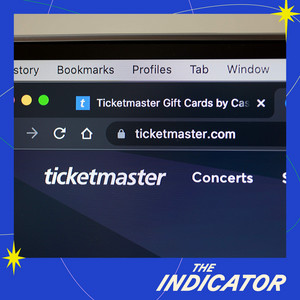
I went on Ticketmaster yesterday and the cheapest seat I could find was $850.
$850. ticket prices going to Mars.
Maybe that example is on the higher end, but the price of concert tickets has gone up faster than overall inflation.
And the ticket market is this economic puzzle that continues to bedevil fans, venue owners and artists.
This is The Indicator from Planet Money.
I'm Darian Woods.
And I'm Waylon Wong.
The strange economics of the ticket market has given rise to reseller bots.
They're considered an industry scourge that makes prices higher.
And yet, in the world of economics, they do have a function.
Today on the show the arguments for and against the ticket bots and why it's so hard to get rid of them from the ticket market.
We travel to Maine to see how that state is battling the bots.
Support for NPR and the following message come from Rosetta Stone the perfect app to achieve your language learning goals, no matter how busy your schedule gets.
It's designed to maximize study time with immersive 10 minute lessons and audio practice for your commute.
Plus tailor your learning plan for specific objectives like travel.
Get Rosetta Stone's lifetime membership for 50% off and unlimited access to 25 language courses.
Learn more at rosettastone.com slash NPR.
Support for NPR and the following message come from Warby Parker, the one-stop shop for all your vision needs.
They offer expertly crafted prescription eyewear plus contacts, eye exams and more, for everything you need to see.
Visit your nearest Warby Parker store or head to warbyparker.com.
Lauren Wayne can tell when the ticket reselling bots show up.
It's easily recognizable, but it causes a lot of pain and suffering.
Lauren runs the State Theater in Portland, Maine.
It's a historic venue that's been a vaudeville house, an adult film theater, and a dinner theater.
Today, it's a concert and event venue.
And in the last few years, that has meant constant battle with the bots.
Lauren has learned to spot their activity.
If we see tickets on the secondary resale sites that they're selling before we go on sale, that's obviously a red flag.
Those tickets are called spec tickets.
They show up on sites like StubHub and SeatGeek and they don't exist, despite both those companies having policies against them.
So that's one telltale sign of bots.
And then, once ticket sales do get underway, Lauren looks for other signs like 500 tickets getting bought overnight.
They've been purchased by bots who are not even people.
It's just technology just grabbing whatever they can.
Lauren's theater has a capacity of fewer than 2000, so a bot that grabs 500 tickets at once is wiping out a huge chunk of tickets that could have gone to fans.
Lauren says when this happens, her staff has to manually void the purchases.
They refund the money and then return the seats to the regular inventory.
It's time consuming work.
And there is another problem.
Resellers sometimes offload those tickets to fans anyway.
That fan doesn't know that the ticket that they bought has been voided.
So when they show up to the show that night, their ticket can be denied.
There's nothing sadder than having someone show up at their favorite artists and thinking that they're going to get in and they don't get in.
Not only that, but the buyer might have paid three or four times more than face value.
These kinds of horror stories are what makes fans, artists and venue operators super frustrated with ticket reselling.
There's actually a federal law meant to curtail illegal bot activity, but that hasn't stopped the problem.
So there's a lot of finger pointing when it comes to the secondary market.
The obvious villain is the resellers who operate the bots.
Then there are big online resale platforms like StubHub.
It's been criticized for not doing enough to police bot activity on its website, while also benefiting from those sales.
We reached out to StubHub but didn't hear back.
In a recent interview with Axios, though, its CEO says the company has publicly lobbied for stopping bots, and its website says that customers will get their money back if their tickets aren't valid.
The Federal Trade Commission and seven states have also accused Ticketmaster of being part of the problem.
Ticketmaster controls 80 percent or more of the major concert venue's primary ticketing market.
But it also allows customers to resell tickets on its platform.
In September, the FTC sued the company.
It said Ticketmaster was coordinating with resellers and profiting from the sale of marked-up tickets.
Ticketmaster and its parent company Live Nation deny the government's accusations and the companies say they've invested over a billion dollars on ticket security and anti-bot technology.
Now, no matter who you want to blame the most, the secondary ticket market does serve an economic purpose.
That's according to Alan Sorensen.
He's an economist at the University of Wisconsin-Madison who has studied this market.
Tickets are so often mispriced in the primary market especially, I think, for music concerts, because artists have some control over the pricing.
I think many artists imagine that by setting low prices, they're doing their fans a favor.
And that leads to sort of you know, funky things.
Among other things, that leads to a really active resale market.
Here's what Alan means by mispricing.
Think of a perfectly efficient free market where a good is sold at a price where supply meets demand.
If that doesn't happen though if say, an artist prices tickets below that equilibrium level, then the secondary market will correct that mispricing.
It might feel like the price really shouldn't be $250. for that ticket.
But if it sells in an open free market for 250, then yes, that kind of is the market price, whether you like it or not.
Now, before you start waving your pitchfork at Alan, he does acknowledge that there are many problems with how ticket markets function.
Like, let's say, an artist prices their ticket below that equilibrium level that a fan is willing to pay.
That fan ends up spending more than face value on a resale site.
Now that's all profit that goes to a reseller instead of the artist or the venue, and that can feel crummy.
I was trying to think like how could an artist guarantee that they're just granting a bunch of surplus to their fans?
Someday maybe some artist will experiment with this, where they will charge high prices for the concert but then just give out tons of awesome stuff to the people who actually come.
Okay, like get the t-shirt canon out.
Yes, the t-shirt canon would go wild, you know, and it would have better stuff than t-shirts.
Someone should definitely give Ellen a research grant to try this.
But in the meantime, venue operators are pushing for state laws to combat what they say are predatory ticketing practices.
The National Independent Venue Association is an industry group that helped get laws passed in Maryland and Maine over the last couple of years.
Lauren Wayne was part of the effort in Maine.
The new law bans bots.
It also makes spec tickets illegal.
Those are the ones that resellers advertise but don't actually own.
And Maine now has a 10% resale cap on live event tickets.
And Lauren says this cap is important because it cuts down on price gouging.
A regular fan who bought a ticket and then gets sick or changes their mind can still resell that ticket to another fan, as long as they don't mark it up more than 10.
StubHub now asks sellers in Maine to confirm that their ticket prices are within the legal limits.
And at Lauren's Theater.
If her customers spot any activity that looks like it's violating the new law, they can fill out a form that gets sent to the state's attorney general's office.
And remember how Lauren says her employees would have to manually scrub ticket transactions to cancel the bot purchases.
She hasn't had to do that since the law went into effect in September.
So that's great news for Lauren.
But she does acknowledge that Maine's victory has probably pushed the bot problem to another state with looser laws.
That's why we're encouraging that every state try to enact tougher ticketing legislation, because they're just going to move to the easiest market.
Darren, you know what you can do at Lawrence Theater if you want to avoid dealing with ticketing websites.
Just full stop.
What?
You can go in person to the box office.
No fees.
I'll get my tent ready.
This episode was produced by Indra Carreras with engineering by Jimmy Keeley.
It was fact-checked by Sierra Juarez.
Kicking Cannon is our show's editor, and The Indicator is a production of NPR.
This message comes from Mint Mobile.
At Mint Mobile, their favorite word is no.
No contracts, no monthly bills, no hidden fees.
Plans start at $15 a month.
Make the switch at mintmobile.com.
That's mintmobile.com.
Upfront payment of $45 for 3-month 5GB plan required.
Equivalent to $15 a month.
New customer offer for first 3 months only.
Then full price plan options available.
Taxes and fees extra.
See Mint Mobile for details.
This message comes from BetterHelp.
To mark World Mental Health Day, BetterHelp is thanking the therapists who change people's lives all around the world by providing accessible mental health support.
With over 12 years of experience matching clients with therapists, and one of the world's largest online therapist networks, BetterHelp can help you find the right therapist.
Visit BetterHelp.com for 10% off your first month.