Discussion keeps the world turning.
This is Roundtable.
You're tuned in to Roundtable.
My name is Steve and today I'm with Yushan and Yushan.
Coming up, the order button on your food delivery app is almost true.
Too easy.
But have you ever wondered where that affordable quick meal is actually being prepared?
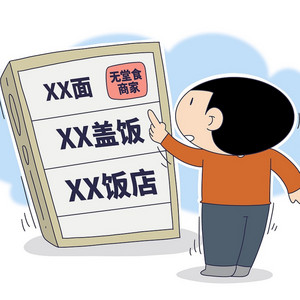
New draft rules in China are now forcing delivery platforms to answer that question directly by requiring a clear no-dine-in label on these so-called ghost kitchens.
It's a mini-icon with huge implications for food safety and transparency.
After that, for Gen Z, the act of pulling out a wallet and fumbling for physical cash isn't just inconvenient.
It's a genuine social faux pas that can make them want to hide their face in embarrassment.
This goes beyond a simple preference for digital apps.
It's a visceral reaction against what they see as an awkward, slow, and completely outdated ritual.
Is cash safe?
Our podcast listeners can find us at roundtable china on apple podcasts.
And don't forget we say it every day that we love hearing your voice, so send your voice notes our way with your thoughts, any of your thoughts, that we discuss here on roundtable, here's how you do that roundtable podcast at qqcom, once again roundtable podcast at qqcom.
And now ever hit that order button on your phone, on your app, and And you're excited to get that cheap, super quick takeout.
And you think to yourself, hmm, I want it.
But where exactly is this delicious dish being made?
Is it a bustling kitchen with chefs in tall hats?
Maybe that's what you imagine.
Or is it something that perhaps you'd rather not think about?
For a long time, the rise of the no-dine-in model.
Those are the places focusing purely on delivery to keep costs down.
It's been a spicy topic.
They do offer great value.
But the lack of a physical storefront for inspection has raised some serious food safety eyebrows.
Well, the National Administration for Market Regulation in China has rolled out a draft rule requiring delivery platforms to slap a clear no-dine-in label right on the main page for these providers.
It's a small icon with massive implications.
Will it make a big difference?
Who's in support?
Who's not in support?
We'll discuss it all.
So what is this about?
The State Administration for Market Regulation.
What did they release?
It's a document with a long title on it.
Yes, it's actually being released recently.
And this is actually a draft for comments or advice on the supervision and administration measures for food safety responsibility of supermarkets.
Third-party platforms and catering service providers for online catering services.
Told you, long title.
Yeah, to the public for feedback.
And the deadline for the feedback is November the 16th.
So if you have any ideas on these kind of new label, no dining kind of thing, you can submit now.
Yeah, your comment on it.
The core provision generating attention is the requirement that external delivery platforms must affix a no dining label to providers of pure takeaway services on their main pages.
And this regulation is part of a broader effort to strengthen the food safety defense line for online catering.
Right.
But the message here is quite clear, right?
They're not illegal, these orders. only take out places.
Yeah, they're totally fine.
And they just need to make their identity transparent so that consumers can make an informed choice.
And according to this kind of choice, they can decide whether they want to go to a restaurant that has no dining area or they want to go to a restaurant that you can actually eat in there.
And that's what these places are.
Right, they focus, they focus solely on delivery and only delivery.
Yeah, they do not provide dine-in services and um, They usually feature smaller store or a smaller stand rather, that are kind of cost effective to avoid high costs associated with store rent.
And also they are able to concentrate their resources and manpower on the dishes themselves and enhance therefore the efficiency to meet customer demands, instead of while I'm catering to everybody but in the meantime I'm managing my delivery services.
Because this mainly affects the delivery part or the online food ordering part of the market.
And I'm not sure if you guys have this habit, but for me, if I'm ordering from a place or a restaurant that, first of all, I've never heard of before, then I'll need to make sure they have all their license showcased.
You check?
I do.
And also it's better if they provide like a with dining area or the front of their restaurant, then I'll be convinced on the fact that okay, this is legitimate.
This is something that you check.
Do you also check you should, I do, and a lot of people do actually and now a lot of these delivery platforms, they actually label some of these restaurants that you can dining and some of them before I think they didn't, when they didn't have that kind of feature.
People even like introduced or develop some tricks on telling people that how can you identify these restaurants?
Are like dining available, restaurant or no dining restaurants how?
What i saw is that when you see these names of these restaurants, if they are like similar to a big restaurant highly suspicious and if there are some black huge dots that do you remember some of these?
They they will like say, let's say, the brand name and what they sell and blah blah, blah and They connect with black dots.
That means they are just no dining kitchens that sell delivery food only.
They're presenting menu on the name of the restaurant.
Yeah, some of them.
Or rather the food stand.
That's a very suspicious but very identical feature that these no-dining restaurants will have.
Again, not that they're illegal.
It's just now we're trying to emphasize on the part that, from an official level, we're trying to make the information transparent to customers from online food ordering platforms so that people know exactly who they are ordering from.
Because sometimes these food stands they don't.
They call themselves restaurants but actually they don't have like seating area like a traditional restaurant would.
So that's confusing and sometimes misleading too misleading people to believe in.
They are something that they are not.
So we're trying to clarify on that, i guess.
So the regulation is introduced to kind of modernize, bring up to date the supervision and also, I guess, to address these longstanding issues that were related to transparency and consumer trust.
Yeah, because the consumers, they have the right to know.
I check, you check, but not necessarily everybody checks.
And it doesn't mean that they don't check, but they don't deserve good quality food.
I do have a question though because Yushan, you just mentioned that up until now, For the dine-in restaurants, they would have a label that said dine-in.
Yeah.
They're so proud about it.
Well, then by that logic, can we not deduce which restaurants are not dine-in?
Kind of.
Because if they don't have that label... We're trying to ask them to have a label now.
You have to have a label.
If the restaurant is capable of getting that kind of dining available label, they will try to do that.
They will try to have that, and then that means that some of these restaurants don't have the label maybe a no dining restaurant, Because I remember in some cases when you order food, those online platforms usually have like a very artistically designed banner for this restaurant where they usually post their new menu or new specialty for the season.
But some chain store, they now exchange that banner place to something.
Just specifically specify we have dying in areas.
That's a selling point for them.
Yeah, and they want to make it as clear.
Well, yeah, particularly considering that we're talking about these new measures right now.
They want to make it as transparent as possible.
And that's the other thing.
Yeah, we're talking about protecting consumer rights here.
We're talking about refined, stricter management, a more precise approach.
But the rules are also designed to curb some deceptive practices.
And this is important too, because apparently some of these non-dine-in restaurants would present themselves as dine-in restaurants themselves through various what would it be?
Photos or videos on the applications.
And they use these kind of fake pictures to impersonate that dining merchants and to eliminate the fact that they are actually just a kitchen and business that lack physical stores or illegally obtained qualifications.
And that is an issue, because I think there is a trend or like raising awareness on the food safety when people are ordering deliveries and they would like to check if these restaurants are dining available or not.
And even some of the platforms are stressing that we only cooperate with the restaurants that has a dining qualification or dining area to attract consumers.
That okay, we only serve these kind of high quality services.
But even that said, the labeling of restaurants that offer dine-in services, that's not that old right.
That started relatively recently.
Yeah, in July actually, food delivery platforms in China, they began labeling restaurants that offer dine-in services.
And most major food delivery platforms in China already have similar features.
That's mainly aimed at informing customers which of the restaurants you're looking at offer dine-in service.
And I think here's a metaphor that just came to me just now.
Imagine a milk tea store.
Most milk tea stores.
They have chained management.
Their sources are traceable and not necessarily every milk tea stand.
Have a seating area for you to sit down and drink the milk tea.
So, just like that many for example, baozi or steamed bun shops or breakfast stores they kind of want the same operational mechanism by trying to build a stand and tell people we are selling breakfast, we're selling stuff and you can find us on whatever online ordering.
But here is the previously quite debatable gray area led to the heated discussion, which is the one certificate multiple store mechanism.
One license.
Yeah, that has caused food safety risks as well.
And they were not strictly and uniformly managed.
That's the problem.
If you utilize one certificate, of course on the online platform is going to showcase.
Oh, we have it.
But just how well managed are you truly are?
Well yeah, because you need to have a license for every individual shop that you have.
You can't have one license and own four different businesses.
Yeah, that's not allowed.
Now I do want to bring this up though, because I think that this is a fair point, and this is what I kind of mentioned when we started this chat is that I can imagine there are some businesses that are not in support of this because, let's say that I own and operate a delivery only restaurant and I, my restaurant is clean and the food quality is great.
Well then, they might not be very happy about this, because if this, if this, passes and you have to put a label, if you're not a dine-in restaurant, this would sway some potential customers from ordering at your restaurant, correct?
I think that's a fair um assumption to make.
Yeah, we've already making that kind of decisions based on these labels.
People do that now, yeah and um.
It could be a challenge for a lot of these business because they are having higher entry barriers when you, even though, let's say, they are just legitimate clean kitchen and they only serve for delivery, it can be a challenge for them that previous charm of the low Threshold entry for no dining catering may vanish and they need to find ways to create a dining space or rent another, bigger space for people to trust them.
They are having high quality food.
I mean, I'm wondering if this is going to sound like I'm joking, but I'm not.
I'm wondering if some of these places will literally put one small table and one small chair in there so that they can qualify and call themselves a dine-in restaurant is the purpose for this new regulation because, as we mentioned that back then, there are labels that you can set by these restaurants.
They can set we are dining available and, because they can like, upload pictures of their like dining area.
And now this regulation is more about putting the responsibility on these platforms.
They need to take uh, they need to be responsible to supervise all of these restaurants.
They are actually available for dining.
I mean, that's going to be tough, logistically speaking.
Yeah, more cost.
Yeah, it was millions and millions of restaurants have sorry, 14 million restaurants have already qualified for this dine-in restaurant badge on Meituan alone.
So multiply that by, you know, the other delivery giants like JD Takeout and Elemeh.
How many people would you need to actually physically visit the stores to ensure that they are what they say they are?
That's a good point, because many of these stores previously, if not now, if not in the future too most of the time the real physical offline clients they deal with are not clients, but rather people they deal with are not the food consumer themselves, but rather deliverers those, yeah right, those people.
They travel to all different restaurants and we talked about this previously that how um, your food delivery riders.
They carry the invisible banner of supervising yeah, supervising food safety for them.
If you don't have like a clean open, transparent kitchen, they might, after taking the, the takeout order, complain about it to other deliverers or, even simpler, just file it.
File you for it.
Yeah, it's an interesting story and it's in the public feedback stage now and i'm curious to see what that feedback will lead us to.
You're listening to roundtable and coming up next is cash cringe.
Looking for passion.
How about fiery debate?
Want to hear about current events in China from different perspectives?
Then tune in to Roundtable, where East meets West, and understanding is the goal.
This is Roundtable.
I'm Steve with Yushan and Yushun.
A recent survey revealed a stark new reality for American Gen Z regarding money.
Physical cash has become virtually obsolete, viewed as a clumsy and outdated tool to be used only as a last resort or in emergency situations.
Their sentiment is so strong that they've even coined a dismissive label for it.
It's a growing aversion that represents more than a preference for convenience, I'd say.
It's more of a profound generational gap in our relationship with money.
That sounds dramatic, but I think it might hold true.
Cash is cringe.
That's what it's all about.
So do you, just off the top, do you agree with as young Chinese people?
Do you agree that cash is embarrassing to use?
I don't have that kind of sentiment.
Cash is great.
Give me more.
I was preparing for you to ask this, because cash for me the different color for different amount.
I'm trying to recall all the different amounts of cash that we have.
For 1 yuan is green, for 5 yuan is purple, for 10 yuan is blue, and for 100 is pink.
Those beautiful colors.
When I see them, they remind me of the good old days that what 1 yuan can bring me like a popsicle, or 5 yuan can bring me like a bag of chips.
So I don't have any cringy or awkward feelings for them either.
I want to get to China in just a minute, because China has been pretty cashless for a.
It's been a good long time now, so we'll get to that.
But first, let's talk about this.
There were surveys conducted and they consistently show that Gen Z in America, by the way, only uses cash when there are no other options available.
There was a story in the New York Post about this.
They refer to it as outdated technology.
They compare it to a flip phone.
Yeah.
Which some of them are making a comeback, but I think we see the point there.
40% of Gen Z, they rarely or never carry cash.
They rely on digital payment methods.
And they see this as a superior way to purchase things.
Speed, efficiency.
They prefer to do it through things like Venmo if you've heard of that in the States or other apps those p2p apps, because one of the reasons they love frictionless transactions they think that carrying cash poses a security risk.
They also think that cash is dirty, and I had that feeling too.
Because of the bacteria.
And it is.
It is.
There's a lot of stuff living on there.
So they view it as kind of a potential health risk, kind of.
And these are just some of the reasons that Gen Z isn't down with using cash anymore.
So now let me ask you about China.
Same views for Gen Z in China, or probably not so much because it's been cashless for a while now, even though we've been in that kind of era cashless era for quite a long time.
I think it's started around 2013 to 2015.
And, um, it was roughly that kind of time.
And uh, back then china's two major payment giants, wechat and alipay.
They launched that kind of promotional campaigns like uh, cashless week or callous cashless months uh, introducing incentives for people to use mobile payments, and then people started to use that.
But and even until now i don't see.
I still see a lot of people are using cash when they have some.
I never see it, i never see it and i never do it myself.
My mom, when she like, buy groceries, a lot of them still use that kind of cash.
For the older generation, my grandparents too.
They recognize cash and see more value in them than a number on their phone.
And here in China.
Interestingly, there are some bloggers saying that Gen Z in China.
Nowadays they're returning back to the cash paying style, mainly to prevent online scam and personal information leakage and to stop themselves from forming the habit of spending ahead.
That's paying credit card.
It's the same thing in the States.
58% of baby boomers reported that they always carry cash with them.
Like, why not?
They view it as, yeah, it's like a flex maybe, I don't know, somehow.
They view it as an essential part of daily life for their daily transactions.
But they also the baby boomers, and this is interesting.
They also link it to successful saving behavior.
And I think you just kind of touched upon that, Yushan.
The tangibility of money in your wallet.
When you spend it, you get a very strong sense of how much you are using, how much you are spending.
When you click a button on your phone, You don't get that same feeling.
It's just the change of the number.
Yeah.
You don't even realize it when your digital wallet is already empty.
Do you agree with this?
Do you feel that when you spend, I mean because everything in China is done, almost everything is done through the phone.
I feel right.
You're paying for everything.
Transactions are done through the phone.
Do you feel like you lose a little bit? a little bit of touch with money?
I think so.
People started to having different feelings when they're trading money, I would say when all of the things are just becoming numbers.
When you having that physical cash with, let's say, 10000 yuan, when it's on a phone, it's just one and four zeros.
Yeah.
And it is cash.
It can be a pile of money.
You can totally feel that.
And I think that's a lot of people are realizing this and creating videos saying that how what, what kind of things you can do with that 10000 yuan.
In fact, you can do a lot of things.
But when you are putting, like on a phone and buying, let's say, just a smartphone, a click, then it's gone.
Here's some data to back you up on that.
So Chinese people, some online consuming style kind of feature, a high frequency small transaction consumption habit.
Over 60% of online shopping users, they typically spend under 100 yuan.
So that's about 14 US dollars per payment.
That means over 60 of us.
We tend to think that's spending smaller amount.
Digitally doesn't mean that much, but it also, depending on the purposes.
When it comes to receiving government subsidies like job or vocational training benefits or house renting benefits, around 80 of people prefer the money to go directly into their bank accounts, comparing with digital accounts.
Yeah.
I don't know.
It's a slippery slope, I think for American Gen Z, because Companies are making it easier and easier for you to pay for things.
Buy now, pay later.
Oh, that's not real money.
It's only a couple of dollars this month and for the next 38 months.
So it kind of makes people lose a little bit.
They get out of touch with reality a little bit.
Not always, but I see that as a potential thing. problem.
For me.
After living in China for a year, I'm still trying to figure out the exact value of the yuan.
And what I mean by that is when I see certain prices, then I know how much the yuan is worth, but it still doesn't hit my brain hard like oh, it's worth this exact value.
So what I'll do for numbers I'm not familiar with, I'll put it in the calculator and find out how much Korean won.
That is because I lived there for more than 20 years.
I know exactly the value amount so that it makes sense to me.
That will come with time, though.
Because shopping, at the end of the day, is about value and what it brings us.
Yes, and keeping money in your wallet is better than putting it in someone else's.
All right, that'll do it for today's roundtable.
Thanks very much for sharing your time with us today.
I'm Steve for Yushun and Yushan.
We hope that you'll come back and join us again next time.