
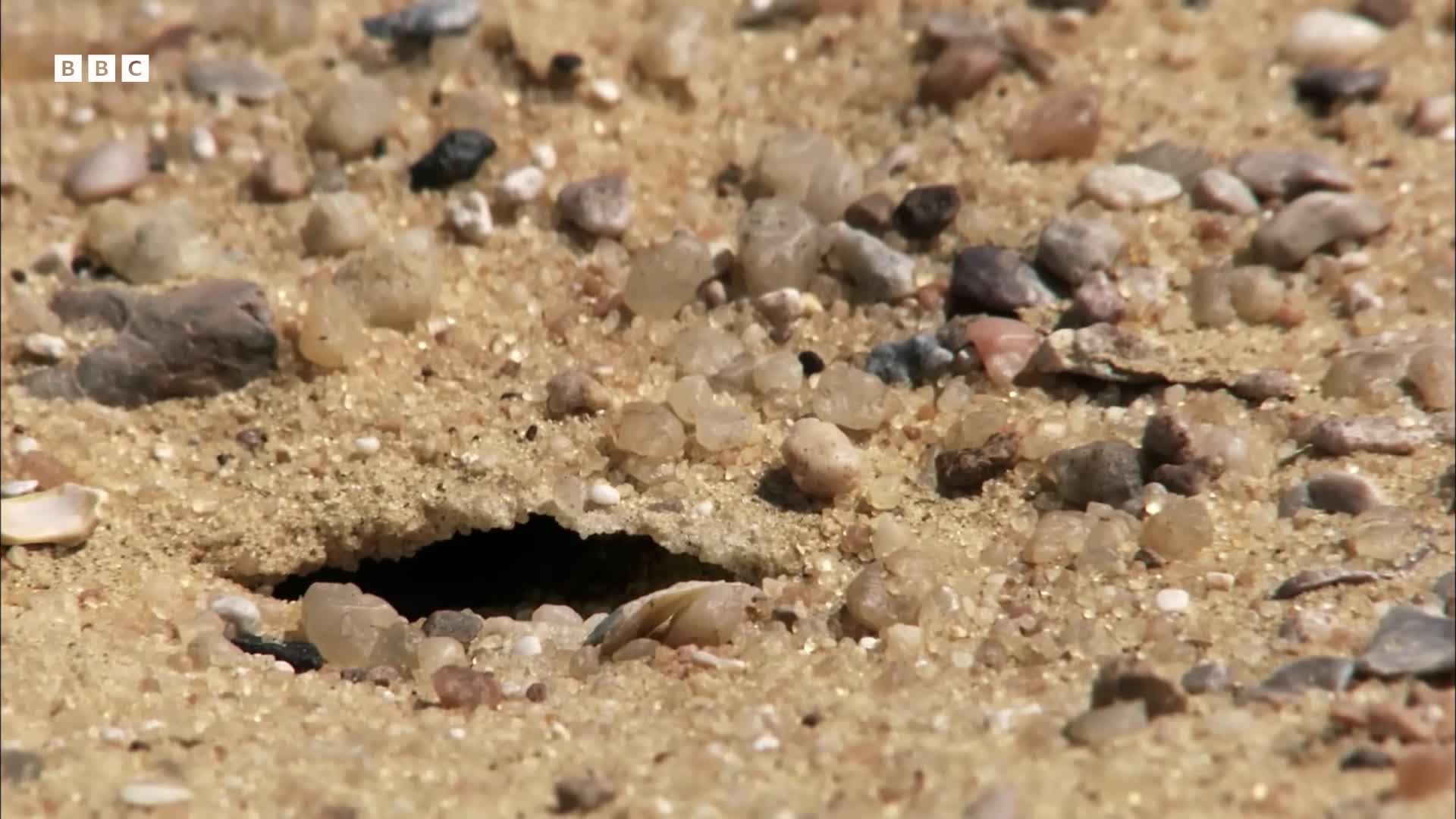
[The Extreme Survival Tactics of Sahara Silver Ants: Navigating Life at 53 Degrees Celsius]-[Ants Tolerate Heat That Could Kill Land Animals | Narrated by David Attenborough | BBC Earth]
📋 Summary
The Midday Desert Challenge
In the scorching environment of the dunes, midday marks a period of extreme physiological stress. The narrative begins with a fringe-toed lizard, a predator attempting a "stakeout" under the relentless sun. Despite having "flashy scales" designed to "reflect some of the sun's rays," the lizard eventually succumbs to the "almost unbearable" heat, forced to retreat as it becomes the "last animal still out on the dunes." This setting establishes the lethal nature of the environment, where survival is not merely a matter of endurance but a race against biological limits.
The Biological Armor of the Silver Ant
As the lizard retreats, the Sahara silver ants emerge, possessing unique adaptations that allow them to endure conditions that would prove fatal to others. These ants are described as having "armored skin" that acts much like a "space suit," specifically evolved to "reflect light." This biological shielding allows them to "tolerate temperatures that would kill any other land animal." However, even with this specialized protection, the ants are operating on a razor-thin margin, as they can only "survive for less than 10 minutes in the midday sun."
Navigation and Precision Under Pressure
To maximize their limited window of activity, the silver ants utilize sophisticated navigational strategies. Because they "can't afford to waste a second getting lost," they employ a precise orientation method: they "spin to take a bearing from the sun." By logging "every change of direction" and "every footstep," they maintain an internal map that ensures they know "exactly where they are and where their nest lies." This level of precision is vital, as they are hunting for food amidst the carcasses of other creatures who have fallen victim to "heatstroke."
The Final Countdown to Thermal Limits
As the ants secure their meal, the narrative shifts to a high-stakes countdown. The journey back to the nest is a "monumental effort" performed under extreme thermal strain. The ants approach their "maximum temperature, an astounding 53 degrees Celsius." The severity of this environment is underscored by the presence of "casualties" among the colony members. With only "one minute left" before their biological thresholds are breached, the situation becomes critical. The ants reach the limit of their endurance, highlighting the precarious balance of life in the desert, where even the most resilient organisms face a point where "something has to change" to avoid total collapse. This transition from predator to scavenger, and from hunter to the hunted by the sun itself, illustrates the brutal efficiency required to exist in one of the planet's most inhospitable habitats.

Deep Learning with ListenLeap


