Hello and welcome to Women in Retail Talks, the podcast where C-suite executive women in the retail space share their stories of professional growth leadership development, personal journeys and more.
I'm Marie Albages, Senior Editor of Women in Retail, a membership-based community of executive women at leading retailers and brands.
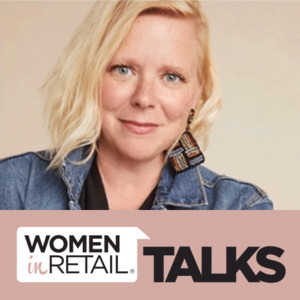
Today, I'm joined by Mindy Massey, the Global Executive Director of Retail at Anthropologie.
She's going to share how she's seen anthropology really transform as a brand in her over two decades there and how she's seen her own role and her leadership style change as well, and then what we can expect from the brand in the future.
So Mindy, thank you so much for joining me.
Thank you for having me.
I'm excited to be here.
Yeah, I'm excited to have this conversation.
I mean, you've had such a long career at anthropology and I want to start with.
You know anthropology is in its 32nd year, if I'm correct.
And so obviously you've been there for the majority of that.
You've seen the brand evolve and change.
Tell us what that looks like.
You know, how have you seen the brand really change over the years?
Well, when I started, we had 15 stores in the United States and are now over 240 stores globally.
I think the most seismic change and something that we navigated in brick and mortar retail was first, the incredible digital explosion.
That was something that was really impactful to our brand.
And then secondly, I would say the impact of social media and the way that our customer interacts with the brand.
I can tell you that our brand learned early on not to separate the customer into channels and to embrace them from an Omni perspective and to be focused on delivering an inspiring experience in both.
From an internal brand experience.
What first drew me in incredible leadership, creativity and celebration of curiosity, the resourcefulness and the authenticity in which our brand operates has remained the same.
So, even though I've been here several years, I feel so fortunate to really work with a seasoned team that has really continued to embrace those core attributes, and one that balances the heritage of our brand with the challenge to refine and evolve as our customer does.
Awesome.
Well, I have lots of questions just from everything you said.
So I want to start with kind of the journey that your customers also went through with, like you said, the explosion of social media, with the digitization of everything you know, e-commerce coming in.
I mean, you saw that happening.
So how did you know where to follow your customers and how did you, how did the brand evolve to make sure that they were meeting the customers in these new spaces?
We definitely had to take a lot of reflection on making sure that we were meeting the customer where they were.
And that's not always a straight line.
I think that the customer is pretty fluid.
Sometimes they want to just be a digital only customer.
Sometimes they just want to go to the stores.
What we can do is make sure that, whichever lane they are in, that we're providing a really great experience in both and embracing them in a way that they feel like they're getting their needs met.
And now you said you have over 200 stores.
What's the percentage of where your customers are now?
Are they mostly shopping e-commerce or are they still shopping a lot in stores?
Definitely our most avid customer is shopping both.
I think that we have a very busy customer.
I think we have a customer that has a lot going on in their lives.
And so it just depends on what they're looking for in that moment.
You know the convenience of obviously, the digital experience, or you know the time to kind of come into one of our stores and interact with us in person.
I know that's kind of been your forte.
I know part of your responsibilities is involving overseeing in-store experiences.
And I feel like retailers are really leaning into those experiences for consumers, in-store especially, as we've seen.
I mean, we were just at NRF and it sounds like stores are really evolving to become front and center again, but in a different way after the pandemic.
So How is Anthro approaching these kind of new in-store experiences?
I believe that the most powerful in-store experience you can have is the building of authentic relationships with your internal and external customer.
You mentioned the pandemic.
Our stores thrive on being part of a community, and that was definitely magnified during the pandemic.
When we reopened our doors after closures, our amazing customers came in with baked goods in hand and really welcoming us back in, letting us know that they had missed us.
We navigated all of that together.
We got through it together and it really just strengthened our role in the community.
I think it's never a wasted moment to emphasize and prioritize relationship building.
In our stores.
That happens by building our brand on a foundation of transparency and trust and mostly on working to provide authentic interactions with our customers every day.
So when I think you know of in-store experience, you know a lot of times people think in really grand ways and we do execute on that in that lane as well.
But I do think it's more that every day, like empowering our store leaders to make decisions to really celebrate the customers, or what are continuing to enhance our in-store experiences.
That's awesome.
I'm sure that the Anthro customers would agree with you.
I mean, I think about you, know you mentioned, something that drew you to anthropology at the beginning was creativity.
And I've always kind of associated anthropology with that word as well.
And I think about, you know, the amazing window displays that you guys are so famous for.
You know, how does that fit with everything you just described?
And tell us the story about, you know, how anthropology really embraced that as kind of their aesthetic.
Well, I like to think of our windows as our curb appeal to our home.
And I think we have some incredible curb appeal, of course, I'm biased.
We have a team of amazingly talented artisans.
I call them our magic makers in our home office, and their process is really inspiring and something to you know.
Just when you see it in action, it's incredible.
They start with an idea and you can watch the path of that idea as it gets enhanced by creative collaboration.
The power of collaboration, as the idea of several you know really evolves and becomes so much better than the original idea, is really amazing.
The team takes very ordinary things and transforms them into something spectacular.
You'd be surprised to learn what some of our windows are made out of.
We also have local artists in every store that bring those ideas to life in their own space and create a special experience unique to that store.
Once you get past our windows.
We want the inside of our home to be warm and inviting, colorful and optimistic and provide an environment for discovery and inspiration, both visually and experientially.
Do you have any favorite window displays over the years?
Oh my goodness.
My favorite is always the last one we just did, because I feel like they just keep making them better and better.
I mean, I think the holiday windows that we just put out were absolutely incredible.
It's really extraordinary to see how our teams are able to transform those ordinary materials.
Yeah.
So I want to talk about you for a little bit.
I mean, you know we talked about the brand and how it's evolved over the years, but How have you and your leadership style evolved over the years?
I mean, you've been there, what, 24 years now?
And you obviously didn't start out as global executive director of retail.
So walk me through kind of your career journey at Anthropologie.
Well, so much has changed.
I always joke to my team that the most consistent thing is in my role, or in all of our roles, is change itself.
That's the most consistent thing that we navigate is change.
When I first started, our offices were in this beautiful home on 17th Street in Philadelphia.
And now we are in this amazing revitalized Navy Yard campus.
My role has had a similar arc.
It's all focused around growth.
Throughout my time here at Anthropologie, I became a spouse.
I became a working parent in my time.
And what I really learned was balance.
I've learned so much as a leader.
I have always led with my heart.
I have learned how to bring vision and strategy to the table, along with heart and the delicate dance of empathy and accountability.
My team has grown with me.
And one thing that has remained ubiquitous for all of us is just having a people-first culture.
So passionate about the people and finding people that are passionate about our brand.
Awesome.
I wrote a lot of that down and I want to kind of hit on a few and get you to elaborate on a few that you said.
You mentioned that you've learned balance, especially as a working parent, as a spouse, as your responsibilities have gotten more and more and your team has grown more and more.
What does that balance look like?
I think a lot of people say like, there is no such thing as work life balance, right?
You're always going to feel guilty when you're prioritizing one over the other.
So what does that balance look like for you?
I know saying the word balance is a lot easier than actually achieving it.
I think that you have to be present in the moment that you're in.
You have to be present in the hat that you're wearing.
I also believe in the quality of time versus the quantity of time.
Being a working parent taught me that I had to be better with the time that I had.
I had to be more efficient.
I had to get to the point.
I also would say that I think mom guilt is a real thing that a lot of working parents experience.
And when I was raising my children and, you know, traveling with work.
It's so interesting to see them, you know, go to college now and say I want to find a job that I'm passionate about, like you are.
I want to be surrounded by incredible people like you are.
So in the process of that, when you're sitting there and you're experiencing the mom guilt, I think you don't have that perspective that your children are going to come out of it and say you know, that's what I want for myself.
And it's so rewarding to kind of get to that point.
It takes a little bit of time.
So you definitely have to give yourself grace in getting there.
Yeah, that's a good reminder.
I mean, all they see is mom so successful, doing what she loves, surrounded by the people that she loves.
And like you said, it's all about perspective.
All of that guilt just kind of dissipates when you look at it from their end.
We have a coworker here who always says and she's a working mom and always says you know, be where my feet are, because she too really struggled at the beginning with.
You know, I love my work so much, but when I'm at work I want to be with my kid, and vice versa.
So be where your feet are is always a good mantra that I stick by.
And you have to let yourself have those moments.
I think when you're feeling a certain way really strongly, you have to let yourself be in that moment and not have the guilt yourself that you're maybe shutting down one side of all of the different things that you're navigating.
And I think you mentioned empathy.
Seeing a leader like you, who is a working parent, who is showing vulnerability and saying look, I experienced this too.
You are not alone here.
I think, you know, that's part of why we have this whole community at Women in Retail.
We have so many women that say, like I thought I was alone in this, but it turns out all of these women are experiencing some version of what I am, whether it's parent guilt or dog parent guilt.
I think it's great that we have leaders in retail that are women, that are not only experiencing this but being courageous enough to say what they are feeling.
And I'm sure that your team sees that in you.
It's allowing yourself to be vulnerable and being able to come to the table and have those conversations of when you're not feeling totally in esteem that I think really can help you through those moments and finding people that you really can be partners with you on that journey.
Yeah, and I'd be curious how you are with your team.
I mean, you mentioned empathy and accountability.
And I think, you know, 2023 especially was the year of the empathetic leader, right?
We saw that word a lot and we saw it reflected in the female leaders that we had here.
So how do you see yourself leading with empathy?
I think that...
When people are looking for empathy, they're truly looking for someone to just see them for who they are and see the human sides of all of the things that they're navigating.
And sometimes that just takes an extra step.
I think that we're all navigating a day where we have so much going on and so much to do.
I often find that if you just pause for a second and take the extra step to have a conversation with someone, whether it's about understanding what they're navigating, allowing them to share, if you're having a moment of just recognition or reflection,
Like creating that space where people can really just be themselves and feel like they're allowed to be vulnerable.
They're allowed to share their real problems so that you can come up with real solutions.
And it doesn't always have to be great.
You will get there.
You'll get to the great, but it's not always.
You know, it's sometimes a process to be able to get there.
And clear is kind, as I think Brene Brown says all the time.
Yes. you know, you can be clear.
And you know, as long as you're sending the message out in a way that is kind, I think you're going to get to what, the essence of what you just said.
So I always talk about, my team always hears me talk about, I say grace, space and place.
Sometimes you just have to one give yourself grace, give other people grace, look at intent, you know really, make sure that you're taking that moment to not just take everything at how you're interpreting it.
To look at that, giving people the space to connect and then place like making sure that people have the right platforms, that they feel like they can have that time.
You know, if you're saying to someone, I'm going to give you time, but then you're you're busy doing something else while you're giving them that time, they're not going to feel valued in that way.
So I always just remind myself, you know and my team, grace space and place, like just hit those things.
And it's a good quick reminder that somewhere in there is probably the answer.
I love that.
And I think we talk a lot on this podcast about creating a safe space when it comes to culture at work.
So it's, I like that it's alliterative and I like that it includes space there in place.
So thank you for sharing.
That was really great advice.
So we're wrapping up a little bit, but I want to make sure I hit on a couple more things.
Looking back over your career, you were able to grow in your role and increase the amount of direct reports that come to you.
So, when you're speaking to the next generation of female retail leaders, What should they be focused on if they want to advance their career in the way that you did?
I think what I've learned is that retail moves very fast because of all the moving parts.
One of the things that I have learned is the value of balancing when to react and when not to react.
I always used to be reacting, just like moving, moving, moving.
Sometimes things have to happen quickly, of course, but perspective is always a gift.
I call this like mentally always allowing yourself to take a lap before you react, because the first step is gonna send you down one path versus another.
So you have to make sure that that first step is the right step.
And if you're always just reacting in the moment, you're gonna lose a little bit of that.
So I always make sure that you know, As we're taking the time to ensure that we're solving one challenge, that we're not creating another.
Another thing that I really learned in my time as a leader is just where strength actually comes from.
Strength comes more from failures than successes.
So as uncomfortable as it can be, you have to take the time to marinate in your failures.
You'll learn so much more about yourself and you're able to build the next idea differently.
You're able to build it better.
And ultimately, you become stronger.
And then I think, for your question about the next generation of female retail leaders, I think something that's really important is the value of feedback.
I know that feedback at times can seem overwhelming.
So one thing I always remind myself is that this is actually feed forward.
It isn't about the past.
Feedback is actually integral on the path forward.
If you change your perspective on feedback, there really is so much more benefit and there's so much more clarity to it and you're able to actually absorb it and apply it and move forward.
It's wonderful to be able to have a support system.
I feel fortunate that I have had one both personally and professionally.
However, sometimes you have to be your own hype person.
Sometimes you have to just look in the mirror and say to yourself and you're doing a great job, give yourself some positivity and balance that with taking the time to fill your own cup.
I think if you're doing that and you're consciously making time to do both of those things, you can get through anything.
Yeah, and that kind of ties back to what you said at the beginning, react versus not react.
I know me personally and we've talked about this on the podcast before as well the tendency to react quickly to feedback and especially react negatively and get defensive.
So I like that your answer all tied everything together very succinctly.
So I appreciate that.
I think you're able to really hear it then, when you just are maybe taking a deep breath and giving yourself a moment to actually hear what's being said to you and thinking this person's taking the time to actually give me something that's going to make me better in the future, versus the defensiveness of the past behavior.
Yeah, I've started to say at work, you know, I'm processing things.
Because I'm an introvert and so like I process first and then I respond right, versus like I think extroverts do the opposite.
So now I'm like actively vocally saying, I need to process this.
Give me a minute, an hour, a day, and I'll circle back with you.
So I want to close out by asking you, what's next for Anthropologie?
Any new store openings in 2024?
What can we expect?
We recently opened several new stores around holiday, and it was absolutely incredible.
Two of our new stores were in Bend, Oregon and Wilmington, North Carolina.
We had hundreds of people waiting in line, cheering us on when we opened our doors.
It was so humbling and so rewarding.
We have a wonderful year ahead of us expanding into new communities globally.
So, so excited to be out there and meet more of those communities across the world.
Well, I think we're going to wrap it up there, but I really enjoyed this conversation.
Thank you so much for being vulnerable with me and sharing.
And I can't wait to see what anthropology comes out with in the next year or so.
I really appreciate being here.
Thank you so much for allowing me to share.
Thanks for listening.
For more information on this podcast, please go to women in retailcom.
Slash podcasts for show notes.
Women in retail talks is available on Apple podcasts, Google podcasts, Stitcher and Spotify.
Make sure to subscribe on our podcast channel page as well.
If you've enjoyed this episode, please take a few moments to rate and review our show.
Lastly, if you're a female retail leader interested in joining our community at Women in Retail Leadership Circle, visit womeninretailcom.
Slash apply.
Thanks and until next time, this has been Women in Retail Talks.