Carvana is so easy.
Just a click and we've got ourselves a car.
See?
So many cars.
That's a click-tastic inventory.
And check out the financing options.
Payments to fit our budget.
I mean, that's Clickonomics 101.
Delivery to our door.
Just a hop, skip, and a click away.
And bought.
No better feeling than when everything just clicks.
Buy your car today on Carvana.
Delivery fees may apply.
This is the story of the one.
As the purchasing manager at a manufacturing plant, she knows the only thing more important than having the right safety gear is having it there when you need it.
That's why she partners with Grainger for auto reordering, so her team members can count on her to have cut-resistant gloves on hand and each shift can run safely and efficiently.
Call 1-800-GRAINGER, click Grainger.com, or just stop by.
Ranger, for the ones who get it done.
Hello, my lovely learners, and welcome to Easy Stories in English, the podcast that will take your English from OK to good and from good to great.
I am Ariel Goodbody, your host for this show.
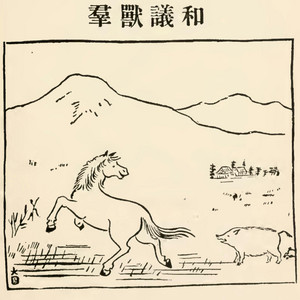
Today's pre-intermediate level story is called The Animals' Peace Party.
As always, the transcript and PDF are available at easystoriesinenglishcom and you can find the link in the description.
Today's story is also adapted from Chinese fables and folk stories by Mary Hayes Davis and Chao Lang.
I say also because we had another story from this collection... which I have forgotten the name to.
One second.
How the Moon Became Beautiful.
That is the episode that I made also based on this collection of stories.
So as you can see, my memory is functioning very well.
I have a brilliant memory.
And it's even better than normal because last night I went out for my friend's birthday party.
We did karaoke and obviously drinking alcohol really makes your memory stronger the next day.
Also, if my voice sounds a bit hoarse H-O-A-R-S-E like hoarse horse then maybe that's because it's the year of the horse.
H-O-R-S-E.
It's the year of the horse, so I sound horse.
What a terrible joke.
Or maybe it's because I was drinking last night.
Who knows?
Anything is possible.
Okay.
I'll just explain some words that are in today's story.
Filthy means very dirty.
If a child goes out and plays in the mud, they will come home filthy and their mother will probably not be happy.
If you go inside a restaurant and it is filthy, you probably won't want to eat there, as you might get sick.
Someone who is greedy, G-R-E-E-D-Y, wants to have lots of food or lots of money.
Often, children are greedy and always want to eat more food and sweets.
Hmm.
I can't understand this.
I never want to eat lots of food and sweets.
Maybe they steal food from other children because they are so greedy.
Usually when adults are greedy, it means that they want more and more money.
Money.
Delicious.
A dispute.
Dispute is an argument, a disagreement between people or organisations.
Disputes can last a long time, so it is a good idea to settle disputes.
People might settle a dispute by talking about it and finding a compromise.
And countries settle disputes in a similar way.
It's just, it's much easier to get two normal people who have had an argument in a room to talk than leaders of two countries that have been at war.
For example, a master is someone who has people who work for them.
In the past, many people had servants or slaves, and these people were the masters of their servants.
In this story, the master is the owner of the farm where all the animals live.
Amongst, A-M-O-N-G-S-T, means among, between. in the middle of.
We often use it in the phrase talk amongst yourselves.
For example, if you are about to give a presentation but you're having problems with the computer and you're not ready to start, you might say talk amongst yourselves while I fix this.
It basically means talk with the people around you.
A farmhand is someone who works on a farm.
Farmhands are usually people doing manual labour, such as feeding the animals, cleaning their areas and so on.
When you favour someone, F-A-V-O-U-R, you prefer them.
You give them better treatment over others.
This is where the word favourite comes from.
As a teacher, I shouldn't favour one student over others. but it's sometimes difficult.
Some of them are just funnier and cuter than others.
It's especially bad if a parent favours one child over another.
This was common with kings in the past.
They would usually favour their firstborn son over the other's.
Wisdom, W-I-S-D-O-M, means being wise, being able to make good judgments and understand difficult ideas.
Many people can be intelligent, but wisdom is different.
Wisdom means you are also good at judging people and situations.
For example, Mufasa from The Lion King is very wise.
He teaches Simba many lessons about the world.
That is wisdom.
The teeth at the back of your mouth that only come up when you're an adult are called wisdom teeth, because you get wiser as you get older.
Usually.
Anyway, wisdom teeth often cause problems and have to be removed.
So that's not very clever, is it?
A squeal, S-Q-U-E-A-L, is a high-pitched sound that some animals make.
Pigs squeal.
And so do guinea pigs.
But guinea pig squeals are much cuter than regular pigs.
Okay, so listen and enjoy.
The Animals' Peace Party Pigs are the filthiest and greediest of all animals.
This is known everywhere and in this story it is no different.
Once there was a farm full of animals. and the horses and cows decided to throw a party.
Although the pigs were filthy and greedy, the horses said Let's invite them and take it as a chance to settle our disputes with them.
Perhaps we could even become friends.
We can call it a peace party.
Generations of pigs have broken into our land, taken our food, drunk our water, eaten our grass.
But it is also true that many young cows and horses have hurt the pigs.
The master does not like us fighting, so let us throw this peace party and settle our disputes once and for all.
Yes.
It is a good idea, said the cows.
So the animals discussed who should be their leader and they chose a very small, kind cow.
The next day, the leader cow went to the pigs to invite them.
The pigs were playing in the dirt and they were filthy.
When they saw the cow, the young pigs jumped up and grunted at her.
What do you want? they squealed.
You here to fight?
No, said the cow.
I am here to invite you to a party that we and the horses are throwing.
Please let me know if you will come.
It will be a lot of fun.
Hmm, said a pig.
We need time to think.
Go away. and we'll let you know what we decide.
So the cow left, and the pigs talked amongst themselves.
What kind of party do you think it will be? said one pig.
Cows are no fun.
Let's not go, said another.
No, said a third.
Just think, it's a party.
At parties there are food.
The cows and horses often have good food.
We can go and eat as much as we want and then go home.
I'll go and let them know, said an old fat pig.
The other pigs all agreed.
This pig was a good talker and many of the cows were scared of him.
So he went and told the cows and horses that the pigs would go to the party.
When the day came, it was a huge celebration.
300 animals all together.
There was food and drink and everyone was laughing and dancing.
The pigs ate greedily, but everyone was happy.
It seemed like this peace party might actually work.
Finally, the moment came to talk.
The leader of the cows, that small kind cow, came forward and spoke.
We will be honest, pigs, said the cow.
We have not just invited you here to celebrate, but also to make peace.
We are tired of disputes on the farms.
Can your people stop breaking into our land, taking our food, drinking our water and eating our grass?
We will then make sure our young cows and horses do not hurt your people.
Our troubles will be forgotten and we will finally have peace.
The horses smiled kindly.
Surely the pigs could not say no to this argument.
But it was the old fat pig who got up to speak.
This land does not belong to you, said the pig.
This land belongs to the master.
Do you not understand?
We cannot go anywhere else for our food.
Every day the master sends farmhands with food to us, and sometimes he sends us to your home to eat your food.
Every day the farmhands clean our home, and in the summer they give us fresh water to bathe in.
So, friends, can you not see?
This land is not our land, it is the master's.
He chooses what we do, and he has decided that we should eat your food after you are finished.
We only eat the food that you do not eat, and if we did not eat it, then it would go bad.
The pigs all made sounds of agreement.
One of the horses tried to speak, but the old fat pig continued.
And answer me this, have our people ever hurt your people?
No, yet every year your young cows and horses kill some of our pigs.
What is worth more, food or life?
Food is nothing if you are dead.
Besides, the master does not send us to do work.
The master favours us.
He sends you cows and horses to work every day of the year, even when you are sick.
But we are allowed to play as long as we want.
He does not favour you in this way.
You may think it is unfair, but who are we to say?
The master lets us grow fat and happy.
You never see our bones.
Now look at some of your horses.
Nothing but bone.
Friends, have you any questions?
I think not.
Everything I have said is true.
The master favours us and the master knows best.
Let us not question his wisdom.
The horses and cows looked at each other.
They did not know what to say to the pig.
It was true that the master knew much more than they did, and they always did what the master told them.
The small, kind cow sighed.
Thank you for coming to our party, she said.
The pigs left and the cows and horses spoke amongst themselves.
I do not understand, said one horse.
We are stronger, wiser and more useful than the pigs.
Why does the master not favour us?
My friends, said another horse, the master is wiser than us.
If we cannot understand his wisdom, so be it.
He favours the pigs, it is true.
Let us forget our disputes.
It will soon be the new year, said a cow.
May all pigs live happily in this world.
But the cow did not sound very happy.
Meanwhile, the pigs were walking home, squealing all the way.
We won!
We won!
We won!
They squealed.
The old fat pig did not squeal.
He did not have the energy.
But he was happy.
He had many long days of eating and playing ahead of him.
After all, That was what the master wanted, wasn't it?
The end.
Ooh, what does it all mean?
I will be honest, when I first read this story, I was not sure of the meaning of the story.
I didn't quite understand what the message was.
The collection of stories has like little messages at the ends of each story that tells you the meaning of them.
But this one was really unclear.
Why don't I read it to you, actually?
Why have some more power than others?
Only one knows.
Why have some longer life than others?
Only one knows.
Why do some try and not succeed while others do not try and yet they do succeed?
Only one knows.
Now, I just realized, actually, this is ambiguous because to me, only one knows implies that, yeah, there is one person who knows everything. the answers to all these questions and i guess it's implying that that person is the master you could read into this in a christian way right that the master is god but given that this is a chinese story i would be very very surprised if that was the interpretation But then again, maybe the American woman who wrote these stories down kind of changed the interpretation to make it more Christian.
On the other hand, this could be an old fashioned way of saying one only knows.
One only knows means we don't know.
Right.
Like it's impossible to know.
Like, oh, why do wars happen?
One only knows, right?
When we say this, we mean there is no answer.
It's just the way of things.
So maybe only one knows is a variation of that expression.
In which case, this is saying we don't know the meaning to anything, which is very, I guess, Taoist.
It's more kind of Chinese philosophy.
So maybe that is the meaning of this story that we just don't know why the master favours the pigs over the cows and horses.
So it was quite difficult to adapt this story because obviously I didn't want to change too much and change the meaning, but then I wasn't really sure what the meaning was.
So
I'm curious to hear your interpretations.
What do you think the message of this story is?
Please leave a comment on Spotify, on YouTube or easystoriesinenglish.com.
As you listen to this episode, I will not be in China.
I will be in Cambodia on a holiday with my parents.
So I hope you enjoy this wherever you are listening from.
And look forward to the next episode in two weeks.
Bye-bye.
One in four taxpaying Americans has paid the price of identity fraud.
What do I do?
My refund, though.
I'm freaking out.
Don't worry.
I can fix this.
LifeLock fixes identity theft guaranteed and gets your money back with up to $3 million in coverage.
I'm so relieved.
No problem.
I'll be with you every step of the way.
One in four was a fraud-paying American.
Not anymore.
Save up to 40% your first year.
Visit LifeLock.com slash podcast.
Terms apply.