This BBC podcast is supported by ads outside the UK.
Listen now, wherever you get your BBC podcasts.
I'm Paul Moss, and at 4.30 GMT on Monday 15th December, these are our main stories.
Australia's Prime Minister has promised to crack down on anti-Semitism after Sunday's deadly attack on a Jewish festival in Sydney.
Chile's new far-right president-elect, José Antonio Cast, has promised to restore respect for the law after winning Sunday's run-off.
And one of Hong Kong's leading pro-democracy activists, Jimmy Lai, has been convicted after a high-profile trial.
Also in this podcast, the US envoy on the Russia-Ukraine conflict says there's been progress during talks in Berlin with President Zelensky.
And... It is thrilling to be alive.
It's great.
Life is to be lived as long as you possibly can, it seems to me.
The British actress Helen Mirren talks about life in Italy and saving olive trees at the age of 80.
MUSIC
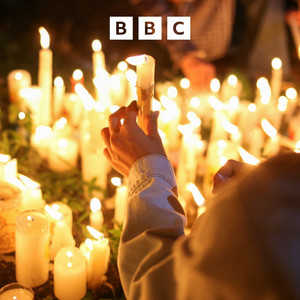
Condemnation continues to mount in the wake of the Bondi Beach shooting in Australia.
Politicians around the world perhaps struggling to find adjectives to describe the cold-blooded murder of 15 people, which police say was carried out by a father and his son.
Pure evil was what the Prime Minister Antonio Albanese called it.
The US Secretary of State Marco Rubio called it horrific.
But others suggested the killings were all too predictable because anti-Semitism, they said, had gone unchecked.
That subject of anti-Semitism was addressed by, among others, the New South Wales Premier, Chris Minns.
There is no tolerance for racism or Jewish hatred in New South Wales or Australia, and we need to be clear and unambiguous that we will fight it everywhere we see it.
It is toxic, it is cancerous within a community and, as you can see from last night, it leads to devastating, devastating implications for the people of our country.
It's two years since Australian police launched what they called Operation Shelter.
That explicitly aimed to deal with issues of public safety in the country which might be sparked by the conflict in Gaza.
Speaking on Sunday, the New South Wales Police Commissioner, Mal Lanyon, said Operation Shelter would now be stepped up.
We will make sure that we are highly visible at places of worship, places that are known to be frequented by the Jewish community, but very much in those suburbs where we know that we have a large Jewish population.
But for some, this is all too late.
Among those who've already assigned blame for the shooting is the Israeli Prime Minister, Benjamin Netanyahu.
He said he'd written to his Australian counterpart in August telling Anthony Albanese that recognising a Palestinian state would encourage anti-Semitism.
He claimed the Bondi Beach shooting was a consequence of that decision.
And there were similar sentiments expressed by Levi Wolfe, rabbi of the Central Synagogue in Sydney.
He too seemed to complain that the government had been too tolerant of prejudice.
Inevitably, when antisemitism goes unchecked, these are things that happen.
And we are now seeing the dreaded, inevitable result of antisemitism doing exactly what it has done to our people just a generation ago.
Rabbi Wolff was also one of the many Australians who said they'd already taken precautions out of fear of an attack.
Schools, for example, discouraging pupils from wearing anything which identified them as Jewish.
And the Sydney-based journalist, Amy Leibovitz, said she had specifically avoided going to the Bondi Beach event out of fear of what might happen.
A week prior, I was having a conversation with my mum.
We normally attend the open Hanukkah festivities.
There's one in my local area in the North Shore.
There's also one in Bondi.
It happens every year.
And we were discussing, do we go, do we not go?
And I said to my mum we shouldn't be going because there's a high risk of terrorism, that something could happen.
So we actually changed our plans out of fear of what could happen.
And it just felt so frustrating and upsetting that this is the outcome.
So could the attack have been predicted and indeed prevented?
My colleague Stephen Nolan has been discussing this issue with Dr Josh Roos.
He's a politics professor at Deakin University in the Australian state of Victoria and says threats against Jews have been growing and from different sources.
In recent weeks there's been significant targeting of the Jewish community from the extreme right neo-Nazis.
And there's been a prevalent and existing threat from jihadist elements within Muslim communities as well.
Particularly since October 7, the increase in anti-Semitism in Australia has been exponential.
This has played out in a number of ways.
It's been through the protests.
People have a right to protest against the war in Gaza, of course.
However, wrapped up in that has been significant targeting of Australian Jewish communities and, in particular, targeting of local Jews in terms of shops.
We've seen the Iranian ambassador expelled here in Australia due to their involvement in targeting synagogues, as well as a number of other threats on a daily basis to Jewish communities.
And that has been, to some extent, not dealt with adequately by the Australian government.
Whilst they've appointed an anti-Semitism envoy, for example, they haven't implemented any of the findings from the envoy.
There's been a refusal to countenance the severity of the threat and it's been framed in some quarters as Jewish Australians whinging and making a mountain out of a molehill.
This isn't as bad as they're saying and we clearly know now that it is.
Do you expect many other cells to be active in Australia?
This has been ongoing for a prolonged period of time.
Australia 10 to 15 years ago, during the Islamic State, produced more foreign fighters per head of population than any other Western country.
This isn't an issue with the Muslim community, but it is an issue with radicalised elements, particularly young second and third generation Australian Muslims, who are unfortunately able to be radicalised online, but also through current events.
To that extent, this has been an ongoing issue.
And unfortunately, authorities have to balance this with what's going on with the extreme right.
We have a significant neo-Nazi threat now in Australia, with many of these movements are individuals targeting Jewish communities for threats online and abuse and harassment.
And so Australia's Jewish communities are being effectively wedged between neo-Nazis and Salafi jihadists, on the other hand,
And keeping an eye on that threat from the Australian government level is not only incredibly resource intensive but deeply challenging.
And you mentioned that the Australian government hasn't done enough.
What more should they have done before now?
The Australian government has attempted to play this off as another form of racism.
For example, in appointing the anti-Semitism envoy when Australians were communicating their challenges and the rapid increase in the hostility that they were facing.
They felt a need to balance this out by appointing, for example, an Islamophobia envoy.
That when the anti-Semitism envoy has released findings, they've failed to engage adequately with what that actually meant and to actually implement those findings.
Dr John Roos.
In the aftermath of the attack, police have provided more information about the shooters.
The father was foreign-born and arrived in Australia in 1998 on a student visa.
He legally owned several guns and was a member of a shooting club.
He died at the scene.
His 24-year-old Australian-born son is in custody.
What's become clear is the sheer scale of the shooting and the fear it caused, not just among those attending the Hanukkah event, but hundreds of others nearby sent running for their lives.
At the time I was just on my sofa and I just heard the poor sound like fireworks going off, and it was multiple, multiple going off.
So I sort of opened the blinds to see what was going on and I just saw an older lady get shot and she was on the floor.
Saw an older guy get shot very badly injured on the left-hand side, and I just saw a bunch of people screaming around towards me.
I didn't know what was going on.
They were just shouting, you know, get cover, get cover.
So I ran to my front door, put the lock on and then ran to my bedroom, put the blinds down and just took cover in my wardrobe.
I was out at the restaurant over there and I was just serving some I think I was taking away some dishes.
But I was nearby the front and you know I heard these shots go off and the whole shop just like stood up and we all just ran into the back exit.
Everyone was pushing everyone, there was no semblance and we just ran in for it.
For the latest on the situation in Sydney, I spoke to our correspondent Phil Mercer, who described a beach scene almost unrecognisable from its normal appearance and mood.
I'm stood on a grassy bank, overlooking Bondi Pavilion, which is ordinarily a hub for the community.
Today, it is a makeshift memorial for the victims of the Sydney shooting on Sunday.
Flowers are arriving every single minute, by people coming down to pay their respects and to have a brief moment of thought and calm in this sea of chaos that erupted here.
It is beyond this particular bit of park, very quiet.
Bondi Beach mostly has been shut down by the police.
And, as you would imagine, just a short walk away, the crime scene is still being poured over by forensic officers.
And there is a very heavy police presence here as well.
Phil.
We've heard there people blaming the Australian government for supposedly not doing enough to tackle anti-Semitism, and also this intervention from the Israeli prime minister, claiming the attacks could be linked to Australia recognising Palestine as a state.
I wonder how you think that's going to go down in Australia?
Well, we've just heard a press conference a few meters away from two senior members of the local Jewish community.
And they were saying that this is a day that they've been dreading.
And this was their nightmares coming true, because of this wave of anti-Semitism that has swept across Australia since the attacks on the 7th of October and the start of Israel's war in Gaza.
And there is criticism in certain quarters that the Australian government has not done enough to try to turn back that tide of anti-Semitism.
Has there been any reaction to those allegations or is it too soon?
I mean particularly.
I was thinking of what the Israeli prime minister had to say, apparently directly blaming, it seemed, the Australian prime minister.
Yes, Anthony Albanese has sidestepped that particular issue, indicating that it's far too early to get involved in that sort of politics.
But certainly Australia's response to anti-Semitism will come under greater scrutiny.
Mr Albanese has said in the last 24 hours that his government has taken the issue of attacks on synagogues, on cars, on restaurants very seriously.
But of course What happened here will draw once again intense scrutiny on the government's recognition of the Palestinian state and also its response to anti-Semitism.
We've told that the older of the two suspects was a licensed gun holder.
And what strikes me is that Australia is often praised for having very tight gun control laws, tight restrictions on who gets to own a gun.
Presumably there's now going to be questions raised about whether those laws really work.
Well, we heard from the New South Wales state premier, a man called Chris Minns, and he is suggesting that those gun laws could well be revisited.
This is Australia's worst mass shooting for almost 30 years.
In 1996 35 people died at a place called Port Arthur on the island state of Tasmania.
That prompted sweeping gun control measures.
And once again, with an atrocity like this in a place like this, at a political situation like this, you'd have to say that further scrutiny of Australia's gun control measures will be an inevitable consequence of this.
Phil Mercer in Sydney.
And since I spoke to Phil, the Prime Minister, Antony Albanese, has said he will pursue tougher gun laws.
The choice in Chile could not have been more stark.
When voters went to the polls on Sunday, they had two candidates for president.
On the one hand, a communist.
On the other, a man usually described as far-right.
José Antonio Kast is the son of a German Nazi party member, and he's expressed admiration for Augusto Pinochet, the country's one-time dictator.
He's promised to crack down on crime and deport illegal immigrants, and that apparently has paid dividends at the ballot box, giving him victory by what seems to be an unexpectedly high margin.
The Communist Party candidate, Jeanette Jara, was quick to concede.
I want to tell you all that today, democracy has spoken loud and clear.
I contacted the president-elect, José Antonio Kast, to wish him success for the good of Chile and all the people living in our country.
In a victory speech in Santiago, Mr. Kast set out his priorities for office.
We are going to restore the rule of law.
We are going to restore respect for the law in all regions, without exception, without privileges.
No political privileges, no administrative privileges, no judicial privileges.
Because it is the citizens we must serve, not those who hold positions of power.
Our South America correspondent, Ione Wells, has been following the election and she gave me this update from the Chilean capital, Santiago.
It's very clear at this point that José Antonio Acast is going to be Chile's next president.
He won decisively with more than 58% of the vote in his third attempt at running for president.
Earlier I was in a crowd of his supporters where they had gathered to watch the results come in in Santiago, many of them draped in Chile flags, some wearing red caps saying make Chile great again.
They were cheering and chanting when that result came through.
Some of them told me that they had been waiting for this moment for years, given his previous attempts to run for president.
It is now very clear that he is going to be inaugurated as the next president on the 11th of March next year.
He has set that as a deadline in his rallies throughout this election campaign for irregular migrants to leave the country if they ever want the chance to get back in again.
He has made it very clear that his top priority, now that he has been elected president, is to crack down on what he sees as a rise in irregular migration, but also on crime and general security issues in the country too.
It's only four years since Chile voted for the previous president, Gabriel Boric, and he campaigned on a pretty left-wing ticket high taxes for the rich, focus on environmental issues.
Now the country's voted for someone described as far-right.
I mean, what has changed?
I think it's a really interesting question and there are different factors behind this.
Some see the so-called sort of fall in Boric's popularity as being due to some early mistakes.
He tried, for example, to introduce a new constitution.
It was rejected by voters in 2022.
Some of the public perceived the new constitution as too radical and that damaged, I think, some of the government's sort of political capital as well.
Then there was the emergence of this increasing concern about security issues in the country.
Chile is still one of the safest and more stable countries in the region, but there has been a growing perception of crime, particularly organized crime, growing.
Immigration has risen in the country since 2017, and certainly right-wing candidates like José Antonio Kast capitalized on that.
They made this link, blaming immigration for rising crime, even though some studies suggest that actually foreigners in Chile on average commit fewer crimes than Chileans.
But certainly this became an issue that really, I think a lot of voters were very incensed by really going into this campaign.
Gabriel Boric did introduce some sweeping new measures, particularly welfare measures.
He raised the free health care for some of the poorest Chileans, shorten the working week.
So there were various policies that he did manage to pass through.
But I think one thing that was clear on this election campaign was some voters didn't feel like the current government was serving them well enough.
They wanted to see change.
And for them, Cass represented that.
Now he has, as I said, won by a wide margin, but that still leaves an awful lot of people who voted for a communist and a country which, I guess, seems to be very polarised.
That's right.
And I think what was interesting, speaking to some voters at the ballot boxes, some of them were saying that they felt quite disenfranchised by what they saw as quite an extreme choice.
They didn't like the far right rhetoric of José Antonio Kass, but also didn't particularly like the idea of someone who is a member of the Communist Party, even if she had tried to position herself more to the centre left in recent months as she tried to appeal to a wider audience.
I think that did leave a lot of voters feeling quite disenfranchised and feeling like they had to vote for whichever they saw as the sort of better of two options they didn't particularly like.
But I think you're right to suggest that there will be polarisation now going forward, particularly when it comes to the issue of migration, with critics saying that it needs to be reduced supporters though, saying that migration is absolutely crucial for Chile's workforce.
Ione Wells in Santiago and we have some breaking news that's come in just as we record this podcast.
Police in Los Angeles say they're investigating the deaths of two people whose bodies were found at the home of the film director and actor, Rob Reiner.
The two victims have not been formally identified, but Reiner's family say that he and his wife Michelle Singer Reiner, are dead.
Ryan is known for directing such classic films as When Harry Met Sally, The Princess Bride, and This Is Spinal Tap.
The BBC will have more on this story as it develops.
You can visit our website at bbcnews.com for updates.
Still to come on the Global News Podcast... It's really one of the natural wonders of the world.
After decades, it suddenly produces what we would call the largest inflorescent flower-bearing structure in the plant kingdom.
The giant palm tree in Brazil that only blooms once in its lifetime.
Exposing an online fundraising scam which exploits sick children and their families.
I don't understand how they could do this to us.
Raise funds for their own benefit.
We did everything he asked us to do so that we could get the help that we needed.
I felt cheated and taken advantage of.
World of Secrets, the child cancer scam from the BBC World Service.
Listen now wherever you get your BBC podcasts.
The verdict of the Hong Kong court was hardly a surprise, but still a desperate blow for Jimmy Lai and indeed for his many supporters.
The newspaper publisher and later pro-democracy activist, has been accused of sedition and colluding with foreign forces, all in breach of the territory's harsh national security law.
Of those who've been prosecuted under these laws... few have ever been acquitted.
The judge in this case said there was no doubt that Jimmy Lai harboured hatred for China and was a national threat.
Our correspondent Danny Vincent was in court for the verdict.
Jimmy Lai has been seen as one of the most outspoken critics of the Hong Kong authorities and the Chinese authorities for many years.
When the national security law was introduced in 2020, Jimmy Lai was quickly arrested.
He was detained and he's been in prison ever since.
Now the authorities accused him and have now charged him of colluding with foreigners and an act of sedition.
When it comes to colluding with foreigners.
The judge went through many of Jimmy Lai's WhatsApp messages messages with one of his colleagues where he attempted to organise meetings with US officials in America.
Now, according to the judge, according to the ruling of the court, Jimmy Lai meeting with these officials has been part of the evidence that they've used to find him guilty of colluding with foreigners.
Now, as you mentioned, Jimmy Lai has already been in jail.
I think it's five years so far, and he's reported to be in poor health.
How did he look in court?
Well, Jimmy Lye has been reported to be in poor health.
His family members have raised many concerns.
They've said that when they've met him, his fingernails have fallen off.
They've also spoken about the poor condition of his skin.
We know that he has diabetes and also has had a heart condition.
So there have been many concerns about his health.
In court today, Jimmy Lye was in relatively high spirits.
He was smiling.
He also waved to his family.
Many Hong Kong residents lined up through the night to try to get to court to see this verdict.
Jimmy Lai has been in prison for many years.
The trial officially started two years ago, but he's been detained for five years.
It's now possible that he could face life in prison.
Sentencing is to follow, but what we know today is that Jimmy Lai is guilty of all the charges.
And the verdict came just a day after Hong Kong's last pro-democracy political party shut down under duress from China.
They said, I just wonder where that leaves the pro-democracy movement in Hong Kong.
Well, critics say that the pro-democracy movement has been decimated by the national security law.
Many of the opposition leaders have been detained.
Many have fled.
Many young people that took part in the protests, many of those people have left Hong Kong.
Many people have faced imprisonment.
So critics will say that the democracy movement has been essentially destroyed by the national security law.
The authorities wouldn't agree.
They would say Hong Kong is still a a free and open society.
But today many people in Hong Kong seeing Jimmy Lai is now guilty.
They might question otherwise.
Danny Vincent.
When it comes to the war in Ukraine, Donald Trump has complained that European politicians spend too much time just talking.
But in fact his own emissaries have also spent plenty of time talking to the parties in this conflict.
The latest talking took place in Berlin on Sunday, when the US envoy, Steve Witkoff, and Donald Trump's son-in-law, Jared Kushner, met with Ukraine's President Zelensky, as so often in the past,
The US delegation insisted that progress had been made.
Europe editor Katja Adler is in Berlin and says the US certainly wants that to be the case.
Donald Trump is getting really impatient.
His administration recently published its national security strategy, where it prioritises stabilising US relations with Moscow.
So ideally, Donald Trump really wants an end to all of this.
But Ukraine is refusing to roll over.
Vladimir Zelensky here in Berlin today said, yeah, he's willing to compromise on some things.
He's no longer insisting on NATO membership as part of a peace deal, but he is insisting on getting Karstein's security guarantees from his allies, including the US, to make sure that Russia doesn't invade again.
Now.
Talks here with US negotiators were so intense that we're told they're going to roll over into tomorrow morning.
And I tell you who else is coming here tomorrow, of big European names Emmanuel Macron of France, Sakhir Starmer, the Danish, the Swedish, the Dutch prime ministers I'm told the Polish prime minister, NATO secretary general, all of them, to hold Volodymyr Zelensky's hand.
No, it's because they are convinced this isn't just about Ukrainian sovereignty going forward.
It's about the future security of Europe.
The host of this meeting, the German Chancellor Friedrich Merz, says this is a Russian war of aggression against Ukraine and against the rest of Europe.
These European leaders are worried that if there is a peace deal that's too soft on Russia, then Vladimir Putin will come back for more.
And while this diplomatic ping-pong continues, of course, so does the war on the ground in Ukraine, claiming more and more lives.
Katja Adler in Berlin.
There's a new site in Rio de Janeiro that's pulling in the crowds, a giant palm tree.
What's so special, you may ask?
Well, this particular species is native to southern India and Sri Lanka and was replanted in the Brazilian city 60 years ago.
And all these decades later, the tree is for the first time producing flowers.
Professor Bill Baker is an expert on palms at Kew Botanic Gardens in London.
It explained why this tree, and indeed its sudden transformation into bloom, is so special.
It's really one of the natural wonders of the world.
It is an absolutely immensely enormous palm tree.
It has a trunk that can be almost a metre wide and it shoots up a stem of about 25 metres with a crown of massive fan-shaped leaves.
Each of those leaves is about five metres in diameter.
And then it has this astonishing flowering strategy whereby, after decades of just growing trunk and leaves, it suddenly switches over to reproduction and produces what we would call the largest inflorescence or the largest flower-bearing structure in the plant kingdom.
And it does it just once.
So it's a fatal effort.
We think it's a strategy, probably to deal with the fact that it grows in relatively disturbed environments.
So by producing massive amounts of flower and then seeds all in one explosive effort, you have a higher chance of colonising these disturbed environments in which it lives.
The really amazing thing about it is that When it's in full flower, we think the whole thing contains as many as 24 million flowers.
It's absolutely mind-boggling.
Palm tree expert Professor Bill Baker.
In her six-decade-long career, the British actor Dame Helen Mirren has won many top awards an Oscar, Golden Globes, five Emmys and a Tony Award for roles too numerous to mention.
But you probably haven't seen or heard her like this before, unless you live in Italy.
Good morning, miss.
Excuse me, could you show me the way to the cave without light?
Without light?
It's there, it's there.
Ah, okay.
It's very far from here.
So go right here, then immediately to the left.
Excuse me, are you vaccinated?
Yes, of course.
In that 2021 video she appeared with an Italian comedian encouraging people to get vaccinated against Covid.
It was filmed at her farmhouse in Salento, in the southernmost Italian region of Puglia.
She spent a good part of the last 18 years there, becoming part of the local community and campaigning to save the local olive groves, which are suffering from a rare virus.
She told my colleague Julian Warricker why she got involved in this work.
When we arrived in Salento, it was the most wonderful green environment, filled with young and ancient olive groves.
And we first heard of this virus that was attacking trees in olive groves down near Gallipoli.
And it was a perfect storm in a way.
They're not big olive growing families in southern Salento.
They're all small local farmers.
They didn't know what was happening.
There were many conspiracy theories flying around about what it was and why it was happening.
So my husband and I and a small group of people started a little organisation called Save the Olives, just really to disseminate information.
But what we do now is we raise funds to to find new species of trees that are resistant to Xylella and produce great olive oil.
And parallel with that, we graft the ancient trees to try and save them for the future.
People will hear the passion that you have for the cause.
I wonder how much it feeds into the passion that you have now for that part of Italy.
I mean, as you say, you had a home there now for many years.
How much do you feel this because of the fact that that part of Italy has become so important to you in recent times?
We have been welcomed by that community.
We feel very connected to the community.
Of course, we will always be foreigners and I will always be Latrice.
You know, that's where Latrice lives.
But parallel with that comes a great level of acceptance.
While we have the opportunity I was keen to ask you about.
I mean, you're very busy at the moment.
I read a list of things that you're in, and one that caught my eye and I know you've spoken about it and certainly Kate Winslet has, because it's her project is Goodbye, June.
According to everything I've read on that subject, you've broken one of your rules about the kinds of part you will play.
I read you had two rules that you wouldn't play someone with dementia and you wouldn't play someone who was dying.
But you've broken rule number two with Goodbye June.
Is that a fair assessment?
It is a fair assessment.
I mean, there are great roles.
You think of Anthony Hopkins in The Father, for example.
I mean, what an amazing piece of work that was.
Don't get me wrong, I'll go anywhere and do anything for a good role.
But this was very much my appreciation of and my love for and my respect for Kate.
Working with her, I could see she had the director's chops, so to speak.
I mean, she said it's not a film actually about dying.
It's a film about living and people have tended to find it quite uplifting.
I wonder if you saw it like that as you were making it.
Very much.
It's about the dynamics and the problems and the challenges and the love of family.
You've talked about ageing and I was rather struck by your use of the word thrilling.
I've got an article from Corriera della Sera in front of me from July, when you were quoted as saying how thrilling it is to be 80.
And I've heard many adjectives alongside the figure of 80, not very often thrilling.
And I wonder where the thrill came from.
Yes, my goodness.
Well, no, I mean...
It is thrilling to be alive.
It's great.
You know, it's a part of the long journey through one's life.
And so, of course, it's exciting.
I mean, I was just in America in a self-driving car.
I can't tell you how exciting that was.
It's like mind blowing.
I'm so glad I lived to witness that, you know.
You know, there's also terrible tragedies that one witnesses and difficulties, but life is to be lived as long as you possibly can.
It seems to me.
And that's all from us for now, but there'll be a new edition of the Global News Podcast later.
If you want to comment on this podcast or the topics covered in it, you can send us an email.
The address is globalpodcast at bbc.co.uk.
This edition was mixed by Hannah Montgomery and the producers were Peter Goffin and Nicky Verrico.
The editor is Karen Martin.
I'm Paul Moss.
Until next time, goodbye.
Exposing an online fundraising scam which exploits sick children and their families.
I don't understand how they could do this to us.
Raise funds for their own benefit.
We did everything he asked us to do so that we could get the help that we needed.
I felt cheated and taken advantage of.
World of Secrets, the child cancer scam from the BBC World Service.
Listen now wherever you get your BBC podcasts.