My name's Josh. I'm the co-host of The Imperfects, and I'd like to acknowledge the Wurundjeri people of the Kulin Nation as the traditional owners of the land on which this podcast is recorded.
Hi, it's Ryan here from The Imperfects, obviously.
Me, Hugh and Josh are very, very excited because later this year we are going on a live tour around the country.
It's called Together Again. It's a brand new show.
If you came and saw us last time, this is completely different.
It's all new and we're really, really excited to do it.
Super excited, actually. This is actually the most excited I've ever been in my life.
So no big deal. But if you want to get tickets, go to livenation.com.au.
We're playing in so many different places, probably one near you.
So yeah, go to livenation.com.au to check the cities and buy your tickets and we'll see you there.
There's this big identity crisis that I had to go through where I was like, it's part of my identity.
Drinking is part of my identity. How can you be a chef and not drink?
How can you still hang out with your friends and not drink?
But one of the things that I learned is that the truth is that no one cares.
The Imperfects invites you into a very safe place.
A place where we share without judgment. and drink heaps of Vulnerability.
Grab yourself a cup. This is the Vulnerability House.
I've just realised I've got a lot of fluids in front of me.
Yeah. You really do. Which is the least important thing I'll say today in this interview, but I've just... It's very disrespectful for the Vulnerability House to sit it next to coffee and water.
Yeah, I don't... Yeah, anyway. Apologies to my tea.
Apology accepted. Apologies to Andy, I guess.
That is not the best way to start an interview, but we are thrilled today to have a man who I feel like we've only just met, but I feel like behind your back, people would say, what a great man.
Yep. That's what people would say behind his back.
Great summation. Thank you. Yeah, I agree.
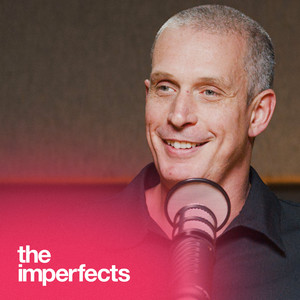
We're joined by Andy Herndon, who is better known for his online moniker, Andy Cooks.
And it says here in the notes in front of me, he is the king of the pivot, which I would agree with, but I think also just the king of food, I would say.
Oh, that's a big title. I was going to say the pivot, but the king of foods.
I mean, it would be a bold one to agree with.
Yeah. Yeah, no, I agree with that. Yeah, king of food.
That's who I am. I'll run that by Ben Shuri when we have dinner tonight.
Rising to fame for asking babe what she wants for lunch, Andy gained over a million followers on TikTok within his first six months.
Andy was born in New Zealand and food was a huge part of social connection and his family would share both breakfast and dinner at the table together.
Andy left school the day after his 16th birthday to pursue a career as a chef.
That is so young to go, right, I know what I'm going to do.
Is that what it felt like? You knew what you were going to do?
I've known since I was, you know, as long as I can remember.
Really? Yeah. Um, after working in cafes across Auckland, Andy left for Europe at 21 to enter the infamous gastronomy scene and cook in some of London's most prestigious establishments.
Andy thrived in the high pressure environment, taking the 90 to 100 hour working weeks in his stride.
That is just insane. Where did you work in London?
Started at a place called Tom's Kitchen by Tom Atkins, which was in Chelsea, and then worked at a restaurant called East and Oriental in Notting Hill, right across from the famous bookshop.
Oh, wow. Really? Yeah. I didn't know that was an actual bookshop.
Yeah, it was an actual bookshop. Oh, wow.
Travel books only then. Yeah. Adele lived upstairs and she used to wear before she was like real famous.
She was singing. What an iconic part of the world.
We're already getting into this. Sorry to cut you into it.
No, no, no. I love it. It was the most – I look back on it and I'm like – there was a pub on the corner not far from there and it was pretty common for chefs at that time, still I'm guessing, to go and have a few beers halfway through your day.
And I used to drink beers with Jamiroquai in that pub.
I don't think he knows my name, but, you know, there was like that, we would stand at the bar and he was always at that pub.
Wow. There was just so many famous people.
Did he wear funky hats? Yeah, he was just dressed immaculately always.
And that was peak Jamiroquai? Yeah. Whoa.
And his dog would sit outside the front, you know.
Yeah. It's the only time of my life I was interested in acid jazz.
I thought you were going somewhere else there.
Yeah. Jazz bang. We'll edit that. There'll be a stitch up later.
All the time in my life I've been drinking acid.
Oh, are you talking about the jazz part?
Slightly more controversial. Oh, dear. A head chef at 24, Andy had the world at his feet.
He knew all the bouncers, all the bankers, Jim Iroquois, and once he left the restaurant, there was nowhere that would turn him away and no one would deny him a favour.
After seven years in London, Andy moved to Sydney and then Melbourne.
Andy worked in a few restaurants and cafes, including a long stint at St.
Ali, before joining Emirates as the executive chef, managing over 100 venues in Australia and New Zealand.
Wow. Then COVID hit and Andy lost his job, so too did his partner.
And for the first time in two decades, he had time on his hands.
Like a lot of us, well it says us, but like a lot of people during COVID, Andy joined TikTok.
And although perhaps to a more accomplished level, learned how to be a home cook.
Andy now has collectively over 18 million people following him on YouTube, TikTok, Instagram, and Facebook.
Yeah. That is madness. That's nearly a country.
It's bigger than a lot of countries. Yeah.
It's bigger than my home country. That's for sure.
I mean, it's really, for people who don't realise the scale of that, like you are one of the biggest YouTubers in Australia.
Yeah. Easily. Yeah. Easily. Like really, it's an enormous, you're a phenomenon.
Just to emphasise, probably one of the biggest YouTube chefs in the entire world.
Yeah. Up there. There's a few people bigger than me, but yeah, certainly up there.
You're up there. Yeah. Because we're getting close to King of Food, aren't we?
Yeah. I'm going to put a full stop to that.
In 2023, Andy was named YouTube Australia's top creator in recognition of his influence.
Oh, there you go. Wow. Like we should all clap.
Yeah. No, please don't. Yeah. It should be called Mr. Feast.
It's a Mr. Feast reference. Yeah. I got it.
I got it. Thanks. Yeah. Thank you. When I hear stuff like that, you know, it goes either two ways.
It's either really cringy at the time or it's like you're really proud.
And I think that was one of those moments where I was really proud.
So thank you. It's extraordinary to go on that journey.
And, of course, you're good friends with Ben Shurey as well, who has been on the podcast a couple of times.
Also pretty good at cooking food. Yeah, pretty good at cooking food.
Ben's a legend. I love that guy. See, I watch the podcast.
I love you, Ben. I love you. Yes. He's just one of those humans that's just, I always feel inspired when I hang around Ben.
And Kiwis have this thing where they kind of hang out together and every time I'm in Melbourne, I go and hang out with Ben and Kylie.
Yeah, we'd go have dinner somewhere and, yeah.
And heap an enormous amount of pressure on whoever's serving you food.
Yeah, yeah, yeah. Here's a question which I – it may not – I know a lot of people listening will be food connoisseurs and maybe princes and princesses of food, not quite the king, but I am so bad at cooking, aren't I, Josh?
Yeah. Josh is my brother, so. Yes. I don't want to.
I should tell the truth. Yes. I don't. Okay.
For someone like me, can I learn or is it something there is a natural aptitude and skill towards?
I think there's a natural skill to any vocation in life, but I think you can almost learn any skill as well.
Yeah. I don't. Yeah. I'm 44 and I just still am bad at it.
Yeah. It feels like you don't want to learn.
Yeah. I would love to be able to do it. Yeah, but you don't want to learn.
There's a difference, right? Yeah. My mum's such a wonderful cook.
I think maybe I would have. Anyway, let's not make this about me and my future.
You started it. There's also, I mean, everyone eats, right?
But there's people that don't think about food like myself and Ben in the way, and not just us, but a lot of people.
A lot of people eat for pleasure, which I'm certainly one of them.
And there's people like my father-in-law, Rob, who eats for survival.
Yeah, for fuel. Yeah, and now he loves it because it brings the family together and stuff.
But it's just fuel. I guess just get it in so I can keep going.
We will get to, so we've got the vulnerability house cards here and we will get to them in a sec and you'll pick a few cards and hopefully find a question that you can answer.
But I'm so, I'm so like inspired slash envious of your YouTube career.
Is it great? Because you have full autonomy to do whatever you want and you've got an audience who are really excited to see what you make.
What is it like being a big YouTube creator?
It's really hard. Yeah. It's really, really hard because it's...
YouTube is a very different platform to all the other media platforms.
It was very similar to podcasts, right, where people have to click to watch.
So it's not just you can create a great video, but if the thumbnail and title aren't engaging, no one watches it.
And I guess I just want to preface that by saying I'm not whinging about my life.
I'm not saying my life's really hard, but I'm saying that actually being a successful YouTuber, it's not easy, you know, what MrBeast does and what, you know, you have to really dedicate your life to it. because it just takes so much time.
Oh, Mr. Feast. Mr. Feast, yeah. I just got it.
Oh, yeah. Well, we can go back and watch me pretending I got it, but I just got it.
So yes, it's hard. It's all encompassing.
It's all I think about every day. I'm not saying it's in a bad way, but it's work.
So it's like I wake up, it's work, work, work.
For a long time, our studio was in our house, which added something to the videos, I think.
It's very personal for the audience. There was a decision to move the studio from the house because we just needed some separation from work.
Absolutely. And people will complain about it and they're like, oh, we miss being in your house.
And I mean, our studio still looks like a house, but we needed, well, Caitlin's my partner and she's a pivotal part of why I'm successful.
But, you know, we work together very closely and then to have that all at home, it was just getting too much.
That's hard. Yeah. your videos are it's like an effortless watch like once you start watching you just and this is coming from someone who doesn't usually devour food content i i was i watched it all the way through we were really lucky our growth you know came from the back into covert when everyone was trying to learn how to cook um yeah And I think there's also something in it that, you know, I was a professional chef for over 20 years before I started making YouTube videos.
Because it is effortless to me to cook. Like I don't think about it that much.
I just cook. So it's enabled me to focus on the storytelling aspects and all the other stuff.
The cooking is easy for YouTube. And what was the... Because when you first started, you started on TikTok.
Yeah. And like you said, you're a professional chef and an acclaimed chef for like 20 years.
What was the reaction like from your peers in the industry when all of a sudden... oh andy's started a channel and he's doing cooking videos like what was the response like the the industry ignored social media for too long and they've just paid attention to it now yeah you know so and it's and it's interesting to watch from the outside because i don't i'm not sure what people are saying behind my back i don't really care but you're a great man i think yeah yeah yeah but i think you know cooking industry in general there's a lot of tall poppy syndrome so i think a lot of people you know probably feel like you're just making tick the tick of the tocks, you know, like it's that kind of attitude.
Yeah. And now they're all like, oh, how do I do that?
Yeah, yeah. Yeah, okay. Yeah. You missed the boat, to be honest.
Like it's a bit late now, but yeah. I feel like you're part of a – there's a – I think a movement across a lot of different – I've certainly seen in podcasting and YouTube of people who I think of like podcasts like The Rest Is History or The Rest Is Politics where you've got people who are like – at the top of their game who did it for a very long time who are now sharing that and i think it's a really interesting shift online uh and a new sort of genre of content that's really compelling yeah yeah i think it is too i think that's how i like watching you know car guys and people making woodwork and stuff on youtube and it's those guys that are like just making beautiful pieces of furniture and making it look effortless that i like to watch because Yeah, I sink a lot of hours into woodworking.
Yeah, it's very, very relaxing, that one.
I feel like you two could catch up. So Josh, I say this as a very proud of him, but Josh is a wonderful cook.
I feel like you two could catch up to watch YouTube.
Do you want to hang out and watch some YouTube together?
Yeah, yeah, that would be amazing. Look at this dovetail joke.
Okay, so we should get into the cards. For those of you who are new to the Tea House, we have a deck of cards here.
Each card has a vulnerable question on it, and Andy will now pick the top three cards, and if one of them really speaks to you, you can answer that.
Okay. If not, then we can just wind the thing up.
Okay. So if you want to take the top three cards from the deck.
I feel like I'm playing poker. You look like you're playing poker.
Yeah. When did you last cry and why? That's a good one.
What is something that took you too long to learn?
What's been your biggest failure and how was it good or bad for you?
Pretty spicy. Lighthearted stuff. Yeah. I'm a huge advocate for failure and learning from it.
So I'm going to go with what was your biggest failure and how is it good or bad for you?
Okay. I think one of my superpowers is the ability to fail and fail quickly and just get over it and move on.
That is a superpower. Yeah, I generally think it is.
I'm not scared of failing. It doesn't bother me.
Wow. Yeah. I'm not scared to admit when I'm wrong.
Yeah. Yeah. My biggest failure in life was becoming addicted to alcohol.
And it's not something that I'm – like I've talked about heaps.
I'm not afraid or ashamed of it or anything.
But I came up in an industry that is rife with drug and alcohol abuse.
And through all the warning signs, I ignored it all.
And then you wake up one day and realize you've got an issue.
Wow. Can you remember, because you said you left school and started sort of working in kitchens and stuff from 16.
Was it like, is it the kind of thing you say from day dot?
Day dot. Yeah. Yeah. You know, I remember like one of my first head shifts, I don't remember the guy's name, but, you know, him taking me back to his place.
I'm like halfway through a shift and, you know, smoking bongs together and, you know.
When you're 16? 16. Wow. And it was. How old would have he been, do you reckon?
Yeah. you know, old enough to know better, early 30s maybe, late 20s.
Yeah. Yeah. And it was just the norm. You know, it wasn't, you know, not what he did was wrong, but I don't think he was just imitating behavior that he'd learned.
Yeah. I don't think it was malicious, I guess.
Yeah. It's what you do. It's how you kind of get, you know, that industry, the stress levels are so high and then they kind of crash off so quickly that you just feel like you need to self-medicate to get yourself back down to a level playing field.
So was there a point in your time where it kind of worked for you, drinking worked and served a purpose?
Absolutely. I don't regret much of my drinking and recreational drug use.
I think it's probably worth mentioning as well.
I don't really regret it until it didn't serve me.
Do you know what I mean? And do you remember where you were in your life or what age you were when you thought this is not working anymore?
I remember, yeah, I was probably just turned 30.
You know, it was the point in my drinking where I was hiding booze from people, you know, and from, from my partner, Caitlin, uh, and just being a dick, you know, like just not being a nice human being, especially to her.
And that was when I would catch myself. Yeah.
Well, do you mind me asking how much you would have been drinking at its worst, what it would have looked like?
You know, pretty comfortably two or three bottles of wine a day.
Gosh. And every day, like every day. Yeah.
Yeah. Wow. Yeah. What time does that start, I feel like, to do three bottles?
It kind of doesn't, mate. You kind of wake up and you have the shakes because your body's turned to a thrall.
So, you know, you might be able to get through till 10, 11 a.m., just grinning and bearing it and then you you you kind of need to start drinking or you're gonna start going into full withdrawals so yeah i don't think people realize how strong of a drug alcohol is it's her like it's really bad once you get once you get addicted to it yeah And because I mean, I know of a few people that I've, in places that I've worked at, who were, we found out later on that they're alcoholics.
And then you find out that, you know, how they were practically making that work for themselves.
And maybe that was in a more corporate environment, but being in a kitchen, I imagine it's maybe a little bit You don't have to hide it as much?
Yeah, no, you definitely can get away with it far easier.
Yeah. And there's a certain point in the day that it's just comp, like everyone's drinking, right?
Yeah. Once you're kind of over the peak of service, it's not uncommon for beers to come out while you're cleaning the kitchen and stuff like that.
For bears to come in? Beers. Oh, beers. I thought bears was like an alter ego or something like that.
Oh, the bears. Yeah. Yes. Wow. I mean, I don't know. a hell of a lot other than what most people do about Anthony Bourdain and sort of the stories that he told in like Kitchen Confidential his book and it felt like this sort of rock star kind of thing where it was not only accepted but encouraged partying kind of vibe while you're working did you experience that sort of thing oh yeah London was wild you know that's why I had to leave it's just really got too much it just got too much you were just like you were living for you know thursday thursday you'd start partying and then you know you have a few hours sleep thursday night then you get to friday and then you'd just be up from friday until you know sunday night just and working and staying up working playing partying all the above you know lock-ins clubs everything yeah yeah and it was you know it wasn't even that glamorous you know like it was pretty it's pretty grim when you look back on it um But it was a funny time in London.
There was just so much money. It was insane.
And you had all these young men, like late 20s, early 30s bankers that were making extreme amounts of money and also working in a similar environment to kitchens with crazy pressure.
So all they wanted to do was to party all weekend.
And they just needed people to party with.
Yeah, the way you said it before I thought it was quite interesting that we don't acknowledge how strong a drug alcohol is because it feels like in that exact scenario and bankers and there are many industries where I can think this is true, it's such an acceptable part of the narrative to blow off some steam.
Yeah. Was that how it was sort of framed from early on, like where we work hard but this is the way you get through it?
Yeah, absolutely, absolutely. It was like a reward, right?
It was how you kind of went to sleep at night because you just get blackout drunk.
Yeah. And, you know, for a long time I think it was okay and I was a high-functioning alcoholic.
I never like was sick. I never like took a day off because of it.
But it was just – and then it just catches up on you, sneaks up on you.
And all of a sudden, and I'm not saying, I'm not like, Caitlin, my partner, loves her wine.
She's still a drinker, but she is a person that can have one glass or two glasses of wine with dinner and then she's comfortable and she can not drink for three or four days or a week or however long.
So I think that's like an important message I like to tell people too.
I'm not anti-alcohol. I just think that people like myself have a brain that's wired in a way that gets addicted to things easily.
I know I am. It's the same with work. You need to be really, really careful.
Well, I mean, it's probably like that part of your brain is maybe part of what makes you so good at YouTube.
And, you know, being the relentlessness of that, I imagine you sort of need that a little bit of that obsession and that addiction to not necessarily work, but getting it right.
Yeah. Yeah. But you do see a lot of people that do get addicted to work too.
You just need to be careful of that as well.
Should also mention, I mean, I know that you're sober now.
I don't think we've mentioned that. So people just say, how long have you been sober for now?
Almost eight years now. Yeah, wow. And that's not a drop?
Not a drop, nothing, no. So I probably started saying, I can't do this forever.
I can't, you know, I'm smart enough to know myself to know that when I was saying that, it's like, well, it's all or nothing.
It was not like, I've got to, at some point I'll have to give the booze up. there's this big identity crisis that I had to go through where I was like, it's part of my identity.
You know, drinking is part of my identity.
What's everyone going to think about? What, you know, how can you be a chef and not drink?
How can you still hang out with your friends and not drink?
You know, so it took a long time for me to process that before I put my hands up and ask for help.
But then one day it just got too much and I just had to put my hand up and ask for help.
And, But one of the things that I learned is that the truth is that no one cares.
No one else cares about what you're doing.
Yeah. And to the point now where I get more people, in general, I've had far more people praise me for it than have, you know, given me shit for it. yeah yeah yeah you know yeah and and there's been a couple of incidents where people have teased me for it and you just go you've probably got an issue yourself oh yeah yeah because if you if you think that makes me weak for not doing it then you might want to look in the mirror because It's a defensive thing.
Yeah, it's a huge defensive thing, yeah.
It's very easy, I think, for people to look at a sobriety story, really, and see a linear process.
But that's, from what I understand, that's not how it works.
No, no. What kind of time scale are we talking about here when you say a while? it probably the best part of two years before i actually went into a rehab and and have been sober since and i tried a couple of times to do it by myself and it was just too hard i just couldn't do it so did it did anybody it doesn't sound like anyone in your in the work world but did anyone in your life ever confront you about it or say i think you're drinking too much No, I don't think anyone did.
No. And what do you, if they did at that time, what do you think your response might've been?
It probably wouldn't have been good. You know, I don't think I would have been like, oh yeah, you're probably right.
Yeah. I'm far more level headed now, you know, back then I was far more hot headed and I think, you know, just the booze talking.
Yeah. But if I knew someone who was in a similar situation, I don't know what I would do because I would be really worried about, I don't want to embarrass them or humiliate them.
I don't know if you've got any experience with approaching people in your life about it or any advice on how to approach that situation if someone you think is drinking too much.
I think you just need to check in with them to start with and try and unpick it slowly.
See where their head's at. You'll be able to know pretty quickly if they've had enough because that's usually what happens with drinkers or anyone addicts.
At some point, they've just had enough. They just don't really know what the first step is to do to get help.
I think from experience of seeing people coming into rehab who are forced into rehab, either through family or through the court system, they relapse pretty soon as they get back out.
So I think the method of you're an alcoholic, you need to go get help often doesn't work.
So I think you kind of need to just you know, put up the olive branch and let the person know that you're there for them and everything they can do and there's no harm in asking for help because that was the hardest thing for me was to actually, like, how do I do this?
How do I just literally turn my life upside down, ask for help and disappear for the best part of 45 days?
Do you have a memory of, like, was there a low point?
Was there a moment like this, I can't keep doing this?
Yeah, I just would find myself, I remember waking up one day and, you know, I hadn't done anything.
I'd just been a bit of a dick to Caitlin the night before, you know, and said some nasty things, stuff I didn't mean, and waking up and just thinking, and it happened a couple of times, right, and thinking, I can't keep doing this to her.
Yeah. Wow. And I called my mum. Really? Yeah, I called mum and said, Mum, I need help.
Really? Did you know that was going to be the person you called or was it just instinctual?
No, yeah, it was never planned. It just kind of happened, you know.
Mum also suffers with a lot of mental health issues, has had depression her whole life and I think she knew, you know, she's the one that would probably know the best, know what to do.
And what did she say? um she just calmed me down and said well you know we'll sort this out you know i can it was like an hour-long conversation i don't really remember what was said two hours later a psychiatric nurse called me and said we'll be there on monday morning And I said, do I stop drinking?
She said, absolutely not. Just keep doing what you're doing.
Wow. The psychiatric nurse said just keep doing what you're doing.
Yeah. It's really dangerous when you're drinking that much to just go cold turkey.
Okay. Yeah. So they came, picked me up and took me to an Airbnb, two psychiatric nurses and they pumped me full of something.
I just passed out for 24, 48 hours and then they slowly rained me off that and they were monitoring me the whole time.
And You know, I tell that story because it's really dangerous to just, like I said, go cold turkey.
And, you know, I'm also very aware that I'm very privileged to have access to that type of care.
Yeah. I've never heard of that before, that the psychiatricness is coming to your house.
Is that a common thing? I'm not sure. I'm not sure.
I think there's a lot of rehabs internationally.
There's a couple of big ones in Thailand and stuff where, yeah, you're monitored especially really heavily for the first week.
And then once you've kind of over that withdrawal period, then they start doing the actual work, which is the counseling and stuff.
And so what was Caitlin's response when you told her where you were going and what you were doing?
She just supported me, no questions asked.
Yeah. And did you not see her for 45 days or was it like a – No, she was there the whole time.
Okay. Especially in that first week in the Airbnb, she was there.
And then going to like an actual rehab, I could only see her once a week, but probably it's probably better that way because you're doing like, you know, counselling twice a day and a lot of shit's coming up.
Yeah. Yeah. That was my first time doing any sort of counseling.
Oh, really? Gosh. Wow. It sounds like an extremely hard thing to do.
Like, would it be one of the hardest things you've ever – Oh, hands down.
Yeah. Hands down. This is – big YouTube channel is easy.
Yeah, yeah, yeah. But the best and most rewarding, you know, ending to my biggest failure –
And I think because it was my decision, no one forced me to do it.
I had overwhelming love and support from my family and friends.
I haven't thought about having a drink ever since.
Oh, really? It's never been an issue. Wow.
I'm just, all right, that's the end of that part of my life.
Well done. Let's go forward. That's incredible.
Can I ask you about how shame interacts with drinking?
Because you mentioned earlier, I think I'm using your words here, but being a bit of a dick and some of the things you said to Caitlin, who, as you said that you can tell how much she means to you.
And I find it really hard to imagine how you break out of a cycle of shame and drinking when you're behaving in a way that it sounds like you would see as shameful.
I think it's a really tricky one. You wake up in the morning ashamed and annoyed at yourself for your actions the night before and you kind of tell yourself you're going to be bitter and you're going to drink less that day.
Yeah. Well, you start shaking at some point and you just have to have a drink to stop the shaking.
And then a week passes and you do the same again and, yeah.
It sounds so hard, not just because of the dependence on the drug itself, but if that drug is playing the role of easing the shame.
Yeah, absolutely. I never thought about it like that.
That's so… Yeah. It's a really vicious cycle.
It's just, it's so hard to break, you know, and it's, it's so disappointing that in countries like Australia, New Zealand, we just don't have better help with this stuff.
You know, as far as I'm aware, there's still not really a public system for addicts.
Yeah. It's so sad that it's only people that have the means to, can actually get help in the space.
Yeah. It's, it's everywhere, right? And it's, it's so easy.
You can get, bottle of booze delivered now you know it's just I saw that the other day and I thought wow it's you know yeah the barriers are so low to that drug it's crazy yeah you don't even have to walk in and out of a bottle shop anymore yeah so obviously there was like points where your hands are shaking and you got to a point where you realised oh this is really a problem but were there were there points before that you recognised that it was a this was an issue yeah there were certainly points where you're going you're taking check of how much you're consuming you know i just put down a bottle of gin by myself that's not normal yeah you know and how much it's taking you to get to the same levels and then you'd hear something on the news with how many standard units you're supposed to have and you you're honest with yourself and you take up how many units you've had that week you know hundreds And you're like, this isn't right.
And you can't. I remember having really vivid thoughts of like, my body can't continue living like this.
It's going to fall apart at some point. And I don't want that to happen.
Like sometimes I'd have a day off and it'd be during the week.
And so Caitlin would be at work and just getting excited about the fact that I could just stay home all day and drink.
And then you'd be like, I know it's like, you know, two o'clock.
I'm going to drink really heavily now so I can get blackout and then wake up and be fine.
Oh, so you'd plan that? Yeah. Wow. So you'd be like, all right, I'm just going to go hard now and then I'll black out and then I'll wake up at 5.36 and then Caitlin will just think I'm just a little bit drunk.
I'm not. I haven't blacked out. Oh, wow.
So in that, what are you looking forward to in that?
Like what is the – That's a great question.
I think it's just the numbness. And it's not until now that I can reflect and go, that's what I was doing.
I was drinking to blackout. At the time you're masking it as, I'm just going to drink until I fall asleep on the couch.
Mm-hmm. In hindsight, you're like, no, I was just drinking until I blacked out.
Yeah. So you're masking it as a nap on the couch in the afternoon.
Okay. But to get to that nap, you've scaled half a bottle of wine.
So, yeah, it's a pretty dangerous way of living your life.
Do you think you stopped for Caitlin or for yourself?
Yeah. I think I stopped for both of us.
I think the thought of losing Caitlin was the thing that put me over the edge.
Wow. But I think it was for myself. But it was because I knew that if I continued doing what I was going to do, my life would have fallen apart.
Yeah. So if I'd lost Caitlin while I was still drinking, I don't know where I'd be.
I certainly wouldn't. I want to be where I am now.
Is it potentially too personal? So feel free to let it through to the keeper.
That's really happening to think of a food.
Yeah, weirdly thought of a cricket one. We're trying to play cricket.
I don't like cricket. Did you ever talk to Caitlin afterwards?
Like once you're sober, was there ever a time for her where she considered leaving because it was just too much for her?
She's never said that, no. I'd be surprised if that wasn't the case.
But I've never asked her directly. Caitlin stuck through some of the, obviously that, which is the biggest thing that I've ever gone through.
And at the time, it certainly did not feel like she wavered at all.
And not only from her, her whole family, they stood by me, no questions asked.
That's love. Beautiful. I think it is love, but I think it's also that they're just good human beings.
Yeah. And they don't just give up on people.
Yeah, wow. Yeah. I mean, the image you painted before of her being there with you in that Airbnb for that intense time, I mean, that's incredible.
That is sticking by someone. yeah in that time have you ever asked caitlin what it was like for her during that experience selfishly i haven't no it's not something that's uh commonly kind of brought up or we talk about in depth but maybe enough times past it i should ask her check in with her yeah I can totally see why you wouldn't have that conversation.
I think there are some relationships where people talk about that stuff and others where she clearly, I mean, the actions are so profound.
I can see why you wouldn't have gone there as like needing to talk about it.
Yeah. And I also imagine you probably assumed that it wasn't good.
Yeah. It was, you know, we had two dogs at the time.
One was another puppy. She was very successful before she had a career.
But all of a sudden... her partner was gone and, you know, there was a whole bunch of uncertain questions about finances and stuff like that.
You know, I wasn't working. My employer at the time was really good about the whole thing which was great but, you know, it wouldn't have been easy.
She was, and, managing all those those conversations you know she worked in a you know in PR firm and you can't like what do you say to your employer but those are not easy conversations no yeah it's like I'm I'm under the pump at the moment because my partner's in rehab it's not an easy thing for anyone to say yeah and the same with her family you know it's like she had to call her mum and dad up and be like Andy's going to rehab that's It's not an easy conversation.
That's hard. Yeah. I wonder whether you ever thought about like when you sort of, again, in your words, behaved like a dick.
In the time of when you were wanting to quit drinking, did you ever sort of think, is this behavior the drink or is this behavior me?
That's a great question. I don't think that I have ever thought that.
No, no. I think I kind of knew it was the drink.
Yeah. Inherently. I think I, I'm most definitely not perfect, but I think deep down, you know, my mom and my brothers and father have put half decent morals into me.
Um, so yeah i think it was just that like you just don't like the way you become yeah yeah and i don't think i'm not excusing the stuff that i said to caitlin or anyone at that time but i don't think it was like outrageous stuff you're just not being particularly nice yes yeah and not being the person you want to be you know yeah not being the man you want to show up and be And it's, and from, I've never worked in hospitality, but from what I've, what you hear, it's like often you do, you get treated shit in kitchens.
Like there is a bit of a history of that.
And I guess that probably just becomes accepted whether there's drinking or not.
It just sort of becomes part of your tenure.
Yeah. In a way. Yeah. Something I've been thinking a lot about since hanging out with Ben and reading his book, you know, and the behavior that happened in the kitchens that I was working in and some of the stuff that I was witnessing and realizing that it was pretty shitty behavior, you know, and it's not okay.
What was I responsible for any of that for a start?
And then, and how do we kind of help educate people to change?
How do we change that behavior? So I'm curious about that, because not the same, but there's sort of a similar history of mistreatment on film crews.
Yes, yes. It's sort of a similar, and this is not all the time, and hopefully it's not as much anymore.
When you're starting out, you get treated shit, and then the cycle continues.
Then when those people become heads of department, they then treat people like shit.
And I just... I never understand why, but whether or not there's a feeling, and maybe you can answer this because you went through the kitchen thing, but whether there's a feeling of like, oh, now I'm allowed to tell that person what to do and get them to do whatever I want.
Yeah, absolutely. It's literally you're just imitating behavior.
In Montreal, you said my first head chef, I was 24, which is just too young to be in charge of cooking.
Any brigade of people. No one had ever taught me how to manage people.
It was nothing, you know. It was just like you're in charge of the kitchen now because I guess you could cut the nicest julienne, you know.
Like it doesn't make any sense, right, like when you think about it.
And it's not until now. I'm almost 40 where I feel – that I'm starting to understand how to manage people in an effective and decent way.
But back then it was just imitated behavior.
It's like people yelled and screamed at me, so I yelled and screamed at people.
And I remember clearly one time there was a guy by the name of Charlie who was a general manager for the restaurant that I was at.
And I was probably a bit off the rails and it was my first head chef job.
It was in Shoreditch in London and I was partying like crazy and having outbursts in the kitchen when stuff wasn't going right.
And he was just like, this isn't you, Andy.
He's like, this isn't – Wow. I'm not a particularly aggressive person by nature.
Don't let the tattoos and – To fool you?
Like I'm just not. I'm a pretty placid person.
Well, that comes across in your YouTube videos.
It's surprising to hear that you were like that because it certainly doesn't seem like who you are.
Just imitating the people that you idolized.
And it's hard, like it's very hard to manage people, obviously, but much easier to yell and scream.
It's harder to have the level head and to be- Also when that's the only thing you've seen, the only way to deal with the situation you've seen.
Yeah. And you don't have life experience as you teach you otherwise.
So for years I just avoided managing people.
I was like, oh, I don't want to do that, don't want to do that.
And now I love it. I love helping my team and watching them grow and it's taken a long time to build that relationship with managing people.
Where I can enjoy it again and understand that it's actually the most important life lesson you'll learn.
If you want to be successful at anything, then you need to learn how to effectively manage people and have them not work hard for you for the sake of it, but work hard for you because they actually care and they actually want to work for you.
Yeah. Wow, that's so true. Yeah. You mentioned your mum's mental health before and I'm interested in your journey with mental health.
I'm sure it's a lot better now you're not drinking and alcohol is just so detrimental to mental health.
But if you're comfortable, I'm interested in how your mental health has been over the years and where it's at now.
I'm really blessed that the only issue I've had with mental health is addiction, you know, because I've seen what depression does to people, you know, through my mum and other people in my life and it's really, really tough.
So my mental health is pretty good most of the time, you know, like I definitely have bad days and good days like everyone but I have pretty healthy habits now, you know, like I eat too well I eat too much because I love food but you know I exercise every day it's really important for me for my mental health and I've got great relationships with my family and with my friends and an incredible relationship with Caitlin now because you've gone through so much and now we work together really closely yeah And that in itself has been an incredible journey to work with someone that you love.
Yeah. It's like, because it goes one or either way, right?
Yeah. But it's made our relationship so much better.
Wow. Because, you know, when you work with someone so closely, so Caitlin, the context, Caitlin runs the business effectively.
So, you know, we had to communicate and learn how to communicate quickly and effectively.
Yeah. So that's just carried over to our relationship.
So now in our relationship we can communicate really well and openly.
So cool. And it's made our relationship so much better now that we communicate better.
So how old were you when you met Caitlin?
What was – Just 28, 27. We were living in Fitzroy North and one of my best friends, Kieran, he was living with me at the same time and his girlfriend at the time.
I was working in a restaurant, Gil's Diner.
It's now an Italian restaurant. I loved Gil's Diner.
Yeah, it was a great little spot. And Kieran brought Hannah and Caitlin in because they were in town.
Right. And, yeah, we ended up at Laundry Bar and –
So do you notice that you're, I didn't have addiction issues, but I stopped drinking probably, I don't know, two years ago.
And it was never a moment of like, I just need to stop.
I just kind of started to stop. I just stopped.
Yeah. I think I just realized it wasn't really serving me anymore.
And I just stopped. In fact, I had a moment about a month ago.
I was sitting. I've always thought, I don't know if I've stopped.
I haven't drunk in ages, but I think I've stopped.
And I was sitting. I always thought, well, there'll be a moment where I can't say no.
Where you're tested. Yeah. And I was in India and I was sitting literally between Pat Cummins, Australian career captain, and Travis Head, probably arguably one of the world's best batsmen, and they were drinking beer.
And I said, no, I'm fine. I was like, whoa, I've...
Wow. I've really stopped. I've really stopped because there'd be no better place to have a beer.
But I've noticed my brain just operates so much more effectively and efficiently.
And have you found that as well? Do you find it?
Absolutely. You know, I've fully come into my own as –
As a human, I think, honestly, it sounds very dramatic to say, but I've learned what I love and what I don't love.
I'm excited to get up and go to work every day and I've learned so much about myself and how I work best, how I operate best, how to kind of get the best out of myself.
I think I've never been more driven in my life than I am at the moment.
Why do you think that is? Other than obviously being sober is probably helpful, but is it because of what you're doing?
Is that? Yeah, I genuinely love what I do for a vocation.
I think I feel really lucky to kind of do this.
I think success has something to do with it too, right?
You know, it's all going pretty well. So there's not much to kind of get too worked up about.
Safe to say it's going pretty well. Yeah.
And, you know, like life's fun, you know.
Like people are like, you should have a holiday.
It's like, what? The algorithm won't allow you to have a holiday.
No, it won't. I used to drink way too much throughout my 20s and partied a lot and overdid it.
And I didn't realise the effect it was having on me.
It's definitely not a traditional alcoholic, but it was definitely problematic drinking that was having an impact on my life for a really long time.
And I had kids and couldn't drink to that amount anymore.
And also it was very social drinking and COVID happened and suddenly you couldn't see people.
And this combo kind of broke a cycle of drinking heavily for sort of three or four days a week.
And I started to notice things about the world that I hadn't noticed before that were so beautiful and wonderful.
I'm wondering if when you came out of rehab and you were no longer drinking, were there things that you started to notice about the world that you hadn't seen in years? yeah yeah interestingly i i left rehab and flew to new zealand to my best mate's wedding wow and yeah straight into a wedding yeah and it was like the the rehab was not happy about it you know they were like we highly advise you against this otherwise my best mate's wedding i'm an agreement i'm going like i don't care um and i think it was just those like to see my mates who like just but open arms, no questions asked, like super pumped to see me.
Like, you know, so thankful to see me. And it was like that, that's like those relationships that I still have today.
I'm really lucky that I've still got like a really good group of mates from high school that we still, you know, connect and chat all the time.
So I think it was that, those relationships.
And I'm still guilty of it now. I still probably don't. put enough energy into my relationships other than kind of my immediate ones.
But I think I've just become way more, I just have a much better understanding of how lucky we all are, you know, to be born in this country or born in countries like this and to live in a country like this and realizing how privileged we are for the lives that we live.
Wow. I feel like there'll be a lot of people listening to this who would identify with right now in their life that alcohol is an issue and maybe it's something that they're really facing right now in this moment as they listen or maybe they've been aware of it for a while.
But what would your advice be to them in order to, I mean, what steps would you recommend they go through now?
I think you probably just need to do a real, you know, a bit of a check on yourself to make sure that, you know, if you are drinking to the point where you're shaking when you wake up and stuff, withdrawals, then please get medical help with it.
Don't just try and stop yourself because it is really dangerous to just go cold turkey.
And when you say medical help, do you mean like calling a GP, going to see a GP sort of?
Yeah, whatever you can get access to, you know, because I'm fully aware that not everyone has access to, you know, private systems and stuff like that.
And if you're questioning it at some point or if you're like, oh, I'm sitting on a fence around this, of my relationship with alcohol, then you probably know deep down that it's time to do something about it.
And I'm a firm believer, and if you have an issue with drugs and alcohol, the reality is that you probably should not try and do the whole, I'll just drink on Friday and Saturday nights.
It often doesn't work. Your end goal probably can't be, I'll just have a little bit.
Yeah, I think you did. For me, the thing that's worked is to just completely cut it off.
Yeah. And it's so amazing to see now, you know, living in Sydney, you go to Pondo Beach on a Saturday morning and there's 500 people 20-year-old kids running, which just didn't happen.
It didn't happen for me, I'm sure. It wasn't the same for you guys growing up.
That type of socialising just wasn't a thing.
It was always going out. You're talking about exercising in the morning.
Yeah, and these young kids are more charged to go to bed early on a Friday night or maybe go out for dinner on a Friday night and then wake up and go and do some exercise.
Then when I was growing up, it was just, you just went to the pub or you went to the rave or, you know.
I wonder why that is. I wonder if there's just like more information, more access to, you know, we know more about the harms maybe now.
I don't know. There is research, I wish I could reel it off the top of my head, around the fact that the amount of alcohol consumption for 18 to 24-year-olds has severely dropped over the last couple of decades.
Yeah. And there's great companies. There's a company called Non here in Melbourne who makes really delicious non-alcoholic beverages now.
Tina. Yeah, Tina. Those are delicious too.
And, you know, bars and restaurants that have proper non-alcoholic programs that aren't just like – sweet water, you know, it's like, you know, I don't really like sweet water.
I want to taste something. So, um, if you're worried about the thing, like there being a stigma and you're worried about how your friends are going to react to it, um, that it might be time to check out who your friends are.
Cause yeah, it's very true. Yeah. I think if anyone's criticizing you for not drinking, then, um, they're probably not a particularly good friend. which is tough it's tough to do someone if you've got a mate that's been your mate forever but you know that they're going to stigmatize you for something particularly because like as you described before you felt like drinking was it's such a big part of your identity and probably such a big part of what socializing is i imagine that would be really really challenging Yeah.
Yeah, absolutely. I think it's a big part of Aussie and Kiwi culture, right?
Like it's at the footy clubs, it's at the bowls clubs, it's at the surf clubs, it's at the career, it's everywhere.
It's at everything you do. Everything. Everything you do.
There is alcohol. You don't realize it while you're drinking, but when you stop, like where can I go where it's not almost encouraged?
Yeah. It's hard to find those places. It is.
Yeah. Yeah. I think there's something you said there that I find really interesting, or I don't know if you said it, but it was in there somewhere.
It was sort of packaged in there, which I think would be really scary because you said really beautifully that one of the things that you noticed was this connection with your friends afterwards.
And we all have a lot of the things we've learned on doing this show is how important human connection is and how it's one of the most primal things that we need in life.
But I can imagine it must be so hard for someone who is in a position where they might have a group of friends who would criticize them for not drinking.
Yeah. to say the drinking is a problem and exactly which I agree with you they're probably not the right friends for you but I just feel this moment of terror of like well I don't have anyone yep and who do I like where's the connection going to come from yep so i guess i just want to acknowledge that that how hard that must be for some people out there yeah um but there are people out there who will connect with you yeah yeah and you'll find them in the weirdest places you know like it's like i just never thought i'd be the gym guy you know like and now i go to the gym every day and part of the reason that i like going to the gym every morning is because i'm just in a room with people who are normal people and Normal people have problems, but there's this weird relationship you have with them because you're friends with them for an hour, five days a week.
I don't have any of these people numbers, and I kind of don't want any of the numbers.
And nothing against them. It's just like there's this kind of quite really interesting relationship you build with these people.
It's a funny dynamic. You go to a room with other people, lift up heavy stuff, put it down again, and then leave.
Yeah, yeah, yeah. And you high-five, you know.
Yeah, that was good. Yeah, yeah, yeah. Really proud of each other.
Well done for moving that very heavy thing.
I'm going to work now. Yeah, yeah, yeah.
There was a guy this morning. This is a crazy story.
I've seen him a bunch at the gym. And he came in late and he's usually there early and my station was free.
And he goes, can I jump on with you? And I said, absolutely, mate, jump on.
And we introduced each other and he goes, oh, I've just had a baby.
I said, oh, that's amazing. It was like his first gym session back since his wife had had a baby.
I was like, that's so crazy. He goes, oh, your life's been pretty crazy the past 12 months.
I kind of didn't think anything of that comment.
And then we were doing bench press and it's one of those gyms where you're kind of paired up.
Yeah, yeah. And he was doing the bench press and he goes, oh, I'm just going to go light and injured.
I said, oh, what's wrong with you? And he showed me his shoulder.
He had this big cut down here and then this big cut in his neck that I'd never seen either.
I said, what was going on? He said, I've got 13 pins in my shoulder and four, my C6 and C7, I'm making these numbers up, vertebrae are bound together or something.
I said, what happened? He goes, I was hiking in Peru with my now wife And I fell down a cliff, a free fall for six meters.
I said, how did you get out of there? He said, we had someone like abseiled and got me.
And it took me 24 hours to get out and another 24 hours in a car to get to a hospital.
Oh, my God. And I was like, no wonder this dude's beaming, right?
Like he was just like, he just had a newborn baby.
And I was like, mate, that's insane. And I left the gym just thinking –
Wow Six metres Yeah So in 12 months This guy's gone from Literally Like almost dead To then And you know His wife saw it His wife was A specialist Physiotherapist To do with Back surgery Wow Lucky Right Yeah So she sat in the back of the car While they're trying to drive To this hospital In the middle of Peru And hold his neck up Like just didn't let him go Yeah So you imagine like all those things that have led to that point.
She knew, right, how severe what was going on was going on.
And then he had to have his next trade for him to get out of this.
That is, I mean, the only thing better would have been if she was like a professional abseiler.
That would have been amazing. It was one of those moments, you know, you're just like, wow, humans are insane.
Humans are so crazy, aren't they? I mean, there's a beautiful metaphor in here.
I hope I'm not stretching too much, but there is so much.
Like that is a very acute, dark, dangerous time for that guy.
But you've talked about a very dark time.
And the thing that I find so... moves me so much having been through some really low dark times myself is how much life there is on the other side of it absolutely or can be on the other side I think that's a fantastic way to put it you know it's that when you're going through rehab or anything like that you're kind of told it's always better it's always better You know, part of the rehab that I went to, we were going to AA sessions, which is a fantastic organization, if you can call it that.
Yeah. They always talk about it in AA. You know, they're like, you know, it's always better.
It's always better. You just got to believe that it's better.
And you do. And it's the same with what you said before as well about if you're worried that your friends are going to ostracize you because you're not drinking anymore.
Mm-hmm. The truth is it's going to be really hard in the immediate future for the next six months or 12 months, but you will meet people that you do gel with and that do respect your sobriety.
And it might be in an AA class or that you meet them.
Or at a gym. Or at a gym, yeah. Or you go to Abside and pull some out of a hill in Peru.
There are many ways. This might not make the final cut, but I'm interested because I've had so many people have talked about the benefits of lifting weights.
Like for you mentally and emotionally, going to the gym and lifting weights, what does that do for you?
I don't know if you've thought about it or articulated it before or it's just something that feels good so you do it?
I like running. Yeah. I love running. Yeah.
And I love the freedom that it makes me feel.
But I love running because it makes me think, you know.
What kind of running do you do? Distance, you know, 10, 15 Ks pretty comfortably.
Yeah. But it's just that, but that peace, just like full peace.
There's no phone, there's nothing. It's just you and the pavement.
And then the feeling afterwards. Yeah, and then, yeah, absolutely.
The euphoric feeling that you have afterwards is real.
I'd love to know what that feels like. I don't know what the – I've always thought like I would love to be a runner and every time I run, I just – because I'm not – haven't got running fitness.
I'm not good at it. And then it's hard. And then I just don't continue with it.
But I'm very envious of the feeling that everyone talks about of going for a run and you can do it anyway.
You don't need any equipment. You can just do it.
Like that's, it sounds great. It was watching Casey Neistat, pretty famous YouTuber.
He was big into his running. Really? Yeah.
And I think it serves people like me with like monkey brain because your brain is always kind of going.
It stops the noises. Yeah, right. Or the voices, I should say.
Yeah, yeah. I mean, a funny thing to do like now, like in your 40s, instead of like people getting together and doing drugs, like going, do you want to get a high on running?
I thought running clubs are a big thing, aren't they?
Like that is a huge thing. I don't hear specifically say, let's go and get high.
I'd love the thought of just going, do you want to go and get high?
I'll just get my shoes, hang on. Stretch my hammies and we'll go and get high.
This is a pivot to the king of the pivot.
You talked about your brain there and in some research we heard about your dyslexia.
Is that correct? Yeah, yeah. I'm fascinated to know because the way I've read about it for you is that you see it as a massive advantage for you now.
Has it always been the case that it felt like an advantage or is that somewhere you've come to and how is it an advantage for you?
No, I haven't always thought it was an advantage.
In school, you know, I was kind of, you know, I went to an all boys school in Auckland and at the time I don't think that people were equipped, teachers weren't equipped.
So they kind of just, you got put into a special ed class and I think that's one of the reasons I just wanted to leave school pretty quickly.
I just gravitated to cooking and picked up physical cooking really quickly.
The theory stuff was terrible. But I think the dyslexic brain just thinks about problems really differently.
So I could problem solve really quickly and I'm not scared of failing.
I think my creative brain works really well.
But I think it's also been that learning how to use it thing as well.
Like I don't, I really struggle to work in like a nine to five kind of scenario.
Like just, all right, you start work at nine and you finish at five and you just work.
My brain just doesn't work like that and it wanders and it does all kinds of weird things.
Yeah. So I can work like that if it is something physical.
It's like, you know, you need to peel 50 kilos of potatoes, break down all that meat and then get all the stuff ready so you're no problem.
I can do all that. But when I'm thinking about my creative brain, I can't work like that.
I can't just go, I'm going to start being creative at nine and finish being creative at five o'clock.
So I think learning to let my brain wander while I'm trying to be creative has been a huge superpower because, you know, chat GPT is an incredible tool for me because the –
The voice recognition is very, very good.
Oh, yeah. Yeah. So I use a lot of voice recognition, have done for a long time, but it's always been a little bit junky.
I had an idea for the video. I was on the way here.
Yell it in so much LGBT, it writes it out, and then I just email it off.
Oh, really? So you'll tell ChatJPT this is the sort of thing I'm looking for?
Probably a bit more specific, but it will write it in a way that's far more legible because that's my struggle is I can't write where people just look at it and just go, I can't read that.
It doesn't make sense because there's no grammar.
The spelling's terrible. That's amazing.
I hadn't thought about ChatJPT almost as an accessibility tool because there's so many people.
I know I can think of a few people who the reason that they don't get into creativity or writing is because they feel so like, I can't spell or I've got messy handwriting or they are creative people, but there's this huge barrier that they've never been able to cross because they feel embarrassed or... whatever, and so you had to be able to use that.
I remember doing like when you're 16, you do a set of exams.
It's called School C in New Zealand. I'm not sure what it's called here.
It's probably not even called School C anymore.
But I had to read a writer, which was kind of pretty progressive, I think, back then.
So there was someone who sat there. Oh, an actual person?
Yeah, a person, yeah. Wow. Which is like very early chat GBT.
Yeah, it is. Wow. Okay, so before we wrap up, there is one more question that I'd just love to ask.
I'm guessing there's a lot of self-reflection that takes place during rehab.
What did you learn about yourself? I don't think I knew myself before I stopped drinking.
Because I started doing drugs and drinking when I was 16.
So I was still a kid. And then you kind of just all the way through to my 30s.
But I think you kind of learn who you are and probably more since that time is learning how to just learning to be yourself.
And that's enough. That's more than enough.
And the truth is that if you aren't yourself, people see through the bullshit real quick.
So take Chef away and take YouTuber away.
Who are you? I'm just a chill guy. That's a great answer.
Same. Same. That's great. Should have gone in the bio.
I don't think there's any better way to describe it.
I just enjoy normal things. I'm a chill guy at the same time.
I'm like really driven and excited to kind of do cool things.
I don't like sitting still for long. I don't like staying in one place for long.
I like moving around. I like traveling. I like meeting people.
I like food. Do you mind me asking off the back of that?
Because you've been a very successful person in both on and off, I was going to say on and off the field, on and off the YouTube, in the kitchen and on YouTube.
Was there a sense that you needed those to be enough, that success to be enough?
Yeah, I think it's probably... Well, I am good at failing.
I think also it's easy to be that way when everything's going pretty good.
So yeah, I think it does define me a little bit, the success, which is probably a blessing in disguise because the internet's a weird place, right?
It can all go away pretty quickly. Yeah.
And I've thought about that a lot recently.
It's like what happens if there's all this – i get cancelled for something cool you know like if something happens and youtube just gets turned off and i'm kind of at peace with that now i'm like wow you know i'm like oh if it goes it goes gosh and just the chill guy yeah like i've got you know i could probably pretty happily just move back to the sunny coast and live a pretty normal life now learn how to do it up to our joint yeah yeah literally yeah yeah be one of those guys obsessive over his lawn you know Do you have any, I mean, obviously not now because you've got a YouTube empire to run, but do you have any interest in cooking in like a kitchen, like in a restaurant anymore?
Yeah, there's a little weird thing that niggles at me always.
Yeah. And it's, you know, it'd be kind of crazy to do it, but I'll probably do it at some point, yeah.
Yeah, really? I think if I don't do it, I'll regret it.
So I don't know if I'll be like... back cooking you know full time 100 hours yeah 100 hours no but uh yeah at some point I'll do a restaurant again well it seems like I mean like you often like I know of a few like youtubers who have like you know opened they've started brands or I mean you've got your own cookware and stuff like that but like And yeah, it's one of those things where there's a built-in audience who would love to come to your restaurant.
I would love to come to your restaurant.
Yeah. Thank you. Yeah, I think it'll be a full-on passion project, which is ironically what will probably make it quite successful.
Because it'll be like one of those places where I just do whatever I want.
And for that reason, to the point that we kind of started this kind of conversation on, that's probably why it'll be successful.
Yeah, exactly. It's like to have a creative project that doesn't need to make money is unbelievable.
Yeah. Yeah, cool. Well, you're welcome to the happening party.
I don't know when it will be. It will definitely be there.
Non-alcoholics in hand. Yeah. Well, I just feel like this chat is going to help so many people who realize they have a problem with alcohol or maybe haven't realized until this conversation, but not just them, the people who love them.
So, yeah, thank you so much for sharing your story because it's a story that will, I honestly think will save lives.
It will definitely change lives for so many people around the country.
So, yeah, what a thrill. Thank you so much, Andy.
My pleasure. Thanks for letting me share it.
Thanks, Andy. Cheers. Enjoyed this week's episode but want a little more?
Then you might want to know that we have a brand new show called A Little More Imperfects over on Patreon.
For a little bit of money, you'll get access to bonus episodes with the three of us every fortnight, early access to live events, plus other things that we haven't thought of yet, but when we do think of them, you'll get them.
Visit patreon.com forward slash the imperfects.
The Imperfects is not a licensed mental health service and is not a substitute for professional mental health advice, treatment or assessment.
The advice given in this episode is general in nature, but if you're struggling, please see a healthcare professional or call Lifeline on 13 11 14.