Hey everyone, Alana here.
Looking back at summer's past, you probably think about beach trips, barbecues, and long weekends.
But you know what doesn't belong in this year's epic summer plans?
Getting burned by your old wireless bill.
That's why you should make the switch to Mint Mobile.
Say bye -bye to your overpriced wireless plans jaw -dropping monthly bills and unexpected overages.
Mint Mobile is here to the rescue.
All of Mint Mobile's plans come with high -speed data and unlimited talk and text on the nation's largest 5G network.
And you can keep your old phone and phone number, so making the switch couldn't be easier.
Mint Mobile lets you soak up the summer without getting burned.
This year, skip breaking a sweat and breaking the bank.
Get this new customer offer and your three -month unlimited wireless plan for just $15 a month at mintmobile .com slash thisweek.
That's mintmobile .com slash thisweek.
Upfront payment of $45 required, equivalent to $15 a month.
Limited time new customer offer for first three months only.
Speeds may slow above 35 gigabytes on unlimited plan.
Taxes and fees extra.
See Mint Mobile for details.
At Kansas City Proton Institute, we're delivering the future of cancer care with state -of -the -art proton therapy right here in KC.
It's a powerful option for breast cancer, head and neck cancers, brain cancer, and more.
providing precision treatment with fewer side effects.
If you've been diagnosed, don't wait, get your second opinion today.
Come see Casey's largest, most experienced and most advanced proton therapy team.
Visit KansasCityProtonInstitute .com today.
Kansas City Proton Institute, where you see the best in Casey.
The History Channel Original Podcast. History This Week is now in its sixth season, which is kind of crazy, but we're continuing to to grow and to bring you stories from the past that you've never heard before.
There are more ways than ever to follow our show.
So yes, you can listen on your podcast app, but now you can also subscribe to History This Week Plus on Apple Podcasts for an ad -free experience on all new episodes.
Also, if you're more of a Spotify person, Spotify now lets you comment directly on individual episodes, so let us know what you think.
You can also get email reminders each time an episode comes out, sign up for that at historythisweekpodcast .com, and be sure to follow us on our new Instagram page, too.
There's some fun stuff going on over there.
As always, share History This Week with your friends, give us a five -star review if you want, and if you want to reach out, shoot us an email at historythisweekathistory .com.
Five years in, we have a ton of episodes that you can always go back and listen to, and we're also really excited about everything that's coming coming up.
We hope you are too.
For now, enjoy the latest episode.
History This Week, July 23rd, 1892.
I'm Sally Helm. Henry Clay Frick didn't become one of the richest men of the Gilded Age by being nice.
And he isn't about to start now.
now. So whatever he and his deputy are discussing that afternoon, seated at an elegant oak conference table in downtown Pittsburgh, it almost certainly doesn't include compromise.
There will be no concessions to the striking workers who have frozen operations at his premier steel mill.
Certainly not now, after their bloody battle with Frick's hired strike breakers, and after the state militia has retaken the plant.
As far as Frick is concerned, he's already won.
Nobody, not Frick, not the Strikers, knows what's about to happen.
Hundreds of miles away, a plot has been hatched.
And at that very moment, an assassin is on his way.
Suddenly, a young man in a dapper suit and bowler hat bursts into the room.
Victim and assassin lock eyes in a moment of stunned silence.
Then the assassin draws a snub -nosed revolver, aims for Frick's head, and fires.
In the high -ceilinged room, the sound of gunfire reverberates like the booming of a cannon.
In. Today, Henry Clay Frick and his assassin.
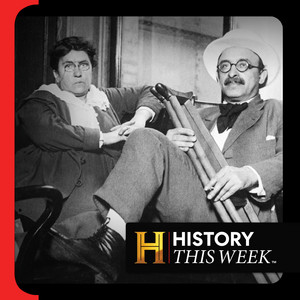
Why did the Queen of Anarchism target one of America's wealthiest men?
And how did the attack help lead to the rise of J.
Edgar Hoover and and policing as we know it.
If you've heard of Henry Clay Frick, chances are you're from Pittsburgh, home to Frick Park.
Or maybe you're an art lover.
Frick's former mansion on New York City's Fifth Avenue is a world -renowned art museum, housing his personal collection of Rembrandts, Vermeers, and the like.
During his lifetime, Frick would have been mentioned in the same breath as Carnegie, Carnegie, Rockefeller, Vanderbilt.
But he's become sort of the forgotten tycoon.
Frick made his fortune in the steel industry.
In the late 1800s, he was one of the uber -rich businessmen who directed America's transformation from agrarian backwater into industrial superpower.
This involved laying thousands of miles of railroad tracks, and turning fields into massive factories like Frick's steel mill in Homestead Pennsylvania.
It all happened so fast. You know as late as the 1860s it was just farmland.
Steven Johnson is the author of The Infernal Machine, a true story of dynamite, terror, and the rise of the modern detective.
You know it's basically people living an agrarian lifestyle as as people have been living for hundreds if not thousands, of years.
And in the space of about 20 years, it had been transformed into this really kind of nightmarish industrial landscape.
The tycoons drove this change.
But of course, actually building this new landscape, that fell to America's vast working classes.
Millions of them were immigrants.
And on a hot summer day in 1889, one of those immigrants stepped off a ferry to begin a new life in New York City.
Ever since she was a little girl, Emma Goldman had been on the move.
Born into a Jewish family in Tsarist Russia, she and her parents moved from town to town, chasing a prosperity that always proved to be just out of reach. Beatings were frequent in her family.
Her father forced forced her to abandon school to work in the garment factories.
Longing for a freer life, Emma fled to America, only to find that the garment factories in Rochester, New York, were no better.
After a couple of years disenchanted in Rochester, Goldman sets off on her own.
She goes to New York City, with a sewing machine and $5 in her pocket.
She's just 20 years old.
The first thing she does is get completely lost. She knows she should head towards the Lower East Side, home of the city's Russian -Jewish immigrants.
Easier said than done.
She's kind of misinformed about where the Lower East Side is relative to where she's arrived.
And so she walks about 60 blocks through a sweltering, overcrowded New York City and finds her way to the Lower East Side.
she later says the streets felt endless but she finally gets there walks through canyons of tenements along streets lined with peddlers selling everything from tin cups to damaged eggs hungry and exhausted she pushes open the door to saxe's cafe it's packed heated arguments fill the air spoken in russian and yiddish arguments about the evils of capitalism and what to do about it That is Emma's element.
She overhears a guy at another table loudly ordering for another steak.
And she's like, who is that annoying guy?
And she ends up sitting down and chatting with him with her friends.
And it's Alexander Berkman.
Berkman, who goes by Sasha, is a Russian Jewish immigrant, too.
He's just 18 years old.
To Goldman, he cuts a dashing figure.
She'll later recall he had a strong jaw and intelligent eyes.
They start talking politics and realize they have similar interests.
Sasha invites Emma to a lecture, and the lecturer is her favorite anarchist speaker.
Emma calls Sasha comrade, which thrills him.
Sitting with this intense young man, Emma has the feeling, after so many years on the move, that she's finally arrived.
arrived. As they're walking out, one of them slips and the other kind of catches them.
And there's a sense of like, oh, you know, I'll protect you.
And that random encounter at Saks on her first day in New York City ends up setting the kind of groundwork for the rest of her life.
Emma and Sasha bond over their terrible jobs.
In Rochester, Emma had been working 10 and a half half hours a day sewing men's overcoats.
Sasha works a series of odd jobs, including as what's called a buncher.
He prepares the insides of cigars.
The pay is so low that he often sleeps on park benches.
Both have come to believe that the world is upside down.
The rich are too rich and the toiling masses too poor.
And they are absolutely convinced that the solution lies in a political philosophy that is quickly taking root across the industrializing West. I think one of the things that we have to do is remind ourselves of what anarchism really meant at the time.
It's obviously a term that still exists as a political philosophy, but I think in most people's minds it's been contaminated by the meaning of the word anarchy connoting chaotic disorder.
To Emma and Sasha, anarchism isn't about disorder at all.
The real original roots of the word just means kind of no rulers, literally.
And so the vision of anarchism is a vision of a society without, you know, large top -down hierarchies.
And it has connections to both the right and the left in the sense that it is equally opposed to large corporate power as it is opposed to large federalized government power.
What it doesn't like is power.
Whether that power came in the form of a strict father, a factory foreman, or the government enforcing its will through the police, to a growing number of American workers at the time, anarchism sounds like a pretty good idea.
Not only are many of them living in overcrowded tenements without indoor plumbing, but in a time before workplace safety regulations, just going to work every day in a factory is incredibly dangerous.
Thousands and thousands and thousands of people were getting killed on the job, you know, year after year after year, and that was just the cost of doing business.
What the ideal anarchist society would be like depended on who you asked.
Here's what Emma Goldman might have said.
There was an ideal society that we hit kind of 200 or 300 years before we started to industrialize, which was the kind of classic late Renaissance kind of hill town culture where you have small city states, you know, there are kind of 50 ,000 people, 100 ,000 people.
They're driven by guilds and workers' collectives.
There aren't yet giant corporations or huge nation states.
And life, Goldman thinks, was pretty good.
You see tremendous artistic, creative developments, amazing science happening, some interesting technology for the period happening.
And the argument the anarchists made was like that was actually a really great way to organize society.
But of course, there's always this important question.
How do we get from the present situation to that ideal society?
Like many of their comrades, Emma and Sasha don't believe that it can happen through the ballot box.
the powers that be are too powerful.
The system is broken.
Instead, they believe that the road to paradise is paved with spectacular acts of violence.
Bombings and assassinations can be used to weaken the ruling class and inspire revolutionary change.
Each attack would make more propaganda than thousands of pamphlets, one anarchist thinker said.
They called it the the propaganda of the deed.
Today, we would call it terrorism.
Sasha and Emma were children in 1881 when Tsar Alexander II was assassinated by a nihilist group.
And even then, the notion that an idealistic group of comrades could kill an autocrat, they found that inspiring.
Never mind mind that it also sparked a wave of antisemitic discrimination and violence.
They believed that just as they had been mobilized and radicalized by earlier moments of political violence, particularly the assassination of Alexander II, others out in the world would rise in support of the cause when they would read about some political leader or some captain of industry being assassinated in the name of an anarchist future.
And there's this incredible scene where they're walking through the Long Meadow in Brooklyn's Prospect Park and they're kind of falling in love with each other but they're falling in love with each other by talking about the deed of assassinating Alexander II and why it was a kind of romantic you know sacrifice to make for the cause as the people who assassinated him were ended up getting executed And so there's this, in a way, very foreign to us today, this young love that's bound up in the passions of assassinating powerful people.
And together, Emma and Sasha make a pact to, quote, dedicate ourselves to the cause in some supreme deed and to die together if necessary.
Emma and Sasha are eventually priced out of New York, some things never change, and they move to Worcester, Massachusetts.
They open a luncheonette and ice cream parlor.
Sasha waits tables and works the soda machine.
Emma fries up the pancakes.
They assassinate zero czars.
It turns out they're really good at this.
The luncheonette is a hit.
Soon they're making enough money to send some to revolutionaries back in Russia.
But in the summer of 1892, headlines about a labor dispute in Homestead, Pennsylvania remind them that they've got bigger dreams and a pact to keep in their new country.
The Homestead Strike is a clash of industrial titans.
The Carnegie Steel Company versus the Amalgamated Association of Iron and Steel Workers.
One of America's most powerful corporations versus one of its strongest trade unions.
It's Goliath versus Goliath.
And it all comes down to a wage dispute.
Workers at the enormous Homestead Mill outside of Pittsburgh are demanding fair pay.
The company's chairman, Henry Clay Frick, wants to cut wages.
He's backed by his boss, Andrew Carnegie, possibly the richest man in America.
When the union goes on strike, Frick locks the workers out of the mill and builds a barbed wire fence around it, just to make sure.
Then he goes one fateful step further.
Frick calls in a very interesting force in this period, which is the Pinkerton Detective Agency.
see. Pinkerton might sound sort of warm and fuzzy, but they're essentially a private militia.
You might remember from an earlier episode that the Pinkertons made their name fighting outlaws in the Wild West. Now, they're strikebreakers for hire.
Frick calls in 300 of them to secure the mill and to protect the non -union workers he wants to bring in to restart it.
That's the plan. But what actually happens is that the Pinkertons arrive by barge, and as they attempt to land, are met by thousands of strikers, many of them armed.
A battle breaks out, like actual warfare.
There are barricades, sharpshooters, dynamite bombs, even cannons.
At one point, the strikers pour oil into the Monongahela River to try to light it on fire to destroy the Pinkerton barges.
This goes on for 12 hours.
Finally, the Pinkertons surrender.
But by then, some nine workers and seven Pinkertons are dead.
The strikers' victory is short -lived.
Frick appeals to the governor of Pennsylvania for help.
The governor sends 8 ,500 troops armed with Gatling machine guns.
The troops seize the steelworks in just 20 minutes.
Soon they've got the plant up and running with scab workers.
It was one of the most violent moments in the history of the labor movement in the United States.
And it really showcased whose side the government was on.
And it showcased the willingness of the industrialists like Frick to hire a militia to put down their workers if they got too uppity in their demands.
Emma and Sasha are furious.
And Berkman decides, apparently in just a matter of minutes, he says, this is the moment we have to send a message to the people.
Frick must die. And he decides that he is going to personally assassinate Henry Clay Frick.
This episode is brought to you by JCPenney.
And if you've been to JCPenney recently, yes, JCPenney, you'll know it's becoming the way to find good clothes for prices that still make sense.
They've got hidden gems for everyone and every budget with deals and rewards that actually make a dent.
If you already shop JCPenney, you feel like you know a secret.
But if not, it's time to ask, Wait, am I sleeping on JCPenney?
Shop JCPenney .com. Yes, JCPenney.
Hey there, cats and kittens.
It's Brian from the Commercial Break, the mediocre comedy podcast where my best friend Chrissy and I attempt to make sense of the world.
We talk about the absurd, the ridiculous, and the stuff no one asked for, like internet weirdos, pickup artists, and why everyone is obsessed with crystals and colonics.
It's all got to stop.
The show is free, it's frequent, and it's probably not for everyone.
You can go to tcppodcast .com, Subscribe at youtube .com slash thecommercialbreak or check out the show wherever you listen to podcasts.
We'll see you on the next commercial break and best to you.
She's made up her mind to live pretty smart.
Learn to budget responsibly right from the start.
She spends a little less and puts more into savings.
Keeps her blood pressure low and credit score raises.
Boring money moves make kind of lame songs, but they sound pretty sweet to your wallet.
BNC Bank, brilliantly boring since 1865.
Alexander Sasha Berkman has decided to assassinate the industrialist Henry Frick.
He and Emma Goldman close their luncheonette in Worcester and move back to New York City.
In an homage to the nihilists who killed Tsar Alexander II, Sasha decides that the murder weapon will be a bomb.
But there's a problem.
You can't just buy a bomb off the shelf.
And he has absolutely no experience as a bomb maker.
And so getting advice from some pamphlets that have been circulating around, he decides to assemble a bomb in this flat with small children of his friends sleeping in the bedroom next door.
And he builds two and he decides to test one of them.
And so he goes off to Staten Island, which at that point was actually mostly unsettled, and finds a kind of remote area and attempts to detonate the bomb.
And it does not succeed.
Bombs are out. So he buys a snub -nosed revolver.
Berkman is convinced that this is the right thing to do.
kill a parasitic industrialist on behalf of the homestead strikers and all working people.
He takes the train to Pittsburgh to find the man he calls the insignificant reptile Frick.
On July 23rd, 1892, he shows up at Frick's office downtown.
Frick is sitting at a conference table in the middle of a meeting and Sasha Berkman barges in.
Berkman raises his gun to shoot Frick in the head and he says in his memoirs of this that he has this kind of moment of like, oh, there's an actual human being in front of me and like I now control his life and there's a moment of kind of hesitation apparently and it's a question of does this throw Berkman off in some way or not?
Because he ends up firing the weapon, but missing, just slicing off a part of Frick's ear.
The bullet pierces Frick's neck.
He drops to his knees and slumps against a chair.
Berkman goes to check whether he's dead.
Then Frick's deputy tackles him.
And Frick, very much not dead, cries for help.
Berkman fires a second shot, again striking Frick in the neck.
and a third, misfire.
Instantly, a number of the people in the room descend on Berkman, slam him onto the floor.
Then on the floor, in this kind of like melee on the floor, Berkman somehow manages to pull out a dagger he's also brought, and he kind of crawls over towards Frick and starts stabbing him in the legs.
And then at the end of this confrontation, as Berkman has been disarmed and is being fully held on the ground by the folks in the room.
A policeman rushes in, points his gun at Berkman, assuming basically that he's going to shoot him and take him out altogether.
And Frick actually intervenes and says, don't shoot, we have him, let's leave him to the law.
Before he's taken away in an ambulance, Frick insists on dictating a public statement.
men. This incident will not change the attitude of the Carnegie Steel Company toward the amalgamated association.
That's the union. He adds, I do not think I shall die, but whether I do or not, the company will pursue the same policy, and it will win.
Frick survives the attack, and he is already turning to the big question.
What will be the effect of this assassination attempt on workers across the country.
Will they be inspired to revolt?
Berkman thinks they will, that they'll respond to his brave sacrifice.
He later wrote, To give all without a thought of self, to give all voluntarily, cheerfully, nay, enthusiastically.
Could anyone fail to understand such a love?
In the Allegheny County Jail, Berkman gets a very direct answer to this question from an actual homestead striker, the first he's ever spoken to, a man named Jack Tinford. And it quickly becomes clear that Tinford has no idea why Berkman tried to kill Frick.
So Berkman launches into his spiel.
Like, Jack, it was for you, for the people, yada, yada, yada.
And Tinford cuts him off.
He's like, what are you talking about?
Frick's death would have been a disaster for the strike.
We don't believe in killing.
We respect the law.
You anarchists have no business being here.
He says this right to Berkman's face.
Now, if somebody you're trying to help says, stop, you're making it worse, it would be reasonable to pause and say, huh, maybe I should rethink this.
But Berkman is a true believer.
And so his takeaway is this Jack Tinford guy has no class consciousness.
What a loser. What he can't understand or admit is that Tinford is right.
The attack makes things so much worse.
It actually ends up being a colossal backfire for them.
It mobilizes kind of public support on the side of Carnegie and Frick, and it ends up being a major loss for labor, leading to exactly the opposite outcome that Goldman and Berkman had hoped for.
As one labor organizer puts it, the bullet from Berkman's pistol failing in its foul attempt went straight through the heart of the Homestead strike.
strike. Within months, the strike is over.
The union is in tatters.
There won't be another big national union in the steel industry for decades.
And Frick gets exactly what he wanted, longer hours and lower wages at the mill.
Berkman is sentenced to 22 years in prison.
Emma Goldman is able to avoid prosecution.
Her role planning and financing the plot is kept secret.
And as her lover Berkman disappears behind bars, Emma is about to begin her meteoric rise.
Berkman's assassination attempt turns out to be at the leading edge of a trend.
It is hard to overstate how wild the 1890s are in terms of political violence.
I think there are a lot of themes that run through the arc of Goldman and Berkman's life that are still resonant for us.
Probably the most important one is, it's a story about how societies fall into a kind of normalization of political violence.
That we had a period that, you know, a significant part of the population thought that blowing things up was an appropriate way to advance an argument.
This is especially true in Western Europe.
Radicals throw dynamite into a crowded restaurant in Paris and plant bombs in the London Underground.
And then, there are the assassinations.
One after another. In 1894, the president of France is killed.
In 1897, the prime minister of Spain.
The next year, an anarchist stabs the empress of Austria to death.
In 1900, they come for the king of Italy.
It is a royal bloodbath.
Anarchists are behind all of these attacks, practicing the propaganda of the deed.
And law enforcement is struggling to keep up.
One of the things that's hard to imagine sitting where we are now, well into the 21st century, is just how disorganized policing was and how unscientific policing was 120 years ago or so.
This is a time when fingerprinting and criminal databases were still in their infancy.
On the most basic level, we had no real standardized form of identification.
So it was very easy if you were a criminal to just say that your name was some other name, and they really didn't have a great way of proving that.
That's not to say that law enforcement isn't trying.
For example, in the summer of 1893, police are crisscrossing New York City, trailing a tiny young woman in a modest blue suit and little pince -nez glasses.
That would be Emma Goldman, all of five feet tall.
New York City policemen nevertheless have her pegged as a big threat.
And for good reasons.
Emma has begun delivering fiery speeches to unemployed workers.
The panic of 1893 has led to widespread job loss.
and Emma is seizing the moment to mobilize the working class.
One evening in August, standing on a dais in Union Square, looking out across a sea of angry protesters, she yells out, go to the houses of the capitalists and demand your rights.
If you are refused them, take them by force.
Plainclothes officers in the crowd perk up.
A few weeks later, Emma is arrested for inciting a riot.
She's sentenced to a year of hard labor on what's now Roosevelt Island in the East River.
Newspapers dub her Queen of the Anarchists, transforming her into a national celebrity.
It was said that bourgeois parents would warn their naughty children to behave or Emma Goldman would get them.
She'd officially become the monster under the bed.
And as any child knows, monsters have terrible powers.
Powers that can reach even the President of the United States.
broke the big cycle explains the mechanics behind big debt crises.
Larry Summers says Dalio's brilliant iconoclastic approach is an invaluable resource.
And Hank Paulson says it provides a solution to what is the biggest and most certain threat to our prosperity.
Read it to understand the greatest economic issue of our time.
Available now wherever books are sold.
At Capella University, learning online doesn't mean learning alone.
You'll get support from from people who care about your success.
Like your enrollment counselor who gets to know you and the goals you'd like to achieve.
You'll also get a designated academic coach who's with you throughout your entire program.
Plus, career coaches are available to help you navigate your professional goals.
A different future is closer than you think with Capella University.
Learn more at capella .edu.
This episode is brought to you by Progressive Insurance.
Do you ever find yourself playing the budgeting game?
Well, with the Name Your Price tool from Progressive, you can find options that fit your budget and potentially lower your bills.
Try it at Progressive .com.
Progressive Casualty Insurance Company and Affiliates.
Price and coverage match limited by state law.
Not available in all states.
There's something creepy about Fred Niemann.
The anarchists who meet him in the summer of 1901 say he asks indiscreet questions.
He's obsessed with finding out some kind of password, and he doesn't seem to know much about anarchism.
But he wants help plotting violent attacks.
tax. Chicago anarchists decide he's a government spy and put out a warning.
He is well -dressed, of medium height, rather narrow -shouldered, blonde, and about 25 years of age.
Comrades are warned in advance and can act accordingly.
After a lecture in Cleveland, Neiman approaches Emma Goldman, asking for book recommendations.
He has a sensitive face, she remembers, with curly golden hair and large blue eyes.
They strike up a friendly rapport.
She introduces him to some friends.
Four months later, Fred Nieman, real name Leon Cholgash, walks up to President William McKinley at a World's Fair in Buffalo and assassinates him.
And they ask him what his motive is.
Does he want to make a statement?
And he says, I am an anarchist. I am a disciple of Emma Goldman.
Her words set my mind on fire.
So this news appears, you know, the next day on the headlines all around the country.
And everyone assumes that this kid is working for Emma Goldman.
He's not. Goldman barely knew this guy.
The police clear her of any wrongdoing.
But her notoriety reaches new heights.
The assassination is also a major wake -up call for the U .S. government.
Coming on the heels of all those assassinations in Europe, American officials are like, we need to get our act together.
This can't happen again.
It's almost impossible to imagine something like that.
We've never experienced anything like that, where there was so much concentrated successful violence in the name of a political movement.
And so what that ends up doing is really solidifying the anarchist and anarchist groups as public enemy number one in the minds of governments around the world, but particularly in the United States.
In his first annual message to Congress, the new president, Teddy Roosevelt, calls anarchism a crime against the whole human race and urges all nations to fight it together.
together. Congress passes a new immigration law that allows them to ban anarchists and other political undesirables from entry.
Radical publications are censored.
The New York Police Department organizes a bomb and anarchist squad.
It feels almost like a 9 -11 moment.
The struggle even gets an eerily familiar nickname, the War on Anarchy.
and all of this is helping to accelerate a revolution in crime fighting u .s law enforcement realizes our id system needs to be way better a french police officer has developed a system that allows governments to quickly id suspects across borders and the emerging forensic scientists help bolster that fingerprinting and mugshots become standard practice there's an interesting side to this story where you have, on the one hand, this explosive violence enabled by new technologies like dynamite and new political ideologies like anarchism.
And on the other side, the force that ends up emerging to subdue that threat is really like library science on some level, like it's information science.
It's managing data and the data ends up being, in a sense, more powerful than dynamite this will become especially true after the fbi is founded but it is important to note that at the time when mckinley is assassinated there is no fbi yet there are no federal investigators period and that was by design it was a very like old school american kind of libertarian decision like there shouldn't be a national like police force like Like that felt like something that Europeans did in kind of a scary way and Americans were more independent.
They didn't want their federal government to have that much power.
After the assassination, Roosevelt asks Congress for a national detective force, a more centralized way to fight back against these anarchists.
But Congress says no. As one lawmaker put it, spying on men and prying into what would ordinarily be considered their private affairs went against the American ideas of government.
Others believed that a central police or spy system in the federal government would be a great blow to freedom and free institutions.
But then, over the course of the early 1900s, things just keep on exploding.
One of the things I noticed going through the archives is just how many bombs were going off in New York City between, say, 1900 and 1920.
There's something like 7 ,000 bombs were attempted to be detonated over about a 30 -year period.
There was just nonstop random explosive violence in the city that would be unimaginable today.
The Bronx Borough Courthouse bombed.
NYPD headquarters bombed.
Wall Street, St. Patrick's Cathedral, the U .S. Capitol Building, Market Street in San Francisco all bombed.
Mail bombs, suitcase bombs, dynamite bombs.
They were called infernal machines by the press, and they had lots of different mechanisms. Some of them were time -based.
The classic ball with the fuse is a little, it's not exactly what it looks like.
It looks almost like a little, I know they would often put them in an old olive oil can or something like that.
And so the explosive would be there, there'd be some fuse coming off of it.
Not all of the bombers are anarchists, but many of them are.
And they loom the largest in the public imagination.
President Roosevelt decides to act and goes around Congress.
He directs his attorney general to create a new division of the Justice Department, the Bureau of Investigation.
It's small, just 34 special agents, but it's a start.
Meanwhile, Sasha Berkman, one of the first anarchists to rise to prominence in the United States, he is finally getting out of prison.
It's May 18th, 1906.
Sasha can't sleep the night before.
A few more hours, he thinks, and, quote, I shall walk through the gates and drink in the warm sunshine after the nightmare of 13 years and 10 months.
When the moment finally arrives, he finds himself stepping not just into the sunshine, but into a new century.
You know, having gone in his early 20s, he comes out in his late 30s, the world has transformed Formed skyscrapers, electric lights, automobiles on the streets.
He's literally never seen a car before.
Just crossing the street is bewildering.
Sasha takes the train to Detroit to meet Emma.
It's been several years since their last meeting.
And when he steps off the train, at first he doesn't recognize the woman on the platform.
The one with familiar eyes, who's staring at him with a look of awe and terror.
Emma is shocked by Sasha's appearance.
She takes him home and quickly realizes how deeply he's been traumatized by his time in prison.
Ever the rebel, Sasha was punished for various infractions, from spreading anarchist ideas to attempting suicide.
He spent over a year in solitary confinement, wracked by pain and despair.
Now, on the outside, he struggles to adjust to life.
He has terrible, screaming nightmares.
He can't find work.
It's as if the world has passed him by.
And that includes the person closest to him.
Perhaps the most dramatic change of all is the status of his longtime compatriot, Emma Goldman.
Emma is now the most influential woman in radical politics.
She's become truly world -famous.
She has traveled all across Europe and the United States on multiple lecture tours.
She has written extensively.
She herself has been briefly incarcerated for a few things, but mostly has been out as a kind of public intellectual and radical figure.
Her ideas have changed, too.
She's moved away from violence as a political tool and turned her focus to women's rights and other progressive causes.
She's still obviously involved in labor movements, but she's a big advocate for sexual freedom, both in terms of like homosexuality, but also just in general, very much kind of like what would become the kind of free love movement.
The two of them try to rekindle their love affair, but it's clear that the fire is gone.
From here on out, they're strictly comrades.
And both of them are still active in politics.
They both oppose U .S. entry into World War I and promote resistance to the draft. And when the U .S. does enter the war, the boundaries of free speech narrow.
Congress passes a raft of laws that make disloyal, profane, scurrilous, or abusive language about the U .S. government illegal.
And the new laws explicitly authorize the removal of non -citizen anarchists.
Even those who renounce violence.
Anarchist ideas are enough.
On top of all of this, the Russian Revolution of 1917 sparks a wave of anti -leftist panic in the United States.
The first Red Scare.
The Justice Department responds by creating a special division to deal with radicals, the creatively named Radical Division.
And they choose a 24 -year -old whiz kid to run in, a young investigator named J.
Edgar Hoover. He was really kind of a super nerd in a way.
Like he was he was trained as a librarian and he had kind of two great passions, like fighting radical subversives and and organizing card catalogs.
Like those are like his great mission in life were to combine those two things.
And he did it incredibly effectively.
At the Department of Justice, Hoover created a whole new way for the government to organize its files.
It was kind of Google before Google, right?
It was a way of making it easier to search the information that the government had amassed.
Hoover will, of course, go on to lead the FBI for decades.
His ability to amass information on individual Americans and use it to destroy lives will make him one of the most feared figures in Washington.
And when he's first starting out, he turns his attention to Sasha Berkman and Emma Goldman.
He made it basically his first mission at the helm of the Radical Division to marshal enough data to deport Emma Goldman and Alexander Bergman.
To deport them by marshalling the data.
When Goldman is brought into her deportation hearing, she actually gets to see all that data.
She describes kind of coming into the hearing and seeing Hoover sitting at the desk with these huge stacks of paper.
And it's all the files that he's amassed.
It's almost everything she's said in public for, you know, 20 years, 25 years, going back to Frick, even even beyond that.
And it's a whole kind of dossier of her life as a as a radical public figure.
care. Emma mounts an impassioned defense, arguing that the anti -anarchist law is a violation of her First Amendment right to free speech. She also issues an ominous warning.
Today, so -called aliens are deported.
Tomorrow, Native Americans will be banished.
But it's no use. Hoover and his team, they win.
And so it's ultimately really the kind of like the triumph, if you want to call it that, of the kind of information surveillance state, finally being able to gather and collect and organize enough information to actually deport someone.
Early in the morning on December 21st, 1919, Emma, Sasha, and 247 other people deemed radicals are loaded onto a barge at Ellis Island.
Newspapers dub it the Red Ark.
J. Edgar Hoover is also on board, making sure everything goes smoothly.
And just before the ship departs, he runs into Emma in the ship's kitchen.
She doesn't hold back.
Deporting people for their political beliefs, she says, is the beginning of the end of the United States.
The exchange is brief.
grief, Hoover departs.
The ship raises anchor, and Emma and Sasha watch as the Statue of Liberty shrinks before disappearing over the horizon.
One important element of this story is really how it ends.
It's a story of people who were deported for entirely political reasons in some cases.
There are some cases where there was violence and actual crimes being committed, but many of the people on the Red Arc were being exiled to Russia because of what they had written, because of what they had argued, because of the protests they had gone to.
That was a change in how the United States treated political dissent.
It was not something we had seen in the first century and a quarter or so of the country's existence.
In kind of a tragic sense, the anarchists ended up not advancing the cause that they were trying to advance successfully.
And in fact, they made the state power that they had fought so earnestly against even more oppressive.
And they created a whole system of kind of state surveillance and information science, and then these political deportations that literally didn't exist before they came into being.
And so the exact inverted version of what they were fighting for came out of their interventions.
Sasha Berkman never again sets foot on American soil.
oil. Suffering from poor health, he dies by suicide in 1936.
With the help of influential friends, Emma Goldman does return for an American lecture tour in the mid -30s.
She dies in Canada in 1940.
And J. Edgar Hoover leads the FBI from 1924 until his death in 1972.
Under his leadership, the FBI amasses files on hundreds of thousands of Americans.
Files that, among other things, help facilitate the government purge of suspected leftists during the McCarthy era.
era. Thanks for listening to History This Week, a Back Pocket Studios production in partnership with the History Channel.
To stay updated on all things History This Week, sign up at historythisweekpodcast .com.
And if you have any thoughts or questions, send us an email at history this week at history .com special thanks to our guest stephen johnson author of the infernal machine a true story of dynamite terror and the rise of the modern detective we also refer to the books love anarchy and emma goldman by candace falk american anarchy by michael willrich and sasha and emma by paul average and karen average this episode was was produced by John Earl.
It was sound designed by Ben Dickstein and also produced by me, Sally Helm.
For Backpocket Studios, our executive producer is Ben Dickstein.
From the History Channel, our executive producers are Eli Lehrer and Liv Fidler.
Don't forget to follow, rate, and review History This Week wherever you get your podcasts, and we'll see you next week.