Grownups, Wondery Plus subscribers can listen to Wow in the World early and ad-free right now.
Join Wondery Plus in the Wondery app or Wondery Kids Plus on Apple Podcasts.
Hey, Wowzer fans, Mindy here.
And before we start the show, I gotta let you know that this November, with a special new episode featuring our friends at Circle Round and Terrestrials on Radiolab for Kids,
And don't miss when Elmo from Sesame Street stops by Wow in the World to make us all belly laugh on November 24th.
Oh, but that's not all, Reg.
On December 1st, we are sharing our 250th episode of Wow in the World with all of you.
We think this one is going to be music to your ears.
Literally.
Did I mention it's a musical?
And if you're a member of the World Organization of Wowzers...
Oh boy, do I have a surprise for you.
You can listen to our 250th episode early with me and other members from around the world on Saturday, November 22nd, at 7 pm.
Eastern.
That's right, we are throwing another listening party.
Join us as we dance along to our new songs.
React to the episode with other members in the chat and more.
Grownups.
If you want your wowzer to join this members-only listening party, you can sign up to become a member today at Tinkercastcom.
Slash wow.
Already a member?
Well, you can find the link and password to join the event when you sign in at Tinkercastcom.
Slash wow.
That's it.
It's going to be a November to remember.
But for now, let's get on with the show.
Woo to Inside Tinkercast Studios, the show where I reminisce and revisit my favorite Wow in the World episodes.
I'm your host, Dennis.
And Reggie's here too, I guess.
You are not my co-host.
You just wandered into my state-of-the-art podcasting studio.
Reggie!
If anyone finds out that my state-of-the-art podcast studio is just a closet where I keep all my old bathroom towels, it would ruin my irresistible aura of mystery.
Well, Just edit that last part out.
You know how to edit, right?
Perfect!
Let's move on.
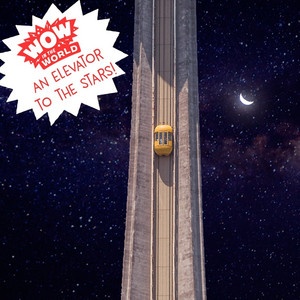
Today's episode of Wow in the World is Season 3, Episode 3, and Elevator to the Stars.
In this episode, Guy Raz and Mindy set off to listen to the latest and greatest in elevator music.
But this elevator music isn't just for any old eleva... What is elevator music?
How do you not know what elevator music is?
Uh...
Elevator music is subtle yet sophisticated music played at a low volume in elevators for calming background noise.
I mean, sheesh, get with the times already, Reggie.
Fine, fine, fine, fine, fine, fine.
You're right.
Let's move on to the Q&A segment of Inside Tinkercast Studios.
Let me just get the old answering machine pulled up here.
Okay, there we are.
You have no new messages.
Hmm, that's strange.
Oh, well, I'll just get the backup answering machine.
Well, obviously there's a backup, Reggie.
Okay, here we go.
Hit it, voicemails.
Hi, you've reached Dennis from Inside Tinkercast Studios.
If you've got a question, well, I do too.
Lots of them.
And who's going to answer all my questions?
You?
Probably not.
But I guess I can answer yours.
Leave me a message.
Hi, Dennis.
It's me, Den-atist.
Yeah.
Your dentist.
I have a question for you.
What is your favorite color?
Wow.
Thanks for your question, Mr. Dentist.
My favorite color is puce.
I actually don't know what color it is.
I just like the word.
Puce.
Puce.
Puce.
It's just, it sounds like... Oh, it does sound like a laser beam.
Next question.
Hi, Dennis.
It's me, Den... Mark.
I'm from Denmark.
Well, naturally.
I have a question for you.
How does a microwave work?
Wow.
Thanks for your question, Denmark.
The answer is, nobody knows.
Next question.
Reggie, what do you mean electromagnetic radiation to cause polar molecules in the food to rotate?
That doesn't make any sense.
Well, you say tomato.
I say tomatoes are gross.
Thanks for your calls, everyone.
If you've got a question for me, call and leave me a message.
The number is 1-888-7-WOW-WOW.
I just might answer your question on Inside Tinkercast Studios.
Okay, that takes care of that.
Good idea.
Let's play the episode.
And now, Inside Tinkercast Studios, brings to you a special encore presentation of one of my favorite episodes.
An elevator to the stars.
Roll it.
Floor one, floor two, floor three, four, five.
Elevators are so cool.
So come on, let's ride in the elevator.
Elevators are so what in the?
Good morning, Guy Raz.
Can I interest you in some fancy coffee in a tiny cup fit for a baby?
Mindy, what in the world are you doing in my kitchen at this hour?
Mine caved in.
Again.
Well, what did I tell you about using those off-brand graham crackers for construction?
Off-brand?
You mean the Grandma G-Force crackers?
That's Grandma G-Force's face on the box, Sky Ross.
Well, her crackers are clearly not as strong as she is.
By the way, what are you going to do about that caved-in kitchen in your gingerbread house?
I don't know.
I guess I'm just hoping someone will come along and offer to rebuild it for me.
I mean, it is gingerbread season, so... Oh, right.
Uh, But in the meantime, you're going to... Use your kitchen.
Is there any fish tacos in here?
What?
No, Mindy.
You've got to find someone to rebuild your own kitchen.
This is my kitchen, and everything is in its right place.
And are you using my Elevate Your Soul magazine as a placemat?
And...
Mindy!
Why?
What is this magazine anyway?
This, Mindy, is only the most popular elevator music magazine in America.
Yeah, I'm pretty sure it's the only elevator music magazine in America.
What?
What?
It's one of my favorites.
Check it out.
The latest band interviews, where to listen to the latest hits.
Let me see that.
An exclusive interview with the biggest name in inter-floor transportational music?
What?
That's them, Mindy.
What's what?
The band that they're interviewing, The Elevates.
The Elevates?
Yeah, their new album is playing in an elevator in a building downtown and I wanted to double-check where they were playing.
Let me see here.
Ah, there it is.
The Elevates' new track will be playing from top to bottom, bottom to the top of 345 Block Street.
Block Street.
I know where that is.
Let me just... Hey, Zoodle.
Oh, boy.
Here we go.
Where is 345 Block Street?
345 Block Street is directly between 344 and 346 Block Street.
Yeah, I know that.
I mean, where is it in relation to here?
345 Block Street has no known relatives in the area.
Zoodle, one last time.
In which part of town is 345 Block Street located?
345 Block Street is located in downtown.
Aha!
See, Mindy?
Such a time saver.
Aha!
Anyway, The Elevate's brand new album is playing in that building downtown.
Uh, hold the phone, Guy Raz.
Are you telling me that you travel to different office buildings all over town just to listen to their elevator music?
Of course I do, Mindy.
Where else would you listen to elevator music?
Um, there's... Yeah, you got a point.
Anyway, Mindy, I better get going.
Wait!
I'll come with you.
No, no, that's okay.
Come on!
Let me just lock up the house here.
Mindy, it's my house.
Oh, it's okay.
I changed all the locks when I moved into your kitchen.
Phew.
What?
Reggie!
Morning, Guy.
Morning, Mindy.
Morning, giant pigeon.
Hi, Dennis.
What's up, Dennis?
Did I overhear you saying that you were going to go listen to some new elevator music?
I love elevator music.
Which band are you going to go listen to?
Uh, it's a band called The Elevates.
Oh, no, no.
You've got to stick with the classics.
My favorite elevator band is Awkward Silence.
Their instrumental arrangement of the girl from Infonema changed.
Okay, great.
Thanks, Dennis.
Ooh, an elevator to heaven?
No?
Come on, you two!
Okay, Reg, we're gonna need you to step on it.
Fourth floor.
Come on, Guy Raz!
Coming!
Are you gonna ride on that bird?
Oh, it's completely unsafe.
Ahoy there, Mr. Bird, Mr. Giant Bird.
Yes, I am a member of an activist group called for imaginary animal rights.
I should give you my card.
Here we go!
Thanks, Reg.
Yeah, thanks, Reg.
You are now free to go sit on the ledge with all the other pigeons.
Have fun!
Okay, so Guy Raz, this must... be the... Wait a minute.
Are you sure this is the right place?
Yep.
345 Block Street.
Kind of looks like a boring old concrete office building.
I know.
Isn't it perfect?
Well, to ride an elevator while listening to elevator music.
Yeah, I guess it is perfect.
Oh, look.
A revolving door.
My second favorite kind of door.
Run, run, run, run, run.
Mindy, wait up.
Come on, Guy Raz.
You're going to miss out on all for two in this little tour.
Come on, just squeeze in one more tiny inch.
Cozy.
You can say that again.
Cozy.
Okay, on three, we're going to push.
Not too hard, though.
What?
Where's Mindy?
Here I am!
Um, hello, sir?
Welcome to 345 Block.
Can I help you with anything today?
Maybe a band-aid?
Yeah.
We're here to listen to the new Elevate soundtrack.
Yeah, can you direct us to the elevator that's playing it, please?
Yes, of course.
That's playing in the elevators just down the hall.
You wanna go down this hallway, take the third right, then the immediate left, walk 24 steps, then take the first elevator on the left.
Then you're gonna wanna take that all the way up to the 54th floor.
And in your case, I should probably note that here at 345 block, we don't recommend attempting to exit the elevator until the elevator has come to a complete stop And the doors have actually opened.
Okay, great.
Now I just need you and your friend to sign in here.
Sure.
Mindy?
And do.
There you go.
Okay, great.
Have a nice day.
Hey, wait.
Did you just sketch a picture of an ice cream sundae?
Thank you.
Bye.
Let's go, Guy Raz.
Man, there are more hoops to jump through in this office building than there were at Reggie's Aerial Acrobatic.
Oh, but it's going to be so worth it, Mindy.
The Elevate's entire album is going to be playing from top to bottom.
From the bottom to the top?
Okay, so Guy Raz, what is so special about this album anyway?
I mean, I don't think I've seen you this excited since since I don't think I've ever seen you this excited.
Oh, Mindy, you can't even begin to understand.
This record is an experimental piece that they've created just for...
Wait for it?
What?
Just for... Just for what?
Just for... Just for space!
Did you just say that the Elevates have created this album for space?
Like, what?
Like, for the next shuttle line?
Well, no, Mindy.
This album is being designed specifically for a new space program that's being developed at JAXA, which is better known as the Japan Aerospace Exploration Agency.
Oh, I know JAXA.
JAXA's like the NASA of Japan.
That's right.
And they're planning on building the world's first ever space elevator.
Wow.
That's what I call taking an elevator to new heights.
Thank you.
Speaking of, here we are.
Okay, 52nd floor, here we come.
Ooh, we're pressing buttons.
Don't mind if I do.
Mindy, no!
And you get a push, and you get a push, and you get a push, and you get a push, and you get a push, and you get a push, and you get a push, and you get a push.
Mindy!
All done.
Mindy, you hit every floor.
Sorry, Guy Raz.
You know me.
I see a button and I push it.
Speaking of which, were you born with one of those belly buttons?
Plenty of time to think about your answer.
We're going to be here for a while.
Well, I suppose it'll give me more time to set up.
Set up?
In an elevator?
Okay, let me see here.
What in the... Just unfurl this rug.
Wait, is that a picnic blanket?
Uh-huh.
Can you hold this?
Oh, yeah, sure.
Were you carrying that cooler this whole time?
Yeah.
What are you doing, Guy Raz?
Well, the secret to a good elevator music listening party Mindy, is that uh, you know, it's all about the atmosphere.
It's an experience.
Now, uh, can you pass me the brie and crackers?
Well, hello there, and welcome aboard the Elevator Express.
Oh, hi.
Uh, going up?
You know it.
What floor can I get you?
Um, 21?
Okay, great.
Let me just see here.
Oh, looks like someone's already pressed that one.
We'll get you there lickety-split.
Um... Can I interest you in some complimentary cheese and crackers for the ride?
Oh, I love this part.
This is so great.
Hold your horses, Guy Raz.
Before this guy got in the elevator, you were saying that JAXA, the NASA of Japan, is building the world's first space elevator.
Yeah?
So what in the wow is a space elevator?
Ah, so glad you asked, Mindy.
How about I give you the, uh, the elevator pitch?
Ha, good one.
Thank you very much, sir.
Elevator pitch.
Oh, Guy Raz making me so proud.
Okay, what's up with this space elevator?
Okay, the year was 1895.
The place was Paris, France.
A Russian scientist named Konstantin Tsiolkovsky was on vacation... How do I enjoy the French sun?
It is so much kinder than the Russian snow.
...when he came across a newly built and rather spectacular monument in the middle of the city.
Oh, the Eiffel Tower!
Exactamundo, Mindy.
Tsiolkovsky would later go on to invent...
Rocket travel.
But on this trip, he was so inspired by the Eiffel Tower, this magnificent feat of engineering, that he proposed a different way of getting to space.
And not by rocket, but by... Elevator?
Whoa.
Hello.
Welcome to the elevator.
Come on.
There's plenty of room for everyone, sort of.
Can I interest you in some crudités?
No, thanks.
I'm actually allergic to celery.
I'll just catch the next one.
Oh, okay.
Well, suit yourself.
Bye!
Okay, Guy Raz, so how exactly does a space elevator work?
I mean, what does it even look like?
Well, it sort of looks like a giant version of those two tin cans with a piece of string between them.
You know that we use to talk to each other sometimes.
Oh yeah, my guy phone X Right, it kind of looks like that, with one end attached to a giant platform out at sea and the other one way up in space orbiting the planet.
Huh, like a satellite?
Exactly like a satellite.
And so what would the string be made of?
It's called carbon nanotube composition ribbon.
Carbo-nano-what-who-ins?
Carbon Nanotube Composite Ribbon.
It's a type of cable that's incredibly strong, but also really, really light.
Huh.
Okay, I think I get it.
So you have this cable that goes from here all the way out into space, and then you attach an elevator card to the cable that can travel up and down the cable.
You got it, Mindy.
Okay, Guy Raz, so I get how a space elevator might work, but...
Why?
Well, Mindy, space travel is expensive.
Oh, man, you're telling me.
I'm still trying to pay off those spacesuits we bought at that black hole fashion store at the mall.
Well, Mindy, it's not just the spacesuits that are expensive.
I mean refilling the International Space Station with everything from medicine to snacks.
Using a rocket costs almost 43000 per pound of stuff.
Whoa, that's like... Hang on, let me see here.
Carry the wand...
Like, that's like $20,000 per kilogram.
And scientists over at JAXA... The Japanese Space Agency.
Right.
They've predicted that once the space elevator is built, it would only cost around 100 to send up a pound of stuff, or 220 per kilogram.
Imagine how many snacks you could buy with those savings.
Thanks.
Is there enough room in there for the marching band?
Uh, probably not.
Sure there is.
The more the merrier.
Excellent.
Come along, everyone.
Just move a little.
Just move a little.
Yes, yes.
That's enough room for me.
I think we're all in.
Oh, someone press the button.
Way ahead of you, kid.
Mindy.
Okay, okay.
Hey, excuse me.
Nice to meet you.
Just dropped a squeeze past you here.
Just wanted to talk some science with my best friend over there in the corner.
No, I'm right here, Mindy.
But I think someone cut the cheese.
What?
In this tiny elevator?
Not cool, guys.
Whoever taught you elevator etiquette?
No, no, Mindy.
I think somebody actually cut the cheese in my cheese platter with the heel of their shoe.
Ugh.
Gross.
So, anywho, what does JAXA have to do with this space elevator?
Oh, right.
Well Mindy, like I said, this idea of a space elevator has been around for some time, but it's never actually been done before.
But?
But the Japanese Space Agency has proposed building one of these space elevators to deliver cargo and astronauts to places like the International Space Station.
So wow, so you'll just get into an elevator like this one, press the button that says Space Deck and then just ride on up into space.
Well, that's the plan, yeah.
So when can I take a ride on this interstellavator?
Well, sooner than you might think, Mindy.
Yes, just what I wanted to hear.
Okay, let me just get my phone out here.
Clearing my calendar for next week.
Not so fast, Mindy.
At Shizuka University, where researchers are working with JAXA on the space elevator program.
They're predicting that we could have an operational space elevator by 2050.
2050?
That's like a million years away.
Well, it's a pretty big project, Mindy.
I mean, it would easily be the longest structure on the planet.
Yeah, speaking of, how fast? how far will this space elevator be able to reach?
Mindy, this elevator will have enough cable attached to it to float as far as 60000 miles above the Earth.
Whoa, that's bonker balls.
Let me see here.
That's like traveling from New York to Los Angeles 21 times two and a half times around the world.
That's right, Mindy.
And although this astronomical structure won't be ready for another 40 years or so, the Japanese Space Agency is already performing tests in space to try out some of their materials.
You mean parts that might be used on the real space elevator?
That's right.
And then I said, move all of my assets out of the Bond's dividends.
Uh...
Okay.
Yeah.
Okay.
So, where were we?
Oh, yeah.
So, Guy Raz, how are they testing out these future space elevator parts?
Okay, so JAXA has recently sent two mini-satellites into space, which, when in orbit... Time out.
An orbit is when an object, whether man-made, like a satellite, or natural, like our moon, is stuck circling around the Earth because of the planet's gravitational pull.
Time in!
Once they're circling around the planet, these two satellites will split apart.
But they won't get far, because these two satellites will be attached to each other by a cable about 10 meters long.
Just like my Guyphone X made out of tin cans and strings.
And Just like a mini version of the space elevator.
Because, over the next year or so, these two satellites That are tied together by a tight piece of cable Right.
These two satellites are going to be sending back and forth along that cable a teeny, tiny little box.
A mini elevator car.
Exactly, Mindy.
A mini elevator car about the size of a matchbox.
Huh.
So I guess these scientists first have to figure out how this kind of elevator is going to work in low gravity situations.
You got it.
Oh well, I guess I'm going to have to wait until they work out all the kinks before I can take a ride in the space elevator.
Let me just set a reminder in my calendar for 2050.
And set.
Oh, looks like we're here at the top, Mindy.
Oh, Guy Raz, we've been standing in this elevator for like 52 floors and have We're going to have to do it all over again on the way back down.
Well, I'm glad you said that, Mindy, because I have a surprise for you.
A surprise?
Hello and welcome to the Elevates live and in concert.
Tonight, the band will be performing their brand new space-themed album in its entirety.
They're doing a live show! for 52 floors to listen to it?
Yeah, that's exactly right, Mindy.
Oh, thank you, Guy Raz.
Thank you, thank you.
Wait a minute.
Did you say that this album was going to be for the JAXA space elevator?
Yeah.
And didn't you also say that the elevator was 60,000 miles long?
Yeah.
So exactly how long is this concert supposed to be?
Uh, let me see.
Here it is.
Seven and a half days.
This concert goes on for a week?
And a half day.
Isn't that great?
Folks, put your hands together for the Elevates.
There they are.
How's everyone doing out there?
Oh, wow.
Cool.
Thank you so much.
Thanks for coming out to the live performance of our new elevator music experience, Making Space.
Cool, cool, super cool.
All right, let's kick it off.
One, two, three, four.
Isn't this great, Mindy?
Oh, yeah.
How much longer does this go on for?
Seven days, 11 hours and 58 minutes. just for you.
That's it!
Back to the show!
Wow in the World!
Hi, thanks for calling Wow in the World.
After the beep, get ready to record.
Hi, Mandy and Guy Ross.
My name is Owen.
I'm from San Diego.
My Wow in the World is that All of the matter in the entire universe came from the Big Bang.
Thanks, bye.
Hello, I'm Gracie.
I live in Black Mountain, North Carolina.
My wow in the world is that Emperor Penguins can be 46 inches tall.
That's exactly how tall I am.
Say hi to Reggie.
My name is Sam in Winter Garden Florida, and my wow in the world is that sometimes Pluto is closer to the sun than Neptune.
Hello, my name is Millie.
I'm from Los Angeles, California, and my wow in the world is that parents don't have vocal cords.
It's so strange because they can almost talk like humans sometimes.
Name is may.
I live in san francisco, and my wow in the world is that chewing gum was banned in singapore until 2004.
Happy holidays, hi.
My name is nora from portland oregon and my wow is wombat sleep on their back with all fours in the air.
It's so cute hi.
My name is guy ross.
My name is leela.
I live in charlotteville, virginia.
My wow in the world is that Platypuses are mammals and they lay eggs.
Hi, my name is Gary Ross.
My name is Adele and I live in Pittsburgh Pennsylvania, and my wow in the world is that rainbows are actually a full circle and we can only see half of them.
Hi, my name is Demi, and my wow is that guinea pigs eat their poop for nutrition.
She also lives in Montclair.
Hi, my name is Jasmine.
I live in.
Mercury's rare tendency in my wow is that everything in the universe except energy is made up of atoms.
Bye.
I love you, Reggie.
End of messages.
Hey, everyone.
Thank you so much for hanging out with us this week on Wow in the World.
And to keep the wow rolling, check out this week's scientific conversation starters at our website wowintheworldcom.
And grown-ups.
There you can find more info on how your kids can become members of the World Organization of Wowzers shop, our Wow Shop.
Upload photos and videos to us and check dates for our upcoming live events.
That's wowintheworld.com.
Our show is produced by Jed Anderson, who provides the bells, whistles, and silly characters.
Say hello, Jed.
Hello.
Our show is written by me, Guy Raz, and Thomas Van Kalken, who also provides...
Tom?
Hello there.
Thanks also to Jessica Bode, Casey Cofer, Rebecca Caban, Kit Ballinger, and Alex Curley.
Meredith Halpern-Ranzer powers the wow at Tinkercast.
Our theme song was composed and performed by The Pop Ups.
For more info on their two-time Grammy-nominated all-ages music, Find them at thepopups.com.
And grown-ups, you can follow Wow in the World on Facebook, Instagram, and Twitter at wowintheworld.
And our email address is hello at wowintheworld.com.
And if you're a kid with a big wow to share with us, call us at 1-888-WOW for a chance to be featured at the end of the show.
Also, if you haven't already done so, please subscribe to Wow in the World on Apple Podcasts or wherever you get your podcasts.
Yeah, leave us a few stars, a review, or just tell a friend about the show.
Thanks again for listening, and until next time, keep on wowing.
Jinx! made by Tinkercast.
Grownups, if you like Wow in the World, you can listen early and ad-free right now on Wondery Plus.
Join Wondery Plus in the Wondery app or on Wondery Kids Plus on Apple Podcasts.
Prime members can listen ad-free on Amazon Music.
And before you go, tell us about yourself by filling out a short survey at wondery.com slash survey.