Grownups, Wondery Plus subscribers can listen to Wow in the World early and ad-free right now.
Join Wondery Plus in the Wondery app or Wondery Kids Plus on Apple Podcasts.
Hey, Wowzer fans, Mindy here.
And before we start the show, I gotta let you know that this November, with a special new episode featuring our friends at Circle Round and Terrestrials on Radiolab for Kids,
And don't miss when Elmo from Sesame Street stops by Wow in the World to make us all belly laugh on November 24th.
Oh, but that's not all, Reg.
On December 1st, we are sharing our 250th episode of Wow in the World with all of you.
We think this one is going to be music to your ears.
Literally.
Did I mention it's a musical?
And if you're a member of the World Organization of Wowzers...
Oh boy, do I have a surprise for you.
You can listen to our 250th episode early with me and other members from around the world on Saturday, November 22nd, at 7 pm.
Eastern.
That's right, we are throwing another listening party.
Join us as we dance along to our new songs.
React to the episode with other members in the chat and more.
Grownups.
If you want your wowzer to join this members-only listening party, you can sign up to become a member today at Tinkercastcom.
Slash wow.
Already a member?
Well, you can find the link and password to join the event when you sign in at Tinkercastcom.
Slash wow.
That's it.
It's going to be a November to remember.
But for now, let's get on with the show.
Woo!
Let's see here.
I've got my ultra wide angle camera lens.
I've got my carbon fiber tripod.
I've got my intervalometer.
Perfect.
I think I've got everything I need for the fireworks display tonight.
Now, if I can just... Coming!
Get it on!
What's going on?
I can barely see you.
What are you wearing?
Oh, this little thing?
It's my laser light show leotard.
You like it?
Like it?
I can barely see it.
It's blinding me.
Okay, well, just let me explain it to you then.
I've got some spinning disco balls, a few multicolored laser lights and the brake light from your bike.
My brake light?
What in the... Check it out.
Put these on.
Put what on?
These sunglasses I made for you.
Well, actually I made them for Grandma G-Force, but turns out you two have the same lens prescription.
Thanks, Mindy.
I guess.
Oh, you're welcome, Guy Raz.
Wow, you aren't kidding, Mindy.
You're dressed up like a Christmas tree, but why?
Because we're going to a world-famous light show, and I don't want to look out of place.
Uh... Besides, this leotard has surprisingly deep pockets.
I've got everything we need for the show in here.
I've got... rug, um, magnifying goggles, and... cats!
How did they get in there?
Well, it sure looks like the wiring on your jacket could use some work.
Huh?
It's sparking up all over the place.
Yeah, I don't know why.
It just does that sometimes.
Just give it a second.
It'll be fine.
All right, can we... Oh, yeah, just a... Can... Can we go now?
Sure, just as soon as Reggie gets back from his snack run.
He should be back here any second now.
Hey, Reggie.
What'd you get, Reg?
Bird seed again?
Ooh!
Buffalo wing flavored bird seed.
Don't mind if I do.
Oh, Guy Raz, you want some of this bird seed?
Uh, no, I'm okay.
Thanks.
You're lost.
Ready to go, Ren?
Okay, hop on board, Guy Raz.
And remember to strap in.
Strap in?
What?
Here we go!
I said... I don't know, Guy Raz.
I can't hear you.
Um, here, put on this headset.
Uh, okay, is this better?
Can you hear me now?
Yeah, much better.
Sorry, buddy.
Like I said, no pretzels.
No, Mindy, I was asking where the light show was.
Where are we going?
Well, the display is being put on by Reggie's friend, Gary. around lately?
Yeah, you know Gary.
Anywho, he's a Canadian geese, so... So, we're going to Canada?
Northern Alberta, Canada, if you want to be technically correct.
Technically correct is the best kind of correct.
In fact, I think we're here.
Set her down, Reg!
Thanks, Reg.
Oh, Mindy, it's freezing out here.
I wish I'd brought a jacket.
Don't worry, Guy Raz.
I think I have a blanket for you in this leotard pocket somewhere.
Um, oh, here we go.
Mindy, this blanket has a giant picture of your face on it.
Yeah, I crocheted it myself.
How thoughtful.
Hey, look, there's Gary.
Hey, Gary.
Hey, nice to see you too, buddy.
Isn't it great when you see old friends get together again?
Good one, guys.
What are they saying, Mindy?
No idea.
Oh, so hey, Gary, when's the light show supposed to start?
What?
You don't know?
Gary, I was told to be here at 8 p.m. sharp, and now... Uh, uh, uh, Mindy?
And now I'm just standing here in the middle of nowhere Canada... Mindy?
Freezing my batoot off, and for what?
Mindy, look!
Oh, my... Reggie, Reggie, Reggie, are you seeing this?
Gary...
Is this what you wanted to show us?
What is it?
So stinking beautiful.
I think I know what it is, Mindy.
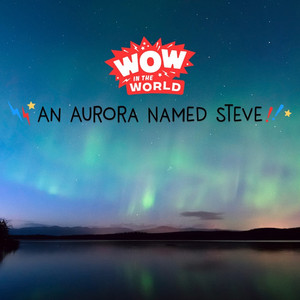
That is the Aurora Borealis, the greatest light show on Earth.
You can say that again.
The greatest light show on Earth.
Just look at all those colors, Guy Raz.
Pink, blue, magenta, yellow, violet.
All dancing across the sky.
It sure is beautiful, Mindy.
Yeah.
What did you call it again?
It's called the aurora borealis.
Huh.
I haven't seen one of these aurora borealis deals before now.
Well Mindy, these lights are so rare because they usually only occur at the planet's magnetic poles.
So way up at the North Pole and way down in Antarctica.
That's right, which means that this aurora, the aurora borealis, can only be seen very far north, when you're close to the North Pole.
Okay, so like here in Northern Canada.
Exactly.
And because the Earth has two magnetic poles... The North Pole South Pole.
There's actually another type of aurora that occurs down in the Southern Hemisphere and that's called the aurora australis.
Wow.
So all those people in the Southern Hemisphere like Australia and New Zealand are getting their own private light show down there, just like us.
That's right.
But what could possibly be making all of these amazing colors?
Is it flashlights being shown down from outer space by Astronauts?
Nope.
Maybe they're caused by really huge disco balls that were placed at the North and South Poles.
Well, just to be clear, the North and South Poles aren't actually poles.
Obviously.
Now, I know.
It must be caused by millions of little high-altitude glow worms.
I'm afraid not, Mindy.
Then what is it?
It's the sun.
Guy Raz, it's pitch black out here.
How can the sun be creating something like this?
Well, it all starts with a... Guy Raz, excuse me.
Use yourself!
Uh, excuse me, Mindy.
You could have at least given me a warning that that was coming.
But I was trying to make a point.
A point about what?
How you had a garlic smoothie for breakfast?
No, no, no, Mindy.
A point about these auroras.
They start with a...
A burp.
A burp?
Yeah, a great big solar belch.
Whoa, whoa, whoa.
Hold the phone there, Guy Raz.
You're saying that the sun burped out this light show?
Well, yeah, sort of.
But how?
You know how the sun provides the earth with heat and light?
Yeah?
Well, that's not the only thing that the sun is giving us.
It isn't?
No, the sun also sends out these gases which have these little particles inside of them, called electrons.
And these gases that the sun sends out... are called solar winds.
Solar wind.
So is that like the wind here on Earth?
Well sort of.
Except instead of carrying things like pollen or plant seeds, solar wind carries around these highly charged particles called electrons.
Time out.
An electron is the negatively charged part of an atom, and atoms are the building blocks that make up the world around us.
Just like the wind here on Earth, these winds can sometimes turn into storms.
Solar storms?
That's right.
And at the peak of these solar storms, the sun throws out a whole bunch of these electrons in a process called coronal mass ejection, otherwise known as Excuse me,
A solar burp.
Right.
The sun belches out this extra huge bubble of electrified gas, and then that gas travels through the solar system really fast.
How fast?
Well, like one million miles an hour fast.
Wow.
So the sun, let me see if I remember here, 92 million miles away.
Then that belt will arrive here in about, carry the one, 92 hours. which is... About four days.
Right.
So what happens when this four-day-old solar burp reaches Earth?
Well as these electrons from the sun's burp enters our atmosphere, they move towards the magnetic poles.
Which are located at the top and bottom of the planet and tell you which way is north on a compass.
Exactly.
And once they get there, they start to smash into the oxygen and nitrogen atoms that live below in our atmosphere.
And by atmosphere, you mean the blanket of gases that surround the planet.
Exactly, our invisible atmosphere.
And as these electrons crash into the oxygen and nitrogen gases, they create these amazing colors.
That's so wow.
So if one of these electrons crashes into an oxygen atom, they'll turn green or red.
And if they hit a nitrogen atom, they'll turn blue or purple.
Huh, so sort of like when you mix two different paint colors together to make a new paint color?
Correctamundo.
OK, but what if I wanted to see pink or yellow or white?
Well, with those colors, if you want to see them, We actually have to leave our planet and move to the outer solar system.
Wait, you mean other planets have auroras too?
Yes, pretty amazing, right?
Yeah.
And for another planet to have an aurora, it just needs to check two boxes on the aurora checklist.
Here, let me show you on my checklist.
You keep an aurora checklist in your pocket?
Yeah, you know, just for good measure.
Okay, well that's awfully convenient.
Let's see here.
So first, the planet needs to have an atmosphere.
And second, it needs to have a magnetic field.
That's right.
So planets like Jupiter, Saturn, Neptune, and Uranus You said Uranus! all have auroras.
In fact, in 2016, NASA's Hubble Telescope captured a video of an ultraviolet aurora over Jupiter's North Pole.
That's amazing.
It's out of this world, Mindy.
So if that's the aurora borealis, then what's the other wave of light out there?
Do you see it?
Huh.
Oh, yeah.
It's much lower than the aurora and very purple.
Hmm.
I think I've got my magnifying goggles somewhere.
Let me just see here.
You know, it looks like one long, giant purple hand with a bunch of green fingers sticking out of it.
Guy Raz, I know what this is!
What?
It's Steve!
Uh, Steve?
Yeah, Steve!
Quick, get your camera out.
My camera?
Yeah, you brought your camera to the light show, right?
Uh, yeah?
Well, get it out!
It's time for us to do some citizen science.
Steve?
Citizen science?
Mindy, what are you talking about?
I just heard about this.
So Steve is a new type of aurora that researchers discovered earlier this year, thanks to citizen scientists.
A guy in my citizen scientist club was talking about it just last week.
Whoa, whoa, whoa, whoa.
Slow down there.
Let's break this down.
Steve is a new type of aurora?
Yeah, so Steve is an acronym that stands for Strong Thermal Emission Velocity Enhancement.
S-T-E-V-E.
Steve, I got it!
And the only reason these researchers were able to understand the inner workings of this natural phenomenon was by analyzing the photographs of Everyday citizen scientists like you or me.
And citizen scientists are just everyday people like us.
People who collect data for big science projects, right?
Exactly.
And like I said, one of the citizen scientists in my club was talking about Steve last week.
Wait a minute, Mindy.
You have your own citizen science club?
Oh, yeah.
We're the Citizen Science Science Solvers, or CSSS, or CSSS.
Gairaz, you should join us.
You would love it.
Yeah, well, what kind of stuff do you do?
Oh, we do all kinds of fun stuff like count the number of endangered bugs in the neighborhood or track the stars as they make their way across the night sky.
One time we even found out how they got the cookies into the cookies and cream ice cream.
And so this natural phenomenon... Steve...
Steve was discovered by a group of citizen scientists?
Yep, with the help of a few researchers.
So how did it work?
So Dr Elizabeth McDonald, this scientist from NASA's Goddard Flight Center.
She set up a website where citizen scientist photographers could upload their photos of Steve to an international database.
Which is basically an online library.
Right.
Then Dr McDonald and her team joined forces with Dr Eric Donovan, a professor at the University of Calgary, who had also been studying the phenomenon for a bunch of years and had also been collecting lots and lots of photos of Steve.
Right.
And so, by analyzing or studying these photos and then combining that data with information they were able to collect from European satellites in the area, Dr McDonald and her team were able to learn that Steve is related to a phenomenon known as subaural ion drift.
Uh, what?
Subaural ion drift!
Ha ha ha ha ha!
Or said for short.
S-A-I-D?
De-sed.
Uh, got it.
These seds happen when the magnetic fields, Which again are the magnetic forces that are found at the top and the bottom of our planet,
And when these magnetic fields rearrange themselves and there are still these highly charged particles floating around in the atmosphere, the charged particles just scatter all over the place.
Kind of like a wet dog shaking itself off.
Exact Doritos.
And when they get shaken off they crash into particles a lot lower than where they usually collide in the Aurora Borealis.
That's fascinating, Mindy.
And to think that all of that was discovered thanks to everyday people with an interest in science.
I know, but they're not done yet.
They aren't?
Nope. scientists still want to know a lot more about Steve.
Well, what more is there to learn?
Well, SEDs happen pretty often, but they're usually invisible to the human eye.
So the next step in Dr McDonald's research will be to explain the vivid colors that we started to see recently.
And the only way to do that is with... More photos!
So get out your camera, Guy Raz.
All right, Mindy, you know what I always say.
Wipe your feet before you.
Anything for science.
Oh, anything for science.
All right, now I'm going to get Steve warmed up while you get the camera ready, okay?
All right.
Hey, Steve, want to take some pictures?
Yeah?
You up for a little photo shoot?
Great.
Ready, Guy Raz?
Ready.
Ooh, yeah, Steve, work it.
Yeah, let me see the red.
Ooh, very nice.
Now some purple.
Ooh, I love it.
Look at those colors.
Come on.
Shake what the sun gave you.
Ah, beautiful, beautiful.
Yeah, that's it.
Wow in the World will be right back.
Grown-ups, this message is for you.
Hey, grown-ups.
It's Mindy and Guy Raz here from Wow in the World.
Mindy and I have some brand new Wow in the World toys out in the world just in time for the holidays.
Made for the kids who love science and for the ones who don't. yet.
From our 100 experiments that wow kit to the telescope and astronomy kit.
Our Wow in the World toys help your wowzer learn about their world through play.
Plus, you can hear exclusive audio content from me and Guy Raz to help your wowzer discover even more wows.
Grownups.
Give the gift of wow and wonder this holiday season with our latest Wow in the World toys designed with your curious wowzer in mind.
You can shop our Wow in the World toys at Tinkercast.com slash toys.
That's Tinkercastcom slash toys the show wow in the world.
Hi, thanks for calling wow in the world after the beep get ready to record hi.
My name is Kennedy and I am nine years old, and my name is Lila and I'm seven years old.
We live in Alaska and our wow is that a cat was the mayor of Talkeetna Alaska, for 15 years.
We love your show.
My name is Scarlett and I am seven years old.
I live in Seattle, Washington.
My law in the world is that female narwhals can have one test and male narwhals can sometimes have two tests.
Bye, Mindy and Guy Ross.
Love your show.
Bye.
Hi, my name's Lucy.
I live in Florida.
My law in the world is that jellyfish poop and eat out of the same hole.
Hi, my name is Niall and I live in Revelstoke BC, and my wow in the world is that there may be life on Mars.
Hi, my name is Noam.
I'm six years old, and I'm from New York City.
My wow in the world is that when cobras are threatened, they puff up to look bigger.
Hey, Mindy and Guy Raz.
My name is Sarah Margaret, and I'm 12 and live in Birmingham, Alabama.
My wow in the world is that in the Supreme Court building at the top level, they have a basketball court and they call it the highest court in all of the land.
Bye.
Love your show.
Hi, my name's Addie.
I'm nine years old, and I live in Pacific Grove, California.
My wow is that the moon controls the tides of the ocean.
It's so cool.
Bye, Mindy and Guy Raz.
I love your show.
Hi, Guy Raz and Mindy.
My name is Sadie from Brooklyn, New York. in December, even though it has poison in it.
It's so cool!
Bye!
I love your show!
Hi, my name's Abby.
I am six years old, and I live in Massachusetts.
I recorded a song.
Wow in the woods, wow in the woods, rainbows are so good.
Wow in the woods, rainbows are so good.
Thank you, that was Thank you.
Bye.
End of messages.
Hey, everyone.
Thank you so much for joining us this week on Wow in the World.
And if you want to keep the conversation going, check out some of the questions we posted on this episode at our website, wowintheworldcom.
And grownups.
There you can find more details on how your kids can become part of the World Organization of Wowzers.
Lots of cool perks.
Exclusive t-shirts, autographed pictures of us, and a bunch of other cool stuff.
Wowintheworld.com.
Our show is produced by Jed Anderson.
Say hello, Jed.
Hello.
With help from Thomas Van Kalken, Chelsea Erson, and Jessica Bode.
Meredith Halpern-Ranzer is the big boss.
Our theme song was composed and performed by The Pop-Ups.
You can find more of their awesome all-ages music at thepopups.com.
And parents and teachers, if you want to send us an email...
Our address is hello at wowintheworld.com.
Grownups, you can also find us on Facebook, Twitter, and Instagram at wowintheworld.
And if you want to be featured at the end of the show, call us up and tell us your wow in the world.
Our phone number is 1-888-7wowwow.
That's 1-888-7wowwow.
And if you haven't already done so, please subscribe on Apple Podcasts, or however you get your podcasts.
Leave us a few stars and a review and be sure to tell a friend about the show.
Until next time, keep on wowing.
And before you go, tell us about yourself by filling out a short survey at wondery.com slash survey.