You say you'll never join the Navy.
That you'd never track storms brewing in the Atlantic.
And skydiving could never be part of your commute.
You'd never climb Mount Fuji on a port visit.
Or fly so fast you break the sound barrier.
Joining the Navy sounds crazy.
Saying never actually is.
Start your journey at Navy.com.
America's Navy.
At Blinds.com, it's not just about window treatments.
It's about you, your style, your space, your way.
Whether you DIY or want the pros to handle it all, you'll have the confidence of knowing it's done right.
From free expert design help to our 100% satisfaction guarantee, and your windows.
Because at Blinds.com, the only thing we treat better than windows is you.
Visit Blinds.com now for up to 45% off with minimum purchase plus a professional measure at no cost.
Rules and restrictions apply.
Why did the T-Rex have such tiny arms?
And why do so many more kids need glasses now than they used to?
Spoiler alert, it isn't screen time.
Our team of scientists digs into the research and breaks it down into a short, entertaining explanation jam-packed with science, facts and terrible puns.
Subscribe to MinuteEarth wherever you like to listen.
Hey folks, just a quick note about today's episode.
We're going to be talking about death, animal slaughter and other sensitive topics, so listener discretion is advised.
On to the show.
We begin today's episode with frequent contributor Avery Thompson in the studio.
You might recognize him from our episodes on the origins of Greek salad or this episode on rattlesnakes.
We have a total of 1,474 pounds of snakes.
Oh, my gosh.
I should warn you that I'm deathly afraid of snakes.
Hey, Avery.
Hey, Jack.
I understand you've got another story for us today.
Yeah, but before I jump into the episode, I wanted to ask, do you like animals?
Are you a pet guy?
My daughter has a dog named Roland nice.
I love animals.
I travel a lot, so i don't have one of my own right now, but i've become the unofficial pet sitter for all my friends.
Next question for you, jack do you eat meat?
Okay, i see where this is going.
I'm not trying to call you out personally.
We say we love animals and yet we do this thing practically every day that involves the killing of an animal.
You mean eating meat, Right?
And yes, some people are vegetarian and vegan for that very reason and for pretty compelling environmental considerations, which is cool.
I commend them.
But according to some recent polls, 5 or less of Americans are vegetarians, which means the other 95 might be wrestling with something called the meat paradox.
The meat paradox?
Explain.
That's a term psychologists use to describe the conflict of values we animal-loving meat-eaters face.
And we use some mental tricks to make this work, like using different words between beef and cow or pork and pig.
Another thing we do is avoid cuts of meat that remind us that what we're eating was an animal.
Hence all the skinless and boneless cuts at the grocery store.
Mm hmm.
But really Jack, the biggest trick we play on ourselves is just not thinking about this stuff at all.
We just zone it all out and go about our business.
Until a reporter like you forces us to confront this paradox.
Oof, reporter seems like such a big word.
I prefer to think of myself as a crash test dummy.
I like it.
I'm very fitting with the test kitchen concept.
Exactly.
And this time, as you'll hear later in the episode, I pointed myself in the direction of a small farm in Oklahoma to face head on what so many of us spend a lifetime avoiding.
So if you don't mind hitting play, Jack, we'll see how this collision plays out.
Today, on Proof from America's Test Kitchen, our frequent crash test dummy, Avery Thompson, wrestles with our meat paradox.
I'm Jack Bishop.
Stay tuned.
Abercrombie denim is everything right now.
Denim should feel like this.
Confident, easy, like your butt has never looked better.
If you didn't know, Abercrombie's Curve Love denim went viral in 2019 for eliminating waist gap and it's still a game changer.
Between that and their classic fits with a straighter line from waist to hip, the perfect denim does exist.
Shop Abercrombie denim in the app, online, and in-store. on top of building this fake volcano for months i give my daughter smarty pants vitamins to support her brain health so her science fair project sounds more like and less like and while i may say it's not a competition of course it's a competition choose smarty pants vitamins to support your kids brain health and save the science fair shop on amazon smartypantsvitamins.com or at target today reporter avery thompson has the story for the first 12 years of my life i grew up on a small farm in new hampshire a homestead would probably be the correct term since we raised animals for our own supply We had pigs, always had pigs.
That's my dad, Dane.
We had chickens, turkeys, cows, sheep.
And my mom, Mary.
And for little chubby child me, the farm life was a great life.
But of all the animals, it was the cows I felt closest to.
You were always very good with the animals, taking care of them.
You liked to get the eggs in the morning and playing with them.
After my dad attached a basketball hoop to the side of the barn, I spent hours out there in the cow pen shooting hoops and weaving between the cows like they were playing defense.
You were always in the cow pen playing basketball and the cow would stand right underneath the basket and I would have to lure him away with food.
I think I understood from an early age that meat came from animals, frequently on our own farm.
But the full reality of this didn't really sink in until the day I was told the cow my mom was talking about earlier, a chilled out bull named Bert, was going to get slaughtered or, in agricultural parlance, culled from the herd.
Suddenly the farm life didn't seem so blissful.
As the day approached, my dad suggested I join him at the slaughter.
I think he saw it as some rite of passage to confront the hard realities of the circle of life, something he experienced when he was young.
I went with my stepfather down to Brighton Mass.
There was a big slaughterhouse down there when I was a little boy.
I remember seeing the throats cut.
I think a lot of people don't even think about where the meat comes when they go to the store.
And there's a lot of people against slaughtering and killing animals, but it is a way of life.
My mom protested.
When I was younger, I saw some bad on-farm slaughtering, so I didn't think you needed to see that.
Caught between my parents' opposing views, I took a diplomatic approach by spending the weekend at my grandma's house.
But when I came home Sunday evening I looked out to the barn and saw that my basketball team was one cow short.
I vividly remember crying in the bathroom over that and wondering if it would have been better if I'd been there to participate or at least say goodbye.
Garrison Keillor, the radio host and writer, has this line where he says, The living wander away.
We don't hear from them for months, years.
But the dead move in with us to stay.
And that's sort of how I feel about Bert.
Before the next culling day came, we moved down to the suburbs of Long Island.
So I never did get to figure out whether being there for the slaughter was the better option.
While Long Island was only 300 miles away, it felt like a totally different world from New Hampshire, one buzzing with modernity.
There were no cows or pigs but, to its credit, Long Island had great pizza and ice cream trucks that roamed the streets late into the humid nights.
And as for the food we ate, all we had to do was go down to the grocery store.
No killing involved, at least not by us.
In this way, my life began to resemble that of many Americans, surrounded by meat but separated from the death behind it.
We don't have to see it, or smell it, or decide if it's better to participate or look away.
That decision's been made for us.
And I don't know if it was that early exposure to farm life that planted the seed.
The curse of Burt we might call it, but I've always found it weird how surrounded by meat we are in America, while being completely separated from the animals and the death that make this possible.
And it turns out, I'm not the only one who finds this arrangement a little unsettling.
You're kind of like, well, that's just the way it is.
And I found that deeply weird.
This is Joshua Specht, a historian at Notre Dame.
And I'm the author of Red Meat Republic, a hoof-to-table history of how beef changed America.
And, according to Joshua, our disconnect from the animals that nourish us is a relatively modern phenomenon.
Because as recently as the late 1800s, he says, livestock were part of daily life in America, even in our cities.
Horsepower is running everything.
Cows are being driven through city streets.
Pigs are everywhere.
As a former farm kid, this sounds appealing.
Though, I suppose it had its shortcomings.
One of the reasons that changes is because city reformers want to clean up cities.
It's not very sanitary for human health to have animals defecating in the street outside your house.
So they try to banish animals outside cities, and that goes hand in hand with this rise of industrial slaughter, which means you also don't have to slaughter animals in the vast majority of cities or in the parts of cities near where people live.
And with the invention of refrigeration, particularly refrigerated rail cars, for the first time in human history we were able to move the animals and their slaughter far away from where the resulting meat would be consumed.
Chicago was already a major railroad hub, and it became the epicenter of America's meat processing industry.
Even in Chicago the stockyards and the slaughterhouses are at the time kind of outside, where a lot of the people live, or not that close, other than the communities that work there.
So what emerges is a centralized industry, mostly out of sight, supplying the nation with its beef.
And as for the public, all they cared about was that the beef kept coming.
The only difference apparent to the consumer, really, is that the meat was cheaper.
And who's going to complain about that?
So, in this way, the rise of the big meat processors wasn't some nefarious ploy, but rather a social contract that we made with those willing to do the work we no longer wanted to do.
And with meat being cheaper, that meant more Americans could afford it.
So if you think about a lot of the people of European ancestry who came to the US, they would have meat on special occasions.
Suddenly, they could have it all the time.
Beef becomes an emblem of our prosperity.
There was no better way to prove you'd made it in the USA than by sinking your teeth into a nice big juicy steak.
But all of this goes to the idea that to be successful is to eat beef.
And that's a long thread in American history.
By the 1970s, beef consumption peaked in America, with the average person consuming 94 pounds of it annually.
The availability of beef didn't just change how we eat.
It rewired us, culturally and psychologically.
We became a protein fixated society, while at the same time going to great lengths to avoid thinking about what it costs.
We don't want to see the conveyor belt of animals going towards their execution.
That's Laura Lister Mensch, and she's a death doula.
For those of you unfamiliar, death doulas help others confront mortality, a path Laura felt called to after surviving a traumatic accident.
She's also the resident death doula at the Congressional Cemetery in Washington, D.C.
I also volunteer to sit with people who are dying alone, and that's a very important part of my calling.
If Joshua helped me understand how we hid away the deaths of our livestock, Laura helped me understand what we've lost by doing so.
It's only the modern world, very recent in our history as humans, that we have had the option of not seeing our food be killed.
We have the luxury now of not seeing it.
Laura sees a strong parallel between how we handle the death of livestock and the death of our loved ones.
Because around the same time we began outsourcing animal butchering, we also started hiring professionals to manage the bodies of our dearly departed.
People died at home throughout most of human history and most of the world.
And your loved ones care for the body and put the body to its final disposal.
Food is the same way.
We no longer are involved with the whole cycle.
But as Laura pointed out, that kind of distance while a luxury doesn't protect us.
It just leaves us unprepared.
It is my observation that most people around me find the topic of death frightening, anxiety-producing and taboo.
And she believes this discomfort around death starts early.
Like if you know enough little kids, you're there for enough of these situations where they go wait a minute.
This hamburger is what.
Like, here you're showing me moo, moo cows and you know, in this story now you're telling me I'm eating this.
What Laura is describing is the beginning of our meat paradox.
The moment we realize our ideals and our actions don't necessarily align.
It could be a powerful opportunity for parents to talk with their kids not just about death, but about where food comes from and what we ask of others to sustain our way of life.
Maybe we do need to incorporate death into our lives, with our families multi-generationally, to give them tools to understand death, which is inevitable.
In response to our cultural denial of death, Laura made a conscious choice to swim against the current, to face head-on what most of us shy away from, and then to help others do the same.
She says it's not always easy work, but it feels necessary.
I have to sit in the discomfort that I will die, and that the people I love will die.
But we are all descended from living things that gave us life.
And I enjoy being part of that, and I can live with the discomfort, because it's also beautiful.
That made me think about how long I'd been doing the opposite.
How often I'd stood in the grocery store surrounded by shrink-wrapped meat without a single thought of the animal they came from.
So, inspired by Laura's example, I decided to finally pay attention, to finally witness the death that makes dinner possible.
Only it wasn't so easy.
With the advent of refrigerated trucking, today's slaughterhouses are no longer just in Chicago, but tucked away in relatively unpopulated areas of the American hinterlands.
They're closer to where the cattle are raised, but also where we're less likely to see them.
And because they're out of view, it's hard for us to understand the sheer scale of the industry.
This is Joshua Specht again.
So if we think about the industry today, It's a lot like the industry of the 1800s, just kind of on steroids.
These slaughterhouses in places like the Texas Panhandle, Nebraska and South Dakota are capable of processing 7000 cattle a day.
All told, 900,000 cows are killed each and every day in the USA.
But good luck asking to see just one.
Every place I reached out to said no.
Joshua said he experienced the same thing, and he literally wrote the book on beef.
To get inside, no.
I tried to follow up.
I even tried to get the corporate records of some of these businesses, but yeah, they just never were answered or sent emails, made phone calls.
The source of this secrecy stems from the slaughterhouse industry facing criticism.
In 1905, journalist Upton Sinclair exposed appalling conditions in those Chicago slaughterhouses.
It was blood and guts, unsanitary conditions and exploitive labor and inhumane butchering practices.
Here's a passage from Sinclair's infamous novel, The Jungle.
There would be meat stored in great piles in rooms and the water from leaky roofs would drip over it and thousands of rats would race about on it.
It was too dark in these storage places to see well, but a man could run his hand over these piles of meat and sweep off handfuls of the dried dung of rats.
He talked about a worker's finger going into the sausage.
Rat feces, blood everywhere, human and animal.
Now, what we found after that, in reaction to that, the processors had a big problem.
Because if people are worried that their food is disgusting or might poison them, they're not going to eat it.
That public outcry resulted in crucial legislation.
The Pure Food and Drug Act and the Meat Inspection Act both passed in 1906.
Fast forward to today.
Many documentaries and investigative pieces have chronicled similar violations over the years.
And pressure campaigns have succeeded in getting the USDA's food safety and inspection services to crack down on slaughterhouses.
All of this has left the industry deeply suspicious of outside observers, especially journalists, and even crash test dummies.
Now, the industry has made efforts to improve conditions inside slaughterhouses.
Research from scholars like Dr Temple Grandin has even influenced the way slaughterhouses can create more humane conditions for the animals.
Honestly, this is a subject that deserves a full, separate episode's worth of attention.
I can't possibly do it justice here.
The good news for me is that not every cow in America is destined for a massive slaughterhouse.
Some are still raised on small farms, where they meet their end either at local facilities or right there on the land they grazed.
And that's how I stumbled onto a website called Farmstead Meatsmith.
It's run by a man named Brandon Sheard who, along with his wife and kids, operates a homestead in rural Oklahoma.
This is Brandon.
Brandon is a meatsmith, which is one who deals in all matters pertaining to the alchemy by which animals are turned into food.
Seeing Brandon Sheard's farm full of animals transported me back to my childhood, especially when I saw his kids helping with the daily chores.
In addition to raising and slaughtering his own animals, Brandon teaches others to do the same through hands-on courses held on his farm.
One class in particular caught my attention.
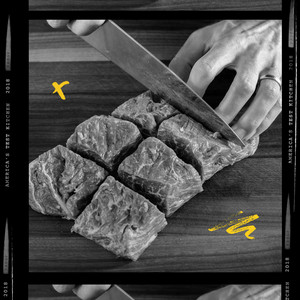
It was called The Family Beef and the course description read Using your hands in antique cutlery, we will harvest a grass-finished Texas longhorn.
We will unknit the carcass without creating any waste.
Our yield will be 100 of hanging weight, in resolute distinction from the convention of wasting over half the harvest.
The silhouette of the magnanimous bovine is our only limitation.
Bingo.
And it just so happened there was still availability for his next class.
After the break, Avery finally gets to witness what his 12-year-old self never did.
The slaughter of a cow.
Funding for Proof comes from American Cruise Lines, proud sponsor of America's Test Kitchen.
On an American Cruise Lines journey along the Columbia and Snake Rivers, travelers retraced the route forged by Lewis and Clark more than 200 years ago.
American Cruise Lines' fleet of modern riverboats travel through American landscapes to historic landmarks where you can experience local customs and cuisine.
To learn more, visit AmericanCruiseLines.com.
Starting a business can seem like a daunting task unless you have a partner like Shopify.
They have the tools you need to start and grow your business.
From designing a website to marketing, to selling and beyond Shopify can help with everything you need.
There's a reason millions of companies like Mattel, Heinz and Allbirds continue to trust and use them.
With Shopify on your side, turn your big business idea into.
Sign up for your 1 per month trial at shopifycom.
Slash special offer.
And now back to our story.
Just a heads up.
The descriptions get especially graphic in the second half of our story, so listener discretion is advised.
All right, I just turned onto the road here.
West for five miles.
Having signed myself up for Farmstead Meatsmith's family beef course, I drove up to Tulsa Oklahoma where, just outside the city limits, Brandon Sheard and his family live and farm according to a homestead approach.
They produce food for their own consumption and teach others how to do the same.
And because they don't sell their meat to the public, they're not regulated by the USDA.
At the end of a long dirt driveway, a picturesque homestead came into view a brick house and a big metal barn surrounded by pastures and gardens.
In the driveway, my fellow classmates stood in a loose circle.
At the center was Brandon Sheard, who waved with one hand while holding a rifle in the other.
All right, then to begin.
I usually like to just go around and have everyone say your name one more time.
As for my classmates, while they came from all over the country, they seemed cut from a similar cloth.
There was Quinn and his dad Ben from Florida.
Quinn got us started on this because he started milking goats when he was like eight years old.
A pair of friends, Brian and Tim from South Carolina.
I'm pretty much this guy's underling.
Casey and Callie, siblings from Idaho.
Just started a ranch this year.
We've got about 20 or so cattle.
Julie, who recently retired and wants to turn her attention to the family farm.
I have a Mosing Angus. cattle operation it had for about 30 years out there.
And a local good old boy named Dave who bore an uncanny resemblance to the macho man Randy Savage.
I've got cows, donkeys, turkeys, chickens.
I've got everything.
All of them either owned farm animals or intended to butcher them in the near future.
So they seem perfectly at ease with the task ahead of us.
After quick introductions, Brandon jumped straight to the order of the day.
He pointed over to the barn where a big Texas Longhorn named Moon Pie was pacing back and forth in her pen.
While there was no basketball hoop hanging off the side of the barn, the scene felt oddly familiar.
Then Brandon pointed to his forehead, showing us where he intended the bullet from his gun to enter Moon Pie's skull.
I use a 22 mag, so it's a 22 WMR rifle and this is like the all-purpose farm gun and you can shoot anything that you can grow with this, as long as you hit them in the brain.
I understand that for some of you listening, the presence of a gun might feel jarring, harsh even.
But it's actually, if done correctly, a humane method of killing a cow, according to the American Veterinary Medical Association.
A clean shot to the brain renders the cow instantaneously unconscious, which is then followed by the slaughterman cutting the carotid and jugular veins.
In industrial slaughterhouses.
A similar effect is achieved using a captive bolt pistol, a steel rod that punches into the skull.
Different tools, same principle.
Death should come quickly.
And all of this is a big improvement from the Chicago days when a guy called a knocker would stand above the cows with a big mallet or axe.
And if you don't like hearing about this stuff, join the club.
Because as I followed Brandon to the barn, I wished to be anywhere else.
No wonder I spent that weekend at my grandma's house on slaughter day.
So I think the way that we'll do this because this cow is exceptionally nervous I think what we'll do is we'll go into the gate here.
She's behind the barn.
At the cow pen, Brandon knelt down and raised his rifle just above a pile of fresh alfalfa.
It is my observation that Most people around me find the topic of death frightening, anxiety-producing and taboo.
Moonpie paced back and forth for a while, snorting.
Brandon waited patiently while we crouched behind.
As much as I wanted to look away, I didn't.
Before I had time to register what was going on, Moon Pie dropped to her knees.
Brandon set down his rifle, unsheathed a long knife from his side and with one swift practice swipe, slit her neck open.
Blood poured forth like water from a fountain.
So I'm going to start with the tip of the knife to get this cut.
There you go.
Stir that blood as it flows.
One of my fellow students rushed forward with a plastic bowl and began collecting the blood.
Apparently, we were going to use this later in the day to make blood pudding.
Just got to stir, stir, stir, and don't stop.
And what you're doing is you are preventing the whole thing from turning into a cake.
It'll solidify because it wants to coagulate when it comes in contact with oxygen.
I'd love to tell you that, standing there watching this cow bleed out, I had some instantaneous epiphany.
That witnessing Moon Pie's death unlocked a deeper understanding of life, me and my relationship to it.
But honestly, I didn't know what to think.
But death, even of a cow, it turns out, has a way of stunning you.
At least it did for me.
Like when someone calls you with terrible news and you just stand there rubbing your jaw, waiting for your brain to comprehend this new reality.
And if I had any doubts that Moon Pie was gone, they vanished when Brandon started sawing off her head.
Which seemed as good a time as any for me to pivot my attention to my fellow students.
Julie owns an 850-acre ranch in Oklahoma with a whole bunch of cattle on it.
She told me she always left the work of slaughtering her cattle to a local meat processor.
But after retiring, Julie says she wants to get more involved in the day-to-day operations, which she admits would require getting over some long-standing aversions.
So you said you get squeamish?
Yeah.
When I was a kid, my mom would buy roasting chickens and bring them home, and I couldn't take them apart without dropping.
So anyway, I was probably 40 years old before I ever bought a whole chicken skinned at the grocery store.
I always bought parts.
So I've come a long way.
I couldn't have walked over here when I was young.
I'm 65 years old, so it's taken me a while to get here.
Julie wasn't doing this solely as a personal challenge. but more as a necessary means to an end.
Is the intention to eventually do it yourself or?
Because I really want good tasting beef and I want these cuts and things that you can't get from a regular butcher.
So I just think food is interesting, and I used to work for some people that own some really nice restaurants in Tulsa and I took a big interest in cooking.
So, you know, I want the best beef.
And then what about the killing process over there?
I have just had to get used to things.
When you have cows on a ranch, you see things expire in one way or another.
Little dead calves and things like that.
And you see my cats catch rabbits and tear them to shreds.
So you get hardened.
Talking to Julie made me feel better, because she didn't pretend to be fearless or born with a cold indifference to death.
It was obvious she struggled with the messiness of it all.
But instead of turning away, she spent a lifetime slowly expanding her comfort zone like a diver acclimating to deeper depths.
I haven't thrown up yet, so that's all good.
As for the Macho Man, aka Dave, this stuff comes a little easier.
I can handle blood and guts all day.
But Dave did admit that he struggles with changing his children's diapers.
It's the baby puke and poo that I can't handle.
So I guess everyone's got an Achilles heel.
Soon our cow, Moon Pie, or what had once been Moon Pie, was headless and hanging from her hind legs.
And I have to say, this part was hard.
Not emotionally, but mentally.
After 40 years of separating cow from beef, I was now staring at some sort of in-between a liminal state that so few Americans ever see.
So you and I have got a better bird's-eye view of this deceased cow.
Yes.
It doesn't stink, though.
I thought it would.
Callie was here with her brother Caleb.
They'd traveled from Idaho, where their family had recently purchased a ranch.
The plan was for Caleb to start doing the butchering.
Callie was still a little on the fence.
Has it switched over to being meat to you?
I don't think so.
Maybe when we take its guts out.
What do you think?
Yeah, it's still retaining some animalness to me for sure.
I mean, it still has the form of an animal just without its head on it.
One thing that made this experience more palatable was Brandon's expertise.
It's always satisfying to watch someone who's good at what they do.
And as I watched Brandon's hands move quickly and confidently, showing us how to remove the hide without damaging the meat beneath, I felt grateful to have such a steady, competent teacher at the helm.
Over the course of the two days, Brandon would lead us through the entire process of transforming a living cow into a broad assortment of food items.
We learned everything from skinning and quartering down to dry aging and curing.
And I know it might sound strange, considering he had just shot this cow in the head, but there was something deeply respectful about the way Brandon treated the carcass.
It was clear to me that Brandon's Catholic faith is woven into the work he does.
Before butchering, he made a sign of the cross over Moon Pie's body and led us in a prayer.
I think the most fitting one is the prayer that we call grace, you know, before a meal, where you just make the sign of the cross and you say Bless us, O Lord, and these thy gifts which we are about to receive from thy bounty, through Christ our Lord.
Amen.
I found it surprising, or maybe jarring, that Brandon was Catholic.
I think part of me kept wanting him to be a member of some unusual religious sect or obscure philosophical order that I'd never heard of.
Something that I could point to and say, ah, see, that's why this guy is so different from me.
But it turns out, he and I had a lot more in common than I expected.
Because Brandon hasn't always lived like this.
While I was growing up in the suburbs of New York, Brandon was doing the same thing in Southern California.
I grew up on fast food, you know.
I think a substantial part of the constituent elements of my cells are Taco Bell and In-N-Out.
And like me, he also went to grad school to study poetry.
I love Shakespeare and at the time I loved John Milton and The idea of going deeper there in teaching was my goal.
But after getting his degree, Brandon decided to take a break from academia.
So while living on an island in the Pacific Northwest, he took interest in a combination butcher shop and farm.
It was really working there that Helped me realize that whatever substance I had been eating up to that point was not actually food in a strict sense.
It was ontologically promiscuous.
Which is Brandon speak for in and out no longer hit like it used to.
Under the tutelage of the butcher shop team, Brandon learned how to break down whole animals.
He learned how to sharpen knives by hand, how to render fat and make all sorts of delicious things from the offcuts that others would throw away.
And he also learned how to kill.
Do you remember your emotions?
Was there apprehension or fear?
Yes, I would say the only fear I had was that I wouldn't do a good job.
I really wanted it to be decisive.
And what that feels like in the moment to someone who is inexperienced is it can feel like violence.
But actually the reality of the situation is that it is no favor to the victim, to the animal that you're slaughtering, to be timid or reticent.
Quite the opposite.
I understood that this is for food for people, to bless people with nutritive, actually nourishing food that is good for their bodies.
And because I had that in view, it was not difficult for me to take the life of the lamb, because I perceived that that is a very high and noble end.
Needless to say, not everyone shares Brandon's view.
Some would argue that the lamb didn't consent to giving its life, noble or otherwise.
And humans don't need to eat meat to survive.
Many of us thrive just fine on a vegetarian diet.
But the fact is, the overwhelming majority of Americans do eat meat.
As for Brandon, the question isn't whether to eat meat, but how to do it well.
Brandon offers his slaughtering services to nearby farms and ranches, as well as teaching his farmstead meatsmith classes.
We get people from all over the country, sometimes overseas.
I put knives in everyone's hands and they they go home knowing how to do it and we do the whole thing.
We start from the living animal and we go all the way to the meal.
Every day they're here and his classes draw some unexpected students.
We've had vegetarians and vegans come to our classes and um would say that they are mostly abstaining from meat or animal products, not because they think it's evil to eat them, but because they object to what is available and they, in conscience, can't eat something from an animal that they know in the industrial system or that they perceive was abused in some way or tormented beyond what is necessary.
And for Brandon, everything he does, everything he teaches, from sharpening knives to choosing what breed of animal to raise, to how frequently he feeds his animals, is ultimately in service of the end result the meal.
And in this way the slaughtering of those animals is just another step in that process which Brandon feels very strongly should be done on their home turf.
And this is why the most...
Proper person to do the kill is the farmer, because the cow knows you and you can get close to them and you don't have to move them off of their home turf, off of their territory, with which they're familiar and outside of which they're only terrified and anxious.
And so you can you can kill them on their own ground.
This is not only benevolent for the animal, it also, some would argue, makes for better meat.
When an animal is stressed, its body can be flooded with hormones like adrenaline, cortisol and noradrenaline, which can result in something called DFD meat, which stands for dark, firm and dry, which you know are not the kind of things you want your beef to be.
But doing slaughter at home on a family farm does present some complexities.
Brandon wasn't the only one in his family present for Moon Pie's slaughter.
From the moment I drove up the driveway, his kids, which he has nine in total, buzzed about the property, engaged in a mixture of play chores and looking up at this class of strangers.
But when it came time to do the slaughter, nearly every one of Brandon's kids stopped what they were doing to watch.
So while Brandon and the class continued to break our Texas Longhorn into smaller and smaller pieces, I asked Brandon if I could talk about slaughter with a couple of his kids.
He said, absolutely, and called over his sons.
John, 14 years old, and Wallace 15, looked like slightly younger copies of their father, with athletic builds, shirts neatly tucked in and their fresh haircuts carefully parted to the side.
They had the clean, put-together look of boys in a catalog shoot.
L.L.
Bean, maybe?
If not for the leather-sheathed knives hanging from their belt.
A subtle reminder that they weren't just playing farmer.
To get away from the noise of the class, we walked off toward a nearby pasture where their dairy cow and a flock of sheep were grazing in the tall, deep green grass.
This is Georgie.
That's the name she came with, and it fits her pretty well.
As we talked, Wallace rocked his baby brother, who cooed in his arms.
Describe for a city slicker kid what your life is like here.
Um, basically the the daily chores are generally morning and evening of just feeding and watering all the animals and then uh, depending on the animal, we either move the animals to a different place so that they can eat off of the ground, or we bring food to them.
Do you guys get attached to your animals?
No, it depends on how you define it.
Attached, i guess.
But i guess we we like them and then We're also fine with eating them too.
We've always been watching animals get slaughtered when we were really, really, since his age.
So really young babies.
And then uh, I don't really remember, I guess the first time, but my parents remember kind of the first time that at least I was cognizant when I was watching an animal get killed.
And, uh, I was probably three or four or something.
Dad had shot the pig and then I was like, go, go, go, because I was like super excited about it.
And like I knew that things had to happen quick to like bleed it out or whatever it was.
I guess sometimes it can be a little sad because it's like oh, now we don't get to hang out with that animal anymore.
But it's also really exciting, because now we get to eat it and we don't have to feed it anymore too.
I was really impressed with John and Wallace.
They didn't flinch when talking about death.
They treated it as a simple fact of life, just one of the many tasks of living on a working farm.
It was something to be acknowledged, accepted, and then done to the best of one's abilities.
And being farm kids with chores, there was clearly some relief that slaughter also meant one less animal they had to tend to each day.
Part of life is death.
Part of life is death.
It was a surprisingly mature worldview, and frankly, more level-headed than most adults I know.
Was this how I'd have ended up if my family stayed on the farm?
That's just how it is.
And for other things to live, you have to kill things, too.
Also, if you didn't kill your pig or whatever, it would just grow old and then die of some horrible thing where it's literally rotting from the inside out.
So it's In the end, always better to just kill your animal for their sake, too.
I realized then that John and Wallace didn't see slaughter as harm.
It was mercy.
Like bringing a beloved dog to the vet when their body starts to fail.
Yeah, we're not disarming them.
And also we just remember that it's better for them.
This is better for them than dying of some natural cause.
They've had a good life.
And now they're going to have a good death.
The death of Moonpie or any of their animals seemed easier for John and Wallace to accept because they knew the life that came before it had been good.
This reminds me of obituaries, which despite my aversion to death, I actually like reading.
They feel more like a celebration of life with only a sentence devoted to the cause of death.
Do you think more Americans should see where their meat's coming from?
Yeah, definitely.
Mainly just because right now they really don't know at all where their meat's coming from.
That would also just motivate them to get meat from local farmers or grow it themselves.
You guys like the farm life?
Yeah.
Plan to keep that tradition going?
Yeah.
Cool.
Should we go back and try to get some of this lunch?
Yeah.
Yep.
While Brandon's class is primarily about the slaughter and butchery of a cow, in keeping with his ethos that the ends dictate the means, it's also a celebration of the bounty produced.
And it was in the kitchen that Brandon's love of cows, or beef, really came to life.
So we are going to make blood pudding, and we're gonna make a slaughter day fry.
And that just means we're going to fry up a bunch of stuff and lots of butter with some salt.
Brandon placed the longhorn's heart, which was nearly the size of my head, on a cutting board.
Part of this, he explained, would not be cooked.
Instead, we would be making heart carpaccio, which for the unfamiliar means thin shavings of raw meat.
This is the Celtic salt.
Okay.
Okay.
By the way, you probably shouldn't try this at home with beef from the grocery store.
There's the risk of E. coli and other potential bacterial contamination.
While eating the heart raw might seem barbaric, to me it felt more like an offering of gratitude.
Plus, it was delicious.
The raw heart tasted incredibly fresh and clean, with just the slightest metallic bite to it.
Somehow it reminded me of eating an oyster, and even gave me that same invigorating rush.
So mild.
Those are mild too.
They don't have a strong flavor at all.
And it was a whole new experience for me.
Because like most Americans, when it comes to beef, I tend to stick to a few select cuts.
Ribeye, sirloin, the occasional brisket.
But Brandon wants to change that.
He's pushing back against what he calls our culinary illiteracy.
This tendency in our culture to prize only a few high-end cuts and discard the rest.
They just create and fabricate those cuts that can be broiled or pan-fried.
Like in France, you'll see completely hairless calf heads in the boucherie.
Which is useless.
Like what on earth do you do with that?
Well, you make consomme.
You make veal broth.
So while Brandon's approach to food might sound French or English, the truth is it's deeply American.
Or at least it used to be, before we industrialized slaughter and forgot how to cook beyond steaks and burgers.
So today at our family beef harvest class, we slaughtered a cow.
With the body temperature still in the liver.
We fried up the liver and the heart together and we made a little sauce with it from mustard and jam and cream and some brandy.
We had some bread that my wife Lauren baked, and then we also captured the blood from this cow.
And we baked it with apples and onions and brandy and some smoked lardo.
And we made blood pudding from it.
And we serve it with a little bit of sweet cool jam.
Sitting around Brandon's massive butcher block table, my classmates oohed and aahed with each bite.
We talked, we laughed, we shared stories from back home, bonding the way only meals make possible.
But I'll be honest, I was only half paying attention, because much of my focus was on the fact that we weren't just eating delicious fresh beef, we were eating poor old Moon Pie.
I think I set out on this story in the hopes of resolving the unease I felt ever since I was 12 years old, Hoped that by finally bearing witness, I could alleviate the internal conflict I've carried ever since I missed my chance to say goodbye to Bert.
But witnessing the slaughter and butchery of Moonpie didn't resolve my meat paradox.
It crystallized it.
Now, instead of some vague unease, I had an actual animal to mourn.
For the first time in my life, I fully understood all the effort and sacrifice that went into our meal.
I could thank everyone involved in its making, especially Moon Pie.
Most of us won't raise or slaughter our own animals.
We'll keep buying shrink-wrapped packages from the supermarket.
But still, there's value in acknowledging what those packages conceal.
That behind every steak or burger is an animal.
And maybe that's enough for now.
Not to solve our meat paradox, but to carry it.
Gratefully, uneasily, and honestly.
To acknowledge, as Brandon Sun Wallace said, that part of life is death.
And the least we could do is not look away.
Thanks to Avery Thompson for bringing us today's story.
Listeners, we're going on a two-week break, but when we come back we've got a three-part series on the life and times of James Hemmings, America's forgotten culinary founding father.
So stay tuned, and I'll catch you on the feed in two weeks.
If you like Proof, be sure to subscribe wherever you listen so you can get new episodes as soon as they drop.
And while you're there, why not leave us a rating or write us a review?
It really helps other people find the show.
I'm Yumi Araki, the managing producer.
I'm associate producer, Angelica Quintanilla.
I'm associate producer, Louise Kern-Kensler.
And I'm Kyla Forman-Andrade, the TV and podcast intern.
Audio services are provided by Ultraviolet and sound design by Matt Boyden.
Brian Campbell of Signal Sounds composed our theme music, additional music by Kyle Forrester and Jordan Pearson.
And Margolis is our director of post-production and our director of production is Diane Knox.
Fact-checking and additional research by Sarah D. Collins.
Special thanks to Tim Hoover, David Funderburk, Julie Clark, Julia Todd-Hunter, Callie and Casey Tice, Ben and Quinn Pittman and the entire Sheard family.
Nina Gianelli is the Senior Vice President of Television, Video, and Podcasts.
Dan Souza is the Chief Content Officer, and Dan Surratt is America's Test Kitchen's CEO.
Proof is a production of America's Test Kitchen.
This podcast is part of the Airwave Media Podcast Network.
Visit airwavemedia.com to listen and subscribe to their other fine shows.