
[Mastering American English Pronunciation Through Daily Routine Practice]-[American Accent Training Pronunciation and Speaking English]
📋 Summary
Mastering American English Pronunciation Through Daily Routine Practice
This podcast episode serves as an intensive drill session focused on refining American English pronunciation, speaking skills, and accent training. By utilizing a structured morning routine as the subject matter, the host guides the listener through repetitive practice to master the nuances of natural speech patterns.
The Importance of Repetition and Nuance
The core philosophy of this session is to "master the nuances of speaking English" through consistent repetition. The host emphasizes that language learning is a physical workout for the mouth, urging the listener to "keep moving forward one step at a time." By repeating specific phrases, the listener is encouraged to internalize the rhythm and cadence characteristic of an American accent.
Breaking Down the Morning Routine
The practice session is centered around a standard morning routine, broken down into manageable, articulatory chunks:
1. Establishing the Foundation
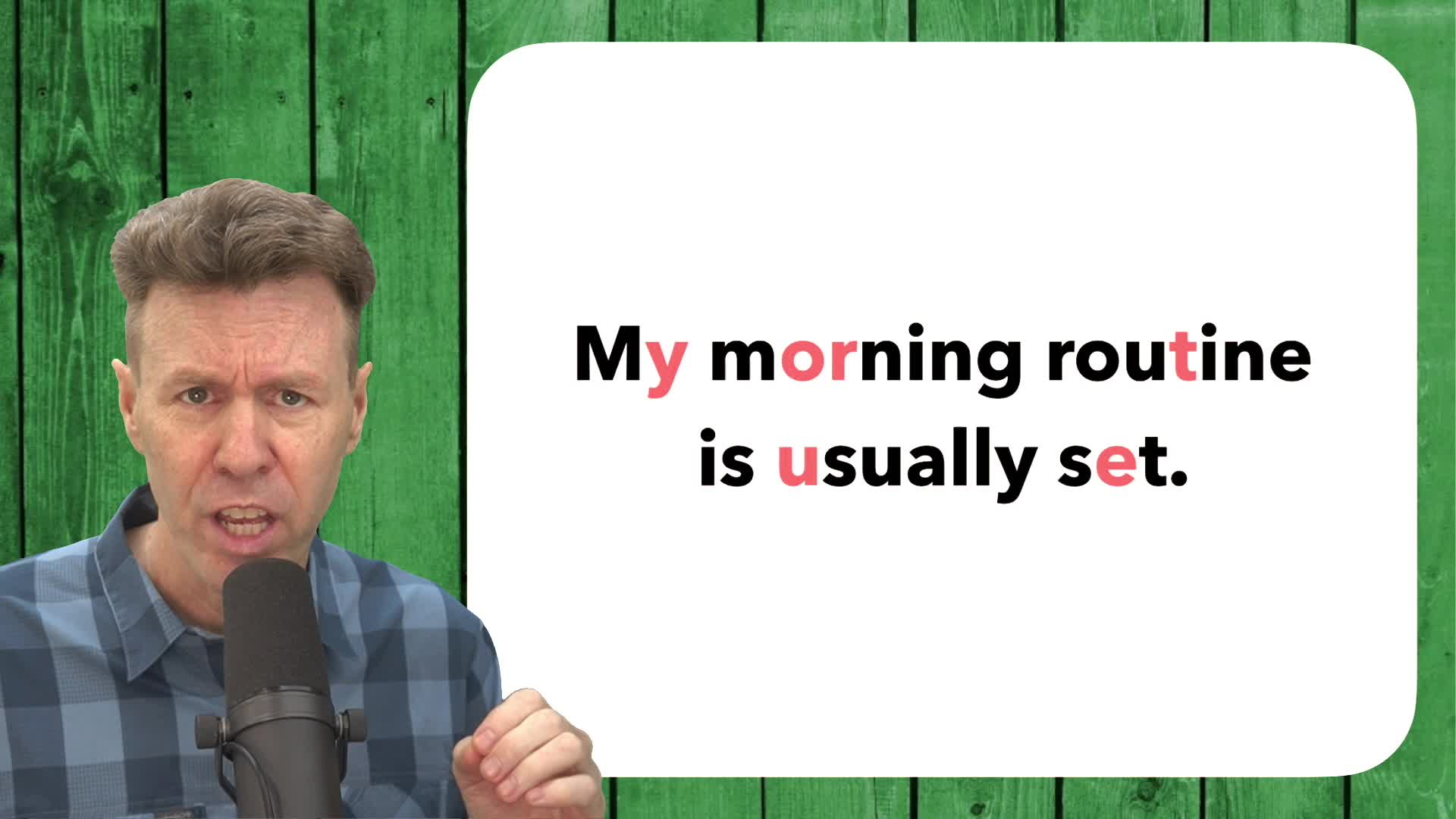
The session begins with the assertion: "My morning routine is usually set." This phrase is repeated multiple times to ensure the speaker adopts a steady, confident pace.
2. Mastering Reductions and Linking
One of the most critical aspects of American English is the concept of "reduced" sounds. The host focuses heavily on the phrase:
"I get up at 6.30 and take a shower to clear my head."
By isolating the segment "take a, take a, take a," the host demonstrates how native speakers link words together. Similarly, the phrase "to clear, to clear my head" is practiced to help the learner achieve a fluid, connected flow rather than a robotic, word-by-word delivery.
3. Sentence Structure and Natural Phrasing
Moving through the routine, the host introduces daily actions to practice natural intonation:
- "I turn on the TV and go to the kitchen." - This segment focuses on the smooth transition between the action of turning on the television and moving to the kitchen.
- "I always have a salad for breakfast." - Here, the focus shifts to the pronunciation of "breakfast," ensuring the word is integrated naturally into the sentence.
4. Advanced Phrasing: "Make it a rule"
Toward the end of the session, the host tackles a more complex phrase:
"I make it a rule to leave home at 7.30 at the latest."
This section is crucial for accent training, specifically the liaison of "Make it a, make it a." By repeating this, the listener learns to bridge the gap between words, which is a hallmark of fluent English. The phrase "at the latest" is also highlighted to ensure proper emphasis and timing.
Conclusion: The Path to Fluency
The session concludes with a comprehensive review, cycling through all the learned phrases in quick succession. The host reinforces that this is a "good practice, good workout," reminding the audience that achieving a natural American accent is a cumulative process. By focusing on the specific "nuances" and "reductions" highlighted in this episode, learners can significantly improve their speaking clarity and confidence.
Deep Learning with ListenLeap


