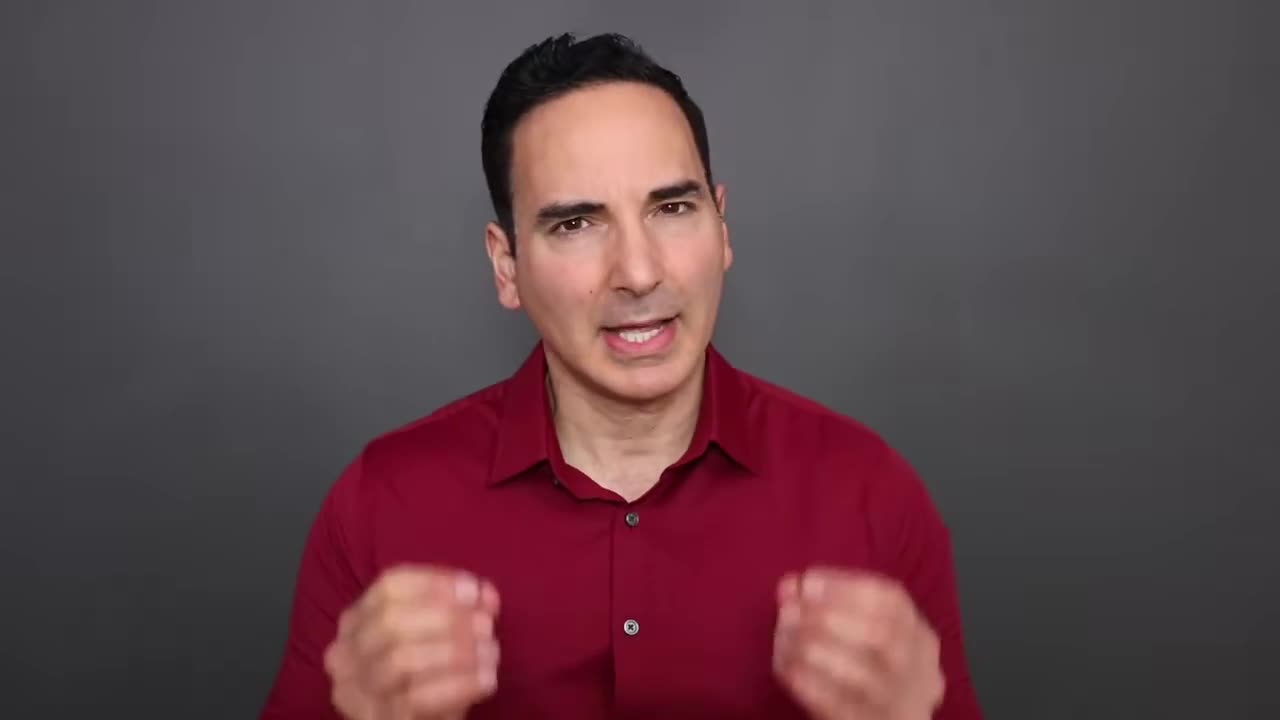
Hi there, voice coach Gabriel Barofato here, founder of GB Voice Academy and creator of the patent-pending SoundMap system to help master the American accent and rhythm that is taking the world by storm.
I've literally helped thousands of people throughout the world master the American accent.
I work with people from Facebook, Google, JPL, Amazon.
Let's face it, in this day and age, We have Zoom calls.
We're always talking in public.
We have meetings.
We're conducting meetings.
So we need to be clear and concise.
And that's where I come in.
And today I want to focus on the East Indian accent.
You need to put the tongue forward today.
Today.
A lot of my clients are East Indian and I've put together sort of a conglomeration of most of the issues that they have when trying to speak American.
And in this video, we're gonna cover the biggest challenges.
And not only are we gonna go through these and gonna talk about it, but I'm gonna show you actual exercises we could do on a daily basis on this video to help improve these challenges, drastically getting you closer to mastering the American accent.
Because remember, this is what I tell all my clients learning the American accent, it's like going to the gym.
You have to work at it.
You have to retrain your muscles to recreate these sounds that your body's just not used to doing.
That's where these exercises come in.
So the first thing we're gonna focus on is the T sound in words like toy today techno technology.
This is a challenge for a lot of East Indian speakers, specifically because they're not really using the abdominal muscles to create the sound.
Because if I put my hands right here in my abdominal muscles, look how engaged they are.
When I try the sound.
Watch.
You need to associate creating that sound with a sort of like a jolt coming from your diaphragm.
It's kind of like spitting.
Now I don't want you going around spitting on people, but literally the sensation I have in my mouth is close to spitting.
Now, let's look at the tongue.
Where is the tongue situated?
East Indian speakers tend to put the tongue back here.
They tend to put it behind the teeth.
So toy, today, technology, ta ta ta.
If I were to give you, let's pretend this is your jaw, right?
And this is your tongue.
East Indians tend to put it back here, like ta, ta, ta, ta.
What I want you to do is I want you to bring that tongue forward.
So it's just about touching the top teeth, right here, t, t.
And remember, this is projecting out.
So remember, this is your mouth.
Your tongue is about here.
So these are your upper teeth.
So it's literally above your upper teeth, right in the tip, right in the front of your mouth.
And remember, we're projecting out with this sound, not like today, or dummy, or technology.
We're projecting it out.
Now, you want a simple trick?
This is where the exercises come in.
I want you to get a blank piece of paper.
I want you to put this paper in front of you, and I want you to try literally spitting out that T.
Okay, this is gonna be your gauge to see if you're using your abdominal muscles for that.
Because if you're not, it's not working.
Engage your abdominals, bring that tongue forward closer to the upper part of your upper teeth and literally project it from your diaphragm.
Right?
Okay, got your piece of paper.
You're ready to engage.
You have your tongue forward just above your upper teeth right there versus .
So we're gonna start with some exercises.
Here we go.
Remember to engage with the diaphragm, ready?
Toy.
Try that.
Spit out that paper.
Good.
Today.
Today.
Technology.
Tuesday.
Tree.
Trust.
Tomato.
Tom.
Time.
Test.
Tell.
Now you're probably saying are you telling me, Americans go around and they spit out ta ta ta, ta ta.
Well, they don't.
But this is what we need to do to engage ourselves to create that sound.
Now it's going to sound exaggerated, but over time, as you practice this, you're going to get your tongue away from back here and bring it more forward.
Okay, so practice that every day.
You got the words in this video, practice this every day as much as you can.
I'm telling you, it's gonna make a huge difference.
Now, this also goes with the TH sounds, both the soft, and the hard sound.
This is also very challenging for East Indian speakers.
They tend to go .
For example, Thursday, Thursday, Thursday, right?
Think, pink, pink.
This is something they're not used to doing, but guess what?
This is the same sort of construct as creating the sound, projecting from the diaphragm, same thing.
Look at how engaged my diaphragm is when I create the soft TH sound.
In words like think, thought.
See how engaged my diaphragm is?
Well, that's the same thing.
Air needs to go through your tongue.
So specifically, where's the tongue?
It's kind of between your teeth right.
And here's the exercise I want you to do hands in your diaphragm and I want literally for you to hold and extend that air as long as you can, obviously without collapsing and fainting.
But this is going to teach your body how to produce that air flow that you need for words like think thousand right.
So Hands right by your diaphragm.
If you're wondering what that is, it's that sort of mushy part in the side, in your side, right there okay.
Now, let's push out that air on soft TH.
Feels weird, doesn't it?
But get your body used to it.
Remember, this is physical.
Here we go.
Time yourself.
How long can you do it?
Try to beat your record.
Now let's put it to practice.
Again, using your paper.
Watch.
Thousand.
Think.
Thought.
Thorough.
Thespian.
Theater.
Thunder.
Again, are we gonna go around going all day long and people are gonna look at us like we're kind of nuts?
No.
But practicing this and your muscle is gonna make this more natural for you.
Because remember, these sounds are not natural to you.
Your body is fighting and saying, what are you doing?
People are gonna laugh at you.
So by practicing this, it's making it normal, so your body will accept it.
So when you're up there making your speech, today's technological advances are very thorough.
BAM, you got it.
Got it cool.
Now same thing with a hard th sound.
This is the exact same as the soft TH we were doing earlier, but we're humming.
Right?
So let's try the soft again to refresh.
Remember that?
Now let's hum.
You should feel a vibration happening in your face.
It might feel like you wanna itch your nose or something.
That's the sound.
Right?
Same exercise.
Put your hands in your diaphragm here.
Engage and elongate as long as you can.
Ready?
Here we go.
Hard TH.
Feels weird, doesn't it?
The weirder it feels, the better.
I'm telling you.
Make your body embrace this.
Here we go with a trusty paper.
Words with a hard TH.
Here we go.
Follow me.
Those.
This.
That.
The.
Now your paper should probably be wet by now.
It feels kind of weird and funky and weird, but this is really, really good.
I want that paper to be sort of moist.
I gotta see spit coming out.
Right?
Good.
That's the hard TH sound.
Okay, we covered a lot.
Now let's move on to another issue that a lot of East Indians have, and this is the D sound.
Again, the East Indians, they tend to put the tongue back here for da-da-da-da.
The tongue is sort of back here, da-da-da.
I want that tongue to go from da-da-da to duh duh duh, sort of the same area that it was for the t duh duh, duh.
And again it's like we're spitting out duh versus duh.
Instead of going in duh, go out duh, everything is forward.
That tongue is never back here, it's always forward duh, Okay.
And again, same engagement from the diaphragm.
Let's go through some words together with your tongue forward and when you feel it going back to da-da-da, bring it forward.
Da-da-da.
Here we go.
Doctor.
Dentist.
Door.
Does.
Discover.
Dance, a lot of engagement, huh?
By this point, your diaphragm should be like, oh my God, I'm so tired.
But this is the muscle that's specifically for the East Indian accent.
This is the muscle that we have to start working.
And a lot of accent reductions.
Instructors forget that aspect.
They focus too much on vowels, which i cover in my target map system thoroughly, but something specifically for the east indian accent is those consonants.
We gotta master those.
This is something very specific to the East Indian accent.
Good, D. Now, moving on to the L sound.
Same issue.
We tend to put the tongue back here for listen, lollipop.
London, la-la-la.
The tongue tends to go back again.
We need to put the tongue forward, right?
So again, la-la-la-la.
Bring the tongue forward.
La-la-la-la-la.
You can literally almost see it, right?
La-la-la-la versus la-la-la.
Okay, so now relax that tongue, bring it forward and let's go through some words together.
Here we go.
Listen, list, laundry, location, London, lobby, Look.
Now what I love doing is I like putting all these together in tongue twisters or sentences to get your mouth navigating through these different sounds.
So then when you're up there and doing a presentation, it won't be such a shocker.
It's like learning combinations.
Imagine a boxer learning all the combinations, so then when he's out there, he'll know where it's going and where it's coming from.
Let's try it.
Let's put it all together in some sentences.
Here we go.
Today's venue went really well.
Did you know that the theory was thorough?
You see all that engagement?
And by all means, if you want to put your hands here in your diaphragm as you do this and feel that engagement for the F.
By all means, we want to associate this with this.
Today's TikTok video was fantastic.
These are just words I'm sort of creating off the top of my head to get everything we learned into practice.
Fantastic work.
Now, make this a habit.
Go through these exercises once a day if you can, or as many, because we're all very busy.
But make this part of your regimen every day to really bring those sounds forward, supported and flowing with your breath.
Do you see how I'm sort of exaggerating these sounds now?
To help you master the American accent.
Now, of course, there's so much more involved.
There's the targets, what I call the target sounds, which is the vowel placements that I cover in my five-star best-selling accent reduction course, and I have a link for it below.
You'll see all the reviews and testimonials from clients who agree that it's a game-changing system that I provide in terms of mastering the American accent.
You want to know what the secret is?
Let me ask you this.
Do you notice singers who have accents?
Famous singers U2 Adele, The Beatles.
They have very thick accents, don't they?
But when they sing, do you hear the accent?
It goes away.
There's no accent.
Well, that is the key to my system. that I want you to check out below.
Now, it doesn't mean I'm gonna have you singing, but it's the same concept in mastering the American accent.
Make sure to subscribe to my YouTube channel.
I post these videos regularly.
Daily practice is for you to work out that American accent and to give you the confidence you need to be articulate, confident and dynamic.