Welcome to Spotlight.
I'm Bruce Gulland.
And I'm Megan Nolet.
Spotlight uses a special English method of broadcasting.
It is easier for people to understand, no matter where in the world they live.
A man is in his kitchen.
His name is Seamus Blackley.
In front of him is a large flat wooden board.
Blackley covers the board in a special powder.
It is a kind of flour made from a grain called einkorn.
This is one of the oldest forms of wheat.
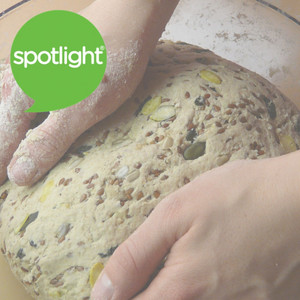
Then he takes a large ball of dough from a bowl.
He begins to push and pull the dough, kneading it into a round shape.
The sweet smell of bread fills the room.
Then, after some time, he places the dough in an earthen tagine.
And he puts it into a hot place to bake.
The dough begins to bake.
Soon it will be a large loaf of bread.
But this is no ordinary bread.
Blackley is making the bread with ancient grains and ancient methods.
But Blackly is also using a special yeast.
The yeast will make the bread rise or expand.
But this yeast is not the kind people normally use.
This yeast is also ancient.
Using a special process, Blackly took the yeast from Egyptian baking bowls.
It is the same yeast used 4,500 years ago.
Yeast is one of the most important ingredients ever discovered.
People use it to make bread, alcoholic drinks and fermented foods.
People have been using yeast for almost 10,000 years.
Today's Spotlight is on the history of yeast.
Yeast is not an ordinary ingredient like salt or pepper or sugar or flour.
Yeast is a very small living organism.
It is a kind of fungus related to mushrooms.
You cannot see it unless you look at it through a microscope.
Yeast feeds on sugars.
When yeast eats these sugars, it produces alcohol and carbon dioxide.
This process is called fermentation.
Carbon dioxide is what causes bread to rise, and the alcohol gives bread its special flavor.
There are hundreds of different kinds of yeast.
Some are useful for making food.
But others do not work as well.
One popular kind of yeast makes a bread called sourdough.
Sourdough has a special tart flavor.
Other yeasts make alcoholic beverages.
Koji is a yeast used in Japan.
The Japanese use it to make a drink called sake.
But there are even yeasts that people do not use much.
These are called wild yeasts.
Humans first started using yeast in food before people invented writing.
Experts think the first use of yeast was probably an accident.
Wild yeast probably fell into a sweet drink, and the drink started to ferment.
When people tasted it, they found it was good, So they took some of the drink and used it to make more.
They were taking yeast and growing more, though they did not know it.
These were the first brewers.
From this point, yeast began to change.
People began breeding the yeast.
If they made something that they liked, they would repeat the process.
And they started breeding different yeasts for different things.
The yeast began to specialize.
Kevin Verstreppen is a scientist at the University of Leuven.
He studies yeast genetics.
He spoke to Science Daily about this process.
Sometimes, Early brewers had a very good fermentation.
They were smart enough to harvest the yeast.
They used it to start the next batch, even if they did not know what was in it.
Reusing the yeast to make beer separated it from nature.
The yeasts were changing in the brewery.
Remember Seamus Blackley from the beginning of this program?
When Blackley started making his bread, he was excited because of these changes.
The Egyptian yeast was a lot like sourdough bread.
But what was yeast like almost 5,000 years ago?
Blackley did not know what it would taste like.
When he finally tasted his bread, Blackley wrote on Twitter about his experience.
The bread is light and full of air, especially for a loaf made from these ingredients.
The smell and flavour are incredible.
It is very different.
You can easily tell the difference, even if you are not excited about bread.
The first evidence of people using yeast comes from China.
The ancient Chinese made a drink called Kui.
They used water, honey, rice, and fruit.
Drinks made with yeast had a lot of advantages.
Of course, people liked the effects of alcohol.
But drinks made with yeast were also safer than water.
In ancient times, drinking water could be dangerous.
It could make a person sick very easily.
But alcohol kills many of the diseases that live in water.
So you could drink it without getting sick.
Many civilizations used this to their advantage.
In ancient Greece, people mixed water with strong wine.
This killed the bacteria in the water.
And because it was mixed, They could drink it most of the day without being drunk.
But making foods with yeast also makes them more delicious and healthier.
These are fermented foods.
The yeast breaks down sugars that may be difficult to digest.
Kefir is a fermented drink made from milk.
It is from Eastern Europe.
For most people, milk is very difficult to digest after childhood.
This is because of a sugar called lactose, which most people cannot digest.
But the yeast in kefir breaks lactose down.
Because of this, Kefir has almost no lactose in it.
The yeast makes milk safe for people who cannot drink milk.
Many ancient people also used yeast to help in food storage.
Fermenting foods in this way is called pickling.
Fermenting, or pickling, makes food last longer. but it also changes the flavour.
Kimchi is one of the most famous pickled foods from Korea.
Kimchi is fermented vegetables, usually cabbage and radish.
In ancient times, people made kimchi so that these vegetables would last through the winter.
But soon, People began to make kimchi because they liked the taste.
Today, we do not need yeast to clean water or to preserve food.
But over the years, humans have developed a taste for fermented foods.
We eat them now because we like them.
We continue to make them because they are part of our traditions and they connect us to people who lived thousands of years ago.
When he made his bread, Blackley wrote on Twitter, This is very exciting.
I am so amazed that it worked.
It is such a magical thing.
We can share food in a rather genuine way with our distant ancestors.
Do you use yeast in your diet?
What fermented foods do you eat?
Do you make any yourself?
Tell us about it on our website at www.spotlightenglish.com.
You can also find us on YouTube, Facebook, Instagram and Twitter.
The writer of this program was Dan Crisman.
The producer was Michio Ozaki.
The voices you heard were from the United Kingdom, and the United States.
All quotes were adapted for this program and voiced by Spotlight.
This program is called, Amazing Ancient Yeast.
Visit our website to download our free official app for Android and Apple devices.
We hope you can join us again for the next Spotlight program.
Goodbye.