The brain is your enemy.
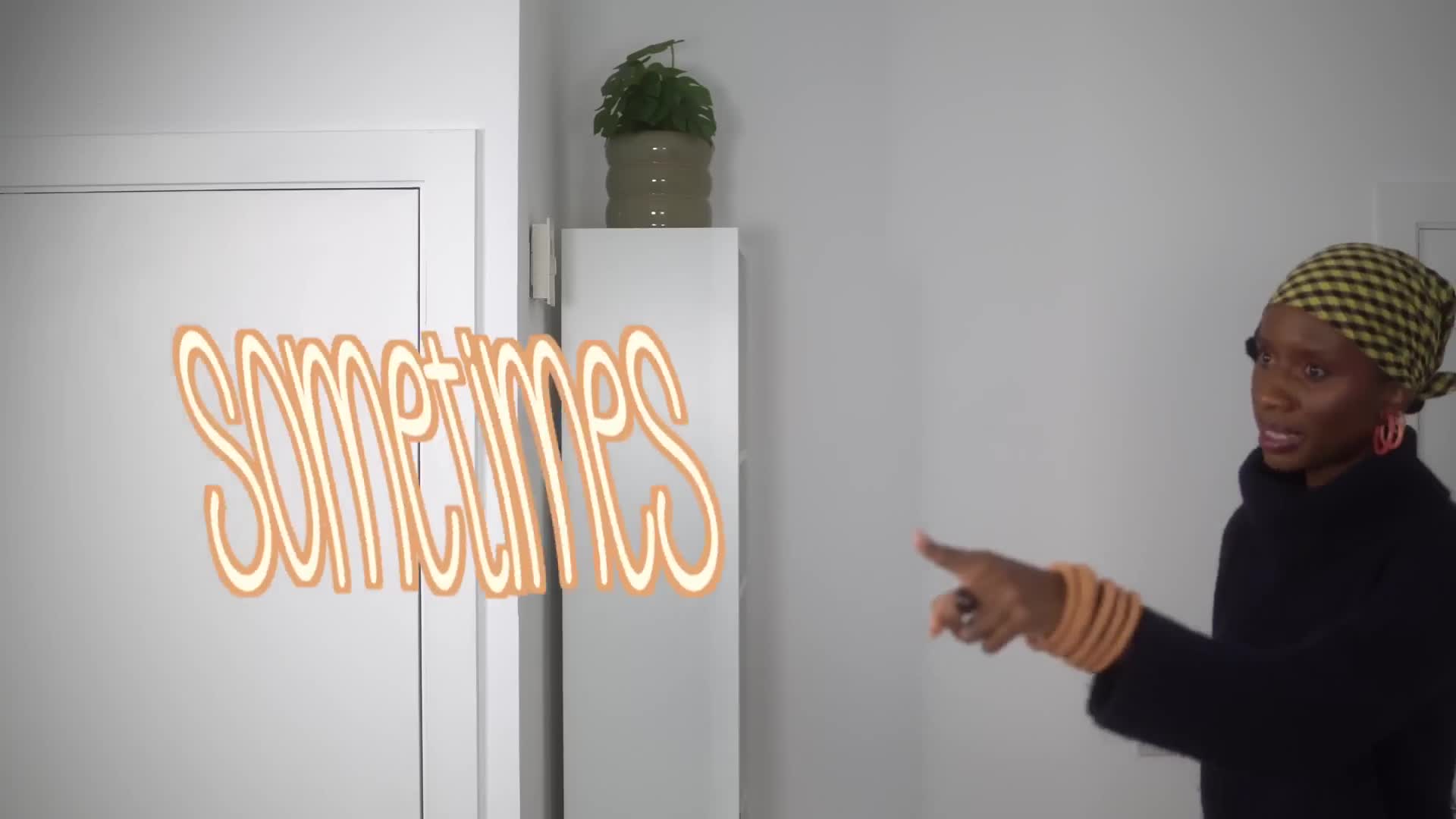
Sometimes.
Sometimes your brain is your biggest up.
Overthinking.
Calculating.
Trying to make things perfect.
Why?
Perfection doesn't exist does it?
No it doesn't.
It doesn't exist.
It's not real.
Let fucking go.
Let go, Pearl.
Let go.
That is what we're going to do.
Letting go.
I recently watched a video on this channel called Make Art, Not Content, where they were examining Basquiat's work ethic.
And I picked quite a few things from that video.
And I put this down in my journal, and I'm going to share it with you.
I have just had a realization.
Like I always do, I have decided, in this very moment, to create bad ugly art.
I don't give a toss anymore.
I am going to scribble shit and write beauty and it is going to be art because I made it, okay?
Because it came from me.
I am done.
I am done trying to create perfection, to create things that are untainted.
I am going to make jumbled shit.
Okay?
Be terrible.
Be terrible.
The audacity to suck.
You have to master the arch of speed.
Work now, work fast, think later.
Yo!
I bought a sketch pad.
Yeah.
I'm going to draw, badly.
Let's draw while we talk.
I remember when I was in uni and the basketball team tried to recruit me.
And I remember vividly because the president then was like, oh, hi, you're very tall, you know.
We have this team.
It's not that serious.
You don't have to be professional.
Because, listen, I'm terrible at sports, okay?
I suck.
Coordination and all those things are not my strongest suit.
So I remember just being like, I don't do sports.
And she was like, oh, you don't have to be professional.
We do play friendly matches.
I think twice a week that was what she said.
And I was like, okay, I'm going to come for practice.
And I remember just i got there and i threw like the ball and people were very nice and all.
I don't know what it was that i felt, but it felt like shame.
Now that i think about it, was it?
I think it was kind of a bit of shame.
I just really struggled.
I struggled so much with coordination and following rules and all these things and and i just remember telling myself there and then that I wouldn't go back.
And I didn't go back.
And, quite frankly, I don't have any regrets that I don't play basketball.
But my point is you know, I could have made friends, I could have learned how to play the sport not be great at it but so much could have happened if I stayed on.
But I was just so scared of being bad at something.
I've just never been bad at things, you know?
As a kid, I just was good at everything.
I'd walk into a room and it would be my first time doing something and I'll be good, you know?
Maybe not the best, but quite good, you know?
And people would be like, oh my God, is this your first time?
And I'd be like, yeah.
And they're like, oh my God, she's talented.
I don't know.
I got used to it.
But then how do you grow?
How do you grow if you don't step into discomfort?
You don't grow.
Of course you don't grow.
How will you grow?
It's impossible to grow when everything you do is only what you're sure of that you're good at.
You should stay in places where you're not good.
You should stay in rooms where you are the dumbest.
Yeah.
And...
I just sometimes think back to that time and wonder what could have been different.
I don't have regrets because there's no point in regretting life.
But sometimes I just do wonder, what if I just stayed on?
What if I tried?
What if I didn't freak out and lean into my freaking out?
You know, by then I hadn't realized that failure is a skill.
Failure is a skill, you know.
You have to learn how to fail.
You know, because every time you learn from failure, the next time you fail you kind of feel better.
Yeah.
There's something I started doing a few years ago where, even if I'm kind of searching how things will go, I still try it anyway.
So I'll give you an example.
I am someone who gets overstimulated very easily.
And I'm very aware of this fact because I've lived in my body my entire life.
But you know, when I started filming, I wanted to see what it felt like filming outside.
I was searching of something.
But if I went outside my house to film and there was sounds like cars and construction around me, I wouldn't be able to speak because my body would be overwhelmed.
But I was like, hmm.
Let me try.
You know, I'm not quite sure how it will go down now.
I know this about my body, yes.
I'm searching of this about my body, yes.
Oh my God, my knees hurt.
I'm getting old.
But then I was like, let me just go outside and try.
Let me not make all these excuses since this is new territory for me.
So I got up and I went outside and I filmed.
And guess what?
I was right.
I was right.
I was so overwhelmed.
All my thoughts ran away from me because there was just so much noise in the outside.
The wind, people walking, cars honking, all these things.
But guess what I learned about myself that day?
I built the confidence to film outside.
Two things.
I confirmed what I knew about filming outside and talking outside.
And I built up the confidence to film outside.
Now, remember that when you film outside your home, you don't have to be talking.
There's B-roll and all these things.
So I was like, okay, I can make B-roll outside if I need to.
I have so many videos and I'm someone who documents my life.
So I have so many videos of me outside in coffee shops just setting up a tripod and I'm filming myself sitting there.
You know?
I'm just saying.
That's what I learned about myself.
Okay?
And I gave myself that confidence because I put myself in the path of discomfort.
We stay comfortable.
We stay comfortable because we are so afraid of failing.
So afraid of being bad at things.
So afraid of being cringe.
Why?
Why?
Now this son...
It's looking haggard.
And I love it.
If it's bad, then it's good.
That's the goal.
Okay?
The goal is to fail fast.
And you don't even have to get good.
Do you know what I mean?
Like, not everything needs to be good.
It's good to be bad at shit.
I don't like the colour blue.
I remember this was like, maybe...
Six, about seven years ago, I found a fault in myself.
And this fault was that I sometimes struggled with not knowing.
And this is because I'm someone who tends to know.
I'm just a seeker of knowledge.
And I found myself struggling with having no knowledge of stuff and just not knowing how to admit it.
And now, anybody who knows anything knows that Saying I don't know is actually a sign of intelligence.
Pretending you know what you don't know.
Yikes.
And I had to work on that, you know?
I had to.
Just going, I don't know.
If the subject was of importance to me, you know, I went and found out.
But in the moment I'll go, you know, I don't know enough about that.
I'm going to look into it.
Let's do something different.
So I was born ambidextrous.
But I'm also Nigerian and I don't know if it's a Nigerian thing or a specific cultural thing.
But there was this thing of my parents trying to make sure that I used only one hand.
And this is quite interesting because my mom is ambidextrous and my sisters are too.
But I ended up having to choose my right or ended up just defaulting to my right hand.
My sister defaulted to her left.
And I've been trying over the past year to kind of just use my left a bit more than I use my right.
Just so I can get back the, you know, the function in my left.
So I'm a righty officially.
But I can also write with my left.
But it's just not pretty.
But then again, the courage to be.
Bad.
I just had a thought.
I am really my mother's daughter.
I used to really get on my nerves every time she's like, you're like me.
And I'm like, I'm not like you.
I get so fucking mad.
I'm like, I am nothing like you.
Nothing.
But then now that I'm getting older, I realized, you know, I'm my mother quite similar.
However, I am just her in another dimension you know, that's what i think and my mother in a different dimension, in a world where there was more space for existence.
You know, my mother could have been me.
I've been thinking a lot about why sometimes we don't do what we want to do or we don't put ourselves in certain situations, and It's not even a fear of failure.
It could be.
It could be a fear of being seen.
But I want to mention something that we barely ever talk about.
And I think it's a kind of obscure reason.
But it's so real.
It's over-familiarity.
Because you're kind of used to yourself.
So nothing you do is wondrous.
So sometimes you disqualify yourself because you think what you give is ordinary.
But bro, sis...
Is it though?
Is it though?
You know, you assume it's not much because it comes from you.
You assume it's not much because that's your standard, okay?
That's what you are used to.
So of course you think it's not much.
Stop saying no to yourself and this is why we have to share things.
This is why we have to release things.
Let people judge you.
Sometimes we're not really the best judges or judge of ourselves, okay?
Let other people judge you.
And I'm not saying that you take on every judgment with and eat it up or lap it up because they are right.
No, but it gives you perspective.
Okay.
If a hundred people judge you and 61 are like saying something similar, that's data.
Okay.
That's statistics.
Statistics, unless somebody has insidious reasons behind it, but statistics generally don't lie.
Unless somebody's trying to lie.
If you go into gathering statistics with some sort of bias, duh.
But if we're talking about statistics that are, you know, it's just a numbers game.
That's why we have to share things.
We have to put things out there.
Release things.
Not doing it, not sharing it, not saying it, not trying it.
That's you rejecting yourself first.
Rejection...
The only rejection is when you don't try.
Okay, because if you try and they say no, now you know what you need to do so that you can try again.
There's people out here with the audacity.
With the audacity.
There's people out here with a level of audacity that is tremendous.
It's amazing.
Honestly, there should be a book written about the way they have audacity, take on life.
They don't even have the skills, but they're out there making money off of random and i, i commend them.
I, i want to be like them when i grow up.
Listen, i'm going to finish this later, but this is so lovely.
Yeah, i feel like sometimes, because of the things we experience in life, we build all these shells, or we develop these shells to protect us, and i think these shells are beautiful for survival.
You know, the thing about shells and walls is this in the bid to keep out the bad, the painful, in the bid to keep out that which hurts us, we sometimes block out the good.
Okay, we sometimes close off from experiencing, i guess, the human, Those things that may cause better, they may hurt, but they make us better okay.
Don't miss out on the miracle, the experimentation, the magic of life, of creativity, of just the beauty of being here.
Because you're in this shell, this shell where, oh, I don't want to do it wrong.
Oh, I don't want people to perceive me this way.
Oh, I don't want to fall below my own standard.
It's all noise.
It's all noise.
I think sometimes mistakes become masterpieces.
Like, yeah, they can be.
And who cares if it's not?
I think at this point, the most important thing a person can recognize is that there is no manual to life.
There's no one way to do this thing.
Have you seen the state of the world?
Let's start there.
Have you seen the state of the world?
Nobody can come right now and tell me that they have the way, the path, a liar okay, no one knows.
We're all just fiddling around, trying things, playing and seeing where it gets us.
All i would say is pick a pass, one pass, or two or three.
If you're freaky like that, pick that path and stick to it.
Okay, stick to it, try to make it work and, while you're in it, if you feel like it's no longer right, then pick another path and make that path right.
That's it.
There's no right or wrong when it comes to your career, your creativity, the choices you make about your life.
As far as you're not harming other people, okay.
If you're not hurting other people, make all the choices, do whatever.
There is no right or wrong.
I think indecision is the crippling factor here.
We keep ourselves on the ground because we're so indecisive.
We don't make a choice.
Choose something and in choosing it, if it becomes wrong, choose something else.
There's just no right or wrong.
Just do you boo and you're gonna be alrighty.
Yeah, have fun play, play.
I'll see you in the next video.
I'll see you in the next video in the, in the, in the, in the, in the.
Okay bye bye, bye which camera?
Bye bye, bye.