If you're a robot, this might not be the show for you.
But if you're a human with hopes, dreams and bills to pay, the Life Kit podcast might be just what you need.
Three times a week, Life Kit brings you a fresh set of solutions to help you tackle topics big and small, from how to save money on groceries to how to bring the house down at karaoke.
You know, human stuff. Listen to the Life Kit podcast from NPR.
Presentado por mí, Mariel Seguerra. Hey short wavers, Regina Barber here.
Today, we're going back to school. a while since we've done one of these episodes where we revisit a science topic you may have learned about and go a little deeper with it. you might remember a list of life, a set of bullet points that are the criteria for being alive.
They include things like being highly organized, like the machinery inside a cell, using energy, and responding to the environment.
So something that could reproduce itself, they have to be able to have a metabolism, also growth.
That's developmental biologist Crystal Rogers at University of California, Davis.
And she thinks about life a lot. So my lab studies how embryos develop from a single cell into a complex organism.
And she says even though we have this list, defining life is not that straightforward.
Can we boil it down to like one thing? I don't think so.
Because I think all of us have our different perspectives on life.
And even though it's a tricky question, Crystal thinks life is worth defining.
There are things we would do to non-living things, like use them for resources, build a house out of a tree which is alive and then we've now killed it and now it's just a thing, right?
Whether a rock is alive, I don't think so, but the bacteria that's living on it is probably alive.
So I don't know if I have an answer to your question, except for the idea It's important to understand what life is so that we don't destroy it and so we can protect it.
Today on the show, what is life? the standard criteria, but also why defining it is so hard.
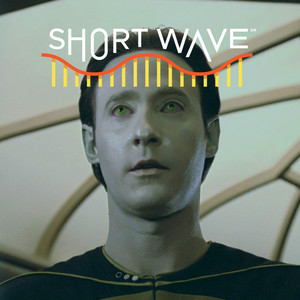
Plus, we get a little sci-fi by imagining what life might look like outside of Earth and ask, Is the Star Trek character Data, who is an android, alive?
I'm Regina Barber, and you're listening to Shortwave, the science podcast from NPR.
This message comes from NPR sponsor, US Bank.
With US Bank Business Essentials, you get more than just a bank. you get a dedicated partner that provides you a powerful combo of checking and card payment processing with quick access to the money you've earned. proving that there is nothing as powerful as the power of us.
Visit usbank.com today to learn more. Member FDIC Copyright 2025 U.S.
Bank This message comes from NPR sponsor Holiday Inn by IHG.
It's a new day for a new stay at Holiday Inn for Business Travelers.
You have everything you need to get work done.
Visit HolidayInn.com to book your stay. Okay, Crystal, so the classic items on this so-called list of life are having an organized structure, reproduction, growth and development, using energy, trying to maintain homeostasis, responding to environment and adaptation.
Okay, let's dig into a few of these. So for me as a developmental biologist, growth is a big part of what we study.
The concept is based on an organism that changes in space and time, meaning...
You are a single cell, egg gets fertilized, and now there's me.
I'm a very complex organism in my own opinion.
But, you know, that required growth. It required patterning and change and response to the environment and the use of energy.
Oh, does it use energy? I mean, a lot of things, even viruses use energy, right?
Well, they use this, I mean, they're using the cell's machinery, so they don't really have... have their own ability to process things.
They don't have a metabolism. They're just like a sack filled with information.
So viruses aren't alive then? Some folks believe that viruses are life.
I'm still of the old school. I think that if you can't reproduce yourself and if you need... to invade somebody else, like a living animal cell to reproduce and to survive, then...
I don't think they're alive, but that's an opinion.
So going back to this idea of metabolism that you mentioned, that's another bullet point on the list.
Can you talk about that one? So something where they use energy sources to do things.
So in our case, each and every one of the cells in our body is constantly using energy to do continue whatever its process is.
So your entire digestive tract is constantly using energy to make enzymes and break down food and all of that requires energy.
What about maintaining balance with your environment?
Homeostasis. Homeostasis. That's part of responding to environmental changes.
So for us, if it's cold out, we shiver, and that helps to create warmth.
Or if it's hot, we sweat. Those are really simple versions of environmental response, but that is something that even a single-celled organism can do, but can a virus?
So is this list of life, like, do you think it comes from the idea of what life actually is?
Or does it come from describing what... we have already decided is alive.
So I think it gets to... It's the latter.
I think that... Scientists over multiple years have been defining what we already think is alive.
And this is why it's so difficult. difficult to then look at things that don't fit in this list to ask. or define whether or not they live.
So it's hard because if you have somebody who has been trained say as a biologist they might look at a cell and say well obviously it has to maintain its homeostasis It is alive.
We know that it has to do that because if it doesn't, it will die or pop or something.
But are we going to be able to apply this list to... extraterrestrial species if they aren't exactly like this.
So have you imagined what life would look like outside of Earth?
When I imagine it, I am completely biased based on what I've seen on TV and in movies.
And I'm always thinking, oh, it's going to be these, you know, these big headed bald creatures that can spit. speak without using their mouths.
It doesn't even make any sense because why would that necessarily evolve?
What is the need for that? Yeah, well, so if we go at it from a scientific perspective, I think that we should look at the kinds of creatures that have thrived on our Earth.
And so, for example, looking at bacteria, so you can imagine there might be some sort of single cell type of organism elsewhere or, and this part is like my nightmare because I'm an arachnophobe and I'm an insectophobe,
But honestly, there are more insects on Earth than there are any type of vertebrate organism.
And I do think that there's something to that, you know, or animals on our Earth. who have survived all this time, cockroaches.
Cockroaches are indestructible scorpions.
Sharks. Sharks were here before trees, apparently.
And so you have these animals who have this really long-term...
And so I imagine that we probably... Humans are...
Like, no offense, but we're the stupidest creature in terms of how we're built.
Like, all of our organs are just presented—
We stand upright, which is really not very effective for like traveling.
We come out premature because our brains are so big that if we continue, we have to be taken care of.
We're completely useless for like a year and a half or more.
And so I don't think that this is something that would necessarily evolve elsewhere because it was the perfect storm that got us where we are.
Can you talk about why you think it's so hard for science to define what life is then?
Hmm. Well, I do think that a lot of that gets into our biases.
When we think about life, most of us think about human life first. or animal life.
And it's hard to consider what that actually means.
And it differs based on our belief systems.
And so... when we extend that net out to other organisms or thinking about, you know, is a virus life, for example –
It's really hard to get past that. None of us are in our own echo chamber and we aren't affected by outside things.
I don't know. I think that we all form our beliefs of what life is based on what we've learned and what we've experienced.
So if we're talking about the Star Trek android crew member Data.
Commander, what are you? An android. Which is?
Webster's 24th century dictionary, 5th edition, defined an android as an automaton made to resemble a human being.
Is he alive? He definitely evolved. I know.
Okay, so this was really hard because watching Data evolve over the seasons... into this creature who was humanoid.
It seemed like he was developing feelings.
You know... He had like relationships. Totally did.
Totally did. That got weird. I'm not going to lie.
That got a little weird. Okay, let's actually take data and let's go through the list.
Okay. So like, okay, he's highly organized.
That's definitely, he's, check. Yeah. Does he charge?
Is there a metabolism there? I don't know that they ever addressed metabolism. whether he is using like how he gets charged.
He does use energy. I think he has some sort of battery source that's like limitless or something.
Okay. He does reproduce, not successfully, but he has.
Right. He does grow and develop. Let's see here.
Okay. I don't know that he grows physically.
Okay, he doesn't grow physically. Well, maybe his biological – the skin portion maybe actually – functions as skin, which would be then a tissue, which would be multiple cells dividing and maintaining homeostasis, right?
Okay. Okay. And does he respond to his environment?
Definitely. Definitely. So is Data alive?
That was multiple seasons. It was the whole question about Data.
Is he alive? I think that the crew on Star Trek Enterprise would tell you that, yes, Data is alive.
I'm going to say he's alive. I don't disagree.
I am a biologist because I find life amazing.
That's the thing that really got me into this.
I thought I wanted to be a physician. And I went to graduate school and I watched a frog embryo develop from a single cell into a froglet. which is basically like a mid-metamorphosis stage frog.
And to me, that was it. I am a developmental biologist because we get to watch life become life.
And it's the coolest thing ever. So I think if more of us appreciated the beauty of life and how it happens, maybe we would be kinder to each other.
I love that. I'm going to try to be more patient and love life more because of you, Dr. Rogers.
Why, thank you. That's amazing. Crystal Rogers is a developmental biologist at UC Davis.
If you have a science question, send us an email at shortwave at npr.org.
Today's episode was produced by Burley McCoy, edited by Gabriel Spitzer, and fact-checked by Anil Oza.
The audio engineer was Josh Newell. I'm Regina Barber.
Thanks for listening to Shortwave from NPR.
Do you ever look at political headlines and go, huh?
Well, that's exactly why the NPR Politics Podcast exists.
We're experts not just on politics, but in making politics make sense.
Every episode, we decode everything that happened in Washington and help you figure out what it all means.
Give politics a chance with the NPR politics podcast available wherever you get your podcasts.
There is so much happening in politics in any given week, you might need help putting it all in perspective.
As your week draws to a close, join the NPR Politics podcast team for our weekly roundup.
Here are best political reporters zoom into the biggest stories of the week.
Not just what they mean, but what they mean for you.
All in under 30 minutes. Listen to the Weekly Roundup every Friday on the NPR Politics Podcast.