This is an iHeart Podcast, guaranteed human.
Hi, I'm Radhi Devlukia, and I am the host of A Really Good Cry podcast.
This week I am joined by Anna Runkle, also known as the Crappy Childhood Fairy, a creator, teacher and guide helping people heal from the lasting emotional wounds of unsafe or chaotic childhoods.
Talking about trauma isn't always great for people.
It's not always the best thing.
About a third of people who are traumatized as kids feel worse when they talk about it get very dysregulated.
Listen to A Really Good Cry on the iHeartRadio app, Apple Podcasts or wherever you get your podcasts.
I'm Jonathan Goldstein and on the new season of Heavyweight, And so I pointed the gun at him and said this isn't a joke.
A man who robbed a bank when he was 14 years old.
And a centenarian rediscovers a love lost 80 years ago.
How can a 101-year-old woman fall in love again?
Listen to Heavyweight on the iHeartRadio app, Apple Podcasts, or wherever you get your podcasts.
What are the cycles fathers pass down that sons are left to heal?
What if being a man wasn't about holding it all together, but learning how to let go?
This is a space where men speak truth and find the power to heal and transform.
I'm Mike Della Rocha.
Welcome to Sacred Lessons.
Listen to Sacred Lessons on the iHeartRadio app, Apple Podcasts, or wherever you get your podcasts.
I slept in cars, my friends would sneak me into their houses and I ended up getting shot by my friend's dad.
It missed my heart by a few centimeters and it's stuck in my lung today.
Hey everyone, welcome back to On Purpose.
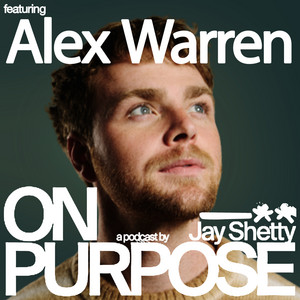
I am so excited for today's episode because I get to sit down with Alex Warren, Grammy nominated singer songwriter, whose music has reached billions across the world.
Alex's rise has been remarkable, not just for the success, but for the story behind it.
A story of deep loss, unexpected love and transforming some of the darkest moments of his life into songs that heal.
Please welcome to On Purpose, Alex Warren.
Alex, it's great to have you here.
Thanks for having me, dude.
That was a crazy introduction.
I love that.
Well, it's true.
You've had to live it.
Dude, when I die, you got to give a speech or something.
That was beautiful.
I have a feeling from having researched and studied your life for this interview, and even the few moments we've just spent.
If that is an honor that you would give me, I will be there.
I will receive that very gratefully.
I hope that's a long, long way off.
We got to go on a few hikes.
Yeah, absolutely.
I need to learn a bit more about you.
I love it, man.
But first of all, I just want to say congratulations.
I just saw you were the number one song on Variety's Hitmakers, 25 songs.
Oh my God.
Sabrina Carpenter, Kendrick's got like three on there or whatever it is.
I'm like, how does that feel?
That is incredible.
That is huge.
I didn't know that until just now, which is awesome.
Did you not?
I don't look at that stuff.
It's something for me.
I feel like I just focus on the music itself, and it's been really amazing to be able to have those accolades.
I don't know.
It doesn't feel real.
Like, that's the one thing that kind of, like, it doesn't hit me yet.
Every time I play a show and I sing that song, I take an ear out and hope people are singing and I get off stage.
I go.
Were people singing the song?
And everyone's like, okay, Alexia, shut up.
Yes, they were.
Like, this isn't cute anymore.
I'm like, I'm genuinely serious.
Wow.
Yeah.
That's beautiful.
And of course I saw you – did a little share the other day, but Spotify wrapped top 10 albums of the year number four song in the world on the globe.
I mean, that again, it's just, how does that feel?
Like, how does that truly feel?
So there's a part of you that goes, I don't look at it.
And of course you're like checking to see where the boat, how does that feel?
Dude, it's...
I see it, and it's true.
There's a warm feeling inside because I've always wanted that.
And I think everyone would be lying if they said they didn't love it.
I think that's the part about it.
I wrote it with my friends about meeting my wife, and that's even more special.
That's the song about my wife.
It's not some fluff.
It's not some pitch song.
It's just a record that we actually believe in.
Yeah, that's so special.
And it's incredible to think that you've got the people around you that you're writing about.
Because I feel like often artists will write a song about someone, but then it's a breakup or someone that they're not connected to anymore.
I imagine it's a really rare feeling to actually say I'm writing a song about the person I love and they're in my life.
Yeah.
That's something I never really think about is when people write like a breakup song and it becomes like a hit, like what that relationship is.
But yeah, it's just something where I feel like it didn't happen to me.
It happened to us.
And it's been really cool to be able to have that moment together.
Yeah, absolutely.
I mean, I was going to ask you.
I feel like you've spoken about your journey many times before, but I wanted to ask you what's A childhood memory that you have that you feel defines who you are today that has played such a pivotal role in molding who you are?
I have never been asked that question.
Wow.
I would say probably...
A lot of the memories I have with my dad, my dad knew he was dying.
And so he.
It's so fun when I do these interviews and stuff because I get to actually like talk about him and talk about that life that I kind of forgot about.
But a lot of the pivotal thing was watching my dad go through chemo and slowly start to break down.
And he still, every day, woke up at 5 am to be able to hang out with me before he went to work to provide for what was left once he passed.
And Um, I just remember, you know, a lot of times in my life, and especially now, I kind of think oh, like you know, I can't do this.
I can't do that.
Or, um, I just get nervous.
And then I think about the things that my dad went through for us and um, I can do anything at that moment.
So I feel like he bought me my first guitar and being able to play music and be able to sing, and watching his face when I didn't know what I was playing and it sounded God awful.
But knowing that he got to cherish that memory was probably a big one for me.
Wow.
How old were you when he was going through chemo?
He got he had cancer four times before.
I mean, entirety of when I was born.
But he beat it three times and the fourth time got him and he died when I was nine.
So probably like probably remembered it from five to nine.
How did he have that conversation with you at that time?
Were you aware at that time, at that age, what was even happening?
I can't imagine.
No, I mean, the night before he died, I remember he was so, they were just making him comfortable.
And so he was at our house in a hospital bed in the downstairs bedroom.
And I remember the night before the last conversation I ever had with him is he was puffed up on drugs.
And I was messing with him.
And I was like, dad, will you buy me a Ferrari?
And he was saying yes to everything you know and um, it's weird to think about it back then and kind of be like that was my goodbye was.
I was kind of fucking with him a little bit and yeah, i all i know is like you know he, he died joking around with us saying yes to everything you know.
He didn't even bother to you know, say no or mess with us back.
But um, he left us all notes and when he died the morning he he died my mom came to my room at like five in the morning i remember the time was actually 505 exact, um and she said it's time to say goodbye to your dad.
He had left us these letters and we got to read those letters and um yeah, i can say that's a pretty surreal moment to kind of like think about.
But i never knew.
Wow, i didn't even realize until i was like 13 or 14.
Then he was in a part of my life.
I think it was just a a weird messed up joke.
I think i would make things up.
I'd be like oh, he works for the fbi or like he, he like faked his death and i yeah, it's pretty weird when i came to terms with the fact that he was gone.
So it was quite hard to actually come to terms with it.
It took a few years to even process the reality of the situation.
I don't think my brain could.
At nine years old, and I think back, I really never think about this.
So this is the first time in a long time I'm actually thinking about it.
I remember when he died, I was doing the stereotypical wake up, wake up.
He was dead in front of me.
And I think it was just a whole moment of me trying to stop joking around.
I was nine, but I understood he was dead, but I didn't understand what that meant.
Of course.
And so for a good 20 minutes I was slapping him, I was shaking him, begging him to wake up, and then they wheeled him out of my driveway.
And the neighbors all looked around and I think that day I was like I remember it so vividly but so blurry at the same time.
But yeah, I knew he was dead.
I didn't know what that meant until I was 13 or 14.
Tell me about, you said he would wake up 5am to play with you before he went to work.
Talk to me about what you do remember, because it's remarkable that you can hold on to memories from them, but obviously they seem so precious.
Are a lot of those memories based on things you remember or pictures and video?
That's what I remember.
Every day he woke up and I have three other siblings.
And so he would take me and my brother skateboarding and we would go to the skate park and get donuts early in the morning, or we'd go to church, or I know, with my sisters, or even all of us, like he'd wake up early and take us to like Legoland, you know.
And like he would just find... every day was a different day.
Every day was a different thing.
You know, there was no routine besides the fact that every morning we woke up and we had no idea what we were doing.
And it was kind of like a bucket list in some ways.
Like he wanted to surf and learn it.
So we went surfing and like, yeah.
So, like every day, I think he just wanted to.
His goal in life was always to be a father and to have kids.
And I think he just sped run it as fast as he could knowing he was dying.
And I can't imagine that as hiding that from your children.
And trying to leave a future for them as you leave.
What a special man.
Yeah.
Truly sounds like... Someone I strive to be every day.
Yeah, absolutely.
Very worthy of that.
And when you came to that, what was the moment at 13, 14 where you came to that reflection?
What kind of made that...
I always knew my life was different.
I didn't understand it.
I watched my little sister go to a daddy-daughter dance without her dad.
And I remember seeing her crying, and I started to think what was different about my life.
And I started to think about, Because at that point it was like oh, at nine years old, losing your dad, and then you're 14, it's all you know.
The formative years of your life are now starting.
And so you're just being like oh, i don't have a dad, that's a normal thing.
And i started to think about what was what i was missing, what i didn't have, and i think that was the biggest thing.
My mom was a alcoholic who wasn't present, so i realized i was raising myself and having to.
You know, all of us, all of me and my siblings, were raising each other and that was something for us that we really um, we didn't realize wasn't normal for a very long time.
And we struggle with today.
I think we struggle with having a normal sibling relationship because we were so busy trying to parent each other.
Talk to me about that parenting each other.
What was it like parenting yourself and then parenting when you're 14 years old?
It's interesting.
I think it was more of like me and my brother were obviously this protective brother over our little sister.
And then I think my older sister felt that Nisha was about four years older than us.
So she felt really the need to do so.
Yeah, I think the dynamic is just different.
You don't have an older brother.
You have someone that you, for me at least, is someone I help through with daily life, and vice versa.
And there's different things that I'm skilled at that he is.
And I think we adapted really, really well to being able to, to being able to parent each other, but then that normal relationship of just catching up and sibling.
It's weird now doing it as we had a moment when my mom died, we kind of all went our separate ways.
We kind of just realized what the is wrong with our lives and we all stopped talking.
Oh, wow.
We all stopped talking.
We all went apart and I started doing this and we rekindled not too long ago.
Most of us live in the same state now and we grab lunch every week and we try our best to kind of, you know, hash that out.
It's been nice.
Honestly, I'm really close with all of them now, which is really cool.
Who was the first person to reach out?
Probably Lauren, my older sister.
She reached out to you?
Yeah.
Well, she's super, super keen on creating an environment of family.
And that was something I was missing for a while.
And so she was kind of the glue that was like, you know, it lets us all come together.
And it's been cool.
She got us all to move to Nashville.
Was it easy to bring everyone back in or did it take a moment?
Like, talk to me about that reconnection.
Everyone wanted to, everyone, everyone wants to be a family.
I think it's just being apart for four years at our twenties.
I mean, you have to think like I was 19 when I, when we all kind of like went away.
And so, you know, a lot has changed since I was 19, you know, career wise, me wise.
I mean, I'm, I, I, I've grown so much as a human, you know?
And I think boundaries and respect and you know, growing like, just trying to like settle back into being siblings, has been a fun challenge, I would say.
Because it is.
It's like, you know, I'm one of those people I think arguing is a beautiful thing.
Yeah.
Well, I do.
I think even with my wife, and she finds it so funny because we'll be like fighting about like a rug and I'll be laughing.
I'm like, this is great.
Like we're talking like life is about compromise.
Life is about figuring out what you can tolerate of me and how much I can tolerate of you.
And, you know, that's how a relationship works.
And it's been really nice to kind of like be able to learn things about people through an argument, how they feel.
What is the compromise there?
And that's what I really like.
When you look back now, do you believe that parenting yourself allowed you to have some of this maturity at this young age?
Yeah, 100%.
I never got into drinking.
I never got into smoking.
Because you didn't have the opportunity.
Right.
And so for me, I'm a pretty boring guy.
I think that's the one criticism I see online and people are like oh, Alex is just a boring white dude.
And I'm like, yes.
Yeah, I am.
I am, and I love it.
But no, it's allowed me to grow up really quickly, which is beautiful and sad.
But it's funny.
I find things that I love that are childish.
I love skateboarding because my dad loves surfing.
I dirt bike.
I do all these things.
And so I'm a giant teenager now kind of living out that childhood I never had.
I can, in my own way—
As I'm reflecting what you're saying, so I felt like I parented myself.
My dad was more, he was around, but he was aloof and in his own world.
And so I was definitely my younger sister's father figure.
That was the role I took on early on.
I really felt like I became man of the house quite early on.
And I look back at those moments now and feel very grateful for them as well because, to me, I don't think I would have had the skills that I was able to develop if I didn't have that experience.
People are always like, do you feel you missed out on your childhood?
I don't think I did, because I think I still had some of that in my way and there were moments of that.
Do you feel like you missed out when you look back or do you feel differently?
I often do, but I think it's a childhood that I wasn't meant to have.
I missed out on having a father.
I missed out on.
I think when you learn how to ride a bike, you look behind you once you figure it out and you fall a couple of times and you look at your parents and you say look, I did it.
And throughout my entire career of even childhood, of becoming an adult and accomplishing certain things, I looked back and I didn't have those people in my life.
And I think that starts to rewire your brain of what an accomplishment is.
You know, how do you value success?
If, to me, success is being able to show my parents I did everything I set out to be, and so it kind of rewires you into thinking you know, what is it?
What does all this mean?
And what does you know my childhood look like?
And I think everything that I went through has shaped me up to where I am today and whether I like it or not and I do like it I like who I am now, but it is something that you know I think about.
A lot is like you know I would be a completely different person if my dad was still alive, my mom was still alive and I didn't go through half those things.
And whether or not I want that is always a question I ask.
In terms of parallel lives?
Yeah.
I think like, you know, I could have had a childhood.
I could have had all these different things, but I would not be who I am and what I know.
And I don't think I'd be a musician.
I don't think that I would be here.
I don't think I would have met my wife.
You know, there's so many different things that I went through in my life that I love that because I didn't have a childhood.
How do you define success now?
Truly, I was so unhappy with myself for a long time I think I just never knew.
I always wanted to be a musician since I was a kid, since my dad introduced me to it and I tried for my entire childhood and no one cared again.
I grew up in an abusive household and you know, when you find something that you like, you get torn down for it.
So I just never thought I could do it.
You know, my dad introduced us to music and he passed away.
He passed away and so I stopped.
I stopped trying it.
Just he played music all the time I grew up with Rascal Flats and Train and um coldplay and he passed away and the music stopped, and figuratively and you know, actual.
And so when i started understanding what was happening in my life, i started playing music and i got torn down for it every day.
You know, i would do talent shows.
My mom wouldn't show up and she would say i sucked and all these different things.
And you know, hearing that every day growing up, you start to think do i suck?
Then I turned 18 and I was still trying.
I would post covers on Vine and TikTok and it was musically at the time.
I got kicked out of my house and I would go.
When I would shower at a 24-hour fitness or whatever bathroom I could find at a resort or whatnot.
I would sing in the bathroom and the acoustics were great and I would post those on the Internet and those wouldn't do well yeah, i was every single second i could.
I think i got shot down.
And then i met my wife and i posted a video with her in my car and it did amazing the first rip around and i was like, oh cool, like this is gonna get us out of the situation.
We kept going and found myself back to music.
And here we are.
What did your day-to-day look like with your mom and her addiction?
I was the only person who I don't know if I'm the only person who knew.
I was the only person who called it out.
At the time.
Yeah.
So my dad, when he was dying, he knew and he was terrified.
So he obviously did certain things that he wanted to make sure that we were okay.
But yeah, I would.
My daily thing is my mom would start, my mom would sleep during the day and stay up all night.
And so she'd be drunk at 5 a.m., driving us to school at 6 or 7.
And she would sleep when she got back home.
She never had a job since my dad passed away.
So whatever we lived on was what she – he left us and he died during the recession.
So it was definitely a scarce, interesting time.
We still grew up fine.
My dad did well.
And so when he passed away, it was whatever.
But – daily it was.
I'd wake up and I'd find what alcohol she was hiding and I'd throw it away.
I can't tell if I was petty for that or if I just truly wanted to see her stop, you know, but every addict needs a surrogate.
They need someone to blame that isn't themselves, or at least that's what I think.
Growing up with it, and I was that person, I was the only person who could call out her problem.
I was the person who, when she was driving drunk, would make her pull over or I would threaten to call the police.
Um yeah, i was the person who made it difficult for her to have the addiction, because i didn't want to see it anymore.
I thought that you know, you're supposed to be a parent, you know, and her and i clashed a lot, you know.
Um, so yeah, my daily life was waking up, calling her an alcoholic for sure um, threatening to call the police and um yeah, it was really, really toxic.
I mean, looking back at it, i would call the police on her several times.
She was abusive.
Um, there's one time she elbowed me in the face so hard that i i have a deviated septum now from it and i called the police and she made up a thing saying that i hit her or something, and i remember they threatened to take me to jail and that was the first time i ever felt like wow, everything is stacked against me in some way, you know.
And so, like that was really difficult for me to be like, oh well, I can't call the police anymore.
And it was so strange.
It was such a strange way to grow up reflecting on it.
But it's also something, you know, again, it's I never drank.
I never drink.
I never do any of those things because I've never seen the good of it.
When people are like, oh, we're going out to drink, I've never understood that.
I've never craved it.
I've never wanted it.
And I'm not against it.
I just...
I just don't get it anymore, you know, because I grew up with the negative of it, you know?
Yeah.
Did your desire to remove her addiction reflect badly on you?
Like, is that where the moments of tension and abuse yeah sparked?
Was that you were the one trying to take it away from her?
Yeah, and i think it didn't help that my siblings didn't realize it either.
I think my siblings would all be like well, if you didn't talk back, you wouldn't get hit, was the sentiment behind it, and i thought that was such a bizarre sentiment growing up.
Um, but yeah, i mean i was just one of those people.
I like i wasn't a troubled kid, i didn't get into bad things, but i wanted to be a singer and my mom hated it.
She hated it.
I don't know what it was about whether it was vlogging or singing or just filming my life.
I never wanted to do a normal job.
In school, instead of class, I would go to the bathroom and sing and film it and post it.
And of course, my grades started dropping. slipping a little bit because that's all I wanted.
I knew I wanted to do that.
And she thought I was some terrible kid.
And so, yeah, it was definitely a clash between us and it never stopped.
Even after all this, she was still alive when I started doing well.
And yeah man, I remember I had distanced myself fully until I was like look, I don't want you in my life until you get help.
And I remember the week she died, she had texted me, I have a problem and I'm going to AA.
And then she died the week after, which is crazy.
Did you believe her?
Yeah.
Yeah.
Which is hard.
But I don't know... I don't know what killed her.
I don't know if it was just final and she realized she had a problem, or She went to the doctors one day, but I remember.
I remember how fucked up her house was.
I never... I couldn't step foot in it.
But my siblings went and it was bad.
There was... Like... She was... She was dead way before she was.
Which is crazy.
I, i think watching two people die in front of you like that is like the.
It's the weirdest thing.
It's the weirdest.
You can't explain it.
It's the breath the, that person doesn't become a human anymore.
You know, and like the the, if you've ever watched it before.
It's the, it's the, the breathing that doesn't leave, like the.
Um, it's so hard to explain just someone.
They're not breathing for themselves, they're gasping for air and you want it to stop.
And it's the scariest thing.
It's crazy watching that twice at nine and then you spent your whole life forgetting it and then you turn 21 and you just it's like a haunting thing that doesn't leave.
It's crazy.
Was that at home as well?
She was at home?
No.
No, I... That one was in a hospital.
But when you die from drinking and liver failure, you're yellow all over.
You know, because I think it's called jaundice or something.
You're... It's...
It's morbid.
I think watching my dad die, he turned white because his kidney failed.
Watching someone die slowly like that is something that you can never forget.
It's crazy, terrifying.
Were you by her best side when it happened as well?
Yeah, i remember.
The one thing, too is you know you walk outside.
We all just had a moment.
Once she had passed, we went outside.
We all just started crying.
And you know you look around and someone's on their lunch break, someone's pulling up in a fancy car to jersey mike's and everyone's laughing and people are walking by, leaving the the hospital and It's weird to think that my world stopped spinning.
But you are just.
You have no idea.
You have no idea what the heck just happened in there.
You have no idea what we just went through.
And it is so interesting.
I remember that that stuck with me so bad.
I'm like, why isn't everyone, why isn't the world stopped?
You know, because mine just did.
It's crazy.
Yeah, with your father.
Obviously your memory was this almost playfulness or joking around him saying yes, i'll get your ferrari.
Yeah, what was that?
Internal and external dialogue with your mother?
They told us she could hear us.
I don't know if that was true or if that's just something you tell people to hope that they they uh, they have closure um, a lot of uh, forgiveness.
That's what you were saying.
Yeah.
A lot of forgiveness.
A lot of apologies, too.
What did you say?
I think for me, you know, I think in everything, especially in a place where there's clashing.
It takes two people.
Regardless, you know, she could have been a better parent.
She could have realized she had a problem and whatnot.
My mom...
Watched her husband die and then had to raise four kids by herself.
How the am I supposed to judge something like that?
How am I supposed to say you did that wrong?
You know, and that's the one part for me is like I gesture so hard.
I thought you're supposed to be this perfect person.
You're supposed to be this parent and.
It's crazy how selfish I could have been to assume that.
I don't know what you went through.
I don't know what it's like.
It's your first time living.
There's no perfect book on how to raise four kids, watch your husband die to cancer and all of a sudden have everything that you thought in life ripped away from you in a second and just have to put a smile on it and not have a cope.
So yeah, I think that was.
My biggest thing is, you know, I spent my whole life judging this person, not putting myself in their shoes and understanding what they had to go through to be okay.
She had to have drinks to be okay.
She had to kill herself to be okay with life.
That's hard.
You know?
So I think that was like the one thing for me that, like you know, I had to wrap around and have closure with and there wasn't.
You know, it's closure in some sense, but I don't know.
I never got to have that conversation.
I was, what's that word when you aren't talking to someone?
It's like they call it something in a family when you aren't communicating with them.
Yeah, kind of.
I didn't talk to my mom for a long time.
Yeah.
It's hard.
Have you given yourself that grace?
I don't think so.
I don't think so.
I haven't thought about it until now, which is funny in such a public setting.
But yeah, I don't.
When you go through the things I go through, or at least I can't speak for everyone.
I have spent a lot of time not forgetting, but putting it on a burner.
Letting it sit there when it's time to approach those feelings.
And then when I do these things, I fully believe in being honest.
And I like to take advantage.
I told you before we started recording that these are my favorite parts of this job.
And I think it's true because this is the time where I get to be human.
I think in my career, a lot of people look at what we do and...
It's the same thing.
I think they just – they don't see the human behind the piece or the art or whatever.
They see the headline or they see whatever they want to see.
Whether I pass their favorite artist on a chart or if I got picked to do something opposed to their favorite artist it almost – I become a villain in their life, without them actually understanding who I am behind it.
So when it's time to do these things, I think it's great because I think you start to realize how – messed up a lot of us are not even messed up i wouldn't even say i'm messed up i think just the things that you you tend to separate the human from the art and i think that's the hardest thing for me too is you know everything i make in the music i write about is fully true to me i don't i'm not taking pitch records i'm writing about my watching my parents die which is so hard to then turn around and swipe on a tiktok and be like alex warren sucks i'm like fuck And so it's just separating that is so difficult for me too.
I just have to scroll now.
Whether it's good or bad, I don't look at it.
And it's hard.
It's really hard because these songs mean so much to me.
These songs helped me through all those things I'm talking about.
And it's so strange to be able to be like, oh, wow.
It's so strange not to take that personally.
So that's definitely been a challenge.
This week on Dear Chelsea with me, Chelsea Handler, Nicholas Sparks is here.
I would imagine that you've gotten a lot of feedback about setting a standard of love and romance that a lot of men probably can't measure up to.
I have heard such stories at my book signings, right?
Where's my Noah?
Where's my John from Dear John?
And at the same time, in the course of my career, I've had seven marriage proposals in lines to sign my book.
You know, up to the table, the doodle dropped to his knees.
And I feel so bad for him.
I'm like, dude, you're in a Walmart in Birmingham, Alabama, you know, but it's happened.
And, you know, you get a lot more.
Of those kinds of stories, then people coming up and saying I've ruined men for the rest, which I'm glad,
I would feel bad if that was more common, actually.
No, that's what you come to Dear Chelsea for.
Yeah.
To get uprated.
Listen to Dear Chelsea on the iHeartRadio app, Apple Podcasts, or wherever you get your podcasts.
Hi, I'm Radhi Devlukia and I am the host of A Really Good Cry podcast.
This week I am joined by Anna Runkle, also known as the Crappy Childhood Fairy, a creator, teacher and guide helping people heal from the lasting emotional wounds of unsafe or chaotic childhoods.
We talk about how the things we went through when we were younger can still show up in our adult lives, in our relationships, our reactions, even in the way we feel in our own bodies.
And Anna opens up about her own story what helped her notice the patterns she was stuck in and how she slowly started teaching her body that it is safe now.
So when I got attacked, it was very random.
Four guys jumped out of a car and just started beating me and my friend.
And they broke my jaw and my teeth.
I was unconscious.
Then I woke up and I screamed.
And I screamed because, even though I didn't know who I was or where I was, something in me was just like hold on wait, they could kill me.
And I'm not going to let that happen.
I'm not going to let that happen.
I'm going to get through this.
And I did.
Listen to A Really Good Cry on the iHeartRadio app, Apple Podcasts or wherever you get your podcasts.
For 25 years, I've explored what it means to heal, not just for myself, but alongside others.
I'm Mike Della Rocha.
This is Sacred Lessons, a space for reflection, growth, and collective healing.
What do you tell men that are hurting right now?
Everything's going to be okay on the other side, you know, just push through it.
And, you know, ironically, the root of the word spirit is breath.
Wow.
Which is why...
One of the most revolutionary acts that we can do as equals just breathe.
Next to the wound is their gifts.
You can't even find your gifts unless you go through the wound.
That's the hard thing.
You think, well, I'm going to get my gifts.
I don't want to go through all that.
You got to go through the wounds of your life.
Listening to other people's near-death experiences, and it's all they say.
In conclusion, love is the answer.
Listen to Sacred Lessons as part of the My Cultura Podcast Network, available on the iHeartRadio app, Apple Podcasts or wherever you get your podcasts.
So they can choose what they need most.
Donate at givedirectly.org forward slash on purpose.
First time gifts are matched, doubling your impact.
Our goal is $1 million by year's end enough to lift 700 families out of poverty.
Join us at givedirectly.org forward slash on purpose.
As I was listening to you, I was just thinking I love that you have the capacity for grace for your mom and to sit there and say no one knows how to raise four kids, watch their husband die, deal with the challenges that come with life.
She's not a superhuman.
And as I was listening to you say that, I was like I hope you're able to develop that grace for yourself to be able to say you know.
No one knows how to come into the world and have their father pass away when they're nine years old and have a mom who's an addict and have three other siblings.
And I think both coexisting is what grace really looks like, because it's beautiful that you've been able to even have the glimpse of that perspective for yourself, your mother, and to expand that out into yourself.
Because I often feel that we do one or the other.
So we often feel, oh yeah, I give myself grace, but I can't forgive that person.
And that doesn't feel fully healed.
But we do the opposite where we give that person grace, but we don't for us.
And I can resonate with it because I always think about my dad because he had such a complex childhood.
And when I look at it, it gives me context and grace for who he became.
And if without that context, in the same way as you just beautifully explained?
But yeah, my dad saw his mom die when he was four.
He grew up in the slums of India.
He had four siblings that...
We're just trying to figure out what to do.
And when I understand that context, I can have grace and compassion for him.
And then, at the same time, even though I didn't have those troubles or your troubles, there's compassion I have to have for myself.
And so yeah, I really hope this opens a doorway for that for you, because it's beautiful that you have the capacity for that for her.
Yeah.
And had it in that moment.
It's really special, actually.
I've never had that perspective funny enough.
Something so simple yet so profound, you know?
Yeah, I mean, you have it.
You're the one saying it about your mother.
It's just saying the same about your nine-year-old self and 14 and 21.
But when you were going through that, what do you believe you needed most in your teenage years that you didn't have?
Wow.
I don't know.
I mean, the obvious answer is obviously a parent.
Yeah, outside of that, yeah.
I think I made do with what I had.
I don't necessarily think I could have had anything more, you know?
Growing up and being a teenager, I think...
I had ambition.
I had a dream.
I had a goal.
And every day, being a kid, I never thought of like, what am I going to do party-wise?
I thought, what am I going to do so I can achieve those goals?
I've always wanted to do this.
So I don't know.
I truly every day.
I just woke up and I thought how do I make this dream and goal of mine possible?
And I've never let go of it.
How did you protect that and protect your self-esteem in an environment where you're being told you suck, where someone who's the only caregiver in your life doesn't love your art or doesn't encourage it?
And of course, you don't have the resources to... How did you protect that?
I have no idea.
I have no clue.
I should have given up so long ago.
And that is something that I've questioned to this day of why it happened.
I, for the longest time, had this gut feeling since I was a kid.
And whether you... For me, I credit that to God.
I'm a Christian and I have faith in that way.
But for so many people, I can't imagine.
Every day I woke up and I go, I'm going to do this.
And I had so much confidence for being such an insecure guy, for not believing in myself talent-wise, for not believing in myself where my life was.
And I would...
I should have given up way before I did, and I never did.
I just had this weird gut feeling that this was supposed to happen and I followed it.
And here we are.
Yeah, I love that.
I love hearing that too, because one of the most common things I hear a lot from my community is Jay, my family doesn't believe in me.
I'm in a toxic atmosphere.
There are people around me who are just holding me back, people with negative energy.
What do I do about it?
And you're sitting here, And we're looking at a snapshot of your life.
And yes, we're getting into some detail, but there's so much more to it, of course.
It's your life.
And you're sitting here going, well, actually, that's all I had.
So I did all I had.
That was basically not your escape, but that was your passion.
It was your pursuit.
It was where all your energy went.
It's where all your focus went, because what else would you give your focus to?
If you gave it to all the other things, you wouldn't have survived.
Exactly.
I never had a plan B. I would go to school and in classes, I was posting musically.
It was literally all I did.
Every day I would go into class and I would just go on my phone and do social media or post my singing videos.
And it, it.
I was failing.
I didn't graduate high school like i, and nor would i ever recommend that to anyone.
I do not know what that conviction was and why i thought that that was what i was supposed to do, and it just it.
I didn't fight it.
I tuned everything else out.
There was nothing else i was interested in and i never had a backup plan.
I was like i'm going to be homeless.
I'm going to do this and i ended up being homeless.
Did god have anything to do with the conviction?
I like to think so.
I think a lot of times when I watch podcasts and I hear people say that, though it always throws me through a loop.
And I think a lot of times when I've gone through this stuff and talked about my faith and things, I just feel as if I have been put on this earth to do this.
And I feel as if I had to lose my parents to be the person I am today, you know, and the things that i've lost have shaped me into the the, the man that i am.
And you know, i've met everyone and i'm happy with myself after all this loss and and whatnot.
And i, for me, i've battled a lot because i've always been like, oh well, like if god was really wouldn't have done that to me, you know, and i think that when you, when i look at a snapshot of my life, i look at every single mistake i've ever made and every single thing that's taken away and every single thing that has happened to me has led been a lesson of some sort.
I've learned from everything and i I understand people probably disagree with that
I think that's fully fine.
I just think, for what I've lived through and the things that I've gone through and where I am today, the only thing to me makes sense is that
And that's the beautiful thing about faith.
You got to believe it, you know?
It's crazy.
Yeah.
Do you regret not telling your mom how you felt?
Or do you wish you got to tell her that you forgive her and that you understand and share that compassion?
Or do you feel it was shared in spirit and internally?
No, I think the one thing that I regret is my mom.
I look at this every time and it just kills me is my mom died alone.
You know, she didn't have friends.
She didn't have family anymore.
Everyone left her.
Everyone left because they wanted to focus on themselves.
I think that's the hardest thing that I've had to deal with is when I thought about that.
I remember I was driving and I started thinking about my life and how I'm terrified to be alone.
And I started to think about my mom.
And I realized that she was alone.
And I texted her.
And I wanted to check on her.
And little did I know she was dying alone.
And so for me, yeah, I mean, it's so easy to, it's so easy when people are out of your life.
And now that it's happened to me so many times to be like, wow, I wish I did this different.
And you're never going to survive if you think that way.
It's never going to, I have lost so many people in my life.
And every time you, it's so goddamn easy to be like, oh, fuck.
I should have done this more.
I should have walked with them every day.
I should have cherished those moments in between.
But now, when I have friendships and I have relationships, nothing matters to me, at least, any issue is small because i'm able to.
I'm able to put in perspective the things that i've lost and been able to now understand the gravity of what that means and losing someone, and so i feel like, as a person, i'm much better of a emotional person with other people because of that as well.
Yeah, of course, but i don't know, i can never think about that.
I'm genuinely so in awe of your ability to process so much in so little time.
And I don't say that as empty flattery at all.
I say it with as much gravitas as you can probably say it with, because and it's so interesting to me, because two people can go through the same thing and have completely different reactions
Yeah.
And everyone's allowed to process it however they decide to process it.
But it feels like the way you've been able to walk these footsteps is allowing you to continue to grow and heal, but not crush yourself.
Yeah, under the responsibility that you shouldn't have had to carry as a kid anyway and i think that's what's so interesting is so many of us, as young people, carry weight that was too heavy, that shouldn't have even ever come across, even as an adult, and you end up carrying that weight continuously and it feels like I'm not saying it was easy, or that's not my interpretation of it, but what I'm hearing is you've almost been able to put the weight down at the right time when you've needed to in order to move forward.
Yeah.
Yeah.
I don't know.
Do you agree with that?
Yeah, I do.
I just have this outlook on life, that and it sounds so redundant and I keep saying it, but truly I think that everything that has happened in my life is a lesson.
Yeah.
Where did that come from?
How did you even get to that place?
I don't even know.
You just had to believe.
It's a survival instinct.
Like, that's what I'm... I started thinking about what's the point.
Yeah.
I started thinking about my life and I think I had a moment where I had a reflection but also had.
I battled with depression a little while ago and I started to think what was the point?
Why did all these things happen to me?
Why is this my life and where am I supposed to be?
And I think, you know, like you said, there are two ways of dealing with it.
There's a lot of people You know, and my family's full of it.
My family's full of different ways that we have all endured what we went through because I'm not the only one.
And we've all gone different routes of that.
And for me, I just started to think, what is the point if I'm not treating this the way?
I can't control the fact that my parents are dead.
I can't control the fact that you know life is fleeting and you know I've had friends die and all these different things.
And you know, or even like the mistakes that happened, getting cheated on or just random stuff that has happened in my life.
And then I start to realize if...
Everything in life is a way to another thing.
You know, what happens to you is a byproduct of a decision that someone made, and your reaction is what follows right.
And for me, if I lose someone, it teaches me something in some aspect of life.
If I make a mistake on stage, I truly think that that's something because I need to learn.
Mistakes are only important if you learn from them and if you don't, it's a habit.
Mm-hmm.
And so I've just really stressed that aspect of my life every day of growing, because what's the point of living if you can't grow?
What's the point of living if you can't constantly try and become a better person?
The one thing I know about my dad, and I don't know much because he died when I was a kid.
Everyone, I ask, says he was the nicest person ever, says he was the kindest person ever, says he was a light when he walked through a room and everything.
I often think of when I die what is someone going to say about me?
You know, and so for me, you know, I've always just strived and chased that ability to be like my dad, and every day I'm constantly striving to be a better human.
And the only way you do that is by growth.
And the only way you grow is by learning from your mistakes.
Why focus on the things you can't change?
Focus on the, the reaction of what has happened.
What do you hope people will say about you when you die?
Feel like a lot of people have probably sat here and said something about their career and i just want to be.
I want someone to say that that was a great father.
I want people to be like that.
Say what you want about me, say what you want about my music, but i cared a lot and i i just want to be a good father.
That's what my entire life has set off to be.
You know Yeah, I love the videos you make.
For my kids.
Yeah, for your kids.
That was inspiring me.
I was like, I need to start.
I need to get on that train.
My dad left us home videos.
No way.
Yeah, so that was the coolest part about... That he filmed for you.
Everything.
Everything.
I have hours of footage of what my dad filmed.
I get to hear his voice.
And I think that's the other thing that no one teaches you about grief is you start to forget the smell of someone.
You start to forget what they sound like.
You forget what it's like to hold someone after having a bad day or confiding in someone.
You don't know how badly.
The one thing I wish is I could call my dad and just ask for advice.
About marriage, about fatherhood, about just things you go through.
That's the thing I take for granted, just being able to call them.
I called every day to hear that voicemail, every day until one day someone picked up the phone.
Because my mom couldn't afford to keep paying the bill.
And so that's the one thing is like it's been so nice to be able to see those videos and humanize someone who I didn't know.
I often hear about my dad and I've put him on this pedestal of just being this perfect guy and I don't want him to be.
I want him to have mistakes.
I want him to have flaws because I have flaws and I want to see that in my dad.
And so my dad's best friend comes around all the time.
He's in my life, so much he's like an uncle to me and he brought these letters because back then they didn't have phones and my dad used to.
They used to write each other letters and it's his bestest friend and he gets choked up talking about him all the time.
And he showed me these letters and i write just like my dad.
I say psyched for no reason, i don't know why i say it.
I'm like oh, i'm psyched, that's sick and everyone's like what are you talking about?
And he wrote it in every letter.
Someone I didn't know.
Think about that.
I did not know my dad.
I was nine years old.
I have memories of him the same way I have memories about my doctor.
And that's hard.
And there's so much of him in me.
And that's the coolest part is being able to every day learn something new about him.
And I say this and I don't know where I heard it.
And I never came up with this, but people die twice.
They die when they die and they die when you stop telling their story.
And my whole goal, with everything, in my entire career, my entire life, is just to keep him alive, which has been really cool.
Yeah, I think you're doing a great job with that.
I mean, even I feel, I feel.
So, you know, I feel like when you're talking about your dad, I feel so close to him, even though I have no, you know, idea of who he was.
And I, and I couldn't agree with you more.
I.
I feel that you carry a part of the people that you lost, that you love.
I had a spiritual mentor of mine, a father figure who passed away five years ago, who i love deeply, and he had stage four brain cancer and so he started to lose his memory towards the last few years of his life.
So he went from remembering my face and name to my name to to, towards the end, not even noticing me.
Yeah, and he's i.
I can relate that point of just he's the person i wish i could call to share anything that happens in my life, because that's what he was, And all of this took off after he passed away.
Really,
And yeah, it's one of those things.
But I fully agree with that.
I talk about him a lot on the podcast.
I talk about him a lot with friends and family because...
There was no one like him.
And I almost wish more people got to experience him, to know what was possible as a human and how someone could live with.
So he had this because he had stage four brain cancer and his memory started to break.
When he'd meet people, all he'd do was thank them for their service to God.
And so his brain was stuck on gratitude.
So all he'd do is thank people.
So he could forget their name, forget their face.
But because he was a leader in our spiritual community, he would just.
If he'd meet you, he'd just be like thank you for your service to God.
And he'd really mean it.
Like, thank you for everything you've been doing.
That's beautiful.
And it was just, and I was like, wow, like, God, if my brain ever broke, I hope it breaks like that.
Because that just shows what's really, you know, in there.
But yeah, as I'm hearing you talk about this, it's almost like every phase of your life.
When I was preparing for this, I was like and now I'm getting to meet you obviously, so I have a completely different perspective, because I'm looking at how much resilience you have and strength you have and how much you're willing to open the wound as well and look at it from different angles.
Which is, at 17, your mom kicks you out of the house and then you end up, as you said a few moments ago, you end up being homeless and living in a car.
Talk to me about the day-to-day of living in a car as a 17-year-old because...
I mean, I had it pretty lucky.
I'm not going to lie.
Like, I slept in cars.
My friends would sneak me into their houses and I would sleep, like you know, on their floors with hiding, hoping no one walked in.
Yeah, I'm not – there was only a few nights where I actually slept, like on the road, like probably two, you know.
And, like I think that's the biggest thing for me is, you know I, my mom, kicked me out because she wanted me to come back.
She wanted me to, I think her whole thing.
And what I never realized was this insecurity of being a mother, you know.
And for me, I would just.
I had a point where she that night she had pinned me on the ground and just started wailing, punching as hard as she could.
My brother, who's a Marine, ended up pulling her off and I ran out of the house and I never came back.
That was something where then the next day she called the cops and the cops went looking for me saying that I hit her a whole thing.
And so I just hid, I hid on the street, uh, hid in my friend's cars.
My mom then called all of her, all of their friends parents, and said I'm bad news and all these things.
And then they stopped letting me sleep in their house.
And so I would sleep in a car, and then I ended up getting um shot by my friend's dad with a one 77, which is like a BB.
It's like a, it's like a, you know, you hunt deer or rabbits or something with it.
And It was an accident you didn't mean to or you didn't understand the scope of it.
As in why did he do it?
I think a lot of the guys who grew up in the 70s and 80s would shoot each other with pellet guns.
That was the thing, I guess.
And I don't think they realized this wasn't a pellet gun.
It was like a hunting rifle.
And he also, I don't know if he knew it was loaded, but we were filming a video and he said, run.
I ran and zigzagged because I thought that would work.
And damn, was he a good shot.
He nailed me right in the liver.
And it went up.
It missed my heart by a few centimeters and it's stuck in my lung today.
It's still there today.
Yeah, yeah.
It's so small that if you were to... If you x-ray it, you can see it.
But if you were to pull it out, you'd have to break my ribs and it'd be a chance I would die.
And it's just not worth it.
It's capsulized in my lung right now, my right lung.
Talk to me about how it felt in the moment.
I mean, that's excruciating.
Have you ever seen those videos of paintballs hitting your body in slow motion?
Yeah, for sure.
It felt like that.
It hit a nerve.
I jumped up.
I broke my elbow.
Or I fractured it or whatever.
And I just remember... the worst pain you'll ever feel in your entire life.
I don't know what it's like to get shot with a nine mil, but that was like it was burning in my body.
And I was scratching my chest, trying to just get the pain.
I was like, make it stop, please.
And I remember when I was shot, they didn't believe it was in me.
They thought I was around.
And so they were squeezing the wound, trying to get the pellet out, thinking it was at surface level, not realizing I was bleeding internally.
And um Yeah, I remember that was probably the worst pain I've ever felt in my entire life is feeling the pellet burn or bullet.
Technically, it's a bullet burning in my body.
That was hard.
That one sucked.
Did you go to the hospital immediately?
Yeah, I went to the hospital.
They admitted me for a gunshot wound.
The cops come because every time you admit anyone to the hospital for a GSW, the cops come.
This guy, he's funny enough, he officiated my wedding.
Yeah.
Guy who shot you?
Huge part of my life, actually.
He's a huge part of my life.
He was a father figure to me when my dad passed away and he made a mistake.
I'm also probably the most forgiving person you'll ever meet.
You literally are.
I think, Alex, we need to slow down here.
No, he's amazing.
He's truly like.
His family has been such a crucial part of my life and in my recovery not recovery, but in my life of becoming who I am today he has been.
He's someone I still go back home and visit and he officiated my wedding.
His daughter is my best friend since I was 13.
And he was letting me sleep on the floor of his house and sleep in his car.
And when this happened, he obviously paid the hospital bills and he bought me a.
He owns a Volvo dealership or he manages a Volvo dealership.
And so I had a car and I slept in it, which was awesome.
So the car that I had, it was a stick shift, 1994 wagon.
It was great.
Volvo wagon.
How long did that recovery take?
Recovery?
I was in the hospital for two months, maybe a month and a half.
And you said it just missed your heart.
Yeah.
Yeah.
And it's still in your lung.
Yeah.
But it can't do any damage in there?
If I fall from a certain height, is what they said.
If I fall to my body at 10 feet, maybe.
So no flips?
I still flip.
But it's not something you think about?
It doesn't cause any pain?
Sometimes.
What about for singing?
I don't know.
I need to get my lungs checked out, especially because I quit smoking three years ago.
When I was homeless, that was something I really got into, was smoking cigarettes.
And then I went to vaping.
And so I really want to get my lungs checked out, especially having cancer run in my family.
But yeah, I need to get that checked out.
I have no idea.
All I know is I sing my little tukka shout.
That's crazy.
I mean, it's just almost like...
I mean, I'm in shock right now because it's just thing after thing after thing after thing.
I mean, it's, you know... Sounds fake.
No, I didn't feel that.
I just feel like it's hard.
And it's just like...
It doesn't sound fake to me.
It just sounds... Oh, I say it all the time.
It doesn't sound real.
It doesn't sound real in the sense of just like, you can't believe someone survived it all.
That's the hard part.
It's like how did someone survive it all and not end up?
It's almost like how did someone survive it all and have the approach you have to it.
That's what Like sitting with you here today, knowing all of this and then hearing about it from you in detail.
And I'm like...
How do you not, how do you not, you know- Have a vice?
How do I not have a vice of sorts?
No, no, it's not even- No, I get it.
I could have gone in a fully different direction.
100%, yeah.
And I could also have a huge different outlook.
That's what I mean.
It's the outlook that is the most profound to me.
And I'm really grateful for that.
Like it's quite.
It's beautiful to sit with that because I'm always looking for.
I was on tour this year, earlier this year, and I-.
I met this young girl who her stories just stayed with me ever since.
And it was like, she, she was, she's from here.
She was a world champion cheerleader, winning all these competitions, traveling across the country performing, et cetera everything that cheerleaders do.
And then she had a freak accident, broke her back spine.
She's a quadriplegic now.
She is paralyzed from her hands down.
I met her in her wheelchair that she'd come to my event.
She's 19 years old.
She was 16 when it happened.
Wow.
And she was just bright and beaming.
And like the light in the, like she was just, you know, brought so much light into the room.
Yeah.
And I just couldn't believe like someone who'd been through that.
She was telling me a story could be that, like you know, that powerful and vibrant and everything else.
And I tell her story and I'm so grateful I get to share yours on the platform because These are the kind of stories that inspire me and make me look for the lesson and make me look for the gift and make me look because it's stories like yours and stories like hers and stories like so many others that I've had the fortune of talking to or people I look forward to meeting in the future that inspire. inspire me in my darkest moments, which are not as dark as that, not to compare, but they're not, or as yours.
And yeah, it's beautiful to think that you can find beauty and create beauty through so much.
Yeah it's, it's inspiration for me just to be able to dude.
Growing up, I I wanted an outlet and music and I didn't know it.
I didn't find it, I didn't see it, you know, until heard Lewis Capaldi, when I was like I think I was 18 when I heard Lewis and he started writing about loss and that was something that was hugely inspirational for me.
I write about that now and that was a lot of, that got me through a lot of stuff.
And so I think that was the biggest thing was like I wanted to be that for someone else.
I wanted to help other people whom I think the one thing that I did that was super selfish was assume that this was all me.
I assumed that this only happens to me and I'm the only one who has lost his parents and I'm the only one who goes through these feelings.
And as I started to play these shows and as I started to write these songs, I've realized that it's way more than you think.
No matter who you are, no matter what you do, no matter how much you make or what your skin color is, you go through loss.
You understand that.
You have things that you lose every day your family members, your friends, your loved ones, your dog.
And that's the one thing that's universally, I think, connect.
Everyone is understanding that piece of you is gone and everyone tries not to talk about it.
And so it's been the most beautiful thing about making music has been able to be a.
It's one thing you can't articulate.
When you lose someone and going through grief, it's something you cannot articulate.
You don't know how to get through it.
And everyone has a different advice on how to.
And I think that's the biggest thing is making music that sounds like it, making music that allows you to articulate that feeling, you know.
And so I've just been really focusing on that.
Yeah.
I think that's I mean, especially for things that can't be put into words.
It feels like that's exactly where music comes to heal, because you feel seen, you feel heard, you feel understood, without having to say anything.
You can just put it on.
And it's amazing to hear that Lewis was doing that.
Was there any other artists that you feel have opened that up and gone there to that extent that impacted you?
Probably Shawn Mendes.
We were talking about Shawn earlier too.
When I first wrote my first song, I've fully, I'm so sorry, Shawn, I've ripped off stitches fully.
I stole the four chords that he did and I would just move the capo around.
That's obviously a version before, but that was a huge thing.
I songwriting my first four years of my life.
Songwriting was just sean mendez stitches chords, moving around a capo, and because i didn't know how to play guitar and it was a huge inspiration just listening to songwriting too and understanding.
You know his his, you know understanding different ways people grow up and different things they go through and his songwriting was a huge inspiration for mine.
So yeah, probably him.
Yeah, We love Sean.
He's been a guest on the show too.
And he's, yeah, he's absolutely a special man.
Yeah.
So wait, all of your music knowledge is fully self-taught.
Yeah.
Yeah.
Not until I was about 20, 21, I really put out my first song and I was like, I need to take this.
I need to do this and throw my whole, my everything. everything into it.
I wanted to do it right.
I wanted to, obviously because music.
I had such a weird relationship with it my entire life that I definitely have really bad imposter syndrome.
So I started taking music theory lessons.
I started taking piano lessons.
I take vocal lessons three times a week, if not more still to this day for the last four years of my life.
And I started taking guitar lessons and asking how to produce.
And when I'm in the studio, what do you do to my voice?
How do you do that?
What do you do to this instrument?
How do you compress that?
How do you EQ that?
And when I'm doing my in-ear monitors, what's the frequency you're taking out?
What is auto-tuned at?
Is it 440 or 432?
I think it's really interesting just learning about it and kind of starting from scratch and reevaluating what you understand about music.
So yeah, I was self-taught for a very long time and then I really wanted to understand it all.
Yeah.
I love hearing the balance of both of just this pure passion and then mastery.
It sounds like where you're actually trying to put in the hours and the work and the reps in a more formal capacity at the same time as having this years of just singing or musically or posting a video when there wasn't any training or structure around it.
Yeah.
Yeah, I had to do it all myself and I realized that I was fortunate enough to be able to have an arsenal of help.
And so I just took it.
Yeah.
What did it feel like?
You talked about.
You mentioned it earlier and I'm kind of looping back to it, but you talked about, like how, when you met your now wife Kova.
Yeah. there was something special about that connection.
And I believe you met on Snapchat.
Yeah.
Yeah, which is amazing.
Talk to me about how that happens.
New Age, it's the New Age Romeo and Juliet.
No, my friend had moved to Hawaii.
She's from Hawaii.
And my friend had moved in with her and they were friends.
And so she would throw my wife cover on her story a lot.
And there was this photo and it's so funny because I tell the story at the time and she's like I hate that photo.
Yeah.
My wife can sleep anywhere at any time, in any position, any time.
She comes surfing with me in the morning and she'll fall asleep on the rock.
Like, I'm not kidding.
There's photos of her sleeping on rocks.
There's a photo of her.
The first photo I ever saw of her was her sleeping in a weird position like this.
And I texted my friend and I said, that's the most beautiful girl I've ever seen.
And we started talking on Snapchat.
Yeah.
No one is harmed, no death, no trauma, just a few cells grown in a dish.
This is David Eagleman from the Inner Cosmos podcast.
And this week, we're tackling a tough question where brain science meets the future.
Lab grown meat is going to force us to confront the boundaries of our ethics and our imagination.
It invites us to question why we draw lines exactly where we do, and whether those lines are drawn in ink or in pencil.
And what does this have to do with sanctity, brain plasticity, social belonging, messed up boundaries between mental categories, flesh copyrights, and the future of personhood?
What is the table we're going to set for ourselves?
What does this question uncover about brain science and our calculations of morality?
Listen to Inner Cosmos on the iHeartRadio app, Apple Podcasts, or wherever you get your podcasts.
I'm Jonathan Goldstein and on the new season of Heavyweight, I help a centenarian mend a broken heart.
How can a 101-year-old woman fall in love again?
And I help a man atone for an armed robbery he committed at 14 years old.
And so I pointed the gun at him and said, this isn't a joke.
And he got down, and I remember feeling kind of a surge of like, okay, this is power.
Plus, my old friend Gregor and his brother try to solve my problems through hypnotism.
We could give you a whole brand new thing where you're like super charming all the time.
Being more able to look people in the eye.
Not always hide behind a microphone.
Listen to Heavyweight on the iHeartRadio app, Apple Podcasts, or wherever you get your podcasts.
A combat surgeon with secrets, a world built on power and privilege and the most unexpected creative duo of the year.
As an actor for so many years, I would always walk into other people's stories.
And I thought, well, why don't I give it a shot, you know, and try to write up my thoughts?
This week, Bookmarked by Reese's Book Club, goes live from Apple Soho in New York City with Reese Witherspoon and Harlan Coben the powerhouse team behind.
Gone Before Goodbye, now a New York Times bestseller.
I think we both knew right away that this was going to happen.
It's a conversation about fear, ambition, and what happens when two master storytellers collide.
I've never seen a woman in kind of a James Bond world.
Come for the chills and stay for the surprises.
And find out why readers can't put it down.
Listen to, Bookmarked by Reese's Book Club, on the iHeartRadio app, Apple Podcasts or wherever you get your podcasts.
What part of you did you share with Cova that you think was hidden until then?
Like was there something that Cova brought out of you that you didn't even know you had within yourself?
Seems like you have such a special relationship.
Yeah.
I don't know a single girl who would find out that I'm homeless and go, cool, let's do it.
She dropped out of college.
She had 500 bucks saved up.
That's it.
She found out I was sleeping in a car.
And immediately was like, all right, cool.
Like, let's do it.
That is the crazy.
I am like, I cannot believe.
She's amazing.
I know.
She's, I'm.
Have you asked her, like, why she said yes to that?
No, actually.
I should examine that.
You're right.
Next time I want her on the podcast with you.
I didn't expect when she said yes to go, why?
I was like, yeah, dude, I'm not going to question this.
You were dating, things were going good.
Did you ask her to move in with you?
Like, was it that kind of... No, she just, she did it.
It was straight up like I was sleeping in my car.
She was staying with a friend because she lived in Hawaii, but she came out to California just to visit.
And then she was like, oh...
Cool.
Yeah.
And moved out of her friend's house and moved into my car.
She had options.
She picked probably the one that no one would have picked.
And I think that's the thing.
It taught me, for me, like that's something I probably would have done.
You know, as I've said all these stories now, I feel like I'm one of those people who...
I trust my gut.
And it seemed like her gut was that and she didn't question it.
And I feel like that was kind of the indication of like, wow, this isn't a normal person.
This is my person.
How were your relationship before that?
Did you have time for relationships?
What did they look like through your teens?
I was notoriously cheated on.
I was – well, I think I looked for what I was missing in my home life and girls.
I mean, I met my wife when I was 18.
So, like you got to think everything before that was probably not real but – well, not real, but just not necessarily, I would say, mature.
I –
I was a clingy guy.
Like I was a super clingy guy who needed, you know, who didn't trust anyone.
I got cheated on every relationship.
I was not a catch by any means, you know?
So I think relationships before were just me trying to figure out who I was but also what I wanted in a partner, you know.
Was it difficult accepting love from Cova because you'd not had consistent love before?
Yeah, it was definitely.
It took me a second to be secure with my relationship.
Probably took me a year or two, to be frank with you, man.
I don't think I was secure at all.
I think I just had so much baggage.
I had so much shit in my life.
My mom was alive at the time and my mom made it a mission to make my life hell.
So my mom said some pretty choice words to my girlfriend or now wife at the time.
What did she say?
She sent her a whole message pretty much being like calling her a whore and saying all these things.
My mom was probably the most – my mom was an amazing person.
But when she was drunk she was probably the most racist homophobic, rude person I ever grew up with, which kind of showed me – my mom – I will say this
And again, I love my mother, but she showed me exactly who I didn't want to be.
And hence why I go by Alex Warren.
It's my mom.
I didn't want anything my mom did ever reflect on me because I am not that person.
I never want to be that person.
And so I started going by my not real name, because I never wanted that part of that to be associated with me.
But my mom was not a kind person when she was drunk and she made it a mission to attack anyone in her life, which is probably an insecurity thing in herself.
Was the name change and identity shift unsettling or did it just feel... It felt right.
It felt normal.
It felt... It gave me so much easement, you know?
My mom...
I'm just very vocal about things that I didn't agree with, which I feel like everyone has that.
I don't think Thanksgiving's necessarily everyone's favorite thing.
Who did you celebrate Thanksgiving with?
Family.
My older sister and my brother.
So we went to their house for Thanksgiving, which was nice.
How cathartic was it to have your music career take off in the same year as your mom passed away?
Did that mean something to you?
Did that... have certain emotions attached to it for you?
I have never thought of the correlation.
Wow.
Yeah, I didn't even realize that was the same years.
I never thought about it like that.
Yeah, I think I'm right.
You are.
You are.
I put my first song out in June of 2021, and she died in October of 2021.
That's crazy.
I don't know.
I've never thought about that.
I...
That's cool.
I don't know how to react to that.
I think it's something that I'd have to probably process.
Yeah, of course.
No, of course.
Please.
Didn't mean to shock you.
No, no, no.
I mean, it's not that... Yeah, no, no, no.
No, no, no.
I appreciate it.
It's not this revolutionary thing.
It's more of like it's.
I definitely feel like my what has now spewed of my music career is something that you know has been dealing with those things.
And the fact that that happened the same year I pursued music.
I feel like it's just another one of those things that have just happened that you kind of have to wonder what the hell is happening in my life.
Yeah.
Yeah.
It's yeah.
It's yeah.
Life is just.
There's so many moments like that that, uh Yeah, you can't explain them because you go.
How is it possible that these two things coincide in a matter of months?
So many, so many things in my life, you know?
To the point where it's like, you know, I'm baffled by it every time, so many sliding doors moments in your life too.
I'm almost like well, what if you and your mom didn't have that fight where you were pinned and you didn't run away?
Yeah, and what would happen if you didn't get shot and become really close to you know your friend's dad, who you know was the officiant of your way?
Like there's and everyone has that, everyone has those yours seem quite um, there's just.
There's just really high tension moments of just figuring that out.
Talk to me about the wedding with Kova.
Yeah.
How long were you together before you got married?
Five years.
Okay.
Yeah.
Five years until I proposed, six years until we got married.
Where did you get married?
What?
Where did you get married?
We got married in Temecula.
Okay.
Yeah.
So I'm from San Diego.
Yes.
So it was something cool.
We got married at a garden.
Temecula is beautiful.
Yeah.
I was terrified.
Of the wedding or Temecula?
The wedding.
Temecula is a great place.
No, the wedding.
I wanted it to be perfect.
And it's so...
It's so crazy when you have family and you invite a bunch of people.
And I wanted this big wedding because I think that there was so many people that were a huge part of my life.
So many people are the byproducts of who I am today.
And so I invited everyone in my life.
I think there was 300 people at my wedding.
Looking back at that, I probably would have shrunk it a little bit.
But yeah, I think everyone just wanted it to be a particular way, because they wanted it to be like their wedding.
And I think that rehearsal dinner was terrifying.
Nothing went to plan.
Nothing went to plan at the rehearsal dinner.
Or the rehearsal in general.
And the minute the wedding actually happened, it was perfect.
It was perfection.
I could not have dreamed of a better wedding.
And it was amazing.
It was so cool to be able to I mean, even like my vows.
I don't think I'll ever write a piece of work better than those.
Do you sing?
No.
Okay.
I didn't want to work on my wedding.
And with the vows, I also just wanted to make sure that I said everything I wanted to.
And I think that's the biggest regret in my life is I never got to say the things I wanted to in the time that I had.
And the wedding was something for me where I thought that would be the perfect time to say everything I've ever wanted to to her.
And so I spent the better half of that night prior just perfecting those vows.
And I remember before I even went out, I read it over again.
And I was like, do I want to do a grammar change?
It was so funny.
And it came from the heart.
And it was so special.
Yeah.
That's, that's beautiful.
Yeah.
I'm a big, I'm a sucker for love and I've officiated few weddings and I'm, whenever I'm officiating a wedding, my, my voice in my head is don't cry, don't cry, don't cry.
Cause I love, love so much that I can just like fully break down and I'm like tearing over, like you know, the bride walking down the aisle and then the look in the husband's the husband to be his eyes and the groom's eyes.
And it's just, yeah, it's, it's a magical moment.
And vows are probably my favorite part.
That's the part where I really have to hold it together.
And, uh, It's, yeah, weddings are a beautiful thing.
I remember I broke down saying my own vows to my wife.
Oh my God.
When I gave my speech and it was just like, it's just, you know, she was laughing.
She was cracking up, which is so indicative of our relationship.
Yeah.
What are the parts of your?
What are the parts of your?
I find this and I'm intrigued to hear what you say about this.
You said that you learned from your mom who you didn't want to be.
Yeah.
What are the parts of your mom that you sometimes see in yourself when you're dealing with COVID or anyone?
I'm stubborn.
I'm really stubborn, man.
I mean, that's difficult.
I think I spent so much time arguing with my mom that I just became so argumentative, you know?
And I think that's like my biggest thing and my biggest struggle is, I think I just want to win every argument now, you know.
Growing up with my mom, my entire relationship with her was trying to prove that she had a problem and trying to spin my words a certain way to articulate to her that she had a problem.
If I said it one way, she would tell me that she didn't have a problem and shut it down.
So every time I had that, I had to articulate it a different way, try to give her a perspective.
Big metaphor guy, because I always tried to correlate to someone who's – I always wondered how someone's brain worked that they – couldn't admit that they had a problem or couldn't understand that if you're getting drunk at 5 am and driving your kids drunk to school, right.
So I'd find different ways to try and communicate with her.
Because I always thought it was a communication error and it was never that.
And that was my problem is it was never a communication error.
It was not wanting to admit you had a problem, but you knowing it did.
So for me, you know, now that I'm, that's a better half of my entire life, you know?
I catch myself arguing with my wife trying to win right opposed to trying to understand where they're coming from.
You know, it's like you hear something, and that's the biggest thing is, the last two years of my life have been me just trying to put myself in other people's shoes, because that's the one thing I carried away from.
It was Whenever someone would argue with me.
I didn't care about how they felt.
I cared about winning the argument and I had to take a step back.
I think once I started music especially and just really writing records, it really changed who I am now.
I've been able to really emotionally be present in a lot of things and understand that How someone feels is important, you know, and I know that.
And after I remember after every argument, I'd be like, wow, I'm a piece of shit.
I didn't like I obviously care.
I obviously care.
But during that moment, it just it was instinct of just to be combative.
And so I remember it would be an hour long conversation just for it to end with i'm sorry, like that's not.
I can relate, i'm with you, i can relate, you know, and so it's just that's been definitely one of the things i've carried from my mom.
It's just truly like you know, that relationship where there was, just so that you know what are the cycles you and kova want to break for your kids.
I know you said the goal is to become a dad and um, the cycles.
I think wow, i don't know.
I think more about how I'm terrified to be a parent because I don't want to do it wrong.
Especially with the way I grew up.
I grew up without a dad.
How am I supposed to understand what that's like if I never had it?
And so what I've really thought about is just the fact that I'm I want to be a girl dad so bad.
I don't know what it is.
I just think I would thrive with a girl.
And I think the biggest thing is, the only thing you can do right is love them unconditionally and try your best to raise them.
There is no right way.
There is no proper thing.
It's just going to be me trying to – be the best father i can be, i think, with things that we're trying to break.
I'm not sure i haven't given that much thought.
I haven't necessarily thought about what that might look like yet.
You know, which is going to be an interesting conversation, or at least interesting thought process when i go into it.
Yeah definitely, i'm excited to see what you both come out with.
Yeah, i feel like there's you have so many great reflections yeah, pinpoints and like almost you know, i I've really battled with not When she gets pregnant.
I don't want to tell anyone.
I don't want to post about it.
I don't want to.
That's been the one thing I really.
Everything in my life is private or it is not private.
Granted, I tell you everything.
And I love that aspect of my life.
And I think...
I battle – the one thing I battle with is I'm so insecure now.
I'm so – I have the worst imposter syndrome.
I care about what everyone thinks about me.
Really?
I care so much.
If I have a thousand comments and one of them is someone saying I suck.
I walk around all day asking people if I suck.
Wait, but this person said I suck.
Like, do I actually suck?
Like, and – wait, was this fine?
Was I off here?
And like, I –
I could never put my kid through that unless they wanted to, but I wouldn't.
I don't know if I could ever.
Do you know how fucking distraught I'd be if I decided to share a photo with my kid and someone's like that kid's fucking ugly?
Are you kidding?
I'm not going to put them through that.
I'm going to put myself through that knowing my genes.
No, but I don't know.
But my wife is like, she loves talking about this.
She loves like posting about stuff.
So it's definitely been a thing where like, that's been a huge conversation is posting about that.
And I don't think, I don't think I will.
Has that been the because?
You know, when you look at your life and you think you've been through so much hardship and it's fascinating that a comment saying you suck.
It still hurts.
It just shows us as humans, we're all wired so similarly.
It doesn't matter that you've dealt with way harder things in your life.
Having you said the one out of thousand comment that says you suck it still hurts, because we all don't want to be hated on.
Has that been the hardest thing about this?
Rise and the music getting so much love and affection, of course, across the world, comes with it naturally, proportionately comes.
You know people who don't like it or whatever it may be.
Yeah, has that been the hardest thing about it?
Yeah, I think so.
I think again, like I said, like the music I make is so real to me, it's about my personal life.
It's hard not to take it personal.
So many people are like oh, it's art, don't take it personal.
They're judging your art.
They're not judging you.
And it's my art is me, you know, and that's when you're writing one more I love you, Yeah.
Like that was, you know, I'm not thinking about the song and how you don't like it.
I'm thinking about the fact that there's a 15 year old kid who wrote that in his bedroom, trying to get over loss, you know, and that's the hardest part for it.
And I also think it's like, you know, I think it's probably my mom's voice.
When I look for that comment, I'm looking for my mom in some random way.
If I had a therapist, I bet you would say that, but.
Yeah, it's just been like one of those situations in my life especially.
I've just really kind of it's the hardest thing, dude.
I am the most insecure mother over me, which most of us are.
What I've learned is most people in this industry are the most insecure people, where you think they have it all together and everything's being held together by tape and nails.
What are you insecure about everything?
I am everything.
I think that's so easy for me to say all these different things because it's true and i believe it, but at the same time, i look in the mirror and i i you know not even the way i look.
I just wish i these songs are so true, these songs are so real and i want them to be perfect every time, and that's not humanly possible.
I want, I want, I've worked so hard and I just want people to think I'm good enough.
You know because, like I, I think that'll convince me I'm good enough.
And so when I see comments that, you know, are hateful, I think that's the truth.
And I think everyone who's being nice is just gaslighting me, which is a perception thing that I need to work on.
Yeah.
Do you feel enough today?
Yeah, I had a really good show last night.
And you know, like, it's funny, it fluctuates.
But like, I don't know, I've been feeling the love recently.
I think the hardest part about being nominated for the Grammys and all these different things is it opens people up who do not like you to fully just shit on you.
And that's been the one thing I've really had to like... Critics or online?
Everyone.
I think like, you know...
More now than ever.
I think because I'm a Christian who writes songs about my wife, people think they know who I am.
Or they assume I'm some thing, whether it's political or they think that I believe in this.
And I've seen the most outlandish things said about me on the internet.
And it's the biggest thing is I just don't comment on it.
Because those people, I'm not going to change their mind.
If you think I'm some racist or whatever this thing, because you think, because I'm a Christian, I think that's the craziest thing in the world.
You know, and my faith is has to do with you know, with my parents passing away and who I am today, you know, and it's just been, it's been such a struggle to kind of watch people say things about me that is not true, you know, and all of a sudden I just have to be okay with it and not say anything because That's the right play.
You fight for yourself.
These people aren't going to believe you.
They're just going to be like, oh, you're just saying that because you sold your soul.
And it's like, what?
What?
Yeah, I came up with a rule a few years ago that really helped me process stuff.
I was like the closer you get to the top 1 or whatever industry you're in, the more likely it is that 50 of people disagree with you.
Yeah.
And that math helped it make sense because...
I remember when my comment section was just like the nicest place on earth.
Yeah.
Like when it was cute and cozy and everything else.
And then you just realize you're like, okay, scale means disagreement.
It means disconnection.
It means debate, whatever it means.
And you realize that it's not a reflection of you, me, or anyone else.
It's normally just a reflection of... too many opinions.
And one thing that's really helped me a lot is recognizing that hate is loud and love is usually soft and quiet.
And that hate is so aggressive and direct, but love is so indirect and subtle in how we share it.
And I've tried really hard over the last couple of years to take So.
Before I used to be indifferent to both And what's really helped me recently is to be as gracious in receiving love as I was serious about reading hate.
Ooh.
So when I used to read the hateful comments, you read them and you take them seriously.
I get that feeling.
You read one bad comment, you're like, I must suck, and you're checking with everyone.
So you're taking it so seriously.
So if I'm going to take it that seriously, I need to take the love as graciously as as I took that.
And so now, if someone says to me Jay, I listened to this episode, with which I'm sure people with Alex, and like I couldn't believe Alex was you know, it's like I would try and take that in far more graciously and presently than I ever would.
Yeah.
Because I recognize that I have to rewire my brain not to only listen to the good stuff or only think positive.
That's not the goal.
But to truly let my heart and soul feel the impact.
Because I definitely let my heart and soul feel the impact of someone you know trying to hurt me.
110%.
It's such a strange thing to like.
I think that was the one part that was really hard for me to turn off was the fact that I wanted to defend myself every second.
You know, I see so many things about me on the internet that are not true.
And everyone just assumes these things because of who I am or how I'm perceived on the internet.
And so it's just like a weird thing of just like you want to bet so badly, be like no.
No, I'm not like that.
Look like I'm this.
And it's like, it doesn't matter.
Like people are going to believe whatever the hell they want to believe anyway.
But that's the hardest thing is shutting the fuck up.
Yeah.
Yeah.
I remember once I said I wish I could sit down one-on-one with every single person who doesn't understand me.
If I could just hold their hands for a moment and look in their eyes and explain my intention and what I was going through and what I was struggling.
You know, whatever it may be,
And i know i can't do that physically.
So you know it's crazy yeah, but i get.
Yeah, i hope one day.
I hope one day that some people just realize my intentions.
My intention is just to make music that can help people.
Everything past that it doesn't matter, like i think that's.
The problem is like everyone looks at these things so much and they view it as arbitrary and they just want to hate on things that they may not like.
And i think if you give everything a chance, like i, there's so much music that i may not like.
Love right, but I respect the fact that they're trying.
I think that's the biggest thing in life right now.
It's like there's so many popular musicians right now where their fandoms are like oh f Alex, because this this, this.
And it's like, dude, do you not realize all of us are friends behind the scene?
All of us are rooting each other on, you know?
And like that's the one thing is like I feel like you're.
It's just such a strange and obviously it's the job.
It's so the job, but coming from being a fan to then doing in, it's the craziest thing.
It's the craziest thing being in it and like understanding it and and and being like wow, like I understand why people don't say anything.
It sucks that you can't, you know?
Yeah.
And it and it's so hard because we're also living in a time where I think everyone's like let's be sensitive about each other's mental health and let's really be thoughtful about how we make people feel.
And then over nothing like just over, almost like a.
It's almost like treating music and art like a sports team, you know.
But, um, Alex, it's been such a joy talking to you.
And I've truly hoped this is the beginning of getting to know you better and getting to know you more.
I've loved every moment of your openness, your vulnerability.
And I really appreciate just how truly transparent you're willing to be in order to help people and help people understand your music better.
And I think that's why your music has resonated so strongly and deeply with me and billions of people around the world, because I believe that everything you shared today is exactly what we're hearing and feeling in your music.
And I felt this as deeply as We do the chords and the singing and all the work that comes through with you.
So thank you so much.
Thank you.
I don't feel like you realize how much I needed this, obviously.
This was really, really important for me.
Well, that means a lot to me.
We end every episode of On Purpose with a final five.
These questions have to be answered in one sentence each.
Cool.
So Alex Warren, these are your final five.
Okay.
The first question is, and we ask this to every guest.
The first question is, what is the best advice you've ever heard or received?
I've actually never received any advice.
I think I've used, but I would say the best advice would be wait.
I forgot, this is one sentence.
No, no, that's fine.
That's fine.
You can do that.
I'm going to let you do that anyway.
Everything happens for a reason.
Everything happens for a reason.
Whatever happens in your life, run with it.
Okay.
Second question.
What is the worst advice you've ever heard or received?
Give up.
Who said that to you?
My mom.
How many times?
Too many.
To the point where I stopped believing it.
So that was definitely the thing.
And I think it fueled me to even keep going more.
So sometimes it's great when someone repeats bad advice, because you get desensitized from it is what I'm taking away from your brain and how it works.
I want to scan your brain one day.
Me too.
Yeah, we should do that.
I would love to do that.
All the colors?
Yeah, I have a lot of neuroscientists on the show, so we'll have to figure that out.
That'd be really special to do.
We'll arrange that.
Question number three, I'd love for you to leave a video for your kids here on the podcast.
Really?
Yeah, that would make my day.
All right, cool.
Which camera do I look in?
That one, yeah.
All right.
Hey kids, it's your dad.
I'm sitting here right now with probably your uncle at this point, or I don't know.
He's around a lot and I don't know if he's eating out of our fridge or what he's doing, but I just want you to know that I love you so much.
And I pretty much talked about you this entire podcast.
And if you want to learn more about me and watch it.
I love that.
That's beautiful.
Thank you.
Thank you for letting me do that.
That's cool.
It's so cool.
I just love it.
I love it.
I do that all the time.
I love that you do it all the time.
You're inspiring me to want to do it.
Like I'm going to start doing it because of you.
It's the best.
And I got it from my dad.
And I think it's the most special thing, especially when they're born.
I'm going to have a camera everywhere.
So they know that like, so they just have that moments.
Yeah.
You're so young, but did you watch that show?
How I met your mother?
Yes.
Yeah.
It's like that to me is just, you know, I love that show and I never thought of it.
So you inspired it.
I love it.
Question number four.
If you could talk to your father today, what would you say to him?
Am I everything you wanted me to be?
I care more about what my dad thinks than anything.
So as I live life, and I think you asked me this so many times today and I didn't have an answer.
And as I'm saying this, I think I know it is you ask why I have this outlook on life and how I do, based on the things I've gone through.
I think it's really easy to when you have a person or you believe someone's looking down at you.
And I like to think that my dad's proud of me.
And so that's the thing is.
You know, everything I do, I try to be moral and I try to do the right thing, because I truly believe that my dad is watching.
I hope one day we get to see those videos in some capacity.
I would show you anytime.
Yeah, that's it.
If he was able to infuse that much morality, love, kindness, empathy.
You'd love them.
I know just after this conversation.
You would love those videos.
Really special.
Yeah, genuinely so powerful.
Fifth and final question.
We ask this to every guest who's ever been on the show.
Alex, if you could create one law that everyone in the world had to follow, what would it be?
Be nice to your neighbor.
Treat your neighbor the way you want to be treated.
I think that's one we've lost so much is everyone now more than ever needs it.
Where we are today, there's so much hate and there's so much judgment.
And that's now more than ever.
I just think that everyone needs to be treated the way that they would like to be treated.
Alex Warren, I'm so excited to see you at the Grammys.
I'm excited to see you.
I'm going to be there.
I'm really looking forward to seeing you hopefully win, putting it out there, manifesting right now.
It would be wonderful to be there and see you get that award that you so deeply deserve.
I can't wait to watch Leon Thomas win it.
I appreciate you.
Thank you so much.
I mean it.
I mean it.
Alex, such a pleasure.
Truly.
Thank you.
Thank you.
You're awesome, man.
Dude.
Such a great guy.
That was so needed.
If you love this episode, you'll really enjoy my episode with Selena Gomez on befriending your inner critic and how to speak to yourself with more compassion.
My fears are only going to continue to show me what I'm capable of.
The more that I face my fears, the more that I feel I'm gaining strength and gaining wisdom.
And I just want to keep doing that.
What do you get when you mix 1950s Hollywood, a Cuban musician with a dream and one of the most iconic sitcoms of all time?
You get Desi Arnaz on the podcast starring Desi Arnaz and Wilmer Valderrama.
I'll take you on a journey to Desi's life, how he redefined American television and what that meant for all of us watching from the sidelines waiting for a face like ours on screen.
Listen to, Starring Desi Arnaz and Wilmer Valderrama on the iHeartRadio app, Apple Podcasts or wherever you get your podcasts.
Hey there, Dr. Jesse Mills here.
I'm the director of the men's clinic at UCLA and I want to tell you about my new podcast called The Mailroom.
And I'm Jordan, the show's producer.
And like most guys, I haven't been to the doctor in way too long.
I'll be asking the questions we probably should be asking, but aren't.
Every week, we're breaking down the world of men's health, from testosterone and fitness to diets and fertility.
We'll talk science without the jargon and get your real answers to the stuff you actually wonder about.
So check out The Mailroom on the iHeart Radio app, Apple Podcasts or wherever you get your favorite shows.
The show was ahead of its time to represent a Black family in ways the television hadn't shown before.
Exactly.
It's Thelma Hopkins, also known as Aunt Rachel.
And I'm Kelly Williams, or Laura Winslow.
On our podcast Welcome to the Family with Thelma and Kelly, we're re-watching every episode of Family Matters.
We'll share behind-the-scenes stories about making the show.
Yeah, we'll even bring in some special guests to spill some tea.
Listen to Welcome to the Family with Thelma and Kelly on the iHeartRadio app, Apple Podcasts or wherever you get your podcasts.
This is an iHeart Podcast.
Guaranteed human.