Hello, and welcome to the NVIDIA AI Podcast.
I'm your host, Noah Kravitz. Take your protein pills and put your helmets on, everybody, because today we're talking about space.
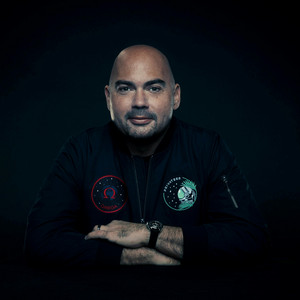
My guest is Alex Fielding, the co-founder and CEO of Privateer Space, a company that's on a mission to improve life on Earth by monitoring and cleaning up space debris.
Privateer is creating the data infrastructure that will enable sustainable growth for the new space economy. by allowing space operators to maneuver safely and effectively.
Privateer is also part of Nvidia's Inception program, which supports startups that are accelerating the adoption of AI across various industries.
Alex is a serial entrepreneur who has worked with Apple co-founder Steve Wozniak on several ventures, including Wheels of Zeus, Ripcord Networks, and now Privateer Space.
Alex has a background in engineering, robotics, machine learning, and AI, and is here to share his wealth of experience and insights on how AI can help us solve some of the biggest challenges facing humanity today.
Alex, thank you so much for taking the time and welcome to the NVIDIA AI podcast.
I am thrilled to be here. Thanks for making time for me.
That's music to my ears. This is going to be fun.
Let me turn it over to you. Why don't you start by telling us, you know, what inspired you to start Privateer Space and what the company is all about?
Privateer is our, I say our, it's my third venture in space.
I always thought I'd spend my entire career in the space industry, but life threw me a curveball and I ended up at Apple instead.
So when I started my career, I was actually working on communication between satellites at different altitudes.
So kind of LEOs, MEOs to GEOs. Specifically to avoid atmospheric delay when, you know, sending signals home from various altitude satellites.
It's the easiest way to kind of say it. But, you know, shortly after leaving Apple, I got really interested in building very, very small, low cost GPS devices. kind of tracking tokens, things like Apple tax 20 years too early.
Waz and I had a chance to play together at Apple in the 90s.
And I said, hey, I'm working on this really interesting project.
I think it would be great, kind of, you know, help you keep track of your kids, your dogs, do fun stuff.
We had a bunch of really interesting gamification strategy back then for how people would use location as a part of their everyday lives.
But this was before you could get GPS in a cell phone.
This was 2001. So we started the company and we started learning a hell of a lot about GPS.
And one of the things that alarmed Woz and I was that or was in me, was that half of the stuff we had in space in 2001 was trash.
So half of it was dead satellites or we barely knew about debris in 2001.
Right. we were just tracking live satellites dead satellites half the satellites on orbit were dead And we used to joke with each other all the time over milkshakes that, hey, someday we would be the first space kind of sanitation engineers and we ride on the back of the space trash truck and we toss these dead satellites into the compactor and you know we were being somewhat facetious but we knew that it would be an issue at some point And fast forward 20 years later, my company, Ripcore, that we actually started at NASA Ames Research Center while I was at NASA,
It was incubated in a weird way by the government.
It's the closest I'll ever get to a tax refund.
Starting Ripcord was an absolute blast. And we started in a concrete asbestos bunker.
With some other wonderful, crazy people like the founders of Cosmogia, which became Planet Labs.
Made in Space was next door. One of the people on the Cosmologia team actually left to go start Deorbit Space in Italy, the magnificent Luca Rossettini.
And our bosses at NASA at the time were Chris Kemp, our CTO, who's now the CEO of Astrospace, And Pete Worden, who's at the Breakthrough Prize, is just an absolutely brilliant character.
And guess what? Just like the mafia, even though I left NASA to go work on vision-guided robots and deep learning, That company is on the way to go in public.
It's got a new CEO now and they're still doing great.
I'm still on the board and I think I'm still an employee.
I probably would have fired me a long time ago.
But this has given us a really interesting opportunity to go work on something else.
And Woz called me out of the blue and said, hey, I'm really getting serious about looking at space debris as a topic.
We should think about... how we could go clean it up.
And I was like, who's we? I got my hands full.
This company's going public. No, man, jetpacks and, you know, rockets and backpacks.
We'll throw them into the compactor. Yeah, exactly.
And he was serious. And I said, well, I haven't given it much of a thought beyond the fact that it's an issue.
So that's a half a thought. Right. And he said, well, just, you know, do me a favor.
Go go do some research. Is this possible?
How would you clean up space? Who's working on it?
Is there any way to get paid to do it so we don't end up building a nonprofit?
Like, I mean, don't get me wrong. Steve is incredibly philanthropic.
But I think he was he was realizing that this is not something you can undertake really lightly.
You've got to really get and go. And I started doing research and what I found was, was somewhat terrifying, which was that We have far, far, far more debris in space now than we ever have.
And every launch adds more debris. I mean, things even from the dispense of satellites, the housing, the packaging, the the pieces that blow off an upper stage, those things float around.
And if they are low enough, gravity and drag will bring them home and they'll mostly vaporize in the Earth's atmosphere.
But other things, really small things like frozen propellant or paint chips or nuts and bolts and screws.
And we can't even see that stuff from the ground.
So I went back to Steve. I said, well, there's a number of challenges.
A lot of this stuff is very small and it's very fast moving relative to Earth.
So, you know, you're talking about, you know, MVA or MV squared or something. but still plays a factor in space, right?
So you now have a nut, bolt, or screw that's bigger than a bullet that's doing... you know, 7.7 kilometers a second.
So it's roughly 10 times the speed of the bullet. but it's the same mass.
So now you have an incredible impact potential.
Right. So we can't see them. We don't have a really good strategy for grabbing them.
And they just go in the known unknowns for risk.
That's right, right, right. So I said, well, we've got this problem.
The other problem we have is that, believe it or not, we don't agree on where things in lowered space are.
This is going to be fairly alarming for some of the listeners on this podcast.
I was running with it. Wait, what do you mean?
Please continue. Well, the reason for that is that There's a couple of reasons.
So I won't go down the rabbit hole too deeply.
But one of the reasons is that when a satellite is dead or inactive, It doesn't have a transponder.
So it's not talking home with us. We have to observe it.
And then once we observe it, we don't have constant observation of our narrowed space.
So it's kind of like, taking a radar dish that would look for an airplane and tilting it up at the sky at like plus or minus 40 degrees, And then you're waiting for objects to blow in and out of your field of view at 17,000 miles an hour.
So this would be the equivalent of telling like a 747 pilot, there's a pigeon off your left wing at 300 feet.
You know, turn right five degrees to avoid.
But those are the size comparisons, but they're 300 to 500 kilometers up for the most part.
There's a high danger band. between 300 and 600 kilometers where we got a lot of stuff.
One of the challenges we have is that all those observational viewpoints, you can't take into account the things you can't see.
Or that you can't measure. How do you, you know, if you can't measure it, you can't monitor.
If you can't monitor, you definitely can't predict it.
So we have these problems where we don't know the size, the shape. the material properties of the objects, so we don't know their actual astrodynamics.
We can't take an off-the-shelf astrodynamics model that would be somewhat predictive and say, let's guess where this thing's gonna be in 20 minutes.
It's actually just the thing tumbling and or spinning at some interval that we can't measure And now, guess what?
When we hit it and we measure it, we think we know where it is.
And then a few minutes later, wherever we predicted was going to go, We used models that assumed that these things are bowling balls or spheres.
We don't have any satellites even that look like Sputnik anymore.
So these things are like Coke machines with wings.
So as a result, we are always wrong. or almost always wrong when we try to predict where a body in space is going to be the next time we see it.
And unfortunately, the impacts on it from radiation, from drag, From its actual angular momentum, those things change where it's going to be.
Yeah. And we don't have a model to predict what forces from outside are being pushed on the object.
And to kind of pause for a second just to clarify, the danger, obviously...
Debris floating in space, to me anyway, is just, that's a bad thing, not a good thing, period.
But what's the danger to life on Earth, to Earth itself?
Opposed by all of these things floating around.
Some of them, as you said, getting drawn in and vaporized before impact.
Some of them not, you know. Is it that they might all fall out of the sky?
Is it that they're going to pollute the atmosphere?
I'm sure there are things that I never would have thought of that you're wondering, should I say this on the air or not?
No, it's top of mind for all of us because our hearts are in this place where we want to become a space-faring civilization.
We want our future of humanity to be able to leave this planet to explore life and other opportunities elsewhere.
But we are dangerously and perilously closed from cutting off this domain.
And the reason for that is And it does impact life on Earth.
We do so much science from space today. We have so many communications from space today or these services that are in space.
We don't do a good job sharing with, you know, kind of planet Earth where the services that we use are provided from, like, you know.
Use your credit card at a gas station. Is it being processed by satellite?
Is it pure financial transaction getting done?
Is it your Starling dish at home? I mean, that one's kind of obvious.
You have a dish on your house pointed at the sky.
Okay, that's probably, you know, your satellite radio, your television or something else, your internet connectivity.
But what people, I think in general, haven't realized yet is that everything that we have sent to space will ultimately, for the most part, most of it will come home in some way, shape, or form.
And we have some bumpers around how we predict and plan when space objects come home.
What maybe wasn't totally obvious is that there's no obligation for things to burn up in the Earth's atmosphere.
So, you know, friction on the atmosphere is totally dependent on the speed at which you reenter the Earth's atmosphere and the friction against it.
It's kind of like hitting the ocean at 17,000 miles an hour.
You're still going to burn up. So the thing that isn't always clear is that all of these satellites will come home.
And today we don't even... We, and I'm using the Royal Space Community, we do a good job Even though we know the morbidity and mortality rates, we know how much of the object will likely survive within some range of Monte Carlo values and simulations.
We don't track, will those pieces that survive cross commercial air traffic?
Would they land on the lawn at your elementary school?
Skylab, when I was a kid, I'm getting flashbacks to like, this thing's going to follow the sky and crush us.
So we've got a picture painted. So this is where I ask, what are you going to do about it?
What is Privateer doing? How are you doing it?
Well, I think the general public only heard half of the privateer story.
So when we started privateer, we said we have to remove the uncertainty.
We have to begin to remove and solve for the known unknowns so that we can make space safer.
So ultimately we can make it more accessible.
Yeah. And what does accessible mean? If you go to wayfinder.privateer.com, shameless plug, for free.
You don't need that. It's cool. We were talking before we hit record.
It's super cool. What you'll see there are a bunch of little dots.
But what most people don't do is they don't zoom in and they don't click on the dots.
So if you do... you'll get our near live real-time tracking of all those space objects.
Soon you'll be seeing airplanes as well.
You'll be seeing boats very soon. And if you keep zooming, You actually end up at Earth Observing Imaging.
So you'll end up at basically Google Earth if you keep zooming in on Wayfinder.
Right. And the reason for this is that while the focus immediately is Stop people from crashing into each other in space.
Make sure that space remains safe and accessible by helping people maneuver around each other when at risk.
The longer term play for privateer is to make sure that we make space data accessible without people needing to launch a ton of stuff into space when we already have things there that do the same thing.
We've got 50-something basically satellite-based cameras looking at Ukraine right now.
They're not looking at totally different parts of Ukraine from their perspective.
Why can't we share? My four-year-old daughter does better at sharing than the space community does.
So Privateer is unlocking space accessibility by making all of the data that you see in Wayfinder, all of those images from our own data sets or from our partners, available through APIs so that you can purchase the image.
You can run image classifiers analysis on it.
Maybe you just care about coastal erosion near your home.
Maybe it's an ESG application. Maybe it's a global supply chain issue and your company has boats and and you know tractor trailers and airplanes and things in their fleet that move things between local applications, all of that stuff is available through Privateer, through APIs that you can consume through data exchange and you can use these capabilities.
We're really going for space accessibility as the end goal.
You have to solve safety to make it happen.
There's a service on Wayfinder you can click on called Crow's Nest, which will show you the top 100 things that are closest to crashing into each other in space, ranked by 3D probability.
And those predictions are good for 72 hours ahead in low Earth orbit and seven days ahead in geostationary orbit.
And it's incredibly powerful because if you look at the 3D probability of those objects that they're going to collide, And then you look at their distances and you look at their speed.
You can visualize the conjunction at the time that we think it's going to occur.
You can model and simulate it in the software.
You can also look at the conjunction data message that has that long-term state vectors to be objects, that tell the space operators how to avoid a piece of debris or how to avoid each other so they don't crash into each other.
And we're not charging for that. I mean, I think companies charging each other to not crash in space are basically space extortionists.
They shouldn't exist. We were joking that it's too bad this isn't a video podcast given, you know, what we're going to talk about and I'm looking at Wayfinder. as you're talking and just encourage folks who are listening to go hop on wayfinder.privateer.com.
It's really, it's fascinating to look at.
Even if like me, my knowledge of the domain is very minimal before starting to chat with you.
So you described before some of the problems with how do you track an object with models that were built for something much, much bigger and perhaps slower moving, or just all of the, you're now aware of all these different parameters that go into successfully tracking something precisely out in space that the models didn't take into account.
So how are you solving? Are you building?
Obviously, we're talking about AI. It's an AI podcast that's in the stack.
But are you building hardware? Are you building new... you know, I'm gonna use the word cameras to be accessible, but whatever the equivalent is of an object that will look into space to see these things.
What's the, I don't know, what are some of the technical things that you're working on or perhaps, you know, challenges that have come up that AI has been a part of getting past.
AI and deep learning have been kind of pivotal in technologies that we're using because there are so many variables and those variables are We're starting to use these technologies to improve space safety first.
I mean, beyond that, it'll go to dynamic tasking and efficiency and all the great things you can solve for by solving safety.
The safety things... There are things in Wayfinder and in the APIs that are available today that do things to predict and avoid collisions.
So maneuver planning, telling each space operator where should I maneuver to that's the lowest risk position and how do I get there?
So weird way, it's like turn by turn navigation for satellites. that they can either connect to their own pointing and propulsion systems or...
They can use ours. So we connect directly to the space vehicles to maneuver them autonomously to avoid collisions.
The other thing that... Just to stop you for a second, Alex, that's one of those things that my brain simultaneously like...
Oh, it's like a remote controlled car that makes total sense.
I get it. And then the other part of my brain was like, it's a remote controlled satellite.
I can't process this. In a weird way, it's like a remote control.
It's like a drone. Yeah. They're in a 3D environment.
And the challenge that they have that drones don't generally have is that there are many, many, many risks in their environment that are in that 3D box.
And when you go to do a maneuver plan, you're actually going to move your remote-controlled drone or satellite, you then want to take into account the probability and risk of the maneuver you're doing.
So you don't want to maneuver into a space that's more risky than the one you're in that you're trying to avoid something in.
And you also have to take into consideration things where deep learning and AI are really helpful, like Operators don't want to burn fuel for no reason, and fuel isn't in space.
They have a very finite capacity for fuel.
You want to extend your mission life. You want to make sure you have enough fuel to make it to the end of your mission life and accomplish things you want to do in space.
And you also don't want to at any time make a maneuver that is going to place your vehicle in higher risk with either another vehicle or debris.
And what I think many people don't realize yet is that not all satellites even have propulsion.
We have hundreds of satellites that have no propulsion.
They're placed, and then they're naturally, orbitally decaying And the original plan was over 25 years, they would come from space home.
Absolutely. We would use, you know, all those wonderful things like, you know, drag and radiation to help us get the thing, including gravity at some point.
So the first thing that we're doing is using deep learning and AI to help predict and avoid collisions, which that you can go demonstrate in the software live or you could subscribe and We do charge people to do their automated maneuvers for them.
Definitely not extortion. It's cheaper than probably having scientists go sit there and figure out where the lowest... position maneuver is.
And the other thing is improving space weather forecasting.
Deep learning algorithms, analyzing this data from space weather sensors, to predict solar events, solar flares, you know, coronal mass ejections, these types of things. they pose a threat to spacecraft and to astronauts on orbit.
So we want to make sure that we take that into account.
You know, certainly we talked a little bit about kind of autonomous navigation and enhancing autonomous maneuvers.
And we do have a benefit that Tesla doesn't have, right?
When you're in space and you're maneuvering, We're not really worried about pedestrians.
We're not worried about potholes. We're not worried about road closures. only worried about the limited number of things in our environment that we actually can sense and detect.
So call it roughly 100,000 things that are in play.
They just happen to be moving very, very, very fast in a 3D box.
Though it's the equivalent of having, you know, air traffic control for space maneuver planes where yes, you do have to worry about pigeons.
Right? It's an unusual thing. I don't know if that really answered the question on safety.
Accessibility... Almost all the data you see in Wayfinder, the Earth-observing imaging, synthetic aperture radar, LiDAR, standard RGB high-resolution photos of the Earth, All those things connect to image classifiers.
So maybe you want to count the cars and parking lot, Maybe you want to look at the boats in the ocean and use those for new novel applications you couldn't do before.
Maybe you want to combine signals intelligence so you can track people doing illegal commercial fishing or polluting our oceans.
Right. or doing something that they shouldn't be doing on a construction site at night.
There's a lot of applications there that are tied to climate.
There's a lot of applications that are tied to making businesses more efficient.
And the thing that makes Privateer so unique is that we help enhance the capability for people in space already to bring their technology to market dynamically so we can task those vehicles and use their capabilities.
And soon, We'll be doing even more with our own capability on orbit.
We've got a vehicle going up this November.
So we're all kind of on high alert right now, getting ready to ship stuff to the launch pad and get it bundled up to go fly.
And that will have NVIDIA hardware on board with some GPUs doing some really interesting work on orbit.
It's just things faster than sending the data down to earth and processing, sending the results back up.
Deep learning way out on the edge. Yeah, the edge of space.
Yeah, exactly. I wanted to go back to something you mentioned before about the difficulties of human beings sharing things with each other sometimes broadly.
And you're mentioning about sharing data in the space community.
You're talking about, you know, you used the analogy of air traffic control for space, and it made me think, okay, so you've got air traffic control towers at, I don't know, every airport and airfield or however many there are, you know, all over the world Who decides who controls what parts of space?
Or really, I think my question is, how do you and slash what's it like control working with different governments and space agencies and regulatory buyers or whoever else it is who might have a say in, you know, well, why is this particular company air traffic controlling for all of space or whatever, however you sort of divvy up the regions?
What's that whole process like, you know, both for you and maybe if you can speak to the broader space community about you know, people who we've divided up ourselves into different nations and nation states on Earth trying to figure out how to manage space.
It's really contentious. So I'm not going to give you a good answer because there is no good answer right now.
We're dealing with the wild west of space right now.
And not every nation on Earth that launches things into space signed the International Space Act or treaties.
Sure. or the Outer Space Act and treaties.
So what that means is that not every nation state that puts stuff in space actually agreed that they would not weaponize space, that they would not put nuclear things in space. that they would not do hostile actions in space.
And we've seen time and time again that not only do nations do the same things, they mimic the same bad behaviors they have on Earth and space, but they have the same hostile aggression towards each other in space, which is, it's heartbreaking.
Yeah. If you can't make space safe and accessible and if you can't get nation states to cooperate with each other on even coordinated maneuvers, at a very basic level, you're in deep trouble.
And space is the Wild West. Now, regulation in space is not as good as on the oceans and international water, even though we took 1900's maritime law. is what we used for the space treaties.
So you fly a flag behind your satellite effectively, and you represent your nation state, Well, imagine that.
Imagine a SpaceX satellite launched from the United States and a SpaceX satellite launched under Kazakhstan collide with each other.
Is Kazakhstan at war with the United States over, you know, an accidental action?
Right. These things haven't been solved for, nor has right away.
So as crazy as it sounds, I mean, if you're a sailboat on the ocean and there's a cruise liner heading your way, it's not the right of weight, right?
The object that's not under power is the one that actually has the right of way, right?
If you're under wind power, you win. Or if it's two sailboats and one calls starboard, you know who has the right of way.
It doesn't happen in space. We don't have those rules.
So SpaceX is making many of the rules as they go because they're the largest operator in space.
And I don't think that's a bad thing. I think they're really a disciplined, great team.
They're doing a lot of the right things you would want to see a space operator that size doing.
But they have to make these rules up as we go.
And then we have to beg the other countries to follow.
And what we're finding in space right now is there's a tremendous amount of friction between nations that have a tremendous amount of friction on ground.
And they're doing hostile things in space that there are no space police.
We should have the Space Force, but the Space Force is not the international space police.
We even have situations in space to go down this nation state.
You started the topic on nation-state activities in space and how do we set the rules.
40 plus percent of the objects in space right now are out of compliance with that International Space Act and treaties.
Yeah. What the hell are we going to do about it?
Who's going to do it? There are no traffic cops in space.
And we've done things like the Artemis Accords and the Paris Peace Accords, and a bunch of people have signed a bunch of paper.
But if no one says it's my job to enforce it, they're all kind of signing it with their fingers crossed behind their backs.
And then it's going to be about the intent behind what they actually put on orbit.
And that includes us. We've done anti-satellite tests that we should have never done.
I hope we'll never do it again in the future.
I don't think we will, because we've led the charge to make sure that others don't.
But that doesn't stop others from doing it.
There isn't a penalty. There isn't... You know, we're not going to embargo other nations based purely on their space activities.
So... Not yet, anyway. So these are all real issues that are surrounding space policy. governance, safety, and they're all bridging our path to accessibility.
And the type of things that we're going to learn from outer space are going to be the types of things that heal our planet.
Because so many things happening in space right now, I don't think the average person knows the average person in terms of what we've experienced. you know, put in mainstream media knows how much of our climate research is happening from space.
Right, right. And you need that more macro perspective.
You need that holistic perspective on your sensing capability to look at Earth so that we can understand where the problems are and how to solve them.
And we could be cutting off the gateway to those possibilities for a solution.
My guest today is Alex Fielding. Alex is the co-founder and CEO of Privateer Space, a company as we've been talking about, which is working on making space safer, more accessible, cleaning up debris,
All the things we've been talking about, sort of tactical and also kind of philosophical, really, that, I mean, they have very... tactical, practical applications, but a lot of kind of philosophical stuff that goes into literally exploring the unknown as privateer is.
Alex, while we have a couple of minutes left here, I want to shift gears.
I'd be sort of remiss not to ask you. You've done a bunch of things. already in your career, which shows no signs of slowing down.
You've started companies you've worked with. astronauts and Steve Wozniak and all kinds of people.
I guess sort of two questions. One, Are there things about being an entrepreneur, doing the kind of work you've been doing, pushing boundaries and exploring new things that, I don't know, a story, an anecdote, kind of tips for people listening.
A lot of the folks who are listening who are interested, obviously, with everything going on, certainly right now with generative AI, but more broadly, kind of the AI and intelligence explosion that we're experiencing.
You know, a lot of folks are thinking about it entrepreneurially who might be listening to this show.
So. any kind of words or wisdom or tales from the trenches for them.
And then separate of that, I wanted to ask you, Outside of the work you're doing with Privateer, what are you excited about right now with all of the technology that you come across day to day?
What's getting you going about You know, whether it's something you're playing with or something that's got you excited kind of long term for, you know, the broader picture.
That's a really fantastic question. You know, I think the thing that matters the most to me is making sure that In my lifetime, I get to make some meaning.
I get to do something of value. People talk about legacy as though it's It's the money they donate after they die to the university that they prefer.
And that could be a legacy for some people.
But I want to make sure that everything that I spend my time on earth you know that's that's so limited has a benefit to people that live here, right?
People that are on earth. If it's not something that benefits our life here, And generally, and I hate to say this, there are problem sets that are so big that if we solve them in my lifetime, it would be a miracle.
So they will be a legacy in the sense that We will make tremendous amount of progress.
And as a company and an entrepreneur, we're not a nonprofit.
We have to make money doing that. So we have to make sure our shareholders make money.
But startup companies are kind of controlled chaos.
So my biggest advice is, you know, pick your pick your rowing partners really well.
Make sure that your bedfellows are fantastic, like minded. you know, people that you can play with long-term.
Because one of the deciding factors in the success or failure of young companies tends to be whether or not those founding teams and their motivations stay together.
Yeah. When we started My last company, we had many co-founders.
We were sitting around the table in a concrete asbestos bunker at NASA.
And one night over pizza and beers, Before we even knew that we were going to be a company, it's like one in the morning, we're just working on our problem set.
We went around the table and said, why does this matter so much that if we don't do it, it'll drive us crazy for the rest of our lives that we didn't do it?
What matters? And we gave everyone a moment, more than a moment, to speak their piece and say that truth for them.
And then we asked ourselves the question as a group, as a cohort, does that ring true for everybody?
Does that mean this other thing that's so important?
If we don't do it, we're going to go nuts.
Because, you know, many of us at that point in our career, it wasn't about making another dollar.
It was about, I mean, don't get me wrong, that's the part of, is it a business?
Yeah. Sure. If you're lucky, it's a business and a passion because then your hobby is what you're working on.
Yep. I don't have any hobbies. I live on an island in the South Pacific with a great group of crazies and privateer is now scattered across 12 states with employees in a bunch of places.
Okay. But this challenge of making space safe and accessible or more accessible to humankind means a huge amount to me and our team.
And I will say companies that make it really successfully.
I mean, Apple's a great example of this.
Their founding team stays together. By and large, because of mission, the why are we doing it?
The what? and how, those are things you can pivot on.
You can't pivot on why. So if you believe in why...
You know, if you have to put your company's mission statement on the wall, you're screwed.
Well said. Yeah. I think these things are the things that are really, really critical and that you test the thesis over and over and over again. so that you know how to make sure that what and how always realign with why.
That's great. One final question before we wrap up here.
Synchronicity or what have you. A friend of mine, I was texting with an old, old friend of mine a couple of days ago.
And however it came up, he said, yeah, but your kids are going to take vacations to other planets when they're grownups.
Are they? My kids are 14, 13 and 10. Getting ahead of myself.
In their lifetimes, were we going to be vacationing on other planets, space travel from Earth?
Is it going to be kind of a, maybe not everybody, maybe still expensive, but a thing?
I think so. Yeah. And I think it's not even just vacationing on other planets.
I think it'll be how do we traverse planet Earth most efficiently.
Right. Right now, we have a couple of barriers, but I'll put myself in the optimist category, which is odd for somebody dealing with some of these space topics that are not, you know, We've gone down the deep, dark rabbit hole of things that are not really popular topics.
But I would still be an optimist because I've got a four-year-old daughter who...
Every night from the time she was age two to now demands that my wife and I take her outside to look at the moon.
She wants to see the moon before bed. And we go outside and we look at the moon every single night.
And she started asking a lot of questions, even now, age three, age four. about planets and is she going to go there?
And she said, you know, Daddy, if I go to the moon, will you come?
Yeah, okay, I'll come with you. And she goes, and I'll drive the rocket.
Yeah, okay. I mean, I'm not going to... And the funny thing is that... Are you too young to talk about autonomous vehicle control or not?
She's probably farther ahead than I am. And she questions that.
We're on the verge of making that domain accessible to humanity in a new way at a very, very cheap cost.
And I'll give you an example. Our cost to put our satellite technology up this November, the payload cost for the weight of the device to get on a rocket and get on orbit. is less than what it costs me to pay the attorneys to do the paperwork.
So let's put that in perspective. Right now, our burdens on getting to space, the hurdles to get to space are actually more policy and regulation and, uh, You know, country dynamics, various nation state dynamics, then the actual technology and the cost hurdle to put the payload up.
So now we'll see people do some pretty entertaining things in space just for fun.
I'm not a lawyer. but I heard some of these Gen AI chatbots can spit out legal documents real quick.
So you might want to look into that. I'll leave it to you.
I think if we can get one of those to get its way through the government regulatory process, then we'll have known that AI has evolved to the proper state.
Yeah, exactly. If it can navigate government bureaucracy.
And we're good. There's AGI. We're good.
Yeah, exactly. Alex, this has been tremendous.
And I could listen to you talk about this stuff all day.
And I mean that sincerely. you know, space to final frontier, all those cliches, all those sci-fi, everything that, that, generations upon generations have grown up with.
It's for a reason, right? You look up in the sky and you wonder what's out there.
And it's just very cool to hear about what is actually out there and sort of get a little bit inside the minds of people working on these things, let alone traveling out there and being you know, being out there amongst the debris and it makes it human and it makes folks like you think like, okay, how do we solve this?
How do we make this safer? Because it's important.
It's humanity. So thank you for taking the time.
You mentioned Privateer. For folks who want to learn more, want to go online, Website, social media, research papers, anywhere.
Where would you send them? I would send them to privateer.com, a great place to look at some of the published papers.
And we left it out of this talk. But our third co-founder is Dr. Moriba Jha, who Moriba just won the MacArthur Genius Prize a couple months ago.
Oh, wow. Yeah. He's our chief scientist.
He's absolutely fantastic, brilliant. He's been working on topics around space debris for the last 15 years and probably was a heretic.
He was a little bit like Copernicus of space debris.
Now he's more like Galileo. He went from, you know, being murdered to just house arrest with the Medici's.
So he's had a great, great time. He was also just elected the National Academy of Science and he also the Edinburgh Rural Society. great, brilliant scientist and researcher.
A lot of his papers are up and public, as well as some of the work that he's done for the Air Force Advisory Board and other things.
Great read if you're interested in the topic.
And please definitely feel free to reach out if you're working on something complimentary, if you want to have your data in Wayfinder.
If you want your capability, whether that means you have a satellite on orbit and you're looking for more customers, Send us a note, partnershipsofprivateer.com.
We actually read that stuff. Would love to work with like-minded co-conspirators on this great mission.
Excellent. Well, it's been a pleasure. I hope we get to do it again, whether on the air or off.
I look forward to it. this November, hearing about the launch.
Good luck prepping for that. Again, thank you for taking the time and best with everything Privateer is doing.
Thank you. Thank you.