
[Alejandro Aravena: Designing Social Progress and Housing for All]-[Alejandro Aravena: Good Housing for All]
📋 Summary
Alejandro Aravena: Redefining Architecture for Social Good
The Catalyst: Disaster and Rebuilding
On February 27, 2010, Chile was struck by a devastating earthquake followed by a massive six-meter tsunami that ravaged the coastal city of Constitución. This tragedy served as the turning point for renowned architect Alejandro Aravena. Tasked with the city's reconstruction, Aravena moved beyond traditional architectural practices, choosing to engage directly with the community. This experience solidified his mission: to use architecture as a tool to solve the growing global housing crisis rather than merely creating "unusual" or purely aesthetic structures.
The Global Housing Crisis
Aravena’s work is driven by a sobering statistic: by 2030, five billion people will reside in cities, with two billion living in poverty. In his 2014 TED Talk, he emphasized the scale of this challenge, noting that we must accommodate a "one million person city every week" with a budget of only $10,000 per family. Without intentional design, Aravena warns that urban growth will result in the expansion of "slums, favelas and other unofficial and poor quality communities."
Elemental: A 'Do-Tank' Approach
To combat this, Aravena founded Elemental, which he describes as a "do-tank" rather than a traditional "think tank." While think tanks focus on theoretical solutions, Elemental is committed to tangible action. Aravena argues that architects must stop viewing themselves as artists—whose work is often too unique to be replicated—and start creating scalable, high-quality solutions for the masses. He famously stated, "We do not think of ourselves as artists," emphasizing that architecture should prioritize utility and accessibility.
The Power of Incremental Housing
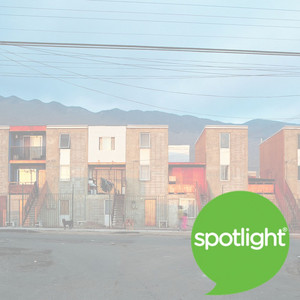
A core innovation of Elemental is the strategy of incremental housing. Recognizing the budget constraints of low-income families, the firm designs high-quality, "complete homes and communities" but builds only half of the structure initially. This keeps the entry cost low, allowing families to move into a quality space immediately. The homeowners then gradually expand the second half of the house as their financial situation improves. This process allows for progress that is sustainable and empowering for the residents.
Community-Centric Urban Planning
In the reconstruction of Constitución, Aravena demonstrated the importance of listening to local needs. While officials suggested building a defensive wall to protect against future tsunamis, the residents prioritized daily concerns like flooding and a lack of green space. Aravena honored these voices by proposing a public park instead of a wall. This park serves as a community asset in normal times and acts as a buffer zone during floods, proving that effective design is "more successful when the people are involved in making decisions."
Legacy and Global Impact
Aravena’s commitment to social equity led him to make his designs public knowledge. In 2016, he announced that all plans and information for his successful projects would be available on the internet for free. This altruistic approach garnered international acclaim, earning him the Pritzker Award, the highest honor in architecture. The Pritzker committee noted that Aravena has "clearly, freely and fully responded" to the challenge of serving "greater social and human needs."
Through Elemental, Alejandro Aravena has transformed the role of the architect from a creator of monuments into a facilitator of human dignity and community resilience, proving that good housing is not a luxury, but a fundamental right.
Deep Learning with ListenLeap


