This BBC podcast is supported by ads outside the UK.
Find home wherever you roam at Sonesta ES and Simply Suites.
Stretch out and enjoy home -like amenities for however long you need.
And when you're a Sonesta Travel Pass member, staying at Sonesta ES and Simply Suites means earning points toward free nights, upgrades and more.
Go to Sonesta .com and book your stay and unlock their best rates with Sonesta Travel Pass.
here today roam tomorrow join now at senesta .com terms and conditions apply this message is sponsored by greenlight with school out summer is the perfect time to teach our kids real world money skills they'll use forever greenlight is a debit card and the number one family finance and safety app used by millions of families helping kids learn how to save invest and spend wisely parents can send their kids money and track their spending and saving, while kids build money, confidence and skills in fun ways.
Start your risk -free Greenlight trial today at greenlight .com slash iHeart.
That's greenlight .com slash iHeart.
This is the Global News Podcast from the BBC World Service.
I'm Jeanette Jalil and at 13 hours GMT on Wednesday, the 23rd of July, these are our main stories.
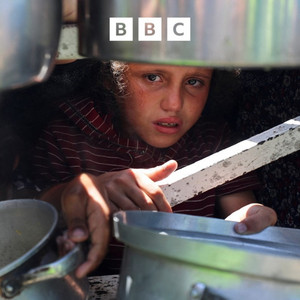
Aid agencies warn that mass starvation in Gaza is spreading as 10 more more deaths from malnutrition are reported.
Donald Trump agrees a trade deal with Japan under which the tariffs imposed will be lower than previously threatened.
President Zelensky faces major anti -corruption protests as Ukraine prepares for talks with Russia.
Also in this podcast...
I thought it was a wad of money.
It's had the same value as money.
Monet. We hear how love letters from 60 years ago that were stolen have been returned to the couple who wrote them.
More than 100 international aid agencies and human rights groups are warning that mass starvation is spreading across Gaza.
They accuse Israel, which controls all the territory's border crossings, of a siege and of not allowing food inside Gaza to be distributed.
Israel denies this.
The Hamas -run health ministry says 10 people have died from malnutrition in the past day after reporting more than 30 such deaths on Tuesday.
And its civil defence says that since early Wednesday morning, at least 17 Palestinians, including five children, have been killed in Israeli airstrikes.
The Israel Defence Forces say they have hit more than 100 terror targets across cross the strip.
But a growing number of critics in Israel itself question why the IDF are still fighting there.
International media outlets are not allowed to report freely from Gaza, but this expectant mother described her life there now.
My name is Huda Mutrabi, I live in Adaraj neighborhood in the Gaza city.
I am a first time mother expecting a baby girl any day now.
This should be one of the happiest moments of my life.
But instead, it's a time of fear, exhaustion, and hunger.
I haven't had rubber food in months.
For a long time now, we have been surviving on the bare minimum.
Sometimes, just a bit of dried bread, rice, or tea.
Where we can find that.
Lately, even that is gone.
There is no fresh food, no milk, no vegetables, no even fruits.
Nothing a mother should have my biggest fear is that when my daughter is born i won't be able to feed her i don't know if i will even be able to produce milk how can i when i haven't eaten properly in months i have my family around me and we try to support each other but we are all in the same situation everyone is starving starving i dream of meeting my baby actually and holding her close my only prayer is that somehow she's born healthy that she has a chance to live even in this darkness that we are living nowadays in gaza strip the un says that in the past two months more than a thousand palestinians
in gaza have been killed as they queued for aid a correspondent in jerusalem yoland nell told me me more about the statement warning of mass starvation that was issued today.
So this is more than 100 different organisations.
They've been playing, a lot of them, a key role in the humanitarian efforts in Gaza alongside the UN.
So you've got the likes of Oxfam, Doctors Without Borders, Save the Children, and it begins in a very strong way saying our colleagues and those we serve are wasting away, talking about how mass starvation now is really spreading.
It's something that we're hearing from our own journalists on the ground and people that we work with and they're saying that children and the elderly are worst affected inevitably but also you know adults are fainting from hunger thirst and exhaustion as well and they say they're sounding the alarm to allow in life -saving aid.
They want all land crossings to be opened.
They want to restore the full flow of water and food medical supplies and fuel through what they're describing as a principled UN -led mechanism?
Because currently only 28 lorry loads of aid are coming in each day, according to these agencies.
That's right. That's what they say is going in and being distributed on average for a population of, you know, some 2 million people who are now almost entirely reliant on food aid.
So obviously that is just a pitiful amount.
And, you know, this gets into a row that's going on with Israel really blaming the UN for the drop in supplies that is taking place.
There was the Israeli military spokesman who posted footage from a drone on his ex -account a day ago, and it shows piles of goods just inside Gaza.
It's gone through Israeli security checks.
It's said to be from 950 lorries.
And he said this after Israel facilitated the entry of aid to Gaza.
The UN and other agencies say, yes, there is this huge amount of aid, but they say there'll be more restrictions introduced by Israel.
It says it's still, you now to get Israeli authorization so that its local drivers that it works with can go to the Gaza side of those crossing points, can pick up this aid and transport it through the Israeli military zones.
You know, you've got a lack of fuel that they're dealing with as well, and badly damaged roads.
And as people become more desperate, there's also more looting.
And that also adds to the dangers for lorry drivers, for aid workers, and of course, ordinary Palestinians trying to get the And what's the latest on the international pressure on Israel and the ceasefire talks?
President Trump's Middle East envoy, Steve Witkoff, is heading to Europe.
He had said he wouldn't return to the Middle East unless a new ceasefire and hostage release deal was close.
So it's being seen as a positive sign that he's at least going to Rome, where we understand that he'll meet Israel's strategic affairs minister, Ron Dermott, and a Qatari envoy with Qatar, of course, playing a key mediation role here.
And there are reports suggesting he could then travel on to Doha, where indirect talks have been going on between Israel and Hamas for a deal to be sealed.
I should say, though, from colleagues who have been in touch with Hamas officials who are joining these talks in Doha, they are not sounding so positive about the idea that progress is being made.
Yolande Nell. Meanwhile, UK aid programmes for Palestinians are among schemes facing significant cuts as a result of the British government's decision to channel more money into defence spending.
The Foreign Office here in London has been giving details of its plans that will also see big reductions in support for education and women's health in Africa.
More from our diplomatic correspondent, James Landale.
The government announced in February it would slash foreign aid spending by 40 % over the next three years, ostensibly to spend more on defence.
It's now revealed where the axe initially will fall.
A foreign office report and impact assessment show the biggest cuts this year will come in Africa, Africa, with less spent on women's health and water sanitation, with increased risks, they say, of disease and death.
There'll also be big cuts in children's education.
Support for the occupied Palestinian territories will fall by 21%, despite promises to the contrary.
But the Development Minister, Lady Chapman, said spending on multilateral aid bodies would be protected, including the Gavi Vaccine Alliance and the World Bank's Development Arm.
The bond network of aid charities said women and children in the world's most marginalised communities would pay the highest price for what it called these political choices.
James Landell. Financial markets around the world have rallied after this announcement from President Donald Trump.
I just signed the largest trade deal in history.
I think maybe the largest deal in history with Japan.
And that was done with Japan.
They had their top people here and we worked on it long and hard and it's a great deal for everybody.
Well, the deal will see Japan investing $550 billion into the US and a significant cut to the threatened 25 % US import tax on Japanese goods.
The tariff has been reduced to 15%, Still a pretty high figure by recent standards.
With more, here's our correspondent in Tokyo, Shai McCaleel.
Japan's economy and its markets are getting a much -needed dose of certainty after weeks and months of difficult negotiations with Washington.
They have finally reached a deal.
The Prime Minister, Shigeru Ishiba, welcomed President Trump's announcement.
He confirmed the deal and he said that Japan's tariff rate, which has been set to increase 25%, is now kept at 15%.
Mr. Ishiba went on to say that this is the lowest figure to date among countries with trade surpluses with the United States.
And remember, President Trump earlier this month had sent a letter to Japan, essentially threatening Tokyo that if they don't reach a deal with Washington by August the 1st, that they are going to be slapped with a 25 percent tariff.
They've made the deal now and they've managed to avoid that.
And this deal will see Japan investing $550 billion into the United States and a 15 % tariff, we now know, on the auto industry and on steel as well, two very crucial exports for Japan.
And we saw very positive reactions from the Japanese market with a hike in the Nikkei, in the Japan stock index, but also a hike in shares in auto giants like Toyota, Nissan and Honda.
And I think even though there are so many details to iron out with this deal, there is a sense of relief because of the certainty.
I think politically it's a bit of a different picture for the prime minister because this deal comes at a very crucial time for him.
He has lost control of both chambers of the house because the Liberal Democratic Party has lost in the upper house elections, has lost their majority in the upper house election over the weekend.
This after losing the ruling majority in the more powerful lower house in October and that puts him at a very precarious position politically.
Politically, there have been many calls for him to step down.
He admitted defeat.
He took responsibility for this, but he did say that he wasn't going to resign because, as he said, there are many pressing matters at hand, including the rising consumer prices that are straining the world's fourth largest economy, but also because he needed to strike a deal with the Trump administration.
Now that this agreement has been reached with the White House, there are many questions about whether or not he is going to resign.
Many of the factions of the ruling LDP are calling for that.
There also could be a motion of no confidence by the opposition.
So even though this trade deal with the United States has provided the markets and the economy with the certainty that they needed, it throws up all sorts of uncertainty about the prime minister's political future.
sure. Shyma Khalil, a woman in South Korea who was convicted of injuring a man, even though he was trying to rape her, is seeking to get her conviction quashed six decades after she was sentenced.
Her sentence was more severe than the one given to her attacker.
The woman, Choi Mal Ja, says she was inspired to do this by the MeToo movement.
A court has now reopened her case.
Our Asia -Pacific editor, Mickey Bristow, told me more.
It is a shocking case, goes back six decades to 1964 when Troye Malyar, a late teenager then, she's now 78, she was attacked.
There was an attempted rape.
She tried to fight off, desperately fight off her attacker and she managed to bite off a piece of his tongue and incredibly she was prosecuted as well as her attacker.
The court decided at that time that even though she had the right to defend herself, she'd gone too far.
So as you suggested there she got a bigger sentence, a the 10 month suspended prison sentence, then the attacker himself, he only got six month suspended prison sentence.
So a really shocking case, which is now gone back to court.
The case has been reopened and the attempt to get that conviction quashed.
And why now? The victim herself gave some indication of this outside the court.
She spoke about the incident itself being one of life and death and how she carried through her life this idea that she was a criminal.
Obviously, see this has been kind of a really pivotal moment in her life and has really scarred her life to to a large extent that's why also she was inspired by the Me Too movement and 2020 she took this to the through the legal system to try and get the case reopened initially the South Korean courts rejected that the Supreme Court overturned that and said yes she couldn't have the case reopened and so that's what's happening now and it's interesting to know that the prosecution have have already said this case shouldn't have been brought and the case ought to be quashed.
And South Korea, 60 years ago, was a very different country.
Would a would -be rapist get a six -month suspended sentence now?
Yeah, it's completely changed.
In fact, interesting, prosecutors say that even though times have changed, even back then, this was a really strange sentence and a real strange case to prosecute, particularly in this way.
South Korea has changed economically and also socially as well it's now one of the most progressive places in east asia really but there still is a lot of conservative attitudes around and essentially that's one of the reasons this victim wanted to bring this case as well to sort of like highlight sexual violence against women mickey bristow still to come in this podcast the world's top court is due to make a highly anticipated climate or whether countries should be held accountable for their polluting.
I think the advisory panel will be very powerful within states to be used by people taking cases against their governments.
Make more of every trip.
When you sign up for the Sonesta Travel Pass, you'll get their best rates instantly.
Go to Sonesta .com to book your stay and unlock their best rates with Sonesta Travel Pass.
Here today, Rome tomorrow.
Join now at Sonesta .com.
Terms and conditions apply.
Now I'd like to introduce you to Meaningful Beauty, the famed skincare brand created by iconic supermodel Cindy Crawford. It's her secret to absolutely gorgeous skin.
Meaningful Beauty makes powerful and effective skincare simple, and it's loved by millions of women.
It's formulated for all ages and all skin tones and types, and it's designed to work as a complete skincare system, leaving your skin feeling soft, smooth, and nourished.
I recommend starting with Cindy's Full Regiment, which contains all five of her best -selling products, including the amazing Youth -Activating Melon Serum.
This next -generation serum has the power of Melon Leaf Stem Cell technology.
It's melon leaf stem cells encapsulated for freshness and released onto the skin to support a visible reduction in the appearance of wrinkles With thousands of glowing five -star reviews, why not give it a try?
Subscribe today and you can get the amazing Meaningful Beauty system for just $49 .95 That includes our introductory five -piece system, free gifts, free shipping, and a 60 -day money -back guarantee All that available at MeaningfulBeauty .com This message comes from Greenlight Ready to start talking to your kids about financial literacy?
Meet Greenlight, the debit card and money app that teaches kids and teens how to earn, save, spend wisely, and invest with your guardrails in place.
With Greenlight, you can send money to kids quickly, set up chores, automate allowance, and keep an eye on what your kids are spending with real -time notifications.
Join millions of parents and kids building healthy financial habits together on Greenlight.
Get started risk -free at greenlight .com slash iHeart.
So do you want to look and feel your best this summer?
Well, don't just think skin deep.
Think cell deep with Prolon.
Prolon is a plant -based nutrition program featuring soups, snacks, and beverages that nourish the body while keeping it in a fasting state, which triggers cellular rejuvenation and renewal, target fat loss, support lean muscle, and reset your metabolism.
So you look and feel your best all summer long.
Prolon is science -backed nutrition that can help change your relationship with food in just five days.
Get 15 % off, plus a $40 bonus gift when you subscribe now at ProlonLife .com slash iHeart.
That's ProlonLife .com slash iHeart.
In Syria, the defense ministry says it will investigate allegations that government forces carried out a massacre targeting members of the minority Druze community.
Staff at the city's hospital told the BBC that scores of patients were killed inside.
Some were thrown off the roof.
Syria's military has been trying to quell sectarian clashes in the southern province of Soweda between Druze and Sunni Bedouins.
The jest toll has now passed Just 1 ,300 people in little over a week, according to an independent monitor.
From Soweta, our correspondent John Donison sent this report.
And a warning, you may find parts of it distressing.
Outside the main hospital in Soweta City, the body bags look to be clear evidence of a mass killing.
Rotting in the baking sun for almost a week.
The first thing that hits you is the stench. The morgue, though, is full.
What happened at this hospital was clearly a massacre, patients from the young to the old murdered in their beds.
Now, everyone here says it was the Syrian government forces who did this, and they say they were targeting the Druze.
At the hospital entrance, we spoke to a security guard who didn't want to show his face, and also to an English teacher.
There is a people, it's 18, 85 years old, you know, they cannot walk, they kill them in the bed.
The patients? Yes, the patients.
Who killed them? The government.
I can say they are monsters, this is the best word I can say.
Monsters? Monsters, yes, monsters, they are criminals.
They bomb the city.
If you came here two days ago, you will see dead bodies on both sides of the streets, even in the gardens, in the parks.
Earlier this week, a surgeon at the hospital sent us a video, allegedly of the immediate aftermath of the attack.
Along the corridors, where they were still cleaning up today, I talked to that surgeon.
Syrian government soldiers try to kill patients after they do surgeries in the departments.
You can see all the bullet holes here on the wall.
It looks like a lot of people died here.
Yes, there were a lot of people.
I don't know how many people did here.
The Syrian government says its forces were in Sawadeh to enforce a ceasefire and says allegations of atrocities by all sides will be investigated.
Along a corridor, I found eight -year -old Hala al -Khatib sitting with her auntie.
Hala told me she'd been shot at her home by gunmen as she hid in a wardrobe.
They shot us, and when they shot us, my sister asked me for water.
I gave it to her, but after she drank it, she could no longer breathe.
My aunt called me, and then I hid in the cupboard. When I arrived at the hospital, I slept for two days, and then my aunt came.
Hala doesn't know it yet, but both her parents are dead.
That report by John Donison.
Thousands of people in Ukraine have taken part in the biggest protest against President Zelensky's government since Russia's full -scale invasion three and a half years ago.
The demonstrators are concerned and angry about a controversial new law which was rushed through Parliament bringing two important anti -corruption offices under the control of a political appointee of the president.
Mr. Zelensky defended the new measure.
The anti -corruption infrastructure will work, only without, without Russian influence.
It needs to be cleared of that.
And there should be more justice.
Of course, the agencies will work.
And it's important that the Prosecutor General is determined to ensure sure that punishment for those who go against the law is inevitable in Ukraine.
Our correspondent in Kiev, Charlotte Gallagher, told us more about the protests.
This is about two anti -corruption agencies, and these were set up 10 years ago after the protests and there was the ousting of the pro -Russian president, Viktor Yanukovych. And there was this feeling in Ukraine that law enforcement agencies were corrupt and they were politically politically subservient.
So they set up two agencies, one to investigate high -level corruption and another one to prosecute any corruption.
And these were politically independent.
They could do what they wanted as they saw fit.
Now, President Zelensky has passed a law which means they will come under his direct control.
So people are saying here, well, how can they investigate political corruption if they're working for the government.
And people here are scared about it.
They think democracy is under threat.
These have been the biggest protests since the invasion in 2022.
And Ukraine has pretty much put on a united front since that invasion.
But now people are openly questioning President Zelensky, that soldiers themselves that are fighting for Ukraine are putting up, criticising President Zelensky, implying that he will stay in power, He'll never leave. They'll be stuck with him.
He'll turn into a dictator.
People are really angry.
Charlotte Gallagher.
Well, while Mr Zelensky is facing trouble at home, Ukraine is preparing for a new round of peace talks with Russia in Turkey.
Moscow, though, has already said it expects no miraculous breakthrough.
So what progress, if any, can we expect?
BBC Monitoring Russia editor Vitaly Shevchenko is in Istanbul for the talks.
Chances of meaningful progress are really slim, Jeanette.
because the delegations are largely unchanged and relatively low level.
Their demands are the same.
Ukraine wants to arrange a meeting between Volodymyr Zelensky and Vladimir Putin, but Moscow is saying, no, no, no, it's too early for that.
Let's discuss the memorandum that the Russian delegation presented at the previous round of talks back in early June.
And that memorandum, Jeanette, is basically a demand for surrender, which Ukraine is not going to accept at this stage.
So previous talks, they have resulted in prison exchanges.
Hundreds of prisoners of war were exchanged as well as thousands of bodies.
and further prison exchanges are much, much more likely than any sort of progress on the key issues that would bring the prospect of peace in Ukraine any closer.
And some people might say that the Russians are purely taking part in these talks to appease President Trump, who has recently hardened his stance against Moscow.
go. And so are Ukrainians, actually.
Volodymyr Zelensky has been saying all this time that Ukraine is at the negotiating table.
He was actually here in Turkey back in May for the first round of talks.
And he said, if Vladimir Putin comes, I'm prepared to meet him.
That didn't happen.
So Ukraine is sending a message to Donald Trump as well that, look, we are serious about it.
We're ready to negotiate.
But Russia is saying more fundamental issues need to be addressed, such as what it calls the root causes of this conflict, essentially meaning the initial reasons why it started this war.
So hopes are slim. Vitaly Shevchenko.
Do countries have a duty to prevent climate harm?
As we record this podcast, the world's highest court is about to answer this crucial question.
The judge's ruling at the International Court of Justice will not be binding, but it could have a big impact on laws around the world at a time when there's growing frustration at the sluggish progress of UN climate negotiations.
The push to get the court to rule on the matter has been spearheaded by the Pacific island nation of Vanuatu, one of many small states disproportionately affected by climate change.
Its climate minister, Ralph Reganvanu, told the BBC the ICJ ruling could have a big impact.
I think the advisory European Union will be very powerful within states to be used by people taking cases against their governments.
And we're already seeing that all over the world is one of the main ways people are trying to get action on climate change is by going through the courts.
So every court, this will be something they can use.
And a hooligan outside the court at the Hague told me that this was a highly anticipated ruling.
Never before has the International Court of justice, address states' climate obligations directly.
So the judges are expected to clarify if international law means that countries are responsible for stopping activities that seriously harm the climate.
And it's been spearheaded by Vanuatu.
What's so fascinating about this case and why you might hear it often referred to as a David versus Goliath case is because it actually began in a classroom with a group of Pacific Island Nation students.
They dreamt up this idea of bringing their fight for climate justice to the UN's highest court.
They managed to get governments on board. There was a UN resolution, and that's why we have ended up here in The Hague at the International Court of Justice today, waiting for the judges to give their advisory opinion on the matters.
But even if the judges rule that states whose emissions have caused environmental harm should do more to mitigate that, won't the big polluters simply ignore the ruling?
ruling? Well, this is about states.
So the ICJ is a court that rules on states and borders.
And potentially it could be ignored, but it's likely to have tangible impact because this is a ruling that's coming from the UN's highest court.
It comes with considerable legal weight and moral authority.
So even though it won't be legally binding, the ICJ's opinion could could raise pressure on governments to set tougher climate targets and stick to them, can be used in other courts worldwide, bearing in mind there are thousands of climate justice cases pending right now.
So anything that's decided here at the ICJ sets a precedent.
It will be used in other lawsuits.
It will be used in courts worldwide to hold countries and possibly corporations accountable for climate harm, depending, of course, on what the judges say as they read out this opinion.
It's designed to act as a kind of legal compass that will give definitive guidance on what states' obligations and responsibilities are and what the consequences should be.
So really this push has been about the most polluting countries taking responsibility for the harm that's caused to those who are less responsible for those harmful emissions.
Vanuatu, bear in mind, faces this existential threat of disappearing below the water if urgent action isn't taken to drastically reduce greenhouse gas emissions.
Anna Holligan, we spend a lot of time keeping in touch with people these days, texting, whatsapping, emailing, but when was the last time you picked up pen and paper and wrote a letter?
They feel in a way more permanent, they last longer, and we often keep them from our grandparents, friends or lovers.
Well, one couple in England have just been reunited with their 60 -year -old love letters after they were found in an unusual location.
Rebecca Wood takes up the story.
It all started with the discovery earlier this year of a bundle of love letters dumped in a Birmingham canal in central England.
In with some magnet fishing and I saw this what looked like just white ember floating down the canal so we hooked them out and it took me three days to dry them off and some of them because That's when I realised they were absolutely adorable love letters.
Shirley Elmore had found 32 love letters written in 1962 between a couple called Arch and Janet and what followed was a social media campaign to track down the love -struck couple and it worked.
An old friend phoned us up, was it on holiday, and she says, you've just been on the telly.
It was a bit of a shock when I come on the telly.
Meet Arthur, also known as Arch, and Janet Sims, The couple at the centre of the mystery, whose letters were stolen along with an engagement ring in a burglary.
We were broken into and I didn't realise they were missing.
They'd been in my cupboard for 60 years in the nickel drawer.
I said to Arch, the letters are gone.
And he said, no, you've hid them somewhere.
They're somewhere else.
So that was dismissed.
Within my 60 years, mostly happy.
after the letters were collected and reunited with their rightful owners the couple were keen to thank the woman who rescued their love story surely you're a wonderful lady you really are janet and arch married in 1965 her engagement ring is still missing but Despite their age and the dip in the canal the love letters have come out relatively unscathed so can the same be said for the couple's 60 year relationship?
Like everybody, you get these people and they say, we've never had an argument in 60 years We've had loads We've had loads I've walked out loads of times, my boys come back And that report was by Rebecca Wood And that's all More from us for now, but there will be a new edition of the Global News Podcast later.
If you want to comment on this podcast or the topic's coverage, you can send us an email.
The address is globalpodcast at bbc .co .uk.
This edition was mixed by Joe McCartney.
The producers were David Lewis and Arian Cochi.
The editor is Karen Martin.
I'm Janette Jalil. Until next time, goodbye.