Discussion keeps the world turning.
This is Roundtable.
You're tuned in to Roundtable.
My name's Steve.
Today with Yushan and Feifei.
Coming up.
AI is now diagnosing depression in China's mental health hospitals.
It's listening to your voice and it's watching your face.
The benefits include a potential increase in hospital efficiency, of course, but can a machine ever really understand the human mind?
And what about the line between cutting-edge care and crisis of communication.
It seems to be getting thinner by the second.
After that, sometimes every Monday, we may feel like our workload will never decrease and our next weekend feels like a distant dream.
If that's you, perhaps you need a little motivating.
We've got your back.
Motivational Monday is on the way.
Our podcast listeners can find us at Roundtable China on Apple Podcasts.
And don't forget we say it every day we love hearing from you.
So send your voice notes our way with any of the thoughts that you might have on any of the things that we discuss here on Roundtable.
Here's how you do it.
Roundtable podcast at QQ.com.
Roundtable podcast at QQ.com.
And now.
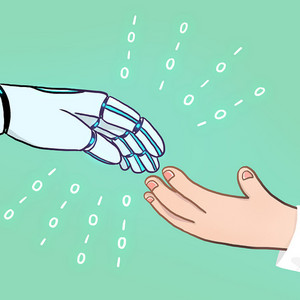
Artificial intelligence is now entering one of the most profoundly human realms the therapist's office.
Mental health institutions across the country now see AI being deployed to screen for conditions like depression by analyzing a patient's speech and facial micro-expressions, generating risk assessments and even assisting in early-stage interventions.
This technological integration.
It does promise greater efficiency, it promises greater scale, but it forces us to confront something.
How do we harness that analytical power of AI without undermining the essential empathy and connection that only and I'll say that again, only a human therapist can provide?
Is it the future of mental health?
Maybe, but it's a delicate partnership, I think, and the path to achieving the right balance is fraught with both ethical and practical challenges.
It is a case of do we need it a bit, I think, but we'll talk about that.
First, let's get to the details.
Yes, so recently, more mental health institutions in China, like the famous Beijing Institute Anding Hospital, the Peking University Sixth Hospital, Shanghai Mental Health Center or Beijing Huilongguan Hospital, as well as such well-known institutions in Chengdu and Guangzhou, they are now offering AI-based services for depression screening to psychological interventions.
So AI is not only handling initial consultancy consultancy, but also the carry-out follow-ups, appointment reminders.
It also starting to directly intervene in patient treatment.
And the workplace quote-unquote might be an evaluation room, a robot or even an interface hidden in the background of the hospital's information system.
For example, there is an example that a patient named Zhang went to Beijing Anding Hospital and instead of going in to a doctor's office, she was directed to a small, quiet glass room.
And there was no doctor inside, just a monitor with a camera.
And that was an AI depression evaluation tool.
And that system designed to analyze her micro expressions, her voice, it started to ask John questions like a real doctor, like how have you been feeling lately?
And how is your sleep?
And meanwhile, that camera was recording every little detail of her responses.
And then, after five minutes, the AI generated a depression risk report and then was handed over to a human psychiatrist for review and further diagnosis.
That's like sci-fi movie move to reality.
Yeah, and also, you know, tech companies like Alibaba, like JDcom, are also offering AI-powered mental health products and also started to invest it in startups.
Yeah, Tencent's done it.
Baidu, I think, is in the game as well.
So, You said that one patient, John, went into a room with glass walls and no doctor.
The AI started asking her questions.
So how are these AI systems being deployed across these health care centers?
And what exactly are they doing?
Is it different?
I guess it's different in each place and it depends on which center you're at.
Yeah, and also there are many various types of advanced technologies that's being used in this area nowadays.
The current mainstream ai diagnostic tools mainly rely on machine learning and deep learning algorithms to analyze large amounts of data related to depression and they also try to find different patterns.
And one very curious part, like you mentioned earlier feifei, is that they kind of document things.
They record your very subtle facial expressions and your micro expressions and speech pattern and from there, from these details, they start to analyze.
So they might look at patients' language patterns in the sense that depressed individual states tend to, or they may use first person pronouns more often and have a more negative tone in their speech.
And also these AI system.
They also look for facial gestures, small facial expression that just so subtle that it's missable for a human eye, but they can capture it like relaxed facial muscles or staring blankly at some places.
And from these details, they can also give diagnosis or suggestions for a diagnosis on that.
Yeah, they also look at That's kind of the surface level stuff.
But then the AI can also well does also look at the angle of your head or your face, which way your head is tilting, the tone of your voice, all of those things that you mentioned.
And then those ones are taken into account in five minutes.
And then it quickly assesses your risk for depression or, if you have depression or are suffering from depression, how severe it might be.
It's a digital avatar doing the job that a human doctor would have in the past done.
And yes, the cameras are recording at all times and all of these little bits of information are used in the AI's analysis.
And also, I think, some system, for example the Beijing Anding Hospital's AI system.
It also looks at your tiny wrinkles on your forehead or the pusses.
So every 80-year-old is severely depressed.
We're not saying that, but I think it's really interesting that sometimes things that you won't directly share to your human therapist or human doctors may sound or feel like it's easier to spread out when it's an AI or a machine asking you that.
All right.
Well, let's get to that.
It sounds like you're speaking to one of the potential advantages of this that if a patient wouldn't feel comfortable or confident sharing certain thoughts with a human doctor, they might be more comfortable sharing with an AI tool.
That's why there's a glass box. and there's an AI asking gentle questions.
And in previous cases, some patients are reported to feel like some questions they are being asked are kind of under sort of guidance, where they feel like it's leading them towards a pretty obvious intent behind each question.
That's explained by Yang Zheng, who is a programmer.
And he said that his visit to the Anding Hospital in Beijing two years ago kind of led them to feel like he's following this whole very professional and well-known system called the Hamilton Depression Rating Scale, or more widely known as HAMD, which is considered the golden or the most widely used measure of depression worldwide.
But he felt that the intent behind each option was quite obvious and he could easily manipulate his answer.
But when his when it comes to the AI asking those questions.
The doctors.
They reported to have more objective data to base their diagnosis on, which has made some patients feel more confident in the results.
And this comes from a different study in Xi'an in northwestern China's Shaanxi province, where a faculty team from Northwestern Polytechnic Polytechnical University has innovatively applied AI technology to develop a sort of a model.
And their project leader said that when one patient interacts with the virtual doctor, the generative large model drives an empathetic conversation engine and start to adjust the question dynamically based on how the patient's responding to them.
So that's something.
That's what a chatbot does, doesn't it?
Yeah, sort of follows your, follows your lead.
Yeah yeah um, Other advantages the AI tool wouldn't get tired.
It wouldn't judge you.
It wouldn't be in a bad mood, I suppose.
Those are the same benefits that AI always comes with, regardless of what we're talking about.
But there is proof... at least according to some doctors, that this is pretty accurate.
Yeah, according to a doctor from the Beijing Anding Hospital, which is actively bracing AI technology, that they found their system is quite accurate, with a rate of about 80.
And three years ago, the Clinical Psychological Center at Beijing's 6th Hospital, which is also very famous for its mental health treatment, also launched a similar service robot called Bei Xiaoliu, and the robot covers four main modules assessment intervention, rehabilitation and education addressing five key areas cognition emotion behavior, relationships and social function.
And, according to a member of that developer team, clinical trials showed that that robot has a significant impact on improving depression and anxiety, and also sometimes even outperforming some human therapists.
And the AI could continuously monitor the patient too, and look for changes based upon the previous data that was collected.
AI therapy, it's kind of a hot button issue in the West now as well.
There are a lot of tools online that are available for people who are interested in it.
And I think that it has its obvious advantages because it breaks down the barrier.
I'm kind of switching topics here and I'm talking about online therapy.
It kind of breaks down the barriers for people who might feel a little bit nervous about getting to the hospital in the first place.
But again, that's a different story here.
We're talking about it being put into the hospitals themselves.
So we talked about some of the advantages.
And again, I think they're quite obvious.
But are there and there are risks of bringing AI in for screenings and intervention when we're talking about someone's mental health.
Yeah.
And you know, the first reaction when I heard about this topic is what about?
You know, in human therapists there will be a famous examples of the patients getting too emotionally attached to a therapist, to therapists.
And I can imagine, when AI systems are widely used in these mental health treatments, some of the patients will also be emotionally attached this ai robot, and that can be a very big ethical problem going forward, and i don't see there is a intimate or very fast solution to this issue.
Would that be an issue if the ai were located within the walls the four walls of the hospital though?
Yeah but, but it's like you know.
It won't do good to the patient's mental health, because it went to the hospital too, because his or her mental health has problems.
And if he or she became overly attached to these AI machine robots, that won't solve the problems.
The only I think is worsening the problem.
Here is the data from one study.
So this study covers a group of 496 AI chat apps users and found that the more satisfied people feel with conversations with AI, the worse their real life social interactions become.
So there is proof that, from a neuroscience perspective, interactions with AI it triggers much lower levels of a hormone linked to trust issues and bonding than interactions with real people.
So it's still different.
You think you're chatting with someone, but that's not someone, that's something.
And the bond made in your brain, the neurological bond, is completely different.
So how helpful is this whole treatment system built based on AI is going to be for these patients?
It's still undetermined.
Well, these are...
And they are trained on data from the past.
But just like human doctors, AI bots would be capable of misdiagnosing someone.
So if I were to go into a hospital and then go into a glass room and I'm answering questions from an AI and the AI says no problem with you?
Well, then, oh, OK, my feelings are automatically unjustified.
Right.
Because a bot told me that I'm wrong.
I thought I was depressed, but apparently I'm not.
So bye.
See you later.
There's a potential for that as well.
Or the other extreme goes with some AI overly agree with you.
Yeah, or you are severely depressed when actually maybe not.
I was looking at the Stanford University website.
They had a lot to say on this topic.
And yeah, it makes things more efficient for hospitals, low cost.
Accessibility is another major advantage as well.
Mm-hmm.
But there's a problem, and it's, again, a problem that we see whenever we talk about AI.
If it's trained on biased data, the AI can amplify these biases.
Yeah, you mentioned it, Feifei, the over-reliance.
Stanford Medical talked about that, too.
But here's what I – and maybe you could tell from my tone when we started this topic.
Yeah, totally.
I don't like this at all.
Not at all.
I think you are dehumanizing one of the most important human interactions.
What it takes for a person to actually make the decision, I need help.
To make that decision is one of the strongest things that a human being will ever do in their entire lives.
To then go into a clinic or a hospital and And be immediately sent in to have a conversation with something that isn't real.
I don't care.
80% accuracy, that's not good enough for me.
It better be 100% before they put it into implication.
Because there's 20% failure.
Again.
So if a person goes in there seeking help, they've already kind of broken down a personal wall of theirs.
And then to go in there and interact like this.
I find it deeply impersonal, I find it almost disrespectful to a degree and I find it to be potentially dangerous and maybe even a little dismissive of how the people are feeling.
Misleading in some cases?
Yeah, but I think AI would be a very good starting tool if, for example, many big hospitals they're facing with a lot of patients every day.
It will be very difficult for a human doctor to not to be human.
You know when you are facing 100 patients a day.
You sort of rely on the, you know, what Yushan mentioned about the very famous questionnaire system that can give you very fast results. answers and that can lead to problems because i have a lot of friends who went to these hospitals seeking help and the first task they have is to fill up these questionnaires and we know the right answers and i think that's um not willing to give the right answers oh i see what you're saying i know the right answer you know what i'm supposed to say yeah yeah But that doesn't mean that it's gonna reflect your real problems.
And I think for screening, AI is very helpful.
But couldn't you trick if you knew what answers to put in the survey sorry to interrupt you, by the way if you knew what answers to put in the survey, if you were not familiar with the AI tools and what they were looking for?
Frowns wrinkles because of frowning tone of voice.
If you wanted to trick it, could you not trick it?
I don't think, you know, when it comes to macro facial expressions.
It's too subtle that you're not even thinking of it when you're making it.
And that's also why that right now, AI mainly serves people with mild emotional distress or depression.
It's not for those with severe mental illnesses.
And I kind of agree with both of you.
And I get the point that it's, At the current stage, it's not enough, but it's there to help.
Here's my final point.
When ketchup was created, okay, people put it on French fries.
Wow, that's amazing.
What a great invention.
Let's put it on a cheeseburger.
Perfect match.
Why didn't we think of this before?
Let's put it on breakfast cereal.
Nope.
Don't need ketchup on breakfast cereal.
Some people do.
AI is amazing.
Let's put it in industry.
Let's put it in customer service.
Wonderful.
I see.
Let's put it in mental health.
Maybe we don't need it there.
That's my point.
Yeah.
But that requires a lot of testing, I guess.
Yeah.
Let's hope the 20% of failure of the AI diagnosis is not going to be the cost of the test.
Yeah, you're exactly right.
Yeah, I'm very cynical about this one obviously, but I do hope that you know, if it works and people get the help that they need, then however they achieve that goal is perfectly okay with me.
We've got Motivational Monday coming up next.
Stay with us.
Motivational Mondays.
Motivational Mondays.
Motivational Monday time, Yushan.
Go on.
I'm going to use this week's Motivational Monday as a special segment to express just how grateful and excited and encouraged I am to have Fei Fei officially on the team.
You always say.
People always say that to know your partner most likely your romantic partner or your friend better is to travel with them.
And that's how I get to know Fei Fei in the first place.
We began talking since this May, when we both went to Southwest China's Guizhou to do the business trip.
And that's when the first encounter Feifei, even after almost four years working here, and that's when I learned how amazingly professional she can be in front of cameras or just in day-to-day interviews.
That's new experience that i've kind of haven't been exposed to before because i've been working on feature and software topics.
And then in face of feifei, who can kind of navigate both the newsy style, the interviewing style, and then in front of the camera they're very subtle and and friendly and sweet style, that's like a new world to me.
And I'm very much looking forward to learning more from you from Roundtable, now that you're officially a part of this team.
You know, I'm so flattered.
I've never heard so many good things about me.
I'm so glad.
I just feel terrible.
All I said was we're really happy to have you here.
That's good enough.
Yeah.
It's funny, isn't it?
We talked about this earlier on the show.
I think it was just kind of a part of another topic, where we said that, you know, in a place, in an office building such as ours, which is kind of like a typically sized office building, I suppose, for a company in Beijing, you know we're surrounded by people who work at the same place, who carry the same card around their neck.
Right.
But we might spend years never interacting with them or getting to know them, which is a real shame because you're missing out, or we are missing out on the opportunity to perhaps learn something from the people that we pass by in the hallway every single day.
I guess that's kind of what you're getting to.
Yeah.
And so it's a good thing to, you know, shifting your focus every couple of years.
You know if, for example, you stayed in one professional areas for too long, sometimes you get too focused and you sort of lose contact with the rest the world around you.
And there is a Chinese saying, 人数诺死, Well, it's a very... What's that mean?
It means if you replant a tree, the tree might die.
But if you change a place for humans, that human will become lively again.
Well, it's a very bad translation for me.
Oh, I get it.
Yeah, because as humans, we need to change our positions and place and focus Every once in a while.
Yes, just to stay refreshed.
Mm-hmm.
I feel like I should say something more dramatic now.
Sorry.
When Feifei came to Roundtable, I knew our lives had changed forever.
It sounds like a 60s movie.
I don't know why my British accent came out there either.
We are blessed to have Feifei on the team.
So send her a message and tell her that you feel the same.
That's it for Roundtable.
Thanks so much for being with us and please do come back again next time.