Discussion keeps the world turning.
This is Roundtable.
We've learned how AI has become helpful in the workplace with various tools to make our office lives easier.
We've also learned about how the use of AI in the classroom can open new doors for teachers and students.
But now, staying within the field of education, AI is moving into study rooms, creating an environment that is somewhere between complete self -study and having a teacher present.
Some people love it, some people still a little skeptical.
And then, leaving a bad review, do you do it for a restaurant if you're not happy?
Well, doing so may cause your review to be taken down, but overseas Chinese customers have found a unique and creative way to have their true feelings known.
We're live from Beijing.
This is Roundtable.
I'm Steve Hatherly.
Thank you very much for being with us.
And for today's show, I'm joined by Nioh Honglin and Lai Ming.
First, on today's show.
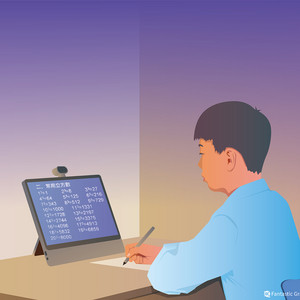
Picture a study space where AI -powered tools coach, correct, and even cheer you on.
AI study rooms are a space where students get personalized support from AI tools and learning devices.
Study rooms equipped with new AI technology have recently appeared in many cities across China, becoming a popular after -school destination for students.
However, some parents have mixed opinions about these new learning spaces.
Many questions and many answers to follow.
Honglin and Lai Ming, thanks for being with me today.
I wonder, how much time did you spend in school study spaces after your regular study hours?
I usually commute, so I don't hang out for too long after completing a lesson in school, so not a lot.
But, Nioh Honglin? I was thinking because for me, it's kind of like mandatory self -studying because the school would provide classrooms for you to finish your homework and if you have questions, you can go to the teacher's office to ask your questions.
And during my middle school time, it will go until around nine o 'clock.
And to my high school time, it's like, for the first session, it's from six o 'clock to nine o 'clock in the evening and from nine o 'clock to eleven o 'clock, the second session.
Nine to eleven? Nine to eleven is like, if you want to stay, you can stay.
If you don't want, you can just go home.
So for high school, it's relatively more flexible.
But I think it's relatively unfair to ask the both of us because during our generation, we need to study a bit longer in schools.
The times are changing, but let's get into it then.
Who wants to kick it off?
So I want to know, what's a study room, an AI study room, and how is AI integrated into these rooms?
Well, AI study rooms are a new type of learning space that combines traditional study environment with artificial intelligence technologies.
And by traditional study environment, I mean just a space where people pay or subscribe to so they can have access to a desk or a space, relatively more quiet compared to, for instance, studying in a cafe or in an Internet cafe.
You're studying in an Internet cafe, huh?
So but now this is new because artificial intelligence technologies are involved.
So unlike conventional study rooms that only provide a space for self -study, AI study rooms are equipped with AI -powered learning tools such as AI learning tablets featuring intelligent learning systems.
They also offer offline supervision and custodian services to provide students with comprehensive learning support.
So it can be a combination of both hardware and software, hardware as in the space and desk and maybe coffee.
And then the software as in the persons or teachers, I wouldn't call them teachers, but tutorials or supervisors overseeing the students and maybe an operating system or a management system helping students to stay focused.
Hongli, what were you going to say there?
I can totally see why parents are sending their kids to these places because come to think of it, like I said, my school is open to really late hours already, so I didn't really have to find a self -study area, yet it's not the situation for every school and especially for example weekends.
And in the cases that the kid is already old enough, you as for example a high schooler who is perfectly responsible for taking care of his or her own study schedule.
I used to go to libraries, for example, as a quiet space to study, yet I would definitely love to go to these AI study rooms because I would have something to help me with my questions, to help me even set the learning plan for me based on how well I am doing on the subject A and how bad I am doing
on subject B. And as for kids who are younger, yes, they can be sent to a library, but you cannot really make sure that they are studying instead of checking out some cartoon and whatever.
That's more unsupervised, whereas these are supervised.
So I've seen study cafes before, but from my experience, I think I walked into one by mistake one day and quickly turned her out and went in the other direction.
From what I saw at that time, maybe a soda machine or a snack bar or something like that, but then just really just spaces for the students to sit down and study.
Kind of like, I guess what offices sometimes use those rented out office spaces.
Ouch, yes. Yeah, exactly.
Office hours, yes. But this is absolutely different.
These are all equipped with AI technology.
Quick question. These must be located within a relative close distance to schools, I would think.
Or relatively close to a residential area where there are many kids.
Fair enough. All right.
So what are some of the advantages then if we reflect on some of the aspects we can find in these spaces?
Well, AI learning machines utilize various AI technologies to create personalized study plans like many of you mentioned earlier, it's tailored to you.
A good example is the very simple software that Maisang uses to learn about the alphabet.
So the device can tell, well, it caters to Maisang's progress.
When he's learning A and B and C, there will be various tests and balloons carrying these words floating around, and he's to point at the balloons to tell which one is A and which one is B.
And so when he survives one test and moves on to the other, there's certain level of repetition.
And if he makes more mistakes than is allowed or than is tolerated, then the AI system would try and come up with a different test that sort of enhances his understanding of the three characters.
Okay. So then the apps, and it's like Duolingo, I guess would be another example, right?
The app will encourage you in a fun way to get the correct answers.
But if you don't get them, you're not going to move on to the next stage within the app.
And that's what you mean by personalized.
But that is only one type of app we're talking about.
Actually, there are so many different types of apps and they're using different strategies.
Some of those apps would be able to give you a range, the time range.
For example, you say you want to study for three hours, then they might separate those three hours into three sections.
You're learning English for one hour, learning Chinese for another.
It does not always have to be a moving up to the next level.
It has also something to do with a better learning habit, whether or not you can be more efficient and an advantage or disadvantage, depending on whether or not you're the kid or the parent, is that the clock in time would be recorded the entire time while you're learning in the self -studying AI helped
self -studying rooms.
And also whether or not you're doing a good job in the sense that when we were kids, I think we all have a little notebook collecting all the answers that we give wrong to certain questions.
You didn't? No. You collected your wrong answers?
Yeah, so that you know why you're wrong and you don't make a mistake next time.
Fair enough. It's a good method.
Yeah, it's a method.
It's not like I like the wrong answers.
And now you have AI to help you with.
So definitely with the help of artificial intelligence, the efficiency of kid studying should be improved, given the AI platform or application is really good.
Yes, the feedback is real time.
That's one of the advantages of AI technologies in AI study room.
Because in traditional classrooms, you bring home your homework, you do it or not, you hand it in the next morning, then the teacher might grade it and then you get feedback afterwards.
So the time lack is significant as compared to what we're talking about right now.
It's a much more streamlined process.
In terms of the supervisors, these are teachers?
Well, not necessarily, I would say.
Because if we're talking about teachers, definitely teaching is the main priority.
To start with, here in China, if you are a teacher or if you're hired as a teacher, you have to have the qualification.
Yeah, you're not teacher teachers.
In schools, you're supposed to have a license to teach.
Whereas in these institutions, they are relatively new, and some of the teachers might have a disadvantage.
I'm sure the study room, the owner of the study room will brag about it.
But if you don't have it, I mean, this is a business that's not yet overly supervised.
So I think you get by without a license and you don't get called a teacher.
And also, there are so many variations because when we think about AI self study rooms, it sounds easy.
It sounds like you go to the room, you have a software helping you to study and you study, and then you go.
But actually, there are so many combinations and so many different ways to register for the study room.
For example, you can just go use the equipment as well as the AI software on the equipment in the study room.
Based on how many times you go use the study rooms.
But you can also subscribe and be a member.
Pay a membership fee of the study room for, let's say, half a year or a year.
You can buy the tablet with the software on the tablet.
You can buy the software and upload, download it on your on your personal, let's say tablets or computers.
You can pay for the kind of service that would have a teacher answering your questions that you feel like the AI is not answering good enough.
Or you can pay for a non teacher kind of service that only teachers would only give you a report of whether or not you are hitting certain goals and giving that feedback to your parents instead of to the student learning directly.
In that case, the teacher does not have to be a teacher teacher, it can be a supervisor teacher.
So it's actually very complicated.
So then for the students, for the customers, I guess we can call them you have a number of different options that you can choose when you're signing up to be a member of one of these study rooms, these AI study rooms.
So it's not just a flat rate.
No, I understand. So so the pricing, I guess, is kind of catered to the individual students as well.
Definitely. And also the price or let's say the salary you pay for the teachers, whether or not they're teachers, teachers, whether or not they're teacher, teacher, or they're just supervisor, teacher, or who are basically interacting with the artificial intelligence, the AI data and analyzing the AI
data and giving feedback report to the parents, technicians, and it also differs depending on the strategy these AI self study rooms decided to go depending on what their business model is.
Right. The national average monthly fee is between 800 and 1000, which is about $137 US dollars, which is similar to the cost of offline custodian services, meaning these supervisors are not necessarily or the owners are not necessarily making a lot of money because if we are paying the same thing as
we pay custodian services, then we are not paying for the AI or the investment into the AI technology that those of them behind the technology it's putting it somehow seems for a price point, you choose a higher price point, I would think right because you're offering services that you can't find anywhere else.
It depends on who you're comparing yourself to, because if these kind of AI study rooms compare themselves with original or traditional study rooms, then definitely because you're basically offering more services, more teachers and more the software.
Yet if you compare yourself to extra curriculum classes, which are offered courses now for teaching and also, excuse me, and also homework even sometimes, then these places are definitely cheaper.
Understood. Again, going back to the point, depends on what their business model is and depends on what they offer.
Where does it stand?
From the business side of things right now, where does the industry stand?
Is there growth happening right now?
Is it competitive right now?
Well, the AI study room industry still in the early stages of development and has already shown some market potential.
Many established educational institutions have joined this industry according to a media reports after the double reduction policy.
Education and training companies have shifted their focus and educational hardware and AI study room models have brought new growth opportunities.
So some major players like Sure -S, New Oriental, which are very highly influential and highly high profile companies in the industry, they made significant moves in this field.
Yes. Actually, the business models for these self AI self -study rooms include, for example, direct operation.
That is what Lyman has just said.
That is, for these big brand or big -name brand educational technology companies or large training institutions, they start the room or they start the direct operation of these places.
And they can also attract individuals or small institutions to join through brand authorization and they can give technical support and they can even provide some sources of talent in terms of the technician in communicating with AI and collaborating with public institutions, such as schools, libraries,
to share values and resources or the software or just or even the hardware is another way of the business model.
You mentioned the double reduction policy.
That's probably obviously very well known here in China.
But for our listeners who might not know what that is, could you talk about that a little bit?
And then I wonder if this is in violation somehow, any way of the double reduction policy.
I don't think it's a violation for those of you who do not understand the double reduction policies, basically aiming at reducing the burden kids used to face.
You both laughed at me when I say I studied until 11 o 'clock, but that was common.
It was not that common, but it was definitely commonly seen here in China at my age.
And we believe that kids definitely need more outdoor time.
They need to, on top of studying math or English or Chinese, they also need a little bit of physics exercise, PE, art education, music, painting, and in today's day and age, definitely knowledge about the internet, about artificial intelligence, and all these need to be considered about.
And that is why the double reduction policy makes sure that the schools do not give too much homework to kids when they go home and extracurricular institutions do not teach kids the kind of knowledge that does not belong to their current grade so that they can have an edge when competing with other
kids. So if you teach a kid in grade three, the knowledge that's supposed to be taught on grade four, then definitely this kid would have an almost advantage, but unfair advantage when competing.
And with all that being considered, actually for a period of time here in China, the extracurricular training facilities felt that it's getting harder for them to basically have the same amount of customers they used to have.
That is why they are shifting a little bit, and I think this is one of the ways for these institutions to move on to, because they have the resources, they have studied the area of education for quite a long time, and they have the teachers and maybe the technicians to understand the logic behind the training
of the AI, and they are moving a little bit towards this area.
Yeah, and this is still so brand new, isn't it?
Definitely. AI in the classroom or somewhere involved in education is not necessarily new anymore, but it is accepted in October of this year, the Beijing Municipal Education Commission.
They released the guidelines for the, and I'll ask you to help me out with this a little bit, the guidelines for the application of artificial intelligence in education in Beijing.
That outlines AI applications in six key educational areas in 29 typical scenarios.
So what is one of the key applications that we're talking about?
Or what was part of that guidelines for the application?
It's a long title of artificial intelligence in education in Beijing.
That is AI assisted learning, a typical example of smart learning support, and the guideline advocates using AI's predictive capabilities to conduct learning diagnostics and precision teaching, something we already touched upon and being able to tell how far a student has gone, and how well he's performing,
and what else he needs help with, that kind of thing.
So yeah, so there's some level of policy support, and regionally speaking, and also I think AI study rooms, they are not in violation of the double reduction policy in the sense that the line has been drawn when the double reduction policy was ruled out, and people would know that this is a policy aimed
at bucking the unhealthy trend of unnecessary cramping, cramming, where students, like Newhorning said earlier, study over time in order to in advance so they can gain advantage, unhealthy advantage as compared to those students who didn't make the time.
So it was very unhealthy and very unnecessarily competitive, whereas in this case with the AI study rooms, the reason why I was careful with calling the supervisors teachers was precisely the point.
The industry was well aware of the line between tutorial for curricular lessons and extracurricular lessons.
So the supervisors are there to clock the input of the students and to monitor whether certain students have trouble with certain subjects, with certain software, and they are not there to teach, which is why I believe that given the support from certain regional governments, and given the care and attention afforded
to the red line, then I think this is not a violation of the double reduction policy.
Well then what's the reason that some parents are skeptical about this?
By the sounds of things, everything is good, right?
You have various pricing plans, you have, that means different prices available to different levels of incomes for families, you have new technology available to help students out.
So what's the reason that some parents might be skeptical about this?
Oh definitely, I would be skeptical if I'm sending my kid, because if it's a teacher, I'm sending this kid too, then I'll be able to talk to the teacher.
I would, you know, just, I would review him or her a little bit by talking to him.
I think I'm a person person.
I would know whether or not the teacher is good with my kid, but with this new thing, this technology, I'm not really sure.
You're not a machine person, you don't trust it.
I don't know, I don't know whether or not I understand the logic behind it to start with, and also if the, let's say the platform is really good, it's really fun, it's encouraging my kid to study, study, study, and what if the kid returns to the classroom and find all the other teachers boring and cannot listen
to them anymore? Yeah, that's a good point.
They did a study in Sweden recently.
I found this on AIBase .com, and it was quite a lengthy study and they divided it into different parts, but here's one of the interesting takeaways that I found from their research is that kids who don't perform as well in the classroom, then they get stressed and when they get stressed, they turn to
AI, and if AI can immediately solve their problems, then they start to rely on AI as the answer as opposed to using AI as a tool when they perhaps get stuck at a particular point.
Yes, on top of that, some of the platforms or some of the applications are not that good just yet.
I've written, I've read a case about one kid telling the other kid that, oh, so after the learning process, the AI would ask a question, why you make the answer, why you give a wrong answer, and if, well, there are three options.
Option number one, I do not know the answer.
That would be my answer every time.
Yes, and there's option number two, that is, I click onto the wrong one.
When I know the right answer, it's a miss operation.
And number three is that I know the answer, I can't get it right.
I was not being careful enough when answering that question, and kids would tell each other, do not choose number one because it will ask you to do it again and again.
So, see, they're already cheating the system.
That's the equivalent of manipulating the system.
That's the equivalent of old schools sharing test answers with your classmates.
Yeah, but the thing is, with teachers asking several simple questions would have them understand what the kid is doing already.
But with artificial intelligence, if you keep on feeding them wrong data, they'll have wrong assessment.
So that would be a problem, I think.
Another issue that parents might be concerned about is the quality of lessons that the AI system can provide.
In some cases, because the industry is so young, it's not adequately overseen.
As a result, certain industries, certain companies, there's even copyright privacy.
They get the content from a different platform, and they don't even change a lot.
Even with that maneuver, they're able to sell and promote their business to, well, parents who are non -the wiser.
So it's a complicated issue.
And parents have a right to anxious about the case.
Honglan said she's speculative.
Are you also speculative?
No, I would definitely get my son involved with AI learning because I think that's the future.
I mean, no matter how worried we are about the negative or adverse effects of using AI, it is here and it's not going to go away.
So my son or his son will need to get get used to learning in the new age.
I just hope that my son in the future would find it easier to communicate with people instead of easier to communicate with AI.
Yeah. Well, I remember when AI was introduced to education, students were using it to cheat somehow, teachers were freaking out.
They didn't know what to do with the situation.
But now we know that it's here to stay.
And what's interesting is that the business side of education, AI in education is starting to bloom.