NPR.
This is The Indicator from Planet Money.
I'm Darian Woods.
And I'm Waylon Wong.
You know Waylon, they say don't read the comments, but Indicator listeners actually leave us with some pretty thoughtful ones.
They do.
We get a lot of emails and actually we pipe those emails into a special Slack channel where we leave, like a light bulb emoji for the ones that make us go, aha.
Yes, and if they point out that we I don't know pronounced the local town wrong, that gets a grimace emoji.
No, but that never happens, Darian.
How dare you?
But today on the show, we sift through the listener mailbox to learn from you, our audience members.
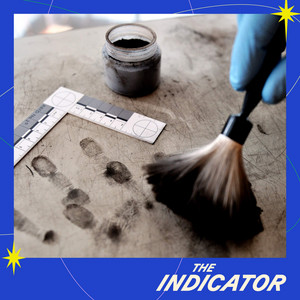
We'll hear why older software engineers may have more job security against AI, and from a forensic consultant on one idea of how to improve credentialing for crime labs.
Crime Labs?
Well, I'm listening.
We dust for fingerprints after the break.
What's in your wallet?
Terms apply.
See CapitalOne.com slash bank for details.
Capital One N.A., member FDIC.
This message comes from ServiceNow.
People should do the creative work they actually want to do, not boring busy work.
Now, with AI agents built into the ServiceNow platform, you can automate millions of repetitive tasks in every corner of your business IT, HR and more.
So your people can focus on the work that they want to do.
That's putting AI agents to work for people.
It's your turn.
Get started at servicenow.com slash AI dash agents.
All right, it is time to open up the listener mailbag.
Who did you pick, Darian?
John Cox recently wrote to us about an episode where we talked about this eye-opening new study on the potential impact of artificial intelligence on the workforce.
And for young people in jobs that were highly exposed to AI.
Their employment dropped 13 more than their older colleagues since late 2022.
And the study's authors found that younger software developers were taking a hit, and they suggested that AI was a big part of this.
At the same time.
This was a bit of a puzzle because it didn't seem to be happening for the older software engineers.
And it turns out that John knows a little bit about this.
I work in a combination of software development and IT, but I've been in the software industry for about a decade now.
John has a potential explanation for why more experienced software engineers are holding onto their jobs.
For someone new coming on who does not really understand software.
They might understand the tools used to generate new software, but if they can't figure out how to fix it if it broke, that is much less valuable.
In plainer terms.
It sounds like there are vibe coders, as in people who are just writing without knowledge of code.
They write a piece of software.
What then happens with the more senior software engineers?
Older engineers, more experienced engineers are still required to fix and maintain systems.
And John says, if these same engineers are also comfortable using the new large language models like Claude, Code and Copilot, that could make their job even more valuable.
As I've been using some of these models, I try to carefully think about everything I'm doing and try to very carefully and prescriptively tell it exactly what kind of functionality I want, where I want it, how to go about organizing it.
The major difference is that I can repair it if something goes wrong, and I have.
And you're saying you've observed more senior engineers have to fix mistakes that are made by perhaps more junior engineers or Vive coders.
Yes, the ability to rescue software from a fire is extremely valuable.
So AI can generate a lot of code, but fixing it requires experience.
Yeah, take that, robots.
Well, John says.
Although his job is secure for now, he can see a future where software is treated less preciously.
What I see as a possible outcome is that we may start getting to a point where there's a large segment of the software industry that starts treating software as a throwaway commodity, not something to be maintained and secured and made into greater quality.
This is kind of like the basis for those dystopian cyberpunk futures where there's some very big and powerful software.
That's very good, but software in general is prevalent and not very secure and not very stable.
Well, that sounds terrible.
I would like to live in an analog future.
So you're throwing away your devices, Waylon?
Well, let me put it that way.
So, Waylon, what caught your attention in the inbox?
Well, this one comes to us from Albany, New York.
Brian Gestring wrote to us with a very interesting episode idea.
It's about a problem and solution for accrediting crime labs in the U.S.
And our producer, Julia, recently spoke to him.
I've been a forensic scientist for over 35 years now and I've worked in every aspect of forensic science, from being a scene investigator to being a crime lab executive.
As a kid, were you interested in forensics?
Did you watch a lot of Law & Order?
Like, what led you to this?
I'm going to date myself, but Law & Order didn't exist when I was growing up.
OK, so maybe more of a Sherlock Holmes guy.
Brian writes us that in most of the US, crime labs are typically housed under law enforcement and or health departments.
Brian says they often don't get a lot of attention.
And over time, that's led to a piecemeal approach to how the industry gets accreditation.
I started realizing that sometimes the guardrails for quality were not as strong as I thought they were when I was on the front line.
So as I started moving up, I started looking and I started seeing gaps where things could fall through the cracks.
And it's not gaps out of maliciousness or anything like that.
It's just kind of how the field has evolved.
Brian says, standards vary widely state to state and there are two private companies that provide the bulk of accreditation for forensic labs.
Brian ran the numbers and found that one of those, ANSI National Accreditation Board, also known as ANAB, accounts for more than 90 of the accreditation business.
I'm not saying they're doing a bad job, but I feel uncomfortable with two private companies and really one private company being the de facto regulator of all forensic science in the United States.
We reached out to ANAB to ask whether they would be in favor of federal oversight, but they did not get back to us before our deadline.
Brian says this raises issues of transparency and accountability.
He wrote a paper called The Invisible Crisis Facing Forensic Providers in the United States about the lack of federal oversight of forensic labs.
He believes forensics quality problems stem from poor regulation, not bad science.
What we really liked about this paper though, is his ideas for solutions, including the idea of universal accreditation.
Brian envisions a five-year window to accredit all crime labs using federal grant funding as both carrot and stick.
He says we saw a version of this when the FBI launched its national DNA database in the 90s.
The National DNA Data Bank came in, a law went into effect, a federal law, and it said that in order to access that DNA Data Bank, you had to be accredited.
The FBI also provided some support for labs.
Bryan says the only problem was that some jurisdictions chose to only accredit the DNA portions of their crime labs, not their entire department.
Bryan says a national standard could help by incentivizing existing federal funding.
I'm trying to migrate this idea from one end of the economy to forensic science and say we can start setting standards.
And what that'll allow us to do is the concerns we have, we can now have a voice to fix them.
Okay, so Roland, it all comes down to incentives.
Number one economic lesson.
And our listeners know this.
Very thoughtful people.
And, you know, we don't just get comments in our inbox.
You can actually leave comments on Spotify episodes these days.
Oh, yes.
I'm well aware.
One episode in particular about Gen Z and money trouble sparked a flurry of unhappy messages.
And we did see those.
Yes, we read all of your feedback.
It makes us have a better show.
So thank you very much.
And if you want to leave us more feedback, you can send us a note at indicator at NPR.org.
This episode was produced by Julia Ritchie with engineering by Kweisi Lee.
It was fact-checked by Sierra Juarez and edited by Patty Hirsch.
Kicking Cannon is the show's editor and The Indicator is a production of NPR.