Let's start with a question that should make you uncomfortable.
If AI can write better than you, draw better code faster diagnosis diseases more accurately than you, then what is left?
What is your and my edge as a human?
And today I want to get into that because I think for most of history being human meant being the smartest thing in the room.
Now you're actually competing with machines that don't sleep, don't forget.
They don't get distracted and they've read more books than any professor alive.
So that's what we're going to do today on The Big Deal Podcast.
We're diving deep into what it really means to be a human in the age of AI.
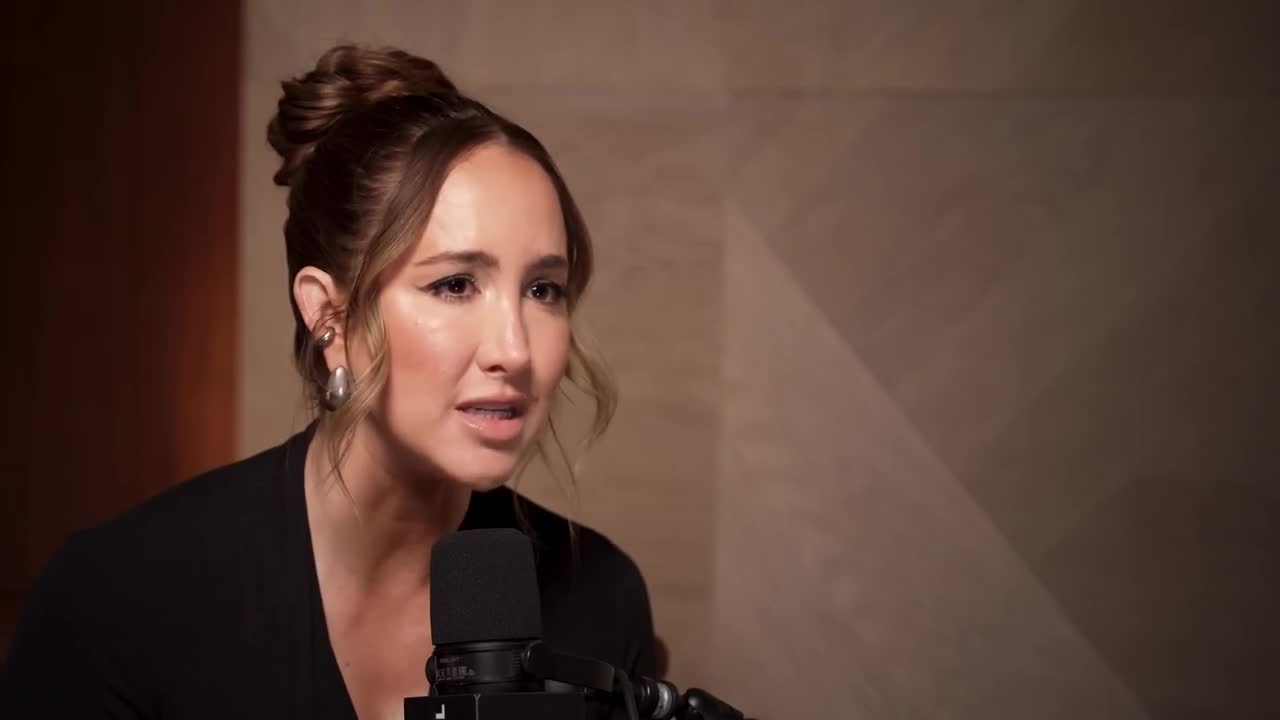
I'm your host, Cody Sanchez, and let's get into it because we got to move fast.
The problem is this is gonna happen faster than you can ever imagine.
AI will take the office cubicle jobs first, because most people in cubicles well, they don't actually work.
It's become like adult daycare.
Uninterested people will fail miserably.
Hyper curious people will win hugely.
And I know there was a lot of AI doomsdayers and some days, honestly, I'm there.
But I want you to still remember that you're not competing with the machines.
You're competing with the humans who use them.
So the game hasn't changed completely yet, but the gear and the speed has.
You can still win the old fashioned way, outwork, outlearn, outship the next guy.
But some of your competition, Well, they just are moving faster than you can even imagine.
We're going to have this barbelled world where on one side you're going to have someone who hasn't even figured out, you can voice to text on your phone.
And on the other side you're going to have people who are running small armies of robots running circles around normal people.
And yeah, you know, the poets of pain are going to tell you this that the world has always been ending for somebody.
You know, they screamed about the printing press.
They lost it about the radio, the television, the internet.
But the same rule survived every apocalypse.
The ones who crawled out with bloody knuckles were the ones who did one more thing, one more time, one more, while everyone else was at the bar complaining about the end of the world.
And yet so many people are experiencing unbelievable pain through this transition, like struggling to find a job, trying to build an income from online work, starting over deep in their careers.
I think America is racing towards a 10% unemployment rate, maybe 20.
And that's horrifying by the way, because the great depression was somewhere between 12 and 20%.
And yet so many people remain unaware, which is why I'm kind of yelling at you on this podcast, because we haven't talked about this before.
Like if we do not understand what is happening in the world of AI.
I believe nothing else you do will matter.
Like you will not be able to find work in the future.
Period.
End of story.
I'm yelling it at all of my employees.
I'm yelling it at all of my friends.
Unless you've already made your bag.
If you've made your bag, you're probably fine.
There'll actually be like some deflationary pressures on costs of things.
If you already have money, you're probably fine.
If you don't already have money, you better fucking figure this out.
Because if you don't, you won't get to be the human that asks the machine what to do next.
There will be a machine overlord on top of you telling you to flip the fucking burger patties, because it takes longer to create a robot than it does an AI that can oversee humans using video technology.
And this brings us to like a deeper truth.
And that's that humans are meaning making machines.
So AI can predict patterns, but only we humans decide what's meaningful or not.
And I think the human brain is still obsessed with narrative.
Like we don't want just information, right?
We want stories.
Why did this happen?
What does it mean?
So AI can generate an infinite amount of content.
But it doesn't care if it changes somebody's life.
It doesn't care if somebody acts or not.
It's got no skin in the game.
I don't think it wrestles with shame and love and envy and mortality, but you and I do.
And that inner chaos, that's what AI can't take from us and sometimes won't take from us.
But I think that's what we have to protect. you know in 2023 open ai and the university of pennsylvania had a study which found that up to 80 percent of workers could have at least 10 percent of their tasks touched by ai i think that's low but the best artists creators and entrepreneurs they aren't worried because they're building they've already figured out their leverage isn't just their skills it's the ownership of attention a direct meaningful relationship with your audience is something ai can't create yet but And that's where you have to use technology or you will die by others who use technology.
For instance, if I wanted to get attention today, I would use Beehive.
Beehive is the infrastructure for independence in attention economy.
It lets you publish your newsletter, grow your audience, monetize your attention in one place, with no algorithms deciding whether your voice gets heard.
So that's where I put my newsletter and it became a media asset, a business emote, because it helps with growth tools, monetization from day one and analytics that tell you what actually moves people.
And so Beehive is where the best creators build their leverage, because that's what being human in the age of AI actually means.
It means maximizing your connection to other humans.
And so Beehive gives you a direct relationship with the only thing that compounds forever trust.
So i asked beehive to do something for you guys, to give you a discount code, and they did.
If you go to beehivecom, which is b-e-e-h-i-vcom, use code cody 30.
You get 30 off your first three months, because i want you to own your audience just like i do.
My working theory right now is that emotion is our mode.
You know humans are hardwired for this narrative, so there's been multiple studies, One in particular.
They published a study called Neurocinematics.
So it's the neuroscience of film, where he basically used fMRI to measure brain activity in participants watching films with strong narrative structure and compared this to more chaotic, non-narrative video.
And he found that structured narratives cause synchronized neural responses across viewers.
What does that mean?
It means stories align brains.
The more coherent, the better the narrative was, the stronger the shared neural arrangement.
You and I, our brains would be sort of like synced.
So, if you look at the most influential entrepreneurs and artists in history, Steve Jobs didn't win because he engineered the best circuits right.
He won because he understood desire.
He understood style.
Taylor Swift doesn't dominate because she has the most complex I don't know chord progressions or something.
She dominates because she connects her heartbreak to everyone else's heartbreak, and she does it at a level that the 10-year-old understands and so does the 50-year-old.
Martin Luther King didn't change the world by going through millions of books and scientific papers.
He changed the world by articulating a moral vision so clear and emotionally resonant that millions of people saw themselves in it.
So AI is just a giant replication machine, right?
It's going to take everything that it's been trained on and give you the average, but it sure doesn't experience them.
And people can tell.
AI is the great automator.
And to automate, it first has got to be an imitator.
And that imitation fools people into thinking it's alive.
But there's something different about when you live through suffering and come out on the other side.
That is humanity.
If everyone can experience emotions and suddenly has the same AI tools at their disposal, how do you differentiate yourself from everybody else in the age of ai when like, literal execution isn't what differentiates you, because anybody can slop out a video video, anybody can slop out an email, anybody can slop out entire books in like 30 minutes with ai.
Well then, what's the difference?
It's one word really taste.
If any human with ai can generate anything, then it's what do you side to build that matters?
If you can create 10000 images in a minute, the person who can say no no no, not that that's crap, this wins.
That's why founders like Musk and Bezos obsess over first principles and judgment, which is like basically what, at the base level, should we be doing above all else?
And taste is about knowing what you're not going to do.
It's like inverse thinking.
And you usually get that through having lived taste.
AI doesn't have lived taste.
It has something completely different.
As AI sort of lowers the cost of creation, I think the real bottleneck becomes psychological.
Maybe it's courage, like courage, to put your ideas out there and to not let them be a gross generalization of everybody else's nonsense, to take a controversial stance.
You know, AI won't feel social rejection.
And so, you know, it won't stake its identity on an idea.
It won't get embarrassed.
You will.
And that's maybe exactly why your work could matter more.
Because it doesn't matter now actually, if you're smarter than somebody else.
It's your ability to share something human.
I want to tell you what's going to differentiate you in the age of AI.
First, we've got taste.
Second, we've got focus.
You see, we want everybody else's attention, but right now we are in a battle for where our brain goes.
Your ability to focus deeply, resist distraction that is everywhere in this age and think independently to develop a worldview that is different from everybody else and not the average of everybody else, is how you win.
My biggest concern today is if you outsource your thinking entirely, like I am seeing people do, to AI, Your critical thinking skills and your taste will just atrophy like muscles.
If I get one more fucking employee, send me an email or a script.
And it's like, it's not this, it's that.
Or it has em dashes all over it.
Or it's.
I'm struggling today because of X and Y and Z and E.
It's so obvious that it's written by a machine.
It's like they have an idea of a spark, they throw it in AI, they let AI do all the critical thinking for them, and then they wonder why.
It's just like everybody else's slob.
If all you do is throw your idea into AI and let AI do all the processing, then it's like hiring a ghostwriter to write your love letters.
Yeah, it gets the words right.
It hits a rhythm, I guess.
It doesn't stutter.
But if you let it talk for you for too long, who's in love with who?
And your voice is completely missing.
And then one day you realize the letters are perfect and none of them are yours.
So you never actually train your own emotion.
You let it be done by a robot.
Being human in the age of AI means choosing not to surrender your agency.
And here's the twist.
The more synthetic and fake the world becomes, the more people crave that real shit that they know is you.
Like look at the rise of long form podcasts like this, raw, right?
You don't have like 4,700 visuals on this.
It's personal storytelling.
Because when everything is too polished, imperfection is the interesting part.
Imperfection is real, not all the other stuff.
It's actually why I don't trust half of the time.
Anything I see online that is not from a name I already know.
If it is some kind of good looking woman podcasting and I don't already know that she is real, I'm assuming that bitch is AI.
Because you know what?
Half the time they are.
And the part that kills me is they get 3 million views on some nonsense that is not real.
That is spit from somebody else's viral tweets.
They have no world lived experience.
And then there are 3 million views and hundreds of thousands of comments saying, yes, queen.
What are you doing?
This is why we need to push back on sort of this fake shiny thing we're seeing on the internet.
We need to be edgy and intense about our opinions.
And let me tell you why.
It's not just Cody's opinion and her ranting on the internet, although I think that's fun.
It's also that there are so many studies on authenticity.
For instance, one was on when social media influencers need to go beyond self-preservation.
In this study, they examine how their perceived authenticity impacts their engagement and trust.
And what do you think they found?
Turns out, audiences respond significantly more to influencers that they think are authentic and vulnerable, not just like super polished.
Because AI really can simulate perfection.
I mean, eventually it'll be able to simulate all of it at this fucking speed, but it cannot simulate vulnerability in the same way yet.
So if you want to be human and free, then you've got to realize you shouldn't just be the inputter.
Hey, I got a question for Chad GPT.
Let Chad GPT think for me.
You're the storyteller.
You are the decision maker.
It can be the processor in the database and remembering things and you can use it to pull studies and ideas.
I do that too.
I don't find these all myself for you.
I use AI.
But it means you own your perspective and you don't just take whatever comes out of it and then just repeat it verbatim.
You should use it to sharpen your taste and develop emotional depth and protect your attention and have the courage to say the quiet part out loud, even and especially when you shouldn't.
The moral of the story here is I want you to use AI to amplify your impact in the world, not just replace your ideas, your brain.
If you can actually harness the power of AI to increase the speed, scope, and depth of your work, you're going to be just fine. use it not as an editor but as the doer and everything and the decider that i think we're going to be like idiocracy with a bunch of people hooked up to vr like you know veins connected to ai and just let the the ai gods tell us what to do next Eventually, let them move our arms and legs for us.
I think we are coming into a world that our kids won't even imagine what our world was pre-AI, which is probably why the only things I see my successful friends doing right now is making money to acquire assets, because they're worried about a post-labor economy and getting as healthy as possible to protect them as they age, probably because they think we can live forever now with AI.
And in 2026.
I think the first step to making money is to figure out AI and to deploy its powers in the direction that's best for you.
And to do that in business is what I do and teach and what we do in the boardroom here at Contrarian Thinking.
But I do think you know, if you're like me and you're too chronically online, like a single day during this AI boom kind of feels like 10 years.
Like every time I don't look at my computer for a week, I'm like, holy shit, I can do what now?
And so if you follow these instincts, it might take you down some weird rabbit holes, but we gotta follow them anyway.
And I always tell my people like if your parents fully understand what you do for a living, you're probably playing it too safe.
You got to get out there and get weird because unfortunately, historically hard work maybe could have just gotten you rich.
Like if you just worked really hard, that might have been enough.
And sometimes I feel like that now because people don't seem to want to work that hard anymore.
They want all the things, none of the sacrifices.
But I think in some ways, hard work now becomes propaganda.
If all you do is work really hard on the wrong things, you're never going to get rich.
If it worked, we'd have millionaires in every factory and construction site.
Those dudes work super hard.
Success in the age of AI isn't just about working more.
It's about working on the right things and then applying that leverage to it.
Like I was looking at notes the other day that said that Jeff Bezos made like 17 million in 13 minutes in 2023.
So that's like $23,000 per minute.
By the time most people finish brushing their teeth.
He's out-earned their entire shift, maybe their month, maybe their year.
Why?
He's not like working hard.
His tooth brushing isn't more intense than yours is.
It's just he has a totally different game because his inputs are different.
And this goes back to that old rule, Pareto's principle, the 80-20 rule, which is like with AI and automation, it's not 80-20 anymore.
It's 99-1, which is like the right decision at the right time will always outperform effort alone.
And the 1% of things you choose to work on will now drive 99% of your results.
And I wish it didn't mean you could not work hard.
I saw a tweet the other day that's like yeah, AI told me that I was gonna work a lot less and there'd be a post-labor economy and so I wouldn't have to work very much, which is why I'm confused as to why I'm staying up until 4 am in the morning trying to figure this shit out.
So I do think you're gonna have to work harder than maybe ever, for longer than you could imagine, to find the right things to work on and to figure out how to keep up right now.
At some point, it'll plateau and stabilize.
But hard work is not gonna be enough.
And if you had one truth, it's that you have to obsess on what you're working on.
And only an after how hard you are working on it know, i don't think there's ever been a better moment to build an ai first business and eat every existing market's lunch, because the incumbents are too busy putting out fires, sitting in meetings, slapping ai first on their pitch decks, instead of actually building things.
Like that's going to be your edge.
Well, they talk about it.
You quietly wire ai into every workflow and make their moat look like a puddle, But the real question isn't will AI replace humans?
It's going to in so many ways we can't even imagine right now.
The better question is, what parts of being human are worth doubling down on?
Because that's where the value goes, right?
If intelligence is cheap, then judgment probably matters more.
If content is infinite, then what type of content means more?
If perfection is standard, then authenticity is probably what we're chasing.
If every job invented in the 20th century is getting threatened by ai, but i do think the age of ai doesn't erase humanity.
If we do this right, it forces you to define it and that's a terrifying gift that most people, by the way, will not do.
Most people and i i see them everywhere i mean we have.
We have one company where we have i don't know 100-ish employees.
We have another.
We have many other companies where we have hundreds or thousands of employees.
I have a lot of surface area where I get to see how people are interacting with AI.
And the truth of the matter is, too many people are outsourcing your brains to AI and they're not even using it in a creative way.
It's like AI sucked their creativity out of them, even in the way they interact with it.
They just ask, write me a YouTube script.
Okay.
What about this?
What about Write me a YouTube script on AI.
Use the voice of Bukowski.
I want it to be dark and edgy and deep.
I want you to imagine what it might be like if you were someone who's never touched AI before, like a truck driver philosopher.
Can you write me a V1 of that and then comb through it and then pull out the best parts and then add?
I also want you to add the best psychological pieces ever created, a mixture of like movie examples of it for like visual effect and simultaneously from the best schools in the world on why AI will actually zap our creativity from us.
Which script do you think is better?
Is the AI different?
No, I just haven't outsourced my brain entirely to a robot I barely trust.
So I guess I want to leave you with this.
Do not go find the career.
Do not go just find the hack with AI.
Go find your curiosity.
Go do something absolutely unhinged.
Do it for the plot.
Come creative.
String together experiences that have never been strung together before.
Be in real estate but write poetry.
Be in finance but study jujitsu.
Vibe code but get some fucking vitamin D, you know?
Go touch the world.
Because magic happens from the men who became obsessed with calligraphy, Scandinavian furniture, complex code and beautifully simple computers.
That's Steve Jobs, by the way.
Creativity doesn't come from normal things.
That's what makes it creative.
Contemplate your mortality, the fact that you're going to die.
Because to know that eventually your star will fall should make you want to blaze, you know?
And if you enjoyed this episode, share it with someone who's wrestling with the same questions.
Because I think it needs to be all humans united against the robots.
Until then, I'm Cody Sanchez.
I'll see you next week on The Big Deal Pod.
Let me know what you guys thought about this one and if I yelled at you too much.
But really, just don't outsource to ChatJBT.
Have you seen who runs that thing?
Sam Altman, Lizardman.
You know, keep your humanity.