Discussion keeps the world turning.
This is Roundtable.
You're listening to Roundtable with myself, He Ying.
I'm joined by Steve Hatherly and Ding Heng in the studio.
Ding Heng, it's always been great to have you on the show.
If folks want to keep up with what you're doing, where should they go?
Oh, they can tune in to the radio show I am usually involved in every night or every evening from Monday to Friday.
Beijing time. Beijing time, yeah, 7 to 8 p .m. It's called World Today.
There you go. You can also search for our podcast by typing in World Today as well on Apple Podcasts, whatever podcast platform you can find.
Okay, World Today. And also you guys have expert interviews on every show, don't you?
Yeah, yeah, yeah. We involve with expert and sometimes we act as commentator on current affairs as well.
So it depends. All right.
Now you know. Coming up on today's show, for many Chinese Gen Zers, young, text -first, self -proclaimed introverts, the idea of a silent salon visit is pure bliss.
Walk in, lie down, let a robot do the scrubbing, rinsing and massaging.
No small talk, no awkward eye contact, just AI and bubbles.
Is this the future for hair care or just a flashy flop?
And you know that awkward moment when somebody complains about being broke, tired, or stressed but never directly asks for anything?
Instead, they leave a trail of vague hints, hoping you'll just get it.
That's what we call dry begging, the subtle art of asking without actually really asking.
game. Today, we're diving into why people do it and how it can quietly strain relationships.
And most importantly, how to spot it and handle it without falling into the guilt trap.
Our podcast listeners can find us at Roundtable China on Apple Podcast. From the world of entertainment to what fuels your passion, our heart to heart segment is all about you.
Share your thoughts with us at roundtablepodcast at qq .com or better yet, record a voice memo.
We'd love to hear your voice and share it with the world.
Now let's move on to the next topic discussion today.
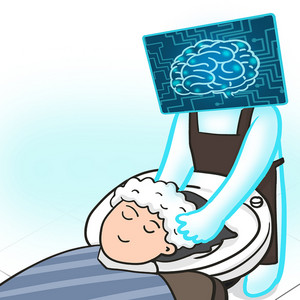
Just when you thought this wave of generative AI was only coming for office jobs and digital tasks, surprise, surprise, it may be reaching into hair salons across China.
AI -powered hair washing stations are bubbling up like shampoo foam, offering convenience, convenience customizable settings and zero awkward small talk but while some customers enjoy the high -tech pampering others are left wondering is their hair actually clean or just gently watered like a house plant so and also we'll discuss whether this is real artificial intelligence are just a shiny gimmick with slick marketing and a mediocre scalp massage.
What is AI hair washing?
And I've seen this in adverts around Beijing here and there when it comes to hair salons.
Yeah. What do we know about this, Ding Hong?
So we are talking about an emerging trend, particularly in major cities like Beijing, Shanghai, Shenzhen, and Guangzhou.
And in the meantime, it has spread to other cities such as Fuzhou, Yulin, and Chongqing.
These are cities either in southern China or southwestern part of China.
So AI hair washing involves smart equipment replacing human labor in hair washing, bars, or salons.
And And these machines offer a one stop intelligent hair washing service from washing to drying at the push of a button.
So this process usually involves, for example, a customer scanning a QR code or using a remote to select a particular model like fast wash or nourishing wash and then select the degree of intensity.
Sometimes you do this after a staff member's scalp health detection.
They do a detection about the health of your scalp.
So then you lie down on this robot washing bat or massage chair, positioning your hair in a designated basin or helmet.
It looks like a helmet, yeah.
Yeah, yeah, yeah. Yeah.
So then there will be like a water column or jets changing position in the flow, automatically dispensing shampoo or conditioner.
Some models even claim that they have advanced features like head shape detection.
I've never had my head shape detected before.
for. Infrared sensing, back massage, hot compress water therapy, and water circulation, optimized steaming, and even biomimetic finger massage functions.
Wow. So some of these AI washing stations are more advanced, I guess, than others, right?
Some of them will be quite basic, and some of them will have biomimetic finger massage functions.
I don't even know what that is.
I watched some videos of some people experiencing the AI washing machine.
So from what I saw in the videos, yeah, you described it quite well.
You lay down on, it looks like a massage bed or maybe a massage chair, and then you lean back and the staff, as you would in your typical hair washing salon situation, situation then the staff member comes and they put the helmet for lack of a better word it's more like a dome yeah like almost like a small chamber you lie down put your head into the chamber yeah and then the staff member will seal it for you right like seal it along your forehead line and then the machine goes to work and there's some fancy lights happening inside and there's some movement from the stream of water there's a ton of jets
of water coming out um and then yeah just it washes your hair from the people's i mean i was watching their faces in the videos to see if they were enjoying this yeah they seemed pretty happy with it at the time they were living their best lives i think in that moment i think these are pretty what do you call those people who are are very like tech forward they have a very open attitude towards new early adopters yeah like that because i would be watching i'm not going to be that batch of people and uh it's also we will discuss like what have the feedback been but right now according to as we're
doing research and looking at all these reports an interesting aspect of this um of the reporting has been on on how has the market been shaping up?
So there's a huge business side, a business story here.
And do you think this is a viable business?
Yeah, I think to start with, curiosity will drive people to try these things.
And given the fact that the initial single -use promotional prices of these AI washing services are often set pretty low, like 5 yuan or 9 .9 yuan.
Yeah, that's to attract business, right?
The initial offer, sure.
This is significantly cheaper compared to those traditional salon wash and blow services.
And more premium services like the enhanced washes or those including hair dyeing, They range from 19 .9 yuan, or just say 20 yuan, to 93 yuan.
In Fuzhou, single prices are between like 19 yuan and 67 yuan.
And in Chongqing, they range from like 26 yuan to 28 yuan.
In other words, these prices are mostly similar to, or a little bit higher than the traditional human labor hair washing services, I guess.
By the way, the business of hair washing done by AI, it's attracted a lot of investors.
There is a domestic tech media group called Tech Planet that reported that a single machine, it's not cheap, right?
It costs around 30 ,000 yuan.
That's about $4 ,100.
And some brands will return the fee in the form of products like 50 to 60 ,000 yuan worth worth of hair growth or hair care products or shampoo and essence that can create 200 ,000 to 300 ,000 yuan in value over two to three months or something like that.
The sellers have claimed this.
And investing in this from a business point of view, investing in an AI hair washing bar typically requires, if you want to get started in the business, it'll cost you about $20 ,000.
It's about 150000 yuan.
You'll have a couple of machines.
Then you'll have hairdryers, the scalp detectors that you talked about before.
So it's and then you've got your franchising fees.
So it's not exactly cheap to get involved in the business.
That's for sure. You're going to need some some amount of money.
My first question, sorry, I should have asked this in the very beginning.
What's a hair washing station?
Is this different from going into a salon?
The hair washing station is basically the area where you lie down on the bed to get your hair washed.
That is the hair washing station.
Okay, but it's not a separate building.
No, no, no, no, no. With only hair washing.
No. Oh, okay. I need to take you to a proper hair salon in Beijing, my friend.
Don't go to the underground supermarket.
Hey, don't give away my happy place tomorrow.
There's no way you're taking me to an expensive salon.
I found my salon, my new salon.
Well, call it a salon.
But, yeah, I've made my choice.
Well, to find that happy place, you'll need to wait for tomorrow's show.
And Steve will share.
I've been waiting all week.
Yes, and he can't stop talking about it.
Yeah, so for this part of the hair wash, I think it is, if not essential, it's an indispensable part of the hair styling experience in China.
Because if you go see your hairdresser, you have to wash your hair first. Right, but that's included in the haircut.
And this is the other question that I had.
So the promotional price is 5 yuan to 10 yuan, something like that.
So you can go to a salon and just pay to have your hair washed and then leave. Yes, and sometimes we do that, too.
Oh, really? Yeah, because, okay, first of all, oh, Steve, you have such glamorous short hair.
You do not understand the pain that women go through.
through. Okay, I have long, thick locks.
And I am, this might sound like a humble brag, apparently, because like for Chinese young people, we're actually very concerned about the amount of hair that's still remaining on our heads.
Anyway, for women who usually have long hair, and especially if you've been through some special styling process, such as maybe permed it or something like that, your hair gets dry.
Anyway, so there's a whole range of hair hair products that you would use.
And just to wash your long hair, it takes more than 20 minutes.
And then to put on extra products and wash them off, another maybe 10 or 20 minutes or whatever.
Anyway, it's a marathon for women, especially when we wash our hair.
So if you can go somewhere, which can provide really good service and at an affordable price, and sometimes we would choose to do that.
Yeah, no, I get it now.
Yesterday when I when I was looking at the the topic and learning.
You didn't understand why we picked this topic.
Well, no, I just didn't understand what it was all about.
I was thinking hair washing station.
Why am I going to a hair salon in the middle of the day just to wash my hair?
I would never do this.
I just wash my hair at home at night or in the morning.
Oh, Steve. No, I know.
Now I know now. So I thought I would never use this business.
This is stupid. Then I said to my wife, hey, did you know there are hair washing stations in Beijing, which is where we are?
And she said, OMG, where are they?
Tell Yeah, I'm taking her, not you, but her.
Yeah, so this is perhaps, you know, there is a great demand for this type of service.
You're giving me more impractical ideas, my friend.
Okay, this reminds me of years ago, I watched this, oh, Xiang Ju, this, you know, those like idol shows, like a TV drama thing.
anyway the most romantic thing ever that's left me a strong impression even till today is when that leading lady when she the character went home after a long day at work you know what the best gift her husband can give her wash her hair yes really yeah and in that you ever washed your wife's hair in that movie in that show see you you you don't even know how to do it and then she's like so tired she couldn't even like lift her arm and then her husband was like baby i'll wash your hair for you i see how great greasy it is and also in china at the hair washing place it's usually in the hair salon they
give you a gentle head massage you know after a long day how badly mama needs that oh excuse me can i can i recommend a biomimetic finger massage function so the impractical idea you just seeded into my head is if as a single lady you can have this at your home and then you'll need to wash your hair and spend 40 minutes or if we really speed it up 25 minutes in the shower doing this and that machine can wash your hair and massage it for you maybe potentially dry it for you i don't know another reason not to need to have to have the man Well, not like he's going to help you anyway.
So yeah, this, but it's probably going to be way too expensive.
And do you guys see maybe the potential downsides of this?
Some people are saying, according to customer reviews, this is actually not all that clean to wash your hair.
Yeah. And some people, skeptics are saying, is this really even AI?
There's also a good question.
What is this? Is this pseudo AI?
Is this a gimmick? They've been mixed.
they lean, the concerns regarding the quality, the comfort of the wash, especially when you compare it to your traditional salon massage, which can be quite enjoyable apparently.
But a lot of people find the experience novel.
They find it worth trying at least once.
Some people really enjoy it.
Some people have described it as being really comfortable or they've had a really great experience with it.
So it's been perceived as convenient, especially for people people who find it very inconvenient to go through the whole washing and drying process.
Yeah, my wife has long hair too, and I've heard her talk about it.
It's a major process to wash and then dry your hair.
It's a real headache.
And also the drying.
Oh, don't get me started with that.
Yeah, yeah, yeah. Because according to some people who have personally experienced these machines, they say some of those machines do not have this automatic drying function.
so they would require human labor to do that that was one of the complaints in the video I saw is that the machine washes the long hair but then the customer has to dry it by themselves but you're probably going to pay less for that I would think yeah well here comes the important business question that is I mean would you actually pay for it after you know those adventurous people people having the first go?
Is this a business that can stay or is it more like, well, a flashy flop for tomorrow?
I mean, you have that initial price offering, right, for customers to inspire interest. And so you'll probably get a pretty significant amount of customers in the beginning, but that's not the real, that's not the goal for a business, is it?
You want those customers to So the industry insiders are suggesting that the AI hair washing industry, it's more of a concept right now than a truly disruptive innovation or game changer or something like that.
And consumers don't yet feel that it's a really, really, really massive change.
Right. I think ultimately this sense of something new, sense of novelty will fade away.
and so things will be made difficult to achieve repeat purchases if the core service quality is not good yeah but that being said you know for women or men with long hair and it's a pain to do it if you've got one of these stations in your neighborhood that might be enough to inspire repeat business again and again and again and again right well for now by the sound of it hairdressers and their trusty assistants can probably relax because their job jobs are safe but also maybe more essentially this is not really about people getting hair washed but this is an investment story because when you
franchise you're giving money to one company to be part of it to join in.
And then the key here is for that company to siphon the money.
And then what happens next?
Well, business vendors who decided to join the franchise.
Think about whether you can get people to join in.
If not, then how viable is really this investment plan coming up?
I could really use a vacation.
Sometimes you must have heard people say that it sounds innocent, right?
Right. But is it a hint or a request?
Welcome to the world of dry begging, passive asks that put pressure on others.
We'll break it down right after this break.
Looking for passion?
How about fiery debate?
Want to hear about current events in China from different perspectives?
Then tune in to Roundtable, where East meets West, and understanding is the goal.
You're listening to Roundtable with myself, He Young.
I'm joined by Steve Hatherly and Ding Heng in the studio.
Ever been in a conversation where somebody's dropping hints so heavy, you could trip over them, but they just won't exactly actually ask for what they want.
Yep, you know the drill.
It's that subtle, often frustrating form of communication.
We are are calling dry begging.
It's a verbal tightrope walk that can leave you feeling confused, manipulated, and even a little bit resentful.
So please explain this concept for us.
Dry begging? Yeah, dry, dry begging.
If you check out social media posts, yeah, you said it.
Sometimes you'll see something like, I could really use a break.
I'm so tired. I need something fun to do.
And Why is that considered dry begging?
Because the person who posted that is begging people to invite them to do something fun.
Maybe on the weekend or something like that.
Here's another one.
This one drives me crazy.
Have you ever seen this social media post?
Oh, what a day. Stop.
Now, what are they doing?
They're asking people to reply.
Oh, are you okay? What happened?
and how can i'm here for you that's another example of dry begging here's another one this one's more subtle though have you ever heard this in the office you're sitting next to your co -workers and somebody just goes what are they asking for are you okay what's wrong yeah yeah right this is what's called dry begging it's a passive aggressive way it's leaving the bread headcrumbs as you mentioned without asking hey i need something to do this weekend can somebody you know anybody want to hang out let's go do something without asking hey i really had a bad day and i could use a shoulder to to lean on or without
asking hey i'm having trouble with this task in the office i need some help right but this sounds like fertile ground for um dry bagging and dating because in dating between you know this kind of in this kind of relationship sometimes Sometimes it's difficult to feel to directly ask for what you want.
And yeah. Okay, guys, why do people dry bag?
So I think a key reason is that the people who are doing this, they are trying to place the burden on the other person to infer what is actually needed and then to offer it.
This means the person during the dry bagging doesn't have to face the kind of vulnerability that can be driven by a direct request or the potential rejection that might come with it.
Yeah, here's a relationship example for you.
Let's say your partner is making food for you.
And they say to you, must be nice to have a partner that cooks.
Oh, that's too on the nose.
So what are they saying there?
What they're saying is, hey.
I'm the best partner ever.
You're so lucky to have me.
No, that's not what they're saying.
Oh, really? What they're truly saying is, can you also do some of the cooking sometimes, please?
Oh, oh. That's why this is dry begging.
They're begging you to do something, but they're not saying it directly to you.
It's a passive aggressive roundabout way of communicating.
Now, that being said, I wish I could say I was 100 % innocent of all dry begging scenarios.
But as a husband, I do this sometimes.
Here's what I do. Here's mine.
I'll say to my wife, you want a coffee?
And what that means?
it's you that now when we were dating my wife would reply like this no thanks i'm i'm okay now she says uh you want a coffee and you want me to make it for you don't you that's she's grown wise to my dry begging ways we're all guilty aren't we all guilty of this sometimes somehow i feel like her response to your request to your dry begging is actually the best response response possible to that we should have towards uh dry bagging you mean the second version uh after they get married like there's a reason why they're married yeah oh hey she's also guilty she'll she'll she'll do this um do you
think we should close the window and i'm saying i say what do you mean we like we're gonna go on a walk to the window together and close the window together you mean steve stand up walk over there and close the window please listen i'm not blaming myself i'm not blaming her i think this is my opinion we all do this from time to time okay so do you think this is something that we should try to drop not do or we're all right we can just keep on dry begging uh well if you're doing this all the time like that example like oh i wish I wish someone would cook for me or something like that.
This can be damaging, potentially, to a relationship because that indirect nature can make the person who's hearing that feel like they're being emotionally manipulated or become resentful.
But that would be in very extreme cases, I think.
Yeah, because they might perceive themselves as being subtly coerced into giving rather than genuinely wishing to offer assistance.
Yeah. Sometimes, though, there's a certain aspect of Chinese culture is so indirect.
I'm not saying that everybody's dry begging, but I just feel like, you know, the obvious alternative is, oh, just be more direct with their communications.
But it could be difficult.
Yeah, yeah, exactly.
Not everybody's a perfect communicator.
Yeah, but at least now you know how to spot dry begging.
And with that, we come to the end of today's show.
Thank you so much, Steve Hatherly and Ding Hong for joining the discussion.
You can find us on Apple Podcasts at Roundtable China.
I'm Haiyang. We'll see you next time.