Hello and welcome to the NVIDIA AI Podcast.
I'm your host, Noah Kravitz. Our guests today were recently featured on the NVIDIA blog for their work in creating Ulangizi, an AI chatbot that delivers multilingual support to African farmers via WhatsApp.
As vital a project as that is, however, GUI AI is much more than a single chat box.
GUI AI is a platform for developing low-code workflows built on private and open-source AI models.
Combining ease of use with innovative features like golden Q&As, GUI enables developers to code fast and change the world.
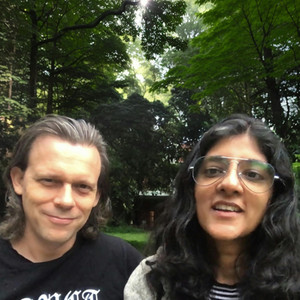
Here to tell us the GUI story are the company's founder and CEO, Sean Blagsvet, and founder and chief creative officer, Archana Purcell.
Welcome to you both, and thanks so much for joining the NVIDIA AI Podcast.
Hello. Hi. Thanks, Noah. So there's a lot that I'm looking forward to you getting into about the GUI platform, how it started, all the things it can do, including, how you're helping developers combat AI hallucinations, which is a big topic these days.
But I'd love it if you can start at the beginning and tell us what GUI AI is and how you got started.
Let me take a shot at that. We got started from actually a digital arts project funded by the British Council.
Many moons ago, I'd like to say 2018, 2019, where we applied to create an AI persona that would matchmake creators, activists, designers from across borders of the UK and India.
And we won that. award. We built out a prototype.
We tested it. It worked beautifully. And, you know, long story short, we managed to get funded a seed fund from Techstars in the race.
Yep, we got into Textas, which was an excellent program.
We took this idea of an AI persona and built an entire communications app around it. called Dara.network, meant to service cultural organizations and social impact organizations, enable them to manage their alumni and keep in touch with each other easily.
The first AI persona we built also, confusingly called Dara, feeling lonely. and wanted some friends.
And we thought, wouldn't it be great to invite non-tech folks, writers, playwrights, authors, poets Could we have them come in and craft their own AI personas from scratch?
And this is right in the middle of COVID.
So all those are out of work. They're isolated.
Isolated, yep, yep. Yeah, yeah. And so we invited 23 folks from across the UK, the U.S., India, Sri Lanka even and met constantly literally every week and ended up developing pretty much an underlying architecture that enabled them to build out what one might call a recurring testing video bot.
So our co-founder, Dave, was hanging out in Discord forums with, what's his name, Brockman. with the president of OpenAI until I think- Chris Brockman, yeah.
Yeah. It's like five years ago. So we had really early access to the GPT APIs.
And we had already built Dara as an asynchronous video messaging platform. kind of like, you know, Discord plus LinkedIn with a little bit of Mark Polo in there.
And so the thought was, well, what if we took, you know, it's kind of a wild idea.
Like, what if we took the video messages that people sent, hook that up with Google's speech recognition, fed that to a long form script Right.
These playwrights and authors were putting together.
And then, you know, we had this thought of like, what is it if it's a dollar fifty to two dollars per API call?
What could we get, right? And then so we basically had this script that they were crafting and they were writing together.
And then we had, you know, the... deepfakes APIs were just beginning to come out and there was speech.
So we're like, well, we can take what the bot says back, right?
That the DaVinci output and then take that little text, put it to a text-to-speech engine, put it into a lip sync piece, And then boom, you've got these Turing test passing characters.
We call them the rad bots. And those were the rad bots.
They were awesome. They still are kind of awesome.
Yeah, they were crazy. And we had a little thing.
This is a public family podcast, but we had like...
You know, the red bots say. That was the wild west of LLMs back in 1921, yeah.
Yeah, and these bots really spoke their mind.
Yeah. They represented issues that the writers brought in that they felt were not represented well enough. spoke on behalf of communities that were underrepresented, kind of in a bid to reduce the algo bias that the group was feeling quite intently.
You know, you're in, the bots are done. They're happily chatting away.
People are excited. And like little kids have talked to them a thousand times.
Like one kid. 1200 times, right? And these were presented at, you know, the India Art Fair, the, you know, Be Fantastic, the British Council hosted event.
Amazing. to the India Literature Festival.
They went wild. They went wild. Quite a bit.
The point was that we had built out this underlying architecture and orchestration platform pretty much that enabled us to kind of plug and play all the incumbent new technologies that were emerging in AI.
And that... was a moment, I think, in this very room, actually, where John and I were like, okay, we have the messaging platform, but what can we do more?
And that was pretty much the start of GUI.
We felt, hey, if we can take artists and writers with us on a journey, why not open it up into a wider world and kind of really take this you know, this mission we had begun to feel quite deeply by then of like democratizing AI.
And really allowing people to play with it, even if they didn't know how to code.
I'm not a coder. So, you know, I feel that part.
I want to ask you quickly about your backgrounds.
I was wondering kind of both technically and at the risk of being corny, Aside from the fact that enabling everyone, artists, creatives, non-coders, to use the technologies...
Aside from the fact that that's just an awesome thing to do.
Why was that your focus? Why the hell would you do such a thing?
Well, my background is actually in art and design.
I studied painting and animation film design back in the day. and quite wonderfully met Sean.
He had landed into India to set up the Microsoft Research Lab.
This was for 2005. So I was number three and she was number five.
In that amazing organization. We're going to track down number four, get them on the pod.
Yeah. That's how we met. I don't have a coding background, but I did get to hang out at Microsoft Research, get access to some of the brightest minds in the world and the papers that were coming out of there.
And we were the, I'd say the first and maybe the only prototype.
What is it? Advanced Prototyping? My title was Head of Product Management and Advanced Prototyping.
And so we did a lot of work this is like 2004 to 2010 round.
How do we build interfaces that reach everybody?
How do we build interfaces for folks where Literacy is an issue.
I have the patent on machine translation and instant messaging from 2005.
Oh, yeah. This is a space that we have been in for a long time running big models on NVIDIA hardware, trying to understand what everybody has to say. through chat interfaces.
And frankly, India was ahead. It skipped email, right?
And everybody kind of went directly into SMS-based interfaces. into WhatsApp in the years ahead.
So this is a space that I would say we've been experimenting in literally for 20 years. in terms of how do you build tools and interactive AI-based interfaces that work for everybody, including people that don't read or write in English very well.
And then after that, Archana went off and... Set up an organization called JAGA and then another called Be Fantastic with co-founders Freeman and Kamiya.
And the idea was really how do we take artists and creative and technology practice?
How can we bring practitioners from these different fields together? and enable them to have conversations and service kind of some of the big pressing issues of the time.
So soon a lot of activists and all that.
We started JAGA in 2009, Freeman and I, and Be Fantastic kicked off as a public organization. arts festival, looking at arts and technology, particularly towards climate change and UNSDG kind of issues.
And then meanwhile, I was off running a company called Baba Job, which was the largest informal sector focused job site in India.
So how do we take drivers and cooks and maids and basically using the phone and IVR.
This is an SMS and multilingual interfaces basically hook them up with better jobs.
Pretty deep phone interface. Yeah, she was the voice.
But, you know, we did 50,000 phone calls a day.
Our telephone bills were astronomical. We had 9 million users.
We processed a million applications a month.
That was a big initiative. That was 11 years of my life while she was running. jogging peril.
There we got now. Yep. So you've got the credentials, you've got the chops.
And I think before I interrupted you, Archana, you were about to say, and so we wound up with this platform that we called GUI.
Yes. We did, and I love the name. It's a little take on graphic user interfaces.
An old-time Reggie Rye was a thing. Also the connective tissue.
And the gooey love, you know. Yeah, so we kind of pivoted pretty much overnight, quite literally.
We took our team over to the idea. They really liked it as well.
And pretty soon we had GUI, which is pretty much what it is today.
Well, and then, you know, it was sort of founded on this premise that almost started out as a joke, but feels less and less like a joke every day. which is that all of us are just going to be AI prompt writers and API stitchers in terms of the job of the future that everyone will do seem to be that.
And then, you know, this thought being, well, if that's the world, what kind of things do you need?
Like, what would be the JS or JS fiddle equivalent of that?
As in, when I make something, do you get to view source on that and understand what I'm doing so that I can learn by building on top of what you've done?
Right. Like also from the, you know, publishing.
I mean, yeah. Yeah. And research of citations and publicly papers, which goes back to the beginnings of the Enlightenment.
And the open source movements as well. We wanted to say, what would that mean for these new higher level abstractions? of how you got a little bit of LLM problems and you want to connect over to here this other API and you want to connect to some other communication platforms.
How do you extract that up to allow a whole new generation and non-coders to basically play.
And efficiently too, right? Yes. I mean, the idea being that it's a one-stop spot.
You can try all kinds of different AI technologies and tools without subscribing individually to any one of them.
Yes, exactly. That's because we do this part of, we saw a huge amount of innovation coming from many sectors.
The open-source ecosystem was clearly making new incredible models every day. not just around LMS, but around animation and image creation and text to speech.
We saw given our work with Radbots that when you allow people who are creative and empowered to put those together in novel ways, you get this magic thousands of interactions, which is definitely bigger than the sum of its parts.
Yes. So we wanted very specifically to say, great, when OpenAI or Google or the open source community comes out with some new feature, We should constantly allow the ecosystem to get better.
So we with this whole thought of we should abstract on top so that every component is essentially hot swappable.
And evaluatable, which is where your golden questions things come in.
Yes. But you can basically say, hey... OpenAI 4.0 or, you know, some 01 piece came out.
Is it better, cheaper, faster for me? And then, you know, given our impact piece of like going forward, like is it also what's the carbon usage? of each one of them, right?
And how do we make that clear to those people that are buying and using those APIs as well as sort of the fourth important factor for any chain or workflow that you're going to put together.
So many questions. Maybe I'll ask you, and this is sort of a bad question for an audio-only format, but that's what we do here, so we're going to do it.
A new user comes to GUI. Someone who perhaps understands... what an LLM is, how technology works.
They know what an API is. Maybe they copy and pasted some code once or twice, you know.
How do they get started? Is it drag and drop?
Is it writing things into a chatbot? text-only interface, how does the platform actually work for the user?
So at a high level, this is something we took from Babajab, we did pretty good at SEO.
And one reason that we do well at SEO is we try to lower friction.
So when you come in, If you Google like AI document search or, you know, agricultural bot or AI animation, you can come in there and you can see the prompts and the output directly.
And you can go into examples and you can see a bunch of other ones that we hopefully gets better and better and are relevant for your field is sort of a UGC model.
And every single one of them, you can just say, great, I like that, I'm going to tweak it, right?
Right, so you grab a pre-existing, yep. I'm going to change what this model is, I'm going to, right?
And so we always have this kind of We're definitely inspired by replicate, which is definitely this idea of what are the inputs somebody else used, what are the outputs, but to do so in a way that We're chaining together many of these different components to basically see something.
And more kind of pull-down menu. Yes. Because the idea there is transparency.
Yeah. Like a lot of other sites, I would argue they hide the prompt that's actually making the magic happen. or they hide the model that's making the magic happen.
And so for us, we have a belief of like, no, the model that you're using for today versus tomorrow And all of the prompts and everything else.
I'll change the black box here. It's all digestible and viewable and inspectable all the way down. call these recipes for a long time yeah sure we'll close yes really like these are the ingredients this is how we made this mix and you know you can make your starting from there yeah So everything is forkable.
And then again, just like JSFiddle, you make one change.
That's a new URL. You can share it with your friends. literally next week we'll come out with workspaces so you can work on these things collaboratively with version histories.
So you can say, hey, I have a static endpoint of like, my cool co-pilot, we can work on that together.
And then you can do things like hook that up directly inside the platform to things like WhatsApp or Slack or Facebook.
And that's actually, I feel like an underestimated part of getting these things to work on the communication tools that really is way harder than you think.
Well, so I, I wanted to friction there that we try to take away.
Right. And I wanted to mention, you know, and I don't know, this is back in the day I covered the mobile phone industry.
And I don't know, maybe... We have a great audience, so they probably know.
But for sort of a US-centric point of view, people don't necessarily understand that in so many parts of the world, Your phone is your computer, period.
And people are sharing phones or getting a phone to use for a day or that kind of thing.
But it all happens on the phone. There's no laptop.
There's no desktop, workstation, all that stuff.
And so when I was researching, prepping for the taping, and reading about how Ulungizi, the farmer chatbot, went through WhatsApp, It was like, oh, cool.
I was like, well, of course it does because that's how people work.
Maybe to get back to what you were saying, Sean, about putting these tools into the communication platforms, What were some of the hurdles, some of the challenges, maybe some of the pleasant surprises in working on that? there's a ton.
Right. And so we've got a talk that's on our site called like the stuff that goes wrong and, Right.
Which is basically like, so, you know, right after we began, again, our old friend and, you know, director of the lab, Anandana, you know, said, hey.
Ricken, who runs Digital Green, is working.
And the whole space is like, you know, bots for development is going to be a thing, which is basically getting this part of If we want to convince every farmer in the world to basically change their livelihood and the crops they grow because Climate change is necessitating that over the next decade.
We've got to convince all of them to change literally the source of their income.
That is a hard challenge. Every government in the world has this challenge for the several billion people on Earth that are farmers.
So there's this piece that he recognized like, okay, bots are going to be a thing.
Why don't you get together? And so what we did there was to say, hey, In the case of Digital Green, they had an incredible library of thousands of videos, basically of one farmer recording how they do a technique better. that was then shown to other nearby farmers.
Farming best practices. There's also, you can think of it as like all of the fact of every question that everybody's asked in the ag space that goes to the government.
And then a bunch of like local knowledge in the form of like Google Docs of like what people should do coming from local on the ground NGOs.
And so what we did is to say, hey, we've built this extensible platform.
We can have rag bots. We know how to do speech recognition well.
We're running private keys to all of the best services, plus we have our own A100 infrastructure and GPU orchestration, so we can run any public model too.
So then we can say, great, we can take all those videos which are not in English, transcribe them, basically use a bunch of DP24 scripts to create synthetic data around them. so that it's not just the transcript, but it's also like, what is the question that Practitioner might actually ask, and what's the answer here?
And then use all of that to basically shove that into a big vector DB, right?
And then say, okay, we then hook that up on and then you put in translation APIs and speech recognition APIs in front of that, and then boom, You suddenly have something that works in multiple languages, in multiple countries, using locally referenced content with citations back. that can speak any language that is actually useful to folks on the ground who are small shareholder farmers.
That was what we demoed at the UN with Ricken in April 2023 at their General Assembly Science right and so you now look across the world the bots are a thing and I'm not saying like obviously we're the only people involved in this kind of transition But the thing that I think for us was exciting is a bunch of people in the private sector also noticed.
And they said, hey— If you're looking at how do I make frontline workers productive, people that need to fix your AC or do plumbing, They have the same issues of like, I need to aggregate every manual of every AC sold in America,
Plus all of the training videos around them.
Plus ask any hard question in order for me to do my job.
And oh, by the way, all the master technicians in that field retired with COVID, right?
And so there's none left. Right. And so but the technology that you need to make that happen is actually the same.
And yes, hence. You'll see us, we talk a lot about frontline worker productivity because I think we do this really well by essentially aggregating all of these different parts.
So it's the long end. Yeah. One of the things that you mentioned a few times is languages.
And, you know, a lot of the models, I mean, English... for better or for worse is taking over, spreading, ubiquitous, et cetera, right?
And a lot of the models- trained on english you're working with all kinds of languages including from my understanding tons of local dialects and the kinds of things that the models aren't necessarily trained on.
Tackling that, talking about translations and all that kind of stuff, Are you also working with training foundational models in these languages, or is it just a better way to tackle it by doing, and I may have this wrong, so please correct me, but doing what I think I understood as translating back to English and then using that to work with the LLMs.
Again, it goes back to the sort of core philosophy of GUI that we always want to be the superset of everything else out there.
I personally think as a small startup, by small I mean under a billion dollars in funding, It is fool's errand to try to train any foundation models.
Yeah. Because every six months you're going to be outclassed.
And so I'm going to leave that to the people that can put 100 billion or more into it.
And yet every single day I want to know, does that work better for my use case?
We take this very use case specific evaluation methodology, which is this golden questions and then apply that to Hey, I have 50 farmers outside of Patna in India speaking this particular dialect of Bhojpuri.
Right. Here's the questions that they ask.
Here is the expert translation or transcription into butchery.
Here's the expert translation of that question.
That is my golden set. And then what we allow you to do is to say, I'm going to run this essentially custom-made evaluation framework across every model and every combination of those things, so that this week I can tell you, the Facebook MMS large model works actually better than Google's USM, which may suddenly work better than, you know, GPT 4.0 audio.
And to basically allow organizations to evaluate which of the current state-of-the-art models, and in particular the combinations of those— work best for their use case.
So we are at the evaluation level, not the training level.
Right. Is that a hands-on user thing, figuring out which model, which combinations to use, or is that something the platform does for the users?
That itself is another workflow. So gooey.ai slash bulk, right?
You can upload your own golden data set and then you can then say, great, I want to do a, and again, you can see all of the work that we've done for other organizations.
And then you can just sort of say, great, this is how they did it.
I can copy. Not copy, I can just fork their recipe on the website.
And the advantage there is you don't have to run the DevOps to run all of those new state-of-the-art models.
No, absolutely not. I'm speaking with Sean Blagsvet and Archana Prasad.
They are the co-founders of GUI AI, a low-code, change-the-world, literally.
Change the world. A lot of people say that, but I think y'all are doing it.
Change the world platform for using AI models for all things, but we're talking particularly about frontline workers, be it an HVAC technician, or a farmer in a rural community in Africa.
Sean, you mentioned, I teased this at the beginning, You talked a little bit now about the golden sets and the golden Q&As.
So I want to ask you about that and about issues around hallucinations.
It's one thing if I'm using a chatbot to help me in my writing work and it hallucinates that I can read it.
It's another thing if A farmer or anybody else is asking a chap out for best practices for their livelihood.
Yeah. Hallucinations, literally, you know, life or death there.
How do you deal with that? So there's a variety of techniques, right, that I'd say out there.
Yeah. You should be suspicious of any time anybody says we're 100 percent hallucination free in general.
There's the RAG pattern which says, hey, I will search your documents or video or whatever you put in there.
And I'll only return, well, then you get back those snippets and then you ask the LLM to summarize it.
The risk of hallucination there goes down, right?
Because you said, hey, I'm summarizing some simple paragraphs.
That's probably okay, honestly, for things like farming.
It may not be okay for things like health care.
Because the other thing that happens often in our pipelines is you take that kind of summarization and then you do a translation.
And that translation, you know, for English to Spanish, great.
We're not going to probably have a problem, but English to Swahili English to kick.
You're like, I don't trust that. So with that other techniques that we see out there, where if you really want to do hallucination free, then what you do is you sort of translate the user's query into a vector search of which question that's already in your databank whose answer has already been approved by, say, a doctor.
Does your question most align to? And then the information you give back is not the answer to the user's question.
It's, hey, here's a related question that I think is very semantically similar to your question with a doctor approved answer.
And then you use essentially your analytics to say, hey, how often and how far away is the user's query to the question bank that I have?
And then I can then go get more questions that can have verified answers from doctors. and make that bank bigger and bigger and bigger over time.
And that's how you actually get hallucination free because it's a search.
So that golden set is the vetted questions and answers that you're then searching for to see, Users can't see this, Sean made a face and looked up, so I stopped.
Oh yeah. are two different things. Okay.
Like what I was talking about is what is the knowledge base in a kind of a rag pattern?
Yes. Bold and answers is really the use case specific evaluation frame.
Okay. Okay. And so you can think of it as most LLMs look at like the MMLU as the benchmark that they should be rated against. which asks a bunch of multiple choice questions for graduate students and things like organic chemistry.
That doesn't tell you how to fix an AC. It doesn't tell you how to plant if there's been a rainstorm and you're using this particular fertilizer in the middle of Uganda.
For that, you need a different evaluation set, right?
And so that golden set is basically our answer to how does somebody bring in their own use case a specific evaluation set.
And then we have a set of, you know, basically you upload those question and answer And then you say, here's one version of the bot using GPT-4.
Here's one version using Gemini. Here's one version using Cloud.
I'm going to run them all and then what we do is we allow you to specify, and we have some default ones, which answer is semantically most similar to your golden answer.
And then we create a score out of that. And then we just, you know, average that score and then give you an answer.
That's it. And so this allows for a very flexible framework for you to evaluate. anything to yeah it was a long technical aside of like how do we know it's it's good it's good So with Goethe Institute, we're looking at how can we enable communities, specifically women and minority genders, to kind of define what their own dataset would look like, how to create a dataset that best represents their community or their values?
How could they use those datasets to then create fine-tuned models? that enable others within their community or outside to make imagery and potentially animation even. using those datasets that they have created.
That's an exciting new project that we're going to take off on this month.
With UDAB actually, we're looking at how, and I think they instigated the workspace feature that we've kind of pulled out now, which is how can we bring their young graduates and even their PhD folks to start using AI tools quickly, play with it without having to know how to do the DevOps part.
I wouldn't, it would take me and a portion of my brain to figure that out.
I'm with you. So, you know, how do we make it possible for like groups of people in their programs?
We're looking at the DX Arts program, which is experimental arts program. graduates to be able to start creating stuff quickly without all of the underlying stuff that on eloquently and in great detail as explained somehow.
But also to do this in a collaborative way, right? that's like the metaphor part that will sort of get back into the AI workflow standards, which is to say, There was Word around for a long time and then we went to Google Docs and we had a huge unlock of what it means to do real-time collaboration. on document and you're like, wow, I can be a lot more productive.
Sure. Together. Look at like analytics. and you take something like Amplitude.
Amplitude say, well, you used to have data analytics and like I ran a company where I would do SQL training classes because I wanted to democratize data analysis. company, but then tablet or, you know, in the case of amplitude, amplitude comes along and around and I can just share a URL with you, which is like, you know, looking at our user analytics.
And if you want to change that from a weekly view to a daily view, it's just a dropdown, right?
And then, you know, Webflow, did the same thing from like Photoshop right as a standalone desktop tool to something that is collaborative in the cloud.
We think we can do the same thing for the AI workflows themselves.
So that again, we are working on these things and I don't have to worry about the underlying models that are underneath them. and you're working at this higher level of abstraction where I get to work and see outputs in a team environment.
It's very useful for learning, which is the DX arts piece.
And, you know, it's very useful for improving frontline worker productivity and then As we make these things bigger and bigger, you want to do the same thing of, hey, if I've got an image set that we feel is underrepresented in something like Dolly, I can take that image set and make my own model and boom, suddenly make animation styles around an indigenous art form that doesn't exist there because the data doesn't exist.
That's really the work that we'll do with gote.
It's kind of like the same metaphors keep getting built on top of each other.
And that's the part that I think we find very exciting.
Archneft, when you're working with, whether it's women, minorities, whatever sort of underrepresented community, and particularly in a more rural place where again, there's access via phone and things like trying to find a way to use Sora online just isn't even in the, it's a different perspective Are you finding that people are interested and enthusiastic about not just learning how to use AI tools, but being represented in the data sets, is that something that you kind of have to explain from the ground up And I'm asking in part because, you know, we're talking about arts in particular, right?
And underrepresented communities. There's been a lot of blowback and people talking about being up underrepresented or having their work used without having been asked for consent.
And so kind of looking at the other side of it.
What's the experience like in working with folks who are coming from this totally different perspective?
And thank you for that, Noah. That's a fantastic question, actually.
So I was recently in Manchester and friends at Islington Mill, and we had a pretty deep conversation pretty much around the same thing that you asked, which is, Artists, creators definitely feel there is a lot of pushback.
They have been exploited. Their work, their life's works have been exploited.
Now, however, the cat's out of the bag. we're not going to be able to rewind some of this stuff.
But if we have to take kind of a peek into the future, one of the missions I personally have and feel very deeply about, and I know that GUI is right there with me on that, is that we're kind of past the moment.
And like, you know, three years ago, four years ago, when we were doing the Radbots project, it was Hey, can we enable the artist?
Can we give them the tools? And then can they make what they would like to make?
I think we're past that moment. I think where we're at is they need to make their own tools and then make the things that they want to make with the tools that are best servicing their needs.
That's where we're at with GUI right now.
How do we enable people to make their own fine-tuned models that allow them to, for example, create imagery or animation that they would like to see, that they would like to be represented with. is just one example of how that could play out.
And I feel like there's a significant urgency around that.
One is... that in the making of those tools, they get more aware, we all learn together and you know, the workplace model is also very much that is that we learn better together.
We make better together and, um, The more we can get people, especially creative thinkers and activists on this technology, the better that world will be.
Absolutely. No, that's great. Absolutely.
So getting into kind of a last topic before we wrap up.
Standards. Yes. Sean, you were talking about the move from Word to Google Docs and this collaborative environment.
HTML obviously is a great example of a standard that has evolved, splintered, what have you over time, but we all use the web, right?
How do you approach standards in this new, fast-moving world of AI.
So there's always lessons from the past, right?
And so... Or we hope so anyway. We hope so, right?
We hope we learned the wisdom from the past.
But if you look at HTML, HTML allowed for computer-to-computer communication between networks, right? but also had this other factor, which I feel like is completely underappreciated, which was view sourced.
The way that I learned to code and figure out what HTML layout would happen is because I dissected the discovery homepage.
And then, but there's other ones that are kind of more recent that I think are also indicative like Kubernetes.
Right. Like, you know, you rewind the clock 12 years.
Amazon had a lock. on essentially cloud server configuration and deployment.
Hence, then Kubernetes came along from an essentially upstart number two and number three players like Google who said, hey, I want to make it really easy to move from one platform to another.
If I had a standard that could describe the configuration that I need, then suddenly you don't have vendor law.
That has allowed the Cloud infrastructure business not be dominated by one company, but to have, at least now big three, plus a bunch of local vendors globally.
And you can use the same Kubernetes file to go and say, this is what I need for all of them.
We think there's a similar thing around AI workflows, and it already happens now.
You have tools like Open Router that allows you to really easily switch your LLM, But our take is, if you can define those kind of high-level interfaces, like what's an LLM do?
You put some text in, you get some text out.
Maybe you put some text and an image in, and then you get some text out, maybe now some audio.
But you look at what is the interface of a speech recognition model.
It's like, well, you put some audio in, and maybe give it a language hint and you expect some text out and then again you want to swap right for any model that's underneath so part of it is there's some standard interfaces for these models and then those become steps and then you can compose those into essentially chain or something like that, but at kind of a slightly higher level.
And then those steps end up becoming your recipe.
But the thing that travels with it is that golden data set.
So that allows you to say, hey, I have my desired set of inputs and outputs, and then I have my current set of steps that I should take. and then I can automatically just swap out the models as new ones are released, and then boom, just tell you you should use this one, it's better, cheaper, faster.
And then that high level thing, that is the AI workflow standard.
It's basically like, what are your steps? distracted above the use of any given AI model.
Maybe you have a little bit of like, what are the function calls that you're going to expose in there as well?
Kind of as, you know, open API configs. then what's the evaluation side?
And, you know, our belief is if you had that higher level thing, then you can take that and say, oh, I want to run that on Cloud or I want to run that on GPT Builder, I want to run that on GUI or DeFi or relevance. then we suddenly have this, again, this portable thing that allows you to run.
For folks listening and, you know, anybody, but I want to kind of gear it towards that kind of, new to the technology or coming from less of a DevOps background and more of artist, activist, writer type background, or the DevOps folks who are working with those people who think it's important to elevate those voices and help them create the tools that they want to use.
What advice would you give? To somebody out here listening who thinks they have a new way to do it or just wants to get involved with an organization who's doing it, what would you tell them? get started.
Get on GUI.ai. It's easy. And if there's any hiccups, contact us.
They're very easy to catch. And it's not as hard.
It's not as complicated as it There's our platform.
There are others, too, that are really trying to make these processes simpler, faster, quicker, more efficient.
And I don't think there's time to be wasted.
I think it's now. And there's no point sitting in the sidelines worrying about it or critiquing it.
Kind of got to get in there, make the stuff and then possibly make the barriers and the guardrails that you need as well, you know.
Take the bull by its horns. Excellent. The GUI.AI website, GUI.AI is great.
Lots of use cases, lots of technical info, videos, fantastic resource.
Are there other places you would direct listeners to go in addition, social media, uh, partner projects, anywhere else besides the gooey.ai website.
And I'll spell it while you're thinking, G-O-O-E-Y.
That's right, yeah. I guess one thing that I'll add to that is you can't do good technology that changes the world just by focusing on the technology.
That actually is just a means to the end.
And so I think the thing for people to get started with is...
For me, it actually gets back to like, what's the problem you're solving?
Do you actually have something that looks like golden questions?
And what does that mean? It means like, If you could imagine that, hey, we could give great public defenders for everyone in the country at no cost, what would that look like?
What would be that set of expertise? If we could say, hey, for any frontline worker, I will be the nurse mentor for them, helping them with triage. and dealing with every WHO guideline that they can imagine and give them the right piece of advice in their own language.
That is a real need for a real expert system.
And so to think not so much of like, what's the technology piece, but what is actually the problem where there's a kind of expert out there right now that's expensive from a capacity building perspective.
Right, right. this is a place where AI can actually be really great, which is we have collected wisdom from people and processes and metaprocesses and documents and videos.
And I feel like in the next year, even with the current limitations we see around LMs, we can do this one well.
So for people, I would say you'd have to find the problem worth solving in your community or your business and say, if I can enable people to have that expert here, They would earn more money, do their job better, live longer, you know, have a better life. and sort of focus not so much on the tech, but that part.
And then if you can get that, then, you know, the tech tools are easy.
Arjuna Prasad, Sean Blagsvet, thank you so much for joining the podcast, telling us about GUI.AI.
I'll say it again for the listeners, gooey.ai.
It's easy. Check it out. There's so much to be done, so much you can do.
And thank you to folks like you who are making it easier. for more and more people to get involved, be represented and create the tools they need to solve the problems they have.
Thank you. Thank you. Thank you.